Addition Flashcards: Free Printable & Customizable
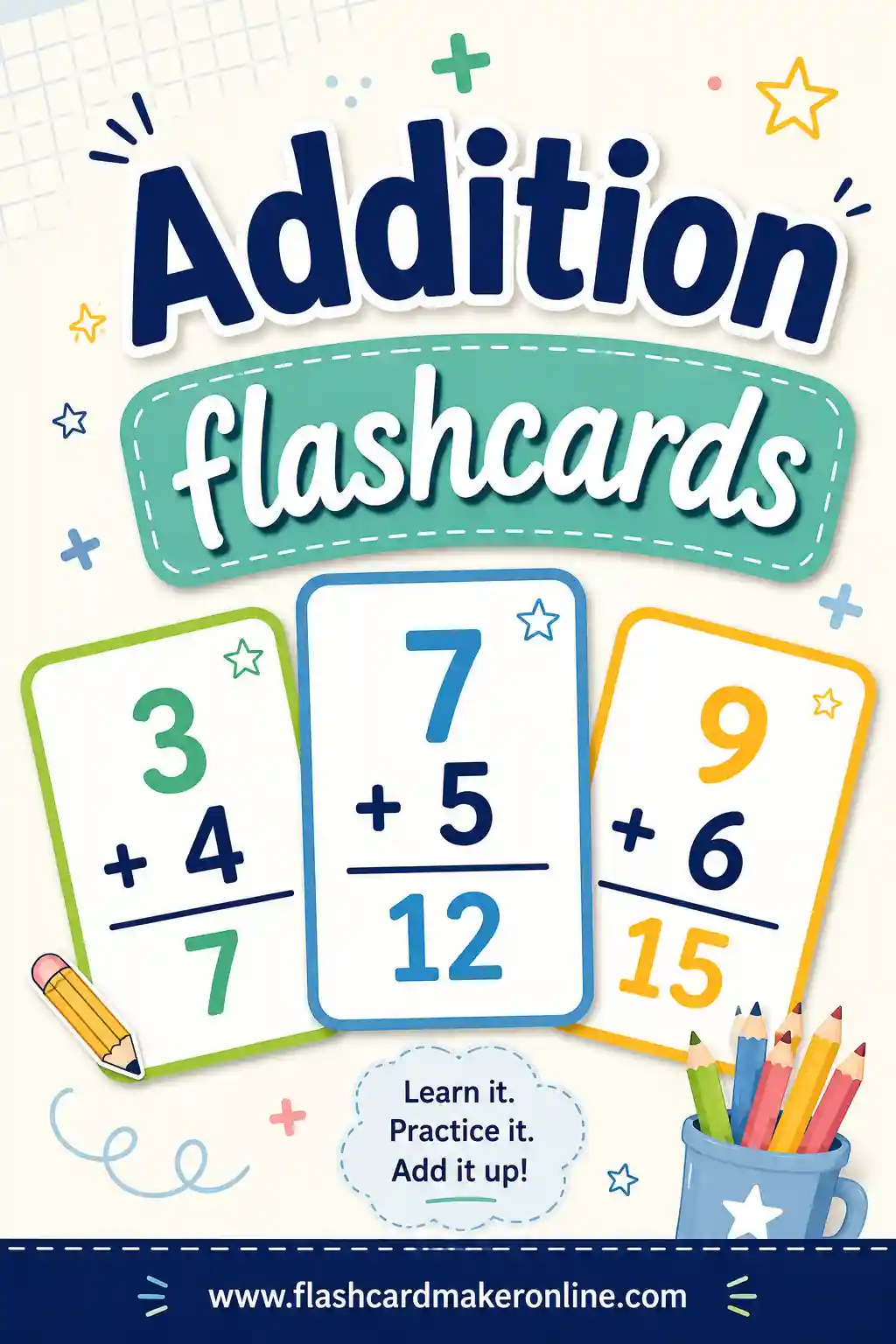
Addition flashcards are simple two-sided cards with a math fact on the front (like "7 + 8") and the answer on the back ("15"). A child sees the problem, says the answer out loud, then flips the card to check. The fastest way to get a full set is to use a free flashcard maker that turns your list of facts into printable cards you can study on screen or on paper.
Want to skip ahead and just make them? Open the free flashcard maker, type in your addition facts (there's a ready-made list below), and print a stack in minutes. No sign-up, no fee, nothing to install.
What Are Addition Flashcards?
Addition flashcards are a classic study tool, and they've stuck around for one good reason: they work. Each card holds a single fact. The front asks a question, the back gives the answer, and that tiny back-and-forth is what builds fast, confident recall.
The magic isn't the card itself. It's what your child's brain does with it. When they look at "7 + 8" and try to pull the answer from memory before flipping, they're doing something called active recall. That little mental effort is what moves a fact from "I think I know it" to "I just know it."
Most kids meet addition facts somewhere between kindergarten and second grade. The goal by the end of those years is automaticity, which is a fancy word for "answers without counting on fingers." Flashcards are one of the simplest ways to get there.
Why Flashcards Beat a Worksheet for Addition Facts
Worksheets have their place, but flashcards have a few real advantages for memorizing facts.
- They force active recall. A worksheet lets kids count or copy. A flashcard makes them retrieve the answer from memory, which is what actually builds the connection.
- They give instant feedback. Flip the card and you know right away if you were right. No waiting for a parent to grade anything.
- They're easy to sort. Got the card right? Set it aside. Missed it? Keep it in the pile. Now you're spending time only on the facts that need work.
- They go anywhere. A stack of cards fits in a backpack or a coat pocket. You can practice in the car, in a waiting room, or for five minutes before dinner.
That last point matters more than people think. Short, frequent practice beats one long cram session almost every time.
Free Addition Flashcards: Sample Deck (Copy & Paste)
Here's a ready-to-use deck of core addition facts. Drop these into the flashcard maker and you'll have a printable set in seconds. These are the "tricky middle" facts kids most often need to drill, plus a few doubles.
| Front (problem) | Back (answer) |
|---|---|
| 5 + 6 | 11 |
| 6 + 7 | 13 |
| 7 + 8 | 15 |
| 8 + 9 | 17 |
| 4 + 7 | 11 |
| 3 + 8 | 11 |
| 6 + 9 | 15 |
| 5 + 8 | 13 |
| 7 + 7 | 14 |
| 8 + 8 | 16 |
| 9 + 9 | 18 |
| 6 + 6 | 12 |
| 4 + 9 | 13 |
| 5 + 9 | 14 |
| 2 + 9 | 11 |
| 3 + 9 | 12 |
| 7 + 6 | 13 |
| 8 + 4 | 12 |
| 9 + 7 | 16 |
| 6 + 8 | 14 |
That's 20 cards covering the facts kids stumble on most. Want the easy ones too? Add the +0, +1, and +2 families and you'll have a complete set.
Build it by fact family
If your child is just starting out, don't dump all 100 addition facts on them at once. Group cards into families and master one batch before moving on:
- +1 and +2 facts (the "just count up" group)
- Doubles (1+1, 2+2, all the way to 9+9)
- Near doubles (6+7 is just 6+6 plus one)
- Make-ten facts (8+2, 7+3, the pairs that hit 10)
- The tricky middle (the 7+8, 6+9 cards above)
How to Make Addition Flashcards in 4 Steps
You don't need any special skills. Here's the whole thing.
- Pick your facts. Start with one fact family, or paste the full sample deck above.
- Type them in. Put the problem on the front and the answer on the back. The flashcard maker keeps them paired automatically.
- Choose study or print. Flip through them right on screen, or print a stack to cut out.
- Practice. Five to ten minutes a day beats an hour once a week.
If you print, use cardstock so the cards survive being shuffled a hundred times. Plain paper works in a pinch, but it'll go soft fast.
Smart Ways to Study Addition Flashcards
Plain flipping works, but a few simple tricks make practice far more effective.
Use the three-pile method
Make three piles as you go: know it cold, almost there, and needs work. Run through the "needs work" pile most often, the "almost" pile sometimes, and the "know it" pile just once in a while to keep it fresh. You'll spend your time exactly where it counts.
Try spaced repetition
Instead of drilling the same cards over and over in one sitting, space your reviews out. Practice a fact today, again tomorrow, then a few days later. Each time your child successfully recalls it, the memory gets stronger and lasts longer. This is the single most powerful study technique we know of, and it costs nothing.
Say it out loud
Whispering or saying the answer aloud beats thinking it silently. Speaking engages more of the brain and makes the recall stickier. Bonus: you can hear whether they're counting on fingers or just knowing.
Keep sessions short and frequent
Two five-minute sessions beat one ten-minute slog. Little kids run out of focus fast. End on a win, before they get tired, and they'll come back happy tomorrow.
Addition Flashcards by Grade Level
The right facts depend on where your child is. Here's a rough guide.
| Grade | Focus | Good card range |
|---|---|---|
| Pre-K / K | Adding within 5, counting on | 1+1 up to 4+1 |
| 1st grade | Adding within 20, doubles | 5+6, 7+8, 9+9 |
| 2nd grade | Fluent within 20, mental math | All facts, mixed |
| 3rd grade+ | Speed and review | Timed mixed deck |
Don't stress about the labels. Some kids fly through addition early, others take their time. Meet them where they are, not where a chart says they should be.
Printing Tips for Sturdy, Reusable Cards
A few small choices make your deck last.
- Use cardstock if you can. It holds up to shuffling and little hands far better than printer paper.
- Print double-sided for true flashcards. Problem on the front, answer on the back, just like store-bought.
- Cut once, laminate forever. A quick laminate or a clear sleeve means the cards survive juice spills and years of use.
- Print a test page first. Check your margins before running off a whole set, so nothing gets cut off.
- Make the text big. Big, clear numbers are easier for young eyes to read at a glance.
If you'd rather not print at all, you can flip through the deck right on screen in the flashcard maker. Perfect for practice on a tablet in the car.
Making Practice Fun (So They Actually Do It)
Drilling math facts can feel like a chore. A little play goes a long way.
- Beat the clock. Time a run through the deck and try to beat yesterday's score. Kids love a personal best.
- Card toss. Get one right, toss the card in a bowl across the room. Now it's a game.
- Two-player race. Each player flips a card; first to call the right answer keeps it. Most cards at the end wins.
- Sticker chart. A sticker for each session adds up to a small reward. Simple, but it works.
Keep the prizes tiny and the mood light. The goal is to make practice something they don't dread.
Common Mistakes to Avoid
A few easy missteps can slow a child down. Sidestep these and practice goes smoother.
- Too many cards at once. A fat stack feels like a wall. Start with 8 to 12 and grow from there.
- Only practicing in order. If you always go 1+1, 1+2, 1+3, kids memorize the sequence, not the facts. Shuffle the deck so each card stands alone.
- Letting fingers do all the work. Finger-counting is fine early on, but if it never fades, the facts aren't sticking. Nudge toward recall with the say-it-out-loud trick.
- Cramming once a week. One long session can't beat five short ones. Spread practice across days for facts that actually last.
- Skipping the easy review. Even mastered facts fade without an occasional refresh. Run the "know it" pile now and then to keep it sharp.
None of these are dealbreakers. They're just the small tweaks that turn good practice into great practice.
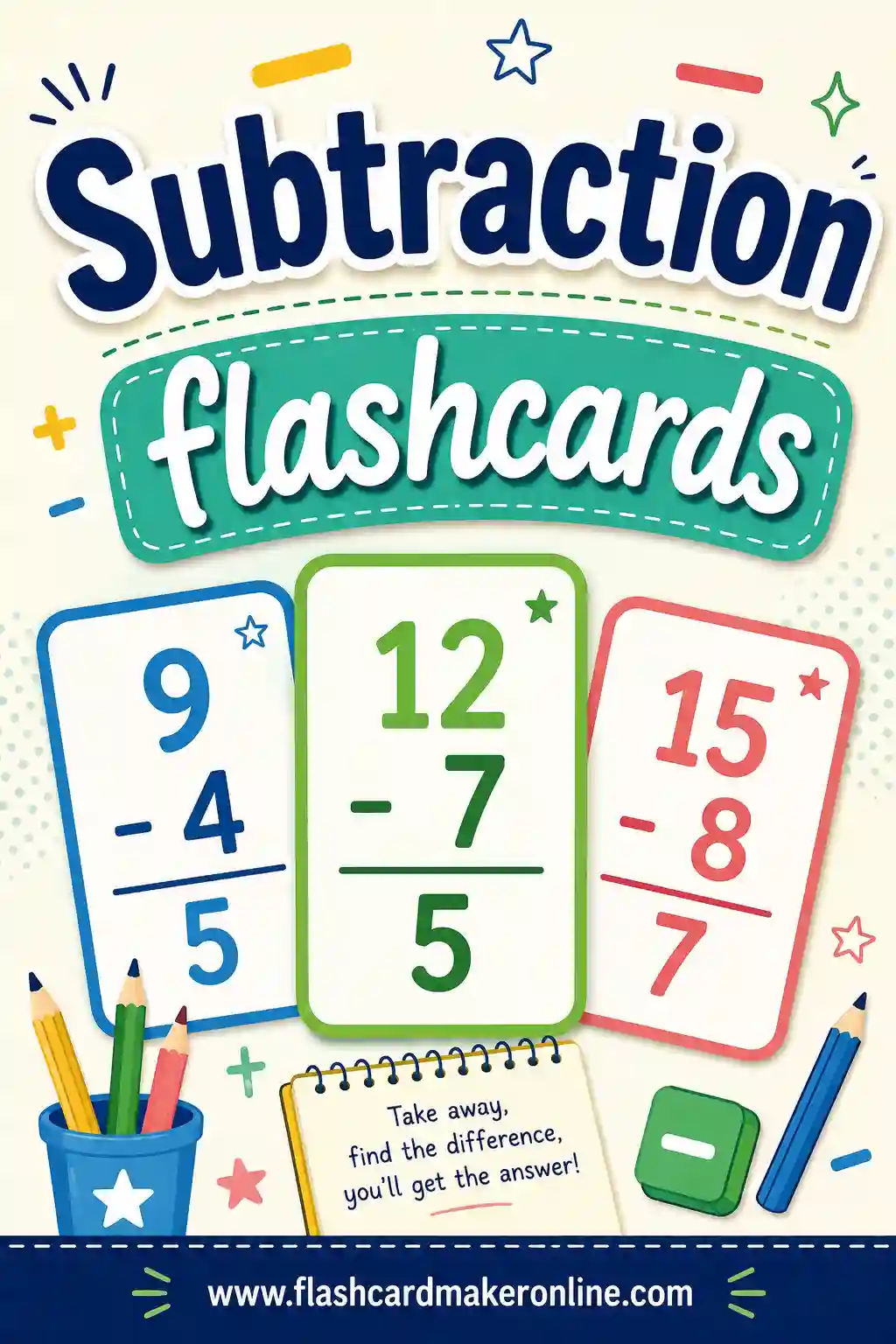
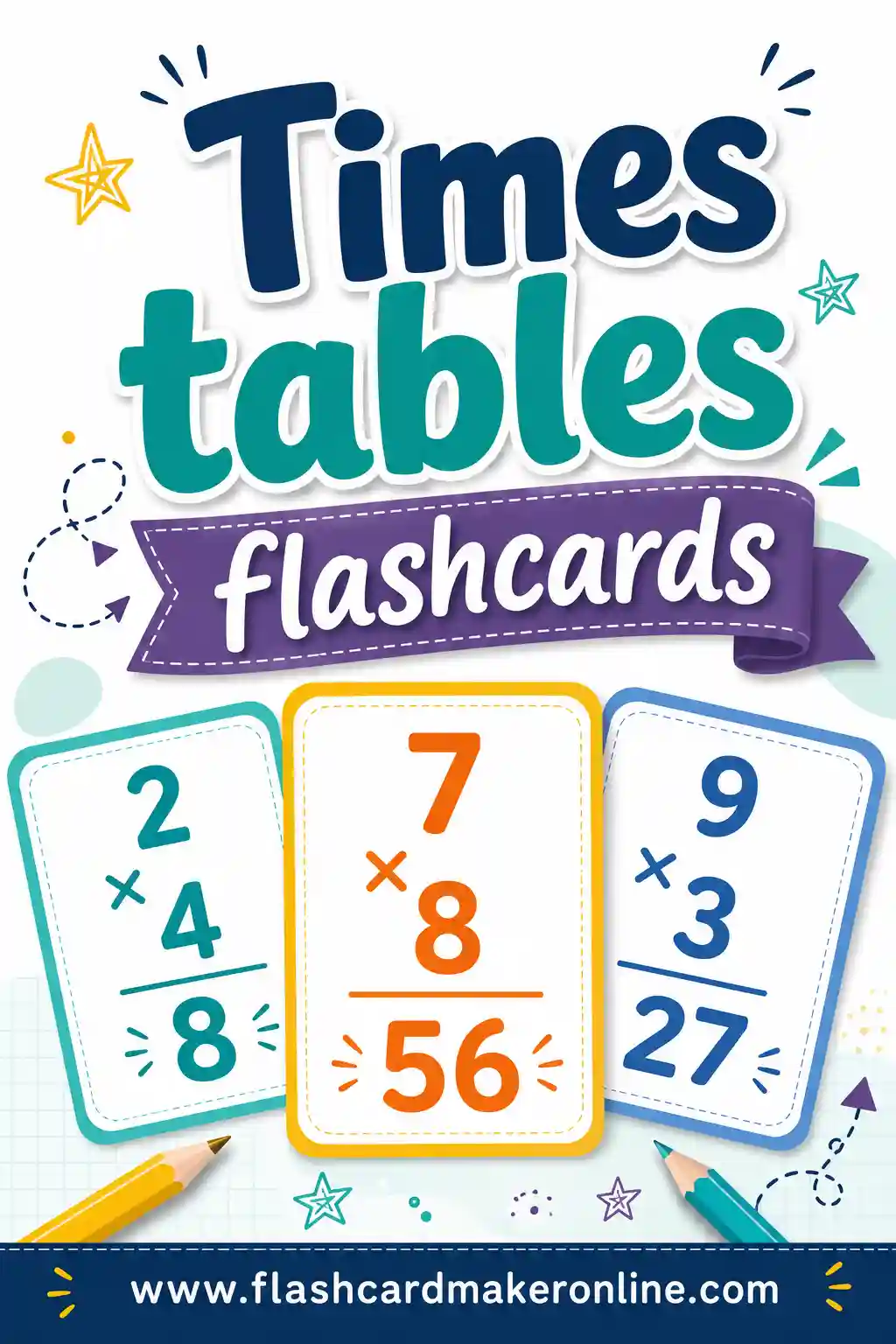
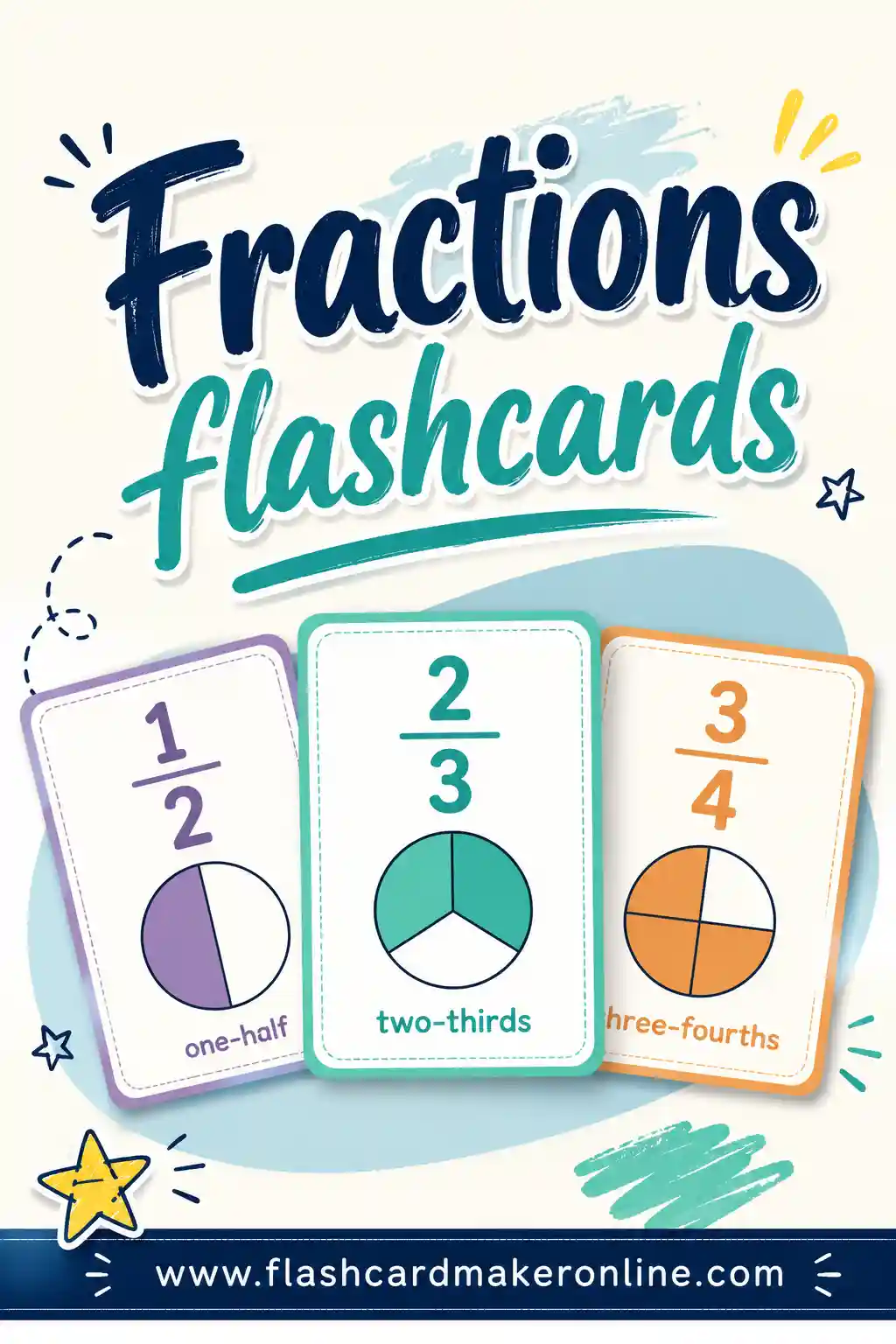
Once addition clicks, you can build matching decks for the rest of math with our subtraction flashcards, times tables flashcards, and fractions flashcards.
Frequently Asked Questions
At what age should kids start using addition flashcards?
Most kids are ready around kindergarten or first grade, once they understand what adding means. Start with small numbers and doubles, then build up. There's no rush, and pushing too hard too early can backfire.
How many addition flashcards should we practice at once?
Keep it small: 8 to 12 cards per session for young kids. A giant stack overwhelms them. It's better to master one small batch, then add the next, than to flip through 100 cards and remember none.
Are these addition flashcards really free to print?
Yes. You make and print them yourself at no cost. There's no sign-up and no watermark, so you can build a full set for one child or a whole classroom on a single free deck.
How do I help a child who counts on their fingers?
That's totally normal at first, and it's how fluency starts. To move past it, focus on one fact family at a time, say answers out loud, and use spaced repetition so the facts stick. Speed comes with repetition, not pressure.
What's the best way to study flashcards effectively?
Use active recall (try to answer before flipping), sort cards into know-it and needs-work piles, and space your practice across several days. Short daily sessions beat one long cram. These three habits do most of the heavy lifting.
Can I study the cards without printing them?
Absolutely. The flashcard maker lets you flip through your deck right on screen, on a phone, tablet, or computer. It's perfect for practice on the go when you don't have a printer handy.
Ready to Build Your Addition Flashcards?
Grab the sample deck above, open the free flashcard maker, and you'll have a stack of printable addition flashcards in minutes. It's free, there's no sign-up, and you can study on screen or on paper. Pick a fact family, keep the sessions short, and watch those answers get faster every week.