ASL Flashcards: Free to Make, Study & Print
ASL flashcards are study cards that pair an American Sign Language sign with its English meaning, so you can drill signs the same way you'd drill any vocabulary. One side names or pictures the sign, the other gives the meaning, and you flip to check yourself. The quickest way to build a set is a free flashcard maker that lets you type your sign list, flip through it on screen, and print a clean deck to practice from.
Want to jump in now? Open the free tool, add the signs you're learning (there's a beginner starter deck below), and start flipping right away. No sign-up, no app, nothing to pay.
What Are ASL Flashcards?
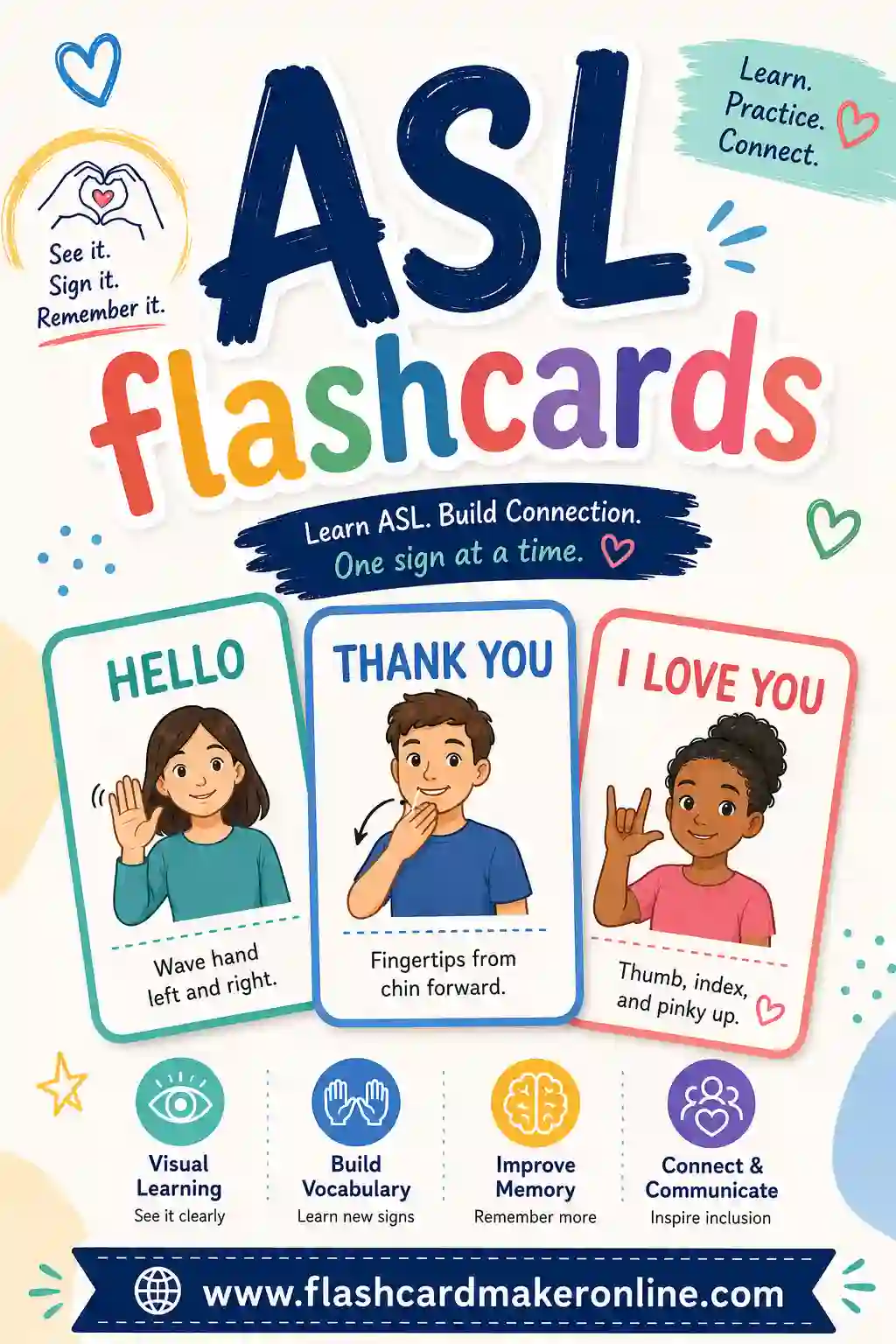
An ASL flashcard links a sign to its meaning. Because signs are visual and physical, your cards can work a few ways: a written description of the handshape and movement on one side with the English word on the other, a picture of the sign paired with its meaning, or the English word on the front prompting you to produce the sign from memory.
That last version is the most useful. When you see "thank you" and your hands move on their own to make the sign, you've truly learned it. That's active recall — pulling the answer out of your head instead of just recognizing it. It's the single biggest reason flashcards beat passively watching sign videos over and over.
ASL is its own complete language with its own grammar, so flashcards are a starting point, not the whole journey. But for building a vocabulary of signs, they're hard to beat.
Why Flashcards Help You Learn Signs Faster
Signs live in your hands, and hands learn by doing. Flashcards turn passive watching into active practice. Instead of nodding along to a video, you're prompting yourself, producing the sign, and checking whether you got it right.
The real magic is in the spacing. You won't remember a sign after seeing it once. You need to meet it again and again, with gaps in between. Reviewing a sign right before you'd forget it — spaced repetition — is what burns it into memory. A digital deck makes this painless: shuffle, flip, mark the ones you missed, and drill those again tomorrow.
One honest note: a flashcard can describe a sign, but it can't show you the exact motion, facial expression, or rhythm. Pair your cards with a trusted video reference or, better yet, a Deaf instructor, so the signs you practice are accurate and respectful.
A Free Beginner ASL Flashcard Deck
Here's a starter set of common, everyday signs. The descriptions are simplified memory hooks, not full instructions, so always confirm the exact movement with a video or teacher. Copy any rows into the flashcard maker to build your deck.
| Sign (memory hook) | Meaning |
|---|---|
| Flat hand at chin, move outward | Thank you |
| Flat-hand salute, move out from forehead | Hello |
| Fist nods up and down | Yes |
| Index + middle finger snap to thumb | No |
| Flat hand circles on chest | Please |
| Flat hand from lips outward | Goodbye / blow |
| Point to yourself | I / me |
| Point to the other person | You |
| Fingers to mouth | Eat |
| Tip thumb to mouth (C-hand) | Drink |
| Both index fingers come together | Friend |
| Hands form a roof | Home |
| Flat hands rock like a cradle | Baby |
| Open hand pats chest twice | Happy |
| Index finger draws a smile | Smile |
| Thumb under chin flicks out | Mother |
| Thumb at forehead flicks out | Father |
| Open-5 hand twists at temple | Understand |
| Flat hands, palms up, raise | Help |
| Index finger to wrist | What time / time |
| Sweep flat hand for "more" gesture | More |
| Both hands "5" wiggle and lower | Rain |
| Thumb and pinky out, twist | Play |
| Fingers wiggle downward | Water (W-hand at chin) |
That's a solid beginning vocabulary. When these feel automatic, swap them out for new signs and keep the deck fresh.
Build small themed decks
Signs are easier to remember in related groups. Try splitting your cards by theme:
- Greetings — hello, goodbye, please, thank you, sorry.
- Family — mother, father, sister, brother, baby.
- Feelings — happy, sad, tired, excited, scared.
- Everyday needs — eat, drink, help, more, finished.
How to Make ASL Flashcards in 4 Steps
No design skills needed. Here's the whole process.
- Open the tool. Go to the flashcard maker. Nothing to install.
- Add your signs. Put the English word on one side and a memory hook (or a note like "see video") on the other. Paste a whole list at once if you have one.
- Flip and practice. Click through the deck, and actually make each sign with your hands as you go. Mark the ones you fumble.
- Print to practice anywhere. Print a paper set for screen-free practice, or to quiz with a study partner.
A great habit: as you flip each card, make the sign before you check the back. Producing it from memory is what locks it in.
Smart Ways to Study Your ASL Cards
Making the deck is easy. Practicing it well is where you actually learn. A few habits help a lot.
Always make the sign
Don't just read the answer. Move your hands. Sign each word as you flip, even if you're not sure. The physical motion is half the memory, and your hands need the reps as much as your brain does.
Use a mirror or your phone camera
Watching yourself sign catches mistakes early. Record a quick clip and compare it to a reference video. Fixing a small error now beats drilling a wrong handshape into your muscle memory.
Go from English to sign
Recognizing a sign is easier than producing one. So put the English word on the front and challenge yourself to produce the sign from scratch. That harder direction is the one that prepares you for real conversation.
Keep sessions short and steady
| Study style | How it feels | How well it works |
|---|---|---|
| One long weekly session | Tiring, signs fade fast | Weak |
| 10 minutes, 3x a week | Manageable | Good |
| 5 minutes, twice daily | Almost effortless | Best |
Short daily practice wins. Your hands and your memory both improve in the gaps between sessions, so frequent, spaced reps beat a single marathon.
ASL Flashcards for Different Learners
Build your deck around who's learning and why.
For parents and young kids
Baby sign language is a wonderful first deck. Focus on signs a toddler can use to communicate before they can talk: more, eat, milk, all done, help. Big, clear pictures on the cards help little ones connect the sign to its meaning.
For students taking an ASL class
Match your deck to this week's lesson. If the chapter covers family signs, build a family deck. Cards that mirror your coursework turn quiz prep into a quick flip instead of a late night.
For meeting Deaf friends or coworkers
Lean on practical, conversational signs: greetings, names, common questions, and polite phrases. Learning to fingerspell the alphabet is also huge, since it lets you spell any word you don't yet have a sign for.
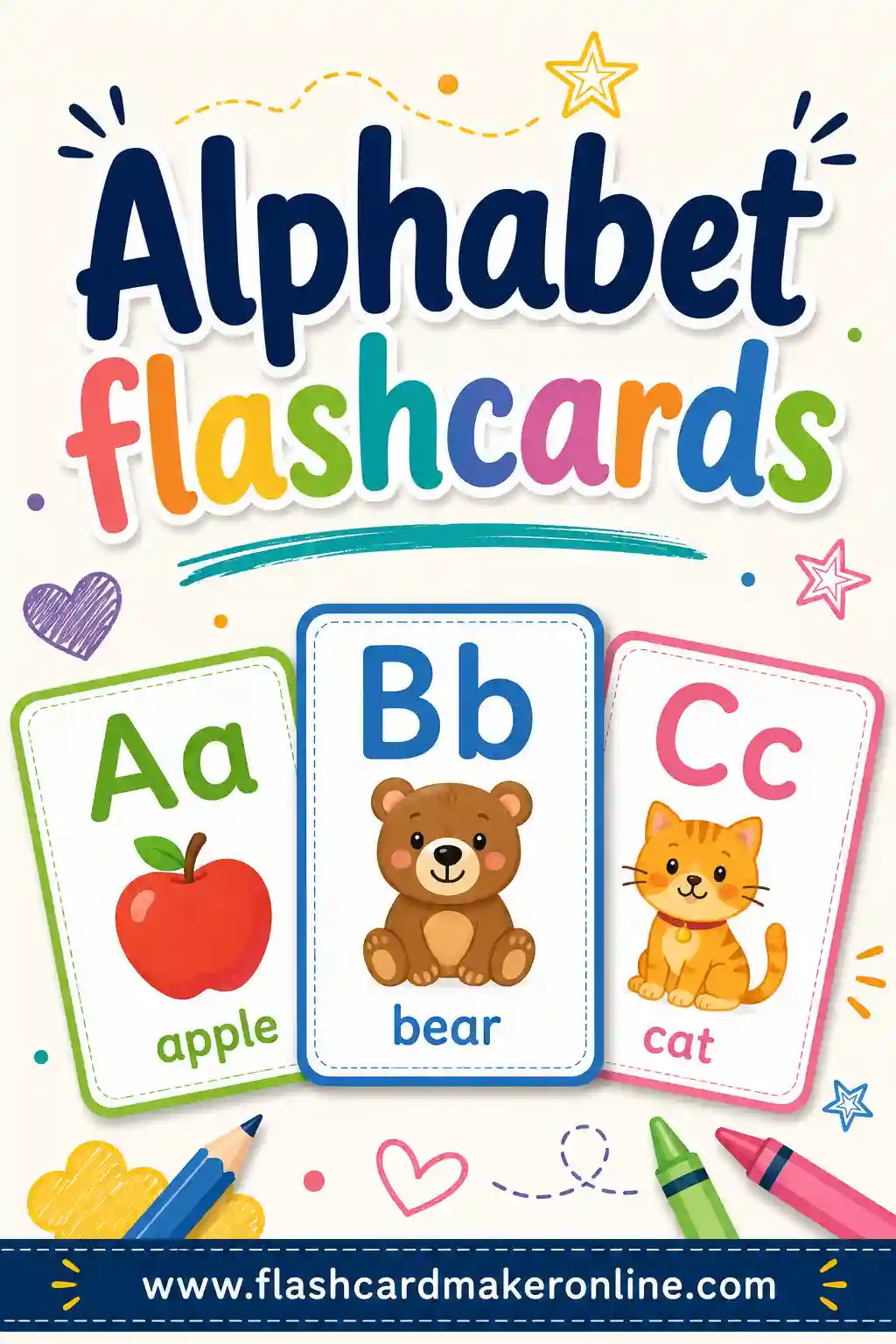
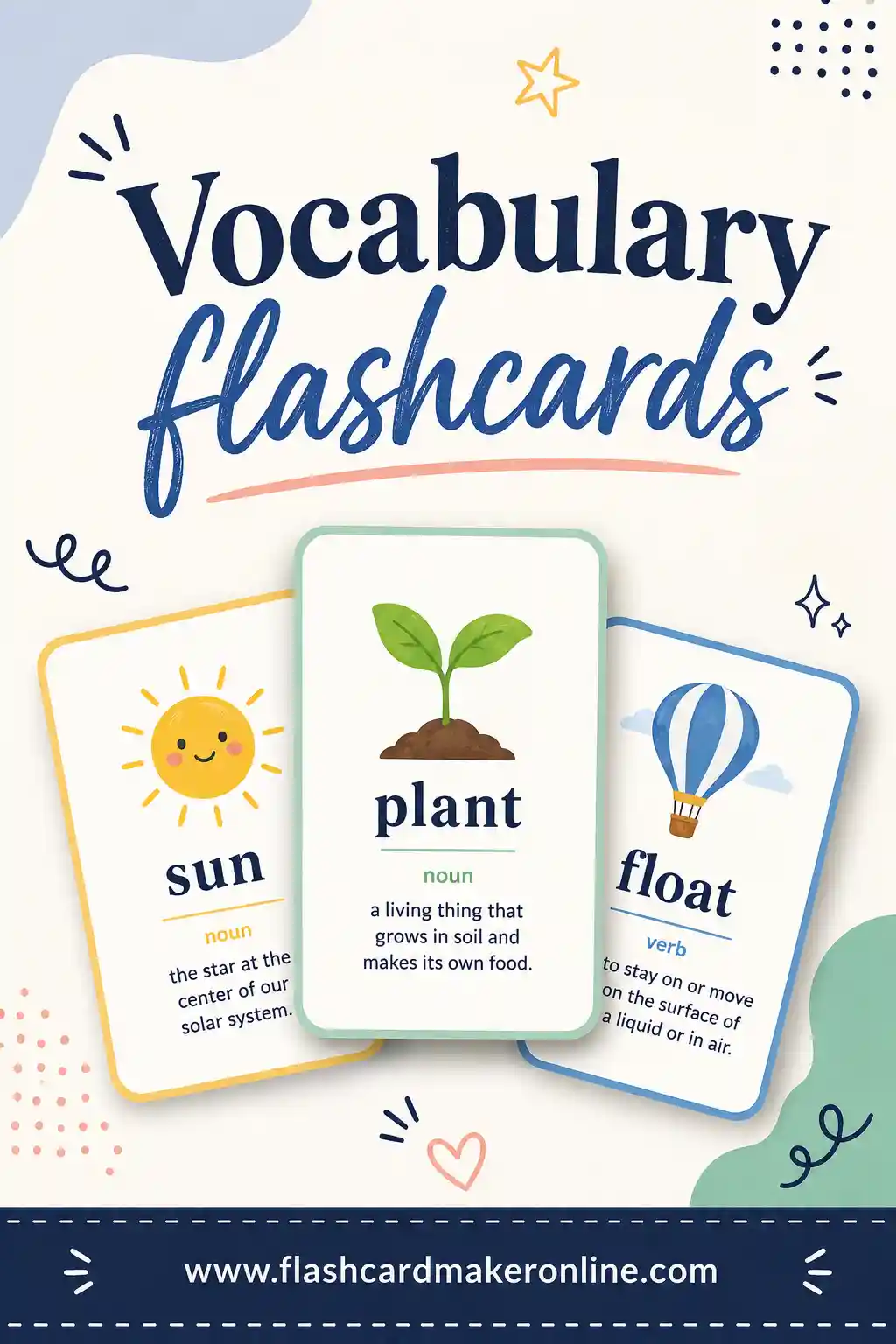
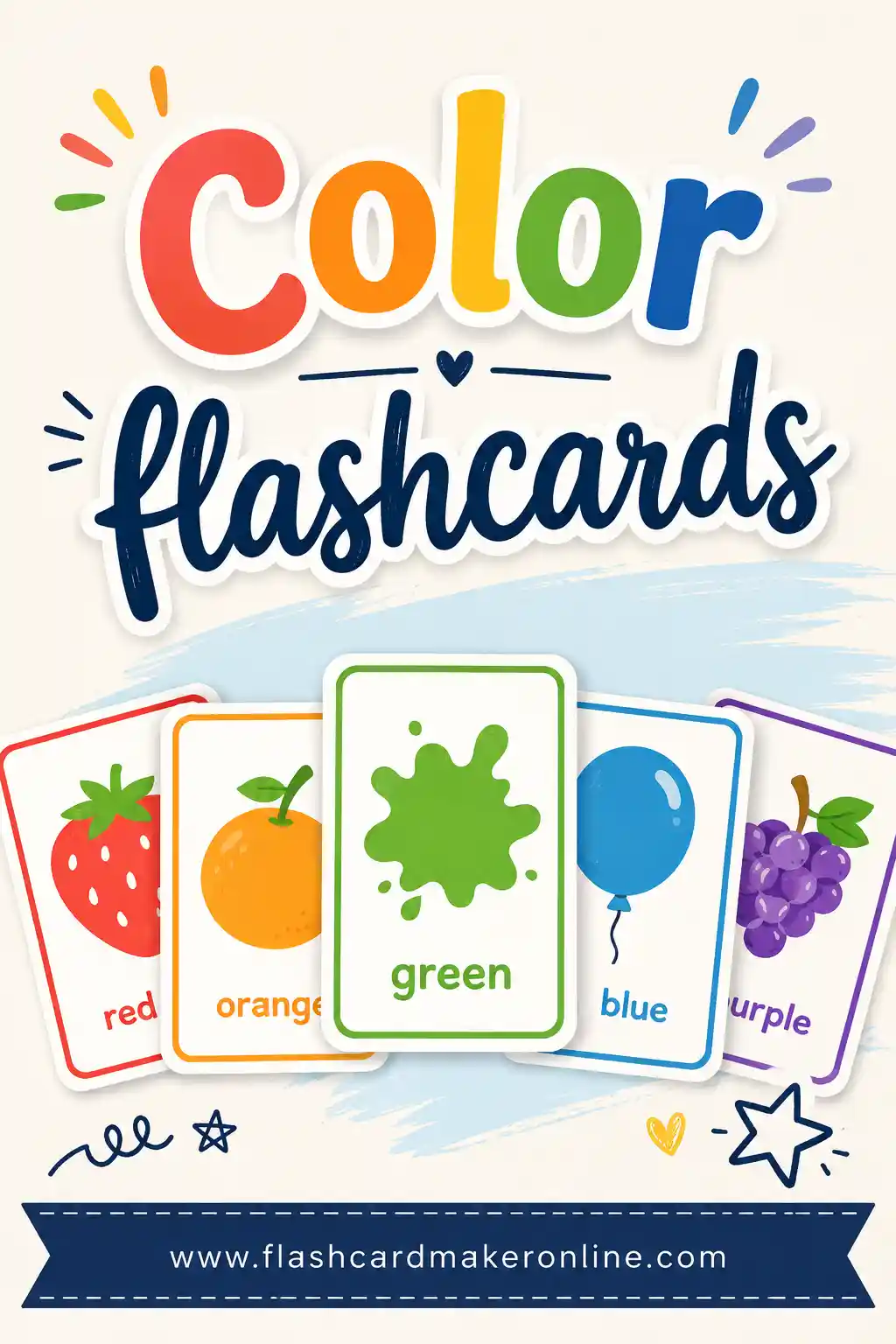
Learning the manual alphabet is a great companion to this deck. See our alphabet flashcards guide, and check out general vocabulary flashcards and color flashcards tips that work for any subject.
Printable vs. Digital ASL Cards
Both formats help you practice, so pick the one that fits how you study.
Printable cards are handy for screen-free practice and for working with a partner. You can spread them out, sort them by theme, and quiz a study buddy who signs back to you. Print on cardstock so they survive being handled, and add a small printed image of the handshape if you can, since signs are visual.
Digital cards win for quick daily reps. You can shuffle instantly, mark the signs you missed, and run through a deck in a few minutes between other things. Pairing a card with a short reference clip on your phone also keeps the exact motion close at hand.
Use both if you like. Build your deck once in the tool, drill it on screen each day, and print a set for practice with a friend. Same signs, two formats.
Common ASL Flashcard Mistakes to Avoid
A few habits hold sign-language learners back. Steer clear of these and your practice will go much further.
- Reading the card without signing. A sign lives in your hands, not on paper. Always make the sign as you flip, even when you're unsure.
- Trusting a written description alone. A memory hook can't capture exact movement or facial grammar. Confirm every sign with a video or a Deaf teacher.
- Ignoring facial expressions. In ASL, your face carries grammar. A sign practiced with a blank face is only half right.
- Cramming many signs at once. A flood of new signs blurs together. Add a small batch, master it, then add more.
- Skipping the alphabet. Fingerspelling lets you communicate any word you don't yet have a sign for, so make it an early deck.
A Note on Learning ASL Respectfully
ASL belongs to the Deaf community, and the best way to learn it is from Deaf people. Flashcards are a fine tool for memorizing vocabulary, but they can't teach you the facial expressions, grammar, and cultural context that make ASL a real, living language. Use your deck as practice between real lessons, follow Deaf creators and teachers, and treat the language with the respect it deserves.
Frequently Asked Questions
Can flashcards really teach ASL?
They're excellent for building and reviewing your sign vocabulary, which is a big part of any language. But a card can't show motion or facial grammar, so pair your deck with videos and, ideally, a Deaf instructor. Use flashcards to drill what you've already been shown correctly.
Are these ASL flashcards really free to make and print?
Yes. You build and print them yourself at no cost. There's no sign-up and no watermark, so you can make a small beginner deck or a big course pack on the same free tool.
Should I put the sign or the English word on the front?
Put the English word on the front so you have to produce the sign from memory — that's the harder, more useful direction. You can run the deck the other way too, but producing signs is what prepares you for real conversation.
How many signs should I learn at once?
Start with 15 to 20 new signs in a session, then review them daily. Adding hundreds at once leads to overwhelm. A steady trickle of new signs mixed with review of old ones is far more effective.
Can I add pictures to my ASL flashcards?
Yes, and pictures help a lot with visual signs. A clear image or a screenshot from a reference video on the card lets you link the handshape straight to its meaning, which is faster than reading a written description.
How long until I remember the signs?
With short daily practice and your hands actually moving, most people lock in a 20-card deck within two to three weeks. Showing up briefly every day beats one long session. Spacing and repetition do the work.
Ready to Build Your ASL Deck?
Grab the starter list above, open the free flashcard maker, and you'll have your own ASL deck ready to flip and practice in minutes. It's free, there's no sign-up, and you can study on screen or print a stack to carry along. Keep your hands moving, learn from the Deaf community, and enjoy the journey.