Division Flashcards: Free Printable & Customizable
Division flashcards are two-sided cards with a division problem on the front (like "56 ÷ 8") and the answer on the back ("7"). A child reads the problem, recalls the answer, then flips to check. The fastest way to get a full set is to use a free flashcard maker that turns your list of facts into printable cards you can study on screen or on paper.
Want to skip ahead? Open the free flashcard maker, type in your division facts (there's a ready-made list below), and print a stack in minutes. No sign-up, no fee, nothing to install.
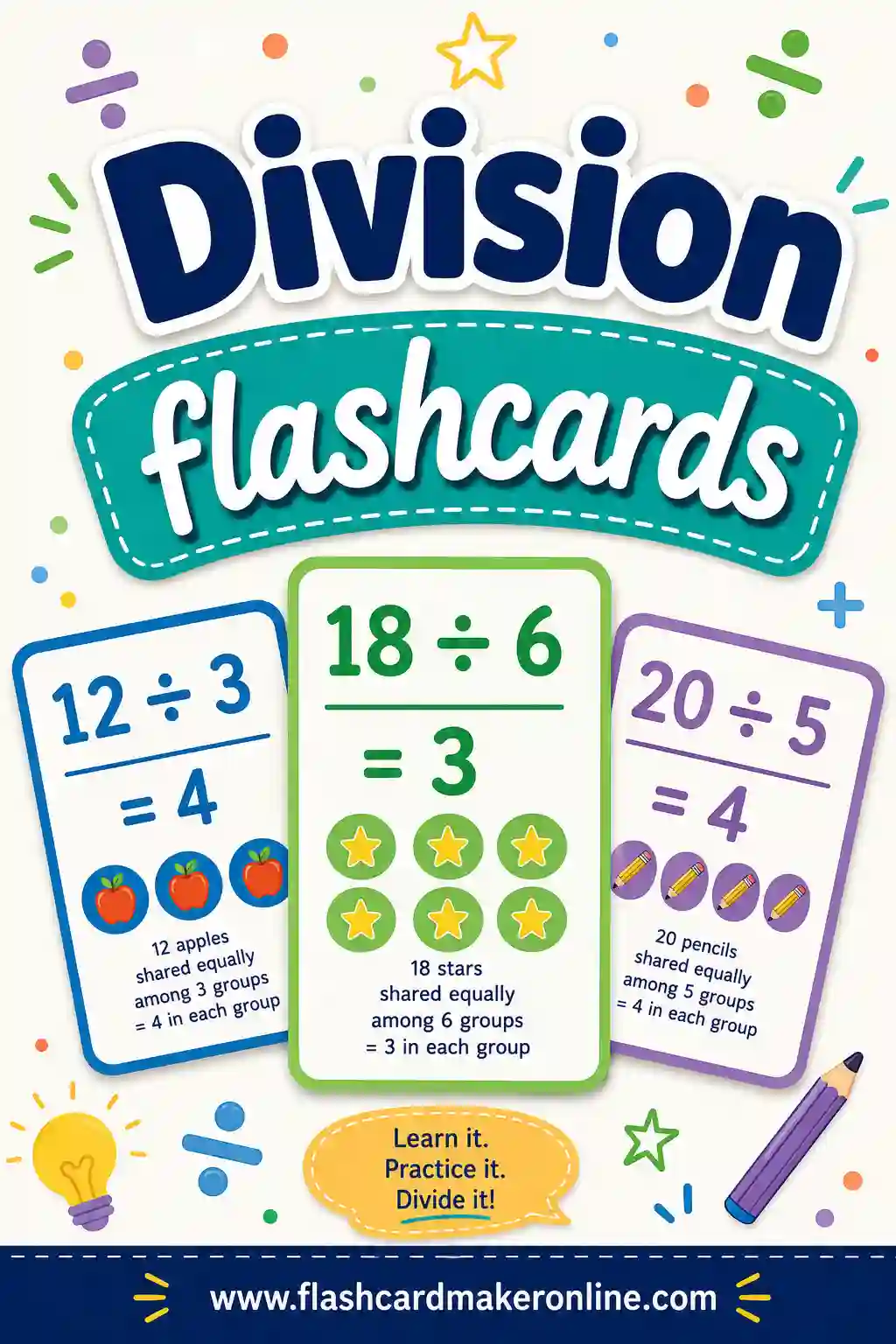
What Are Division Flashcards?
Division flashcards are a straightforward study tool for one of the trickier math skills. Each card holds a single fact. The front asks "how many groups?", the back gives the answer, and that quick flip-and-check is what builds fast, confident recall.
The real work happens in the pause. When a child sees "56 ÷ 8" and tries to pull up the answer before flipping, they're using active recall. That little effort is exactly what locks the fact into memory for good.
Division usually comes in third and fourth grade, after kids have a handle on multiplication. That order matters, and it's the key to making division far easier than it looks. Get the timing right and division stops being the scary table and starts being the one that practically teaches itself.
Division Is Just Multiplication Backward
Here's the secret that takes the fear out of division: every division fact is a multiplication fact in disguise. If a child knows 8 × 7 = 56, then 56 ÷ 8 = 7 is the same fact turned around.
These four facts form a family from three numbers:
- 8 × 7 = 56
- 7 × 8 = 56
- 56 ÷ 8 = 7
- 56 ÷ 7 = 8
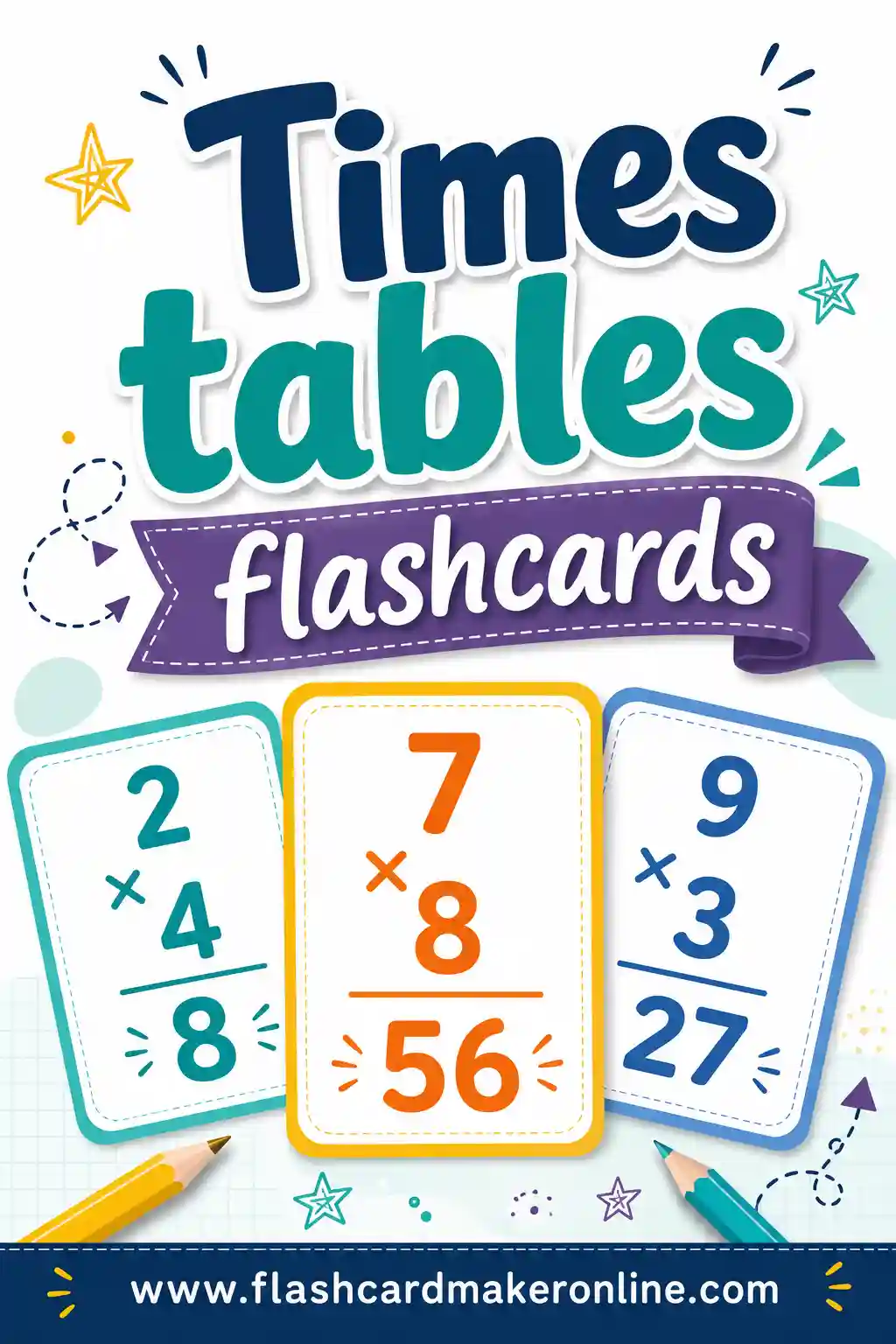
When you teach division this way, kids don't memorize a brand-new pile of facts. They reuse what they already know from multiplication. If your child is solid on their times tables flashcards, they already have most of division figured out. They just need to practice seeing it the other way.
That's exactly what division flashcards are for: training the brain to jump straight from "56 ÷ 8" to "7" without stopping to rebuild the multiplication.
Free Division Flashcards: Sample Deck (Copy & Paste)
Here's a ready-to-use deck of core division facts. Paste these into the flashcard maker and you'll have a printable set in seconds. These cover the facts kids most often need to drill, drawn from the harder times tables.
| Front (problem) | Back (answer) |
|---|---|
| 24 ÷ 6 | 4 |
| 28 ÷ 7 | 4 |
| 36 ÷ 6 | 6 |
| 42 ÷ 7 | 6 |
| 48 ÷ 8 | 6 |
| 45 ÷ 5 | 9 |
| 54 ÷ 9 | 6 |
| 56 ÷ 8 | 7 |
| 63 ÷ 9 | 7 |
| 64 ÷ 8 | 8 |
| 72 ÷ 8 | 9 |
| 72 ÷ 9 | 8 |
| 81 ÷ 9 | 9 |
| 49 ÷ 7 | 7 |
| 35 ÷ 5 | 7 |
| 32 ÷ 4 | 8 |
| 27 ÷ 3 | 9 |
| 40 ÷ 8 | 5 |
| 30 ÷ 6 | 5 |
| 21 ÷ 7 | 3 |
That's 20 cards covering the facts kids stumble on most. Add the easy divisors (÷1, ÷2, ÷10) and you'll have a complete set.
Group cards by divisor
Don't drill all the facts at once. Work through one divisor at a time:
- ÷2 and ÷5 (the easy ones, great for confidence)
- ÷3 and ÷4 (steady building blocks)
- ÷6 and ÷7 (where it starts getting tricky)
- ÷8 and ÷9 (the toughest, drill these most)
- Mixed review (shuffle everything once each batch is solid)
How to Make Division Flashcards in 4 Steps
No design skills needed. Here's the whole thing.
- Pick your facts. Start with one divisor, or paste the full sample deck above.
- Type them in. Problem on the front, answer on the back. The flashcard maker keeps each pair together.
- Choose study or print. Flip through on screen, or print a stack to cut out.
- Practice daily. Short, frequent sessions beat one long grind.
Print on cardstock if you can. Division decks get a lot of shuffling, and plain paper wears out fast. A small tip: write the matching multiplication fact lightly in a corner of the answer side for the first week or two. It gives a stuck child a hint without handing over the answer, and you can drop it once the facts are solid.
Smart Ways to Study Division Flashcards
Plain flipping helps, but these tweaks make practice far more effective.
Use the three-pile method
As you flip, build three piles: know it cold, almost, and needs work. Spend most of your time on "needs work," check "almost" sometimes, and run "know it" just once in a while. You'll target the facts that actually need attention.
Space your reviews out
Don't grind the same cards for twenty minutes straight. Review a fact today, again tomorrow, then a few days later. Each successful recall makes the memory last longer. This is spaced repetition, the most powerful study habit there is, and it's completely free.
Think the multiplication
When your child gets stuck on "56 ÷ 8," prompt them: "Eight times what is 56?" That bridge back to multiplication is the whole skill. With practice, they'll skip the bridge and just know it.
Say it out loud
Speaking the answer beats thinking it silently. It engages more of the brain and makes the fact stickier. It also lets you hear whether they're recalling or guessing.
Watch for the divisor-as-answer mix-up
A common stumble: a child sees "56 ÷ 8" and blurts "8" instead of "7." They've grabbed the divisor instead of the missing factor. When this happens, slow down and point back to the multiplication: "Eight times what makes 56?" Naming the missing number out loud clears up the confusion fast. A few reps and the mix-up usually fades on its own.
Drill the relatives together
Division facts come in related pairs that share the same three numbers. 56 ÷ 8 = 7 and 56 ÷ 7 = 8 are siblings. Practicing them back to back helps a child see the connection instead of treating every card as a brand-new puzzle. It also doubles your coverage without doubling the memorizing.
Division Flashcards by Grade Level
The right facts depend on where your child is. Here's a rough guide.
| Grade | Focus | Good card range |
|---|---|---|
| 3rd grade | Basic facts, ÷2 to ÷5 | 24 ÷ 6, 30 ÷ 5 |
| 4th grade | All facts to ÷9, fact families | 56 ÷ 8, 72 ÷ 9 |
| 5th grade | Speed, then long division | Timed mixed deck |
| 6th grade+ | Review and remainders | Mixed, with leftovers |
Treat these as a guide, not a rulebook. Some kids race ahead, others need more time. Drill the facts they're missing, not the ones a chart assigns.
Printing Tips for Sturdy, Reusable Cards
A few small choices make your deck last.
- Use cardstock. It survives shuffling and rough handling far better than printer paper.
- Print double-sided. Problem on the front, answer on the back, like the store-bought sets.
- Laminate or sleeve them. Then they shrug off spills and last for years.
- Run a test page. Check your margins before printing the whole stack.
- Keep the print big. Large, clear numbers are easier to read at a glance.
No printer? Flip through the deck right on screen in the flashcard maker, perfect for a tablet on the go.
Making Practice Fun
Division can feel like the hardest table, so a little play keeps spirits up.
- Beat the clock. Race through the deck and try to beat yesterday's run.
- Keeper game. Get a card right, you keep it. Most cards wins.
- Around the world. Two players race to answer; the winner advances. A classroom favorite.
- Sticker streak. A sticker per session, building toward a small treat.
Keep rewards small and the mood light. The goal is to make a tricky skill feel doable.
Common Mistakes to Avoid
A few easy missteps can stall a child on division. Watch for these.
- Drilling division before multiplication. Division leans entirely on the times tables. If those aren't solid, division feels impossible. Lock in multiplication first.
- Grabbing the divisor as the answer. Seeing "56 ÷ 8" and saying "8" is common. Point back to "8 times what makes 56?" to clear it up.
- A stack that's too big. Eight to twelve cards beats fifty. Work one divisor at a time.
- Never shuffling. Practicing in order lets kids memorize the sequence, not the facts. Mix the deck.
- Cramming once a week. Short daily sessions beat one long grind. Spread it out across days.
None of these are dealbreakers. They're the small fixes that make practice click.
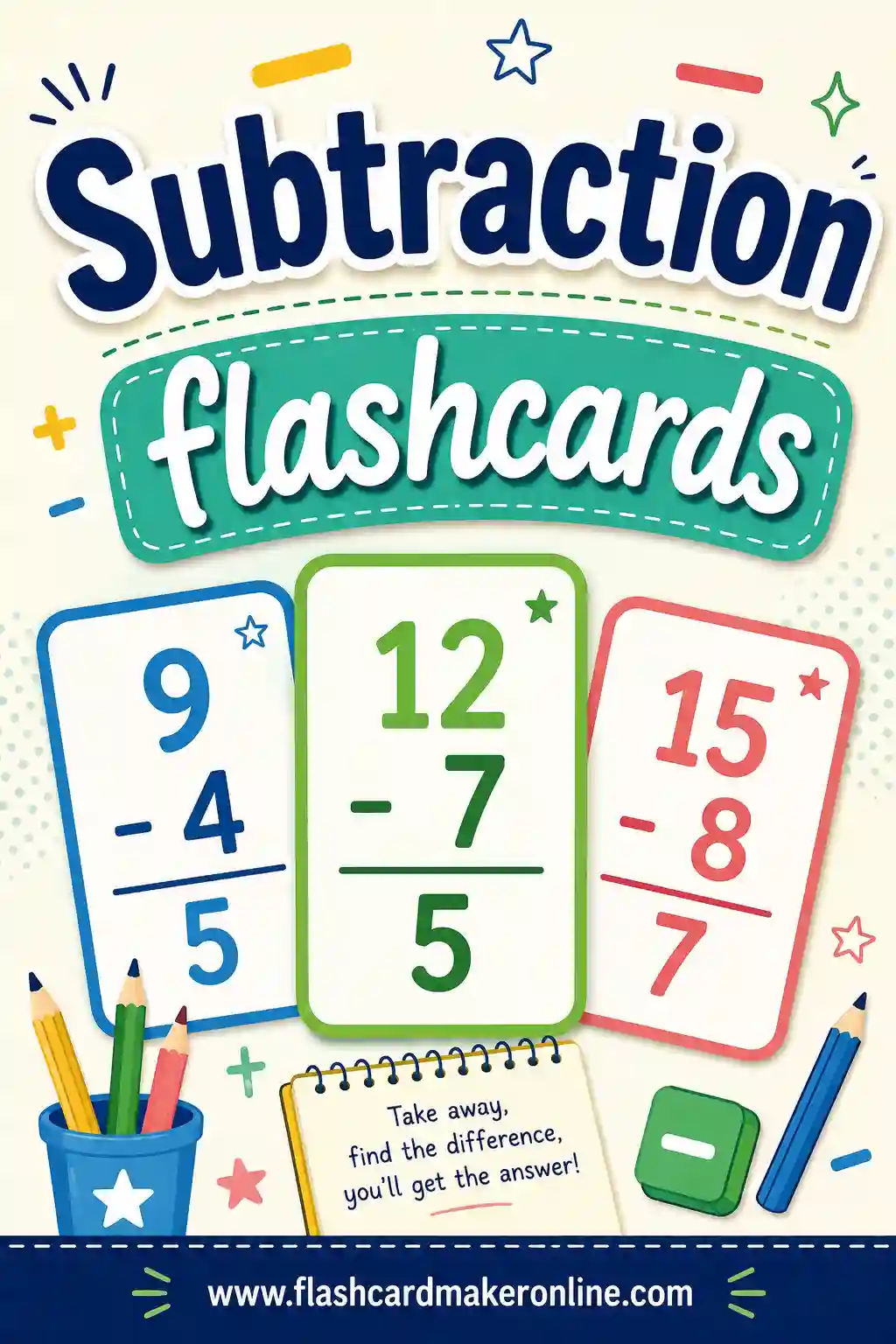
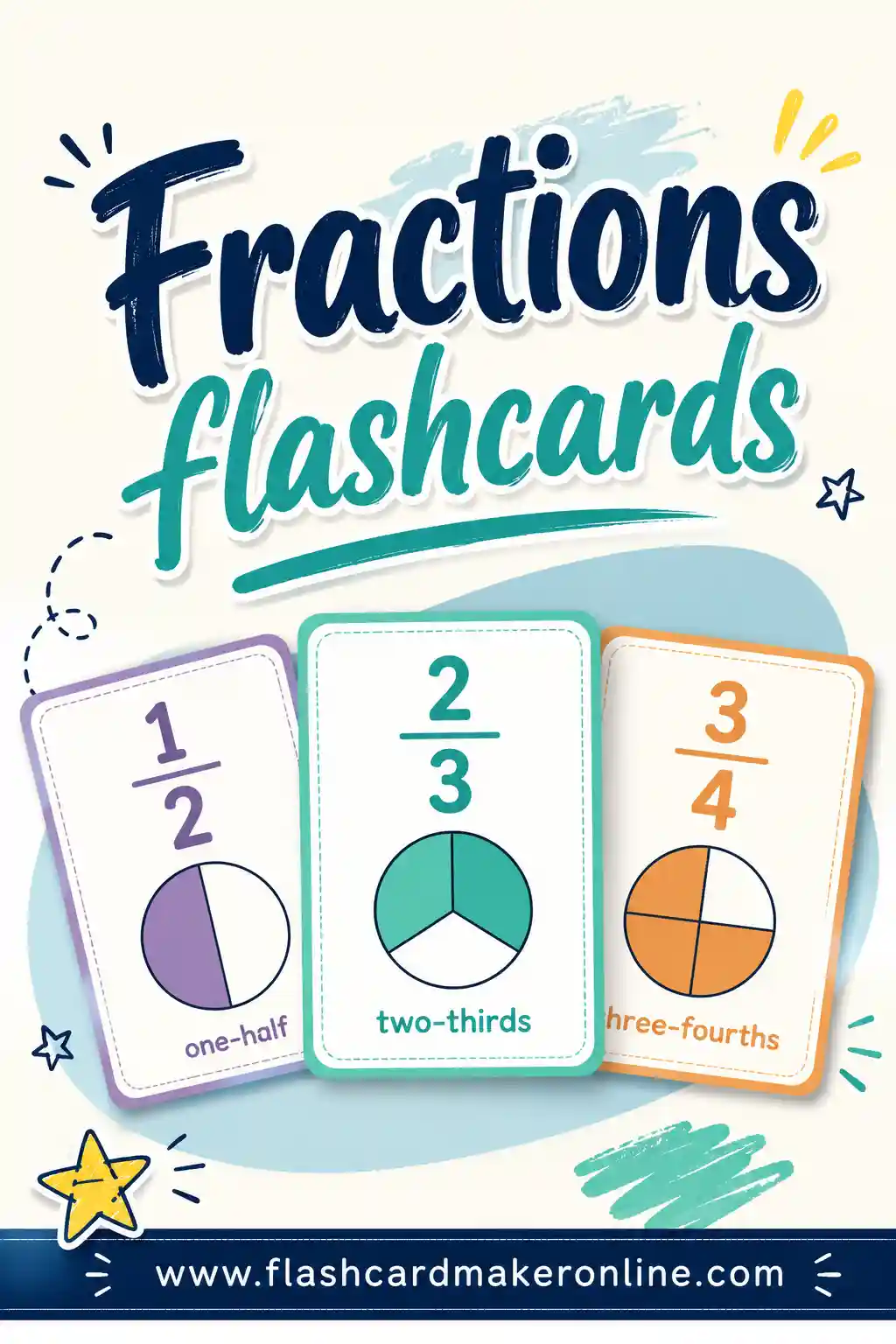
Once division clicks, round out your math practice with our times tables flashcards, subtraction flashcards, and fractions flashcards.
Frequently Asked Questions
When should kids start division flashcards?
Usually third grade, once they've got a handle on multiplication. Division leans directly on multiplication facts, so a solid grasp of the times tables makes it click much faster. If multiplication is still shaky, drill that first.
How many division flashcards at once?
Keep it to 8 to 12 cards per session for young kids. Work through one divisor at a time, master it, then add the next. A giant stack just overwhelms them.
Are these division flashcards really free to print?
Yes. You make and print them yourself at no cost. There's no sign-up and no watermark, so you can build a full set for one child or a whole class on a single free deck.
Why is division harder than multiplication?
Mostly because it runs backward. Kids have to recall "8 times what is 56?" instead of just "8 times 7." The fix is to teach division and multiplication as fact families, so children reuse facts they already know instead of memorizing new ones.
What's the best way to study flashcards effectively?
Use active recall (answer before flipping), sort cards into know-it and needs-work piles, and space practice across several days. Short daily sessions beat one long cram. Those three habits do most of the work.
Can I study without printing?
Yes. The flashcard maker lets you flip through the deck right on screen, on a phone, tablet, or computer. Great for practice on the go.
Ready to Build Your Division Flashcards?
Grab the sample deck above, open the free flashcard maker, and you'll have a stack of printable division flashcards in minutes. It's free, there's no sign-up, and you can study on screen or on paper. Lean on the fact-family trick, keep sessions short, and watch a tricky skill turn into one your child just knows.