Bass Clef Flashcards: Lines, Spaces and Ledger Notes
Bass clef flashcards help you learn the notes on the lower staff, the one most pianists read with the left hand. The lines of the bass clef, from bottom to top, are G, B, D, F, A ("Good Boys Do Fine Always"), and the spaces are A, C, E, G ("All Cows Eat Grass"). Below is a free bass clef flashcard deck with every line, space and the most common ledger lines, plus a simple plan to learn them in about two weeks.
Try the deck here. Read where the note sits, name it, then tap to check:
🃏 Quiz yourself: 16 cards from this page
Read the front, say your answer, then tap the card to check.
Make, study & print this deck → Opens the free flashcard maker with all 16 cards ready to edit or print.Bass clef notes: lines and spaces
The bass clef is also called the F clef. Its curl starts on the fourth line, and its two dots sit just above and below that same line, which is F. If you ever forget the mnemonics, find the dots and count from F.
| Position (bottom to top) | Note | Mnemonic word |
|---|---|---|
| Line 1 (bottom line) | G | Good |
| Space 1 | A | All |
| Line 2 | B | Boys |
| Space 2 | C | Cows |
| Line 3 (middle line) | D | Do |
| Space 3 | E | Eat |
| Line 4 (between the dots) | F | Fine |
| Space 4 | G | Grass |
| Line 5 (top line) | A | Always |
Read the table from the bottom up and you'll see the musical alphabet in order: G, A, B, C, D, E, F, G, A. Lines and spaces simply take turns.
Bass clef mnemonics (pick the one that sticks)
| For | Notes | Mnemonics |
|---|---|---|
| Lines | G B D F A | Good Boys Do Fine Always; Good Burritos Don't Fall Apart; Grizzly Bears Don't Fly Airplanes |
| Spaces | A C E G | All Cows Eat Grass; All Cars Eat Gas |
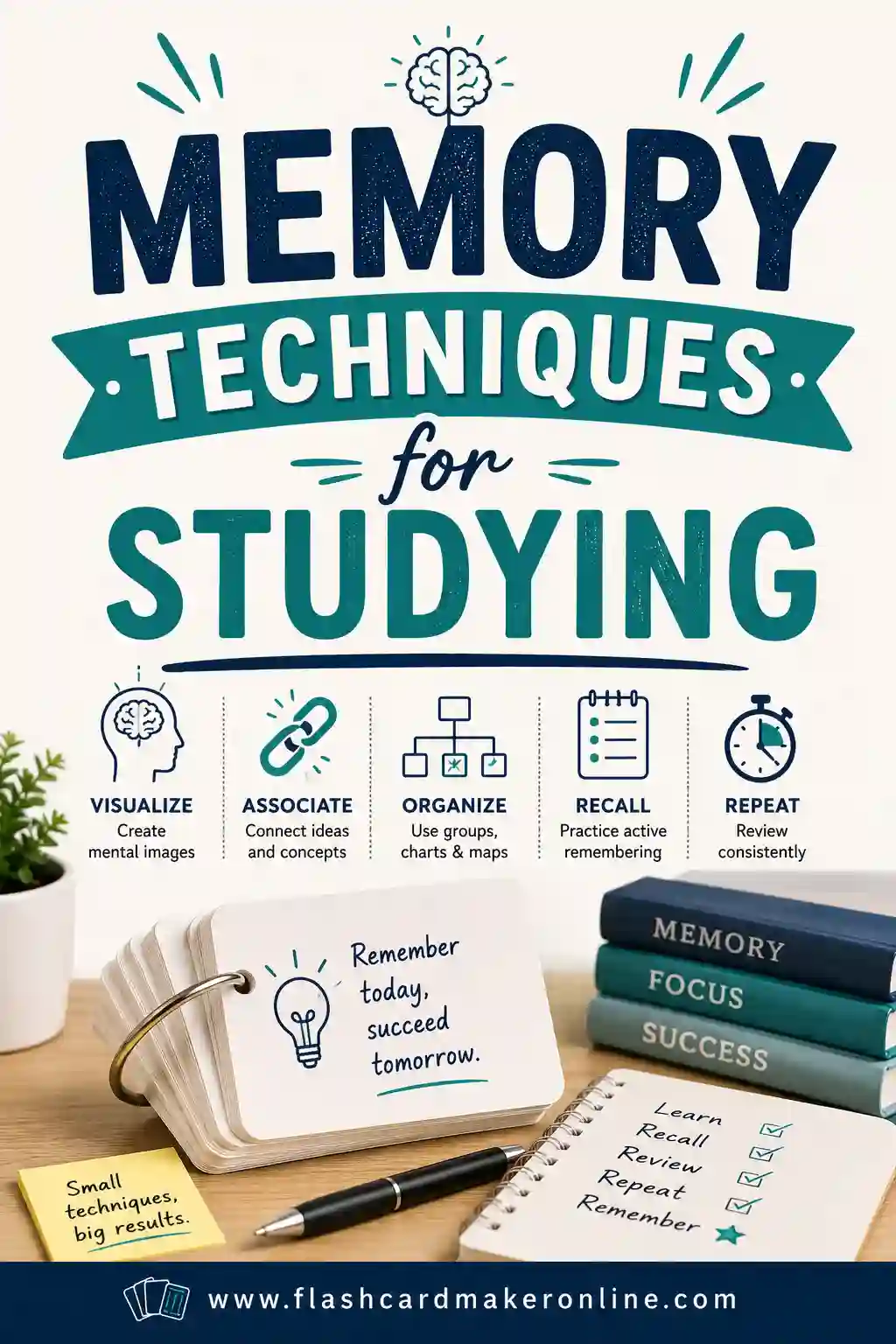
Kids often like to make up their own, and that's a great idea. A silly sentence you invented is easier to remember than one you read. Our guide to memory techniques for studying explains why that works.
Ledger lines above and below the bass staff
Ledger lines are the short extra lines for notes that go above or below the five main lines. You'll meet these early, especially middle C.
| Where | Note | Tip |
|---|---|---|
| First ledger line above | Middle C | The note between the two staffs on a piano grand staff |
| Space just above the top line | B | One step below middle C |
| Space just below the bottom line | F | One step below the bottom-line G |
| First ledger line below | E | Count down: G, F, E |
| Space below the first ledger line | D | Keep counting down |
| Second ledger line below | C | Low C, two octaves below middle C |
Here's the trick for any ledger note: start from a note you know for sure, then count up or down the musical alphabet, one line or space at a time.
How to make bass clef flashcards
You can make good bass clef note flashcards without drawing a single staff. Describe the spot in words on the front ("bass clef, second space") and put the answer on the back. That's what the deck above does. Here's how to build your own:
- Open the free flashcard maker (or use the button under the practice card).
- On each front, write the position: "Bass clef: third line."
- On each back, write the note name and its mnemonic word: "D. Good Boys Do Fine Always."
- Add a few ledger line cards once the staff notes feel easy.
- Print 4 big cards per page for young students, or 8 standard cards for older ones.
Prefer picture cards? Draw a five-line staff on the front of blank cards by hand, add one note, and print just the backs from the maker. Or add a photo of a note drawing to each card in the maker.
A two-week plan to learn the bass clef notes
| Days | Cards | Goal |
|---|---|---|
| 1 to 3 | The 5 line notes | Name each line in about 3 seconds |
| 4 to 6 | The 4 space notes | Name each space in about 3 seconds |
| 7 to 9 | Lines and spaces mixed | All 9 notes, in random order |
| 10 to 12 | Add middle C, B above, and F and E below | Use the "count from a note you know" trick |
| 13 to 14 | The whole deck, plus a page of easy music | Read real notes, not just cards |
Five minutes a day is enough. Go through the deck once, set aside any card you missed, and run those again at the end. A note you name instantly three days in a row can drop to a weekly review pile.
Who reads the bass clef?
Pianists read the bass clef for the left hand. So do players of the cello, double bass, bass guitar, bassoon, trombone, baritone and tuba, and singers with lower voices. If you're starting piano lessons, you'll learn both clefs side by side, which is why many teachers start the bass clef deck a week or two after the treble clef.
Bass clef vs treble clef flashcards
The two clefs use the same five lines, but the notes are different, and that's what trips most beginners up. Treble clef lines are E, G, B, D, F ("Every Good Boy Does Fine") and its spaces spell F-A-C-E. Middle C sits one ledger line below the treble staff and one ledger line above the bass staff.
| Treble clef | Bass clef | |
|---|---|---|
| Lines (bottom to top) | E G B D F | G B D F A |
| Spaces (bottom to top) | F A C E | A C E G |
| Middle C | First ledger line below | First ledger line above |
| Usually played by (piano) | Right hand | Left hand |
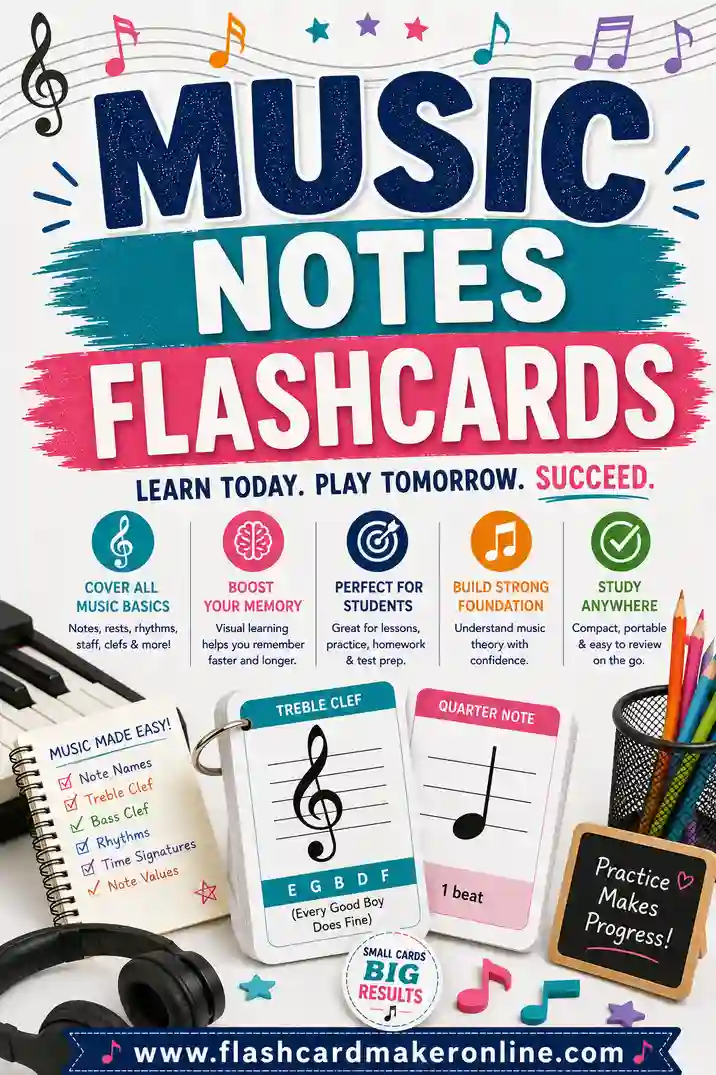
Don't try to convert one clef into the other in your head. It's faster to learn each clef as its own set of notes. Most teachers find students do best with separate decks, then a mixed deck once both feel easy. For treble clef flashcards and note values, use our music notes flashcards starter deck.
Games to play with bass clef flashcards
- Beat the clock. How many cards can you name in 30 seconds? Write the score down and beat it tomorrow.
- Find it on the piano. Draw a card, name the note, then play it on the keyboard below middle C.
- Spell a word. Use notes to spell words like CAGE, BADGE or FACE, then find each one on the bass staff.
- Teacher, student. Let the student quiz the parent. Kids love catching a grown-up's mistake.
More ideas that work with any deck are on our games using flashcards page. When you're ready, open the deck in the free flashcard maker, add your own cards, and print a set for the piano bench.
Frequently Asked Questions
What are the notes of the bass clef?
The bass clef lines, from bottom to top, are G, B, D, F and A. The spaces, from bottom to top, are A, C, E and G. Middle C sits on the first ledger line above the staff.
What is the mnemonic for bass clef notes?
For the lines (G B D F A), use Good Boys Do Fine Always. For the spaces (A C E G), use All Cows Eat Grass. Many students make up their own silly sentence, which can be even easier to remember.
Why is the bass clef called the F clef?
The bass clef marks where F is. Its curl starts on the fourth line, and its two dots sit just above and below that line, so the fourth line is F.
Where is middle C on the bass clef?
Middle C is on the first ledger line above the bass staff. On the treble clef, the same middle C sits on the first ledger line below the staff.
How long does it take to learn bass clef notes?
With about five minutes of flashcards a day, most beginners can name the nine staff notes in one to two weeks, then add ledger lines. Practicing with real music alongside the cards helps it stick.