Memory Techniques for Studying That Actually Work
The most effective memory techniques for studying are active recall (testing yourself instead of rereading), spaced repetition (reviewing at growing intervals), and mnemonics (linking new facts to images, stories, or acronyms). Used together, they help you remember far more in far less time than highlighting and rereading ever will. The fastest way to put them into practice is to turn your material into flashcards and quiz yourself.
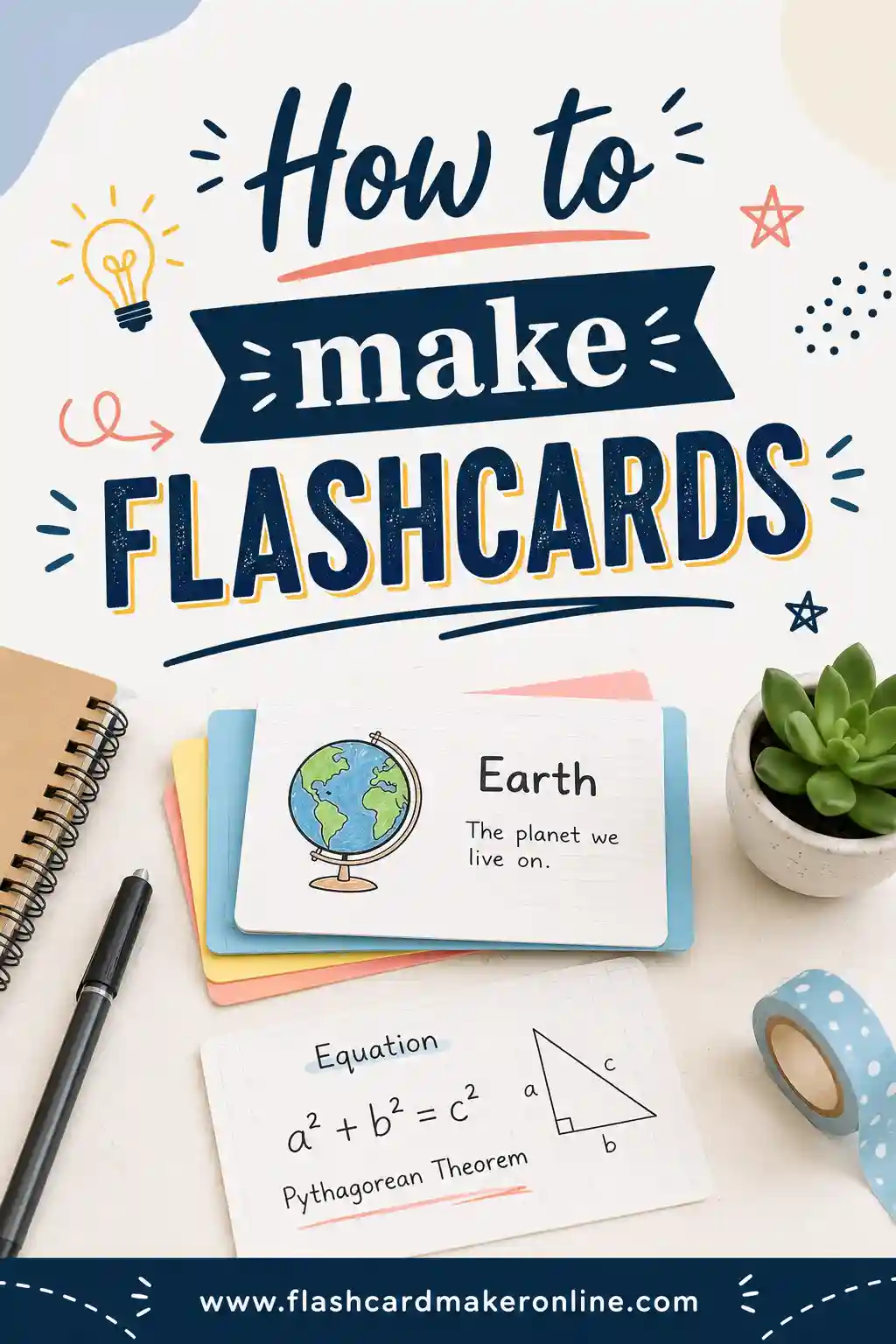
Want to start right now? Open the free flashcard maker, type in the facts you're trying to learn, and you've got a self-testing deck in minutes. No sign-up, no cost, nothing to install. Build it once, study it anywhere, and print it if you like paper.
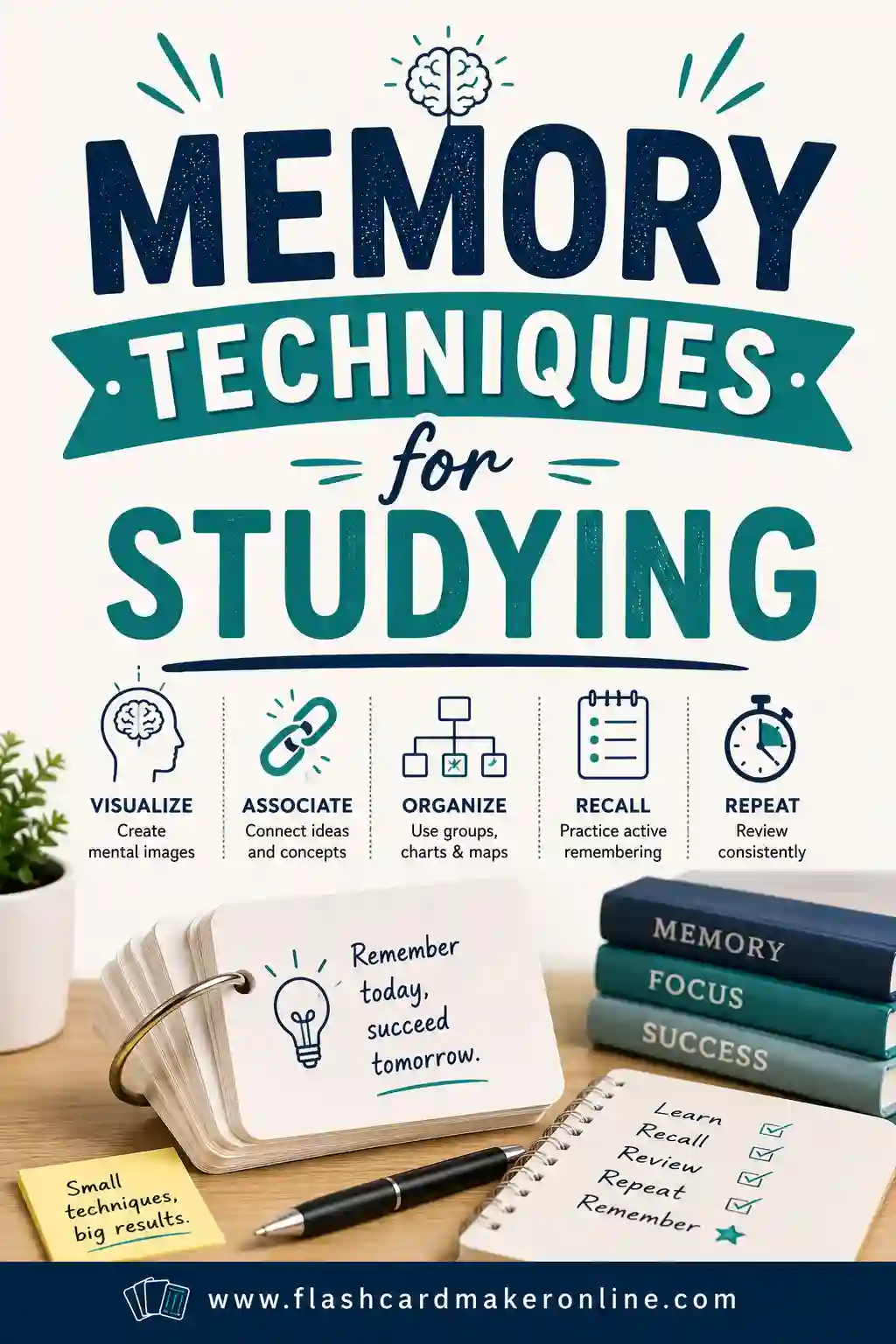
Why Rereading Feels Productive but Isn't
Here's the trap most students fall into. You read a chapter, highlight the important parts, then read it again before the test. It feels like studying. The words look familiar, so your brain says, "Got it." But familiarity isn't the same as memory.
When you reread, you recognize the material. Recognition is easy and shallow. The real test asks you to produce the answer from a blank page, and that's a totally different skill. Researchers call this the "fluency illusion": smooth, easy reading tricks you into thinking you've learned something you can't actually recall under pressure.
The fix is to make studying harder on purpose. Every technique below works because it forces your brain to do effortful retrieval, which is exactly what builds durable memory.
Active Recall: The Single Best Technique
If you only adopt one habit, make it active recall. Instead of looking at the answer, you try to pull it out of your own head first.
It works like this. You read a question, you cover the answer, and you say or write what you think it is. Then you check. That tiny moment of struggle, of reaching for the answer, is what strengthens the memory. Studies consistently show that students who test themselves remember far more than students who reread the same material for the same amount of time.
Flashcards are active recall in its purest form. The front asks, the back answers, and you never see the answer until you've tried. That's why a flashcard maker is such a natural fit for this method.
How to use active recall well
- Always guess before flipping. Even a wrong guess helps. The effort is the point.
- Say it out loud or write it. Producing the answer beats thinking "yeah, I know that."
- Close the book first. If your notes are open, you're recognizing, not recalling.
Spaced Repetition: Beat Forgetting With Timing
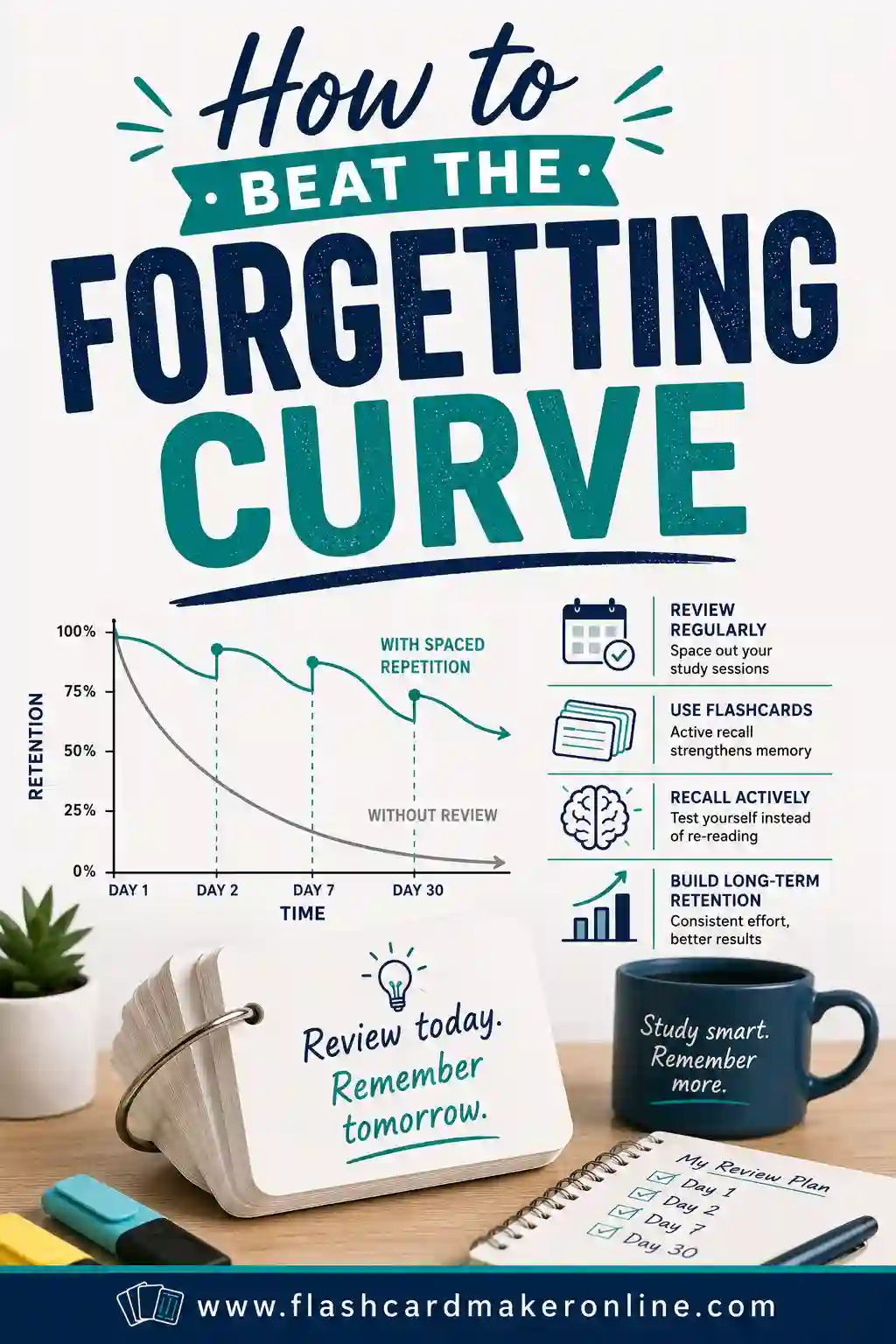
Your brain forgets on a predictable schedule. Learn something today and you'll lose most of it within a few days unless you revisit it. Spaced repetition fights that by spacing out your reviews so each one lands right as you're about to forget.
The trick is the growing gap. Review a fact after one day, then three days, then a week, then two weeks. Each successful recall pushes the memory deeper and lets you wait longer before the next review. You end up studying less overall while remembering more.
The catch is keeping track of which cards are due when. A simple system: sort your deck into piles labeled "daily," "every few days," and "weekly," and move a card to a slower pile each time you nail it. If you want the math handled for you, that's what spaced-repetition apps are built for. We go deeper on this in our guide to beating the forgetting curve.
Mnemonics: Hooks for Hard-to-Remember Facts
Some facts just won't stick on their own. That's where mnemonics come in. A mnemonic is any trick that links new information to something your brain already holds onto easily, like an image, a rhyme, or a silly phrase.
A few classic types:
- Acronyms. Take the first letter of each item and make a word. "HOMES" for the Great Lakes: Huron, Ontario, Michigan, Erie, Superior.
- Acrostics. Make a sentence where each word's first letter cues an item. "My Very Educated Mother Just Served Us Nachos" for the planets.
- The keyword method. Link a foreign word to a sound-alike image. For the Spanish pato (duck), picture a duck stuck in a pot.
- Rhymes. "Thirty days hath September…" sticks because the rhythm carries it.
Mnemonics shine for arbitrary facts: dates, lists, vocabulary, anatomy. Put the mnemonic right on the back of the flashcard so it shows up every time you review.
The Memory Palace (Method of Loci)
This one sounds fancy, but it's ancient and it works. You picture a place you know well, like your home, and you "place" facts in specific spots as you walk through it in your mind.
Need to remember a speech or a list of steps? Imagine the first item by your front door, the next on the kitchen table, the next on the couch. To recall them, you mentally stroll the route and "see" each item where you left it. Memory champions use this exact method to memorize decks of cards and pages of numbers.
It takes practice, but it's unbeatable for ordered lists and anything you have to recite in sequence.
More Techniques Worth Knowing
A few extra tools round out your kit.
| Technique | What it does | Best for |
|---|---|---|
| Chunking | Groups small bits into bigger units | Phone numbers, long codes, formulas |
| Interleaving | Mixes different topics in one session | Math problem types, similar concepts |
| Elaboration | Asks "why" and "how" to deepen meaning | Concepts, cause-and-effect material |
| Dual coding | Pairs words with images or diagrams | Anatomy, geography, processes |
| Self-explanation | You teach the idea back in your own words | Anything you almost understand |
You don't need all of these at once. Pick two or three that fit your subject and lean on them. Interleaving plus active recall, for example, is a powerhouse combo for math and science.
A Sample Study Deck You Can Copy
Here's a ready-to-use set of cards on the memory techniques themselves. Drop these into the flashcard maker and you'll have studied the article by the time you've built the deck.
| Term | Definition |
|---|---|
| Active recall | Retrieving an answer from memory instead of rereading |
| Spaced repetition | Reviewing material at increasing time intervals |
| Forgetting curve | How fast memory fades without review |
| Mnemonic | A memory aid like an acronym, rhyme, or image |
| Acronym | A word made from the first letters of a list |
| Acrostic | A sentence whose words' first letters cue items |
| Keyword method | Linking a new word to a sound-alike mental image |
| Memory palace | Placing facts along a familiar imagined route |
| Method of loci | The formal name for the memory palace technique |
| Chunking | Grouping small items into larger memorable units |
| Interleaving | Mixing topics rather than blocking them together |
| Elaboration | Explaining why and how a fact is true |
| Dual coding | Combining words with visuals to aid memory |
| Self-explanation | Teaching an idea back in your own words |
| Retrieval practice | Another name for active recall through testing |
| Fluency illusion | Mistaking easy rereading for real learning |
| Desirable difficulty | Hard study that builds stronger memory |
| Distributed practice | Spreading study across days, not cramming |
| Massed practice | Cramming everything into one long session |
| Cue | A prompt that triggers a stored memory |
That's twenty cards. Add your own subject's facts and you've got a deck tuned to exactly what you need.
How to Combine Techniques Into a Study Session
The magic happens when you stack methods. Here's a simple routine that uses several at once.
- Turn your notes into flashcards. Writing the cards is itself a form of elaboration. One fact or question per card.
- Run an active-recall pass. Guess every answer before flipping. Sort cards into "knew it" and "missed it."
- Space your reviews. Study the "missed it" pile again tomorrow, the "knew it" pile in a few days.
- Add mnemonics to stubborn cards. Any card you keep missing gets a hook on the back.
- Interleave your subjects. Mix two or three decks so your brain has to switch gears, just like a real exam.
Twenty focused minutes of this beats two hours of rereading. Genuinely.
Common Mistakes to Avoid
- Studying with the answers visible. That's recognition, not recall. Cover them.
- Cramming the night before. One huge session can't beat the forgetting curve. Start early and space it out.
- Making cards too dense. A card crammed with a whole paragraph is impossible to recall. Keep it to one idea.
- Never updating your deck. Drop cards you've truly mastered and add new weak spots so your study time goes where it counts.
- Skipping the hard cards. The cards you dread are the ones doing the most for your grade.
Frequently Asked Questions
What is the most effective memory technique for studying?
Active recall — testing yourself from memory — is the single most effective technique in study after study. Pair it with spaced repetition (reviewing at growing intervals) and you have the strongest combo known for long-term memory. Flashcards are the easiest way to do both at once.
How is spaced repetition different from cramming?
Cramming packs all your study into one session, which the forgetting curve quickly erases. Spaced repetition spreads short reviews across days and weeks, catching each fact just before you forget it. You spend less total time and remember far more.
Do mnemonics actually work or are they a gimmick?
They genuinely work, especially for arbitrary facts like dates, lists, and vocabulary. By linking new information to something memorable, mnemonics give your brain an easy hook to grab. Memory champions rely on them, so they're far from a gimmick.
How many flashcards should I study in one session?
Quality beats quantity. Most people do best with 20 to 40 cards in a focused 20-minute block, guessing every answer before flipping. Sort them into "knew it" and "missed it," then review the misses again sooner.
Can I use these memory techniques for any subject?
Yes. Active recall, spaced repetition, and elaboration work for languages, science, history, law, medicine, and more. Mnemonics and the memory palace are especially handy for lists and sequences. Build a deck for your subject and the same methods apply.
How long until these techniques pay off?
You'll feel the difference in your first study session, because guessing answers exposes exactly what you don't know yet. The bigger payoff — remembering material weeks later — shows up once you've done a few spaced reviews. Stick with it for a week and the gains are obvious.
Start Studying Smarter Today
The best memory techniques for studying aren't complicated: test yourself, space it out, and hook hard facts to something memorable. The fastest way to put them to work is to open the free flashcard maker, build a deck from your own notes, and start quizzing yourself. It's free, there's no sign-up, and you can print your cards or study them on any device.
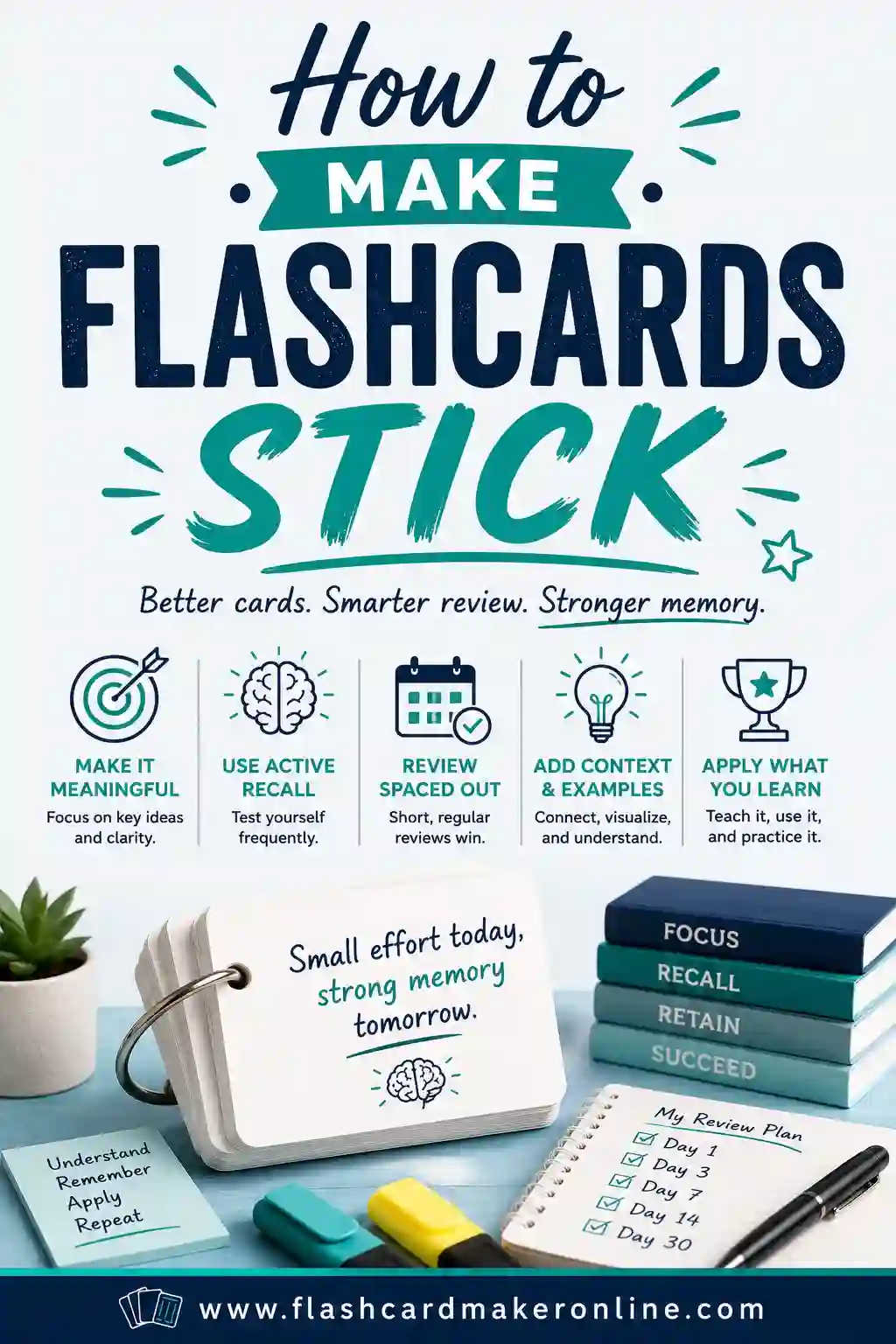
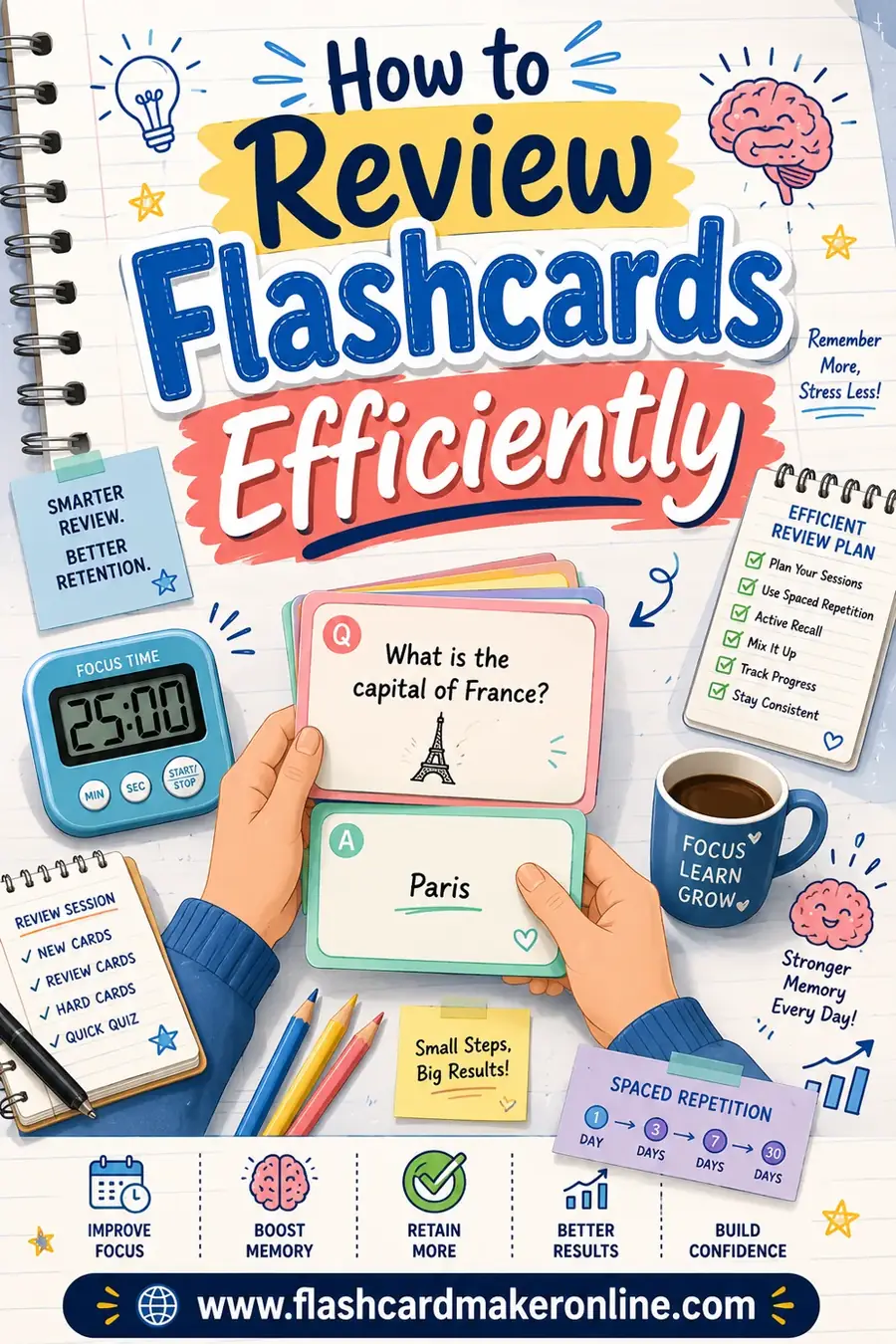
Want to go deeper? Learn how to make flashcards stick, how to review flashcards efficiently, and how to beat the forgetting curve. Your future self, sitting calmly in the exam room, will thank you.