How to Make Flashcards Stick: 9 Rules That Work
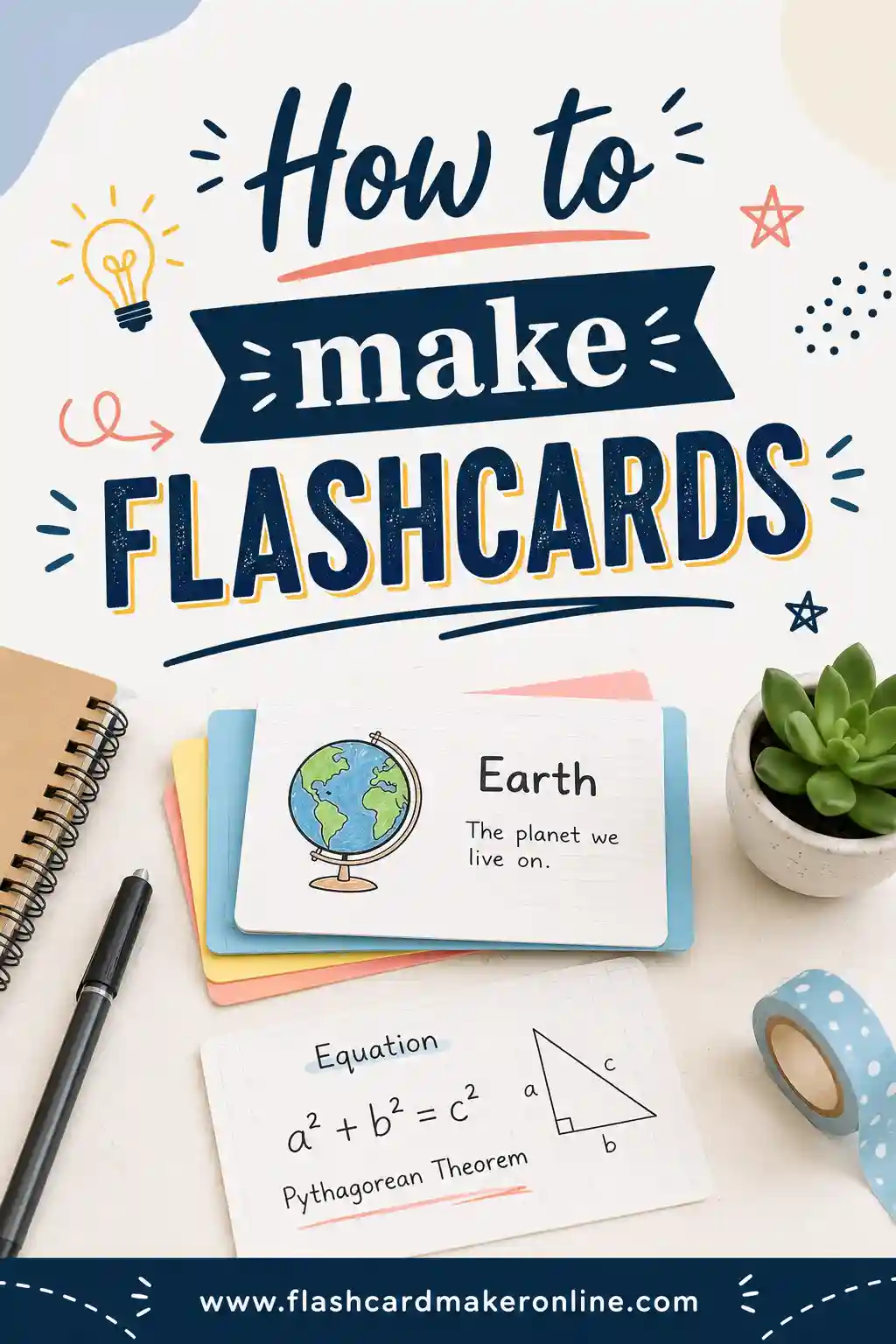
To make flashcards stick, keep each card to a single idea, write the question in your own words, add an image or example when you can, and always test yourself before flipping. The cards that stick are short, clear, and active — not paragraphs you reread. Combine well-built cards with spaced repetition and the facts move into long-term memory.
Want to build cards the right way from the start? Open the free flashcard maker, type in your terms and definitions, and you'll have a clean, testable deck in minutes. It's free, no sign-up, and you can study online or print the cards for offline review.
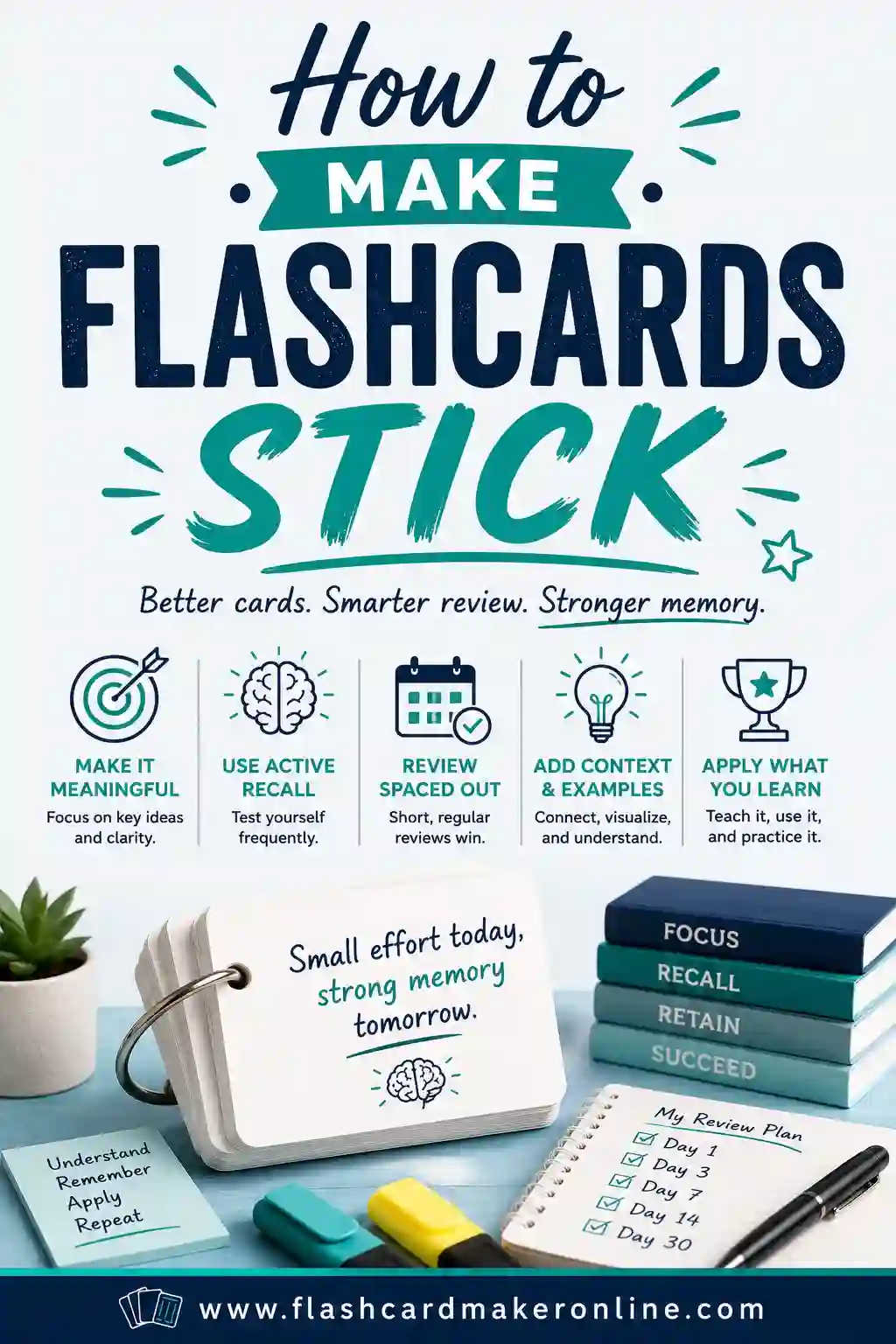
Why Most Flashcards Don't Stick
Plenty of people make flashcards and still bomb the test. The problem usually isn't the method — it's the cards. A badly built card teaches you almost nothing, no matter how many times you review it.
The most common failure is the overstuffed card: a front that asks a vague question and a back crammed with a whole paragraph. Your brain can't recall a paragraph cleanly, so you end up "sort of" knowing it, which is the same as not knowing it under exam pressure.
The second failure is passive review. You flip through the deck, glance at each answer, nod, and move on. That's recognition, not recall, and recognition fades fast. The rules below fix both problems.
Rule 1: One Idea Per Card
This is the most important rule, so it goes first. Each card should test exactly one fact, one definition, or one connection. Nothing more.
Why? Because recall is all-or-nothing. If a card asks for five things and you remember four, what do you score yourself? With one idea per card, the answer is obvious: you knew it or you didn't. That clarity is what lets spaced repetition work — you can sort cards cleanly into "got it" and "missed it."
If you've got a meaty topic, break it into several cards. "The causes of World War I" becomes one card per cause. More cards, but each one actually sticks.
Rule 2: Write the Question in Your Own Words
Copying a definition straight from the textbook feels efficient, but it's a missed opportunity. When you rephrase a fact in your own words, you're forced to actually understand it first. That act of rewriting is itself a powerful study step.
It also makes the card easier to recall later, because the wording matches how you think, not how the textbook author thinks. Your own phrasing is a better cue for your own memory.
So before you type a card, ask: "How would I explain this to a friend?" Then write that. The card will be clearer and the memory deeper.
Rule 3: Phrase the Front as a Question
A card front that says "Photosynthesis" is vague. A front that asks "What is photosynthesis and where does it happen?" pulls a specific answer out of you. Questions trigger retrieval; single words just sit there.
This small change turns every card into a mini-quiz, which is exactly what you want. The more your cards feel like test questions, the better they prepare you for the real thing.
Rule 4: Add an Image or Example
Memory loves pictures. Pairing a fact with an image gives your brain a second route to the answer — words and visuals, what researchers call dual coding. If you can't add a picture, add a concrete example instead.
- Abstract concept? Add an example. "Irony" sticks better with a one-line example beside it.
- Anything visual? Add the image. Anatomy, geography, art, and chemistry cards all benefit hugely.
- A process? Add a tiny diagram or numbered steps on the back.
The example doesn't have to be fancy. Even a quick mental image you describe in a few words gives the memory something to grab.
Rule 5: Make Cards Two-Way When It Helps
For vocabulary and term-definition pairs, test both directions. One card asks "What does ephemeral mean?" and a sibling card asks "What word means lasting a very short time?" Learning a fact one direction doesn't guarantee you can recall it the other way, especially for languages.
A good flashcard maker lets you flip terms and definitions so you can drill both ways without retyping everything.
Rule 6: Always Test Before You Flip
You can build perfect cards and still waste them if you review passively. The rule is simple and non-negotiable: read the front, produce the answer out loud or in writing, then flip to check.
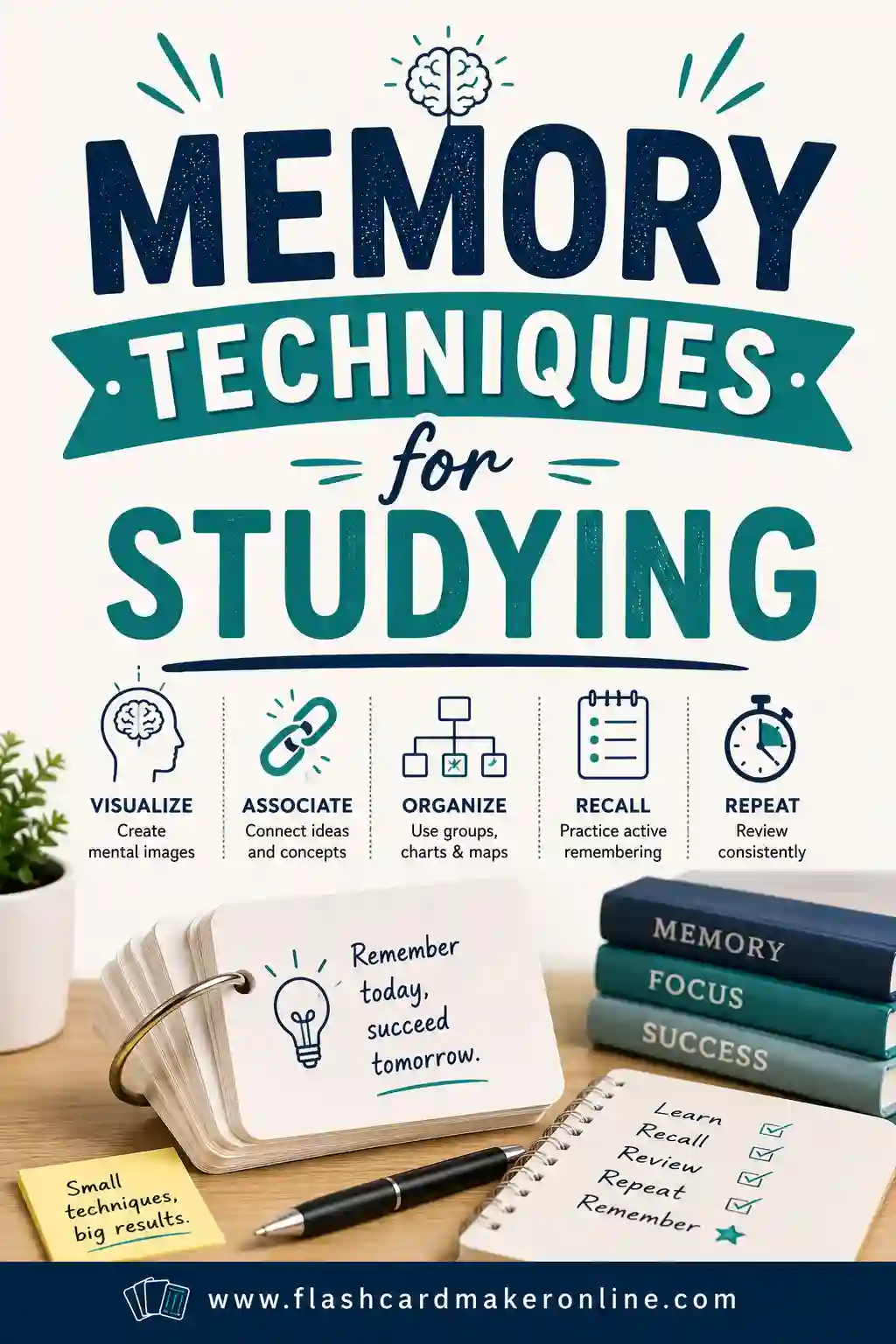
That moment of effort — reaching for the answer before you see it — is what burns the fact into memory. Skipping it turns studying into skimming. We dig into the science behind this in our memory techniques for studying guide.
Rule 7: Space Out Your Reviews
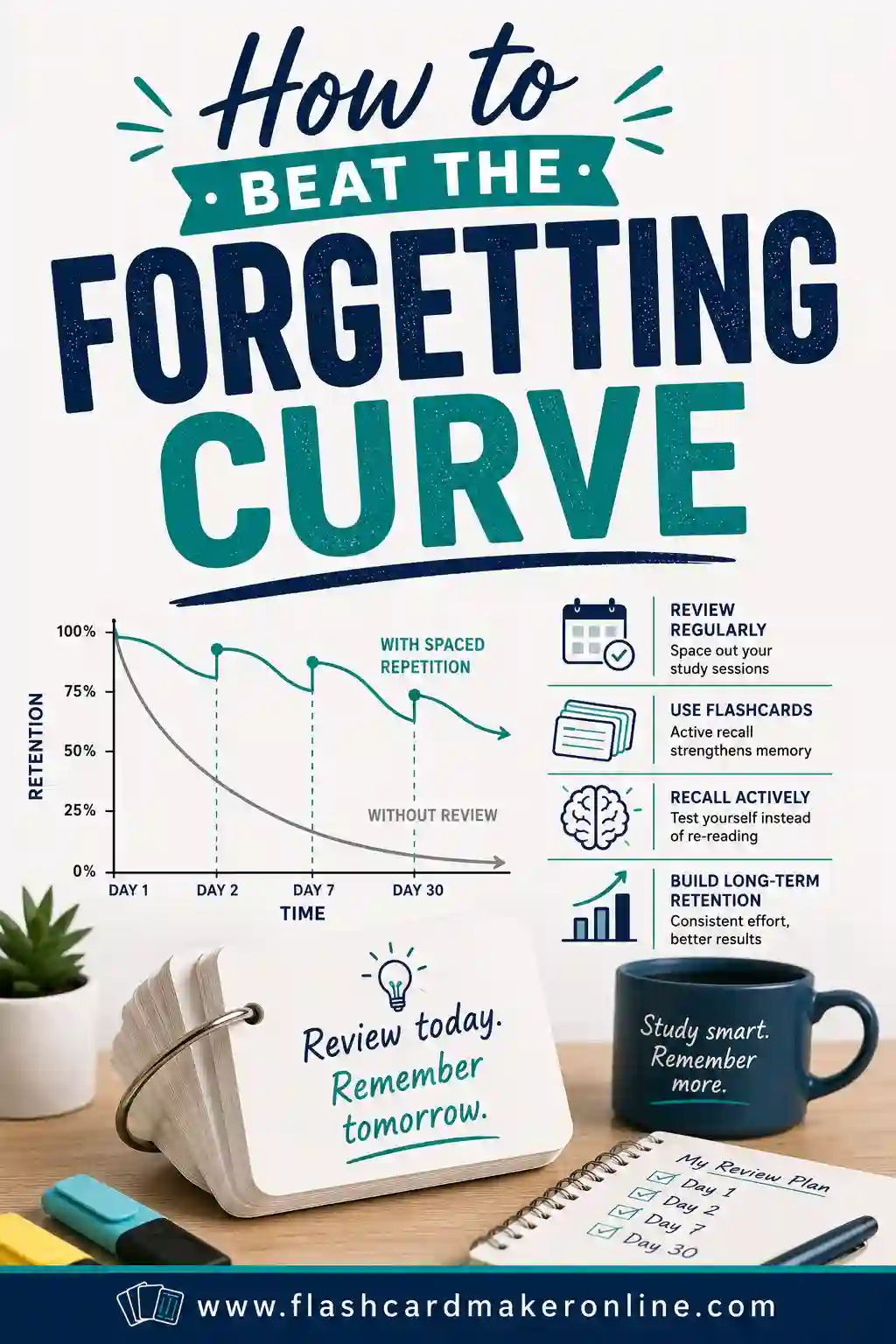
Even great cards fade if you review them once and stop. Memory follows the forgetting curve: learn something today, lose most of it within days unless you revisit it.
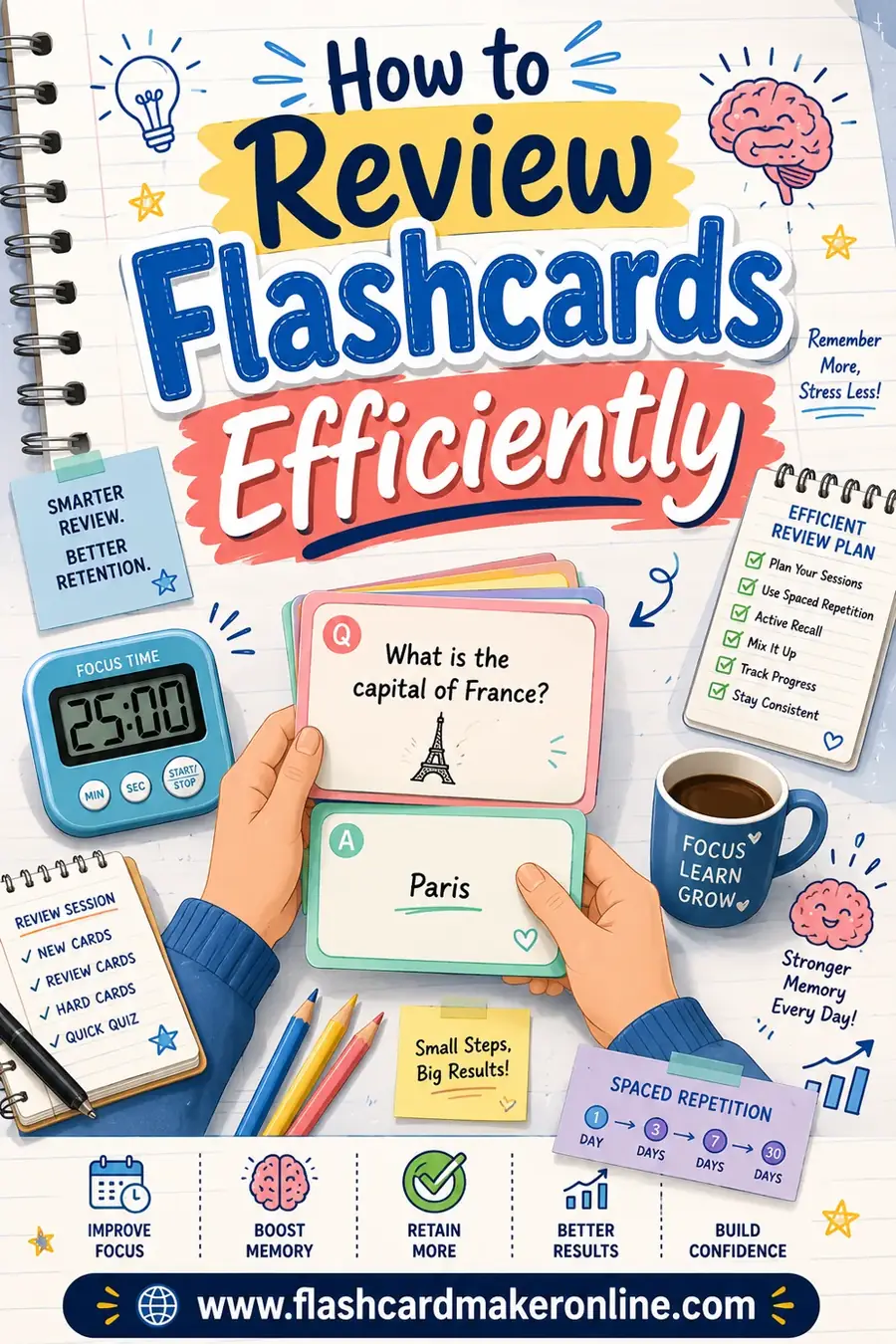
The fix is spaced repetition — reviewing each card at growing intervals: a day later, then a few days, then a week, then a month. Cards you nail get spaced further apart; cards you miss come back sooner. This is how you turn a study session into lasting memory. Our guide on how to beat the forgetting curve walks through a full schedule.
Rule 8: Keep Cards Short and Clean
A card you can read at a glance is a card you'll actually study. Long fronts and cluttered backs make you skip cards or recall them sloppily.
- Trim the front to the essential question.
- Trim the back to the essential answer, plus one image or example.
- Cut filler words. "What is the function of the mitochondria?" beats "Can you please describe in detail what the function of the mitochondria is?"
Clean cards are faster to review, which means you review more often, which means they stick.
Rule 9: Prune and Update Your Deck
A deck isn't done when you build it. As you study, some cards become automatic — retire them so they stop eating your review time. Other cards keep tripping you up — flag them, add a mnemonic, or split them into smaller pieces.
A living deck that grows with your weak spots is far more powerful than a frozen stack you made once and never touched again.
A Sample Deck Built the Right Way
Here's a model deck on flashcard best practices — short fronts, clean answers, one idea each. Copy it into the flashcard maker to see the rules in action.
| Term | Definition |
|---|---|
| One idea per card | Each card tests a single fact for clean recall |
| Own words | Rewriting the answer forces real understanding |
| Question front | Phrasing the front as a question triggers retrieval |
| Dual coding | Pairing words with an image to aid memory |
| Two-way card | Testing a term and definition in both directions |
| Active recall | Producing the answer from memory before flipping |
| Spaced repetition | Reviewing at growing intervals to fight forgetting |
| Leitner box | A paper system of piles for spaced review |
| Mnemonic | A memory hook like an acronym, rhyme, or image |
| Cue | The prompt on the front that triggers recall |
| Overstuffed card | A card with too much info to recall cleanly |
| Recognition | Knowing an answer when you see it, not from memory |
| Retrieval practice | Another name for testing yourself to learn |
| Pruning | Retiring mastered cards from the deck |
| Example card | A card that anchors an abstract idea with a case |
| Diagram card | A card whose back uses a small picture or steps |
| Forgetting curve | How memory fades without timely review |
| Interleaving | Mixing topics in one study session |
| Elaboration | Explaining why a fact is true to deepen it |
| Confidence rating | Marking how sure you were to guide spacing |
Twenty clean cards — every one of them follows the rules above.
How These Rules Work Together
Each rule helps, but the magic is in stacking them. Picture a single great card: it tests one idea, phrased as a question, in your own words, with an image on the back. Now you review it with active recall on a spaced schedule, and prune it once it's automatic.
That card is almost impossible to forget. Build a whole deck that way and you've turned flashcards from busywork into one of the most efficient study tools that exists.
Frequently Asked Questions
Why do my flashcards not stick?
Usually because the cards are overstuffed or you review them passively. Cram a paragraph onto one card and you can't recall it cleanly; flip through without guessing and you're recognizing, not remembering. Fix both — one idea per card, and always test before flipping — and they'll stick.
How much should I put on one flashcard?
One idea, full stop. A single fact, definition, or connection per card. If a topic has multiple parts, split it into several cards. This keeps recall clean and lets you sort cards accurately into "knew it" and "missed it."
Should I copy definitions word-for-word from my book?
It's better to rewrite them in your own words. Rephrasing forces you to understand the idea before you can write it, and your own wording is an easier cue for your own memory. Copying is faster but teaches you much less.
Do images really help flashcards stick?
Yes. Pairing a fact with a picture gives your brain two paths to the answer — words and visuals — which researchers call dual coding. Images are especially powerful for anatomy, geography, languages, and anything you can picture. When an image won't fit, a concrete example does a similar job.
How often should I review my flashcards?
Use spaced repetition: review a card a day after learning it, then a few days later, then a week, then a month, stretching the gap each time you recall it correctly. Cards you miss come back sooner. This schedule fights the forgetting curve far better than reviewing everything daily.
Is it better to make my own cards or use pre-made ones?
Making your own is usually better, because writing the cards is itself a study step that builds understanding. Pre-made decks save time but skip that benefit and may not match how you think. If you use a pre-made deck, rephrase the cards that don't click.
Build Flashcards That Actually Stick
Sticky flashcards aren't magic — they're well built. One idea per card, your own words, a question on the front, an image or example on the back, and active recall on a spaced schedule. Follow those rules and your facts will be there when you need them.
Ready to put them into practice? Open the free flashcard maker and build your first proper deck. Then keep sharpening with our guides to memory techniques for studying, how to review flashcards efficiently, and how to beat the forgetting curve.