How to Review Flashcards Efficiently (Less Time, More Recall)
To review flashcards efficiently, test yourself from memory before flipping each card, sort cards into "knew it" and "missed it," and space your reviews so easy cards come up less often and hard ones come up more. Short, focused sessions beat long marathons, and quizzing beats rereading every time. Done right, you remember more in a fraction of the time.
Want a deck that's built for fast, smart review? Open the free flashcard maker, add your terms, and start quizzing yourself in minutes. It's free, no sign-up, and you can review online or print your cards for study anywhere.
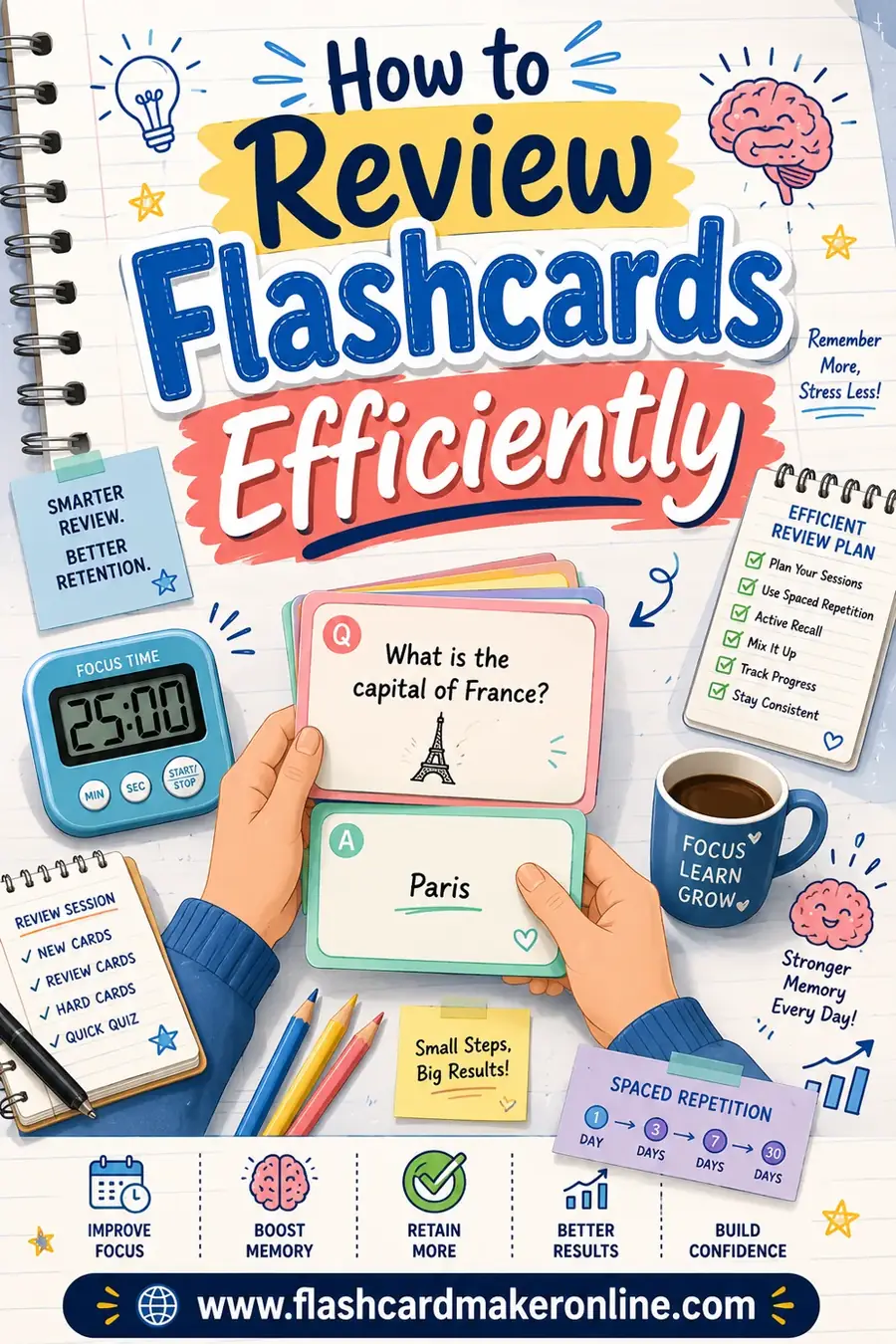
What "Efficient" Really Means
Efficient review isn't about flipping through cards as fast as possible. It's about getting the most lasting memory out of every minute you spend. A slow, thoughtful guess that strengthens a memory beats ten quick glances that don't.
Two things waste the most time in flashcard study. First, reviewing cards you already know cold — that's effort spent where it isn't needed. Second, reviewing passively, just reading answers without trying to recall them — that's effort that doesn't stick. Efficient review fixes both: it sends your time to the cards that need it and makes every review an act of recall.
The techniques below all serve those two goals. Master them and your study time shrinks while your scores climb.
Always Guess Before You Flip
This is the foundation. The single biggest efficiency gain is to test yourself on every card before you see the answer.
Here's why it matters so much. When you read the front and reach for the answer, you're doing active recall, which is the act that actually builds memory. When you flip first and just read the back, you're doing nothing — that card review was wasted. Same time spent, wildly different results.
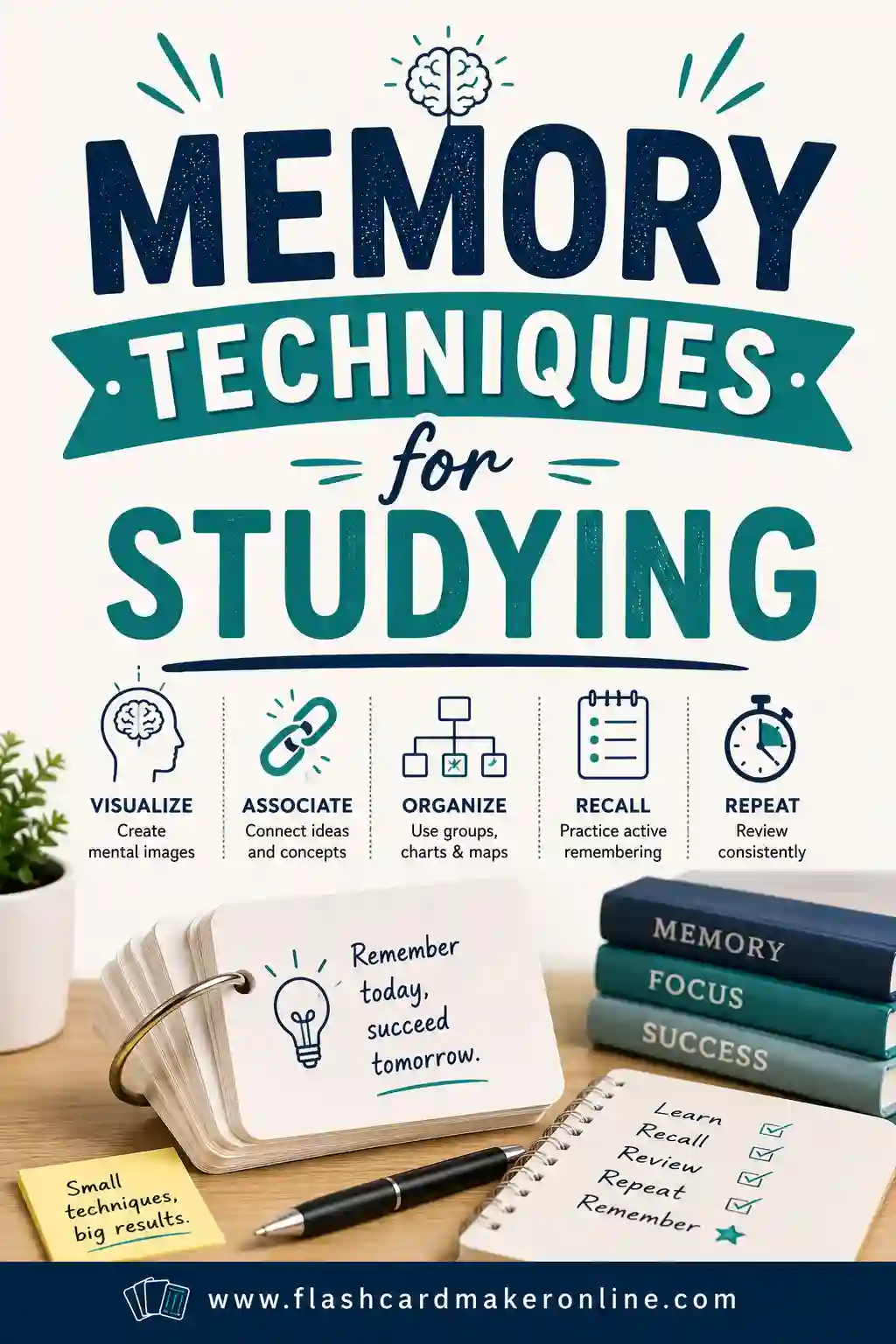
So make it a hard rule: front, guess out loud or in your head, then flip. Even a wrong guess helps, because seeing the correct answer right after your attempt teaches your brain far more than reading it cold. This is the core idea behind all the memory techniques for studying.
Sort Cards as You Review
Don't treat every card the same. As you go, split your deck into two piles:
- Knew it. You produced the answer cleanly and quickly. This card needs less attention.
- Missed it. You blanked, hesitated, or got it wrong. This card needs more.
Now you've turned a flat deck into a map of exactly where your gaps are. Your next session focuses on the "missed it" pile, while the "knew it" pile gets reviewed less often. That's efficiency in one simple move — you stop wasting time on what you already know.
Be honest in your sorting. If you peeked, half-knew it, or took ages, it's a miss. Honest sorting now means real memory later.
Space Your Reviews
Sorting tells you which cards need work. Spacing tells you when to review them. Together they're the heart of efficient flashcard study.
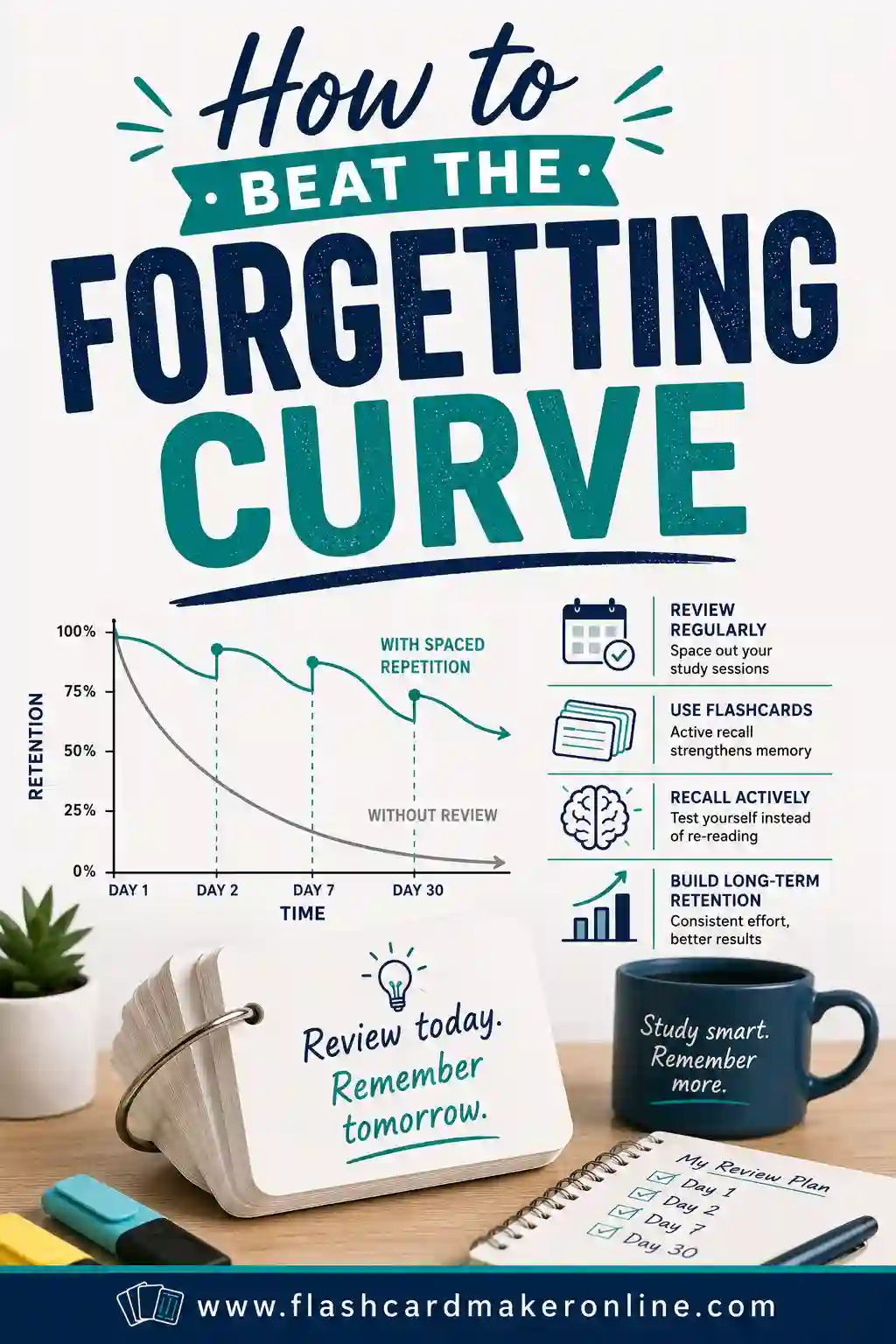
Memory follows the forgetting curve — you lose new material fast unless you revisit it. Spaced repetition fights this by reviewing each card right before you'd forget it. Easy cards get pushed further apart (a week, two weeks, a month). Hard cards come back sooner (tomorrow, or even later today).
| Card type | Review frequency | Why |
|---|---|---|
| Brand new | Same day + next day | Memory is fragile and fades fastest now |
| Recently missed | Every 1–2 days | Needs repetition to stabilize |
| Getting solid | Every 4–7 days | Stretch the gap to test durability |
| Well known | Every 2–4 weeks | Light upkeep is all it needs |
| Mastered | Retire or rare check | Time is better spent elsewhere |
This is why reviewing your entire deck every single day is inefficient — you spend most of the session on cards you already own. Let mastered cards space out, and pour the saved time into your weak spots. Our forgetting-curve guide lays out a full schedule.
Keep Sessions Short and Focused
Long study marathons feel virtuous but they're not efficient. Attention fades, cards blur together, and the last half-hour barely sticks. Short, focused blocks win.
- Aim for 15–25 minutes. Long enough to get into it, short enough to stay sharp.
- Do a couple of blocks rather than one long one. Two 20-minute sessions beat one 40-minute slog.
- Kill distractions. Phone away, one deck at a time. Five focused minutes beats twenty distracted ones.
- Stop while it's still working. Ending on a good note keeps you coming back tomorrow, which matters more than any single long session.
Consistency is the real secret. A little every day, spaced out, crushes occasional cramming.
Shuffle the Order
If you always review cards in the same order, your brain starts memorizing the sequence instead of the answers. You recall "the next card is photosynthesis" because of where it falls, not because you actually know it.
Shuffle the deck each session so the order is unpredictable. A good flashcard maker shuffles automatically, but if you're using paper, give the stack a mix before each round. This forces genuine recall every time and surfaces the cards you only "knew" thanks to their position.
Rate Your Confidence
Add one quick step: after each card, note how sure you were. A simple three-level scale works:
- Easy — instant, confident. Space it way out.
- Okay — got it but had to think. Review in a few days.
- Hard — blanked or guessed wrong. Review soon.
This fine-tunes your spacing beyond a simple knew-it/missed-it split. The cards you barely scraped get the attention they actually need, instead of being lumped in with the ones you nailed. It's a small habit that sharpens every session.
A Sample Review Deck
Here's a deck on efficient review itself — quiz yourself on the very techniques you're learning. Drop it into the flashcard maker and practice the method on the method.
| Term | Definition |
|---|---|
| Active recall | Guessing the answer from memory before flipping |
| Spaced repetition | Reviewing hard cards more often than easy ones |
| Forgetting curve | How fast memory fades without timely review |
| Sorting | Splitting cards into knew-it and missed-it piles |
| Confidence rating | Marking how sure you were to guide spacing |
| Leitner system | Box-based piles reviewed on different schedules |
| Shuffle | Mixing card order so you learn answers, not sequence |
| Focused session | A short 15–25 minute block of distracted-free study |
| Massed practice | Cramming everything into one long session |
| Distributed practice | Spreading reviews across many days |
| Retrieval practice | Another name for testing yourself to learn |
| Recognition | Knowing an answer on sight, not from memory |
| Retire | Removing a fully mastered card from rotation |
| Due card | A card the schedule says it's time to review |
| Honest sorting | Counting hesitations and peeks as misses |
| Interleaving | Mixing topics or decks in one session |
| Overlearning | Reviewing past the point of first mastery |
| Cue | The front prompt that triggers recall |
| Lag effect | The boost from longer gaps between reviews |
| Consistency | Short daily study that beats occasional cramming |
Twenty cards on reviewing well — efficient review, applied to itself.
Putting It All Together: A 20-Minute Routine
Here's how the pieces fit into one tight session.
- Pull only the due cards. Don't review the whole deck — just the cards the schedule calls up. This alone saves huge time.
- Shuffle them. Mix the order so you can't lean on sequence.
- Guess every card before flipping. Out loud or in writing. No peeking.
- Sort as you go. Knew it on one side, missed it on the other.
- Rate the tricky ones. Mark easy, okay, or hard to fine-tune next time.
- Reschedule. Push the easy cards out, bring the hard ones back sooner. Then stop while you're still sharp.
Run that routine daily and you'll review less, remember more, and walk into exams genuinely prepared.
Common Efficiency Mistakes
- Reviewing the whole deck every day. Most of it you already know. Review only what's due.
- Flipping before you guess. That's the biggest time-waster of all. Always recall first.
- Same order every time. You memorize position, not content. Shuffle.
- Marathon sessions. Attention fades and late cards don't stick. Keep blocks short.
- Dishonest sorting. Counting near-misses as wins leaves real gaps. Be strict with yourself.
Frequently Asked Questions
How long should a flashcard review session be?
Aim for 15 to 25 focused minutes. That's long enough to get into a rhythm but short enough to stay sharp. Two shorter sessions in a day usually beat one long one, and daily short reviews crush occasional marathons.
Should I review my whole deck every day?
No — that's inefficient because most cards you already know. Review only the cards that are "due" under a spaced schedule: hard cards often, easy cards rarely. This pours your time into weak spots instead of restudying what you've mastered.
What's the most efficient way to use flashcards?
Guess every answer from memory before flipping, sort cards into knew-it and missed-it piles, and space your reviews so hard cards come up more often than easy ones. Add a shuffle each session so you learn answers, not the order. That combination gives the most recall per minute.
Why should I shuffle my flashcards?
If the order never changes, you start recalling cards by their position instead of actually knowing the answers. Shuffling forces genuine recall every time and reveals cards you only "knew" because of where they sat. Most flashcard apps shuffle automatically.
Is it better to review out loud or silently?
Saying or writing the answer is more effective than just thinking "yeah, I know it." Producing the answer out loud is a fuller act of recall and exposes fuzzy memories you might otherwise wave past. When you can't speak aloud, at least form the full answer in your head before flipping.
How do I know when to stop reviewing a card?
Once you can recall a card instantly and confidently across several spaced sessions, it's mastered — retire it or check it only rarely. Holding onto fully known cards just wastes review time that your weaker cards need more.
Review Smarter, Starting Now
Efficient flashcard review comes down to a few habits: guess before you flip, sort as you go, space your reviews, keep sessions short, and shuffle the deck. Do that, and you'll spend less time studying while remembering far more.
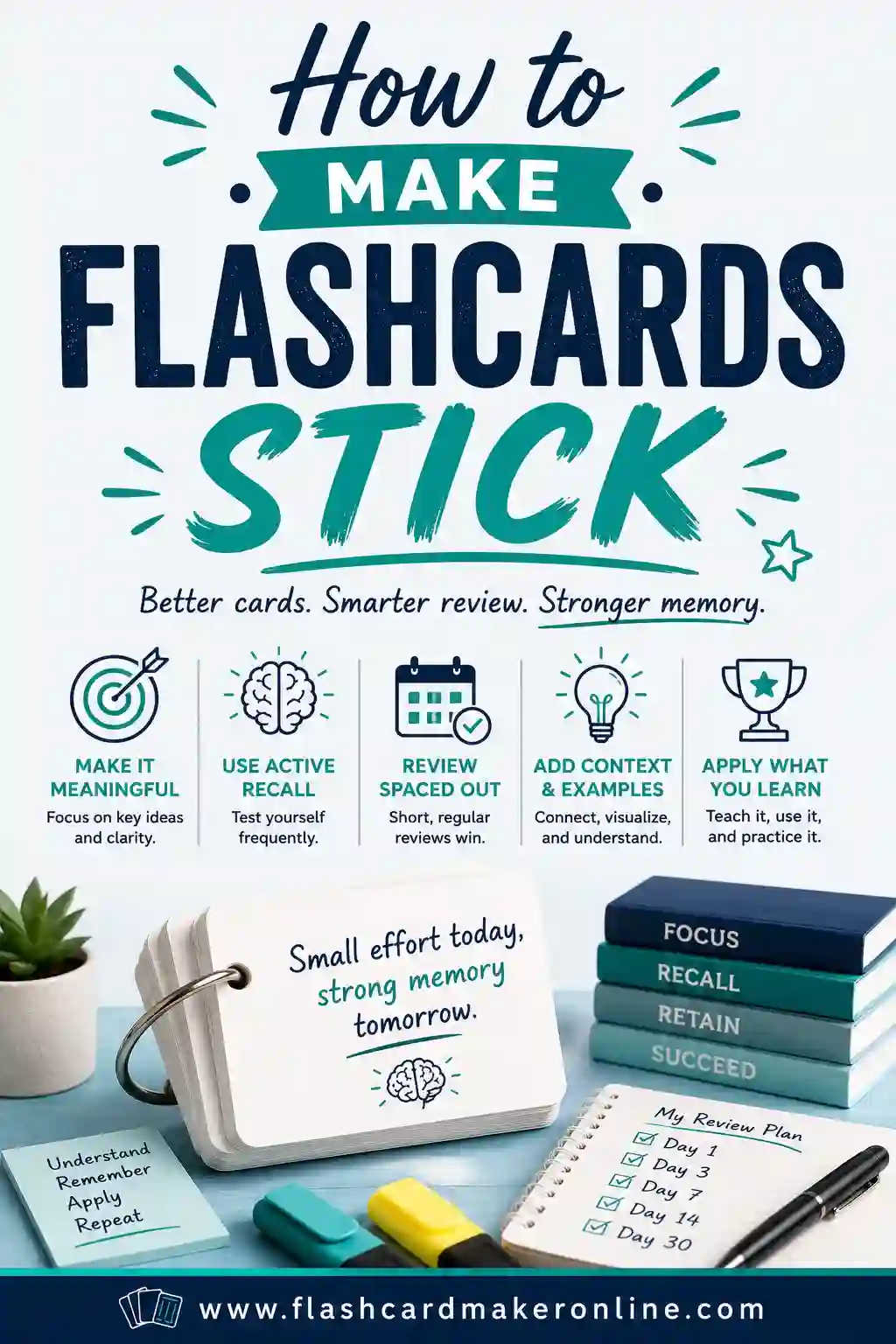
Ready to try it? Open the free flashcard maker, build a deck, and run the 20-minute routine above. Then keep leveling up with our guides to memory techniques for studying, how to make flashcards stick, and how to beat the forgetting curve.