Christmas Vocabulary in Spanish: Flashcards with Pronunciation
The Christmas vocabulary in Spanish most classes start with is short and friendly: la Navidad (Christmas), el árbol de Navidad (Christmas tree), el regalo (gift), la estrella (star) and, of course, ¡Feliz Navidad! (Merry Christmas). Learn each word with its little article, el or la, and you'll know whether it's masculine or feminine without a single grammar rule.
Here's a quick deck to try. Read the English, say the Spanish out loud, then tap to check:
🃏 Quiz yourself: 14 cards from this page
Read the front, say your answer, then tap the card to check.
Make, study & print this deck → Opens the free flashcard maker with all 14 cards ready to edit or print.Spanish Christmas words: the full list
Every word below has its article and an easy pronunciation guide. Capital letters show the stressed syllable. The guide uses Latin American pronunciation, which is what most US classes teach. In Spain, the "c" in words like luces sounds more like "th."
Navidad basics
| English | Spanish | Say it |
|---|---|---|
| Christmas | la Navidad | lah nah-vee-DAHD |
| Christmas Eve | la Nochebuena | lah noh-cheh-BWEH-nah |
| Christmas tree | el árbol de Navidad | ehl AR-bohl deh nah-vee-DAHD |
| gift, present | el regalo | ehl rreh-GAH-loh |
| Santa Claus | Papá Noel | pah-PAH noh-EHL |
| reindeer | el reno | ehl RREH-noh |
| sleigh | el trineo | ehl tree-NEH-oh |
| elf | el duende | ehl DWEHN-deh |
| snow | la nieve | lah NYEH-veh |
| snowman | el muñeco de nieve | ehl moo-NYEH-koh deh NYEH-veh |
| family | la familia | lah fah-MEE-lyah |
Decorations
| English | Spanish | Say it |
|---|---|---|
| star | la estrella | lah ehs-TREH-yah |
| lights | las luces | lahs LOO-sehs |
| ornament | el adorno | ehl ah-DOHR-noh |
| bell | la campana | lah kahm-PAH-nah |
| candle | la vela | lah VEH-lah |
| wreath | la corona de Navidad | lah koh-ROH-nah deh nah-vee-DAHD |
| candy cane | el bastón de caramelo | ehl bahs-TOHN deh kah-rah-MEH-loh |
| poinsettia | la flor de Nochebuena | lah flohr deh noh-cheh-BWEH-nah |
| nativity scene | el nacimiento | ehl nah-see-MYEHN-toh |
| angel | el ángel | ehl AHN-hehl |
Fun fact for class: the poinsettia is called flor de Nochebuena, the "Christmas Eve flower," because it blooms red in Mexico in December. In Spain you'll hear el belén for the nativity scene, too.
Food and celebrations
| English | Spanish | Say it |
|---|---|---|
| cookies | las galletas | lahs gah-YEH-tahs |
| hot chocolate | el chocolate caliente | ehl choh-koh-LAH-teh kah-LYEHN-teh |
| tamales | los tamales | lohs tah-MAH-lehs |
| dinner | la cena | lah SEH-nah |
| Christmas carol | el villancico | ehl vee-yahn-SEE-koh |
| piñata | la piñata | lah pee-NYAH-tah |
| the Three Kings | los Reyes Magos | lohs RREH-yehs MAH-gohs |
| Three Kings Day | el Día de Reyes | ehl DEE-ah deh RREH-yehs |
Christmas action words
Verbs make great cards because kids can act them out while they say them.
- decorar (deh-koh-RAHR): to decorate
- envolver (ehn-vohl-VEHR): to wrap
- abrir (ah-BREER): to open
- cantar (kahn-TAHR): to sing
- dar (dahr): to give
- celebrar (seh-leh-BRAHR): to celebrate
How to say Merry Christmas in Spanish (and other greetings)
These make a sweet last card in any deck, and kids love writing them inside cards for family.
| English | Spanish | Say it |
|---|---|---|
| Merry Christmas! | ¡Feliz Navidad! | feh-LEES nah-vee-DAHD |
| Happy New Year! | ¡Próspero Año Nuevo! | PROHS-peh-roh AH-nyoh NWEH-voh |
| Happy holidays! | ¡Felices fiestas! | feh-LEE-sehs FYEHS-tahs |
| Happy Three Kings Day! | ¡Feliz Día de Reyes! | feh-LEES DEE-ah deh RREH-yehs |
Watch the little squiggle in año. Without the ñ, the word means something very different, so it's worth a card of its own.
Why el and la matter on every card
Spanish nouns are masculine or feminine, and the article tells you which. The easiest habit is to never learn a noun without it. Put "el regalo" on the card, not just "regalo." A few quick patterns help, too:
- Words ending in -o are usually masculine: el regalo, el reno, el adorno.
- Words ending in -a are usually feminine: la estrella, la vela, la campana.
- Words ending in -dad are feminine: la Navidad.
- Some don't follow a pattern, like el árbol and la nieve. Those are the ones flashcards are best for.
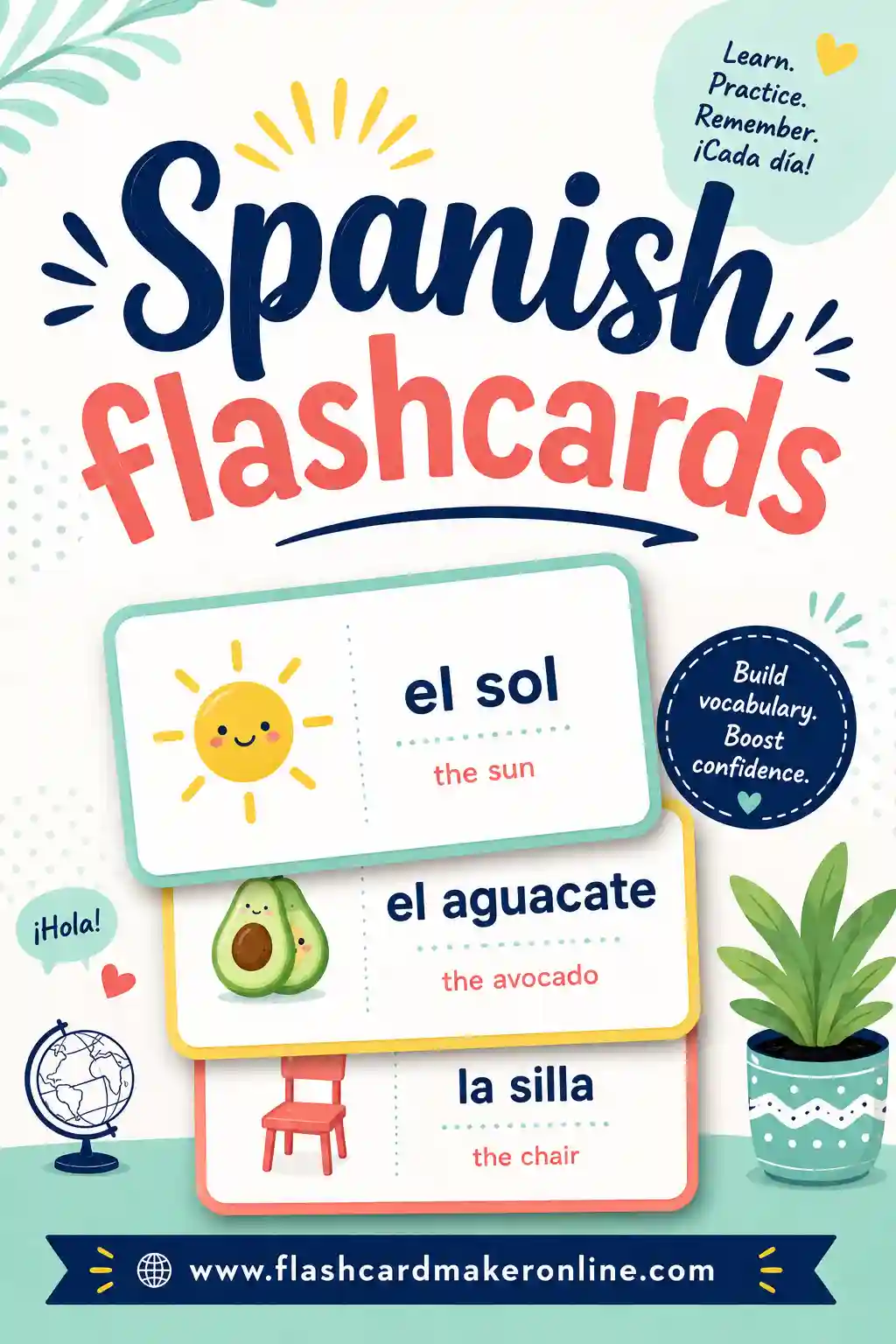
Color-coding helps visual learners: blue cards for el words, red for la. Our Spanish flashcards page has more on building a full beginner deck.
How Christmas is celebrated in Spanish-speaking countries
A little culture makes the words stick. Here are a few talking points for class:
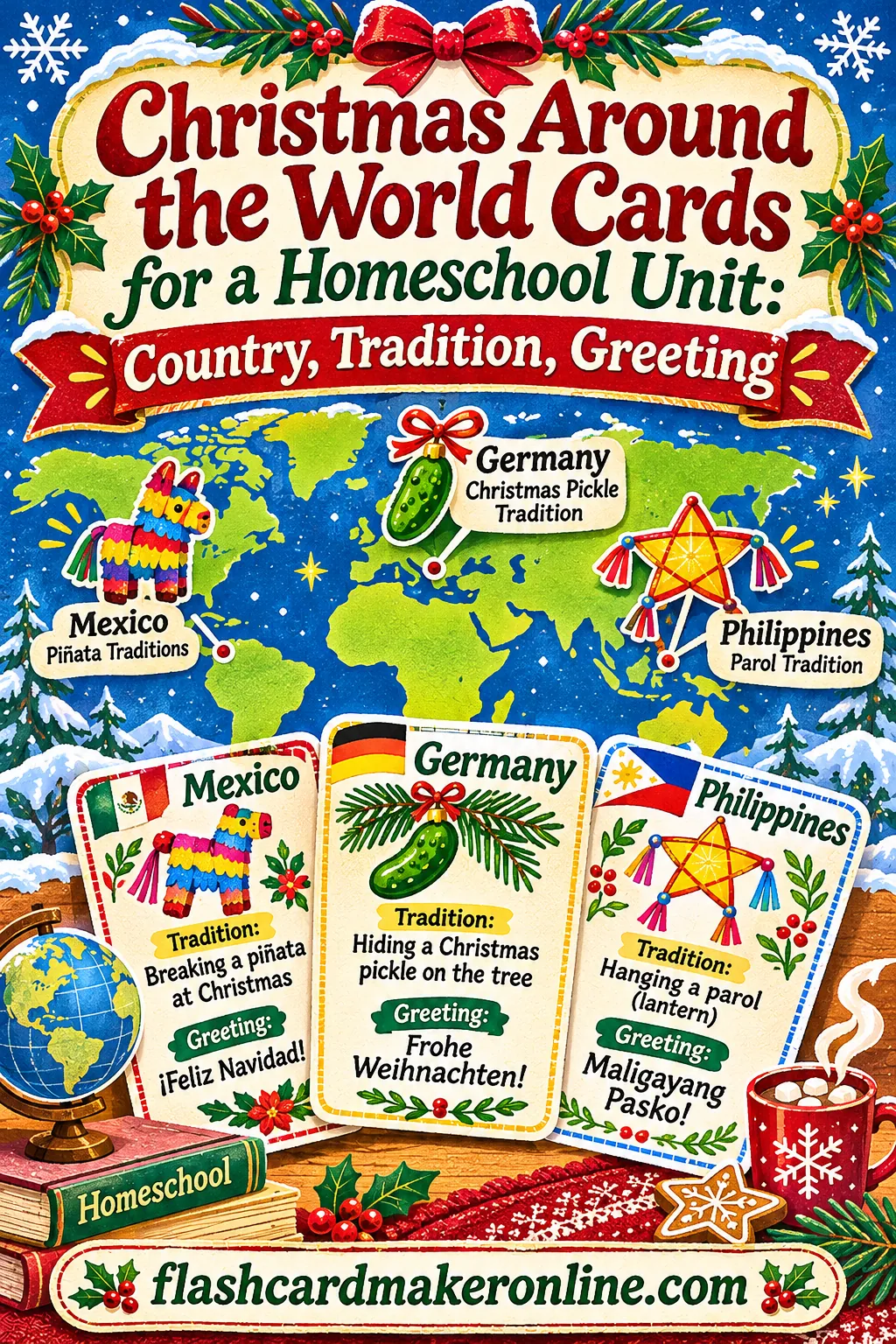
- Las Posadas (Mexico): from December 16 to 24, families and neighbors walk from house to house acting out Mary and Joseph's search for a place to stay, often ending with a piñata.
- Nochebuena: in many countries, the big family dinner is on Christmas Eve, December 24, and it can run late into the night.
- Los Reyes Magos: in Spain, Puerto Rico, Mexico and many other places, the Three Kings bring gifts on January 6. Kids often leave out their shoes, and some leave grass or hay for the camels.
- Villancicos: traditional Christmas carols. "Los peces en el río" is a well-known one from Spain.
For a quick world tour, our Christmas around the world cards cover how to say Merry Christmas in a dozen languages.
Spanish Christmas flashcard games for class
- ¿Qué es? Hold up the picture side. The first student to say the Spanish word with the right article gets the card.
- El or la sort. Kids sort a stack of cards into two piles. Fast, quiet and great for a station.
- Christmas Eve memory. Print two copies, one English and one Spanish, and play memory match with 8 to 10 pairs.
- Act it out. Pull a verb card (envolver, cantar, abrir) and the class acts it out while saying it.
- Write a card. Students use five words from the deck in a short holiday card: "Feliz Navidad, abuela. Me gusta el árbol."
Our games using flashcards roundup has more ideas that work in any language.
How to make your own Spanish Christmas deck
- Open the free flashcard maker and name the deck, like "Navidad Vocabulario."
- Put the English word (and an emoji, if you like) on the front.
- Put the Spanish word with el or la on the back, plus a short pronunciation guide.
- Flip through on screen to practice, then print 4 big or 8 standard cards per page.
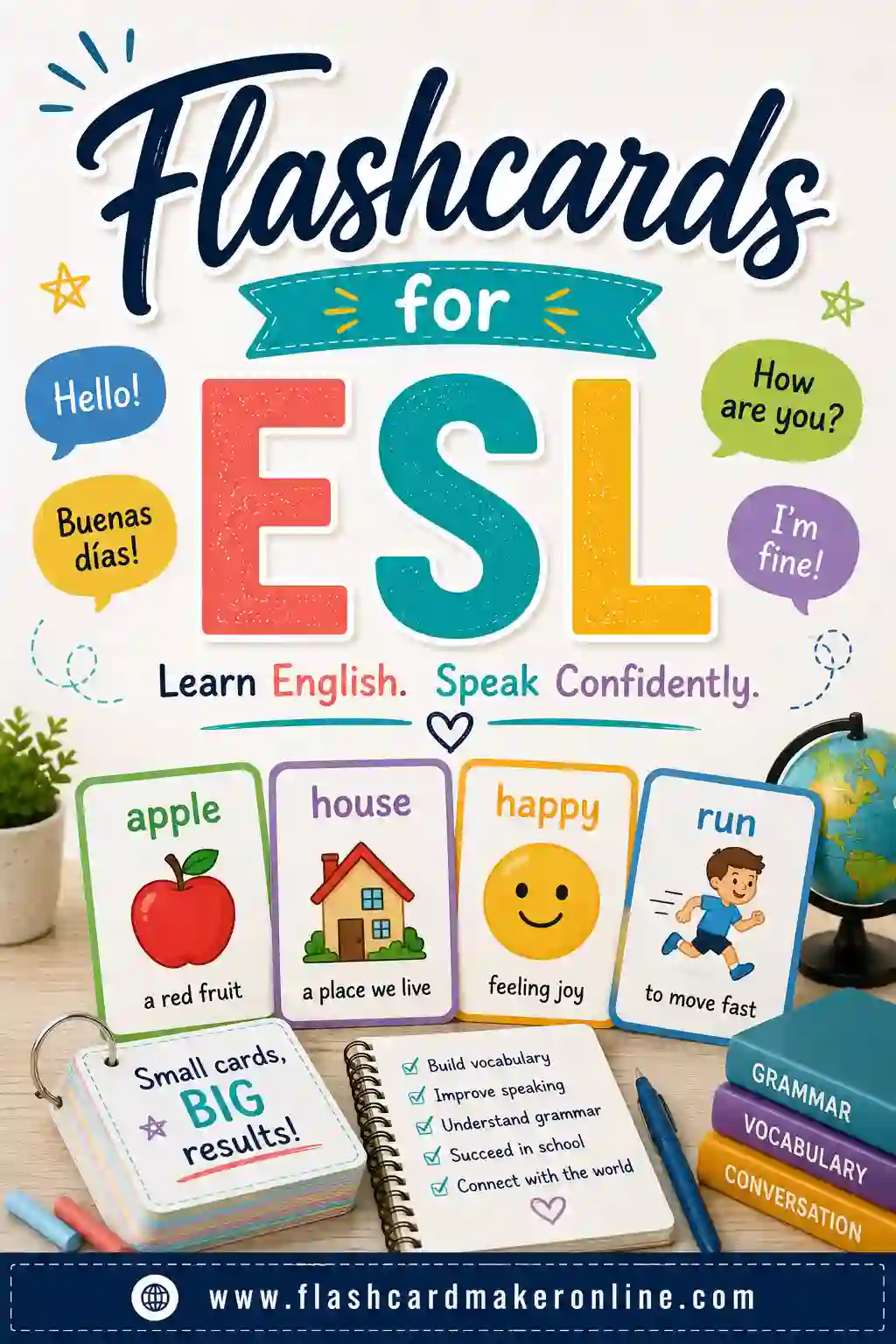
Teaching English learners at the same time? Flip the deck so Spanish is on the front. Our flashcards for ESL guide shows how to set up a two-way deck. Then open the free flashcard maker, add your Navidad words, and you'll have a deck ready before the first villancico.
Frequently Asked Questions
How do you say Merry Christmas in Spanish?
Feliz Navidad (feh-LEES nah-vee-DAHD). To add Happy New Year, say Feliz Navidad y Próspero Año Nuevo.
What are the most common Spanish Christmas words?
Start with la Navidad (Christmas), la Nochebuena (Christmas Eve), el árbol de Navidad (Christmas tree), el regalo (gift), la estrella (star), las luces (lights), el villancico (carol) and Papá Noel (Santa Claus).
Is Christmas el or la Navidad in Spanish?
It's la Navidad. Most words ending in -dad are feminine, so they take la.
What is Nochebuena?
Nochebuena means Christmas Eve, December 24. In many Spanish-speaking countries it's the big family dinner night, often bigger than Christmas Day itself.
What do you call Santa Claus in Spanish?
Papá Noel is the most common name. In Mexico and parts of Latin America you'll also hear Santa Clos, and in many countries Los Reyes Magos (the Three Kings) bring gifts on January 6.
Can I print these Spanish Christmas flashcards?
Yes. Open the deck in our free flashcard maker, add or change any words, and print 4 big or 8 standard cards per page. No sign-up needed.