Flashcards for ESL: Teach English Vocabulary Faster
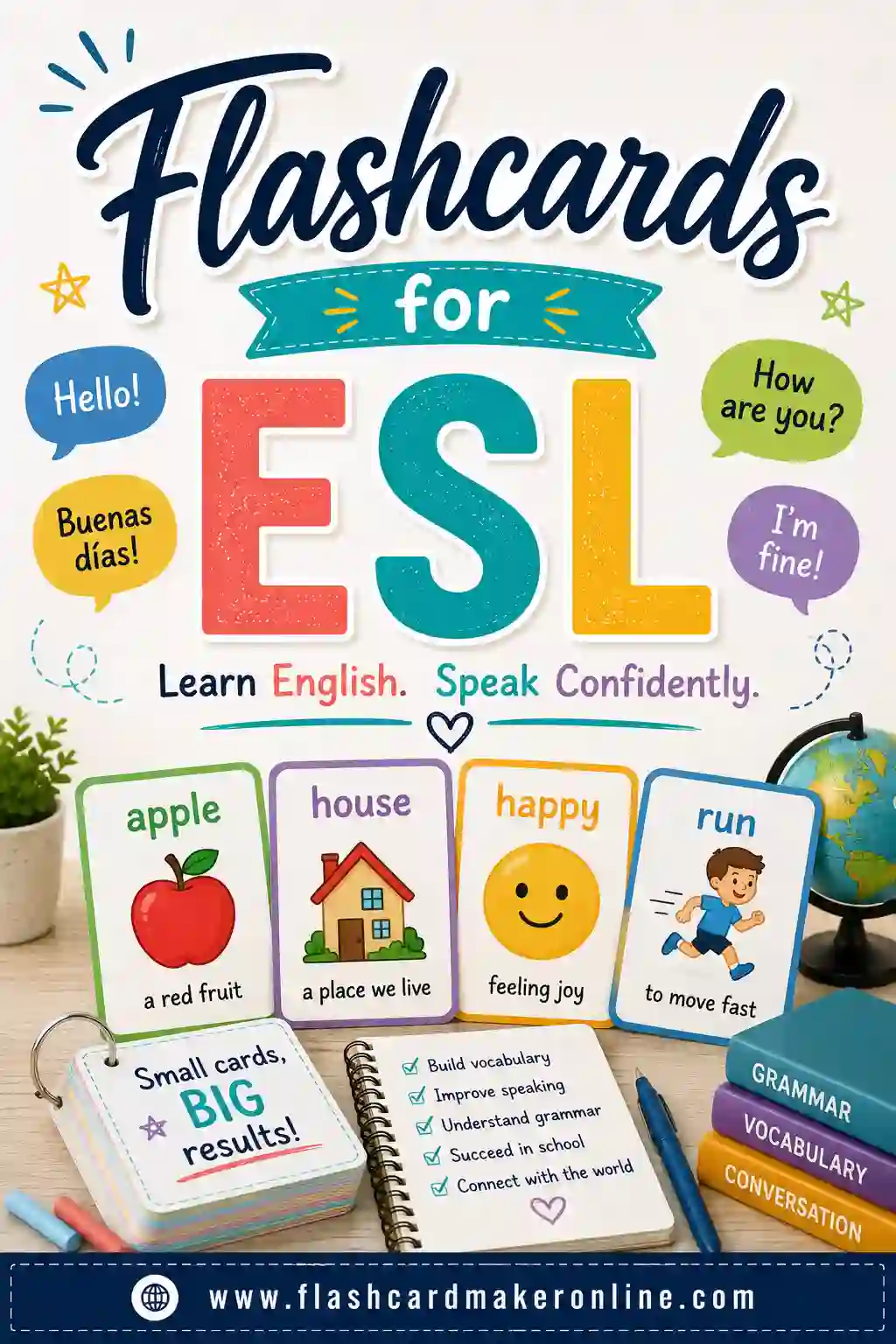
Flashcards for ESL are picture-and-word cards that help English language learners connect new words to meaning quickly — usually an image on one side and the English word on the other, so students learn to think in English rather than translate in their heads. They work because they pair active recall with visual support, which is exactly what language learners need to build vocabulary fast. The easiest way to get a set that fits your lesson is to build your own with a free flashcard maker and print picture cards in minutes.
Teaching a lesson soon? Open the free flashcard maker, put the English word on the front and a clear meaning or picture cue on the back, and print a classroom set fast. No sign-up, no software, no cost.
Why Flashcards Are So Effective for ESL
For English language learners, the hardest part isn't grammar rules — it's building enough vocabulary to understand and be understood. Flashcards are tailor-made for that job, and they work for learners of every age and level.
Here's what makes them so powerful in an ESL setting:
- They use pictures. A picture connects an English word directly to its meaning, so learners skip the slow step of translating through their first language.
- They drive active recall. Trying to remember a word builds a far stronger memory than rereading a vocabulary list.
- They suit spaced repetition. New words appear often; mastered words fade out, so students spend time where it counts.
- They work without much shared language. A picture card needs almost no translation, which is gold in a mixed-language classroom.
Together, these make flashcards one of the most reliable tools for moving learners from "I've heard that word" to "I can use it."
What to Put on an ESL Flashcard
Good ESL cards are simple, visual, and built around real, useful words.
- Lead with a picture. For concrete nouns and actions, an image beats a translation — it teaches meaning directly in English.
- Use a simple English definition. For abstract words, write a short definition in plain English rather than translating, when your students are ready.
- Add a sample sentence. Showing the word in context teaches grammar and usage at the same time.
- One word per card. Keep it clean so students know exactly what to recall.
- Mark the part of speech. A small "(verb)" or "(noun)" cue helps learners use the word correctly.
A Sample ESL Vocabulary Deck (Copy & Adapt)
Here's a ready-to-use starter set of high-frequency English words, with simple definitions. Drop these into the flashcard maker, and add a picture to each for concrete words. The front is the English word; the back is a plain-English meaning.
| Term (Front) | Definition (Back) |
|---|---|
| apple | a round red or green fruit |
| water | a clear drink with no color |
| house | a building where people live |
| kitchen | the room where you cook |
| doctor | a person who helps sick people |
| teacher | a person who helps you learn |
| happy | feeling good or glad |
| sad | feeling unhappy |
| hungry | wanting to eat |
| tired | wanting to rest or sleep |
| big | large in size |
| small | little in size |
| hot | having a high temperature |
| cold | having a low temperature |
| run | to move fast on your feet |
| eat | to put food in your mouth |
| buy | to get something with money |
| rain | water falling from the sky |
| money | coins and bills you pay with |
| friend | a person you like and trust |
| open | not closed |
| fast | moving quickly |
That's 22 cards to start. The best results come from building decks around the themes your students need next — shopping, work, health, school.
ESL Classroom Activities Using Flashcards
Flashcards power a huge range of low-prep activities that get learners speaking:
- Show and say. Hold up a card; students say the word, then use it in a sentence. Simple and effective.
- Memory match. Print pairs (or word + picture) and have students match them. Great for small groups.
- Charades or drawing. A student draws or acts out the card while others guess the English word.
- Sentence builder. Students draw three cards and make a sentence using all three.
- Slap the card. Lay cards out; call a word; students race to slap the right one. High-energy review.
- Question chains. One student asks a question using their card's word; the next answers and asks a new one.
Match the activity to the level
| Level | Best activity | Focus |
|---|---|---|
| Beginner | Show and say, memory match | Word-meaning links |
| Elementary | Slap the card, charades | Recognition + recall |
| Intermediate | Sentence builder, question chains | Usage in context |
| Advanced | Drawing with definitions, debates | Production + fluency |
Why Pictures Beat Translation
It's tempting to put the student's native-language word on the back of every card. Resist that when you can. Translation builds a habit of routing every English word through the first language, which slows comprehension and speaking.
A picture does something better: it links the English word straight to the idea. When a learner sees an image of rain and recalls "rain," they're thinking in English. That direct connection is what fluency is built on. Save translations for abstract words where no picture will do — and even then, a simple English definition is often the stronger choice once students are ready.
Themed Decks That Help ESL Learners Most
Grouping vocabulary by real-life situation helps learners use words right away — and that early usefulness keeps them motivated. A few high-value decks to build first:
- Survival English. Greetings, please and thank you, "where is," "how much," "I need help." The words that make daily life possible from day one.
- Food and restaurants. Ordering, common foods, "the bill, please." Practical and fun to practice.
- At work. Job-related words for your students' fields — schedules, tools, common instructions. Hugely motivating for adult learners.
- Health and the doctor. Body parts, symptoms, "I feel sick." Important and confidence-building.
- Shopping and money. Numbers, prices, "how much does this cost," "can I pay with card?"
- School and the classroom. Especially key for younger learners and parents navigating a new school system.
Build decks around what your students actually need next, not a generic word list. When a learner uses a new word successfully in real life — orders a coffee, asks for directions — that win cements the vocabulary far better than any drill.
Supporting Beginners Who Share No Common Language
One of the toughest situations in ESL is a classroom where you and your students share almost no common language — and where the students themselves speak several different first languages. This is exactly where picture flashcards shine.
A clear image needs no translation. Hold up a card showing rain, and every learner understands "rain" regardless of their first language. That makes picture cards the great equalizer in a multilingual room: you can teach the same word to everyone at once, without favoring any one language group.
Lean into gesture and demonstration alongside the cards. Act out "run," mime "tired," point to a real apple. Pair each new picture card with the action or object, say the word clearly a few times, and have students repeat. Then move straight into a simple game — show-and-say or memory match — so they use the word right away. With pictures, patience, and a few rounds of repetition, even a class with no shared language can build real English vocabulary together, and flashcards make that possible with almost no prep.
Digital vs. Printed Flashcards for ESL
Both formats earn their keep in an ESL setting, and most teachers and learners use both.
Printed cards are perfect for classroom games, pair work, and physical activities like matching and "slap the card." They need no devices and work in any room.
Digital cards are great for projecting to the class, for independent review on phones, and for quick edits. With a free flashcard maker, you build the deck once and use it both ways — project it for a warm-up, then print a set for group games.
Printing tips for ESL sets
- Print on cardstock so cards survive lots of handling.
- Print picture cards large so the whole class can see them held up.
- Laminate high-use decks for years of reuse.
- Make several sets so small groups can play at once.
- Keep separate word and picture cards for matching games.
Common Mistakes in ESL Flashcard Use
A few simple adjustments make flashcards much more effective:
- Over-relying on translation. Lead with pictures and simple English so students think in English, not their first language.
- Words with no context. Add a sample sentence so learners know how to actually use the word.
- Drilling without speaking. Have students say the word and use it aloud — production is the goal, not silent recognition.
- Too many new words at once. Introduce a manageable set (8–12 new words), master those, then add more.
- Same difficulty for a mixed class. Differentiate with picture support for beginners and definition or sentence work for advanced learners.
Frequently Asked Questions
Are flashcards good for teaching ESL?
Yes — flashcards are one of the most effective ESL tools available. They pair active recall with visual support, helping learners connect English words to meaning quickly and without constant translation. They also power countless speaking games, which makes vocabulary practice engaging rather than tedious.
Should ESL flashcards use pictures or translations?
Lead with pictures whenever you can. A picture links the English word directly to its meaning, training learners to think in English instead of translating. Save translations or simple English definitions for abstract words that can't be drawn — and even then, a plain-English definition is often better once students are ready.
How many new words should I teach with flashcards per lesson?
For most ESL classes, introducing 8–12 new words per lesson is a sustainable pace. Master that set through games and review before adding more. Reviewing previously taught words each lesson matters even more than the number of new ones, so the vocabulary actually sticks.
What are good flashcard activities for an ESL class?
Show-and-say, memory matching, "slap the card," charades, and sentence-building all work well and get students speaking. Match the activity to the level: matching and recognition games for beginners, sentence and question activities for intermediate and advanced learners.
Can I print ESL flashcards for free?
Yes. Build your deck in the free flashcard maker and print picture-and-word cards on cardstock. Laminate the sets you use most so they last, and print several copies so small groups can play games at the same time.
Ready to Build Your ESL Flashcards?
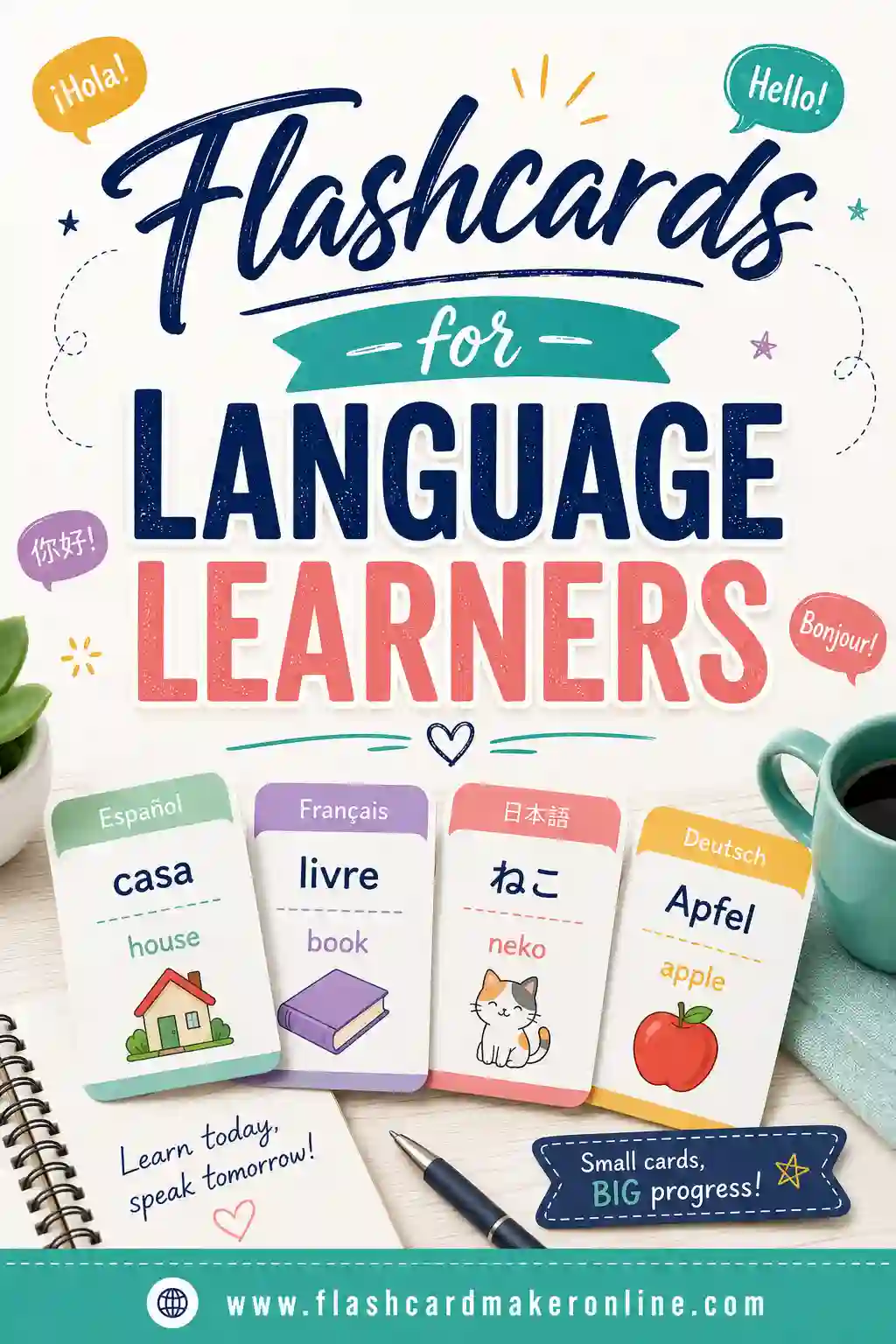
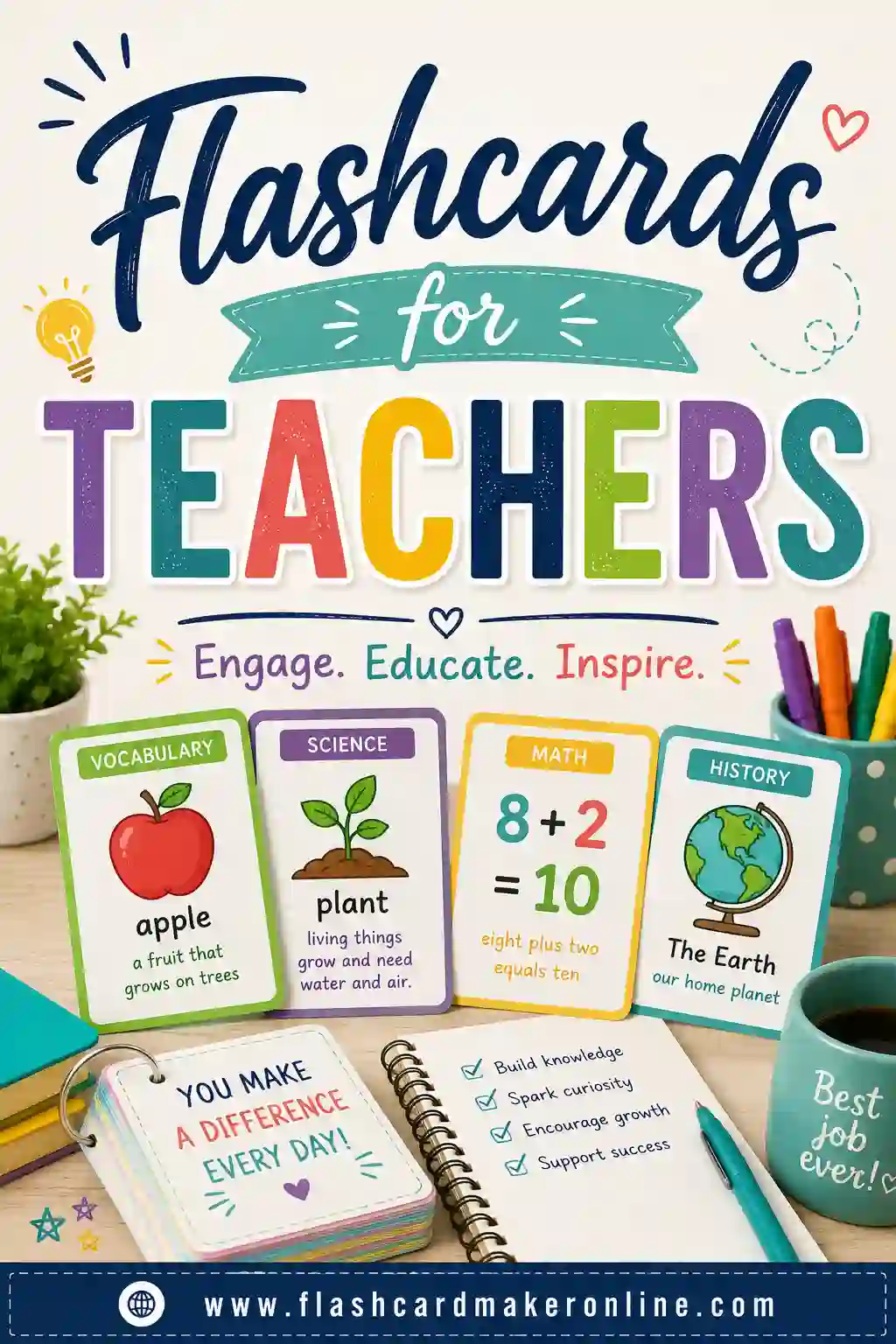
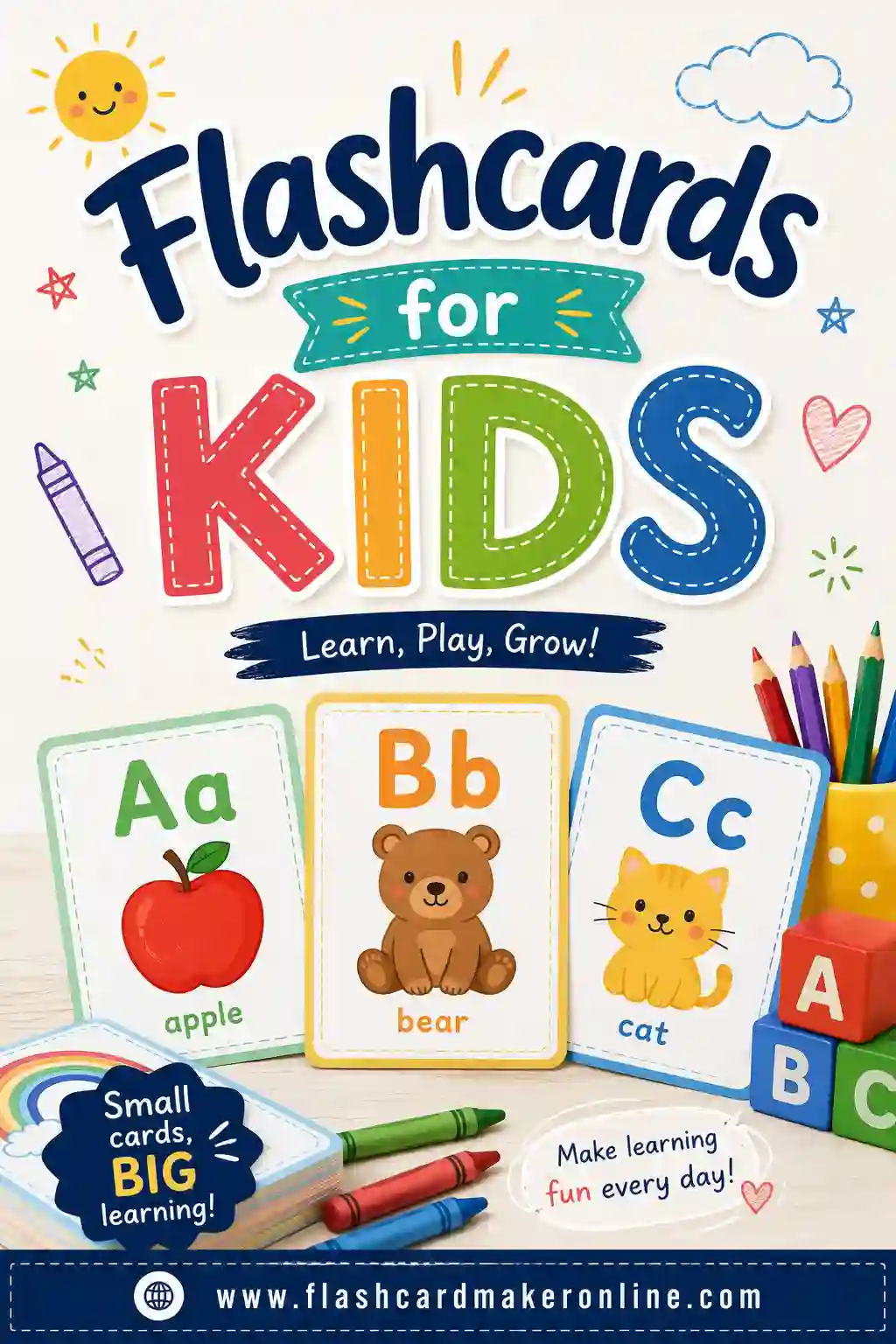
You've got activity ideas, a high-frequency starter deck, and a plan for using pictures over translation. Now open the free flashcard maker, build a set for your next theme, and print picture cards for your class today. It's free, there's no sign-up, and you can project the deck or print it for games. Want more ideas? See our guides on flashcards for language learners, flashcards for teachers, and flashcards for kids. Happy teaching — watch your students' vocabulary take off.