Flashcards for Kids: Fun, Free & Easy to Make
Flashcards for kids are simple, colorful cards with a picture, letter, word, or number on one side and the answer or name on the other. They make early learning feel like a game, and they work because young brains love repetition and quick wins — flip, guess, cheer, repeat. The easiest way to get a set that matches what your child is learning is to build your own with a free flashcard maker, then print them out for hands-on play.
Want to make a set right now? Open the free flashcard maker, type a word or letter on the front and the answer on the back, and print a colorful stack in minutes. No sign-up, no app, no cost.
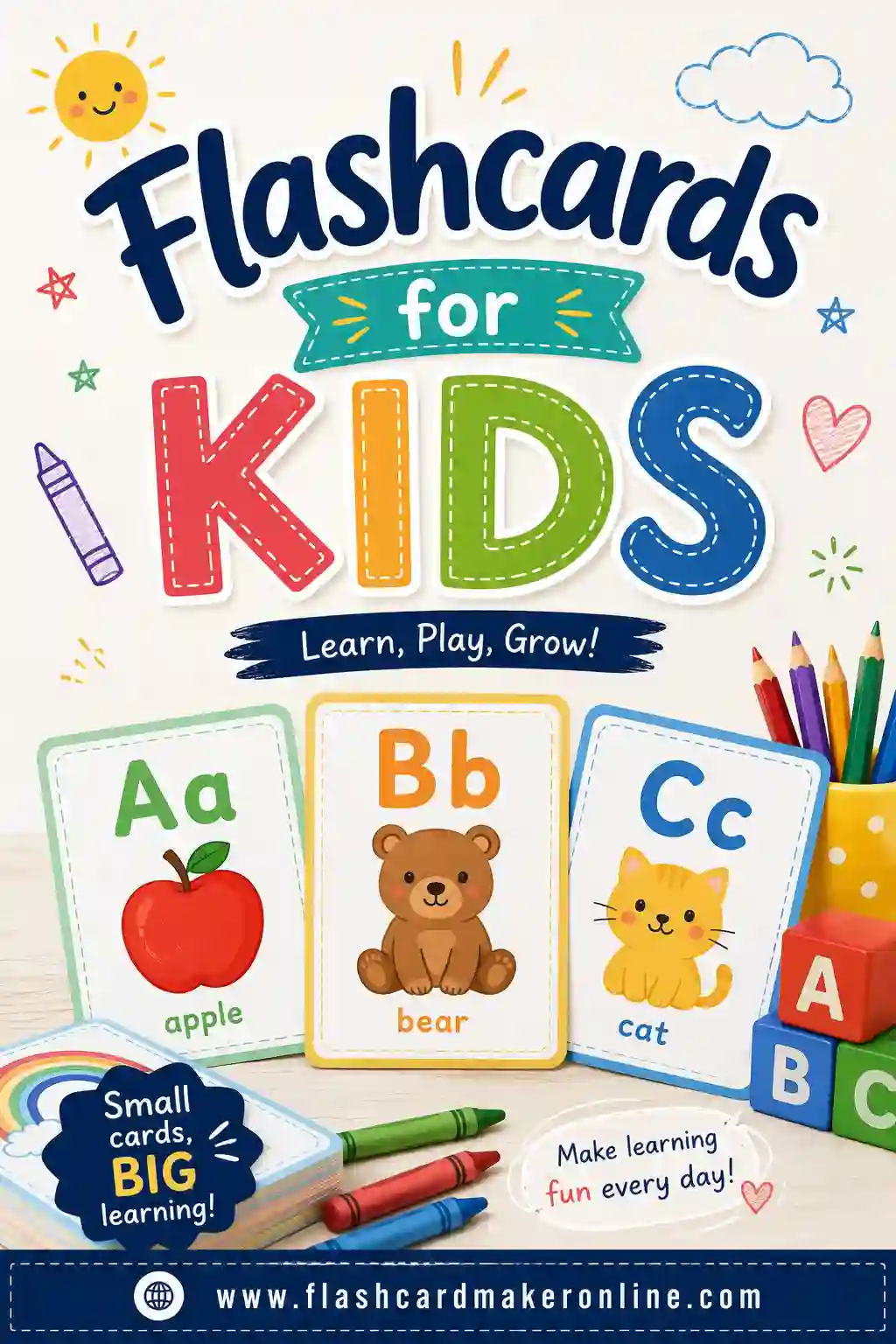
Why Flashcards Work So Well for Kids
Little kids learn through repetition, and they learn best when it feels like play. Flashcards check both boxes. A quick flip-and-guess turns drilling letters or numbers into a fast, fun back-and-forth instead of a chore.
Here's what makes them click for young learners:
- Quick wins build confidence. Each correct guess is a little cheer, and kids love to feel smart. Confidence keeps them coming back.
- Repetition is exactly what they need. Young brains cement skills through seeing the same thing again and again — and cards make repetition painless.
- They're bite-sized. A handful of cards is a perfect attention-span-friendly session. No long worksheets, no overwhelm.
- They're hands-on. Holding, sorting, and matching cards adds movement, which helps kids stay engaged.
You don't need to drill for an hour. Five focused, cheerful minutes a day does more than a long, frustrating session ever will.
What to Put on Flashcards for Kids
The best kids' cards are simple, colorful, and crystal clear. One idea per card, big and bold.
- Use a big picture. For young kids, a clear image is worth more than text. Pair the picture with the word once they start reading.
- One thing per card. A single letter, one word, one number, one shape. Don't crowd it.
- Make it colorful. Bright cards are more inviting and easier to remember.
- Keep words short and familiar. Cat, dog, ball, sun — words from a child's everyday world.
- Match their level. Pictures-only for toddlers, letters and words for preschoolers, sight words and simple math for early grade-schoolers.
A Sample Kids' Flashcard Deck (Copy & Adapt)
Here's a ready-to-use starter set covering letters, sight words, numbers, and more. Drop these into the flashcard maker and tweak for your child's age. The front is the prompt; the back is the answer.
| Term (Front) | Definition (Back) |
|---|---|
| A | Apple |
| B | Ball |
| C | Cat |
| D | Dog |
| E | Elephant |
| 1 | One |
| 2 | Two |
| 3 | Three |
| 2 + 1 | 3 |
| 4 + 1 | 5 |
| Red | A color |
| Blue | A color |
| Circle | Round shape |
| Triangle | 3 sides |
| Square | 4 sides |
| Cow | Moo |
| Dog | Woof |
| Duck | Quack |
| the | Sight word |
| and | Sight word |
| see | Sight word |
| big | Sight word |
| Sun | Day |
| Moon | Night |
That's 24 cards to start. Once you see what your child loves, build decks around their favorites — animals, dinosaurs, trucks, whatever lights them up.
Flashcards by Age: What Works Best
Kids change fast, so match the cards to where they are right now.
| Age | Best card type | Tips |
|---|---|---|
| 1–2 (toddlers) | Pictures only | Name the picture together. Keep it short and silly. |
| 3–4 (preschool) | Letters + pictures | Letter on front, picture word on back. Sing the sounds. |
| 4–5 (pre-K) | Sight words, numbers | Simple words and counting. Praise every try. |
| 5–7 (early grades) | Sight words, simple math | Mix reading and adding. Add a timer for fun. |
| 7+ | Spelling, math facts | Multiplication, harder words. Turn it into a game. |
The golden rule: keep it just challenging enough to feel like a win, never so hard it feels like a test.
Make Flashcards Into a Game
The fastest way to lose a kid's attention is to make cards feel like homework. Turn them into play instead.
- Beat the clock. How many cards can they get right in 60 seconds? Try to beat yesterday's score.
- Memory match. Print two of each card and play a matching game.
- Hide and seek. Hide cards around the room; they read each one as they find it.
- Silly voices. Say the answer in a robot, monster, or squeaky voice. Giggles keep them going.
- Sticker rewards. A sticker for finishing the stack makes review something to look forward to.
- Trade roles. Let your child quiz you (and pretend to get some wrong). Teaching is great learning.
When learning feels like a game, kids ask to do it again — and that repetition is exactly what makes it stick.
Subjects That Work Great on Kids' Flashcards
Almost anything a child is learning can become a deck. A few favorites that pay off early:
- The alphabet. Letter on the front, a picture word on the back (A / Apple). Add the letter sound, not just the name, so they're ready to read.
- Sight words. The little words that appear everywhere — the, and, see, go, you. Reading these on sight is a huge early-reading win.
- Numbers and counting. Numerals, number words, and simple "count the dots" cards build number sense.
- Simple math facts. Addition and subtraction first, then multiplication for older kids. Quick math drills feel like a game.
- Shapes and colors. Easy, visual, and satisfying for the youngest learners.
- Animals and their sounds. Always a hit — kids love making the noises, and it sneaks in vocabulary.
Start with whatever your child is working on at school or is naturally curious about. A deck built around a child's current obsession — dinosaurs, trucks, princesses — gets way more enthusiasm than a generic set.
Keeping Flashcard Time Positive
How flashcard time feels matters more than how long it lasts. A child who associates cards with fun and praise will ask to do them again. A child who associates them with pressure will resist every time.
A few simple habits keep the mood light. Always start with a couple of cards you know they'll get right — early wins set a happy tone. Cheer the effort, not just the correct answer; "good try!" keeps a stuck child engaged instead of discouraged. And when a card is too hard, just say the answer cheerfully and move on. There's no need to make a child sit and struggle.
Follow your child's energy. Some days they'll want to fly through three rounds; other days two minutes is plenty. Both are fine. The goal at this age isn't to drill facts into them as fast as possible — it's to build a positive, curious relationship with learning that will pay off for years. Cards that feel like a warm little game with a grown-up they love do exactly that.
Digital vs. Printed Flashcards for Kids
For young children, printed cards usually win — but both have their place.
Printed cards are hands-on, screen-free, and perfect for sorting, matching, and movement games. They keep little ones away from screens while they learn, which most parents appreciate.
Digital cards are handy for quick review on the go, like in the car or a waiting room, and they're easy to update as your child grows. With a free flashcard maker you can build the set once and do both — flip on a tablet, or print a colorful stack for tabletop play.
Printing tips for durable kids' cards
- Print on cardstock so cards survive sticky little hands.
- Laminate them or slip them into sleeves for years of reuse.
- Print big — fewer, larger cards are easier for small fingers.
- Use color to make them inviting, and let kids help color them in.
- Round the corners with scissors so there are no sharp edges.
Common Mistakes Parents Make With Flashcards
A little awareness keeps flashcard time fun for everyone.
- Going too long. Five fun minutes beats twenty frustrating ones. Stop while they're still enjoying it.
- Pushing too hard. If a child is tired or upset, the cards can wait. Keep it pressure-free.
- Cards that are too advanced. Start easy. Early wins build the confidence to tackle harder cards later.
- Too much text for non-readers. For toddlers, lead with pictures, not words.
- Skipping the praise. Cheer the tries, not just the right answers. Encouragement is the whole engine.
Frequently Asked Questions
At what age can kids start using flashcards?
You can start as early as 12–18 months with simple picture cards you name together — think of it as a fun naming game, not a drill. As kids grow, you add letters, sight words, numbers, and math facts. The key at every age is keeping it short, playful, and pressure-free.
Are flashcards good for kids, or are they too much like drilling?
Flashcards are great for kids as long as they stay fun and short. The problem isn't the cards — it's turning them into long, high-pressure drills. Keep sessions to a few cheerful minutes, mix in games, and celebrate every try, and flashcards become something kids actually enjoy.
What should I put on flashcards for a preschooler?
Letters with matching picture words (A / Apple), basic shapes and colors, numbers 1–10, and a handful of early sight words. Use big, clear images and one idea per card. Bright colors and familiar things from your child's daily life work best.
How long should a flashcard session be?
Short — usually 3 to 10 minutes depending on age and mood. Toddlers may last a couple of minutes; older kids can go a bit longer, especially if it feels like a game. Always stop while they're still having fun so they want to come back.
Can I print these flashcards at home for free?
Yes. Build your set in the free flashcard maker and print a colorful stack on cardstock at home. Laminate them or use sleeves to make them last, and you've got a reusable learning toy for pennies.
Ready to Make Flashcards Your Kids Will Love?
You've got the ideas, a starter deck, and games to make it fun. Now open the free flashcard maker, build a colorful set for your child's level, and print it out for some hands-on learning today. It's free, there's no sign-up, and you can flip on a tablet or print a stack for game time. Want more ideas? See our guides on flashcards for language learners, flashcards for teachers, and flashcards for ESL. Have fun, and watch those little wins add up.