Flashcards for ADHD Learners: Focus, Recall, and Win
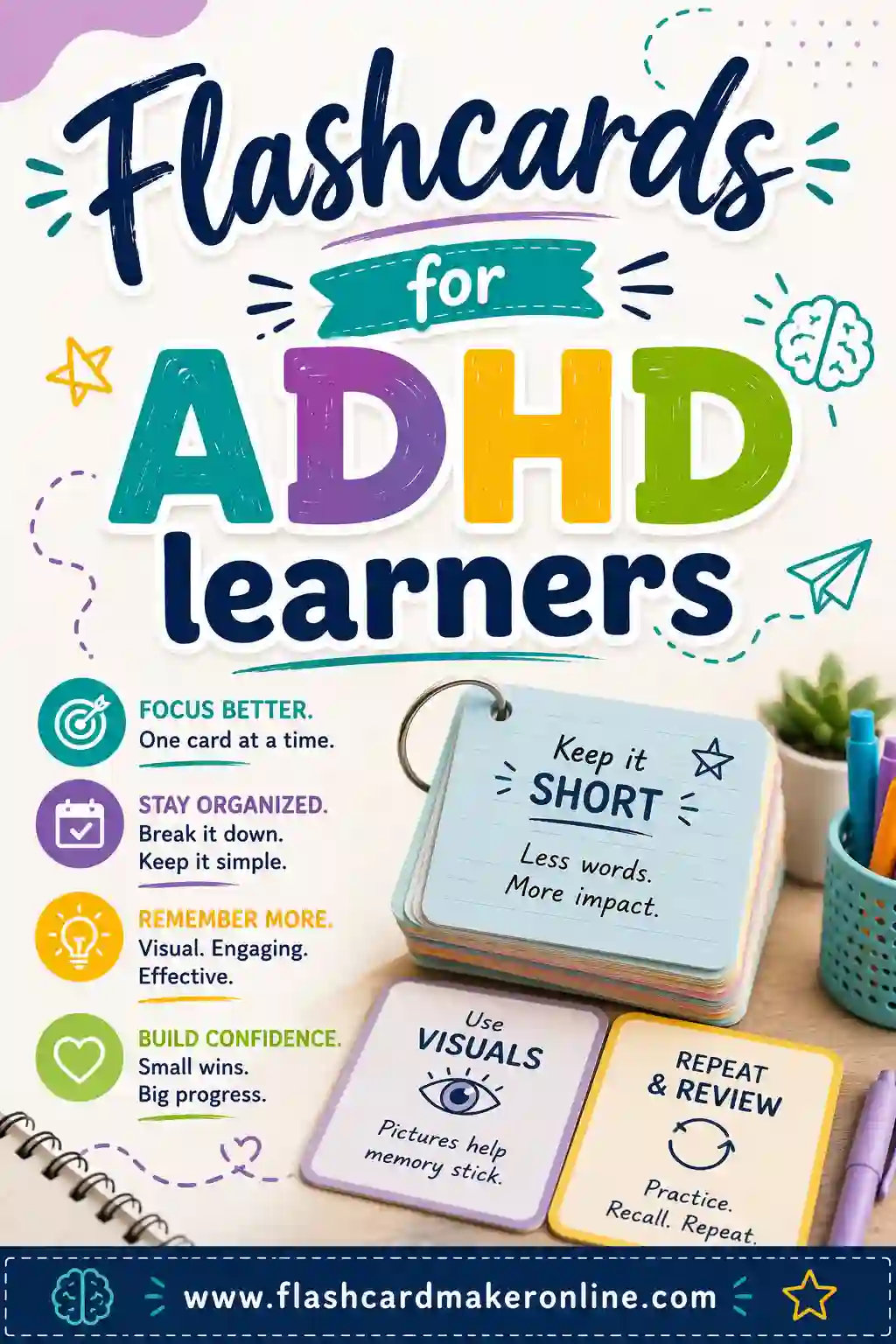
Flashcards for ADHD learners work because they break studying into short, active, one-question-at-a-time bursts, which is exactly the kind of task an ADHD brain can lock onto. Instead of facing a wall of notes, you face a single card, flip it, and move on. The easiest way to start is with a free flashcard maker where you build a quick deck, flip through it, and turn studying into something that actually holds your attention.
Want to try it now? Open the free flashcard maker, type a handful of terms, and start flipping. There's no sign-up, no install, and no cost.
Why Flashcards Fit the ADHD Brain
Long study sessions are tough for an ADHD brain. A page of notes has no clear start or finish, no quick wins, and a hundred places for your attention to wander. Flashcards solve all three problems at once.
- One task at a time. A single card is a small, clear target. There's nothing else competing for your focus.
- Fast feedback. Flip, check, know instantly if you got it. That quick hit of "yes!" gives your brain a little reward that keeps you going.
- Built-in pacing. Each card is its own mini-finish line, so you get a steady stream of small wins instead of one distant goal.
- Movement-friendly. You can shuffle, sort, pace, or flip cards standing up. Studying doesn't have to mean sitting still.
On top of that, flashcards use active recall and spaced repetition, the two most effective study methods for anyone. For an ADHD learner, the bonus is that they make those methods feel doable instead of draining.
Keep Sessions Short and Active
The single most important tip: study in short bursts. An ADHD brain often does its best work in focused sprints, not marathons.
Try a simple timer method:
- Set a timer for 10 to 15 minutes. Short enough that it never feels like a slog.
- Flip cards the whole time. Recall the answer before you check.
- Take a real break. Stand up, stretch, grab water, move around for a few minutes.
- Run another short round. Two or three sprints with breaks beat one long sit.
The timer does two things. It gives your brain a clear finish line, and it turns "study" into a game against the clock, which is far easier to start.
A Ready-Made Sample Deck
Here's a sample deck of study and focus terms so you can see the right format. Each row is one card. Keep cards short, one idea each, so flipping stays quick. Build your own in the flashcard maker.
| Term (front) | Definition (back) |
|---|---|
| Active recall | Pulling an answer from memory instead of rereading |
| Spaced repetition | Reviewing material across several days |
| Pomodoro | A short, focused work burst followed by a break |
| Body doubling | Working near someone else to stay on task |
| Dopamine | A brain chemical tied to motivation and reward |
| Working memory | The mental notepad that holds info for a few seconds |
| Hyperfocus | Locking deeply onto one task for a long stretch |
| Task initiation | The hard part of simply getting started |
| Chunking | Breaking big tasks into small, clear steps |
| Externalizing | Getting thoughts out of your head and onto paper |
| Time blindness | Trouble sensing how much time has passed |
| Novelty | New or different input that grabs attention |
| Fidget tool | A small object to keep hands busy and focus the mind |
| Reward loop | Pairing a task with a small treat to stay motivated |
| Environment | Your surroundings; shape them to cut distractions |
| Single-tasking | Doing one thing at a time on purpose |
| Brain dump | Writing down every thought to clear mental clutter |
| Transition | Moving from one activity to the next |
| Stimulation | Input that keeps your brain engaged |
| Accountability | Someone or something that keeps you on track |
Twenty short cards like this take a few minutes to type and flip through fast, which keeps the momentum going.
Make Studying More Stimulating
An ADHD brain craves stimulation. The more senses and movement you bring in, the easier it is to stay engaged.
Read the cards out loud
Saying the answer adds sound and motion to silent study. It also keeps you from zoning out mid-card.
Use color and pictures
Color-code by topic and add a quick sketch to each card. The visual variety holds attention and helps recall. Our guide on flashcards for visual learners has more on this.
Move while you study
Pace the room, sort cards into piles, or flip a printed stack while standing. Movement isn't a distraction for many ADHD learners, it's fuel.
Turn it into a game
Beat the clock. See how many cards you can clear before the timer dings. Race a study buddy. A bit of challenge makes starting much easier.
Change your scenery
The same desk, the same chair, the same view can go stale fast for an ADHD brain. Studying somewhere new, a different room, a library, a coffee shop, a park bench, gives your brain a little novelty that sharpens focus. Because flashcards are portable, you can pick up a printed stack and study anywhere the mood strikes. A fresh setting can be the difference between staring at a card and actually flipping through the deck.
Build Momentum With Small Wins
Starting is often the hardest part. The fix is to make the first step tiny.
- Start with five cards, not fifty. A small target is easy to say yes to. Once you start, momentum usually carries you.
- Make a visible "done" pile. Watching the stack of mastered cards grow gives you a steady sense of progress.
- Reward each round. A snack, a song, two minutes on your phone, whatever works. Pairing study with a small reward trains your brain to come back.
- Use a body double. Studying near someone else, even silently, helps many ADHD learners stay on task.
These small wins matter because motivation for an ADHD brain often runs on reward, not willpower. Stack up enough little wins and the whole session feels lighter.
A Simple ADHD-Friendly Study Plan
You don't need a complicated system. Here's a plan built around short bursts and spaced reviews.
| Step | What to do |
|---|---|
| Start small | Pick 5–10 cards and a 10-minute timer |
| Flip fast | Recall, check, sort into got-it and missed-it |
| Break | Move for a few minutes, then return |
| Repeat | Run two or three short rounds |
| Space it out | Review the misses again tomorrow and a few days later |
Spacing your reviews across days does the heavy lifting for memory, and it keeps any single session short. For a full schedule you can borrow, see our guide on flashcards for memorization.
Print or Study on Screen
Both work, and the right choice depends on what keeps you focused.
- Printed cards are great if screens pull you toward distractions. You can hold them, sort them, shuffle them, and study while moving. No notifications, no open tabs.
- On-screen cards are handy for quick reviews and let you flip through a deck anywhere without printing.
If your phone tends to derail you, a printed stack is your friend. Build your deck in the flashcard maker, print it on cardstock, and you've got a distraction-free tool you can use anywhere. For longer test prep, our flashcards for exams guide lays out a spaced study schedule.
Common Pitfalls and How to Dodge Them
A few traps catch ADHD learners. Knowing them helps you steer clear.
- Cards that are too long. A paragraph on the back stalls your focus. Keep each card to one short idea.
- Sessions that drag on. Pushing past your focus window leads to burnout. Stop while you're still engaged.
- No breaks. Breaks aren't slacking, they're part of the method. Skip them and your attention crashes.
- Studying somewhere distracting. A noisy, cluttered space competes for attention. Clear your spot or move somewhere calmer.
- Trying to do it all at once. Spacing reviews across days is easier and works better than one giant session.
- Being hard on yourself. A wandering mind isn't a personal failing. When focus slips, take a break and come back. Self-blame just drains the motivation you need to keep going.
Frequently Asked Questions
Why do flashcards work well for people with ADHD?
Flashcards break studying into single, clear, fast tasks with instant feedback. That structure suits an ADHD brain, which thrives on quick wins and stimulation and struggles with long, open-ended tasks like rereading notes.
How long should an ADHD study session be?
Short. Many ADHD learners do best with 10 to 15 minute bursts followed by a real break. Two or three short rounds with movement in between beat one long session that ends in burnout.
How can I make studying more interesting with ADHD?
Add stimulation: read cards out loud, use color and sketches, move while you flip, and turn it into a race against a timer. Small rewards after each round also help keep your brain coming back.
How many flashcards should I study at a time?
Start with just five to ten. A small target is easy to begin, and starting is usually the hardest part. Once you've built momentum, you can keep going or stop and pick it up again later.
Are printed or digital flashcards better for ADHD?
It depends on your distractions. If your phone pulls your focus, printed cards remove the temptation and let you study while moving. If screens don't derail you, digital cards are great for quick reviews anywhere.
How do I remember to actually review my cards?
Tie reviews to something you already do, like right after breakfast, and keep the stack visible. Pairing study with a small reward and spacing reviews across days makes the habit far easier to keep.
Ready to Build an ADHD-Friendly Deck?
Studying with ADHD gets easier when you swap the wall of notes for short, active, one-card-at-a-time bursts. Pick a topic, open the free flashcard maker, and build a quick deck you can flip through in 10-minute sprints. It's free, there's no sign-up, and you can print a distraction-free stack or study on screen. Start with five cards, beat the timer, and let the small wins pull you forward.