Flashcards for Group Study: Games & Tips
Flashcards for group study turn a boring review session into a quiz game. One person reads the front of a card, everyone else races to answer, and the group keeps score or just helps each other learn. It works because saying answers out loud and competing a little makes facts stick. The easiest way to set it up is to make one shared deck with a free flashcard maker, then print copies for the table.
Studying with friends tonight? Open the free flashcard maker, build your deck, and print a set for everyone. No sign-up, no cost, and you'll be quizzing each other in minutes.
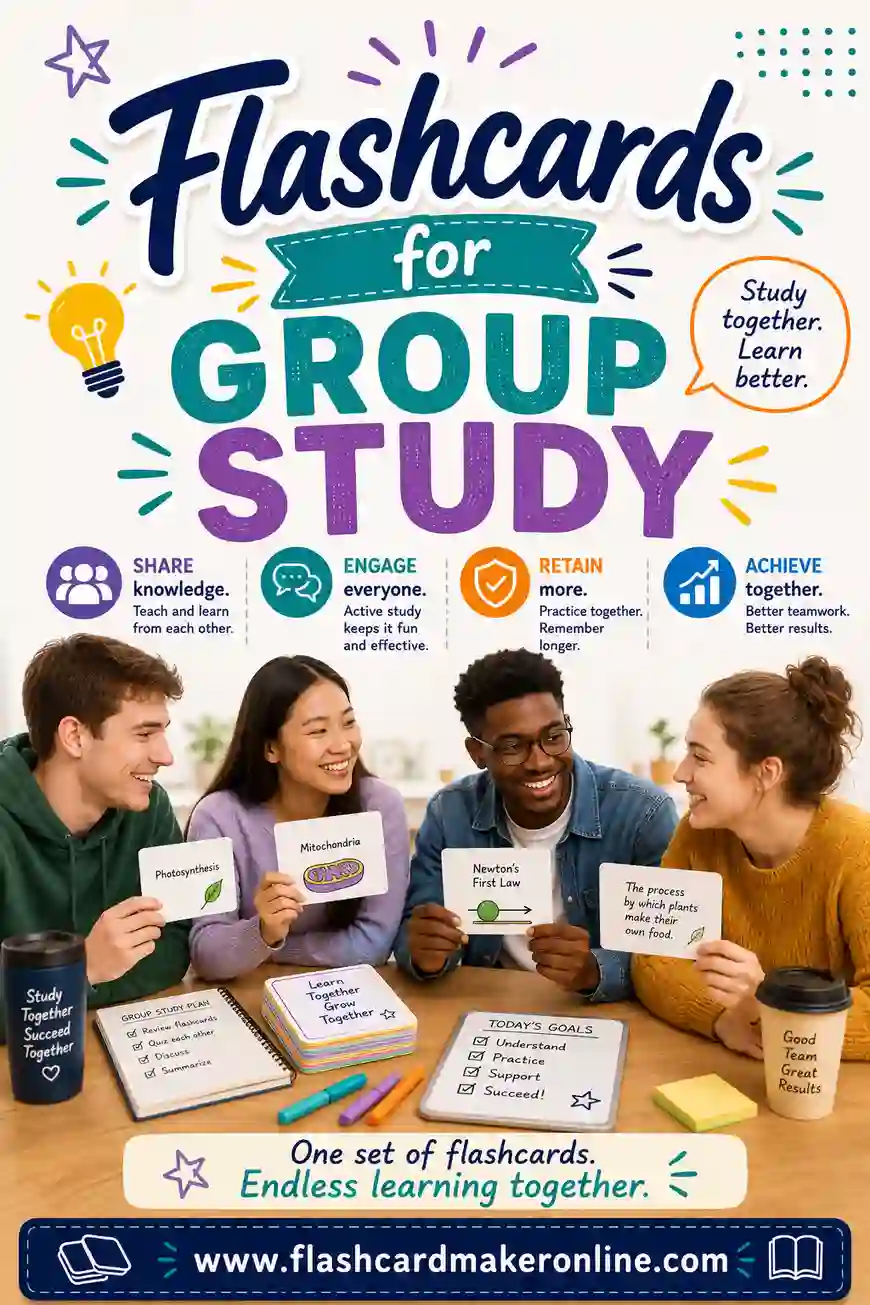
Why Flashcards Work So Well in a Group
Studying alone is quiet and easy to fake. You glance at a card, think "yeah, I know that," and move on, even when you don't. A group calls your bluff.
When you have to say the answer out loud in front of others, you find out fast whether you really know it. That moment of "wait, I forgot" is exactly when learning happens. The group also fills gaps: someone always remembers the card you blanked on, and explaining it to you helps them too.
A few reasons groups and flashcards click:
- Accountability. Hard to drift off when it's your turn to answer.
- Out-loud recall. Speaking an answer locks it in better than thinking it.
- Different strengths. Everyone's strong on different cards, so the group covers more ground.
- It's fun. A little competition keeps energy up far longer than solo flipping.
The key is one shared deck. If everyone studies different cards, the games fall apart. Build a single deck for the group with the flashcard maker and print enough copies.
Setting Up a Group Flashcard Session
A little prep makes the night run smooth. Here's a simple setup:
- Pick the material. Agree on what you're reviewing before anyone shows up. One chapter, one unit, one topic.
- Build one shared deck. Split the cards between people if you like. Each person makes ten, then combine them into one deck in the flashcard maker.
- Print enough copies. One full set for the caller, plus a set per team if you want everyone to have cards.
- Choose a game. Pick from the formats below based on group size.
- Set a time limit. Forty-five minutes of focused quizzing beats three hours of drifting.
Splitting the card-making is a sneaky win: writing the cards is itself great study, so everyone arrives already half-prepared.
6 Flashcard Games for Groups
Here's where it gets fun. Pick a format that fits your crowd.
1. Quiz relay
Sit in a circle. One person reads a card and the next person answers. Get it right, you pass the deck on. Get it wrong, the group helps, then you try the next card. Simple, fast, and everyone stays involved.
2. Buzzer round
The caller reads a card and the first person to shout the right answer scores a point. Keep a tally. This one's loud and competitive, great for energetic groups and easy facts.
3. Team bingo
Split into two teams. The caller reads a card and teams race to answer. First correct answer wins the point. Best of a set number of cards takes the round. Good for bigger groups.
4. Teach-back
Draw a card and instead of just answering, explain the concept to the group in your own words. If you can teach it, you know it. This format is gold for tough, conceptual material.
5. Round robin
Go around the circle, each person reading the next card aloud and answering their own. Anyone stuck gets two helpers before moving on. Calm, fair, and good for steady review.
6. Speed stack
Set a two-minute timer. Race as a group to clear as many cards as you can, passing the deck fast. Count your pile, then try to beat it next round. Fun for the end of a session when focus is fading.
Here's a quick guide to which game fits your group:
| Group size | Best games |
|---|---|
| 2 people | Quiz relay, teach-back |
| 3–4 people | Round robin, buzzer round |
| 5–8 people | Team bingo, speed stack |
| Big class | Team bingo with a single caller |
Sample Group-Study Deck (Copy & Paste)
Here's a starter deck about study and teamwork terms, perfect for practicing the games. Type it into the flashcard maker and print a few sets. Each row is one card.
| Term (front) | Definition (back) |
|---|---|
| Quiz relay | Each person answers one card, then passes to the next |
| Buzzer round | First person to call the answer wins the point |
| Teach-back | You explain a card to the group in your own words |
| Team bingo | Split into teams and race to answer cards |
| Round robin | Take turns reading and answering in a circle |
| Active recall | Pulling an answer from memory instead of rereading |
| Spaced repetition | Reviewing material at growing intervals to beat forgetting |
| Score keeper | The person who tallies points during a game |
| Caller | The person who reads the front of each card aloud |
| Shared deck | One set of cards the whole group studies from |
| Study group | A small team that learns the same material together |
| Peer teaching | Learning by explaining a topic to a classmate |
| Time limit | A set length for a focused study session |
| Review chapter | The specific material the group agrees to cover |
| Helper rule | Letting the group assist when someone is stuck |
| Tally | A running count of points scored |
| Tiebreaker | An extra card to settle an even score |
| Cardstock | Thick paper that makes printed cards last longer |
| Shuffle | Randomizing card order so no one memorizes the sequence |
| Wrap-up | A final pass over the cards everyone missed |
Once you've played a round with this set, build a deck for your actual subject and bring it to your next group session.
Tips for a Productive Group Session
Group study can drift into chatting if you're not careful. Keep it on track:
- Pick a leader. One person keeps time and runs the games so things don't stall.
- No phones unless they're the deck. If you're studying digitally, fine, but otherwise stash them.
- Rotate the caller. Reading cards is a job, and switching keeps everyone fresh.
- Mark the misses. Set aside cards the group struggles with and review them again at the end.
- End with the hard pile. Spend the last ten minutes only on the cards that tripped people up.
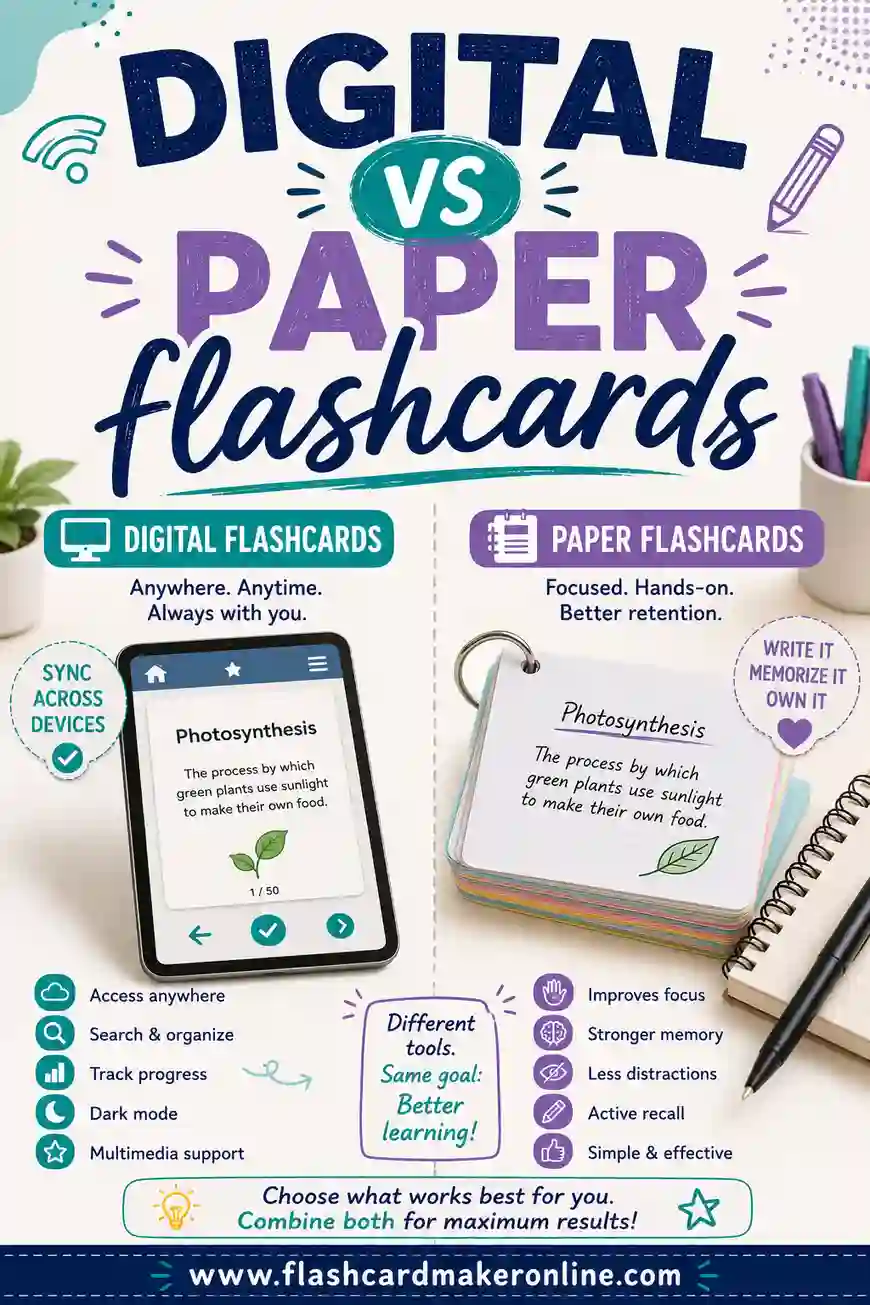
Want the cards to last for next time? Print on cardstock or slip them into sleeves. For more on choosing your format, see digital vs paper flashcards.
Common Group-Study Pitfalls
Group sessions can go sideways fast. Steer around these:
- Turning into a hangout. The chat is fun, but set a timer and stick to the cards. Save the social time for after.
- One person dominating. If the same fast answerer grabs every card, quieter members tune out. Use turn-based games so everyone answers.
- Skipping the hard cards. Groups love the easy wins. Make a point of saving time for the cards that stump people.
- No shared deck. If everyone brings different cards, the games fall apart. Agree on one deck ahead of time and print copies from the flashcard maker.
- No follow-up. A single group session won't lock facts in. Take the deck home and review it on your own over the next two weeks.
Avoid these and your group sessions stay focused, fair, and genuinely useful.
Make It Stick After the Session
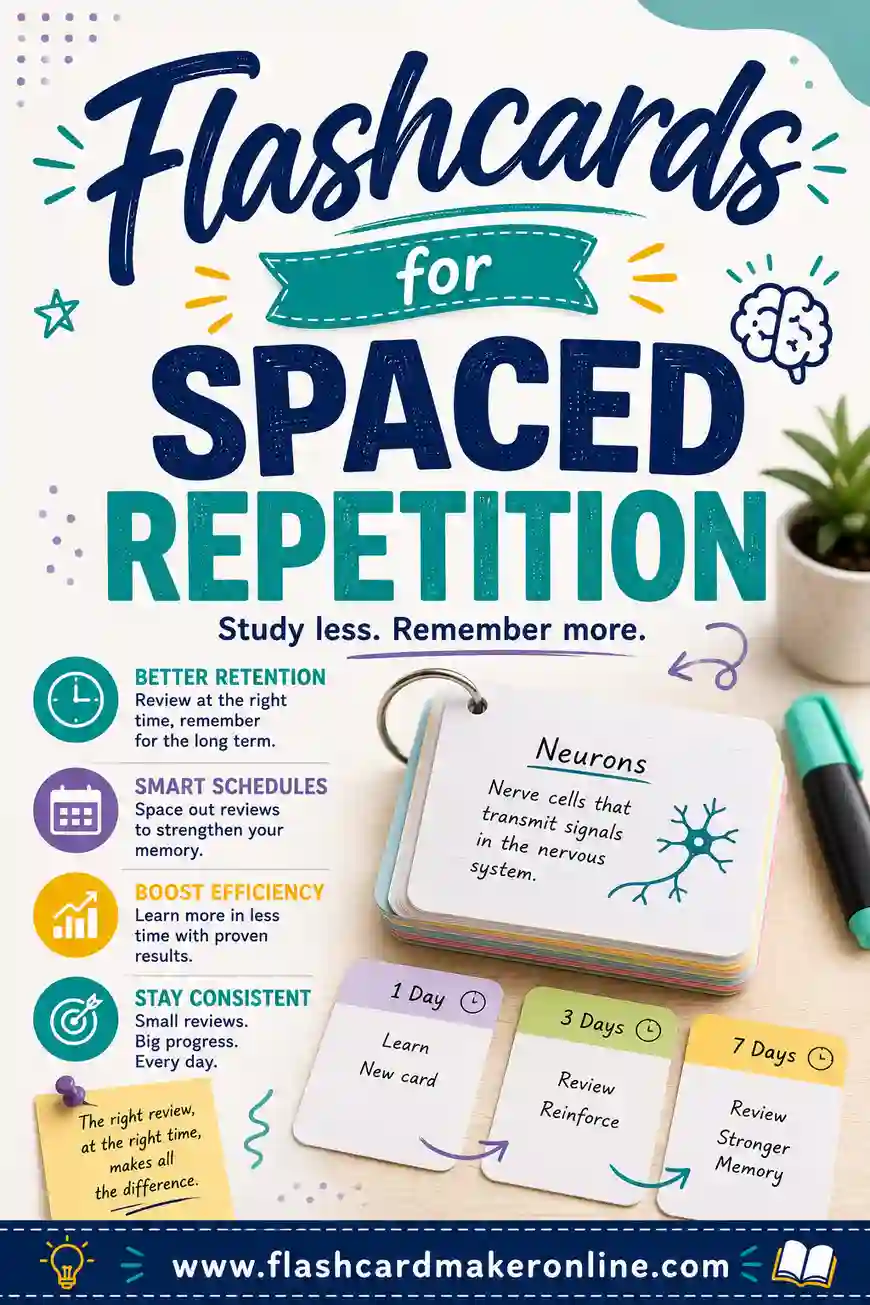
Group games are great for energy and out-loud recall, but real memory needs spacing. After the session, take the deck home and review it on your own over the next two weeks.
A simple plan: review the cards the day after the group session, then again in three days, then a week later. Each round is shorter than the last. This is spaced repetition, and it's how the facts move into long-term memory. Our full guide on flashcards for spaced repetition walks through the schedule.
The combo is powerful: learn it loud with the group, then lock it in with spaced solo reviews.
Frequently Asked Questions
How many flashcards do I need for a group session?
Plan for 30 to 50 cards for a 45-minute session. That's enough to fill the time without dragging. If your group splits the card-making, each of four people writes ten cards and you've got a 40-card deck ready to go.
What's the best flashcard game for two people?
Quiz relay and teach-back both work great for pairs. One reads, the other answers, then you swap. Teach-back is especially good because explaining a concept to your study partner shows you whether you truly understand it.
Should everyone have their own set of cards?
The caller needs a full set, and it helps if each team has one too. You can make one master deck in the flashcard maker and print as many copies as you need. There's no sign-up and no cost, so print freely.
How do I keep a group from getting off track?
Pick a leader, set a time limit, and use a game format with turns so everyone stays involved. Saving the cards people miss for a final review round also keeps the session focused on what matters.
Can we study digitally as a group?
Yes. You can flip a shared deck on a laptop or tablet and quiz each other from one screen. Digital is great for quick setup and sharing. If you prefer printed cards for a hands-on game, see digital vs paper flashcards.
Does group study really work better than studying alone?
For recall and motivation, often yes. Saying answers out loud and a little friendly competition keep you engaged. But pair it with solo spaced review afterward for the best results. The group builds energy, the solo review locks in memory.
Ready to Quiz Your Group?
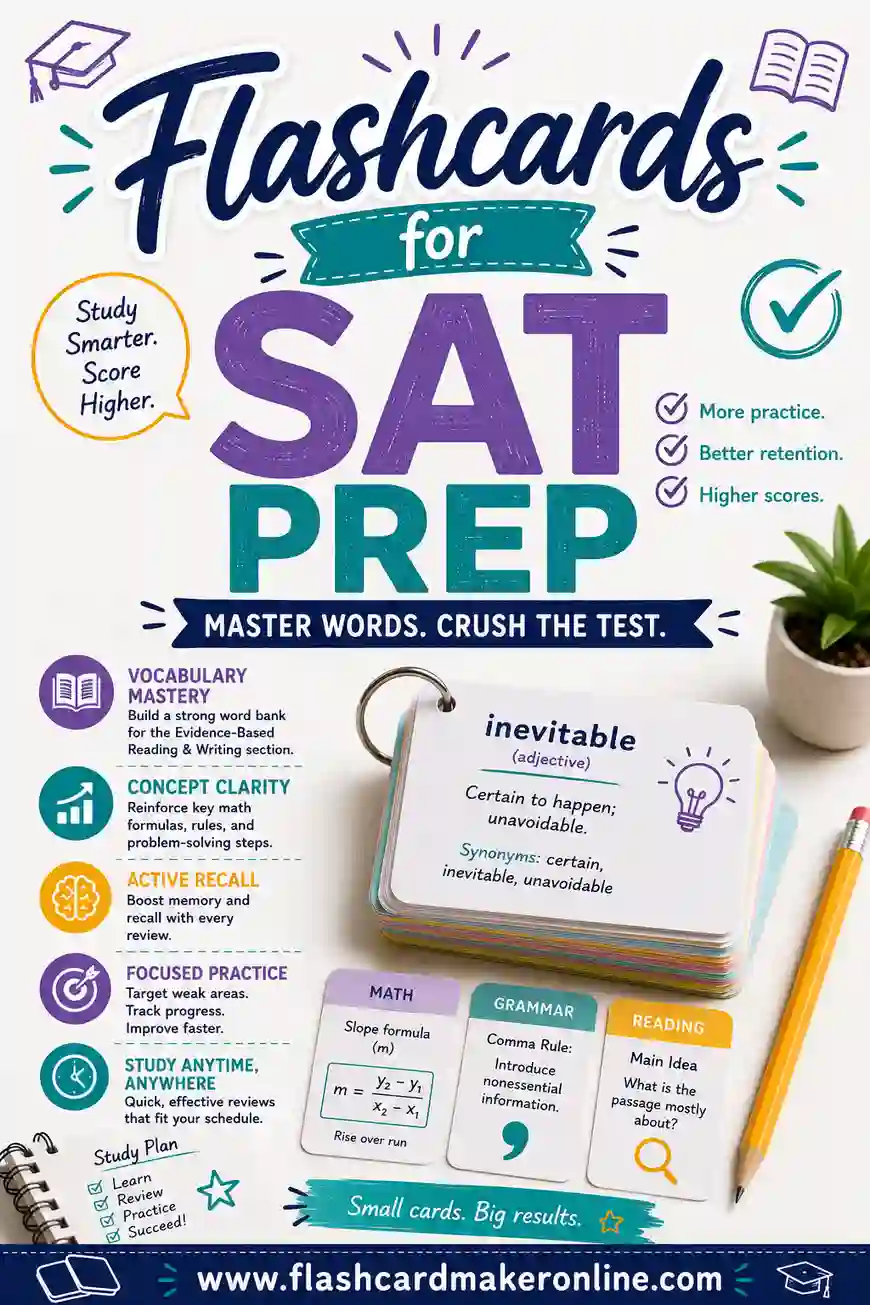
Grab your study buddies, open the free flashcard maker, and build a shared deck for tonight's session. Print a set for the table, pick a game, and turn review into something everyone actually enjoys. It's free with no sign-up. For your next step, see our guides on flashcards for spaced repetition and flashcards for SAT prep. Happy studying.