Flashcards for Kindergarten: Fun Learning Cards
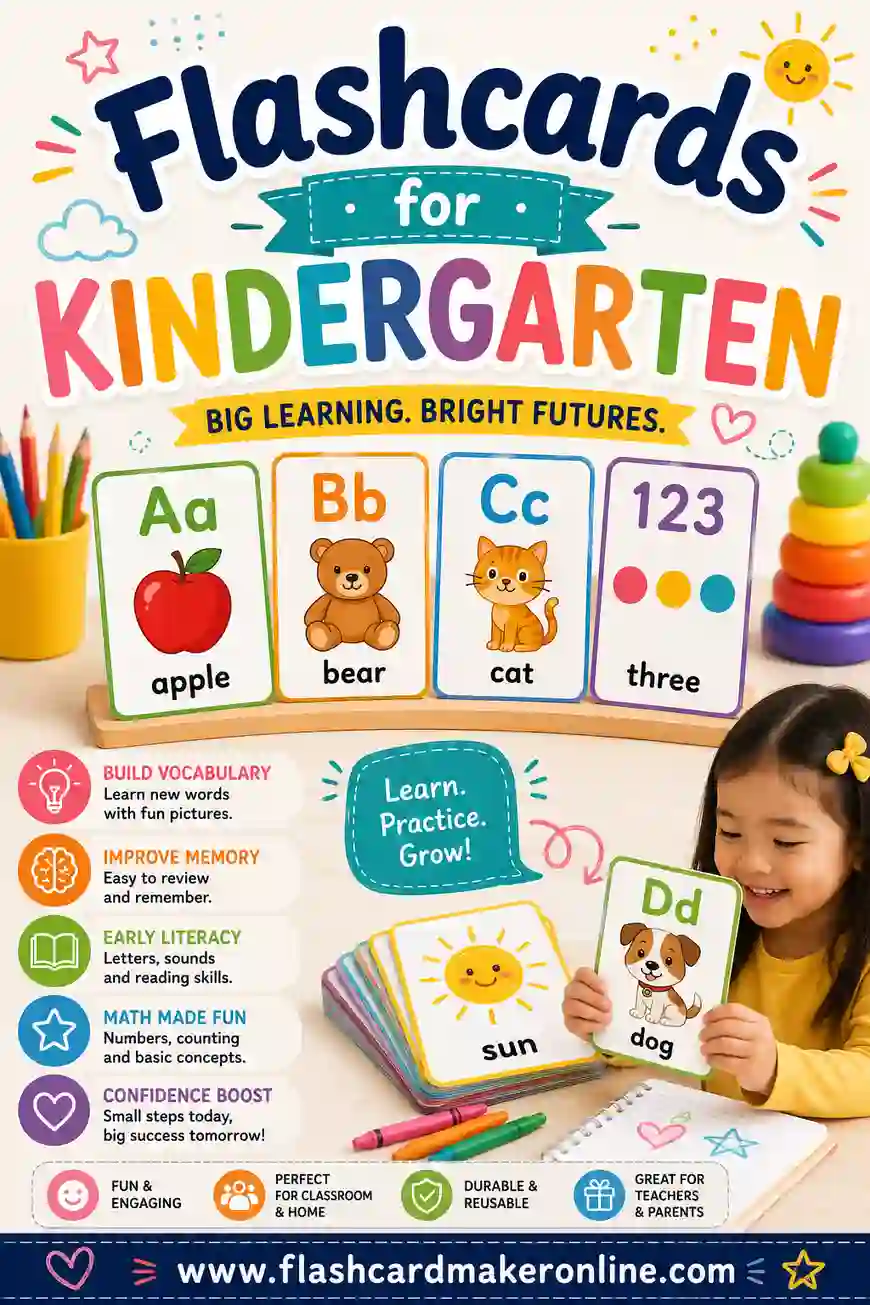
Flashcards for kindergarten are simple picture and word cards that help young kids learn letters, numbers, colors, shapes, and sight words. You show a card, your child names it, and short, playful sessions build early reading and math skills fast. The trick is to keep it fun and brief. The easiest way to start is to make your own set with a free flashcard maker, then print big, colorful cards at home.
Want cards for tonight? Open the free flashcard maker, type in letters, numbers, or words, and print a set in minutes. No sign-up, no cost, and you choose exactly what your child is working on.
Why Flashcards Work for Young Kids
Little kids learn through repetition, and they love it. Showing the same cards over and over, in a fun way, helps letters and numbers click. Flashcards make that repetition quick and playful instead of dull.
They also fit a kindergartner's short attention span. A flashcard session can be three minutes long and still count. You don't need a worksheet or a long lesson, just a few cards and a happy voice.
Here's what makes them work for this age:
- One idea per card. A single letter or number, nothing crowded. Easy for little eyes.
- Pictures help. A card with "A" and an apple connects the letter to something real.
- Fast wins. Naming a card right feels great, and that good feeling keeps kids coming back.
- You control the pace. Slow down on tricky cards, breeze through the easy ones.
The golden rule for this age: keep it light. The moment it feels like a chore, stop. Five happy minutes beats twenty grumpy ones.
What to Put on Kindergarten Flashcards
Kindergarten is all about the building blocks. Focus your cards on these:
- Letters. Uppercase first, then lowercase, then both together.
- Numbers. 1 through 10, then 11 through 20.
- Sight words. Common words like "the," "and," "is," and "you."
- Colors. Red, blue, green, yellow, and friends.
- Shapes. Circle, square, triangle, star.
- First words. Simple nouns paired with pictures: cat, dog, sun, ball.
Mix in pictures wherever you can. A picture turns an abstract symbol into something your child knows. The free flashcard maker lets you type the word, and you can keep cards clean and big for little learners.
A Sample Kindergarten Deck (Copy & Paste)
Here's a starter set covering letters, numbers, and sight words. Type it into the flashcard maker and print big, bright cards. Each row is one card: the prompt on the front, the helper on the back.
| Front | Back |
|---|---|
| A | Apple |
| B | Ball |
| C | Cat |
| D | Dog |
| E | Egg |
| 1 | One |
| 2 | Two |
| 3 | Three |
| 4 | Four |
| 5 | Five |
| Red | A color, like an apple |
| Blue | A color, like the sky |
| Green | A color, like grass |
| Circle | A round shape |
| Square | A shape with four equal sides |
| Triangle | A shape with three sides |
| the | A common sight word |
| and | A common sight word |
| is | A common sight word |
| you | A common sight word |
Start with just five or six cards at a time. A whole deck at once can overwhelm a little one. Add more as the first set gets easy.
Easy Flashcard Games for Kindergartners
Plain drilling gets boring fast at this age. Turn it into a game and your child won't even notice they're learning.
1. Name it
Show a card and ask, "What's this?" Cheer every right answer. For letters, ask for the sound too: "What does B say?"
2. Find the match
Lay a few cards face up and call one out. Your child races to point to it or grab it. Great for sight words and colors.
3. Hop to it
Spread number or letter cards on the floor and call them out. Your child hops to the right one. Movement plus learning equals a happy kid.
4. Card hunt
Hide a few cards around the room. When your child finds one, they name it before the hunt continues. Turns review into a treasure hunt.
5. Beat the clock
Set a gentle timer and see how many cards your child can name. Keep it pressure-free, the timer is just for fun, not a test.
Here's which game fits which skill:
| Skill | Best game |
|---|---|
| Letters | Name it, hop to it |
| Numbers | Hop to it, beat the clock |
| Sight words | Find the match, card hunt |
| Colors & shapes | Find the match, name it |
Keep sessions short and stop while it's still fun. You want your child asking to play again.
Tips for Making Great Kindergarten Cards
A few choices make a big difference for young eyes and hands:
- Go big. Large letters and pictures are easier for little ones to see and hold.
- One thing per card. No clutter. A single letter, number, or word.
- Use cardstock. Thick cards survive sticky fingers and lots of handling.
- Add color. Bright cards hold attention better than plain black and white.
- Let them help. Kids love coloring their own cards. It builds ownership and sneaks in extra practice.
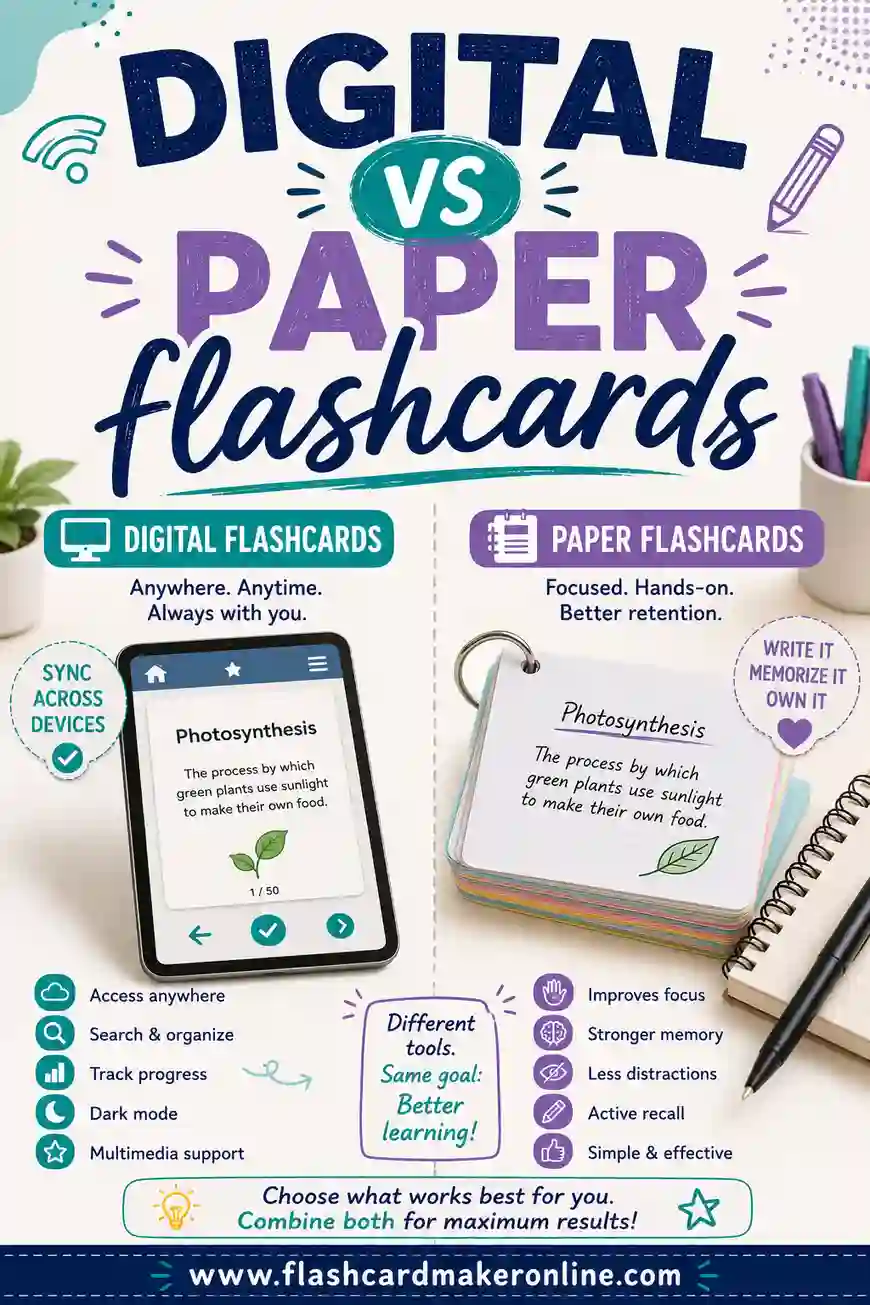
Printing on cardstock and laminating, or using clear sleeves, makes cards last through years of use and younger siblings. For a deeper look at format choices, see digital vs paper flashcards. For this age, paper usually wins, since real cards are easier for little hands and screen-free.
Keep It Fun and Stress-Free
The single most important tip: never let flashcards feel like pressure. Kindergartners learn best when they're relaxed and playing. If your child gets a card wrong, just smile, say the answer, and move on. No frowns, no drilling.
A few ways to keep it light:
- Stop before they're tired. End on a win, not a meltdown.
- Praise effort, not just answers. "Nice try!" keeps them confident.
- Follow their energy. Some days they'll want ten cards, some days two. Both are fine.
- Mix it up. Switch games often so it never feels like the same old drill.
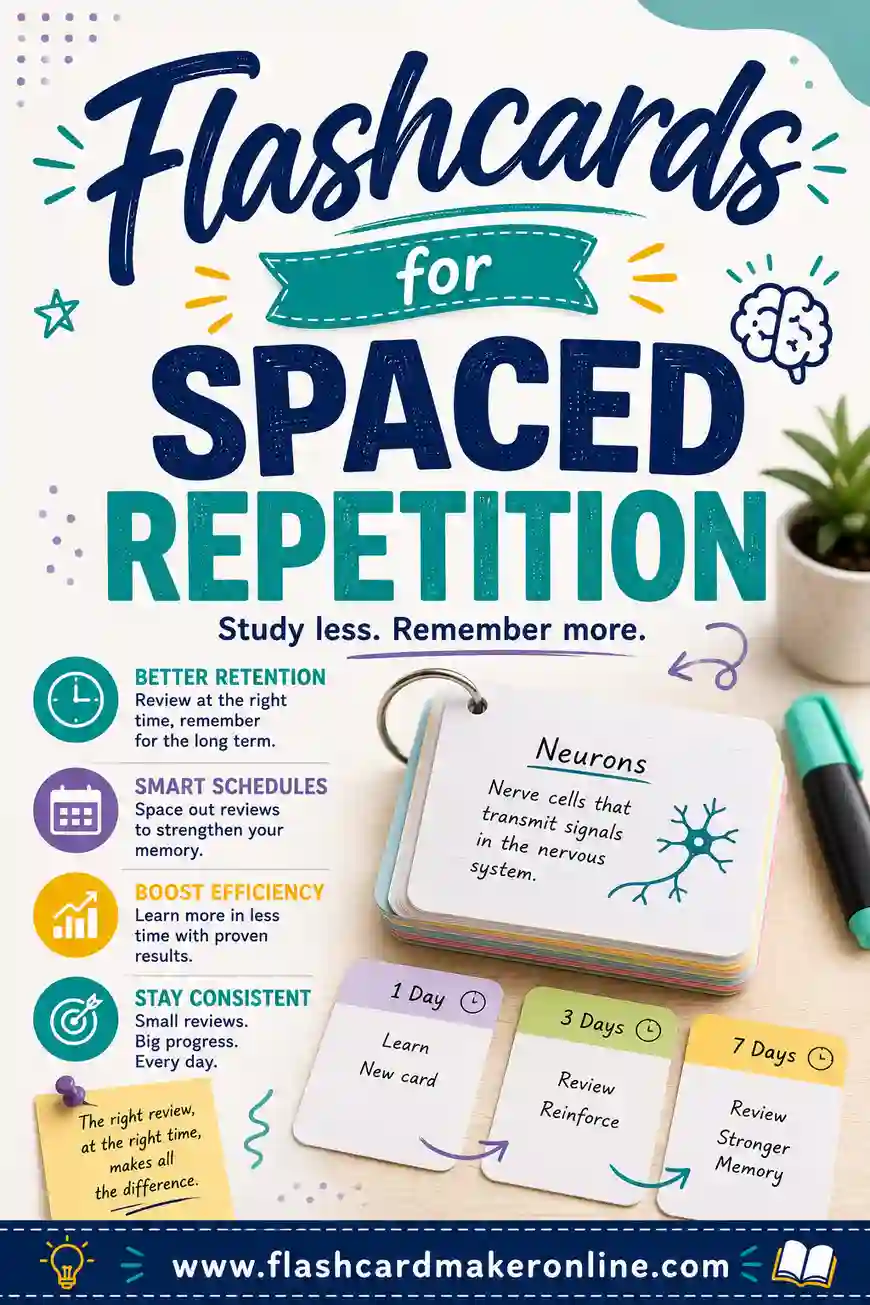
Short, happy sessions repeated over days beat one long push. A little every day is the secret. If you want to understand why spacing the practice works so well, our guide on flashcards for spaced repetition explains it in plain terms (and it applies to kids too).
A Simple Weekly Plan
You don't need a strict schedule for a kindergartner, but a loose rhythm helps the learning add up. Here's an easy plan you can bend to fit your week:
- Pick one focus. Maybe it's letters A through E this week, or numbers 1 to 5. One small goal keeps it manageable.
- Play a little each day. Three to five minutes, ideally at the same time, like after breakfast or before a bedtime story.
- Switch the game. Name it on Monday, find the match on Tuesday, hop to it on Wednesday. Same cards, fresh fun.
- Bring back the tricky ones. Set aside any card your child misses and slip it into the next day's set so it gets a little extra practice.
- Celebrate the win. At the end of the week, run through the cards and cheer how many they know now.
This gentle, spaced rhythm is the same idea behind spaced repetition for older students: a little practice spread across days beats one long push. The cards your child finds easy can rest while the harder ones come back more often.
Signs to add more cards
Wondering when to move on? Watch for these green lights:
- Your child names the cards quickly and confidently.
- They ask for harder cards or seem bored.
- They get the whole set right two days in a row.
When that happens, swap in a few new cards. Keep a couple of old favorites in the mix so the deck still feels familiar.
Studying Together
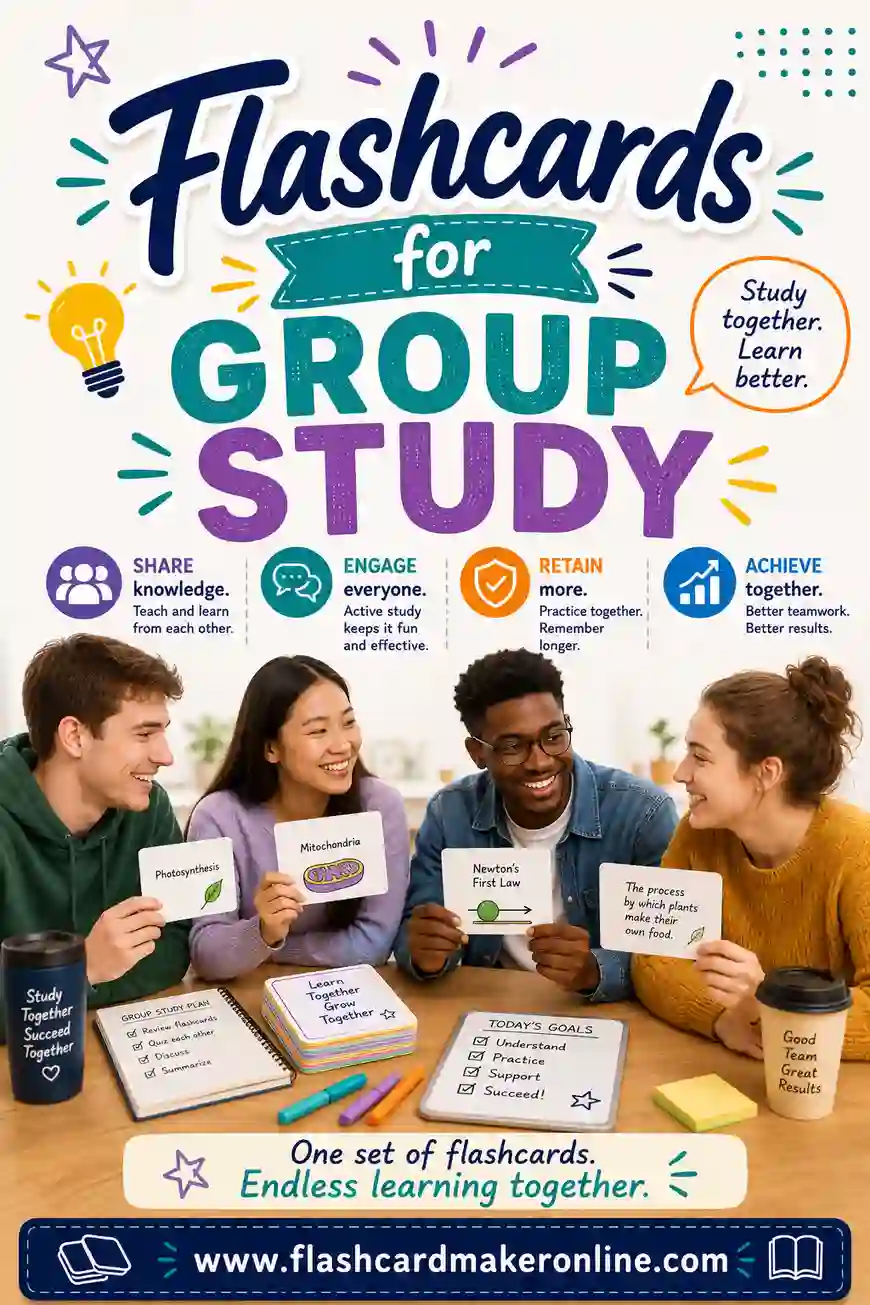
Flashcards are great for one-on-one time, but they also work with a small group of kids, like siblings or a playdate. Turn it into a friendly team game: one child holds up a card and the others call out the answer.
Keep the competition gentle at this age. The goal is fun and learning, not winners and losers. Cheer everyone on. For more group ideas you can simplify for little ones, see our guide on flashcards for group study.
Group play adds energy and helps shy kids learn from braver ones. Just keep the rounds short and the mood happy.
Frequently Asked Questions
What flashcards should a kindergartner start with?
Begin with uppercase letters and numbers 1 through 10, since those are the foundation. Add a few sight words, colors, and shapes once letters and numbers feel comfortable. Start with five or six cards at a time so your child isn't overwhelmed.
How long should a kindergarten flashcard session be?
Keep it short, three to ten minutes is plenty. Young kids have short attention spans, and brief, happy sessions repeated daily work far better than one long one. Always stop while it's still fun.
Are flashcards good for teaching kids to read?
Yes, especially for letters, letter sounds, and sight words, which are key early reading skills. Pair each letter with a picture and its sound. Flashcards build the quick recognition that makes reading flow later on.
Should I use paper or digital flashcards for young kids?
Paper usually wins for this age. Real cards are easier for little hands, screen-free, and great for active games like hopping and hunting. You can still make them quickly with a free flashcard maker and print a colorful set.
How do I make flashcards fun for my child?
Turn review into games: find the match, hop to the right card, or hunt for hidden cards. Keep your voice upbeat, cheer every effort, and let your child color their own cards. Fun is what keeps them coming back.
Can I make free kindergarten flashcards at home?
Yes. Our flashcard maker is free with no sign-up. Type in letters, numbers, or words, then print big, bright cards on paper or cardstock. You control exactly what your child practices.
Ready to Make Learning Fun?
Pick a skill your little one is working on, open the free flashcard maker, and print a set of big, colorful cards tonight. Keep sessions short, turn them into games, and cheer every win. It's free, there's no sign-up, and you choose exactly what to teach. For more ideas, see our guides on flashcards for spaced repetition and flashcards for group study. Happy learning.