Flashcards for Toddlers: Fun, Easy Learning at Home
Flashcards for toddlers are simple cards with a single picture or word, used in short, playful bursts to help little ones learn first words, colors, shapes, and numbers. The trick at this age is to keep it light, fast, and fun, more game than lesson. The easiest way to make a set is with a free flashcard maker where you type a word, add a picture in your mind, and print big, clear cards for tiny hands.
Want to make a set today? Open the free flashcard maker, type a handful of simple words like "dog," "ball," and "red," and print them out. No sign-up, no install, no cost.
Are Flashcards Good for Toddlers?
Used the right way, yes. Flashcards can be a fun, gentle way to build early vocabulary, name colors and shapes, and count to ten. The key word is fun. At this age, learning has to feel like play, never a drill.
Keep sessions short, a couple of minutes at most, and stop the moment your toddler loses interest. You're not testing them. You're showing them a picture, naming it together, and celebrating when they join in. If it stays cheerful, your child will ask to do it again, and that's where the real learning happens.
Flashcards also build something quieter but important: the back-and-forth of pointing, naming, and responding. That simple rhythm is great for early language, even before your child can say the words back.
What to Put on Toddler Flashcards
Toddlers do best with one clear thing per card and a big, simple picture. Skip anything busy or abstract. Stick to things they see and touch every day.
Great early categories:
- Animals — dog, cat, cow, duck, fish
- Food — apple, banana, milk, bread, egg
- Colors — red, blue, yellow, green
- Shapes — circle, square, triangle, star
- Numbers — 1 through 10
- Everyday objects — ball, cup, shoe, hat, car
- Body parts — nose, eyes, hands, feet
- Family — mama, dada, baby
The best first words are ones your toddler already hears all day. Naming a card and then pointing to the real thing ("Look, a cup, just like yours!") doubles the learning.
A Ready-Made Sample Deck
Here's a sample deck of simple toddler words to get you started. Each row is one card: a big word and picture on the front, and a friendly cue on the back for the grown-up to say. Make your own set in the flashcard maker.
| Word (front) | Grown-up cue (back) |
|---|---|
| Dog | Woof! A furry pet with four legs |
| Cat | Meow! A soft pet that purrs |
| Apple | A round fruit you can eat |
| Ball | A round toy you can roll and throw |
| Red | The color of an apple or a fire truck |
| Blue | The color of the sky |
| Circle | A round shape with no corners |
| Square | A shape with four equal sides |
| One | Hold up one finger |
| Two | Hold up two fingers |
| Duck | Quack! A bird that swims |
| Banana | A long yellow fruit |
| Cup | You drink from it |
| Shoe | You wear it on your foot |
| Star | A twinkly shape in the night sky |
| Cow | Moo! A big farm animal |
| Milk | A white drink that helps you grow |
| Hat | You wear it on your head |
| Car | It has wheels and goes vroom |
| Nose | The part of your face you smell with |
Twenty cards like this is plenty for a toddler. You can rotate a few at a time so it always feels fresh.
How to Use Flashcards With a Toddler
Keep it playful and short. Here's an easy routine.
- Pick just 3 to 5 cards. A toddler's attention is short. A few cards is a full session.
- Show one and name it. Hold it up, say the word clearly, and smile.
- Invite them to repeat. "Can you say dog?" If they do, cheer. If not, that's fine, move on.
- Point to the real thing. Connect the card to something in the room.
- Stop while it's still fun. End before they get bored so they want more next time.
Make it a game
Flashcards don't have to mean sitting still. Try these:
- Hide and find. Place a few cards around the room and ask your toddler to find the dog.
- Matching. Hold up a card and have them point to the real object.
- Sound game. Show the duck and ask, "What sound does a duck make?"
- Sorting. Mix animal and food cards and sort them into two piles together.
- Peekaboo. Cover a card and slowly reveal it, asking "What is it?" The little surprise keeps toddlers leaning in.
- Walk and name. Lay cards on the floor in a line and let your toddler step from one to the next, naming each as they go.
Games beat drills every time at this age, because a toddler who's laughing is a toddler who's learning. The goal isn't to get through the whole stack. It's to share a happy back-and-forth that builds words and connection at the same time.
Flashcards by Age
What works changes fast in the toddler years. Here's a rough guide.
| Age | Best focus | Tips |
|---|---|---|
| 12–18 months | First words, animals, food | Name the card, point to the real thing. Keep it under 2 minutes. |
| 18–24 months | Colors, body parts, simple objects | Ask them to repeat. Cheer every try. |
| 2–3 years | Numbers 1–10, shapes, more words | Turn it into a finding or matching game. |
| 3–4 years | Letters, counting, simple opposites | Let them "teach" you the cards back. |
Every child moves at their own pace. These are starting points, not deadlines. Follow your toddler's interest and you'll never go wrong. Some toddlers love numbers and ignore animals; others are the opposite. Lean into whatever lights them up, and the learning follows naturally.
Tips for Making Great Toddler Cards
A few choices make your cards easier and safer for little ones to use.
- Go big and simple. Large words and one clear picture per card. No clutter.
- Print on cardstock. Toddlers are rough on paper. Thicker cards last longer and survive a little chewing.
- Round the corners. Snip the sharp corners with scissors so the cards are safe for small hands.
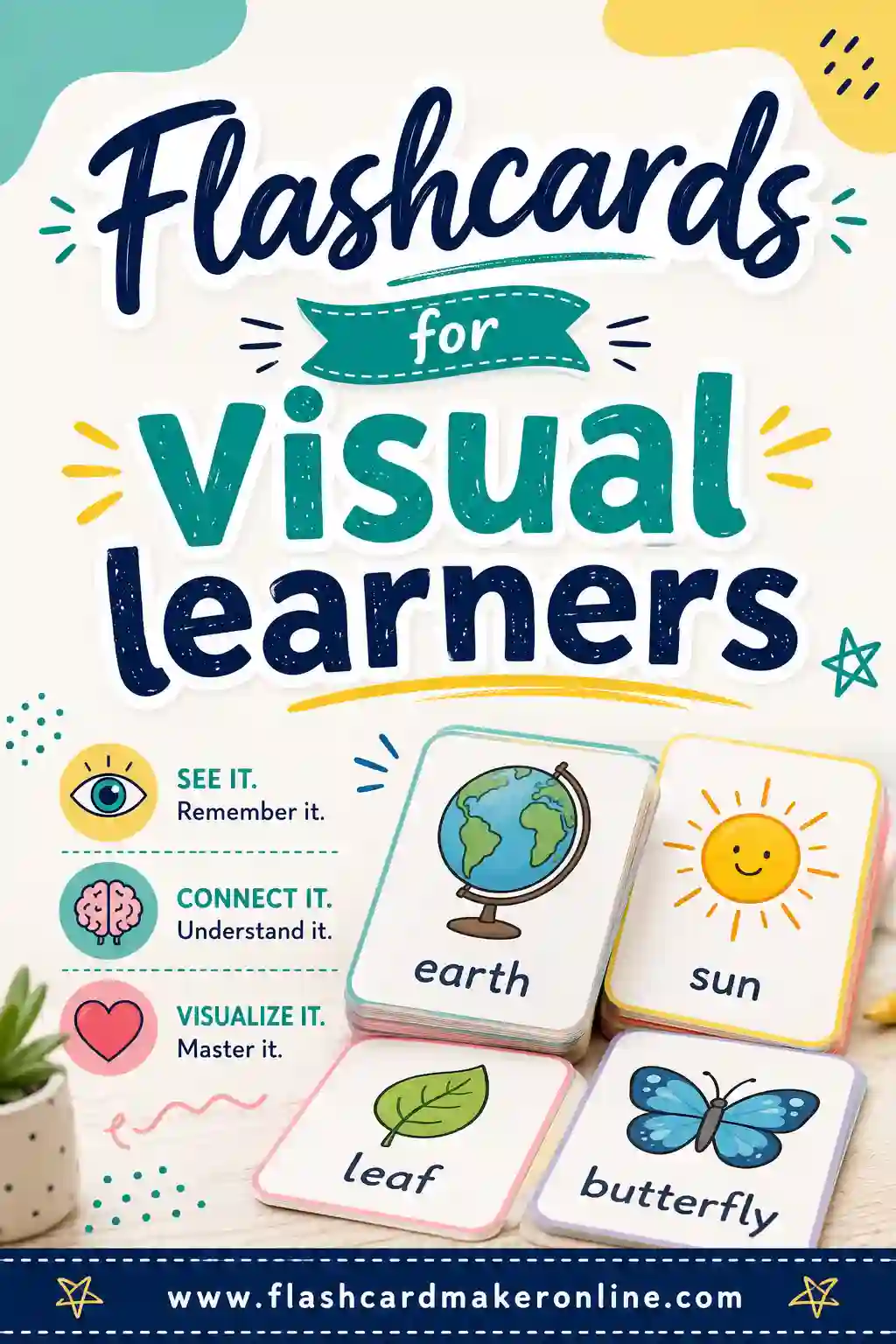
- Use bright colors. Color grabs a toddler's attention and helps with recognition. Our guide on flashcards for visual learners has more on using color well.
- Laminate if you can. A wipe-clean card survives snack time and sticky fingers.
- Rotate the set. Keep five or six cards in play and swap them out so the deck always feels new.
- Add a real photo when you can. A photo of your own dog or your toddler's cup connects the card to their actual world, which makes it click faster.
- Keep text minimal. One short word per card. Toddlers read the picture first, so don't crowd it with extra words.
Keeping It Stress-Free
The biggest mistake parents make is treating flashcards like a test. A toddler who feels pressured will lose interest fast. So will one who's tired or hungry.
Watch your child's signals. If they're pointing, repeating, and smiling, keep going. If they look away or push the cards aside, you're done for now, and that's perfectly fine. There's no schedule to keep. A two-minute burst of fun a few times a day beats a long session that ends in tears.
Above all, celebrate effort, not correctness. When your toddler tries to say a word, the win is the trying. The accuracy comes later, on its own.
Talk around the cards
The cards are just a starting point. The real magic is in the chatter around them. When you show the dog card, don't stop at "dog." Say, "A dog! Dogs go woof. Have you seen a dog at the park? It had a wagging tail." All that extra talk is pure language fuel, and it costs nothing.
This back-and-forth, where you name, your toddler points or babbles, and you respond, is one of the best things you can do for early speech. The flashcard simply gives you both something to point at and talk about together. So follow your toddler's lead. If they're fascinated by the duck, stay on the duck. There's no rush to move on.
Frequently Asked Questions
At what age can I start using flashcards with my toddler?
Many parents start around 12 to 18 months with simple picture cards of animals, food, and everyday objects. There's no rush. Follow your child's interest and keep every session short, playful, and pressure-free.
How long should a toddler flashcard session last?
Keep it under two or three minutes, or just a few cards. Toddlers have short attention spans, so several tiny sessions through the day work far better than one long one. Always stop while it's still fun.
How many flashcards should I show at once?
Start with just three to five cards. Showing too many at once overwhelms a toddler. Once a few words are familiar, swap in new cards and rotate the set so it stays fresh and interesting.
Should toddler flashcards have words or pictures?
Both, but the picture leads. A big, clear image is what a toddler reads first, with the word printed below it. Over time the word starts to register too, which builds early letter and reading awareness.
Are flashcards bad for toddlers?
Not when used gently. Problems come only from pressure, drilling, or screen-heavy use. Short, playful, hands-on sessions that follow your child's interest are a healthy, fun way to build early vocabulary.
Can I print my own toddler flashcards for free?
Yes. The free flashcard maker lets you type simple words and print big, clear cards at home. Use cardstock, round the corners, and laminate them so they hold up to busy little hands.
Ready to Make Toddler Flashcards?
Early learning works best when it feels like play, and flashcards give you a simple, cheerful way to share new words with your little one. Pick a few favorite objects, open the free flashcard maker, and print a set of big, bright cards for tiny hands. It's free, there's no sign-up, and you can make a whole deck in minutes. Keep it short, keep it fun, and enjoy watching those first words click.