Japanese Hiragana Flashcards: Free & Printable
Japanese hiragana flashcards are small cards with a hiragana character on one side (like あ) and its romaji sound on the other (like "a"). You see the character, say the sound out loud, then flip to check. The fastest way to learn all 46 is to use a free flashcard maker that lets you type each pair, flip the cards on screen, and print the full set at home.
Want to skip ahead and just make them? Open the free flashcard maker, enter the kana (the full chart is below), study them right in your browser, and print as many as you need. No sign-up, no fee, no app to install.
What Are Hiragana Flashcards?
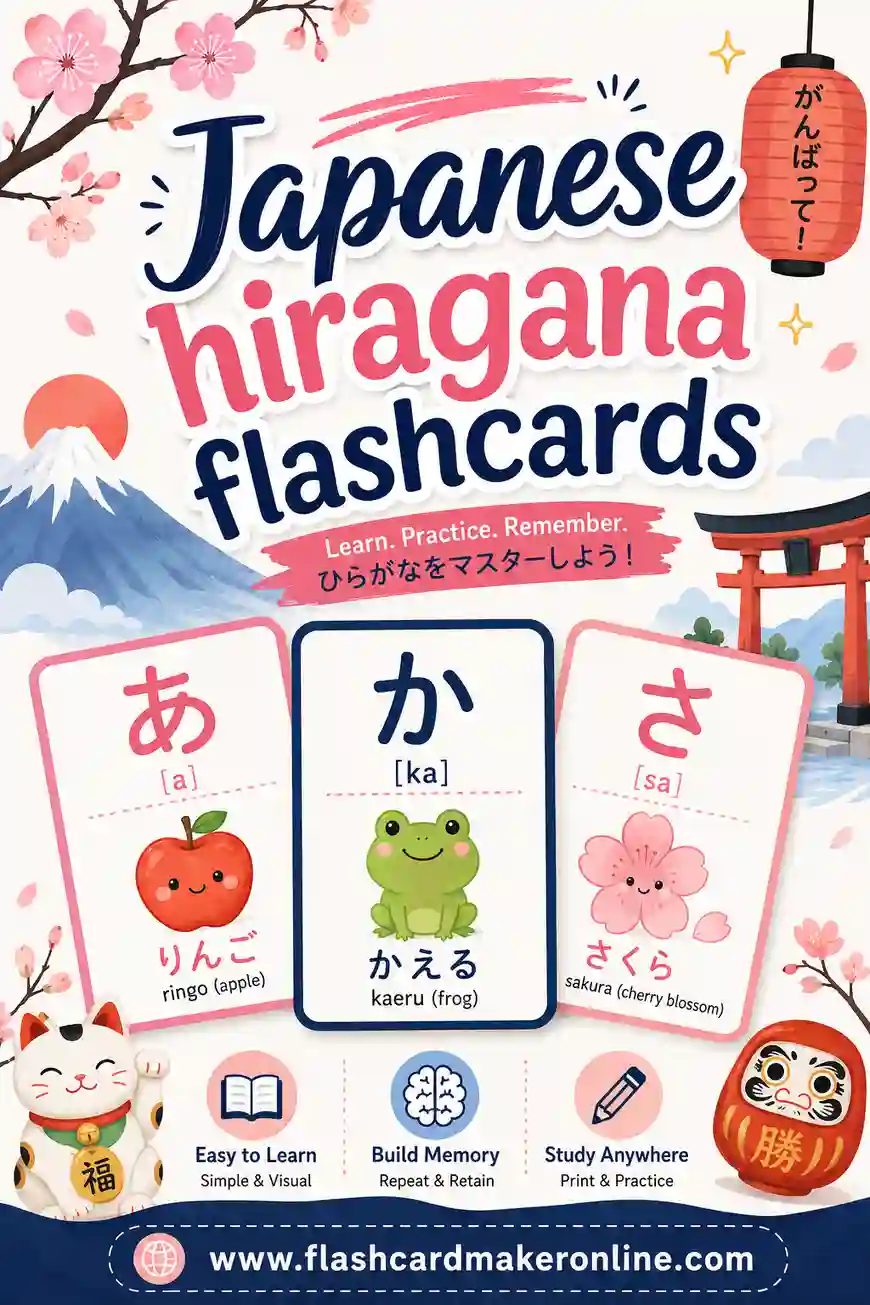
Hiragana is one of Japan's three writing systems, and it's where almost every learner starts. Each of its 46 basic characters stands for a single sound — あ is "a," か is "ka," and so on. A hiragana flashcard puts the character on one side and that sound (called romaji) on the other.
You quiz yourself by looking at the character, saying its sound aloud, then flipping to confirm. That tiny moment of recall — "is あ the 'a' sound or the 'o' sound?" — is the whole engine. It's called active recall, and it carves the character into memory far better than staring at a chart ever will.
You can study the deck two ways:
- Character to sound. See あ, say "a." This is reading practice — exactly what you need first.
- Sound to character. See "a," draw or recall あ. This is writing practice, and it's the next step once you can read.
A digital maker flips the whole deck with one setting, so a single set trains both reading and recall.
Why Flashcards Are Perfect for Hiragana
Hiragana is a closed set — just 46 basic characters — which makes it the ideal thing to drill with flashcards. There's a finish line, and you can see it.
- Active recall. Naming the sound before you flip locks the character in far better than rereading a chart.
- Spaced repetition. Review a character today, again in a few days, then a week later. Each pass makes it stick.
- It's a fixed goal. Unlike vocabulary, hiragana ends at 46. Most learners get there in one to two weeks of short daily sessions.
- You drill the look-alikes. Cards let you isolate the tricky pairs (like さ and ち, or ね and れ) and hammer them until they separate.
Keep sessions short. Ten to fifteen new characters a day, reviewed daily, beats trying to cram all 46 in one sitting.
The Full Hiragana Chart (Copy & Paste)
Here are all 46 basic hiragana with their romaji sounds, grouped by row the way Japanese learners study them. Copy these straight into the maker to build your full deck in one go.
| Hiragana | Romaji | Hiragana | Romaji |
|---|---|---|---|
| あ | a | た | ta |
| い | i | ち | chi |
| う | u | つ | tsu |
| え | e | て | te |
| お | o | と | to |
| か | ka | な | na |
| き | ki | に | ni |
| く | ku | ぬ | nu |
| け | ke | ね | ne |
| こ | ko | の | no |
| さ | sa | は | ha |
| し | shi | ひ | hi |
| す | su | ふ | fu |
| せ | se | へ | he |
| そ | so | ほ | ho |
| ま | ma | や | ya |
| み | mi | ゆ | yu |
| む | mu | よ | yo |
| め | me | ら | ra |
| も | mo | り | ri |
| わ | wa | る | ru |
| を | wo | れ | re |
| ん | n | ろ | ro |
That's the full set of 46. Notice the sounds aren't all "perfectly regular" — し is "shi" (not "si"), ち is "chi," つ is "tsu," and ふ is "fu." Those four are the ones beginners trip on most, so give them extra card time.
What to learn after the basics
- Dakuten (゛) and handakuten (゜). Small marks that turn か into が ("ga") or は into ば ("ba") and ぱ ("pa"). Add these as a second deck.
- Combo sounds (yōon). Pairs like きゃ ("kya") and しゅ ("shu") that squeeze two kana into one syllable.
- Katakana. The second kana set, used for foreign words. Same sounds, different shapes — a natural next deck.
How to Make Hiragana Flashcards in 4 Steps
No special skills needed. Here's the whole flow.
- Enter the kana. Type each character with its romaji using the chart above. The maker turns each pair into a flip card.
- Study one row at a time. Don't load all 46 at once. Master the あ row, then か, then さ, building up.
- Flip on screen. Run the deck both directions — character to sound, then sound to character.
- Print when ready. Print the set so you can shuffle, carry, and quiz yourself anywhere.
For lasting cards, print on cardstock and cut them apart. A small box of paper kana cards is great for a quick run while you wait for the bus.
Smart Ways to Study Your Hiragana Deck
Making the cards is the easy part. Studying them well is where it clicks. A few habits that pay off:
Learn by row, not all at once
Japanese hiragana is organized in rows of five (a-i-u-e-o, ka-ki-ku-ke-ko, and so on). Drill one row to mastery before adding the next. The structure does half the memorizing for you.
Say every sound out loud
When a character flips, say its sound aloud. Hiragana is phonetic, so the sound never changes — locking the voice to the shape is the fastest path to fluent reading.
Isolate the look-alikes
A handful of characters are easy to mix up: さ/ち, ね/れ/わ, は/ほ, ぬ/め. Pull just those into a "tricky" deck and run it until they stop tripping you. This is where flashcards beat a wall chart.
Use spaced repetition
Once a character is solid, see it less often and give the shaky ones more passes. Spacing your reviews is what turns short-term recognition into permanent reading ability.
A Realistic Learning Plan
You can learn all of hiragana faster than you'd think with short daily sessions. Here's a one-week plan that works for most people.
| Day | New kana | Focus |
|---|---|---|
| 1 | あ, か rows (10) | Read aloud, flip both ways. |
| 2 | さ, た rows (10) | Watch shi, chi, tsu carefully. |
| 3 | な, は rows (10) | Review days 1–2 first. |
| 4 | ま, や rows (8) | Add a "tricky look-alikes" deck. |
| 5 | ら, わ rows + ん (8) | All 46 now in rotation. |
| 6 | none | Full review, sound-to-character. |
| 7 | none | Speed pass; retire the easy cards. |
Stick to ten to fifteen minutes a day. Daily and short always beats one long weekend cram, because the spacing is what makes the kana stick.
Tips for Crisp, Reusable Printed Cards
If you're printing your hiragana flashcards, these small choices help.
- Use cardstock. Plain paper bends; cardstock survives daily shuffling.
- Print double-sided. Character on the front, romaji on the back, for a true flip.
- Add a stroke-order hint. A tiny number guide in the corner helps if you're also learning to write.
- Group by row. Rubber-band each row so you can drill one set at a time.
- Test one page first. Print a single sheet to check the characters render clearly before the full run.
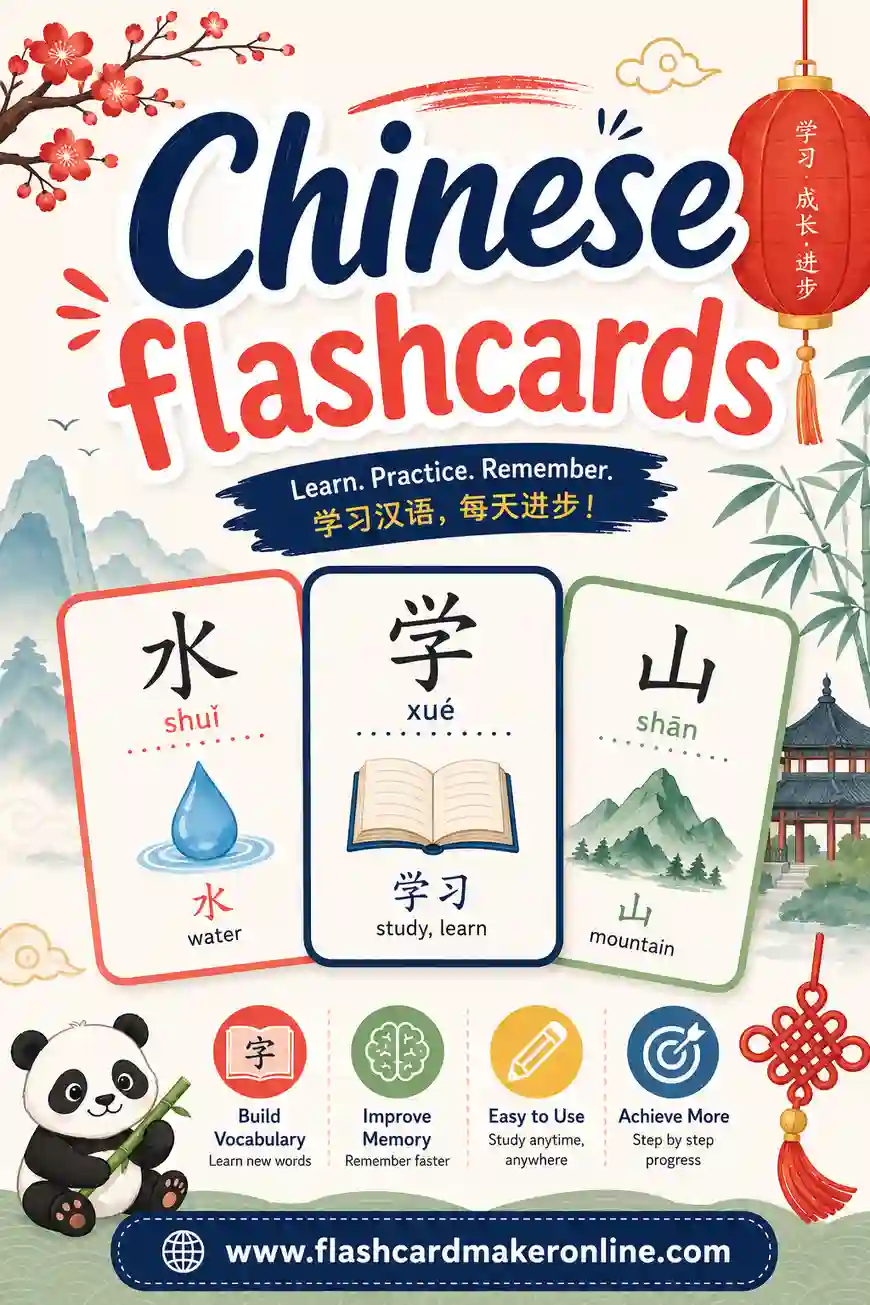
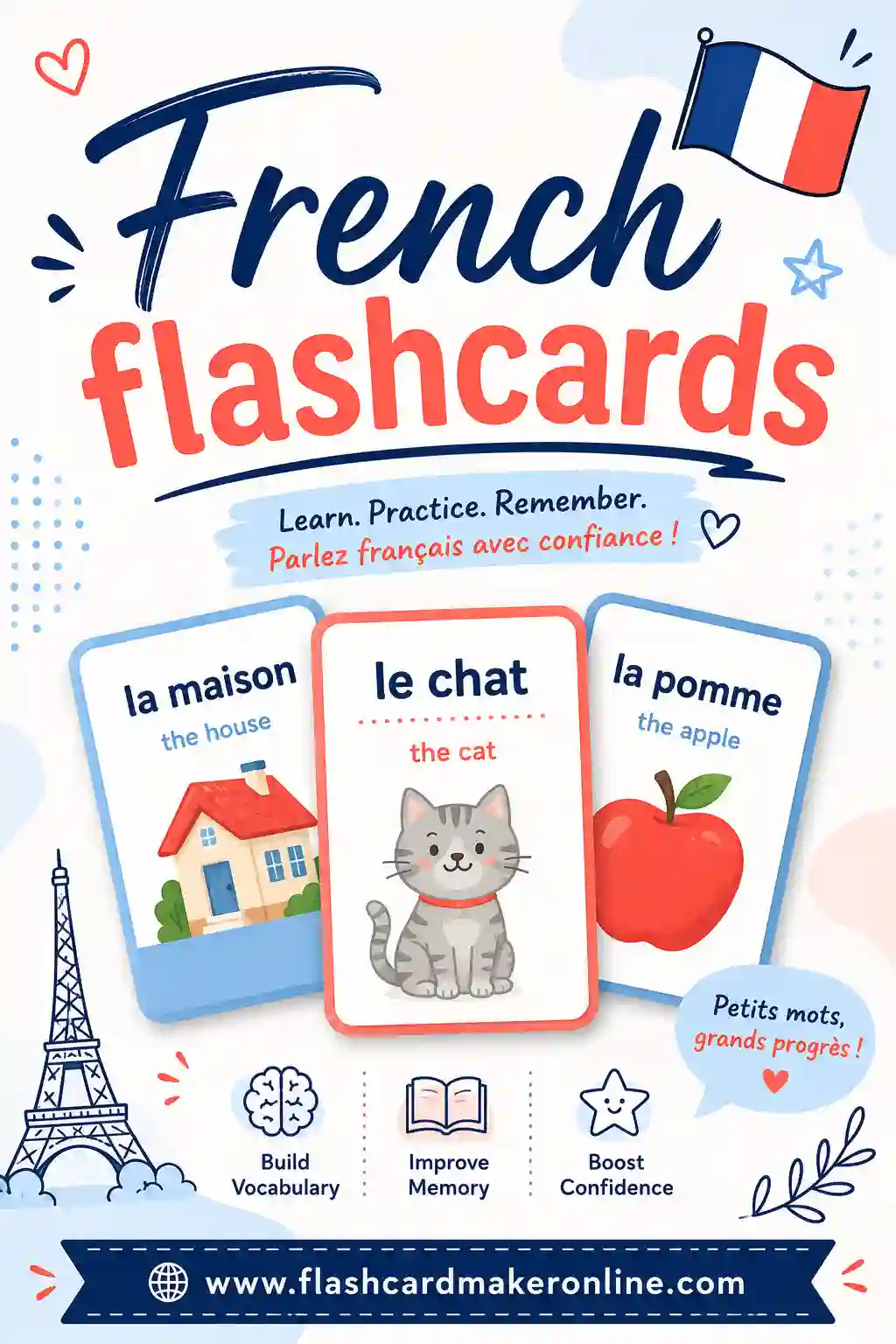
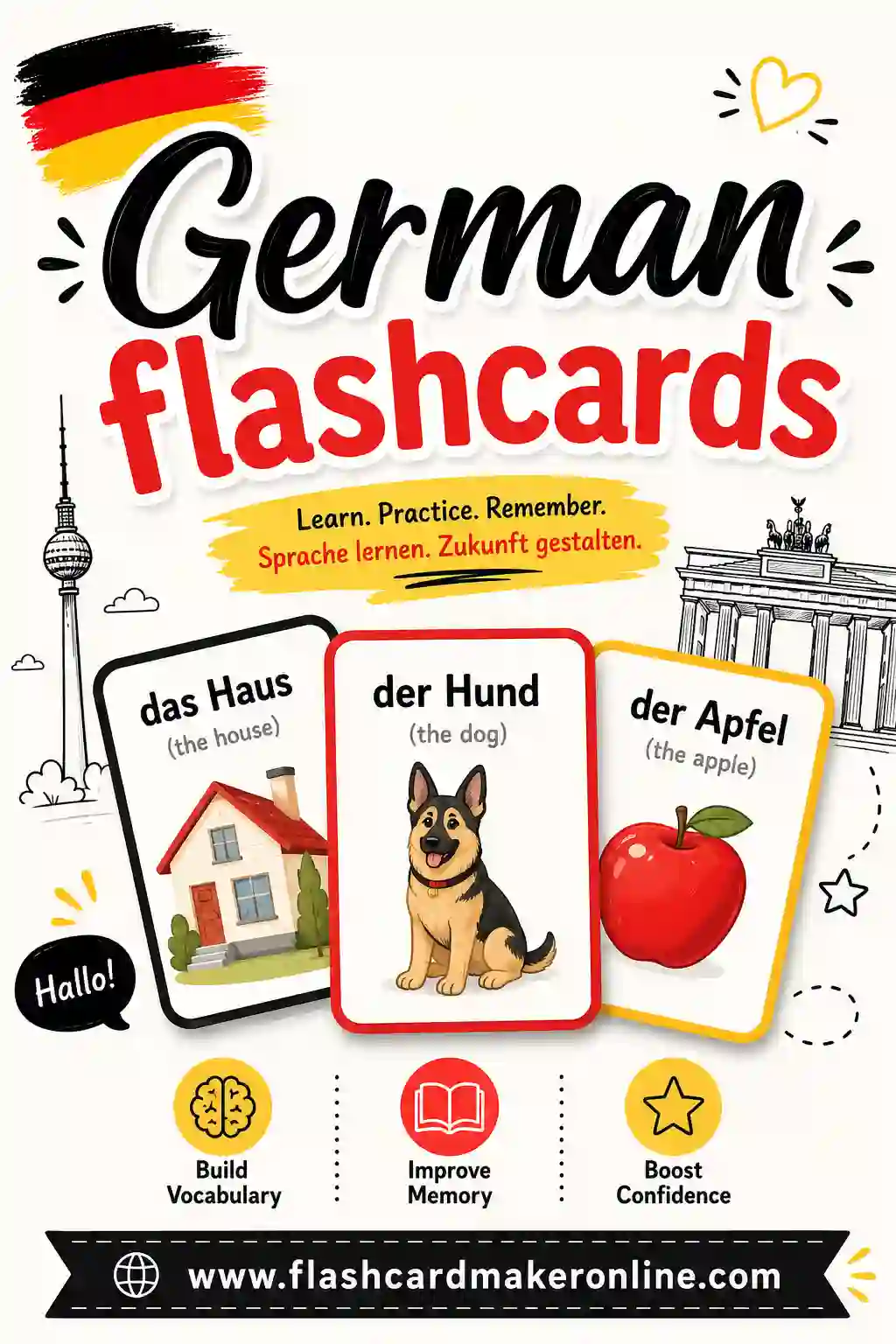
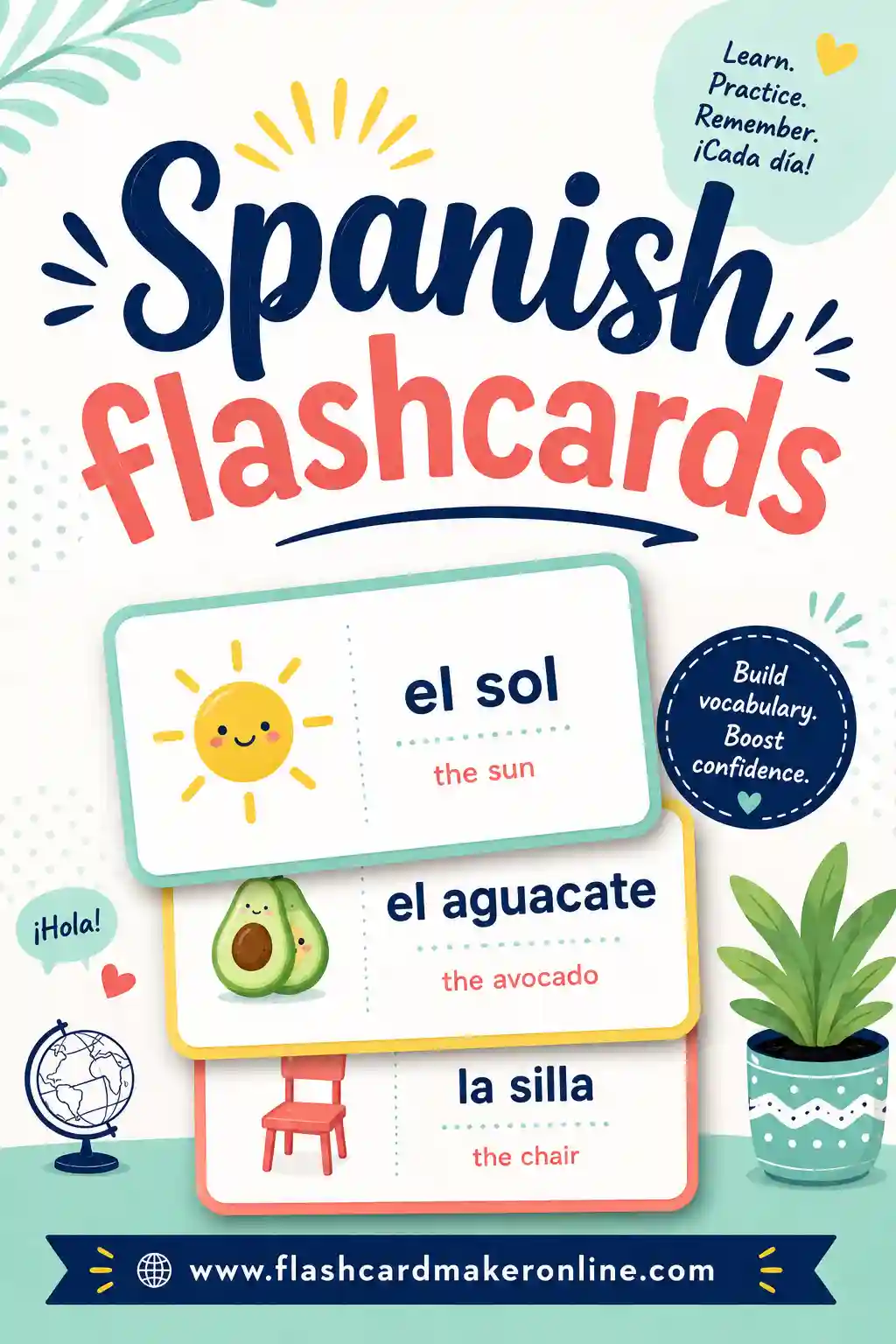
Studying Japanese alongside other languages? You can build the same kind of set with our Chinese flashcards, French flashcards, and German flashcards.
Common Mistakes to Avoid
Hiragana is a short, beatable list, but a few habits trip up learners on the way. Here's what to watch for.
- Leaning on romaji too long. Romaji is a crutch, not the goal. If you read "a" off the back of every card, you never learn to read あ itself. Cover the romaji as soon as a row feels familiar.
- Trying to learn all 46 at once. The set is small, but cramming it in one sitting blurs the look-alikes together. Drill one row of five at a time and let each settle before adding the next.
- Skipping the tricky pairs. さ/ち and ね/れ/わ won't sort themselves out by accident. Give them their own deck and extra reps until the shapes separate cleanly.
- Studying silently. Hiragana is phonetic — every character has a fixed sound. Say each one aloud when it flips so reading and pronunciation grow together.
- Quitting before review days. Learning a row once isn't enough. The spaced review passes are what turn shaky recognition into instant, automatic reading.
Avoid these and hiragana falls into place fast — most learners are reading kana comfortably inside two weeks.
Frequently Asked Questions
How long does it take to learn hiragana with flashcards?
Most people learn all 46 in one to two weeks of short daily sessions. Ten to fifteen minutes a day, drilling one row at a time and reviewing the day before, gets you reading kana faster than you'd expect.
Are these hiragana flashcards free to make and print?
Yes. You build and print them yourself at no cost. There's no sign-up and no watermark, so you can make the full 46-card deck (plus dakuten and combos) for free and reprint any time.
Should I learn hiragana or katakana first?
Hiragana first. It's used for native Japanese words and grammar, so it shows up everywhere from day one. Katakana, used for foreign words, makes a natural second deck once hiragana feels solid.
Which hiragana characters are hardest to tell apart?
The classic mix-ups are さ/ち, ね/れ/わ, は/ほ, and ぬ/め. Pull just those into a separate "tricky" deck and drill them on their own until the shapes separate clearly in your mind.
Should I study character-to-sound or sound-to-character?
Both, in that order. Character-to-sound builds reading, which you need first. Once you can read a row reliably, flip to sound-to-character to practice recalling and writing each kana.
Do I need to learn romaji too?
Use romaji only as a temporary crutch on the back of each card. The goal is to read あ as "a" instantly, without the romaji. Lean on it early, then wean off it as the characters become automatic.
Ready to Build Your Hiragana Flashcards?
Grab the full chart above, open the free flashcard maker, and you'll have a complete hiragana deck you can flip, study, and print in minutes. It's free, there's no sign-up, and you can drill one row at a time, so your study time goes straight to reading real Japanese. がんばって — good luck!