Multiplication Flashcards: Free to Make, Study & Print
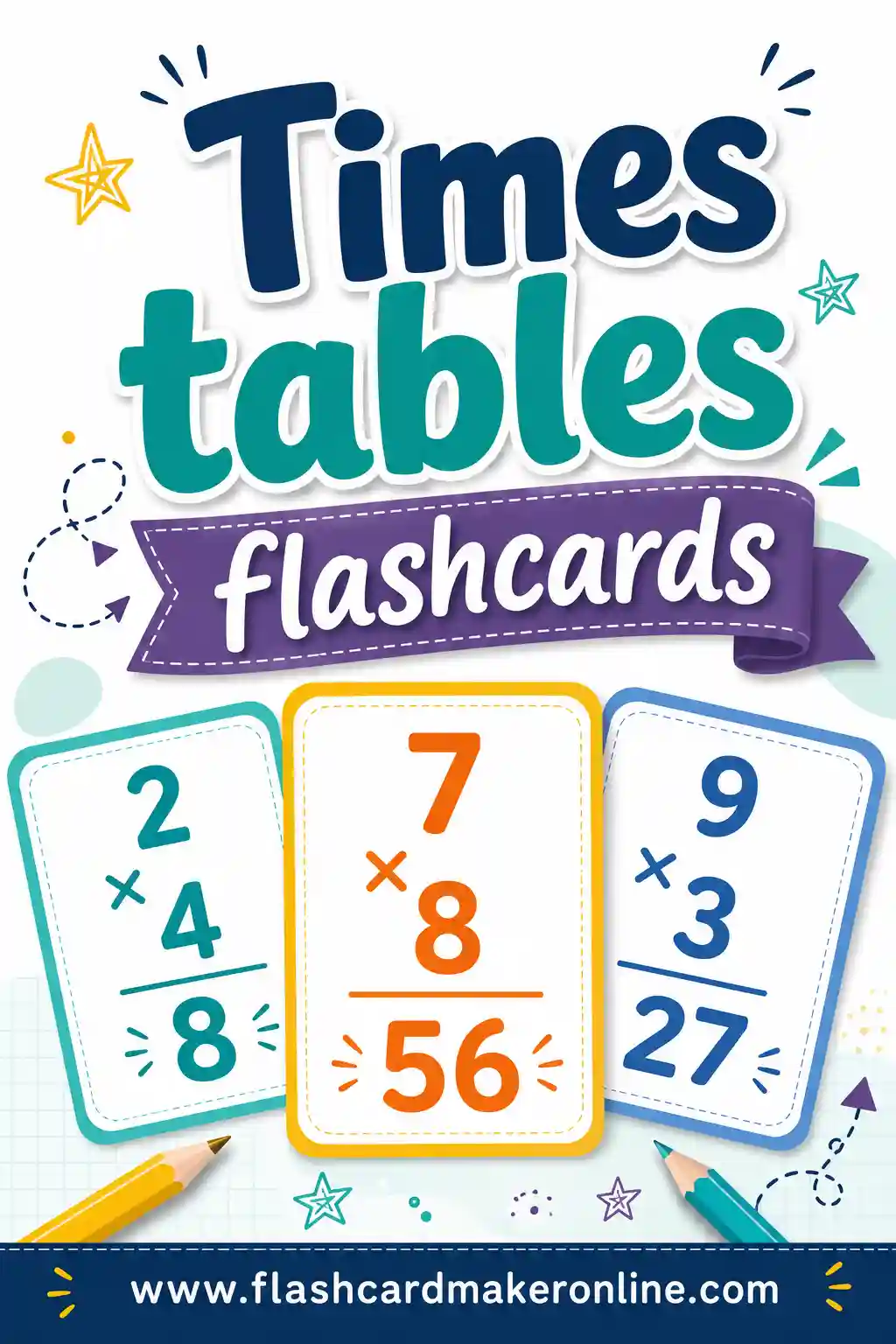
Multiplication flashcards are two-sided cards with a multiplication problem on one side, like 7 × 8, and the answer on the other, 56. A child reads the problem, says the answer, then flips to check. The fastest way to build a full set is a free flashcard maker that lets you type your facts, flip through them on screen, and print a clean deck for daily practice.
Want to start right now? Open the free tool, add the facts you're working on (there's a full times-table deck below), and you'll be flipping through cards in under a minute. No sign-up, no app to install, nothing to pay.
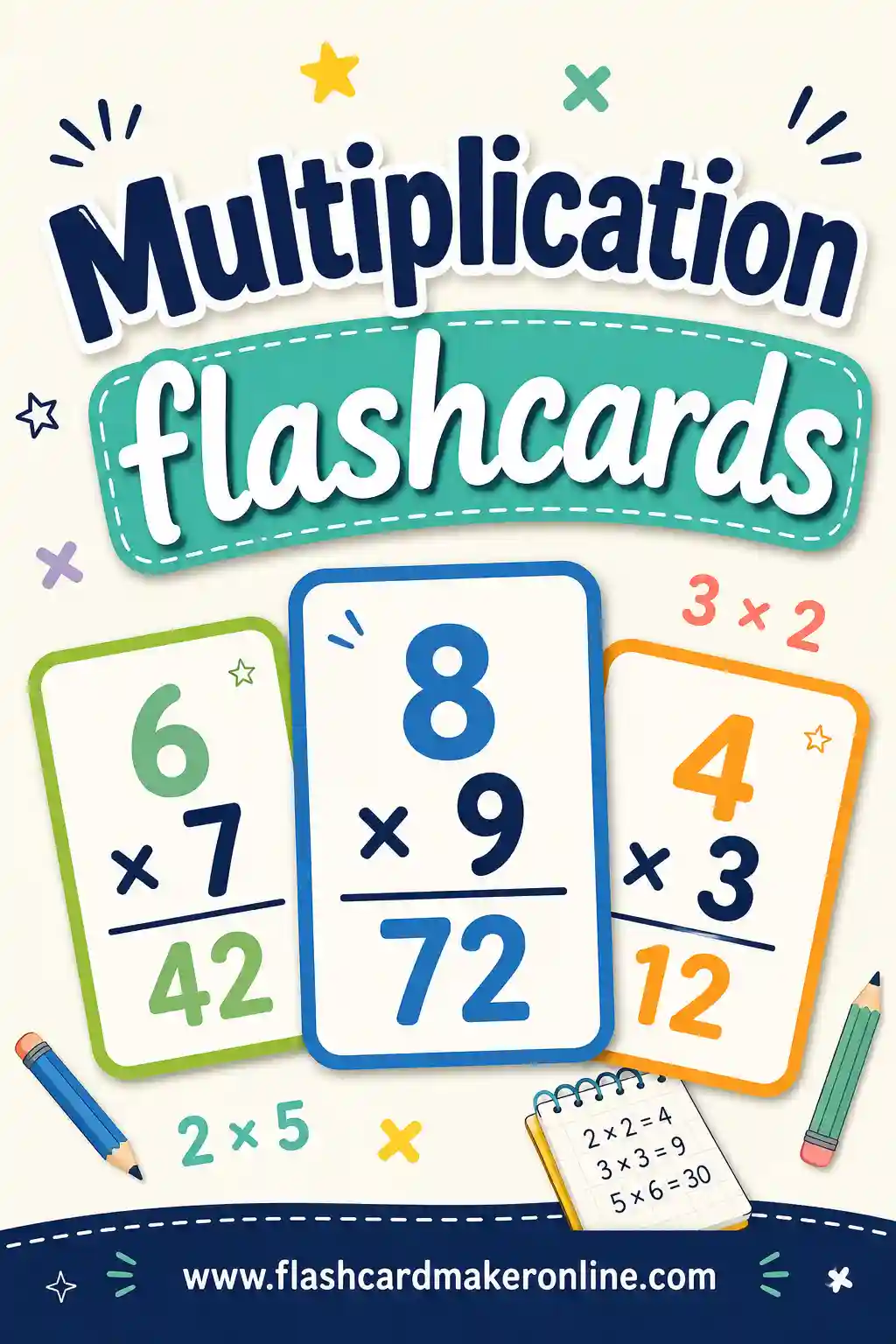
What Are Multiplication Flashcards?
A multiplication flashcard is as simple as it gets. The front shows a fact, like 6 × 7. The back shows the answer, 42. The child looks, answers out loud, and flips to check. Right or wrong, every flip is a tiny bit of learning.
The reason this works so well is active recall. When a child has to pull "42" out of memory before flipping the card, the brain does real work, and that effort is what turns a fact into something automatic. Just listening to the times tables or reading a chart doesn't build that same fast, confident recall. The flip does.
The goal with multiplication is fluency: answering instantly, without counting on fingers or pausing to figure it out. Flashcards are the most direct path there, because they drill the exact skill you want — quick recall of a single fact.
Why Flashcards Beat a Times-Table Chart
A wall chart is a fine reference, but it teaches recognition, not recall. A child can stare at a chart all day and still freeze on 8 × 7 during a timed test, because the chart was doing the remembering for them.
Flashcards flip that around. There's no chart to lean on, so the child has to produce the answer. And because each card is one fact, you can do the most important thing in math practice: spend extra time on the few facts that are actually hard. Most kids know their 2s and 5s quickly. It's the 6s, 7s, 8s, and that infamous 7 × 8 that need the reps.
The other key is spaced repetition. A child won't lock in 7 × 8 after one good day. They need to meet it again tomorrow, and the day after, with the gaps slowly growing. Five minutes of flashcards a day beats a long, frustrating session once a week, every time.
A Full Multiplication Flashcard Deck (Tricky Facts)
You could drill all 144 facts, but most kids only struggle with a couple of dozen. Here's a deck of the ones that trip up nearly every student. Copy any rows into the flashcard maker and focus your practice where it counts.
| Problem | Answer |
|---|---|
| 6 × 6 | 36 |
| 6 × 7 | 42 |
| 6 × 8 | 48 |
| 6 × 9 | 54 |
| 7 × 6 | 42 |
| 7 × 7 | 49 |
| 7 × 8 | 56 |
| 7 × 9 | 63 |
| 8 × 6 | 48 |
| 8 × 7 | 56 |
| 8 × 8 | 64 |
| 8 × 9 | 72 |
| 9 × 6 | 54 |
| 9 × 7 | 63 |
| 9 × 8 | 72 |
| 9 × 9 | 81 |
| 4 × 7 | 28 |
| 4 × 8 | 32 |
| 4 × 9 | 36 |
| 3 × 7 | 21 |
| 3 × 8 | 24 |
| 7 × 7 | 49 |
| 12 × 6 | 72 |
| 12 × 7 | 84 |
| 12 × 8 | 96 |
Master these and the rest of the times tables tend to fall into place. When a fact becomes instant, set it aside and add new ones.
One table at a time
Don't dump all the facts on a child at once. Build small decks and conquer them in order:
- Start easy — 2s, 5s, and 10s build confidence fast.
- Then the middles — 3s, 4s, and 6s.
- Save the hardest for last — 7s, 8s, and 9s, once the easier facts feel solid.
A child who feels successful keeps practicing. A child who feels swamped quits.
How to Make Multiplication Flashcards in 4 Steps
No design skills needed. Here's the whole process.
- Open the tool. Go to the flashcard maker. Nothing to install.
- Add your facts. Type the problem on the front (7 × 8) and the answer on the back (56). Paste a whole table at once if you like.
- Flip and practice. Click through the deck, shuffle so the order changes, and set aside the facts your child gets instantly.
- Print for the table or the car. Print a paper set on cardstock for screen-free drills, homework time, or quizzing on the go.
A small tip: make cards for both 6 × 7 and 7 × 6. Kids often know a fact one way but freeze when it's flipped. Drilling both directions builds true fluency.
Smart Ways to Practice Multiplication Facts
Making the deck is the easy part. Practicing it well is what builds speed. A few habits make a real difference.
Keep it short and daily
Five minutes a day beats thirty minutes once a week. Math facts settle into memory through repetition over time, so a quick daily flip is the single most effective routine. Tie it to something regular, like right after dinner, so it doesn't get skipped.
Focus on the few hard facts
Don't waste time drilling 2 × 2 if your child nails it. Pull out the three or four facts they keep missing and give those extra reps. This is the biggest time-saver in math practice: drill the hard stuff, skim the easy stuff.
Make it a game, not a test
Beat-the-clock challenges, a small reward streak, or racing a parent keeps practice fun. A child who's relaxed recalls facts faster than one who's stressed about being "tested." Keep the tone light.
Use the Leitner method
Sort cards into three piles based on how well your child knows each fact:
| Pile | What's in it | How often to drill |
|---|---|---|
| Daily | Facts they miss or hesitate on | Every day |
| Few days | Facts they get, but slowly | Every 2–3 days |
| Weekly | Facts they nail instantly | Once a week |
Get a card right twice and it moves up; miss it and it drops back to daily. Hard facts get the most attention, mastered facts stay fresh without eating up time.
Multiplication Flashcards for Different Stages
Match the deck to where your child is.
Just starting out
Begin with the 2s, 5s, and 10s, which follow easy patterns. Keep decks tiny — five or six cards — so early wins build confidence. Pair each fact with a picture of equal groups (three rows of two) so the meaning of multiplication lands, not just the answer.
Building fluency
Once the easy tables are solid, layer in the 3s, 4s, and 6s, then the tricky 7s, 8s, and 9s. Mix old facts with new ones so nothing gets forgotten. Aim for instant answers, not just correct ones.
Prepping for timed tests
Many schools give timed multiplication quizzes. Practice with a timer at home so the format isn't a surprise, and drill the specific facts your child slows down on. Speed comes from removing the few weak spots, not from grinding the facts they already know.
Working on the full times tables or other math skills? See our times tables flashcards and math facts flashcards guides, plus our addition flashcards tips for younger learners.
Printable vs. Digital Multiplication Cards
Both formats build the same fluency, so let your child's habits decide.
Printable cards are great for the kitchen table, the car, and homework time. There's no screen to distract a young child, and a physical stack feels like a manageable goal — "let's get through these ten." Print on cardstock so they survive sticky hands and daily shuffling, and keep the hard-fact pile in a pocket for quick reps anywhere.
Digital cards win for instant shuffling and quick daily drills. You can change the order in a tap so your child can't memorize the sequence instead of the facts, and you can quietly set aside the facts they've mastered. No printing, no scissors, no lost cards under the couch.
You don't have to choose. Build the deck once in the tool, drill on screen during the week, and print a stack for a screen-free weekend or a long drive. Same facts, two formats.
Fun Ways to Keep Practice Going
Drills get stale, and a bored child stops trying. A few twists keep multiplication practice feeling like a game.
- Beat the timer. Set a 60-second clock and count how many facts your child answers. Try to beat the score the next day.
- Race a parent. Take turns answering. Kids love a chance to out-quick a grown-up.
- Build a streak. Mark a calendar for each day of practice. A growing chain of checkmarks is surprisingly motivating.
- Fact of the day. Pick one tricky fact each morning and sneak it into conversation all day. By bedtime, it's stuck.
- Reward the hard pile. When a stubborn fact finally becomes instant, celebrate it. Moving 7 × 8 from "hard" to "easy" is a real win.
Keep the mood light and the sessions short, and practice becomes something your child does without a fight.
Frequently Asked Questions
What's the best order to learn the multiplication tables?
Start with the easy patterns — 2s, 5s, and 10s — to build confidence. Then move to 3s, 4s, and 6s, and save the 7s, 8s, and 9s for last. Tackling the hardest facts after the easy ones are solid keeps kids from getting overwhelmed.
Are these multiplication flashcards really free to make and print?
Yes. You build and print them yourself at no cost. There's no sign-up and no watermark, so you can make a small deck of tricky facts or the full times tables on the same free tool.
How long should we practice each day?
Five to ten minutes a day is plenty. Short, daily sessions build math fluency far better than one long weekly drill. Consistency matters much more than length, so a quick flip every day is the winning routine.
Should I drill both 6 × 7 and 7 × 6?
Yes. Kids often know a fact one direction but freeze when it's reversed. Making cards for both orders builds true fluency and prevents that frozen moment on a timed test. The free tool makes adding both quick.
My child knows the answers but is slow. What helps?
Speed comes from repetition and from drilling only the slow facts. Identify the three or four facts your child hesitates on and give those extra daily reps. Adding a light timer or a beat-your-best game also nudges speed without adding stress.
How long until the facts become automatic?
With five minutes of focused daily practice, most kids master a small deck of tricky facts within two to three weeks. The key is showing up briefly every day and drilling the hard facts more than the easy ones. Spacing and repetition do the work.
Ready to Build Your Multiplication Deck?
Grab the fact list above, open the free flashcard maker, and you'll have a multiplication deck ready to flip in minutes. It's free, there's no sign-up, and you can practice on screen or print a stack for the kitchen table. Pick your facts, keep it short and daily, and watch those times tables click into place.