Math Facts Flashcards: Free, Printable & Easy to Study
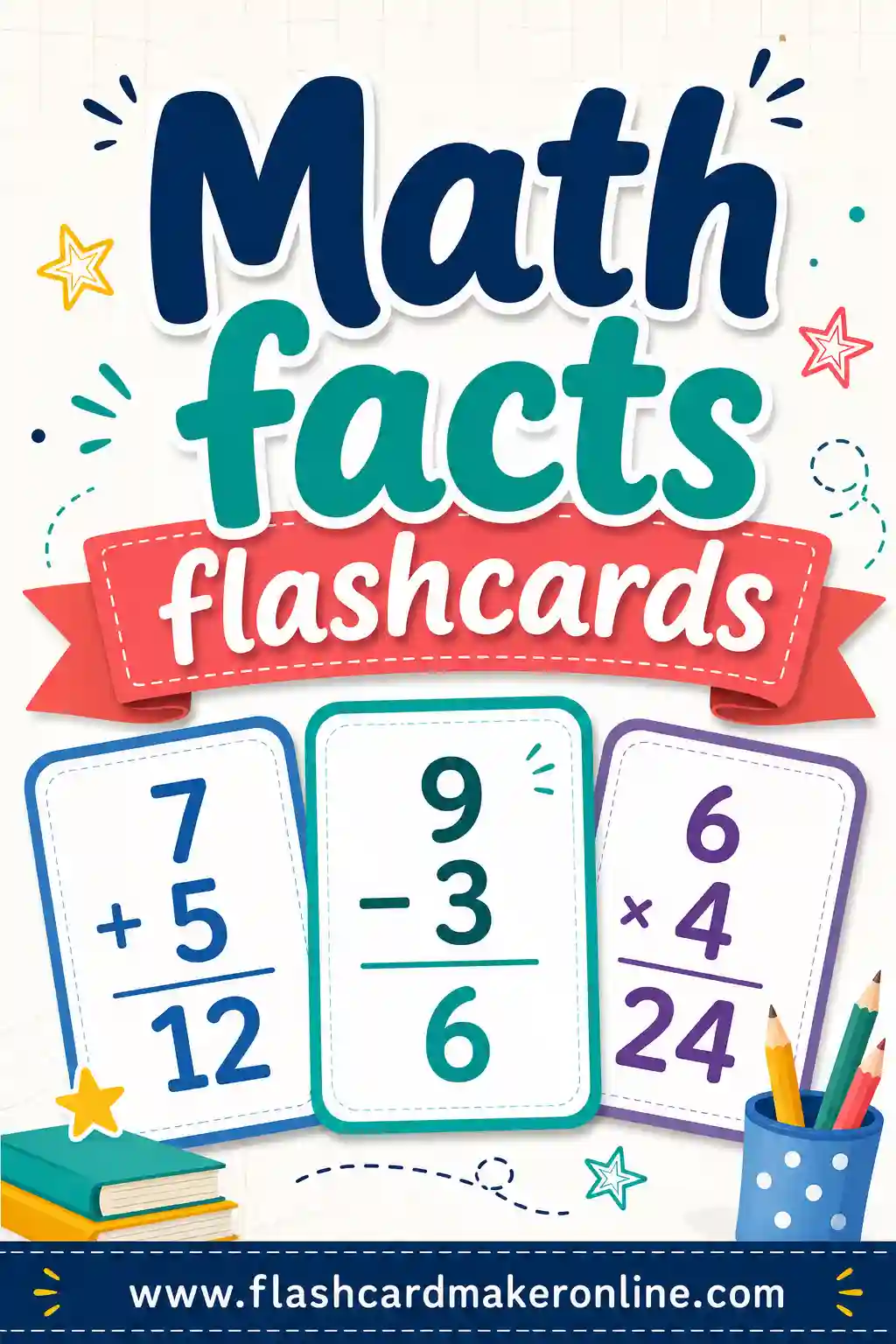
Math facts flashcards are simple two-sided cards with a problem on the front, like "7 × 8," and the answer on the back, like "56." You study them by reading the front, saying the answer out loud, then flipping to check. The fastest way to build a full set is to use a free flashcard maker that turns your list of facts into cards you can flip on screen or print at home.
Want to skip ahead and make your own? Open the free flashcard maker, type or paste your math facts (there's a ready-made list below), and study them right away or print a stack. No sign-up, no fee, nothing to install.
What Are Math Facts Flashcards?
Math facts are the basic number combinations kids are expected to know by heart: the sums, differences, products, and quotients that show up over and over. Think "8 + 5," "9 × 7," or "42 ÷ 6." A math facts flashcard puts the problem on one side and the answer on the other.
The whole point is speed and recall. You don't want a child stopping to count on their fingers for "6 × 7" in the middle of a long-division problem. Flashcards train that instant recall so the basics become automatic and the brain is free to handle the harder steps.
There are four main families of math facts:
- Addition facts — sums up to 10 + 10 (or higher for older kids).
- Subtraction facts — the reverse, like 17 − 9.
- Multiplication facts — the times tables, usually 0 through 12.
- Division facts — the inverse of multiplication, like 56 ÷ 8.
You can make a deck for just one family or mix them once a child is comfortable.
Why Flashcards Work So Well for Math
Flashcards aren't old-fashioned. They line up with two of the most well-studied ideas in learning science.
Active recall. When you look at "9 × 6" and try to pull "54" out of your own head, you're forcing your brain to retrieve the answer. That retrieval effort is what builds a strong memory. Re-reading a times-table chart feels easier, but it doesn't stick nearly as well.
Spaced repetition. You learn faster when you review a fact, wait, and review it again just as you're about to forget. Flashcards make this easy. Cards a child knows cold can go to the back of the pile or come up less often, while shaky ones come up more.
Put those two together and you have a study method that's simple, cheap, and genuinely effective. No app subscription required.
Free Math Facts Word List (Copy & Paste)
Here's a ready-to-use sample deck. The left column is the front of each card; the right column is the back. Drop these straight into the maker, or use them as a model for your own set.
| Front (problem) | Back (answer) |
|---|---|
| 6 + 7 | 13 |
| 8 + 5 | 13 |
| 9 + 6 | 15 |
| 4 + 8 | 12 |
| 7 + 7 | 14 |
| 14 − 6 | 8 |
| 15 − 8 | 7 |
| 12 − 5 | 7 |
| 17 − 9 | 8 |
| 13 − 4 | 9 |
| 6 × 7 | 42 |
| 8 × 8 | 64 |
| 9 × 6 | 54 |
| 7 × 8 | 56 |
| 12 × 11 | 132 |
| 4 × 9 | 36 |
| 56 ÷ 8 | 7 |
| 48 ÷ 6 | 8 |
| 63 ÷ 9 | 7 |
| 72 ÷ 8 | 9 |
| 81 ÷ 9 | 9 |
| 36 ÷ 4 | 9 |
That's 22 cards covering all four operations. For a focused deck, pull just the rows from one family. For a review deck, mix all four like above.
Build by grade level
Different ages need different facts. Here's a rough guide so you make a deck that fits.
| Grade | Focus | Sample facts |
|---|---|---|
| K–1 | Addition & subtraction to 10 | 3 + 4, 9 − 2 |
| Grade 2 | Addition & subtraction to 20 | 8 + 7, 15 − 6 |
| Grade 3 | Multiplication & division to 100 | 6 × 7, 56 ÷ 8 |
| Grade 4 | Full times tables 0–12 | 12 × 9, 132 ÷ 11 |
| Grade 5+ | Mixed review, speed drills | all four operations |
How to Make Math Facts Flashcards in 4 Steps
You don't need any special skills. Here's the whole process.
- Pick your facts. Choose one operation to start, or paste a mix. The list above is a good starting point.
- Enter front and back. Type the problem as the front and the answer as the back. The maker keeps the pairs lined up.
- Study or print. Flip through them on screen, or print a stack to cut out. Your call.
- Sort as you go. Keep the facts a child knows in one pile and the tricky ones in another, then drill the tricky pile more.
If you print, cardstock holds up better than paper, and you can slip cards into a sandwich bag so the deck doesn't scatter.
Smart Ways to Study Math Facts Flashcards
A deck is only as good as how you use it. These tactics speed things up.
Say it out loud
Reading the answer silently is fine, but saying "fifty-four" out loud adds a second memory channel and catches guesses. For young kids, saying it also keeps them honest about whether they really knew it.
Use the "three piles" method
Run through the deck and sort each card into one of three piles: knew it instantly, had to think, and missed it. Then study only the second and third piles. This focuses your time on the facts that actually need work instead of wasting reps on ones already mastered.
Time short bursts
Five focused minutes beats thirty distracted ones. Set a timer, run a quick round, and stop while it's still fun. Daily short sessions build recall far better than one long cram.
Mix in both directions
For multiplication and division, flip the relationship. After "8 × 7 = 56," ask "56 ÷ 8 = ?" The two are linked, and studying them together makes both stronger.
Who Math Facts Flashcards Are Great For
This simple tool flexes to a lot of situations.
Parents helping at home
A five-minute flashcard round at the kitchen table, a few times a week, does wonders. You don't need to be a math teacher. Just flip, listen, and praise the wins.
Teachers and tutors
Print a class set, or hand out blank cards and let students write their own facts (writing them is its own kind of practice). Flashcards make great warm-ups, fast finishers, and partner activities.
Kids who get math anxiety
Some kids freeze on timed tests not because they don't understand math, but because the basic facts aren't automatic yet. Flashcards take the pressure off by building that fluency quietly, one short session at a time.
Older students brushing up
It's not just for little kids. A teen prepping for a test that bans calculators can use a quick mental-math deck to sharpen up before exam day.
A Simple Weekly Routine That Works
You don't need a grand plan to see progress. A light, steady routine beats sporadic cramming every time. Here's one that fits a busy week.
- Monday — introduce. Pull out 10 to 15 new facts. Go through them slowly, saying each answer out loud together. No pressure, no timing. This round is just getting familiar.
- Tuesday — sort. Run the same deck and split it into "knew it" and "still working." Set the known cards aside and focus only on the rest.
- Wednesday — drill the hard pile. Spend five minutes on just the facts that gave trouble. Try a pattern or trick for the stubborn ones.
- Thursday — mix it up. Shuffle the whole deck and flip in random order so your learner can't rely on sequence. This is closer to how facts come up in real problems.
- Friday — quick win. Run the deck one last time and celebrate how much faster it goes than Monday. Visible progress keeps motivation high.
Skip a day when life gets busy. The point isn't perfection, it's keeping the facts warm and slowly moving the hard ones into the easy pile. Over a few weeks, that quiet consistency adds up to real fluency.
Common Mistakes to Avoid
A few habits quietly slow learning down. Steer clear of these.
- Too many cards at once. A 40-card stack overwhelms a young learner. Work in batches of 10 to 15 and add more only as the early ones lock in.
- Always studying in the same order. Kids memorize the sequence instead of the facts. Shuffle the deck so each answer has to be recalled on its own.
- Letting frustration build. If a session turns into tears, stop. End on an easy card and a win so the next round feels approachable.
- Skipping the spoken answer. Saying "fifty-six" out loud adds a memory channel and catches lucky guesses. Don't let it become a silent flip-and-glance.
- Drilling already-mastered facts. Time spent on facts a child knows cold is wasted. Keep moving the easy cards out so every minute goes to facts that still need work.
Printing Tips for Sturdy Math Flashcards
A few small choices make your cards last.
- Use cardstock if you can. It survives shuffling, dropping, and being stuffed in a backpack.
- Print double-sided so the answer lines up behind the problem. Run a test page first to check the alignment before printing the whole stack.
- Keep the font big. Math symbols are small. Larger print helps young eyes and anyone reading across a table.
- Laminate for reuse. Then you can write notes with a dry-erase marker and wipe them clean.
- Bundle by operation. Use a rubber band or bag per family so addition cards don't mix into multiplication cards.
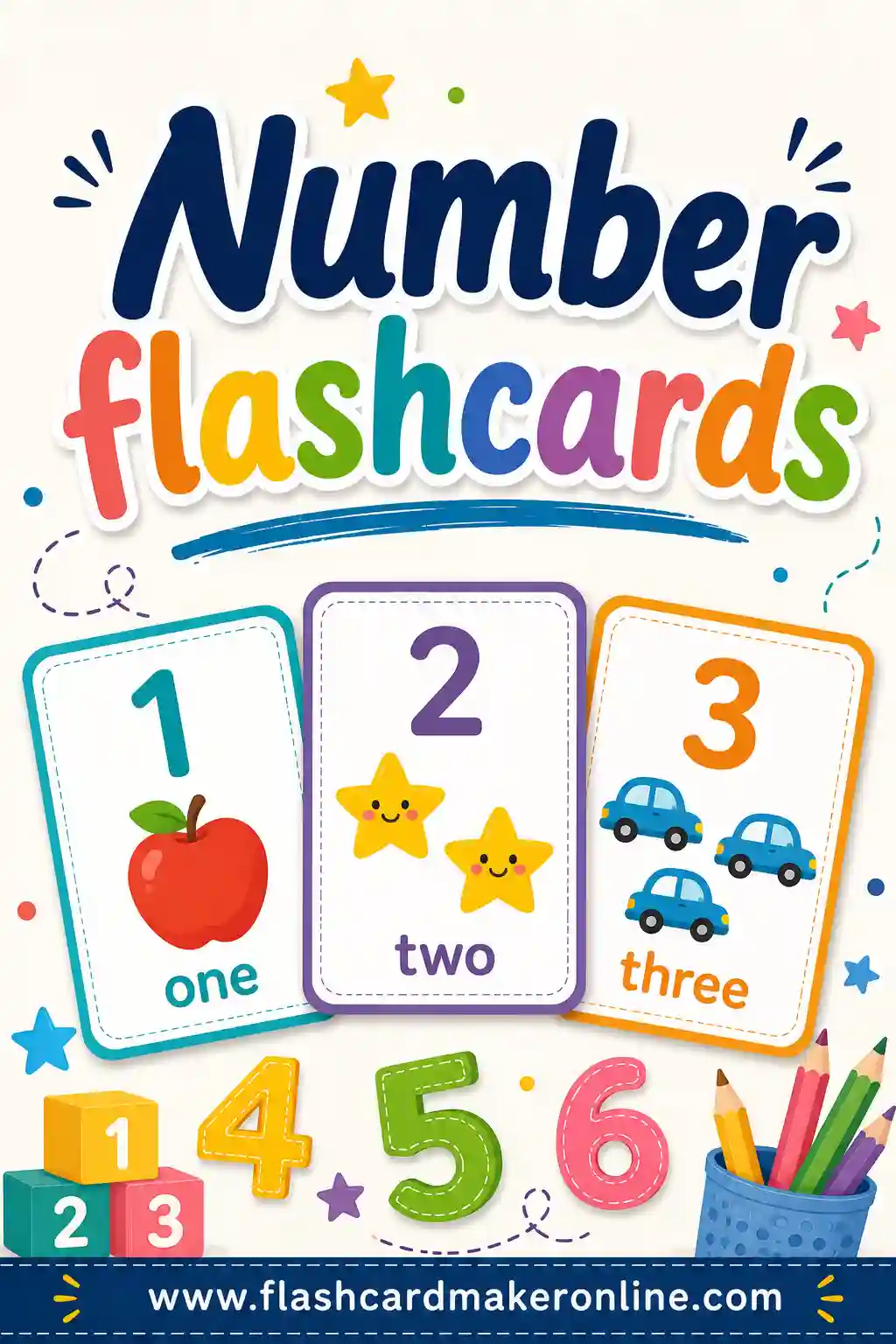
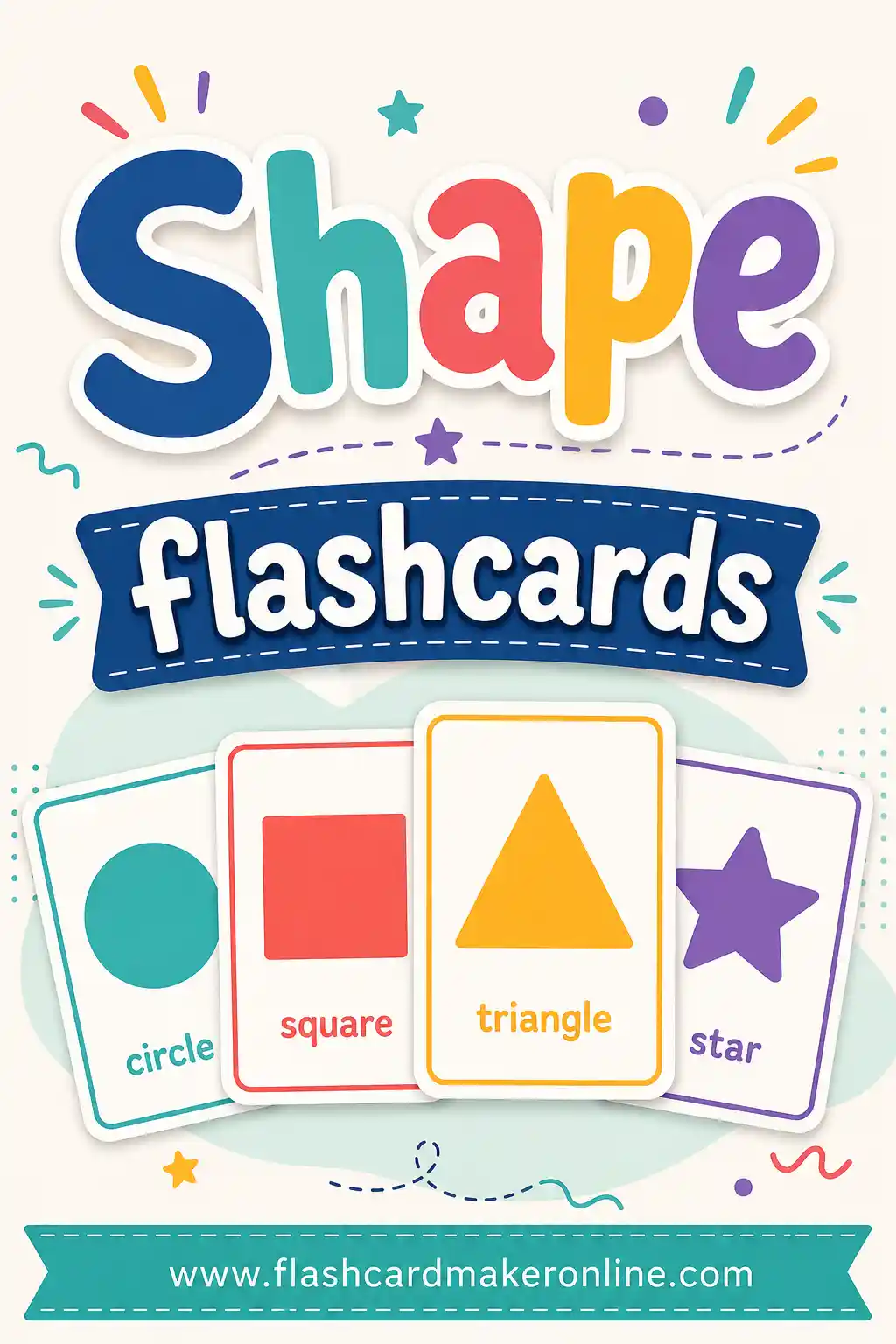
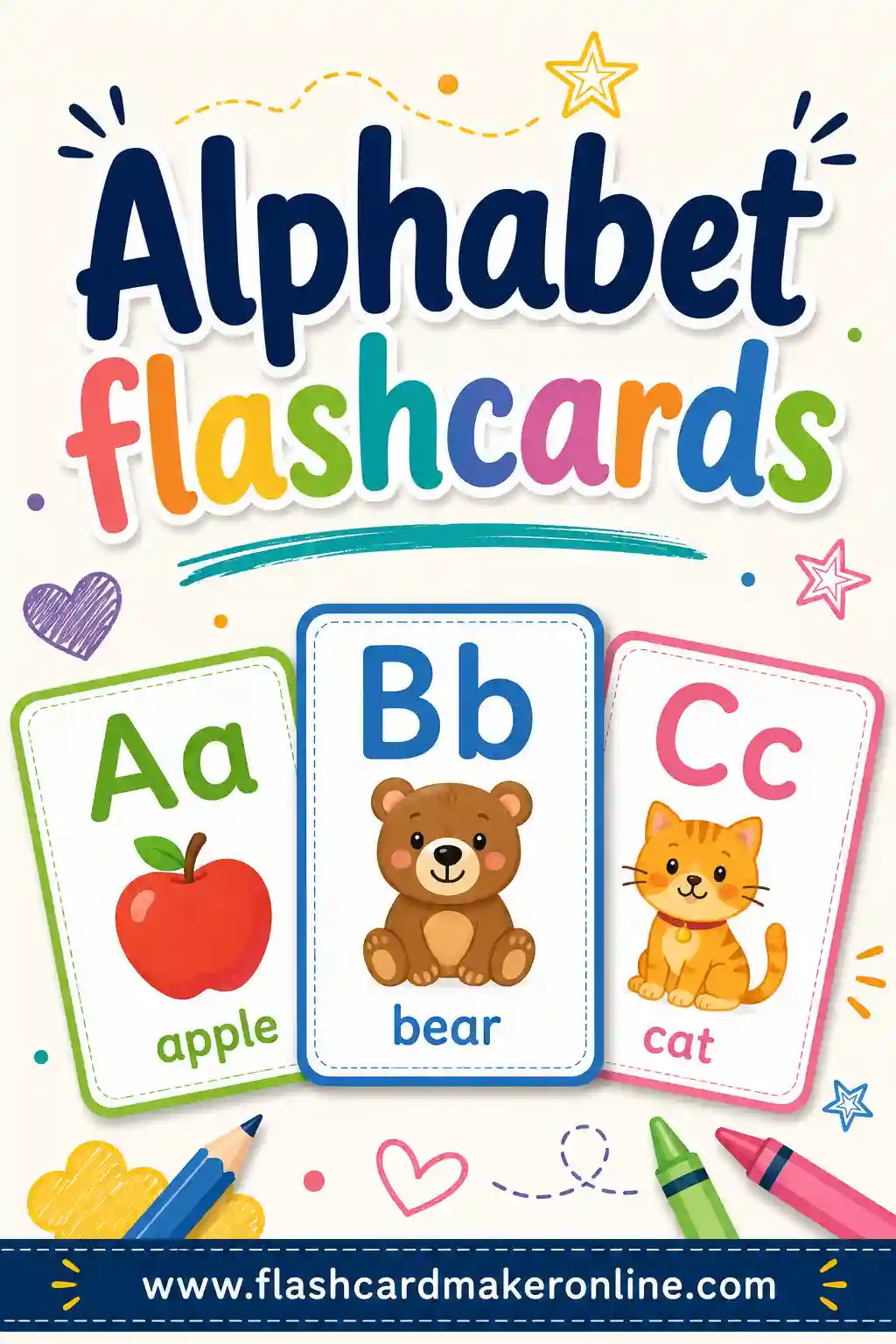
Looking to build other early-learning decks too? You can make matching sets with our number flashcards, shape flashcards, and alphabet flashcards.
Frequently Asked Questions
What math facts should kids memorize first?
Start with addition and subtraction within 10, then within 20. Once those are solid, move to multiplication and division facts up to 12 × 12. Master one operation before mixing them so a child isn't overwhelmed.
How many math facts flashcards should I study at once?
Work in small batches of about 10 to 15 cards. A short, focused session of five to ten minutes beats a long one. Daily quick rounds build recall faster than occasional marathons.
Are these math facts flashcards free to print?
Yes. You make and print them yourself at no cost with the free flashcard maker. There's no sign-up and no watermark, so you can run a whole class or family on a single word list.
How do I help a child who keeps missing the same fact?
Pull that card into a separate "tricky" pile and study it more often. Try a trick or pattern (like 9 × anything: the digits add to 9). Short, frequent reps on just the hard facts works better than re-running the whole deck.
Can I use these flashcards without printing them?
Absolutely. The maker lets you flip through cards right on screen, which is great for quick practice on a phone or tablet without using any paper or ink.
What's the best age to start math facts flashcards?
Around kindergarten for simple addition, using small numbers and pictures if helpful. Multiplication facts usually start in second or third grade. Match the deck to what the child is learning in class right now.
Ready to Make Your Math Facts Flashcards?
Grab the fact list above, open the free flashcard maker, and you'll have a full deck ready to flip or print in minutes. It's free, there's no sign-up, and you can mix any operations you need, so practice fits whatever your learner is working on this week. Start with five minutes a day and watch those facts become automatic.