Number Flashcards: Free Printable Cards for Counting
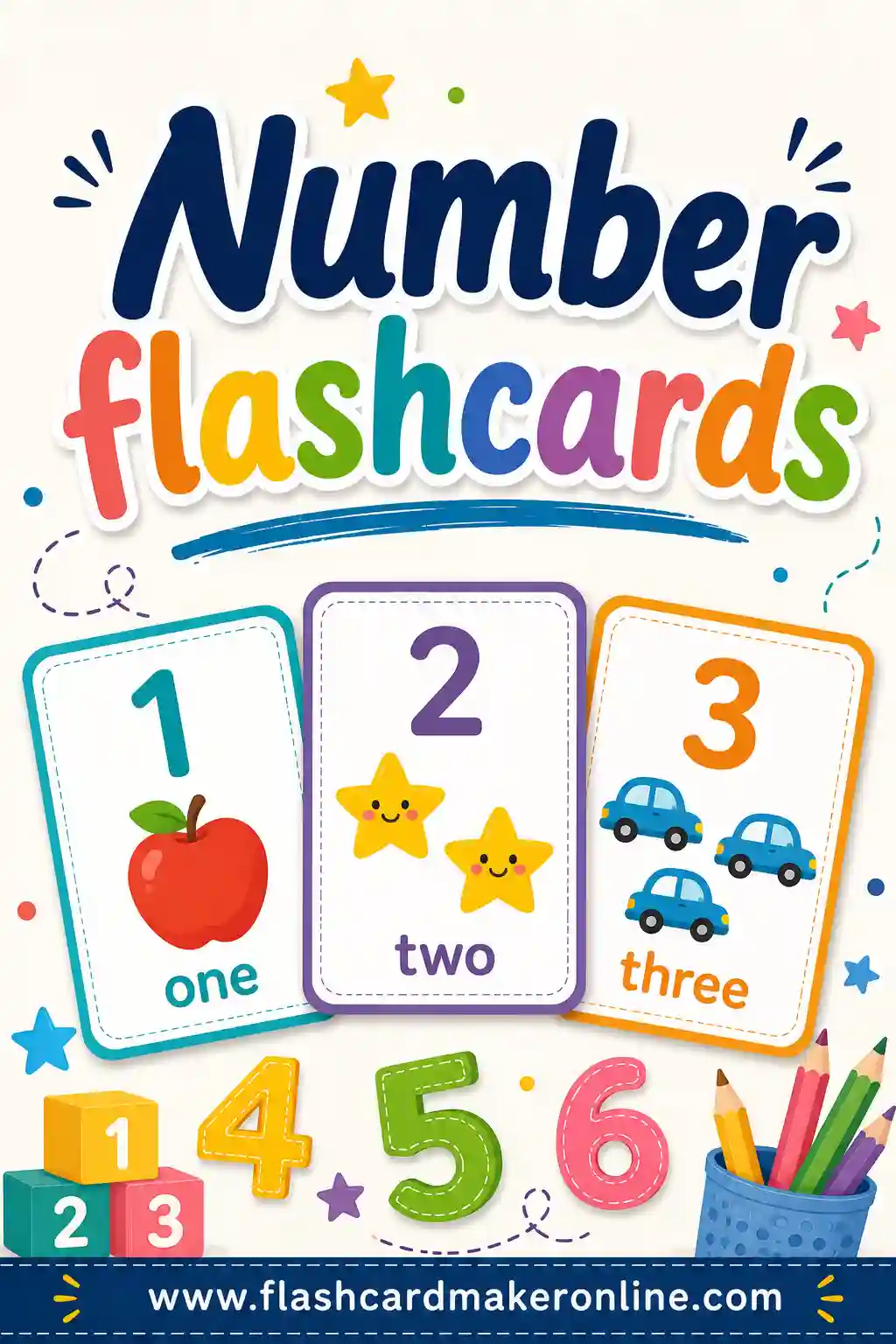
Number flashcards are simple two-sided cards that show a number on the front, like "5," and what it means on the back, such as the word "five" or five dots to count. Kids study them by naming the number, counting the matching items, then flipping to check. The fastest way to build a full set is to use a free flashcard maker that turns your number list into cards you can flip on screen or print at home.
Want to make your own now? Open the free flashcard maker, type your numbers and their meanings (there's a ready-made list below), and start studying or print a set. No sign-up, no fee, nothing to install.
What Are Number Flashcards?
Number flashcards put a numeral on the front of the card and its meaning on the back. The "7" card might flip to the word "seven," or to seven dots, or to both. They help young kids connect three things that don't automatically go together in a small brain:
- The symbol — the squiggle we write as "4."
- The name — that we call it "four."
- The quantity — that "4" means this many things.
That last link is the big one. A toddler can recite "one, two, three" like a song long before they understand that "3" means three actual cookies. Good number flashcards build that bridge between the symbol and the amount.
You can make a basic 0–10 set, extend to 0–20, or go further with tens, hundreds, or even simple fractions for older kids.
Why Number Flashcards Help Early Math
Number sense, the deep feel for what numbers mean, is the foundation everything else in math sits on. A child who truly gets that 8 is more than 5, and that 8 is made of 5 and 3, is set up to handle addition, subtraction, and beyond. Number flashcards build that sense one card at a time.
Two learning principles make them work.
Active recall. When a child sees "9" and names it before flipping, their brain retrieves the answer instead of just recognizing it. That effort is what builds lasting memory. Counting the dots on the back then ties the symbol to a real quantity.
Spaced repetition. Review numbers, pause, and review again. Numbers a child knows can come up less often, while shaky ones (the teens trip a lot of kids up) come up more. Sorting cards into "knows it" and "still learning" piles does this naturally.
Pair the numeral with countable dots and you add a hook. Seeing five dots next to "5" makes the meaning concrete in a way the symbol alone never can.
Free Number Word List (Copy & Paste)
Here's a ready-to-use sample deck from 0 to 20. The left column is the front (the numeral); the right column is the back (the number word). Paste these into the maker, or add countable dots to the back for younger kids.
| Front (numeral) | Back (number word) |
|---|---|
| 0 | Zero |
| 1 | One |
| 2 | Two |
| 3 | Three |
| 4 | Four |
| 5 | Five |
| 6 | Six |
| 7 | Seven |
| 8 | Eight |
| 9 | Nine |
| 10 | Ten |
| 11 | Eleven |
| 12 | Twelve |
| 13 | Thirteen |
| 14 | Fourteen |
| 15 | Fifteen |
| 16 | Sixteen |
| 17 | Seventeen |
| 18 | Eighteen |
| 19 | Nineteen |
| 20 | Twenty |
That's a full 0–20 deck. For a toddler, start with just 0–10. For older kids, extend with tens (30, 40, 50) or two-digit numbers.
Build by skill level
Match the deck to where your learner is.
| Level | Range | Focus |
|---|---|---|
| Beginner | 0–10 | Name the number, count dots |
| Growing | 0–20 | Recognize teens, count higher |
| Confident | 0–100 by tens | Count by tens, skip-count |
| Advanced | Mixed | Place value, simple fractions |
How to Make Number Flashcards in 4 Steps
No special skills required. Here's the whole process.
- Choose your range. Start with 0–10, or go to 0–20 once those are solid.
- Add the meaning. Put the numeral on the front and the word (and dots, if you like) on the back. The list above is ready.
- Study or print. Flip through them on screen, or print a set to cut out and hold.
- Sort as you go. Keep mastered numbers in one pile and shaky ones in another, then drill the shaky pile more.
If you print, cardstock holds up best, and a hole punch plus a ring keeps the deck together so no cards go missing.
Fun Ways to Study Number Flashcards
Numbers can feel dry, so turn practice into a game.
Count it out
When the "6" card comes up, don't just name it. Count six fingers, six blocks, or six jumps together. Tying the symbol to a real quantity is the whole point, so build counting into every card.
Put them in order
Shuffle the deck, then have your child lay the cards out in order from smallest to largest. This builds a feel for sequence and which numbers come before and after, a skill that matters for counting on and counting back.
Find the missing number
Lay out cards 1 through 10, remove one while your child's eyes are closed, and ask which is missing. It's a simple game that sharpens number recognition and order at the same time.
Skip-count for older kids
Make a deck of 5, 10, 15, 20 (or 2, 4, 6, 8) and flip through in order. Skip-counting lays the groundwork for multiplication and is surprisingly fun as a rhythm game.
Who Number Flashcards Are Great For
This simple set fits a wide range of learners.
Toddlers and preschoolers
This is the prime age for number flashcards. Use a small 0–10 set with countable dots, keep sessions short, and count everything out loud together. The goal is a happy first taste of numbers.
Kindergarten and grade 1
Teachers use number cards for counting practice, number-line games, and ordering activities. Print a class set, or let students make their own (writing and drawing the dots is good practice too).
Kids learning to count higher
The jump past ten, especially the teens, throws a lot of kids. A focused 11–20 deck with dots on the back gives them the extra reps right where they struggle.
Special education and ESL learners
Pairing the numeral, the word, and a picture of the quantity supports kids who need multiple cues to lock in a concept. The visual count makes an abstract symbol concrete.
A Simple Weekly Routine That Works
You don't need a formal lesson plan to teach numbers. A light, steady rhythm beats long, forced drills. Here's an easy week.
- Monday — meet a few numbers. Pull out three or four numbers with their dots. Name each one and count the dots together. Slow and friendly is the goal.
- Tuesday — review and sort. Run the same numbers and notice which your child names quickly and which need help. Spend more time on the shaky ones.
- Wednesday — play a game. Put the week's cards in order, or play "find the missing number." Hands-on play locks the numbers in without feeling like work.
- Thursday — mix in old numbers. Add a few from last week so they don't fade. Shuffle so your child can't just rely on counting up in order.
- Friday — celebrate. Run the week's numbers one last time and cheer the progress. Ending on a win keeps your child eager for next time.
A few new numbers a week is a comfortable pace, and you can adjust to match your child. Counting isn't a race. A child who enjoys numbers builds far more real number sense than one who's pushed too fast.
Common Mistakes to Avoid
A few habits quietly slow number learning. Watch for these.
- Numerals without quantity. Showing "5" alone teaches a symbol, not a meaning. Always count the dots or real objects so the number connects to an amount.
- Only ever counting in order. Reciting "one, two, three" is a song, not number sense. Shuffle the cards so each number has to be recognized on its own.
- Too many numbers at once. A long range overwhelms a young learner. Work in small batches and grow the range as the early numbers stick.
- Rushing past the teens. Eleven through nineteen don't follow a clear naming pattern, so they need extra time. Don't skim over them.
- Pushing through frustration. If your child is done, stop on a known number and a smile so the next round feels welcoming.
Printing Tips for Sturdy Number Cards
A few choices make your cards last.
- Use cardstock if you can. It survives shuffling, dropping, and the occasional toddler taste-test.
- Print big, clear numerals. Large, simple digits help young eyes. Avoid stylized fonts that distort the shape of a number.
- Add countable dots. Putting the matching number of dots on the back turns an abstract symbol into something a child can actually count.
- Laminate or use sleeves. Then cards survive spills and you can write on them with a dry-erase marker.
- Bundle by range. Keep 0–10 in one bag and 11–20 in another so you can grab the right set fast.
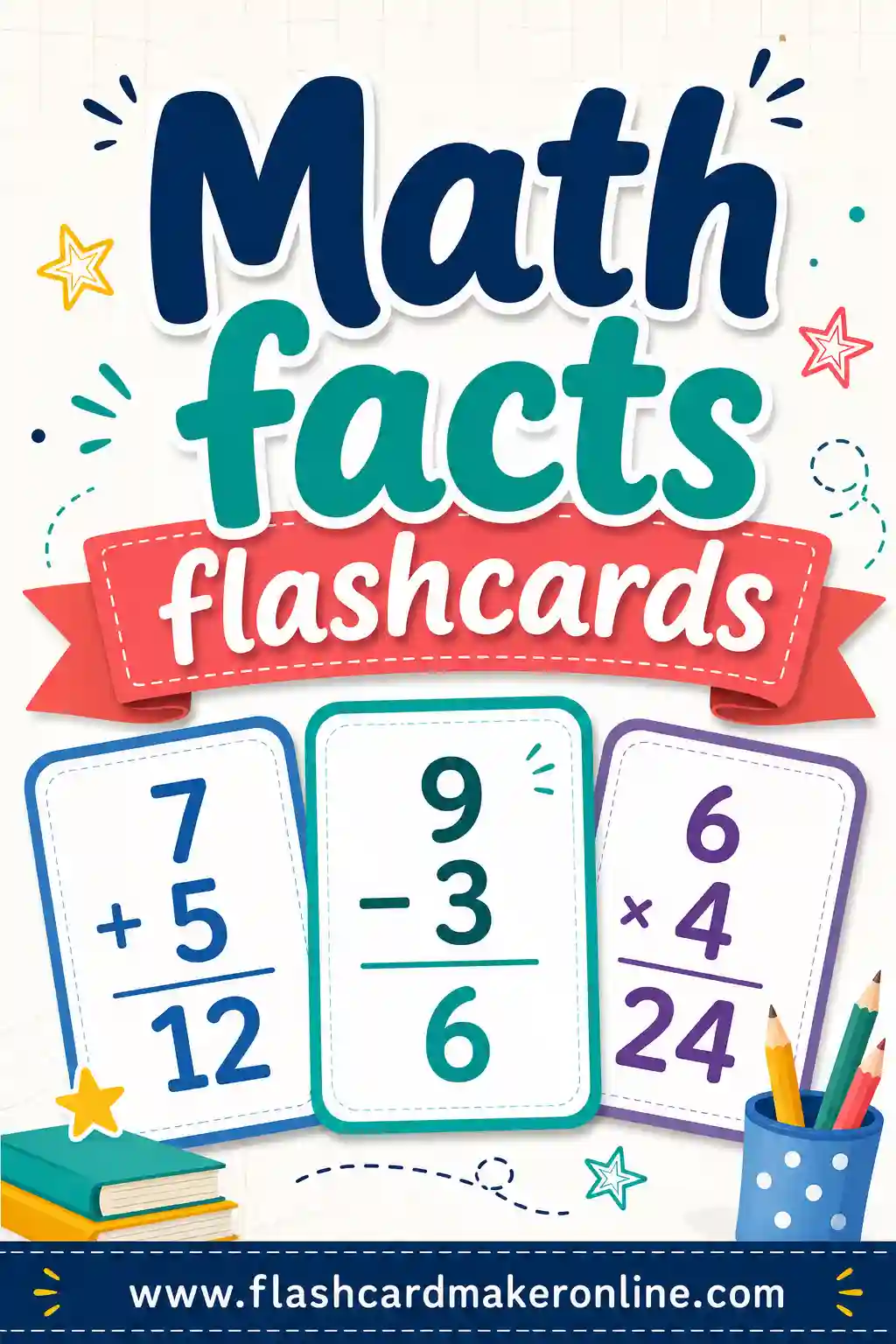
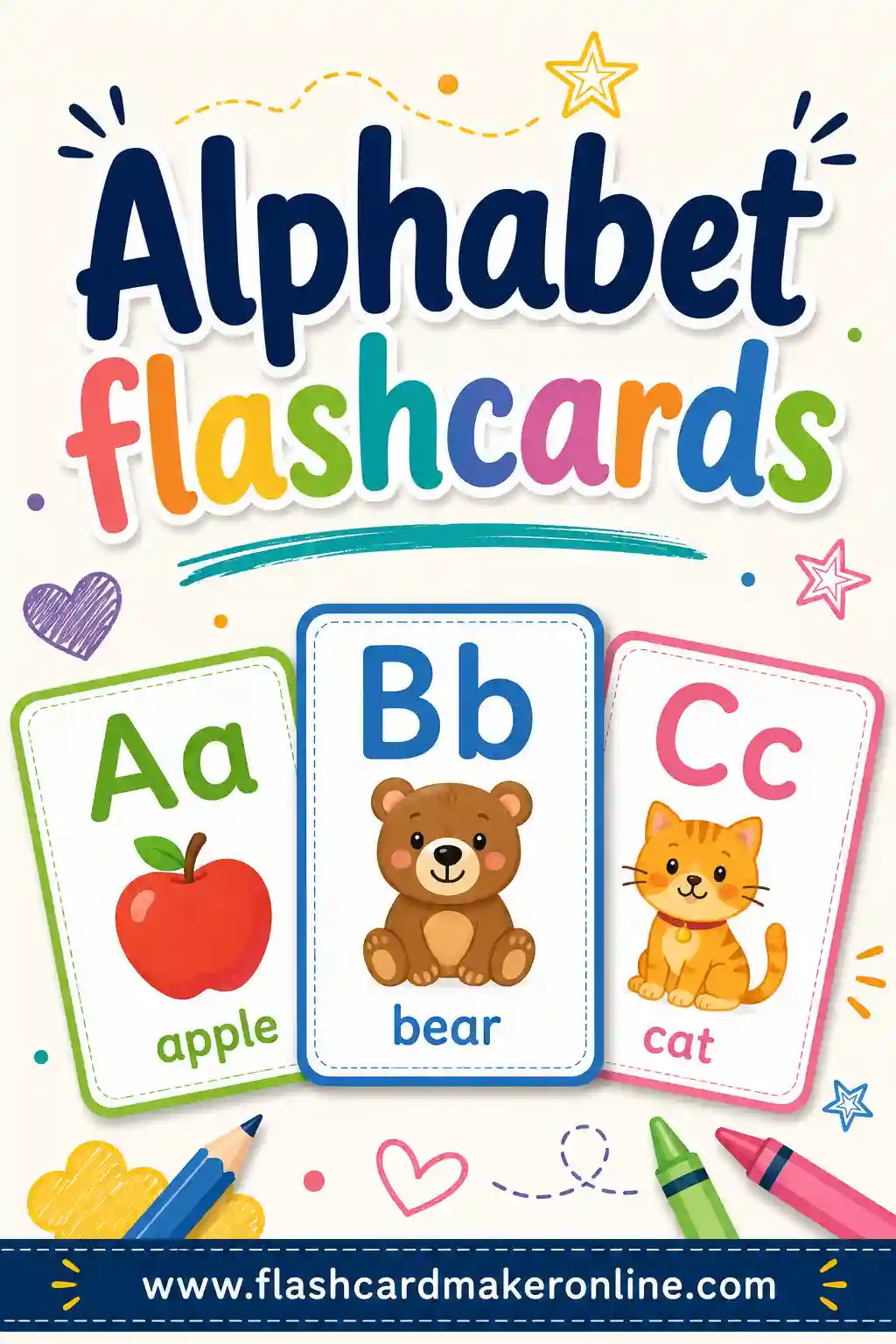
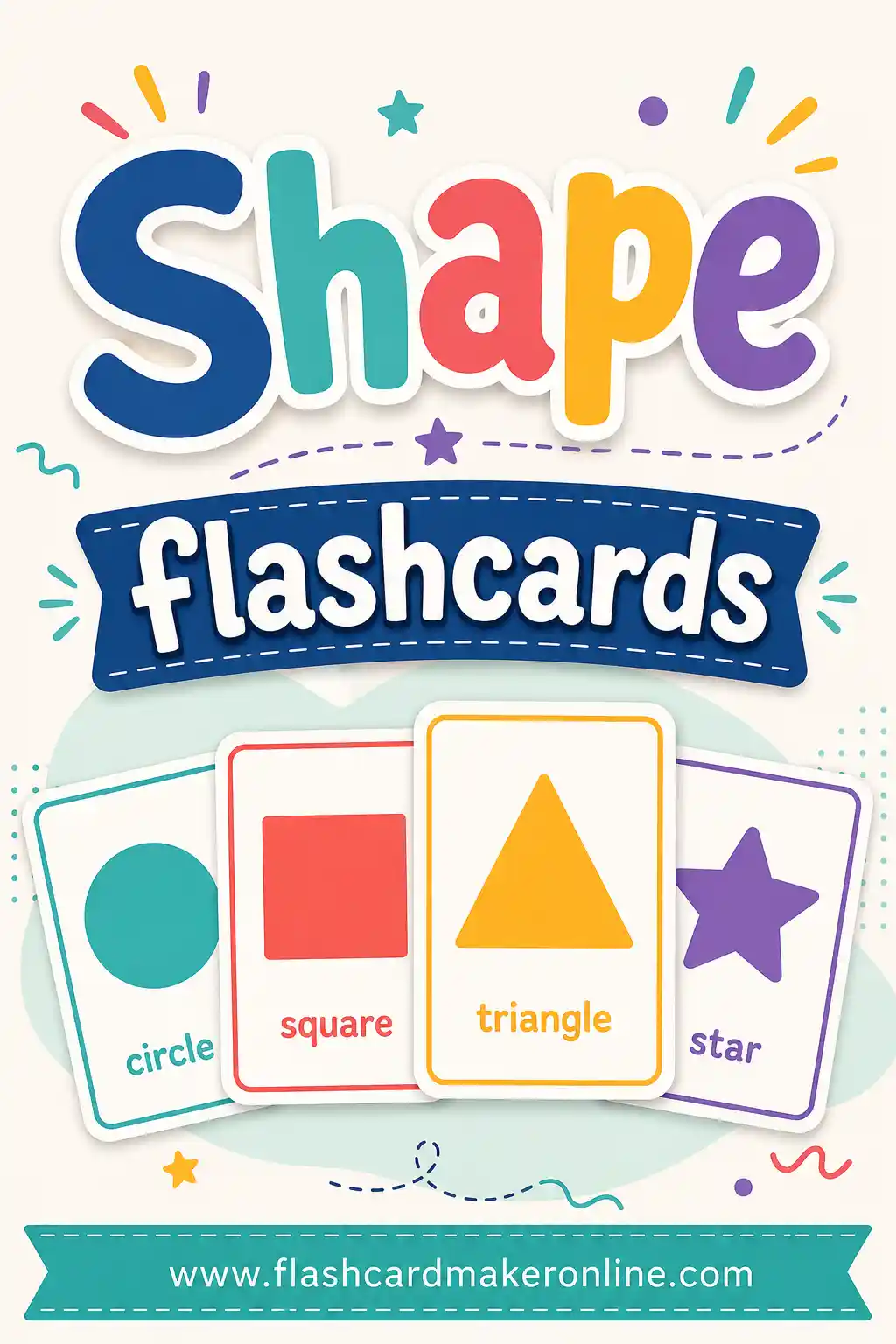
Building a full early-learning kit? You can make matching sets with our math facts flashcards, alphabet flashcards, and shape flashcards.
Frequently Asked Questions
What age should kids start number flashcards?
Many kids enjoy them around ages 2 to 3, starting with numbers 0 to 10 and countable dots. Keep sessions short and playful, count things out loud together, and follow your child's interest rather than pushing a strict pace.
Should number flashcards show dots or just the numeral?
For young learners, show both. The numeral teaches the symbol, and the dots show what it means so a child can count and connect the two. Once the quantity link is solid, the numeral alone is enough.
Are these number flashcards free to print?
Yes. You make and print them yourself at no cost with the free flashcard maker. There's no sign-up and no watermark, so you can outfit a whole classroom or home from a single number list.
How do I help a child who struggles with the teen numbers?
Make a focused 11–20 deck with countable dots on the back and study it more often. The teens are genuinely tricky because the names don't follow a clear pattern, so extra targeted reps there make a real difference.
Can I use number flashcards to teach counting by tens?
Yes. Make a deck of 10, 20, 30 and on up, then flip through in order so your child hears the pattern. Skip-counting decks build a base for multiplication later and work well as a rhythm game.
Can I use number flashcards without printing them?
Absolutely. The maker lets you flip cards on screen, so you can practice on a phone or tablet anywhere, with no paper or ink, which is great for car rides and waiting rooms.
Ready to Make Your Number Flashcards?
Grab the number list above, open the free flashcard maker, and you'll have a full set ready to flip or print in minutes. It's free, there's no sign-up, and you can pick the range that fits your learner, so counting practice grows right along with them. Start with five minutes a day and watch those numbers click.