Shape Flashcards: Free Printable Cards to Learn Shapes
Shape flashcards are simple two-sided cards that show a shape on the front, like a circle, and the shape's name on the back, like "Circle." Kids study them by looking at the shape, naming it, then flipping to check. The fastest way to build a full set is to use a free flashcard maker that turns your shape list into cards you can flip on screen or print at home.
Want to make your own now? Open the free flashcard maker, enter your shapes and their names (there's a ready-made list below), and start studying or print a set. No sign-up, no fee, nothing to install.
What Are Shape Flashcards?
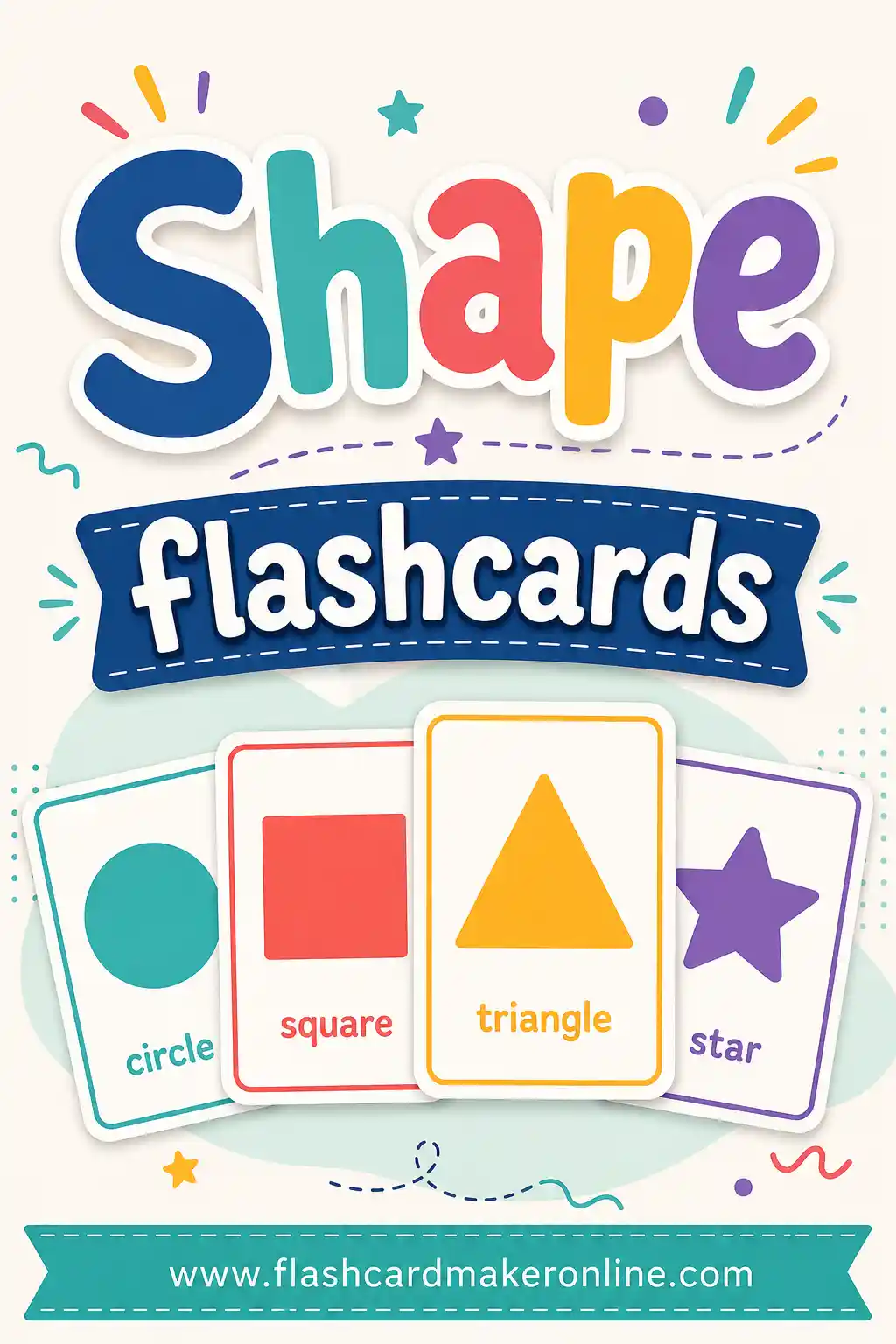
Shape flashcards show a shape on one side and its name on the other. The front of a card might be a yellow triangle; flip it and you see the word "Triangle." Some sets add a real-world example, like a clock for a circle or a slice of pizza for a triangle, to anchor the shape in something a child already knows.
They teach two things together:
- Shape recognition — telling a square from a rectangle, a circle from an oval.
- Shape names — matching the right word to each form.
Shapes are everywhere a child looks: wheels, windows, road signs, cookies. Learning to name them builds early geometry and gives kids a handy way to describe the world. You can keep a set to the basic shapes, or extend to ones like pentagon, hexagon, and octagon for older kids.
Why Shape Flashcards Help Young Learners
Recognizing shapes is an early math skill that quietly supports a lot of later learning. Kids who can sort and name shapes are building the same brain muscles they'll use for geometry, pattern-spotting, and even letter recognition (after all, letters are just specific shapes). Flashcards give that practice in a quick, playful form.
Two learning ideas make them work.
Active recall. When a child sees a shape and names it before flipping, their brain retrieves the word instead of just being told. That effort is what builds memory, far better than passively pointing at a poster.
Spaced repetition. Review shapes, take a break, then review again. Shapes a child knows can come up less often, while tricky pairs (square versus rectangle, or oval versus circle confuse a lot of kids) come up more. Sorting cards into "knows it" and "still learning" piles handles this naturally.
Add a real-world example to the back, and you give the shape a hook. "A circle, like a clock" sticks better than the word "circle" floating alone.
Free Shape Word List (Copy & Paste)
Here's a ready-to-use sample deck. The left column is the front (the shape); the right column is the back (the shape name). Paste these into the maker, or pair each shape with an object your child knows.
| Front (shape) | Back (shape name) |
|---|---|
| Circle | Circle |
| Square | Square |
| Triangle | Triangle |
| Rectangle | Rectangle |
| Oval | Oval |
| Star | Star |
| Heart | Heart |
| Diamond | Diamond |
| Crescent | Crescent |
| Pentagon | Pentagon |
| Hexagon | Hexagon |
| Octagon | Octagon |
| Arrow | Arrow |
| Cross | Cross |
| Trapezoid | Trapezoid |
That's 15 shapes, the basics plus a few extras. For toddlers, start with circle, square, triangle, and rectangle. For older kids, add the many-sided shapes and let them count the sides.
Pair each shape with a real-world object
Anchoring a shape to something familiar makes it stick. Here are easy pairings.
| Shape | Real-world anchor |
|---|---|
| Circle | Clock, wheel, pizza |
| Square | Window, cracker |
| Triangle | Slice of pizza, roof |
| Rectangle | Door, phone, book |
| Star | Night sky, sticker |
| Heart | Valentine, candy |
| Octagon | Stop sign |
How to Make Shape Flashcards in 4 Steps
No design skills needed. Here's the whole process.
- Choose your shapes. Start with the basic four or five, or go wider once those are solid.
- Add the name. Put the shape on the front and its name on the back. Add a matching object if you like. The list above is ready to go.
- Study or print. Flip through them on screen, or print a set to cut out and hold.
- Sort as you go. Keep mastered shapes in one pile and shaky ones in another, then drill the shaky pile more.
If you print, cardstock holds up best to little hands, and big, bold shapes read clearly across a table.
Fun Ways to Study Shape Flashcards
Shapes are everywhere, which makes them perfect for active games.
Shape hunt around the house
Hold up a card and have your child race to find something that matches. The "circle" card sends them off to find a clock, a plate, or a wheel. Spotting shapes in real objects is where the learning gets real.
Sort and match
Lay out a few shape cards and a pile of real objects or shape blocks. Have your child place each object on the matching card. This builds the shape-to-name link in a hands-on way that feels like a game.
Count the sides
For older kids, turn each card into a mini math moment. "A triangle, how many sides? Three!" Counting sides connects shape names to early geometry and helps kids tell tricky shapes apart, like a pentagon from a hexagon.
Name it before you flip
Always ask "What shape is this?" before turning the card. Naming it first forces recall, which is what builds memory. If your child guesses wrong, flip, say the right name together, and move on, no pressure.
Who Shape Flashcards Are Great For
This simple set fits a lot of learners.
Toddlers and preschoolers
This is the classic age for shape flashcards. Start with circle, square, and triangle, pair each with a familiar object, and keep sessions short and cheerful. The goal is building everyday shape vocabulary, not perfection.
Preschool and kindergarten classrooms
Teachers use shape cards for circle time, sorting centers, and shape-of-the-day activities. Print a class set, or let kids cut and paste their own shapes as a craft (cutting is great fine-motor practice).
Kids learning English as a new language
Shape words are useful, concrete vocabulary. Pairing a shape with the word and a familiar object teaches the name and a handy descriptive word at the same time.
Kids who mix up similar shapes
For the classic square/rectangle or oval/circle confusion, make a small focused deck of just those shapes and study them side by side, counting sides or noticing what's different. Targeted practice clears up the mix-up faster.
A Simple Weekly Routine That Works
You don't need a formal lesson to teach shapes. A light, steady rhythm beats long, forced sessions. Here's an easy week.
- Monday — meet a few shapes. Pull out three or four shapes with their objects. Name each one and find something that matches in the room. Keep it slow and cheerful.
- Tuesday — review and sort. Run the same shapes and notice which your child names easily and which need help. Spend more time on the tricky ones.
- Wednesday — play a game. Do a shape hunt around the house or sort blocks onto the matching cards. Hands-on play locks the names in without feeling like work.
- Thursday — mix in old shapes. Add a few from last week so they don't fade. For older kids, count the sides of each shape as you go.
- Friday — celebrate. Run the week's shapes one last time and cheer the progress. Ending on a win keeps your child eager for next time.
A few new shapes a week is a comfortable pace, and you can adjust to match your child. Learning shapes isn't a race. A child who enjoys spotting shapes in the world builds far more real geometry sense than one who's pushed too fast.
Common Mistakes to Avoid
A few habits quietly slow shape learning. Watch for these.
- Teaching too many shapes at once. A long list overwhelms a young child. Start with the basic four and add more as they stick.
- Only naming shapes on a poster. Pointing at a chart is passive. Have your child name the shape before flipping, and hunt for it in real objects.
- Relying on color to tell shapes apart. If the "circle" card is always red, kids may learn the color, not the shape. Make sure they can name the form on its own.
- Skipping real-world anchors. "A circle, like a clock" sticks far better than the word alone. Pair each shape with something familiar.
- Pushing through frustration. If your child is done, stop on a known shape and a smile so the next round feels welcoming.
Printing Tips for Clear, Sturdy Shape Cards
A few choices make your cards last and read well.
- Use cardstock if you can. It survives sorting games, dropping, and lots of handling.
- Print big, bold shapes. Large, simple forms read clearly across a table and help young eyes. Keep each shape one solid color so it stands out.
- Add a real object on the back. A clock for a circle, a stop sign for an octagon, gives kids an anchor and makes practice more fun.
- Laminate or use sleeves. Then cards survive sticky fingers and wipe clean.
- Bundle by level. Keep the basic shapes in one set and the many-sided shapes in another so you can grab the right deck fast.
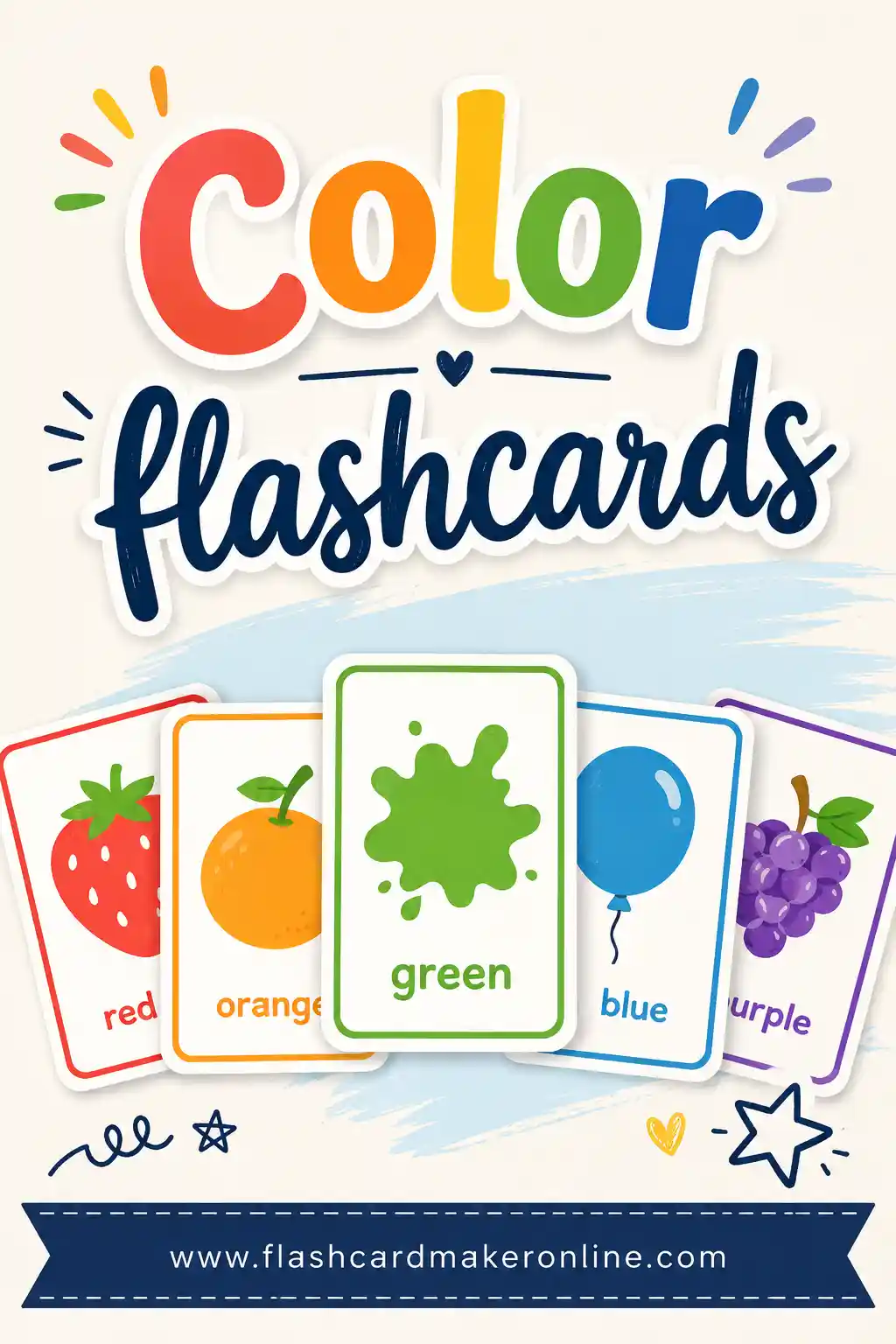
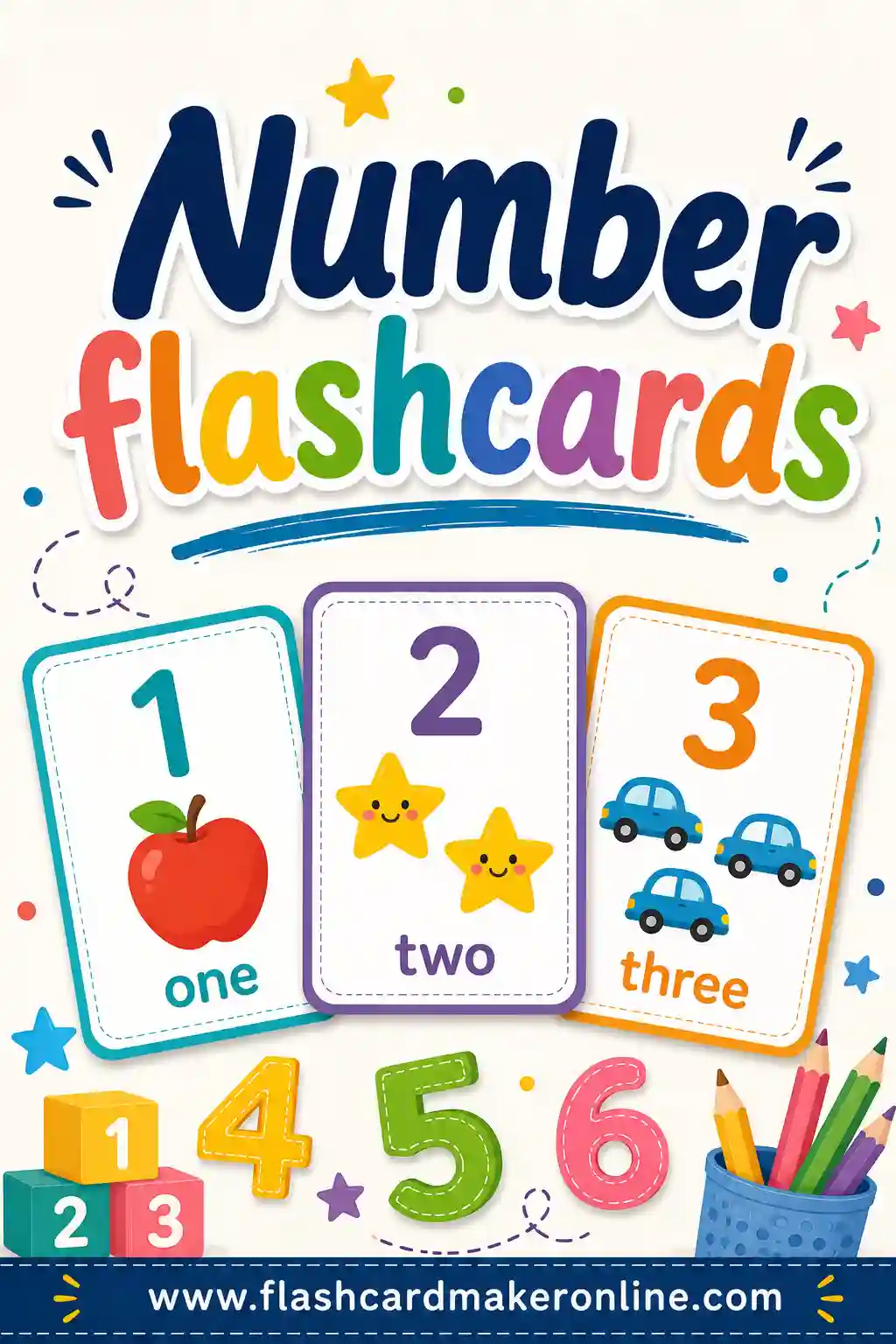
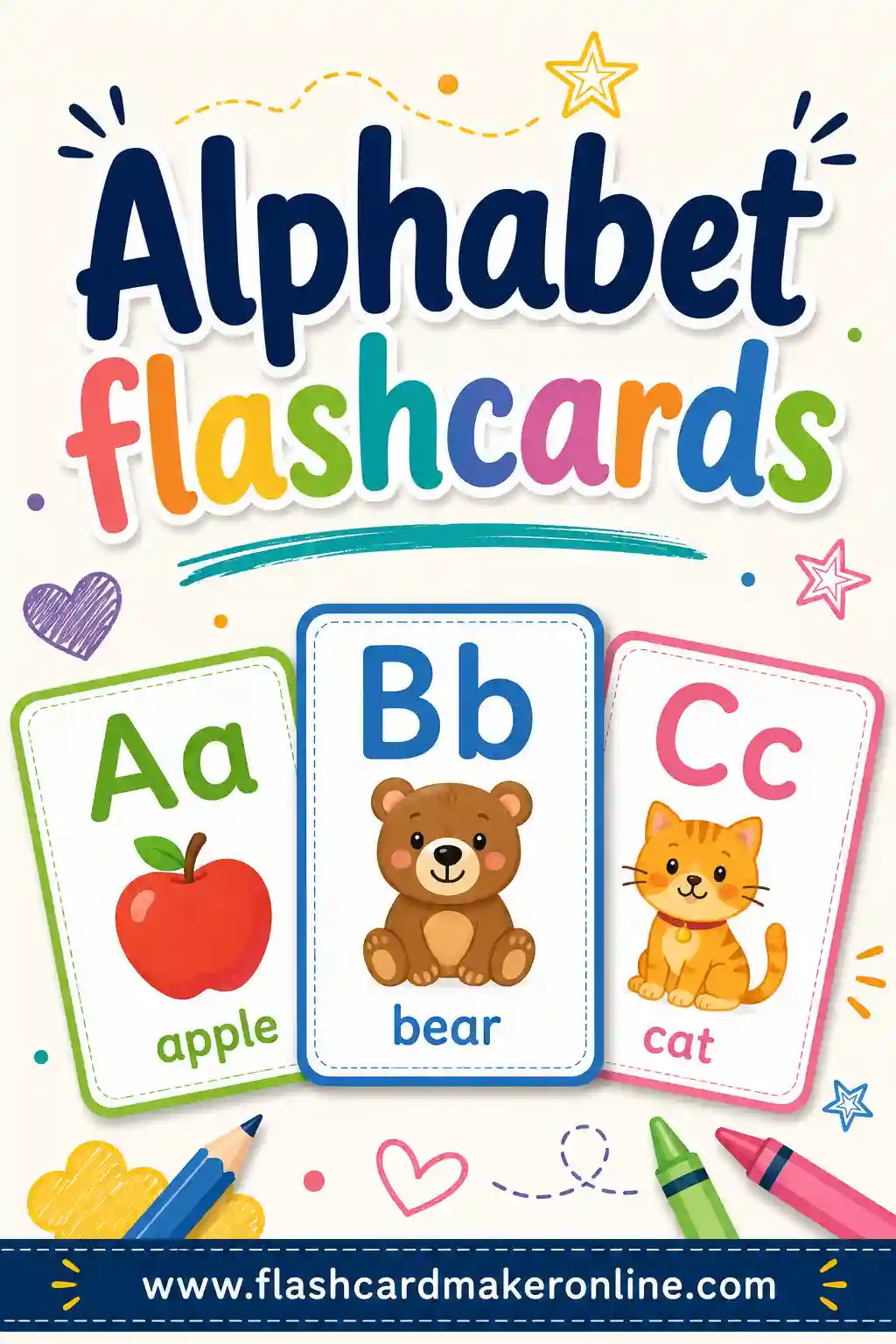
Building a full early-learning corner? You can make matching sets with our color flashcards, number flashcards, and alphabet flashcards.
Frequently Asked Questions
What age should kids start shape flashcards?
Many kids begin naming basic shapes around ages 2 to 3, so that's a good time to start. Begin with circle, square, and triangle, pair each with a familiar object, and keep sessions short and playful. Follow your child's interest rather than forcing a pace.
Which shapes should I teach first?
Start with the basics: circle, square, triangle, and rectangle. These show up most in a child's everyday world. Add star, heart, oval, and diamond next, then many-sided shapes like pentagon and hexagon once the basics are solid.
Are these shape flashcards free to print?
Yes. You make and print them yourself at no cost with the free flashcard maker. There's no sign-up and no watermark, so you can outfit a whole classroom or home from a single shape list.
How do I help a child who confuses a square and a rectangle?
Make a small deck of just those two shapes and study them side by side, counting the sides and noticing that a square has four equal sides while a rectangle is longer one way. Pairing each with a real object, like a cracker and a door, makes the difference click.
Should I teach shapes and colors together?
You can, and it works well. Many shape cards are colored anyway, so naming "the red circle" or "the blue square" reinforces both at once. Just make sure the child can name the shape on its own, not only by its color.
Can I use shape flashcards without printing them?
Yes. The maker lets you flip cards on screen, where the shapes show up crisp and clear with no printer needed. It's handy for practice on a phone or tablet anywhere you go.
Ready to Make Your Shape Flashcards?
Grab the shape list above, open the free flashcard maker, and you'll have a clear, full set ready to flip or print in minutes. It's free, there's no sign-up, and you can pair each shape with an object your child loves, so learning shapes feels like a game. Start with five minutes a day and watch those shape names stick.