Nursing Abbreviation Flashcards: Free & Printable
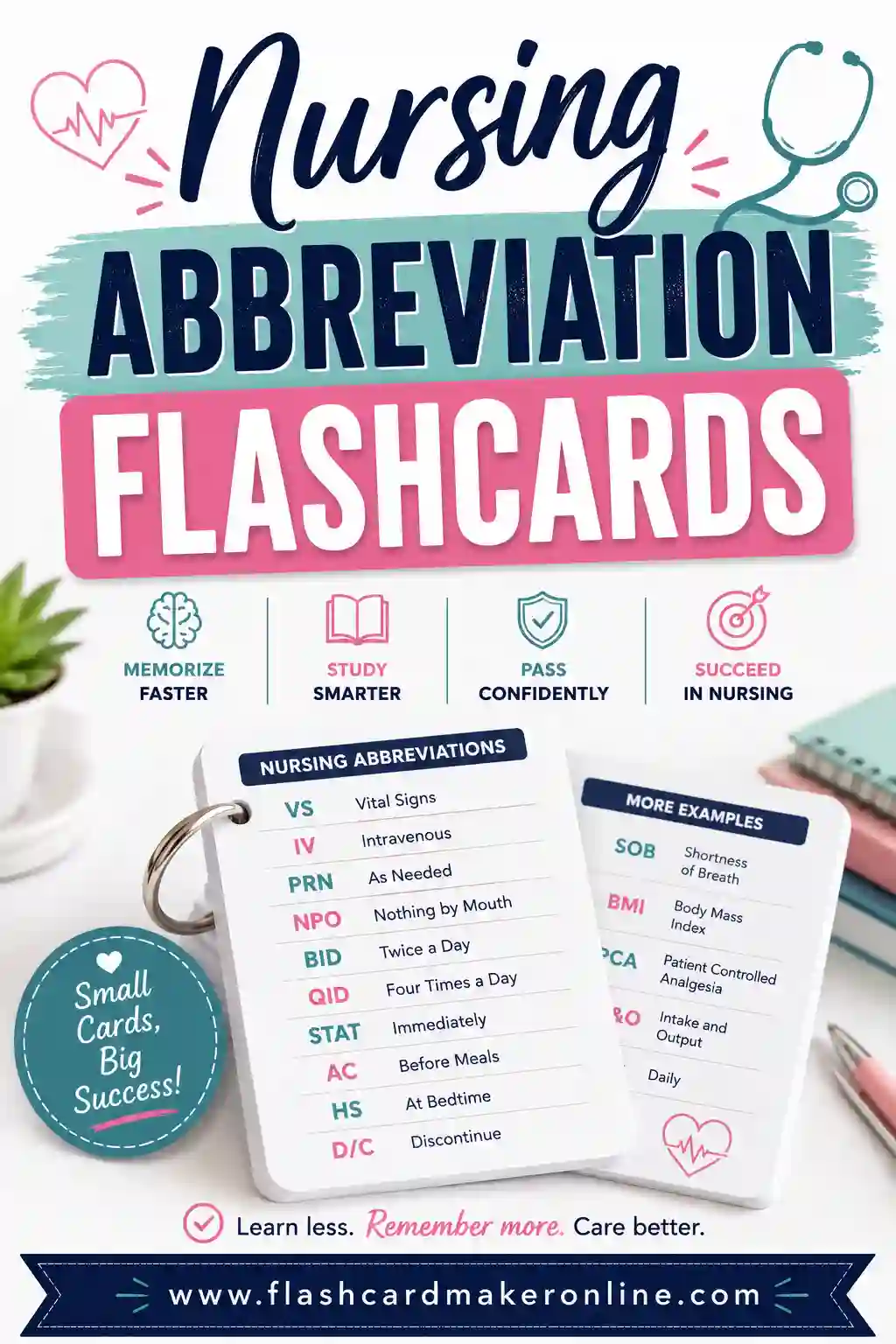
Nursing abbreviation flashcards put a medical shorthand on the front, like "PRN" or "NPO," and its full meaning on the back, such as "as needed" or "nothing by mouth." You flip the card, recall the meaning, and review the ones you miss. The fastest way to build a full set is a free flashcard maker that turns your abbreviation list into clean, printable flip cards you can quiz from on your phone or on paper.
Want to start memorizing right away? Open the free flashcard maker, paste in an abbreviation list (there's a ready-made one below), and you'll have a deck of flip-style cards in under a minute. No sign-up, no app to install, and you can print the deck for quick offline review before clinicals.
What Are Nursing Abbreviation Flashcards?
Walk onto any unit and you'll see shorthand everywhere: in charts, on med orders, in handoff reports. Nurses use abbreviations to move fast, but for a student it can feel like a foreign language. Misreading one can be more than confusing, it can be a safety issue.
Nursing abbreviation flashcards fix that. The front shows the abbreviation. The back shows what it means in plain words. When you try to recall the meaning before you flip, you're using active recall, which locks the term in far better than reading a list over and over.
You can study these two ways:
- Abbreviation to meaning. See "NPO," recall "nothing by mouth." This is how you'll read orders.
- Meaning to abbreviation. See "twice a day," recall "BID." This builds the reverse link you'll use when documenting.
Why Flashcards Beat a Printed Abbreviation List
A lot of students keep a long printed list of abbreviations taped inside a binder. It's a fine reference, but it's a weak way to actually learn them. Flashcards work better.
- Active recall. A flashcard makes you produce the answer. A list just lets your eyes slide over it.
- Spaced repetition. Sorting into "know it" and "missed it" piles means you drill the tricky ones more often.
- Speed. You can run a deck of 20 abbreviations in three minutes while you wait for the bus.
- Confidence on the floor. When the shorthand is automatic, you read orders faster and second-guess yourself less.
Keep each card to one abbreviation and one clear meaning. Short cards are fast cards, and fast cards get reviewed more.
Free Nursing Abbreviation List (Copy & Paste)
Here's a ready-to-use set of common nursing and medical abbreviations. Put the abbreviation on the front and the meaning on the back. Copy any rows into the flashcard maker and it builds the flip cards for you.
| Abbreviation (front) | Meaning (back) |
|---|---|
| PRN | As needed |
| NPO | Nothing by mouth |
| PO | By mouth (oral) |
| IV | Intravenous (into the vein) |
| IM | Intramuscular (into the muscle) |
| SubQ | Subcutaneous (under the skin) |
| BID | Twice a day |
| TID | Three times a day |
| QID | Four times a day |
| STAT | Immediately, right now |
| q | Every (as in q4h, every 4 hours) |
| ac | Before meals |
| pc | After meals |
| HS | At bedtime |
| SOB | Shortness of breath |
| BP | Blood pressure |
| HR | Heart rate |
| RR | Respiratory rate |
| Tmp | Temperature |
| I&O | Intake and output |
| WNL | Within normal limits |
| Dx | Diagnosis |
| Hx | History |
| Tx | Treatment |
| Rx | Prescription / treatment |
That's 25 cards, plenty for a first study block. Build a couple more decks like this, one for routes, one for timing, one for symptoms, and the shorthand will stop slowing you down.
Watch out for "do not use" abbreviations
Some old abbreviations are now banned because they cause errors. For example, "U" for units can look like a zero, so write out "units." Make a small deck of these "do not use" terms and their safe replacements. Knowing what NOT to write is just as important as knowing what things mean.
How to Make Nursing Abbreviation Flashcards in 4 Steps
No special software needed. Here's the whole process.
- Group your terms. Routes, timing, symptoms, charting — one theme per deck.
- Add your cards. Abbreviation on the front, meaning on the back. Paste your list and the maker splits it into cards.
- Study and sort. Flip through and split into "got it" and "missing it" piles.
- Print or study online. Flip cards on screen, or print the deck for clinicals and quick review.
That's it. Your first deck takes under ten minutes.
Group Your Abbreviations by Type
Random lists are hard to learn. Grouped lists almost teach themselves, because related terms reinforce each other. Try decks like these:
- Routes. PO, IV, IM, SubQ — how a drug gets into the body.
- Timing and frequency. BID, TID, QID, q4h, HS, ac, pc — when to give something.
- Vital signs. BP, HR, RR, Tmp, SpO2 — the numbers you chart every shift.
- Symptoms and findings. SOB, N/V, c/o, WNL — what you hear and observe.
- Charting shorthand. Dx, Hx, Tx, Rx, I&O — the words you'll write in notes.
When you study "BID, TID, QID" together, the pattern clicks, and you stop mixing them up.
Study Tips That Actually Work for Abbreviations
A few simple habits make memorizing shorthand much faster.
| Tip | Why it helps |
|---|---|
| Study in short bursts | A few minutes a day beats one long session |
| Shuffle the deck | Stops you learning the order instead of the terms |
| Say the meaning out loud | Speaking adds a second memory pathway |
| Drill your missed pile | Spaced repetition locks in the tricky ones |
| Use them in real notes | Writing them in practice charting makes them stick |
| Quiz a classmate | Teaching a term proves you really know it |
The fastest progress comes from the missed pile. Set aside every card you can't answer, then review just that smaller stack again. Those are the terms that need your attention.
Who Nursing Abbreviation Flashcards Help
This shorthand shows up across every level of training and practice.
Nursing students starting clinicals
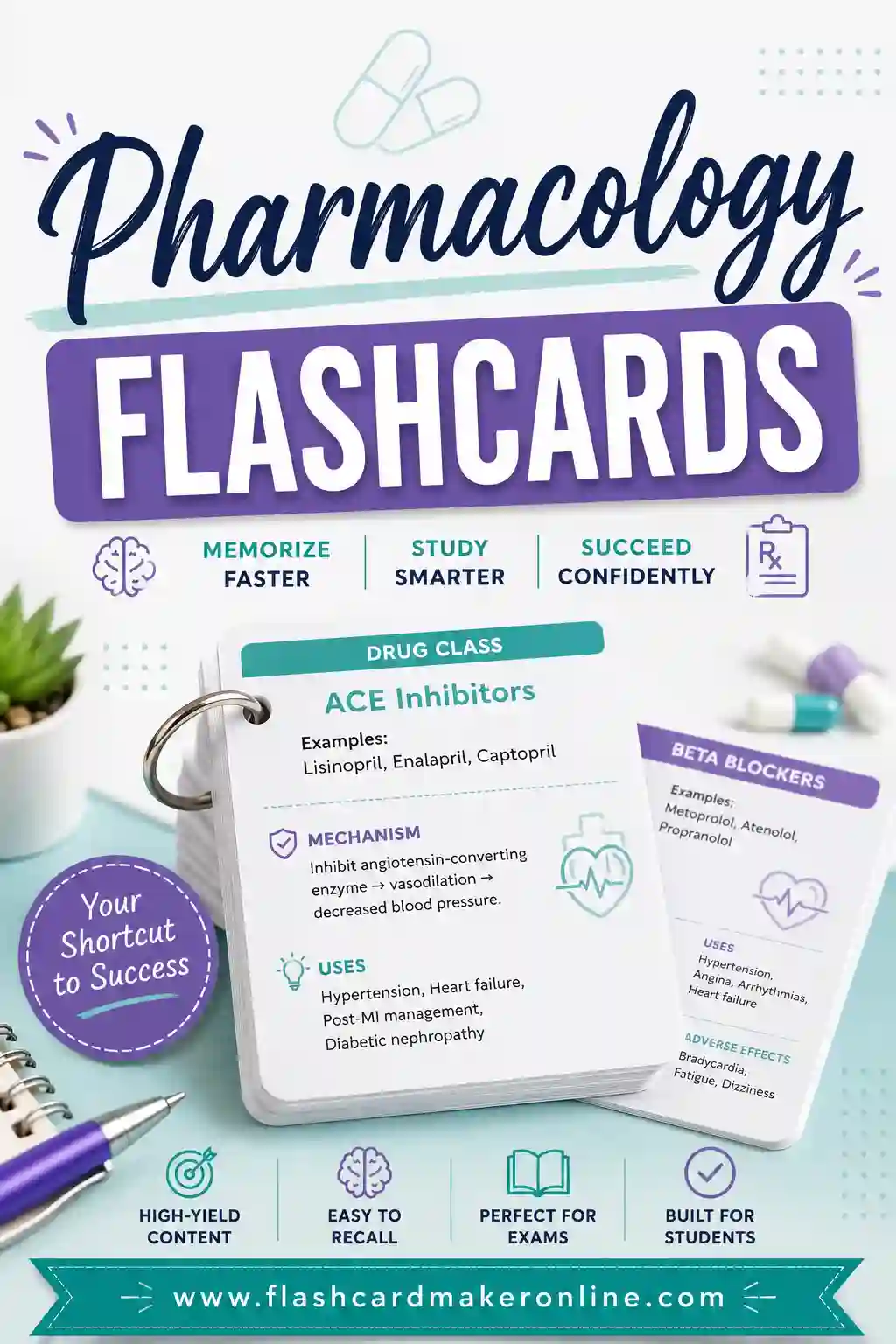
Your first clinical rotation throws abbreviations at you fast. A deck you've drilled means you can read orders and reports without freezing. Pair it with our pharmacology flashcards so the drug names and the shorthand both feel familiar.
Students prepping for the NCLEX
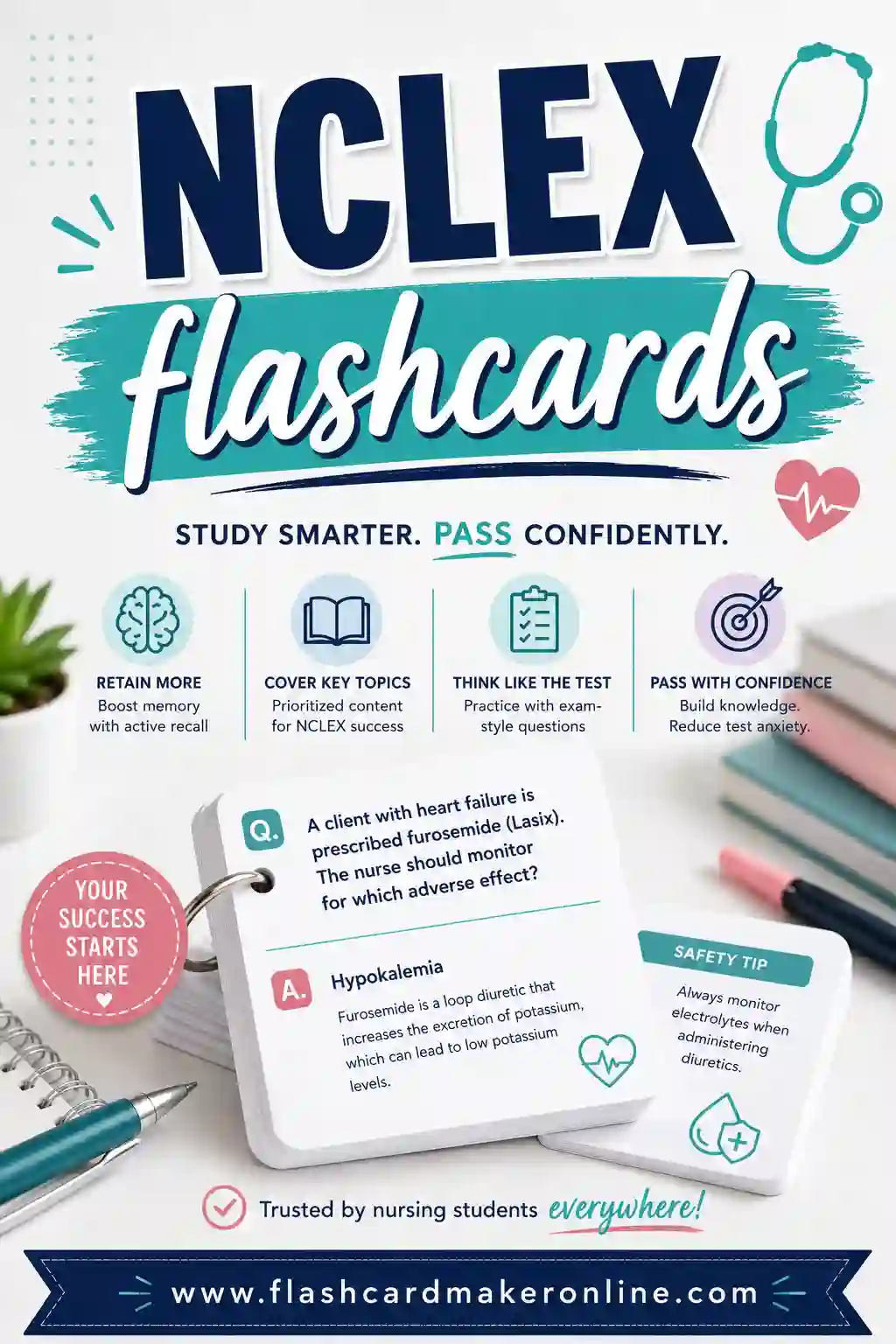
The licensing exam assumes you know common shorthand. Build this deck alongside our NCLEX flashcards so an abbreviation in a question never trips you up.
CNAs and medical assistants
Aides and assistants read the same charts. A quick deck of routes, timing, and vital-sign shorthand makes the workday smoother.
New nurses on a fresh unit
Even experienced nurses meet new abbreviations when they switch specialties. A small custom deck of your unit's shorthand gets you up to speed fast.
Abbreviations That Students Mix Up Most
Some pairs look almost identical but mean very different things, and those are exactly the ones worth their own deck. A few classic mix-ups:
- BID vs. TID vs. QID. Twice, three times, and four times a day. The letters look similar, so students swap them under pressure. Drilling them together fixes the confusion.
- ac vs. pc. Before meals versus after meals. One letter, opposite timing. Mixing these up changes when a medication should be given.
- PO vs. PRN. By mouth versus as needed. Both start with P, but one is a route and the other is a schedule.
- SubQ vs. IM vs. IV. Three different injection depths. A card for each, studied side by side, makes the differences obvious.
- Dx vs. Hx vs. Tx. Diagnosis, history, and treatment. Same shorthand style, different meaning in every note.
Make a small "tricky" deck of just these confusing pairs and review it more often than the rest. When you can flip through it without a single miss, you've cleared the most common stumbling blocks. This is spaced repetition doing its job: the cards you struggle with get the most attention, and the easy ones fade into the background.
A quick way to test yourself is to go meaning-first on this deck. Read "three times a day" and try to produce "TID" before flipping. Going both directions on the trickiest cards builds the kind of automatic recall you'll lean on during a busy shift.
Printing and Reusing Your Cards
If you like studying on paper, a few choices help the deck last.
- Use cardstock. It survives being shuffled in a scrub pocket far better than copy paper.
- Print double-sided so each meaning lands behind its abbreviation.
- Punch a corner and add a ring so the deck stays together on the go.
- Keep cards small. Pocket-sized cards are easy to flip between tasks.
- Print a test page first to check that fronts and backs line up.
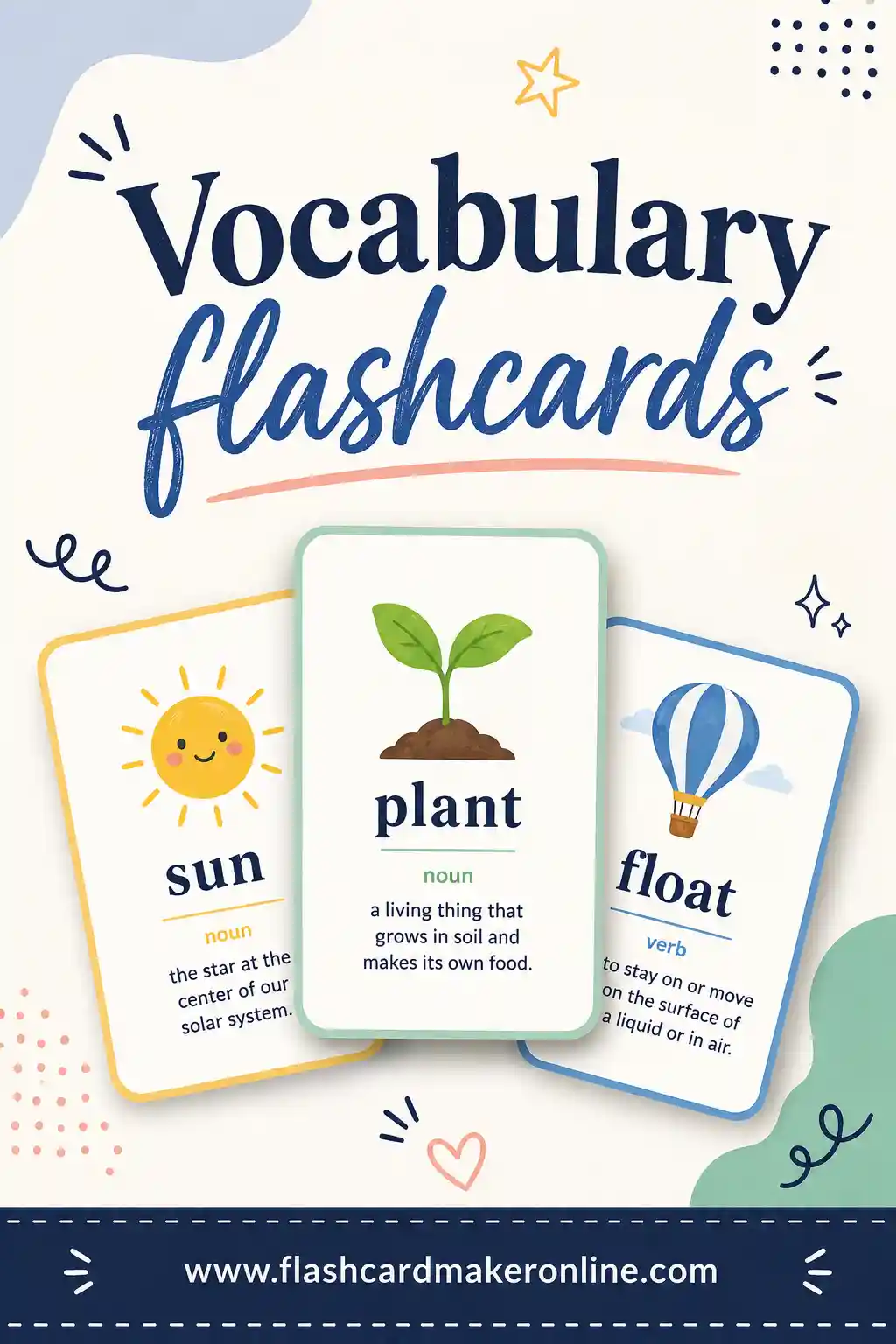
Want to broaden your study system? The same flip-card method works for any subject. See how we set it up with our vocabulary flashcards.
Frequently Asked Questions
How many nursing abbreviation flashcards do I need?
Enough to cover the shorthand you'll actually use, split into small themed decks. A deck of 20–25 cards per theme is easy to study. Make as many decks as you need with the free flashcard maker.
What should go on a nursing abbreviation flashcard?
Put the abbreviation on the front and its plain-language meaning on the back. Keep the back short, just the meaning, so you can read it in a second or two. For "do not use" terms, add the safe replacement on the back.
Are these nursing abbreviation flashcards free to print?
Yes. You make and print them yourself at no cost. There's no sign-up and no watermark, so you can build a full set of shorthand decks for free.
How do I memorize so many abbreviations?
Group them by type, like routes, timing, and vital signs, so related terms reinforce each other. Use active recall by answering before you flip, and drill your missed pile daily. Short, frequent sessions beat cramming.
Can I study these flashcards on my phone?
Yes. The flip cards work in your browser, so you can review on your phone any time you have a free minute. You can also print the deck to carry to clinicals.
Should I learn the "do not use" abbreviations too?
Yes. Some abbreviations are banned because they cause medication errors. Make a small deck of those terms and their safe replacements. Knowing what not to write is a real safety skill.
Ready to Build Your Nursing Abbreviation Flashcards?
Grab the abbreviation list above, open the free flashcard maker, and you'll have a deck of flip-style cards in minutes. It's free, there's no sign-up, and you can print the whole set or quiz yourself on your phone. Start with one theme today, drill your missed cards, and walk into clinicals reading the shorthand like a pro.