Pharmacology Flashcards: Free, Printable & Easy to Study
Pharmacology flashcards put a drug name, class, or concept on the front and the key facts you need to recall on the back, like the drug's mechanism, common side effects, and nursing considerations. You flip the card, test yourself, and repeat the ones you miss. The fastest way to build a full set is a free flashcard maker that turns your drug list into clean, printable cards you can flip on screen or carry in your pocket.
Want to skip ahead and start studying? Open the free flashcard maker, paste in a drug list (there's a ready-made one below), and you'll have a deck of flip-style cards in under a minute. No sign-up, no app to install, and you can print the whole set for offline review.
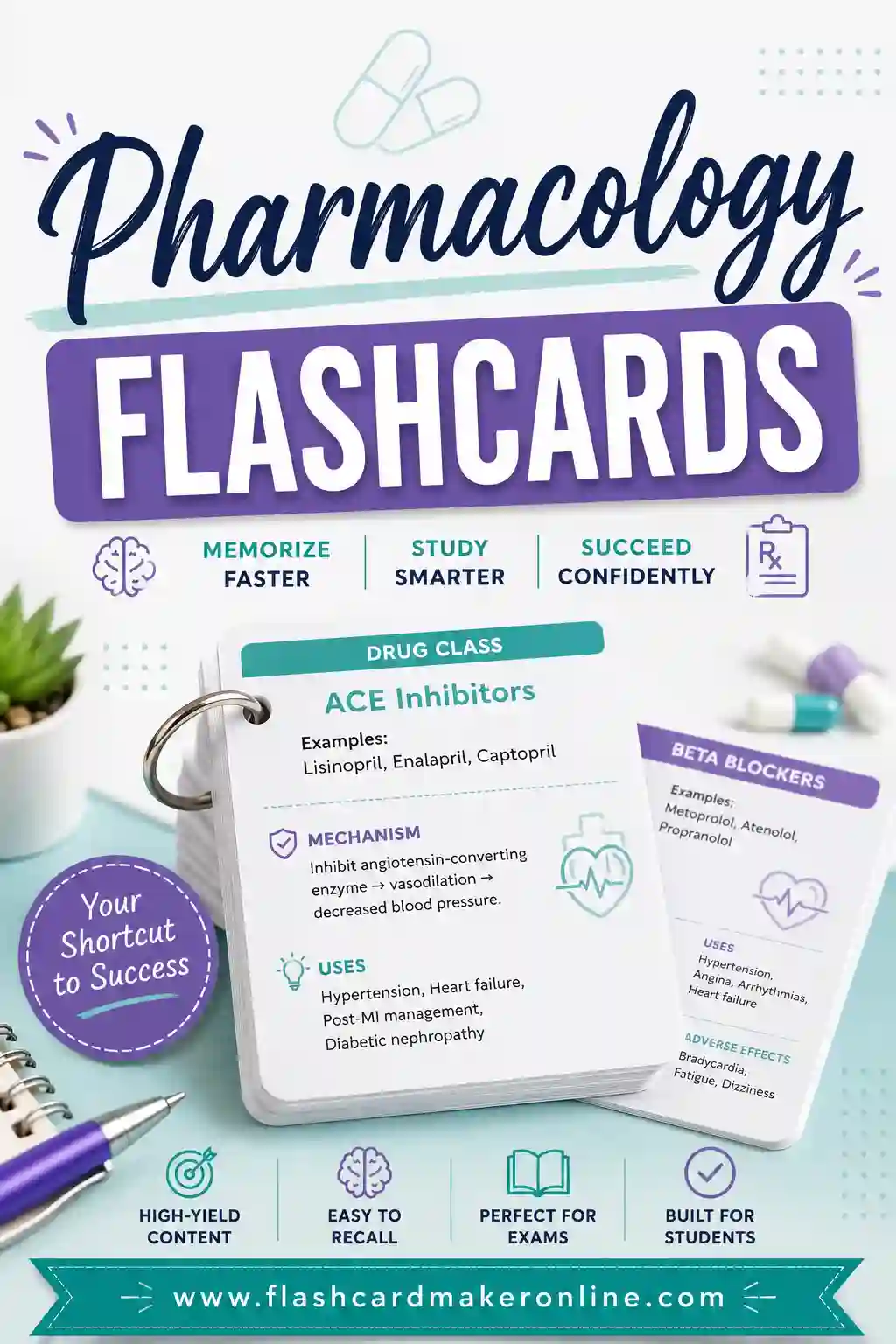
What Are Pharmacology Flashcards?
Pharmacology is one of the heaviest memorization subjects in any health program. There are hundreds of drugs, each with a class, a mechanism, side effects, interactions, and things you have to watch for. Flashcards break that mountain into tiny, testable pieces.
A good pharmacology card has a clear front and a focused back. The front is a prompt, like a drug name or a question. The back holds just the facts you need to recall, not a textbook paragraph. When you flip the card and try to answer before you look, you're using active recall, which is one of the most proven ways to make information stick.
You can study cards two ways:
- Front-to-back. See the drug name, recall its class and key facts. This is how you'll be tested on most exams.
- Back-to-front. Read a description and name the drug. This builds the reverse connection, which trips a lot of students up.
Why Flashcards Beat Re-Reading Your Notes
Most students study pharmacology by reading their notes over and over. It feels productive, but it's one of the weakest ways to learn. Here's why flashcards work better.
- Active recall. Pulling an answer from memory strengthens it far more than seeing it again. Every flip is a tiny test.
- Spaced repetition. When you sort cards into "got it" and "missed it" piles, you naturally review the hard ones more often. That spacing is exactly what your memory needs.
- Portability. A deck fits in your bag. You can run through ten cards in a checkout line or between classes.
- Honest feedback. A card you can't answer tells you the truth. Re-reading lets you fool yourself into thinking you know it.
The trick is to keep each card small. One drug, a few facts. If a card has ten bullet points, split it into three cards.
Free Pharmacology Flashcard List (Copy & Paste)
Here's a ready-to-use set of common drugs grouped by class. Use the drug as the front of your card and the facts as the back. Copy any rows straight into the flashcard maker and it'll build the flip cards for you.
| Drug (front) | Class & key facts (back) |
|---|---|
| Metoprolol | Beta blocker — lowers HR and BP; hold if pulse under 60 |
| Atenolol | Beta blocker — cardioselective; watch for bradycardia |
| Lisinopril | ACE inhibitor — dry cough, high potassium, angioedema |
| Losartan | ARB — like ACE but no cough; watch potassium |
| Amlodipine | Calcium channel blocker — lowers BP; ankle swelling |
| Furosemide | Loop diuretic — strong; monitor potassium and dehydration |
| Hydrochlorothiazide | Thiazide diuretic — mild; can lower potassium and sodium |
| Spironolactone | Potassium-sparing diuretic — watch for HIGH potassium |
| Warfarin | Anticoagulant — monitor INR; antidote is vitamin K |
| Heparin | Anticoagulant — monitor aPTT; antidote is protamine |
| Atorvastatin | Statin — lowers cholesterol; watch for muscle pain |
| Metformin | Antidiabetic — first line type 2; hold before contrast dye |
| Insulin (regular) | Rapid glucose control; watch for hypoglycemia |
| Albuterol | Bronchodilator — opens airways; tremor, fast heart rate |
| Prednisone | Corticosteroid — taper off slowly; raises blood sugar |
| Acetaminophen | Analgesic — max 4 g/day; liver toxic in overdose |
| Ibuprofen | NSAID — take with food; can harm kidneys and stomach |
| Morphine | Opioid — pain relief; watch for slow breathing |
| Naloxone | Opioid antidote — reverses overdose fast |
| Digoxin | Cardiac glycoside — narrow range; check level and potassium |
| Amoxicillin | Antibiotic — penicillin; ask about penicillin allergy |
| Omeprazole | Proton pump inhibitor — lowers stomach acid |
Twenty-two cards is enough for a focused study block. Build a few decks like this, one per body system or drug class, and you can cover the whole course without drowning.
Group cards by class, not alphabetically
When drugs are grouped by class, you start to see patterns. Every "-olol" is a beta blocker. Every "-pril" is an ACE inhibitor. Every "-statin" lowers cholesterol. Learning the suffix gives you a free clue on dozens of drugs at once, which is gold on a timed exam.
How to Make Pharmacology Flashcards in 4 Steps
You don't need fancy software. Here's the whole process.
- Pick a topic. One drug class or one body system per deck keeps things focused.
- Add your cards. Put the drug name on the front and the class plus 2–4 key facts on the back. Paste a list and the maker splits it into cards.
- Study and sort. Flip through, and split into "know it" and "missing it" piles as you go.
- Print or review online. Flip cards on screen, or print the deck for offline study. Cardstock holds up to repeated shuffling.
That's it. The first deck takes ten minutes. After that you'll be fast.
What to Put on Each Card
Pharmacology has a lot of moving parts, so it helps to decide what goes on a card before you start. A clean back usually covers:
- Class. The single most useful fact. It predicts mechanism and side effects.
- Mechanism (short). One line on what the drug does in the body.
- Top side effects. The two or three you'll actually be tested on.
- The big "watch for." The one thing that makes a nurse or pharmacist stop, like "hold if pulse under 60" or "check INR."
Resist the urge to cram. If you can't read the back in five seconds, it's too long. Split it into two cards instead.
Study Tips That Actually Work for Pharmacology
A few habits make a huge difference when you're facing hundreds of drugs.
| Tip | Why it helps |
|---|---|
| Study in short bursts | 15–20 minutes beats one long cram session for memory |
| Shuffle the deck | Stops you memorizing the order instead of the content |
| Say answers out loud | Speaking adds a second memory pathway |
| Review missed cards daily | Spaced repetition locks in the hard ones |
| Learn drug suffixes | One pattern unlocks a whole class of drugs |
| Mix old and new cards | Keeps earlier material from fading |
The single best habit is the "missed pile." Every time you flip a card you can't answer, set it aside and review that smaller pile again at the end. Those are the cards your brain needs most.
Who Pharmacology Flashcards Help
This subject shows up across a lot of programs, and flashcards fit all of them.
Nursing students
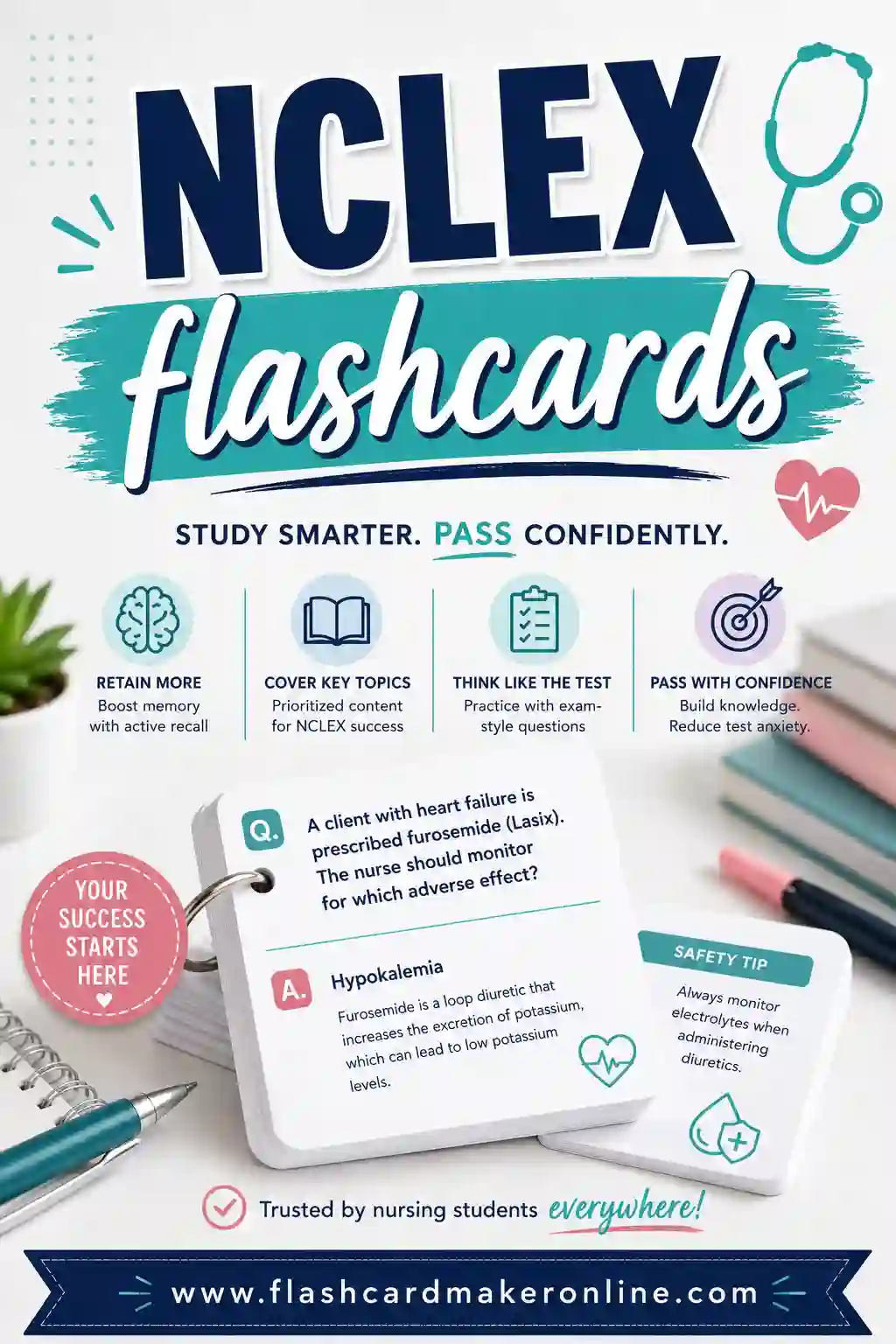
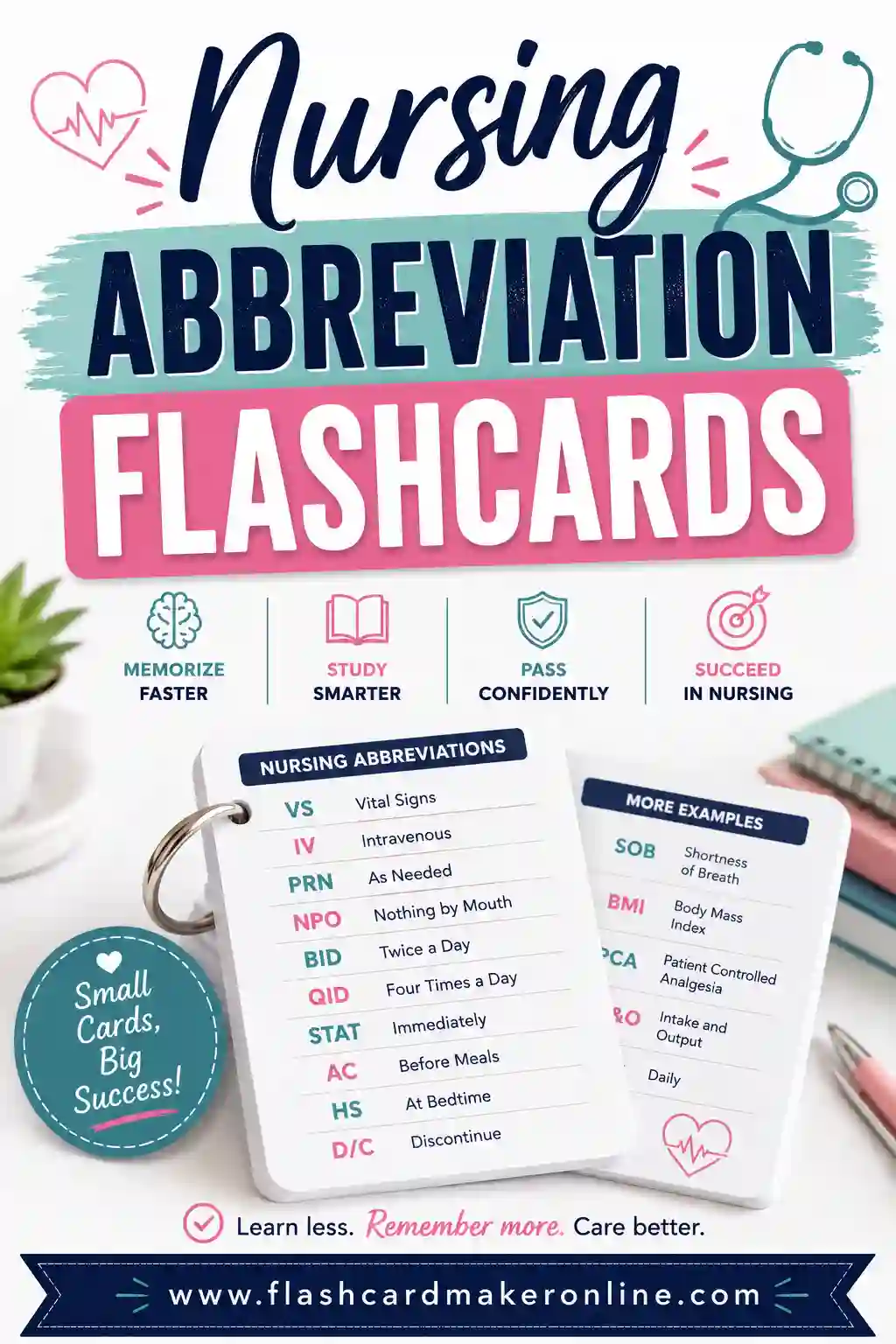
Nursing programs lean hard on pharmacology, and it carries straight into the licensing exam. If you're heading toward boards, pair these cards with our NCLEX flashcards and nursing abbreviation flashcards so the drug names, the test format, and the shorthand all click together.
Pharmacy and pharm tech students
For pharmacy programs, the volume is even higher. Brand-to-generic decks, drug-class decks, and interaction decks all work well as flip cards you can shuffle daily.
Med students and PA students
Med and PA students use flashcards to keep pharmacology fresh between blocks. A quick daily review of mixed cards beats re-reading slides the night before an exam.
Working clinicians brushing up
Even after school, a small deck of high-alert drugs is a handy refresher. Build one for the meds you see most on your unit.
Printing and Reusing Your Cards
If you like studying on paper, a few choices make the deck last.
- Use cardstock. It survives months of shuffling far better than regular paper.
- Print double-sided so the answer lands on the back of the matching front.
- Slip them in a small ring by punching a corner. Now your deck won't scatter in your bag.
- Color-code by class. A dot of highlighter on each class helps you sort fast.
- Print a test page first to check that fronts and backs line up before you run the whole set.
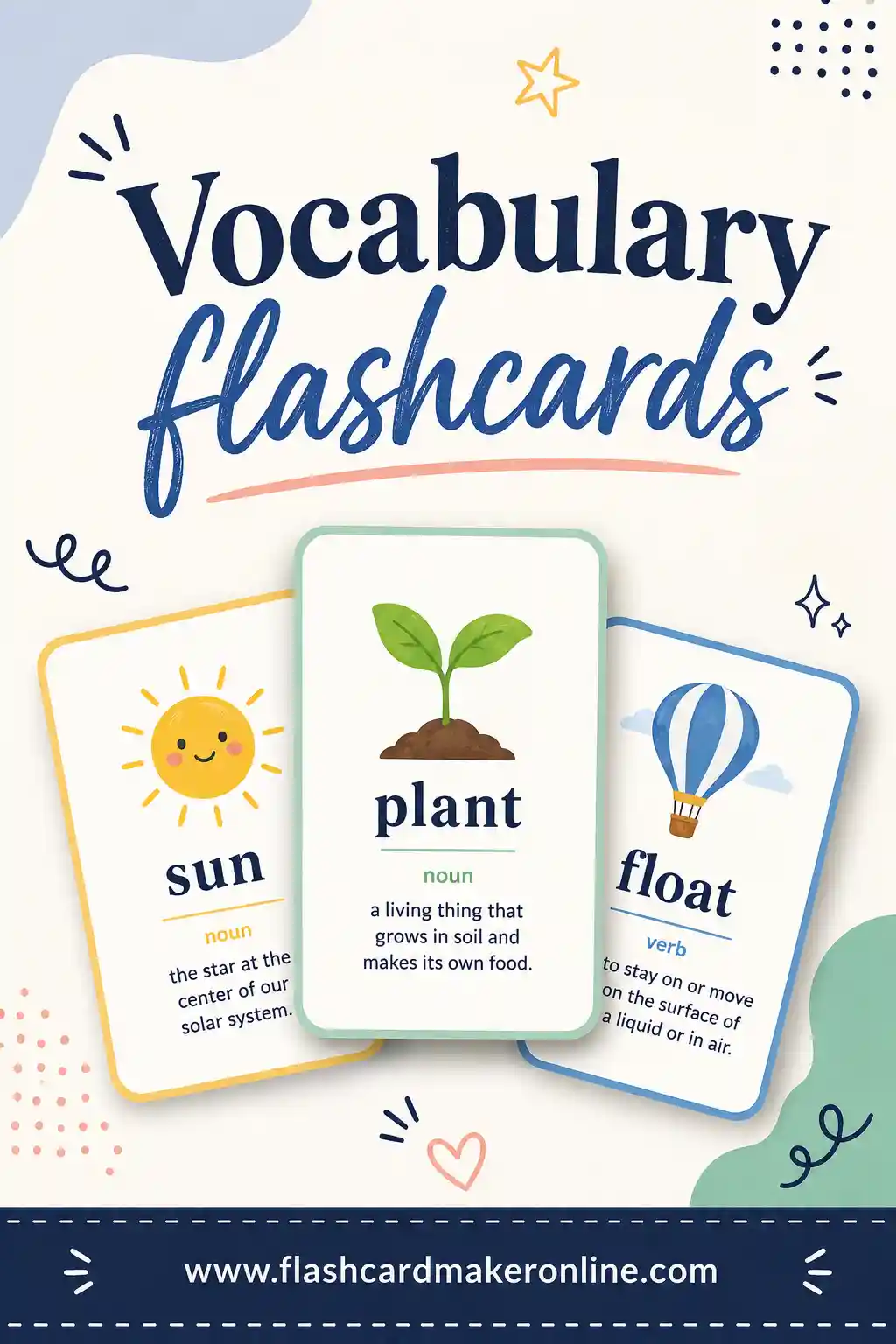
Loving the flip-card method? You can build the same kind of deck for other subjects. Start with our vocabulary flashcards approach and adapt it to any class.
Frequently Asked Questions
How many pharmacology flashcards do I need?
Enough to cover your drug list, but split into small decks. A deck of 20–30 cards per class or body system is easier to study than one giant stack. Make as many decks as you need with the free flashcard maker.
What should go on a pharmacology flashcard?
Put the drug name on the front. On the back, write the class, a one-line mechanism, the top two or three side effects, and the single biggest thing to watch for. Keep it short enough to read in five seconds.
Are these pharmacology flashcards free to print?
Yes. You make and print them yourself at no cost. There's no sign-up and no watermark, so you can build an entire semester's worth of decks for free.
How do I memorize so many drugs?
Group cards by class so you learn patterns and suffixes instead of isolated facts. Use active recall by answering before you flip, and review your "missed" pile daily. Short, frequent sessions beat long cram nights.
Can I study the cards on my phone?
Yes. The flip cards work right in your browser, so you can review on your phone between classes. You can also print the deck for offline study when you want a screen break.
Should I make my own cards or use a pre-made set?
Making your own is worth it. Writing the card is itself a study step, and you can tailor each one to your course and your weak spots. The maker just speeds up turning your list into flip cards.
Ready to Build Your Pharmacology Flashcards?
Grab the drug list above, open the free flashcard maker, and you'll have a deck of flip-style pharmacology cards in minutes. It's free, there's no sign-up, and you can print the whole set or study right on your phone. Start with one drug class today, sort your missed cards, and watch the names finally stick.