Spelling Bee Flashcards: Make, Study and Print Your Bee Deck
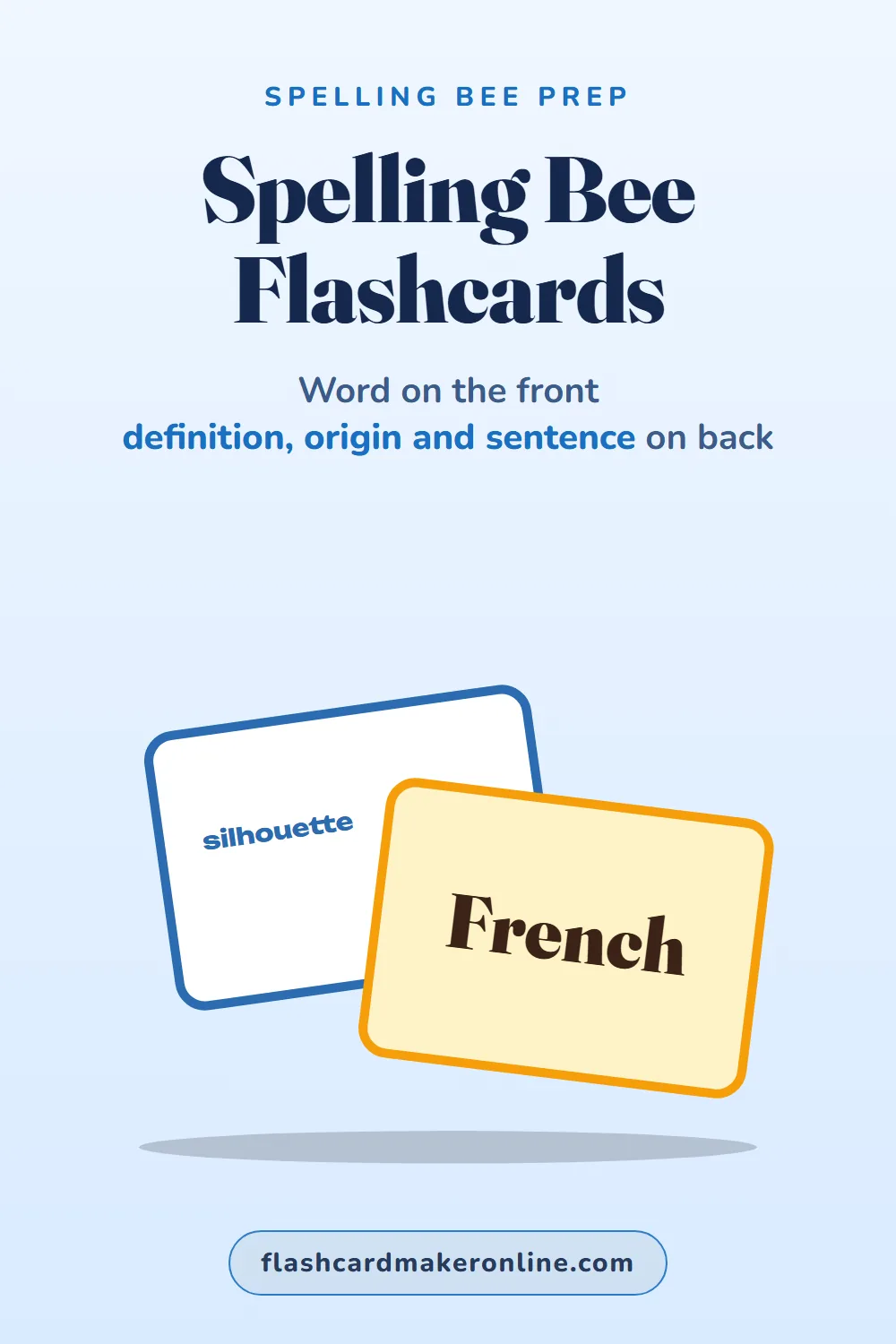
The best spelling bee flashcards put just the word on the front, and the three things a speller is allowed to ask for on the back: the definition, the language of origin and a sentence. That way every practice round feels like the real stage. Make a small deck from your bee's study list, drill 10 to 15 new words a day, and spell each one out loud before you flip.
School and district bees usually run in January and February, so if you start now you have plenty of time. Try a few cards below, then open the full deck and add your own list.
🃏 Quiz yourself: 10 cards from this page
Read the front, say your answer, then tap the card to check.
Make, study & print this deck → Opens the free flashcard maker with all 10 cards ready to edit or print.What should go on a spelling bee flashcard?
A regular spelling flashcard just shows the word. A spelling bee card does a little more, because at a bee you can't see the word at all. You hear it, and then you can ask questions about it. In the Scripps-style bees most schools use, a speller can ask for the definition, the part of speech, the language of origin, the word in a sentence and any other pronunciations.
So build your cards to match:
- Front: the word, nothing else.
- Back: a short definition, the language of origin and one simple sentence.
Here's a sample card:
| Front | Back |
|---|---|
| silhouette | A dark outline against a light background. Origin: French, named after a French official. Sentence: We saw the silhouette of a cat in the window. |
Keep the back short. If it takes longer to read the back than to spell the word, your practice slows way down.
How do you practice with spelling bee flashcards?
Here's the trick: don't practice by looking at the word. That just tests whether you can copy it. At a bee you only hear it.
- Partner reads, speller spells. A parent, friend or sibling holds the deck, reads the front out loud, and answers questions from the back. The speller never sees the card until after spelling.
- Say it, spell it, say it. Practice the real routine: repeat the word, spell it letter by letter, then say the word again.
- Sort into two piles. Got it right? Into the "know" pile. Missed it? Into the "again" pile. Tomorrow, start with the "again" pile.
- Practice alone with Read aloud. In the flashcard maker, the Study tab has a Read aloud button that speaks the current side. Hide the screen, listen, write the word on paper, then check.
Writing it down when you practice alone works great, but switch to spelling out loud a week or two before the bee. Saying letters in order under a little pressure is its own skill.
Spelling bee word lists by grade
Your school's bee will usually hand out an official study list, and that should be your main deck. Scripps has published a study list for school bees for years (recently called Words of the Champions), so ask your bee coordinator which list your bee uses this year.
The lists below are extra practice words, grouped by level. They lean on words borrowed from other languages, because that's where most bee spellers trip up. Copy any rows straight into the maker.
Starter words (grades 2 to 3)
| Word | Meaning | Origin |
|---|---|---|
| giraffe | tall African animal with a long neck | Arabic, through Italian |
| pizza | flat baked bread with toppings | Italian |
| piano | large keyboard instrument | Italian |
| kayak | small, narrow boat moved with a paddle | Inuit languages |
| igloo | dome-shaped house made of snow blocks | Inuit languages |
| cookie | small sweet baked treat | Dutch |
| pretzel | twisted, salted bread snack | German |
| noodle | long, thin strip of pasta | German |
| tomato | ripe red fruit used like a vegetable | Spanish, from Nahuatl |
| canyon | deep valley with steep sides | Spanish |
| ballet | graceful dance that tells a story | French |
| garage | building where a car is kept | French |
| castle | large stone building with strong walls | Latin |
| island | land with water all around it | Old English |
| knight | soldier in armor who served a king | Old English |
| answer | a reply to a question | Old English |
Middle words (grades 4 to 5)
| Word | Meaning | Origin |
|---|---|---|
| moccasin | soft leather shoe | Algonquian |
| raccoon | gray animal with a masked face and ringed tail | Algonquian |
| mosquito | small flying insect that bites | Spanish |
| hurricane | huge storm with very strong winds | Spanish, from Taino |
| ukulele | small four-string guitar | Hawaiian |
| tsunami | giant ocean wave | Japanese |
| origami | art of folding paper into shapes | Japanese |
| kindergarten | first year of school for young children | German |
| hamster | small furry pet with cheek pouches | German |
| yacht | large boat used for pleasure trips | Dutch |
| shampoo | soap for washing hair | Hindi |
| jungle | thick tropical forest | Hindi |
| bagel | round bread roll with a hole | Yiddish |
| violin | four-string instrument played with a bow | Italian |
| volcano | mountain that can erupt with lava | Italian |
| umbrella | folding cover that keeps off rain | Italian |
| algebra | math that uses letters for numbers | Arabic |
| rhythm | a steady, repeated beat | Greek |
| echo | a sound that bounces back | Greek |
| tortilla | thin, flat round bread | Spanish |
Challenge words (grades 6 to 8)
| Word | Meaning | Origin |
|---|---|---|
| silhouette | dark outline against a light background | French |
| camouflage | colors or patterns that help something hide | French |
| chauffeur | person paid to drive someone | French |
| souvenir | something kept to remember a place | French |
| plateau | high, flat area of land | French |
| rendezvous | a planned meeting | French |
| connoisseur | an expert judge of something | French |
| pneumonia | an infection of the lungs | Greek |
| psychology | the study of the mind | Greek |
| mnemonic | a trick that helps you remember | Greek |
| onomatopoeia | a word that sounds like what it means | Greek |
| chaos | complete confusion | Greek |
| poltergeist | a noisy ghost in stories | German |
| sauerkraut | chopped, pickled cabbage | German |
| karaoke | singing along to recorded music | Japanese |
| tycoon | a powerful businessperson | Japanese |
| khaki | dull yellow-brown color or cloth | Hindi and Urdu, from Persian |
| piranha | South American fish with sharp teeth | Portuguese, from Tupi |
| jaguar | large spotted wild cat of the Americas | Portuguese, from Tupi |
| boomerang | curved stick that returns when thrown | an Aboriginal Australian language |
| quinoa | small grain-like seed eaten like rice | Spanish, from Quechua |
| chihuahua | very small dog breed | Spanish, from a Mexican state |
| smorgasbord | a wide spread of many foods | Swedish |
| fjord | narrow sea inlet between cliffs | Norwegian |
| tundra | cold, treeless plain | Russian |
| mammoth | huge, extinct hairy elephant | Russian |
Why does the language of origin matter?
Because each language leaves fingerprints on its spellings. Once you know a few patterns, a word you've never seen stops being a total guess.
- French: "ch" often sounds like "sh" (chauffeur), and an "oo" sound at the end is often spelled "ou" or "eau" (rendezvous, plateau).
- Greek: watch for "ph", "ps", "pn" and "rh" at the start (psychology, pneumonia, rhythm). The first letter is often silent.
- Italian: words often end in a vowel (piano, volcano), and double letters are common (umbrella, spaghetti).
- German: "ei" and "ie" show up a lot, and "z" or "tz" can sound like "ts" (pretzel).
- Japanese: words are built from simple syllables like ka, ra and mi, and every vowel gets sounded (ka-ra-o-ke, o-ri-ga-mi).
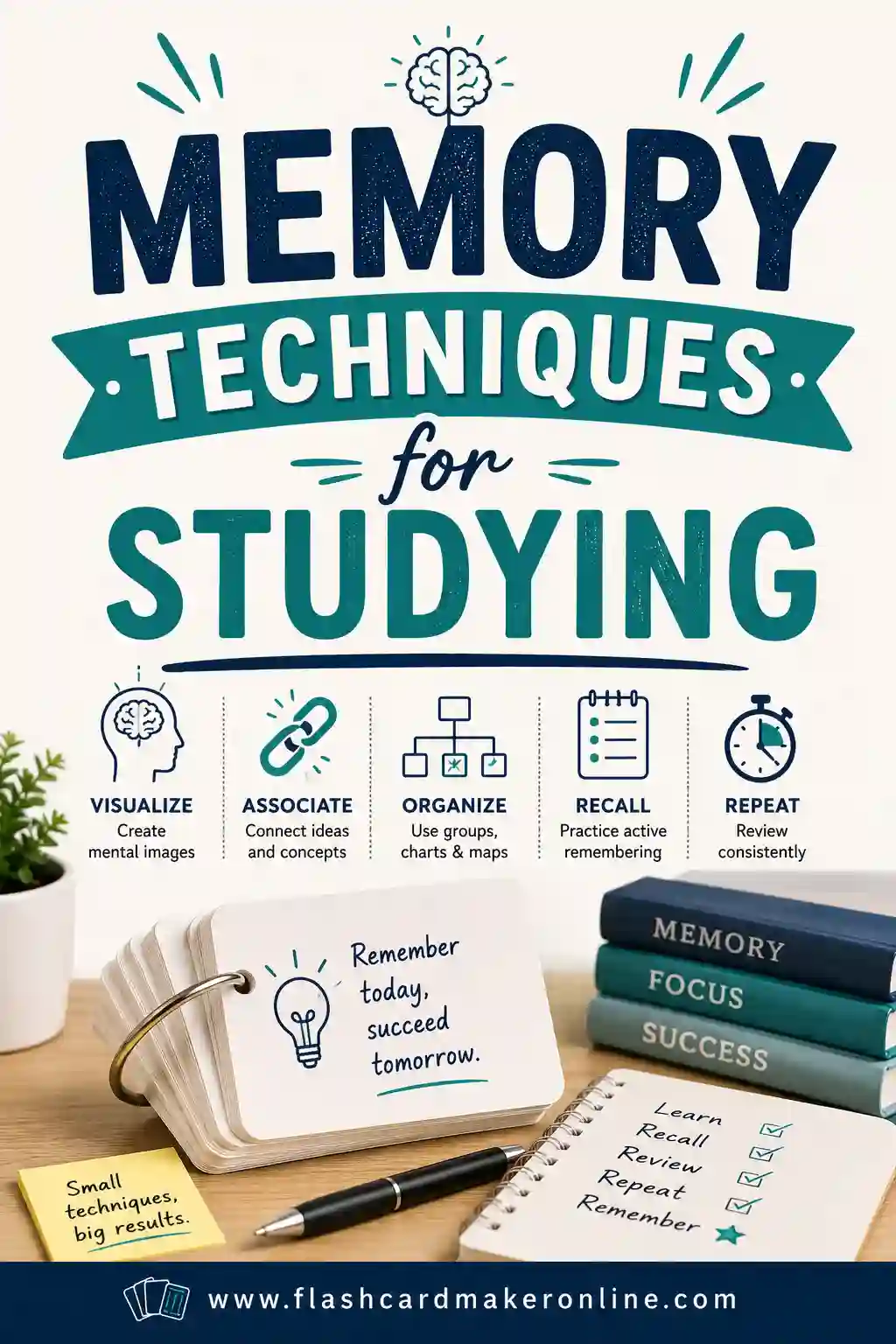
Make a mini deck just for patterns: put the language on the front and the rule plus three example words on the back. Grouping words by pattern like this is one of the easiest memory techniques for studying, and it works especially well for bees.
A simple spelling bee study plan
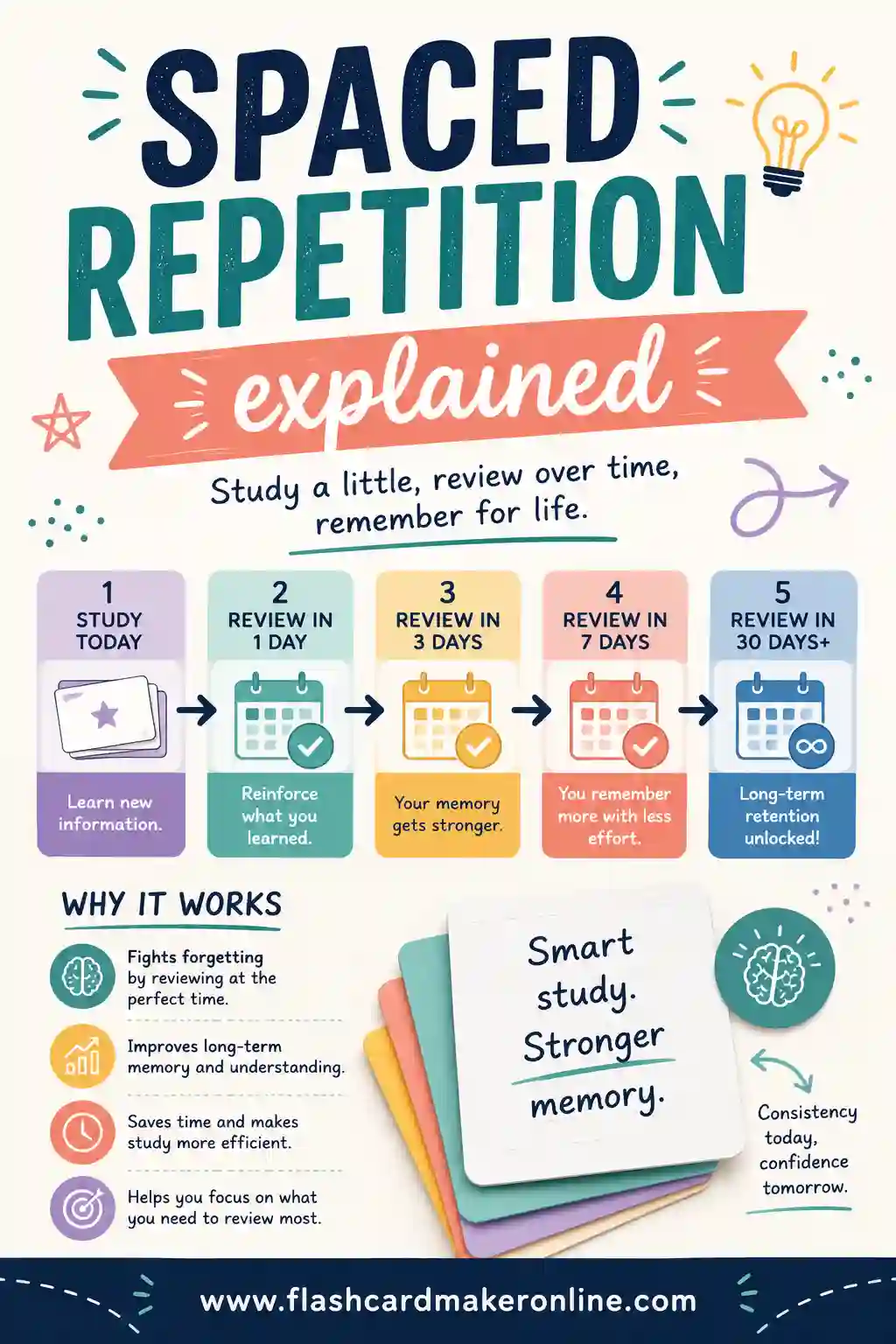
You don't need hours a day. Short, steady sessions beat cramming, because coming back to a word right before you'd forget it is what locks it in. (That's spaced repetition, and flashcards make it easy.)
| When | What to do | Time a day |
|---|---|---|
| Week 1 | Turn the full study list into flashcards. Learn 10 to 15 new words a day. | 15 to 20 min |
| Week 2 | Keep adding new words. Start each day with yesterday's "again" pile. | 15 to 20 min |
| Week 3 | Partner practice: hear the word, ask questions, spell out loud. | 20 min |
| Week 4 | Mixed review of every card. Do a mock bee with a parent as the pronouncer. | 20 to 30 min |
| Bee week | Only the "again" pile, plus a calm full run-through two days before. | 10 to 15 min |
If your bee is sooner than four weeks away, squeeze the plan: learn new words for half the time you have, then review for the other half.
Mistakes most spellers make when they study
- Studying by sight only. Reading the list over and over feels productive, but you never hear the words. Hearing is the whole game at a bee.
- Cards that are too crowded. One word per card. Keep the back to a line or two.
- Skipping the easy words. Plenty of spellers go out on a word they "knew." Run through the easy pile once a week.
- Never practicing out loud. Saying letters in order is different from writing them. Do it daily the last week.
- Cramming the night before. A good night's sleep does more for recall than one more hour of cards.
Print your spelling bee deck
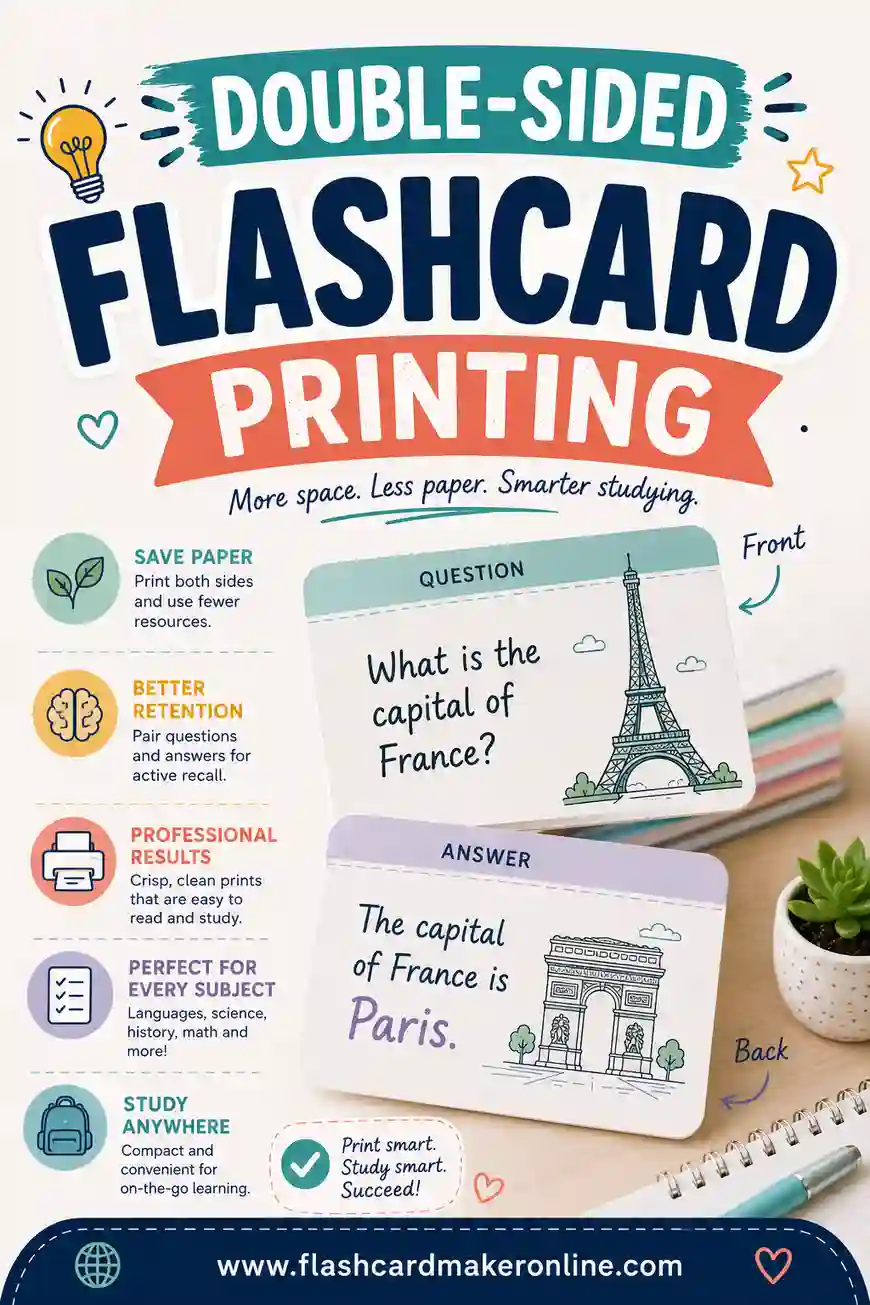
Once your list is in the maker, open the Print tab. Standard size fits 8 cards on a page, and Big puts 4 on a page, which younger spellers find easier to handle. Choose double-sided if you want the definition and sentence on the back, or fronts only if a partner reads from a separate list. For lining up backs with fronts, our guide to double-sided flashcard printing walks you through a quick test page.
Prefer weekly class lists instead of a bee? The spelling flashcards guide is set up for Friday tests. For the bee itself, add your study list to the free flashcard maker, flip through it a few minutes a day, and you'll walk up to that microphone ready.
Frequently Asked Questions
What should be on the back of a spelling bee flashcard?
Put the things a speller can ask for at the bee: a short definition, the language of origin and an example sentence. Keep it to a line or two so practice stays quick.
How many words a day should my child study for a spelling bee?
Most kids do well with 10 to 15 new words a day, plus a quick review of the words they missed the day before. Fifteen to twenty minutes is plenty.
Where do I find the official spelling bee word list?
Ask your school's bee coordinator. Many school bees use the study list Scripps publishes each year, and that list should be your main deck. The grade lists on this page are extra practice.
Is it better to study spelling bee words by writing or out loud?
Both help. Writing is great when practicing alone, but switch to spelling out loud a week or two before the bee, because saying letters in order is a separate skill.
Can I hear the words read aloud while I study?
Yes. In the flashcard maker's Study tab, the Read aloud button speaks the current side of the card, so you can listen, spell on paper, and then flip to check.
When should we start studying for a school spelling bee?
Four weeks out is a comfortable start. School and district bees often run in January and February, so starting in December or right after winter break works well.