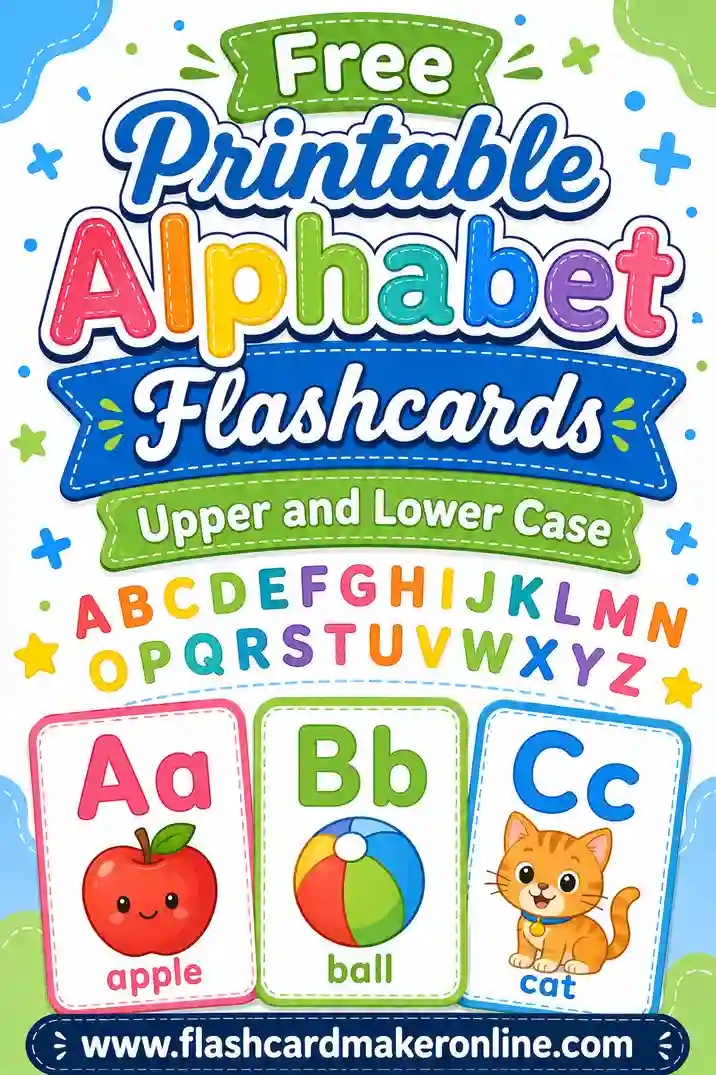
Free Printable Alphabet Flashcards Upper and Lower Case
Free printable alphabet flashcards upper and lower case style put the capital letter on the front of each card and its small partner on the back — flash "B," flip to "b." One deck, and your child learns that the two shapes are the same letter wearing different outfits. The fastest way to print the full A–Z set is a free flashcard maker that turns a pasted list into big, bold, double-sided letter cards.
Want the deck today? Open the free maker, paste the A–Z pairs below (or load the alphabet preset), pick a card size, and print. No sign-up, no fee — and unlike a downloaded pack, you can tweak every card.
What Are Upper and Lower Case Alphabet Flashcards?
They're the matching version of the classic ABC deck. Instead of pairing a letter with a picture, each card pairs a letter with itself: uppercase on the front, lowercase on the back. The child names the capital, guesses what the small version looks like, and flips to check.
Why does this deserve its own deck? Because to a four-year-old, "B" and "b" genuinely look like strangers. Some pairs are easy — C/c, O/o, S/s are just size changes. But G/g, R/r, E/e, Q/q, and D/d share almost nothing visually. A child can know all 26 capitals cold and still be stuck at the starting line of reading, because books are written almost entirely in lowercase.
The flip is what teaches the match. Every card is a tiny prediction game — "big G... and the small one looks like... a curly one!" — and that prediction-then-check loop (active recall, the same engine behind every good flash card) welds the two shapes into one letter.
Why the Case Match Matters So Much for Reading
Here's the gap many parents don't see coming: alphabet songs, toys, and puzzles are overwhelmingly uppercase. Kids arrive at kindergarten confidently naming capitals — then open a book where roughly 95% of the letters are lowercase.
Getting the match solid does three big things:
- Unlocks real text. Once "g" is recognized as G's partner, every storybook page stops being a wall of mystery squiggles.
- Preps handwriting. School writing is mostly lowercase. A child who knows the shapes learns to form them much faster.
- Sorts out the troublemakers early. The infamous reversible letters — b/d, p/q — and the two-story lowercase forms (a, g) need extra meetings before they behave. A matching deck schedules those meetings.
Pair each flip with the letter's sound ("Big G, little g, /g/!") and you're quietly building the full pre-reading stack: shape, match, and sound.
The Full A–Z Matching Deck (Copy & Paste)
Copy this into the flashcard maker — capitals on the front, lowercase on the back. The tricky pairs are marked so you know where the reps will be needed.
| Front | Back |
|---|---|
| A | a (tricky — new shape) |
| B | b (watch for b/d mix-ups) |
| C | c |
| D | d (watch for b/d mix-ups) |
| E | e (tricky — new shape) |
| F | f |
| G | g (tricky — new shape) |
| H | h |
| I | i |
| J | j |
| K | k |
| L | l |
| M | m |
| N | n (tricky — looks like little h) |
| O | o |
| P | p |
| Q | q (tricky — p/q mix-ups) |
| R | r (tricky — new shape) |
| S | s |
| T | t |
| U | u |
| V | v |
| W | w |
| X | x |
| Y | y |
| Z | z |
Trim the notes before printing if you like a clean back — or keep them; they're a handy reminder of where to slow down. You can also add a keyword picture ("g — goat") to any card in the maker for kids who need a meaning hook.
How to Make the Deck in 4 Steps
- Open the tool. Go to the free flashcard maker in any browser.
- Paste the pairs. Drop in the A–Z list above, or load the alphabet preset and set lowercase forms on the backs.
- Preview the flip. Click through on screen — it's a proofread and a practice round in one.
- Print big. Choose Jumbo (2 per page) or Big (4 per page), print on cardstock, and cut along the colorful borders.
Seven sheets of cardstock at Big size and the whole alphabet is on the table. The deck saves in your browser for reprints.
Games That Teach the Match
Matching is a naturally playful skill — lean into it.
Flip and predict
The core routine: show the capital, ask "what does little B look like?", let your child draw it in the air or describe it, then flip. Right guesses get a cheer; wrong guesses get a "so close — look!" and the card goes back in the pile.
Memory match with two sets
Print the deck twice — one printed fronts-only showing capitals, one fronts-only showing lowercase. Lay a handful face down and play classic memory: a pair is "B" plus "b." Start with six pairs, not 26.
Sort the families
Deal ten cards. Your child sorts them into "twins" (same shape, like C/c and S/s) and "strangers" (different shapes, like G/g and R/r). Sorting forces close looking, and close looking is the whole skill.
The b/d hospital
Confusable letters get their own tiny pile and a daily check-in. A quick trick that helps many kids: "b has its belly after the line, d has its belly before." Thumbs-up hands make the same shapes.
Keep sessions short
Five playful minutes daily beats a weekly half hour. End on a win, always.
Which Card Size Should You Print?
- Jumbo — 2 per page. Letters big enough to trace with a finger — ideal for ages 3–4, letter-formation practice, and wall displays.
- Big — 4 per page. The kid default: bold letters, sturdy cards, right for most preschool and kindergarten matching work.
- Standard — 8 per page. A compact review deck for kindergartners who mostly know their pairs, or a travel set for the backpack.
For case-matching specifically, bigger helps: the visual differences between "n" and "h," or "a" and "o," are much easier to study on a large, bold card.
Printing Tips for a Deck That Survives Preschool
- Cardstock (65 lb) or laminate. Alphabet decks are daily drivers for a year or more.
- Double-sided with a test page. Print one sheet and flip it to confirm "g" lands behind "G" before running all seven.
- Cut-out grid as backup. No duplex printer? The grid layout prints capital and lowercase side by side — fold each cell into a two-sided card.
- Print a second fronts-only set. That's your memory-match game and your word-building letter bank, for one more round of cardstock.
- Save the PDF. "Save as PDF" in the print dialog keeps a free printable alphabet flashcards file for reprints anywhere.
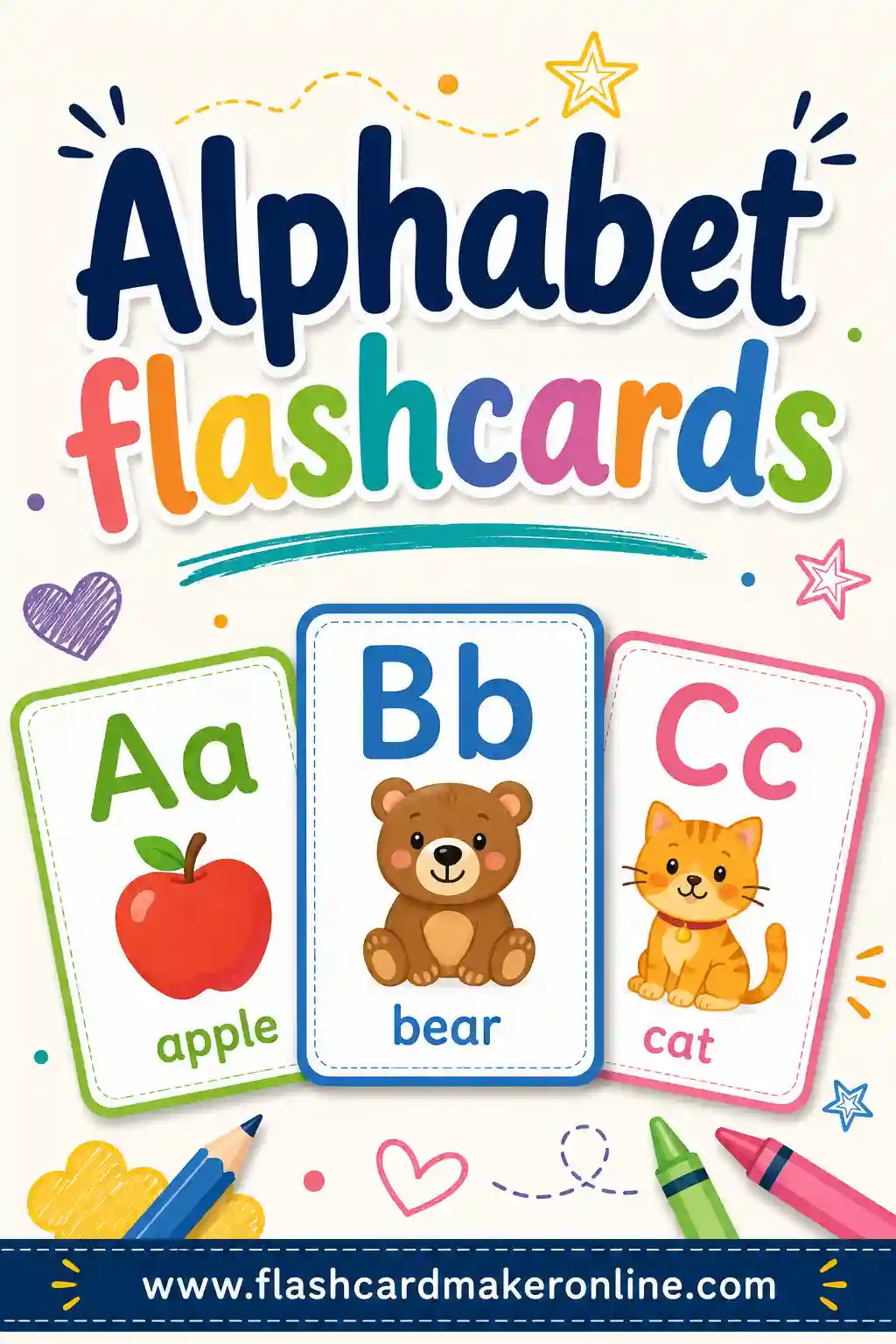
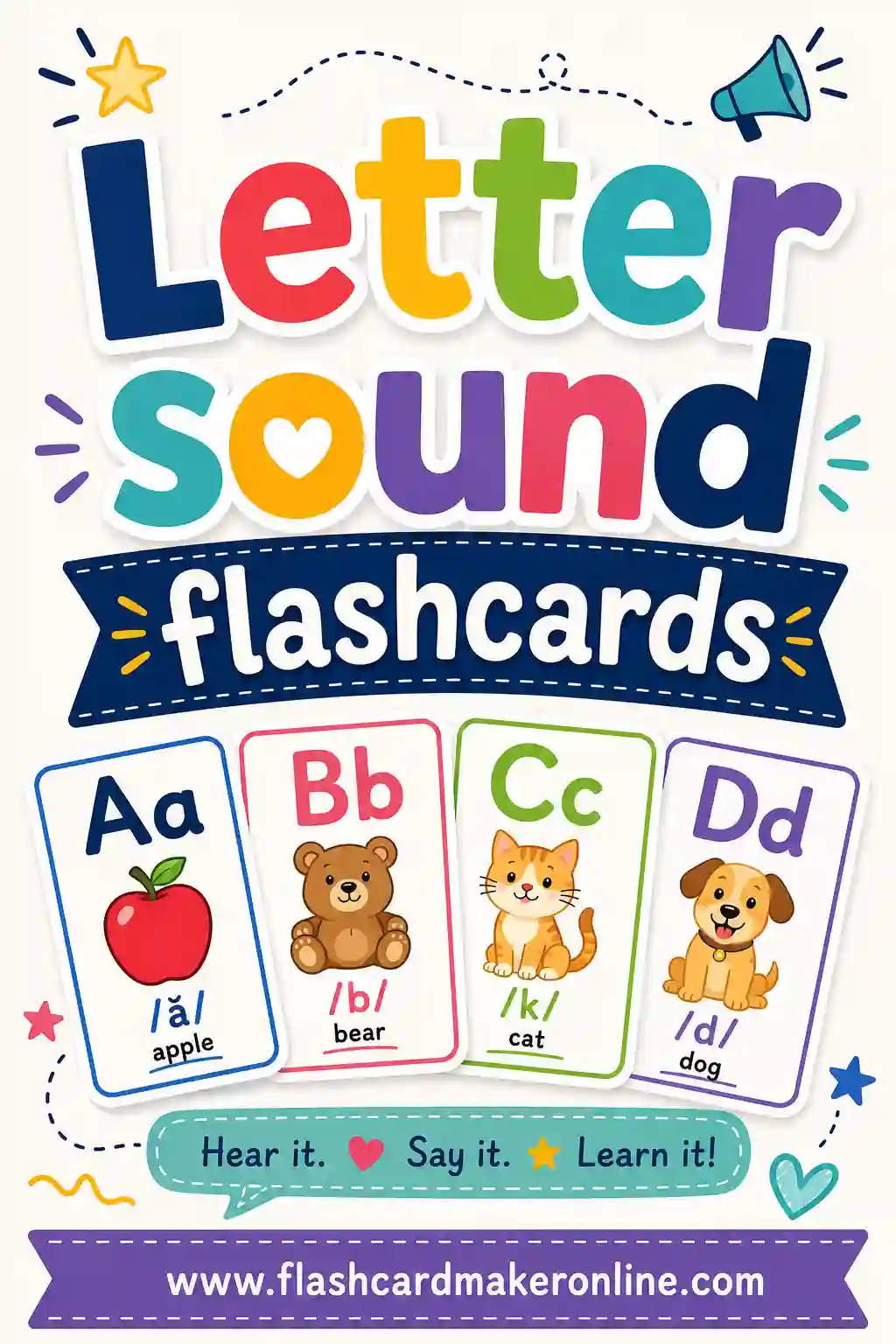
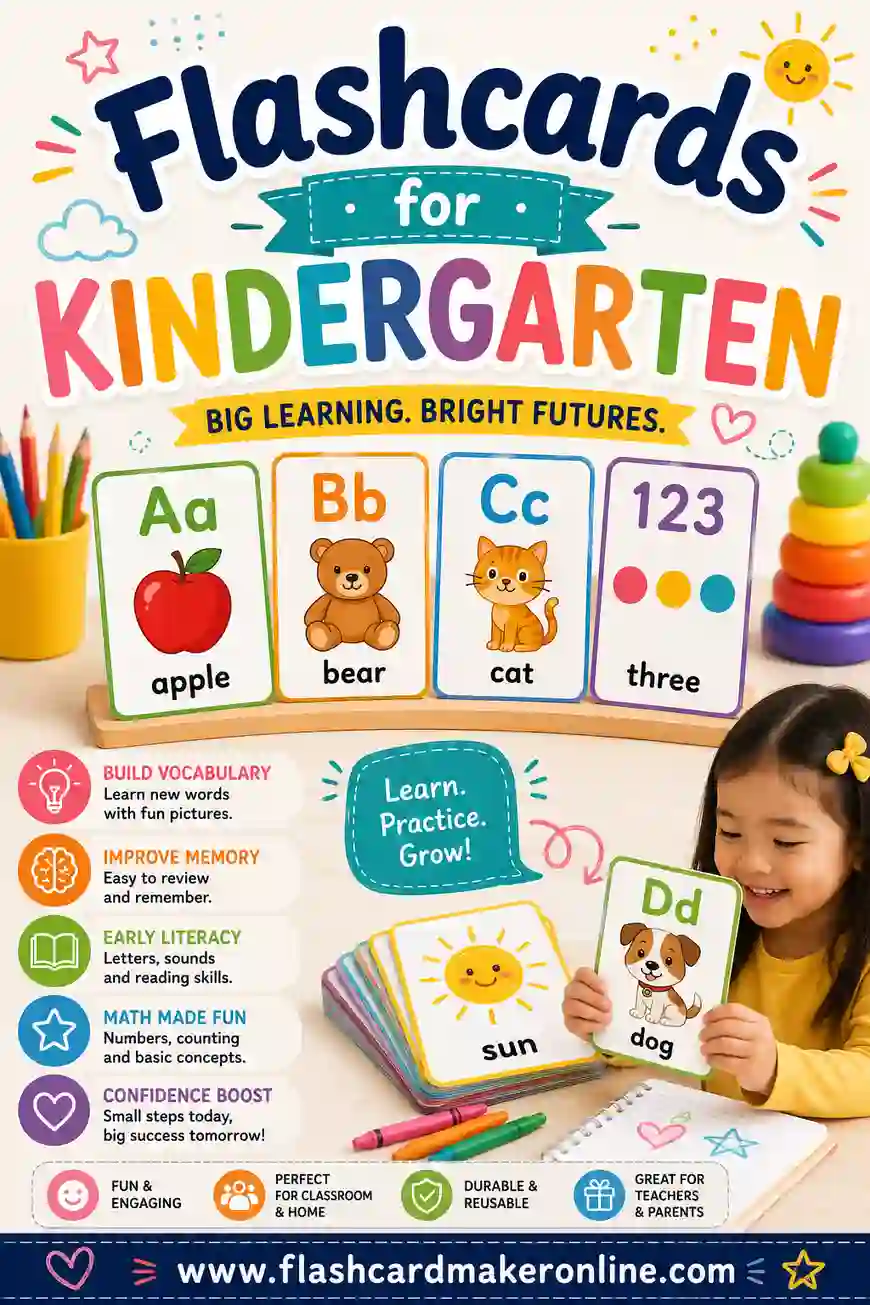
Rounding out the pre-reading shelf? See our full alphabet flashcards guide, letter sound flashcards for the phonics layer, and flashcards for kindergarten for what comes next.
Common Mistakes to Avoid
- Waiting until capitals are "done." Introduce the lowercase partner from the first week. One letter, two outfits — that framing works from the start.
- Drilling in ABC order every time. The song answers for the child. Shuffle so each pair stands alone.
- Giving every pair equal reps. C/c needs one meeting; G/g needs ten. Let the tricky-pair pile earn its extra attention.
- Treating b/d confusion as a problem. It's completely normal, often into first grade. Calm, brief, daily exposure fixes it; frustration doesn't.
- Small cards for small kids. Case differences are subtle. Big, bold print makes them visible; cramped print hides them.
Frequently Asked Questions
Are these alphabet flashcards upper and lower case free to print?
Yes — build the deck in the free maker and print it at no cost. No sign-up, no watermark, and unlimited reprints when Q wanders off.
Should I teach uppercase or lowercase first?
Start recognition with capitals (their shapes are more distinct), but pair each with its lowercase from the very beginning. The match — not either case alone — is what reading needs, since books are nearly all lowercase.
What age is this deck for?
Roughly 3 to 6. Threes and fours play the prediction and matching games with a handful of letters; fives and sixes drill the full shuffled deck and tame b/d and p/q.
How do I handle letters that look alike?
Give b, d, p, and q their own mini-pile with daily quick visits, and teach one anchor trick per pair (like "b has a belly, d has a... different belly" — whatever phrasing makes your child laugh and remember). Short and often beats long and stern.
Can I add pictures or sounds to the cards?
Yes. The maker lets you put an image on any card — a "g — goat" keyword picture, for instance — and saying the letter sound at every flip layers phonics on for free.
Can I save the deck as a PDF?
Yes. Choose "Save as PDF" in the print dialog and keep the file for reprinting at school, the library, or grandma's house.
Ready to Print Your Matching Deck?
Paste the A–Z pairs into the free flashcard maker, pick Jumbo or Big, and print an alphabet where every capital finally meets its small partner. Free, no sign-up, seven sheets of cardstock — and the squiggles in the storybook start making sense.