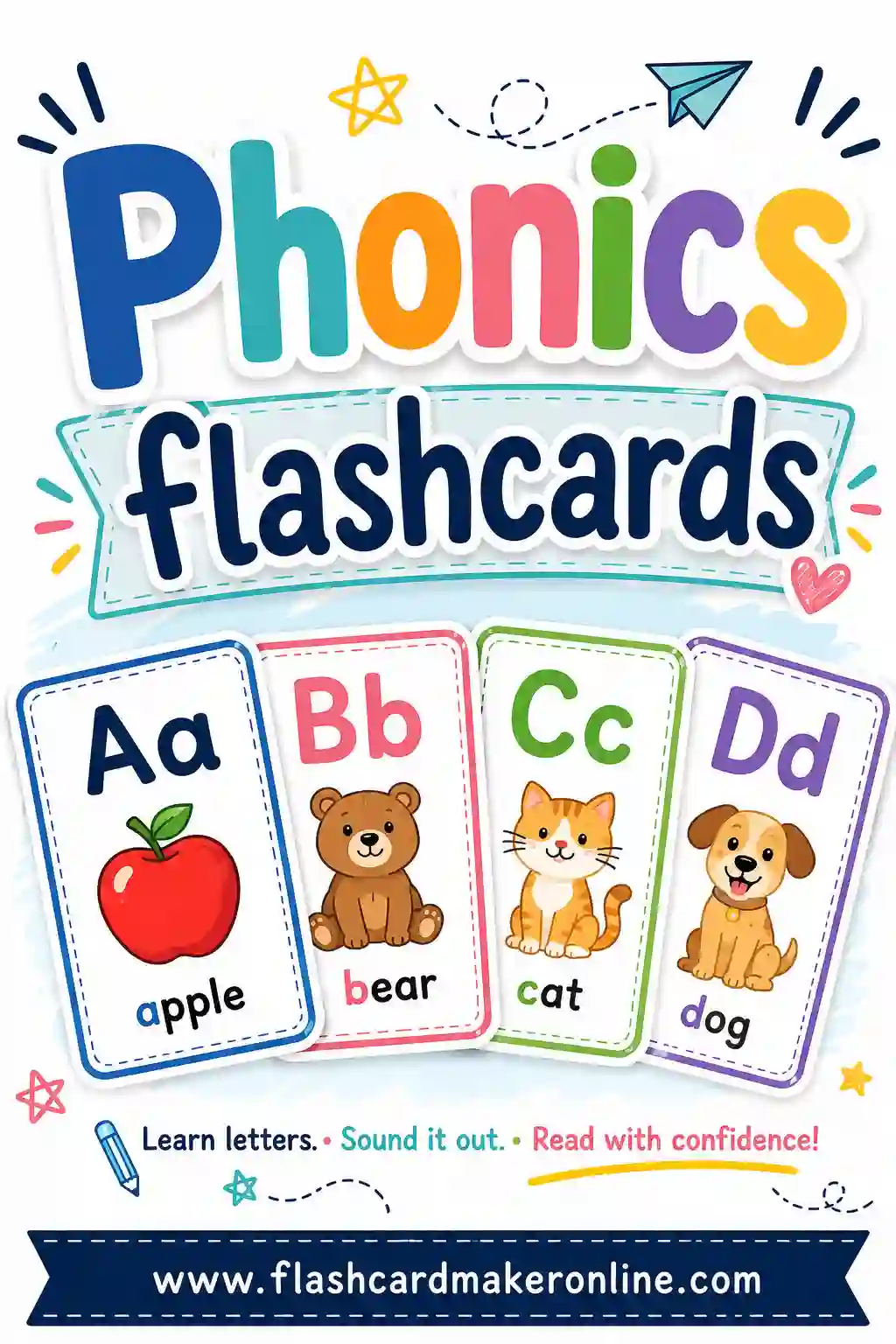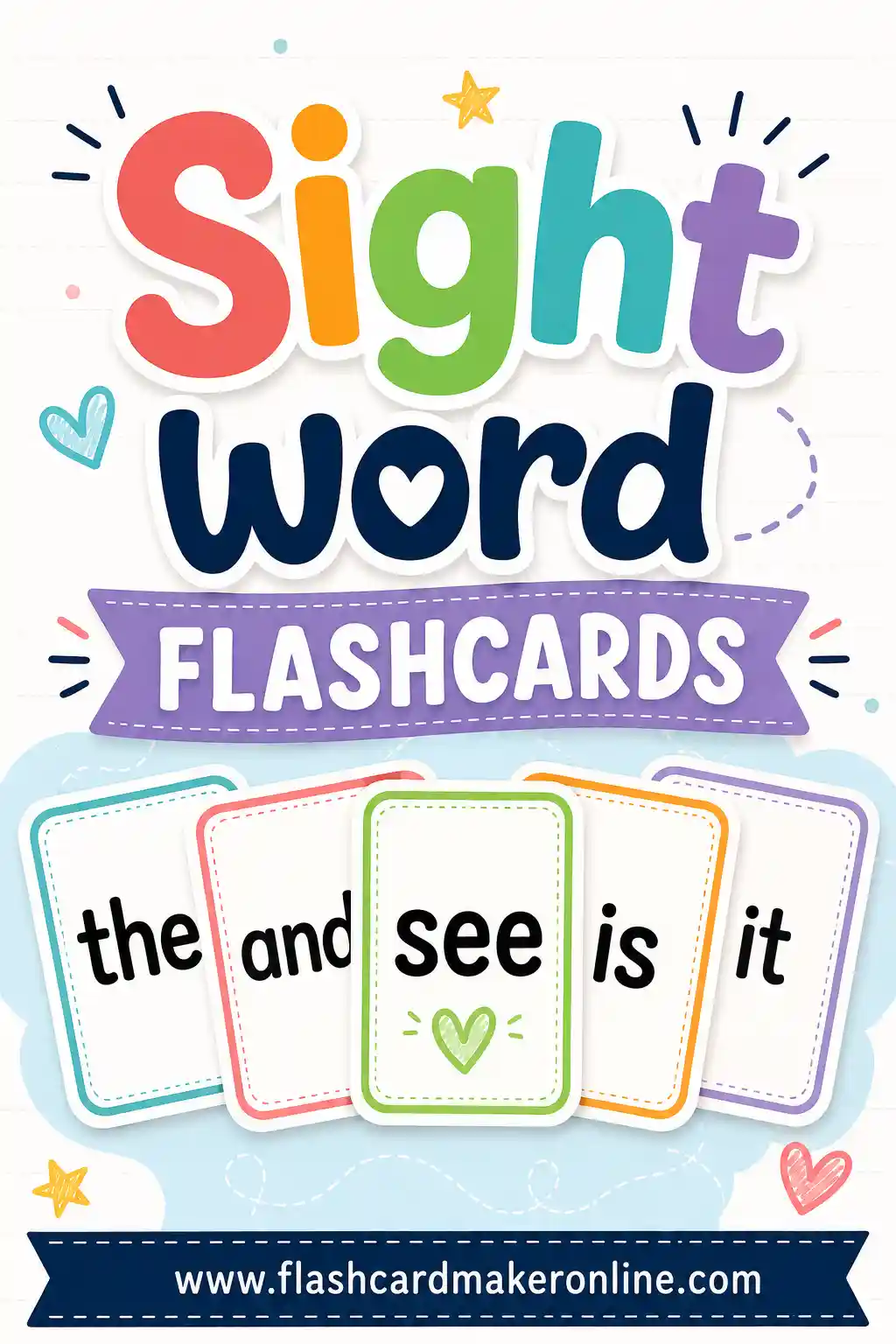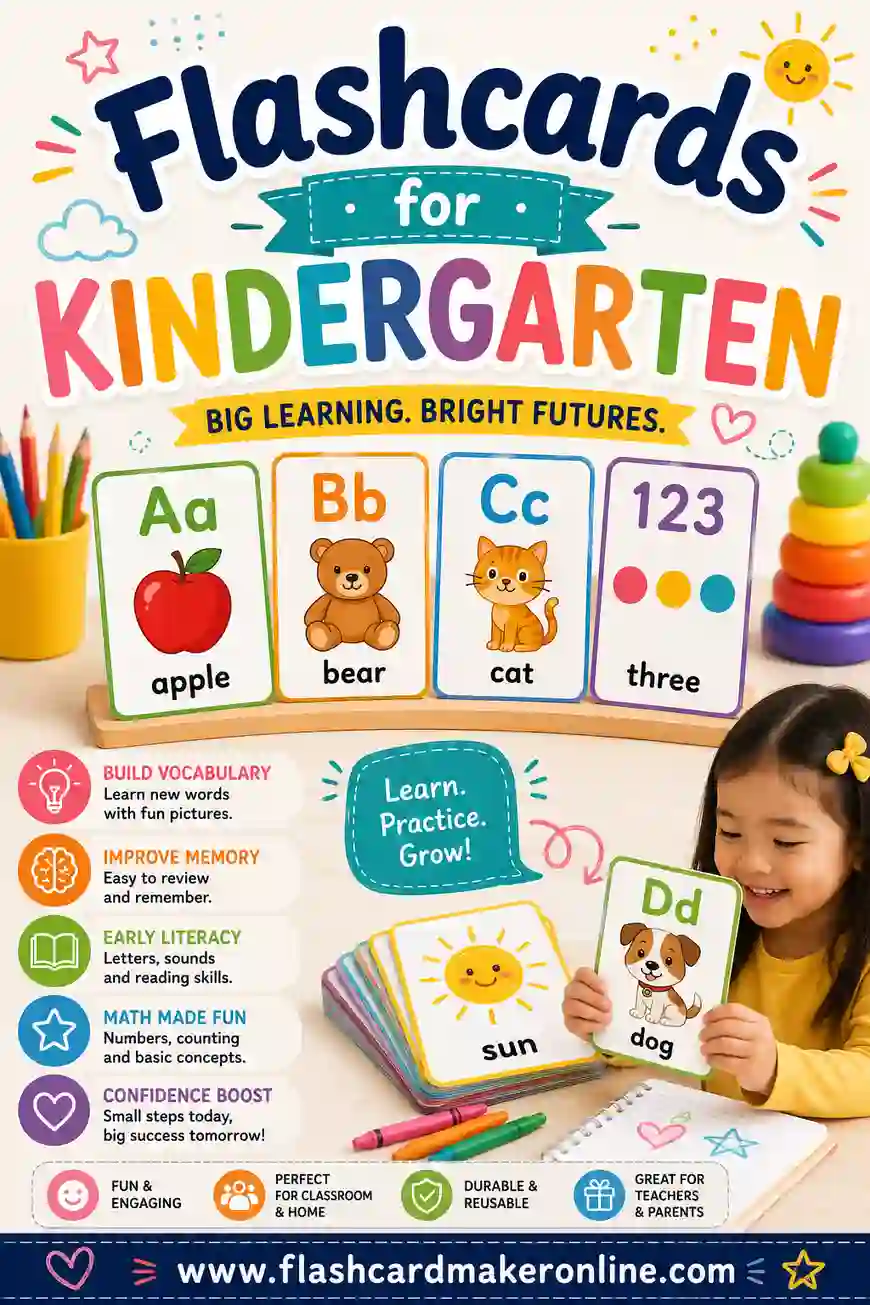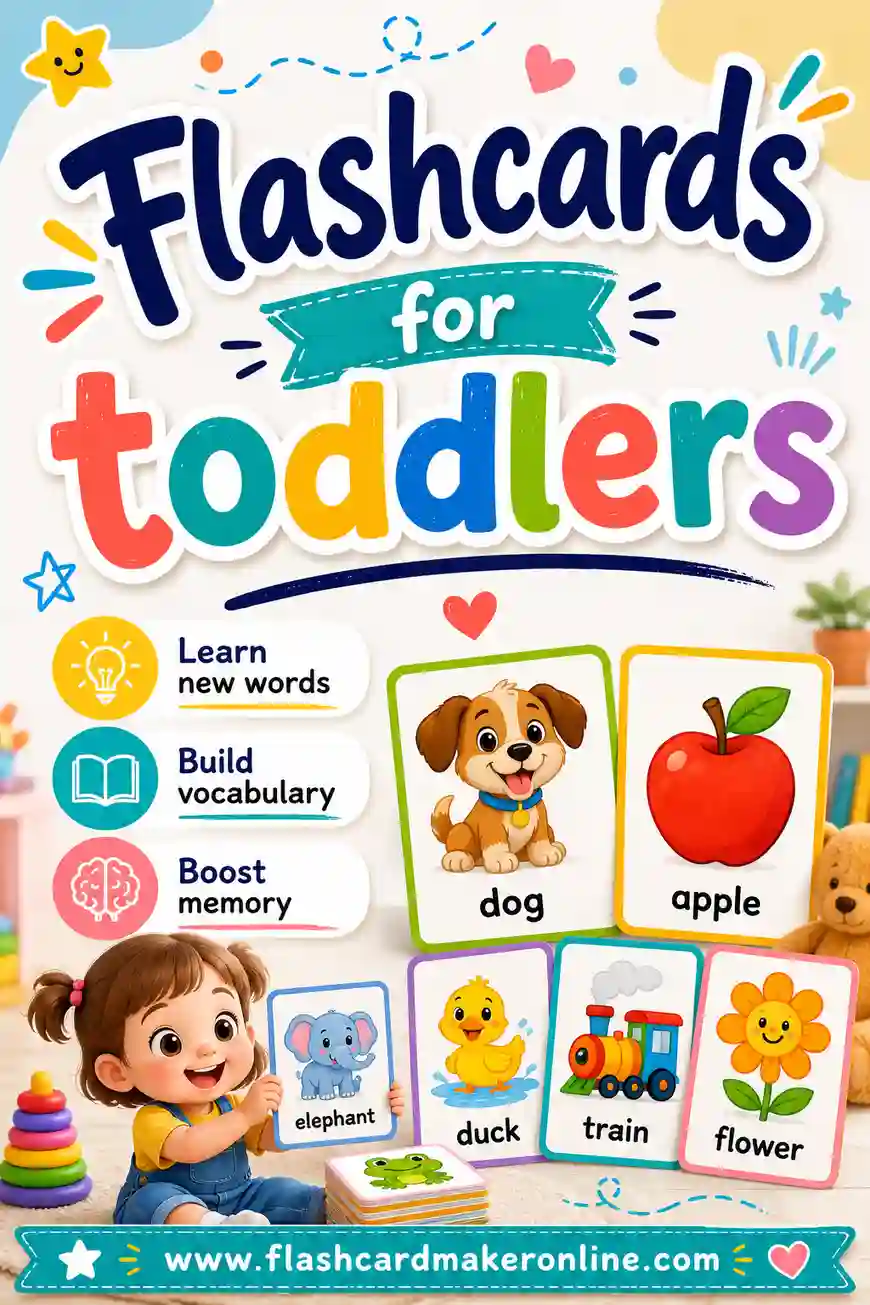
Letter Sound Flashcards: Free Printable & Customizable
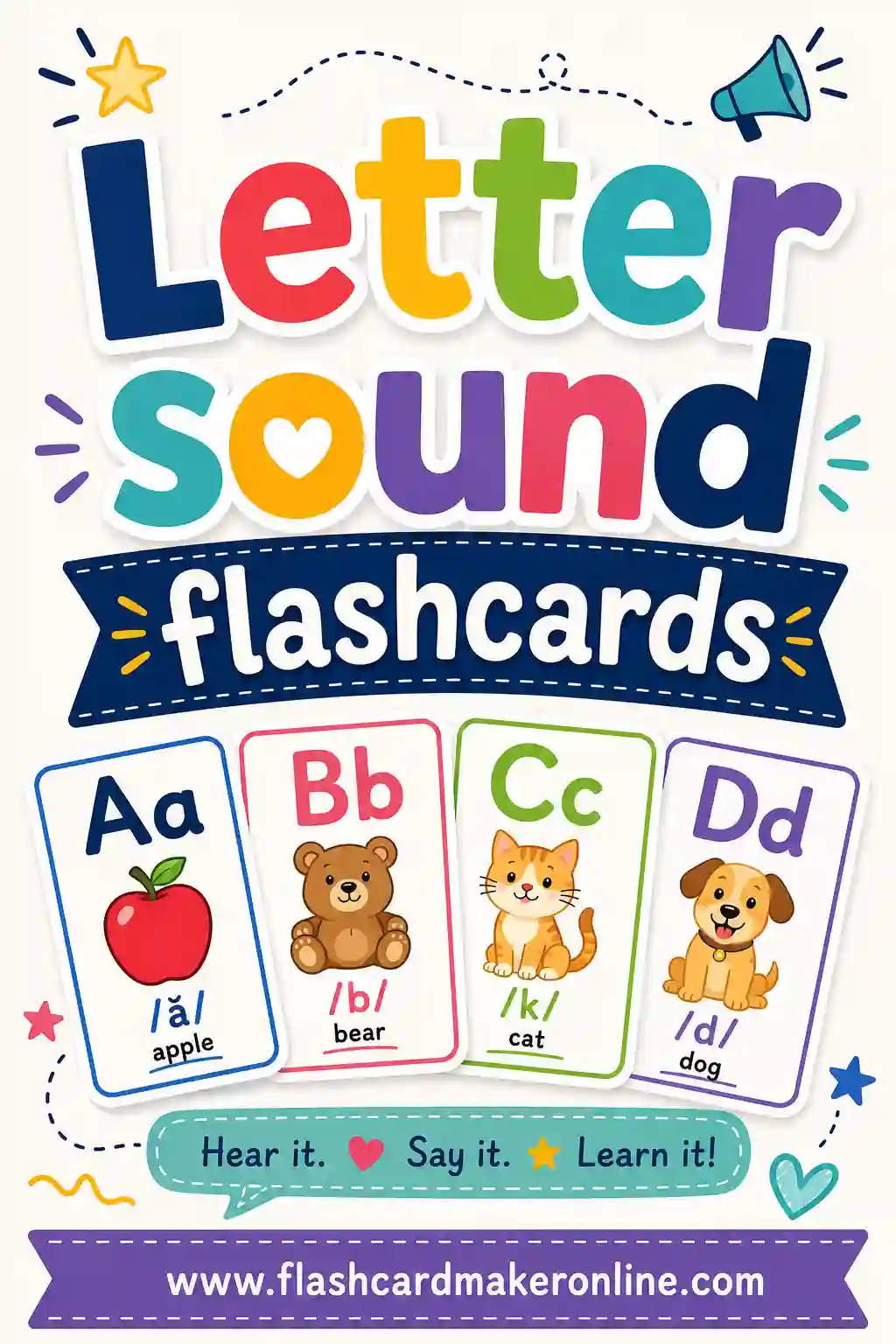
Letter sound flashcards are cards that pair each letter with the sound it makes, like "b" says /b/ as in "ball," so a child learns to connect letters to sounds, the very first step in reading. You show the letter, the child says its sound, and short daily sessions make those 26 sounds automatic. The fastest way to build a full A-to-Z set is to use a free flashcard maker that turns the alphabet into clean, printable cards.
Want to skip ahead and just make them? Open the free flashcard maker, paste in the letter list (it's right below), and print a deck in minutes. No sign-up, no software, no cost.
What Are Letter Sound Flashcards?
Most kids learn the alphabet song long before they can read. But singing "ay, bee, see" is knowing letter names, not letter sounds, and it's the sounds that build words. Letter sound flashcards bridge that gap. Each card shows a letter and stands for the sound it makes: "b" isn't "bee," it's /b/, the sound at the start of "ball."
This is the ground floor of reading. Once a child knows the sound each letter makes, they can blend those sounds into words, which is where real reading begins. Flashcards make the connection quick to practice and easy to repeat in tiny daily doses.
Think of these cards as step one. After letter sounds come phonics flashcards for blends and digraphs, then sight word flashcards for the tricky words. But it all starts here, with 26 clean sounds.
Why Sounds Beat Names for Early Reading
A child who knows letter names but not sounds will stall when they try to read. They'll see "cat" and say "see-ay-tee," which means nothing. A child who knows sounds says /c/ /a/ /t/ and blends it into "cat." That's the difference.
So when you drill these cards, ask for the sound:
- Show "m" → child says /mmm/ (not "em")
- Show "s" → child says /sss/ (not "ess")
- Show "t" → child says /t/ (not "tee")
Keep the sounds crisp. /t/ is a short, clean sound, not "tuh." That stray "uh" makes blending muddy later, so trim it now.
You can teach names and sounds side by side, but for reading, sounds come first. The cards make it easy to focus on exactly that.
Free Letter Sound List (Copy & Paste)
Here's the full A-to-Z set with a sound cue and an example word for each. Copy it into the flashcard maker and print a deck. Put the letter on the front and the sound plus example word on the back.
| Letter | Sound | Example word |
|---|---|---|
| a | /a/ | apple |
| b | /b/ | ball |
| c | /k/ | cat |
| d | /d/ | dog |
| e | /e/ | egg |
| f | /f/ | fish |
| g | /g/ | goat |
| h | /h/ | hat |
| i | /i/ | igloo |
| j | /j/ | jam |
| k | /k/ | kite |
| l | /l/ | leaf |
| m | /m/ | moon |
| n | /n/ | net |
| o | /o/ | octopus |
| p | /p/ | pig |
| q | /kw/ | queen |
| r | /r/ | rabbit |
| s | /s/ | sun |
| t | /t/ | top |
| u | /u/ | umbrella |
| v | /v/ | van |
| w | /w/ | web |
| x | /ks/ | fox |
| y | /y/ | yo-yo |
| z | /z/ | zip |
Start with a handful of high-use letters (s, a, t, p, i, n is a classic first set) rather than going straight down the alphabet. Those six let a child build real words fast.
Make it a sample deck
Here's how a starter deck might look once you build it:
| Front (letter) | Back (sound + word) |
|---|---|
| s | /s/ as in sun |
| a | /a/ as in apple |
| t | /t/ as in top |
| p | /p/ as in pig |
| i | /i/ as in igloo |
| n | /n/ as in net |
With just these six sounds, a child can read "sat," "pin," "tap," "nap," and more, which makes the first reading win arrive quickly.
How to Make Letter Sound Flashcards in 4 Steps
No hand-lettering, no laminator marathon. Here's the whole process.
- Pick your first letters. Start with six high-use sounds, not the full alphabet. s, a, t, p, i, n is a great opener.
- Add them to the maker. Paste your letters into the flashcard maker, with the sound and an example word on the back.
- Print your deck. Hit print. Cardstock survives daily handling far better than paper.
- Cut and study. Slice them apart and run your first five-minute session.
For toddlers, print big and bold, one large letter per card. Bigger letters are easier for little eyes to lock onto.
How to Study Letter Sound Flashcards
The cards are just paper until you use them well. Here's how to run sessions that stick.
The two-pile sort
Show a card. Quick, correct sound goes in "knew it." A miss or a long pause goes in "review." Run the review pile again, end on a card they know. Tomorrow, start with yesterday's misses. Simple, and it's spaced repetition in action.
Keep it short and upbeat
Three to five minutes is plenty for a toddler or new reader. Two short sessions a day beat one long, fidgety one. Always stop while it's still fun.
Add movement and play
Same cards, more giggles:
- Sound and pose. Show a card, the child says the sound and does a matching action (/s/ = slither like a snake).
- Letter hunt. Hide cards around the room. The child finds one, says its sound, brings it back.
- Match the object. Lay out a few toys; the child puts each one on the card for its starting sound.
- Beat your best. How many sounds can they say in 30 seconds? Try to top it tomorrow.
Build toward blending
Once a child knows a few sounds, lay out cards to make a word: "s" + "a" + "t." Have them slide a finger under each card, say the sounds, and blend them into "sat." That first blended word is a huge milestone, celebrate it.
A Quick Order to Teach Letter Sounds
Going straight A to Z works, but a smarter order gets a child reading words sooner. Here's a common sequence.
| Group | Letters | Why this order |
|---|---|---|
| 1 | s, a, t, p, i, n | Make the most words fast (sat, pin, tap) |
| 2 | m, d, g, o, c, k | Add more easy words (dog, mat, cot) |
| 3 | ck, e, u, r, h, b | Fill in common sounds |
| 4 | f, l, j, v, w, x | Less frequent, still important |
| 5 | y, z, q | Trickier or rarer sounds last |
Master each group before moving on. Confidence early keeps a child eager to keep going.
Common Mistakes to Avoid
A few quick fixes make letter sound practice click.
- Teaching names instead of sounds. "Bee" doesn't help read "bat." Drill /b/.
- Adding an "uh." /t/ is clean, not "tuh." That extra vowel muddies blending later.
- Going straight down the alphabet. Starting with s, a, t, p, i, n gets a child reading real words much sooner than starting with a, b, c.
- Drilling too long. A tired toddler learns nothing. Keep it to a few minutes and end on a win.
Once these 26 sounds are solid, move up to phonics flashcards for blends and digraphs and sight word flashcards for high-frequency words. Teaching the littlest learners? Our toddler flashcards and kindergarten flashcards guides have more setup tips.
What to Do When a Sound Won't Stick
Every child has a sound or two that just won't take. Maybe "b" and "d" keep getting swapped, or "e" and "i" blur together. This is completely normal, and a few targeted tricks usually fix it.
For the classic "b" versus "d" mix-up, give each letter a physical anchor. Make a "bed" with your hands, fists with thumbs up, and the b faces left, the d faces right, just like the word "bed" spelled out. A child can check their own hands when they're unsure.
For vowels that blur, slow way down and exaggerate the mouth shape. /a/ in "apple" opens the mouth wide; /i/ in "igloo" is a small, tight sound. Have the child watch your mouth, then a mirror, then their own. Connecting the sound to a feeling in the mouth gives it an extra hook.
And when a sound just won't land, pull it out and drill it solo for a day or two before mixing it back in. A single card, reviewed a few times a day with a clear example word, almost always breaks the logjam. Patience beats pressure, the sound will come.
Connecting Sounds to the Wider World
Letter sound flashcards work best when they don't live only at the table. The more a child notices sounds out in the real world, the faster the cards click, because the practice never really stops.
Play "what sound does it start with?" on the go. Point at a dog and ask, "what sound does dog start with?" Do it with cereal boxes, street signs, and toys. These tiny, casual reps add up to far more practice than any formal session, and they teach the child that letters and sounds are everywhere, not just on cards.
You can also tie sounds to favorite things. A child who loves dinosaurs will happily tell you that "dinosaur" starts with /d/. Lean into whatever they're excited about, the motivation does half the work for you.
Reading aloud to your child every day quietly reinforces all of it. As you read, occasionally run a finger under a word and say its first sound. You're showing, in real books, that the sounds on the cards are the same sounds that make stories. That connection, cards to real reading, is the whole goal, and it's what turns 26 little sounds into a lifelong reader.
Frequently Asked Questions
What are letter sound flashcards?
They're cards that pair each letter with the sound it makes, like "b" says /b/ as in "ball." A child learns to connect letters to sounds, which is the first step toward blending sounds into words and reading.
Should I teach letter names or letter sounds first?
For reading, teach sounds first. A child needs to know that "m" says /m/ to blend "mat." Letter names like "em" don't help with decoding. You can teach names alongside, but sounds are what unlock reading.
What order should I teach letter sounds in?
Skip straight A-to-Z and start with s, a, t, p, i, n. Those six sounds let a child build real words like "sat" and "pin" right away, which makes the first reading win come quickly and keeps motivation high.
Are letter sound flashcards free to print?
Yes. Paste the letter list into the free flashcard maker, print on paper or cardstock, and cut them out. There's no sign-up and no cost, so you can make a fresh A-to-Z deck whenever you need one.
How long should a session be for a young child?
Three to five minutes is ideal for toddlers and new readers. Two short, upbeat sessions a day beat one long one. Stop while your child is still having fun so they come back eager.
What comes after letter sounds?
Once the 26 sounds are solid, move to phonics flashcards for blends and digraphs (like "sh" and "st"), then sight word flashcards for high-frequency words that don't follow normal spelling rules. Letter sounds are the foundation the rest is built on.
Ready to Make Your Letter Sound Flashcards?
Grab the A-to-Z list above, open the free flashcard maker, and you'll have a clean, printable deck in minutes. It's free, there's no sign-up, and you can build a fresh set whenever you need one. Start with six sounds, keep sessions short, and watch reading begin.