Sight Word Flashcards: Free Printable & Customizable
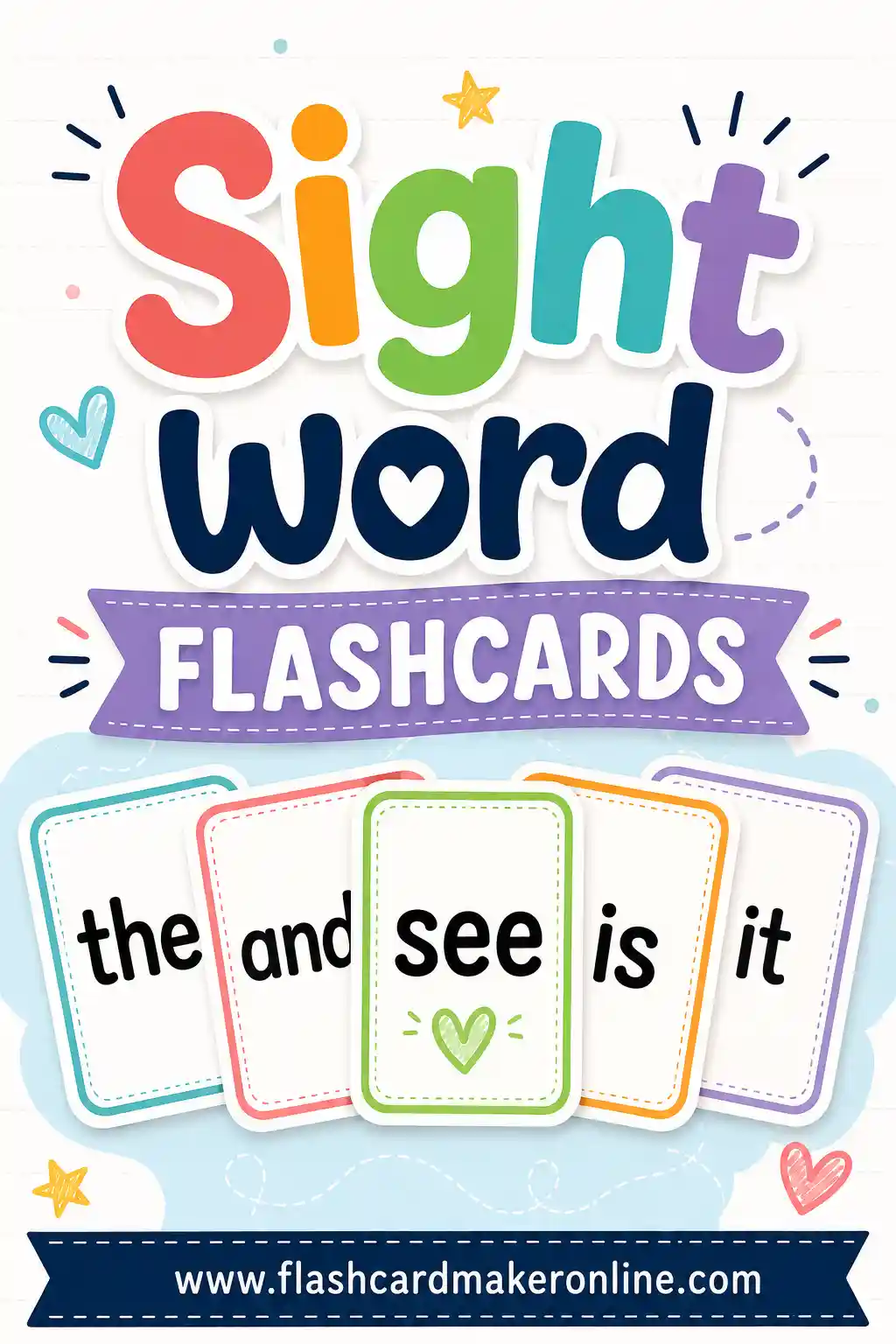
Sight word flashcards are simple cards that show one high-frequency word, like "the," "and," or "said," so a child learns to read it instantly without sounding it out. You show the word, the child reads it, and over a few short sessions those words become automatic. The fastest way to build a full set is to use a free flashcard maker that turns your word list into clean, printable cards you can study at the kitchen table.
Want to skip ahead and just make them? Open the free flashcard maker, paste in a sight word list (there's a ready-made one below), and print a deck in minutes. No sign-up, no software, no cost.
What Are Sight Words?
Sight words are the words that show up most often in everyday reading. Some can't be sounded out easily ("one," "two," "said"), and some can, but they appear so often that it's faster for a young reader to just know them on sight. Think of them as the glue that holds a sentence together.
Two famous lists cover most of them: the Dolch list (220 words plus 95 nouns, built in the 1930s and still the classroom standard) and the Fry list (the 1,000 most common words in English, grouped in hundreds). You don't need to memorize the history. You just need to know that a child who reads the first hundred of these instantly can read most simple books smoothly.
That's where flashcards earn their keep. A word on a card, read again and again over short sessions, moves from "I have to think about it" to "I just know it."
Why Flashcards Work So Well for Sight Words
Sight words are pure recognition. There's no rule to apply, no sounding out, just instant recall. That's exactly the kind of learning flashcards are built for.
Two ideas make them powerful:
- Active recall. When a child sees the card and says the word out loud, their brain does the work of pulling it from memory. That effort is what builds the memory, far more than re-reading a list.
- Spaced repetition. Reviewing a word today, then in two days, then in a week, locks it in for the long term. You don't need an app for this. A simple "knew it / didn't know it" sort each session does the job.
Short and often beats long and rare. Five minutes a day with a small deck will outpace one big weekly cram every single time.
Free Sight Word List (Copy & Paste)
Here's a ready-to-use set of common sight words, roughly grouped by reading level. Copy a column straight into the flashcard maker and print a deck. Start with the pre-primer words, then add more as they're mastered.
| Pre-Primer (start here) | Primer (next) | First Grade (then) |
|---|---|---|
| the | all | after |
| and | are | again |
| a | at | an |
| to | be | any |
| said | but | as |
| in | came | could |
| he | did | every |
| I | do | from |
| you | for | had |
| it | get | has |
| of | have | her |
| was | he | him |
| is | into | his |
| up | like | how |
| we | must | just |
| see | new | know |
| go | no | let |
| me | now | live |
| can | on | may |
| my | our | of |
Work left to right. Don't dump all 60 on a child at once. Pull eight to ten words for a deck, master those, then swap in the next batch.
Make it a sample deck
Here's how a starter deck might look once you build it, term on the front, a quick prompt on the back:
| Front (word) | Back (prompt) |
|---|---|
| the | "the dog ran" |
| and | "you and me" |
| said | "she said yes" |
| you | "I see you" |
| was | "it was fun" |
| for | "this is for you" |
Tiny sentences on the back help a child anchor the word in real reading, not just memorize it in isolation.
How to Make Sight Word Flashcards in 4 Steps
You don't need to hand-write a single card. Here's the whole process.
- Pick your words. Grab eight to ten from the list above. Match the level to the reader, easier is better when you're starting.
- Add them to the maker. Paste your list into the flashcard maker, one word per line. Add a short sentence on the back if you like.
- Print your deck. Hit print. Use cardstock so the cards survive sticky little hands.
- Cut and study. Slice them apart, and you're ready for your first five-minute session.
If you want reusable cards, print on cardstock and slip them in a sandwich bag or a small box. They'll last all year.
How to Study Sight Words (That Actually Sticks)
The cards are only half the job. Here's how to run a session that builds real recognition.
The two-pile method
Show a card. If the child reads it in under three seconds, it goes in the "knew it" pile. If they hesitate or miss it, it goes in the "review" pile. Go through the review pile a second time, then end on a win. Tomorrow, start with yesterday's review pile.
Keep sessions short
Five to ten minutes is plenty for a young reader. Two short sessions a day beat one long, frowny one. Stop while it's still fun.
Mix in movement and play
Sight words don't have to be a worksheet. A few games that use the same cards:
- Word swat. Lay cards on the floor, call a word, the child swats it with a fly swatter.
- Hide and seek. Tape cards around the room. The child finds one, reads it, brings it back.
- Beat the timer. How many can they read in 60 seconds? Try to beat yesterday's score.
- Memory match. Print two of each word and play a matching game.
Build toward sentences
Once a child knows a handful of words, lay them out to build a sentence: "I see the dog." Reading a real sentence is the payoff, and it shows them why these words matter.
Sight Words by Level: A Quick Guide
Match the deck to the reader so practice feels like a fair challenge, not a wall.
| Level | Typical age | Sample words | Deck size |
|---|---|---|---|
| Pre-K | 3–4 | I, a, see, my, me | 5–6 |
| Kindergarten | 5 | the, and, you, was, said | 8–10 |
| First grade | 6 | after, every, how, just, live | 10–12 |
| Second grade | 7 | because, before, found, off, right | 12–15 |
Move up only when the current level is solid. Speed and confidence matter more than racing through the lists.
Common Mistakes to Avoid
A few small fixes make sight word practice click.
- Too many words at once. A child swamped with 30 cards learns none of them well. Eight to ten is the sweet spot.
- Sounding them out. The whole point is instant recognition. If a word is "said," don't drill the letters, just show it and say it.
- No review. A word learned Monday and never seen again is gone by Friday. Cycle old words back in.
- Drilling when tired. A grumpy session does more harm than good. Keep it short, keep it light, end on a high note.
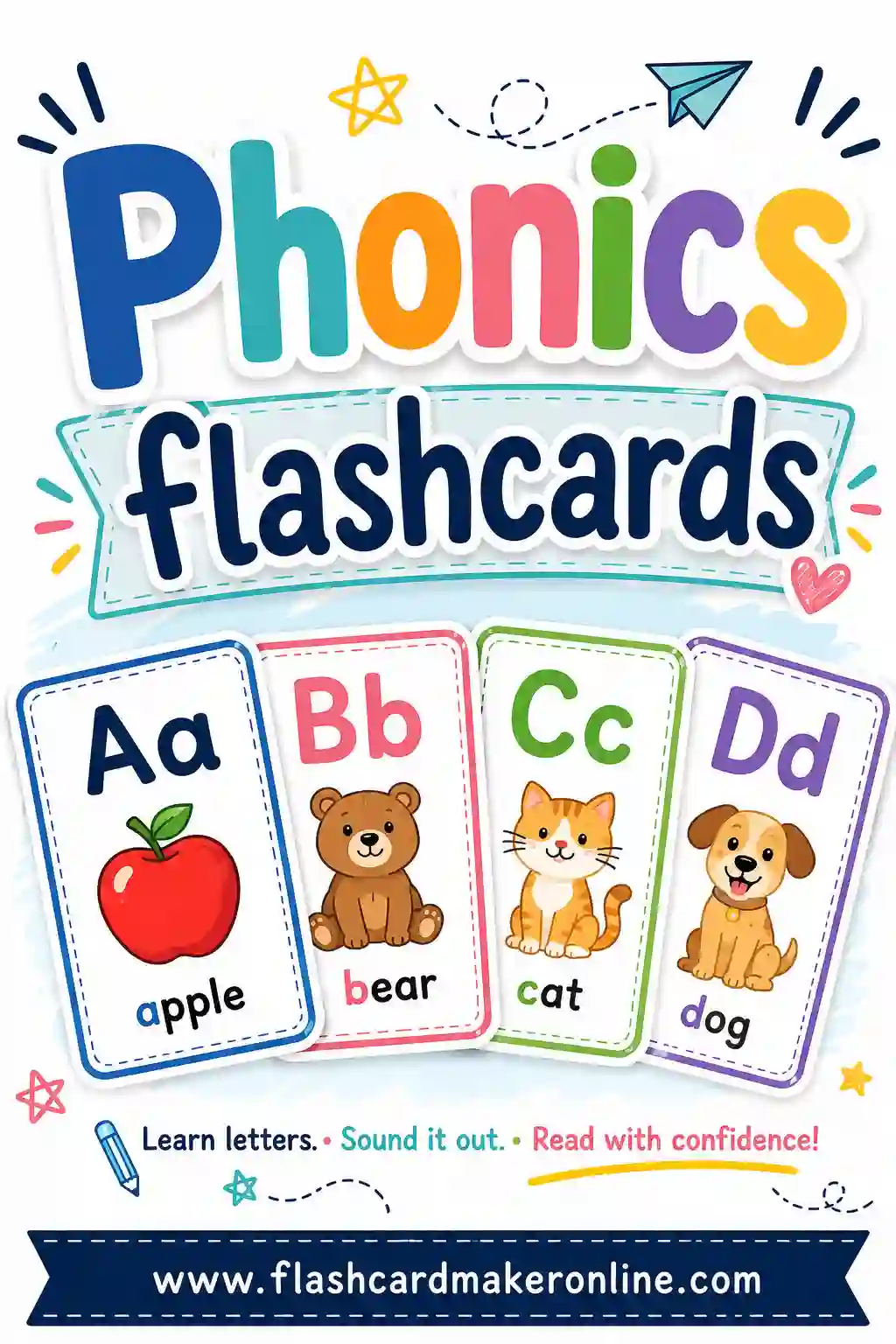
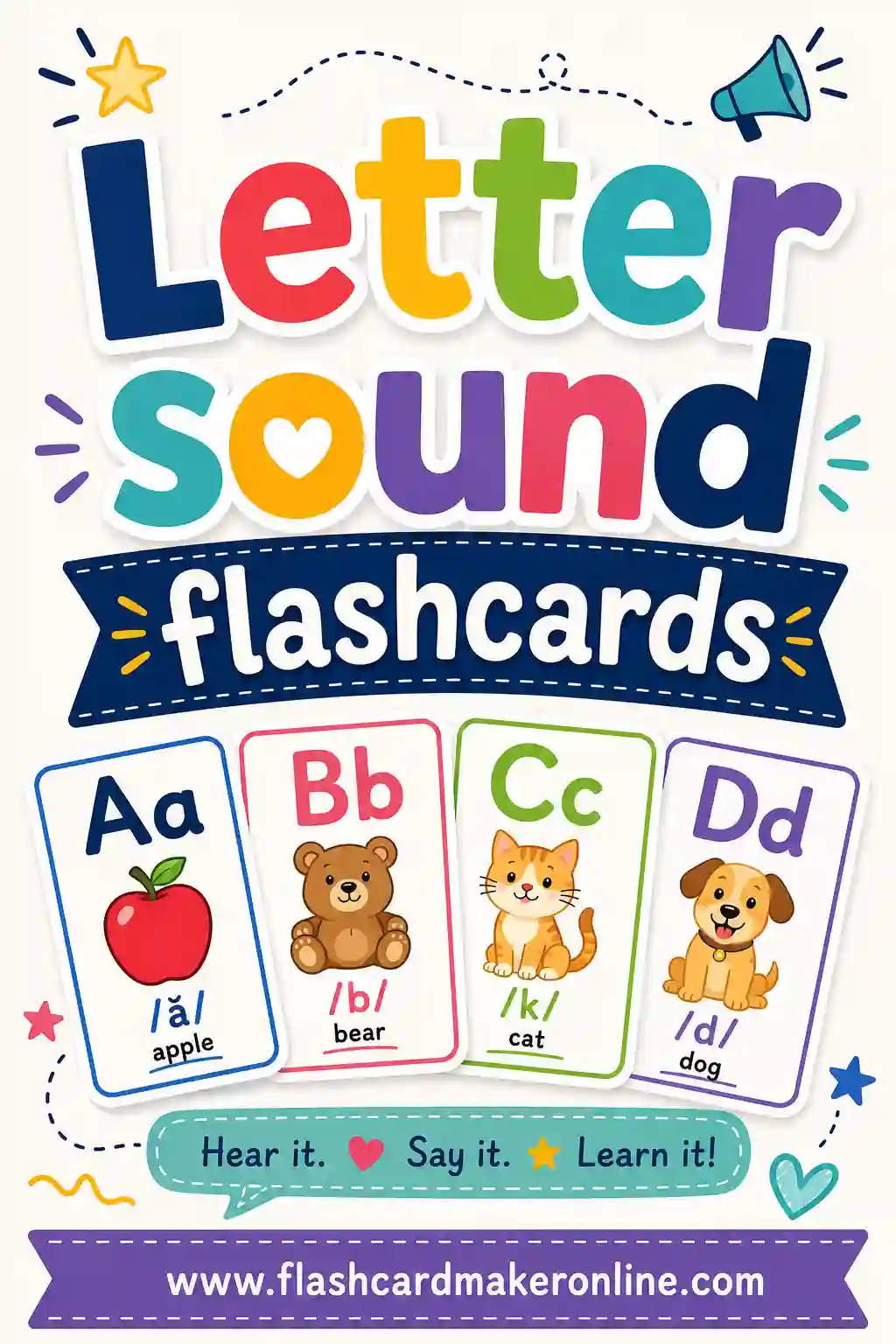
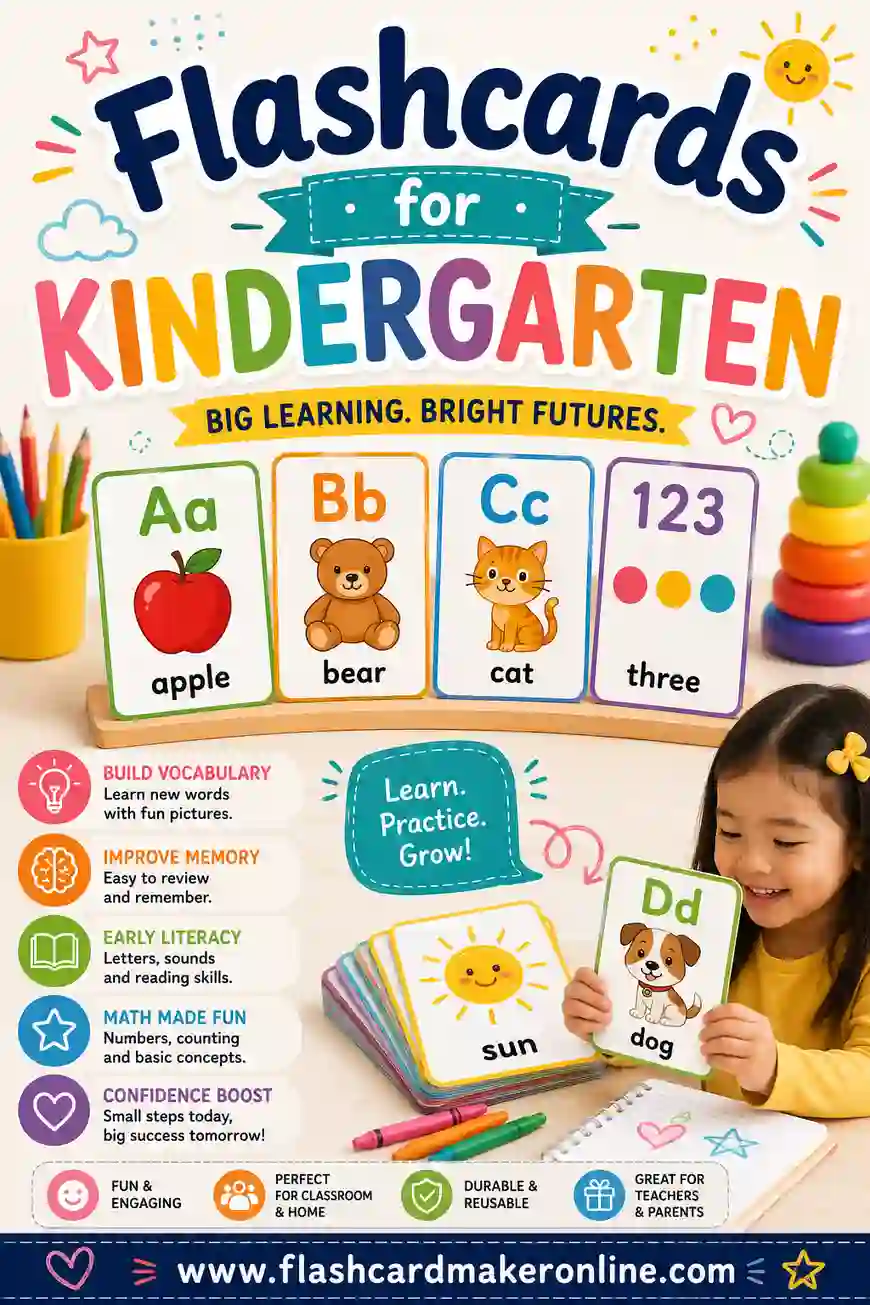
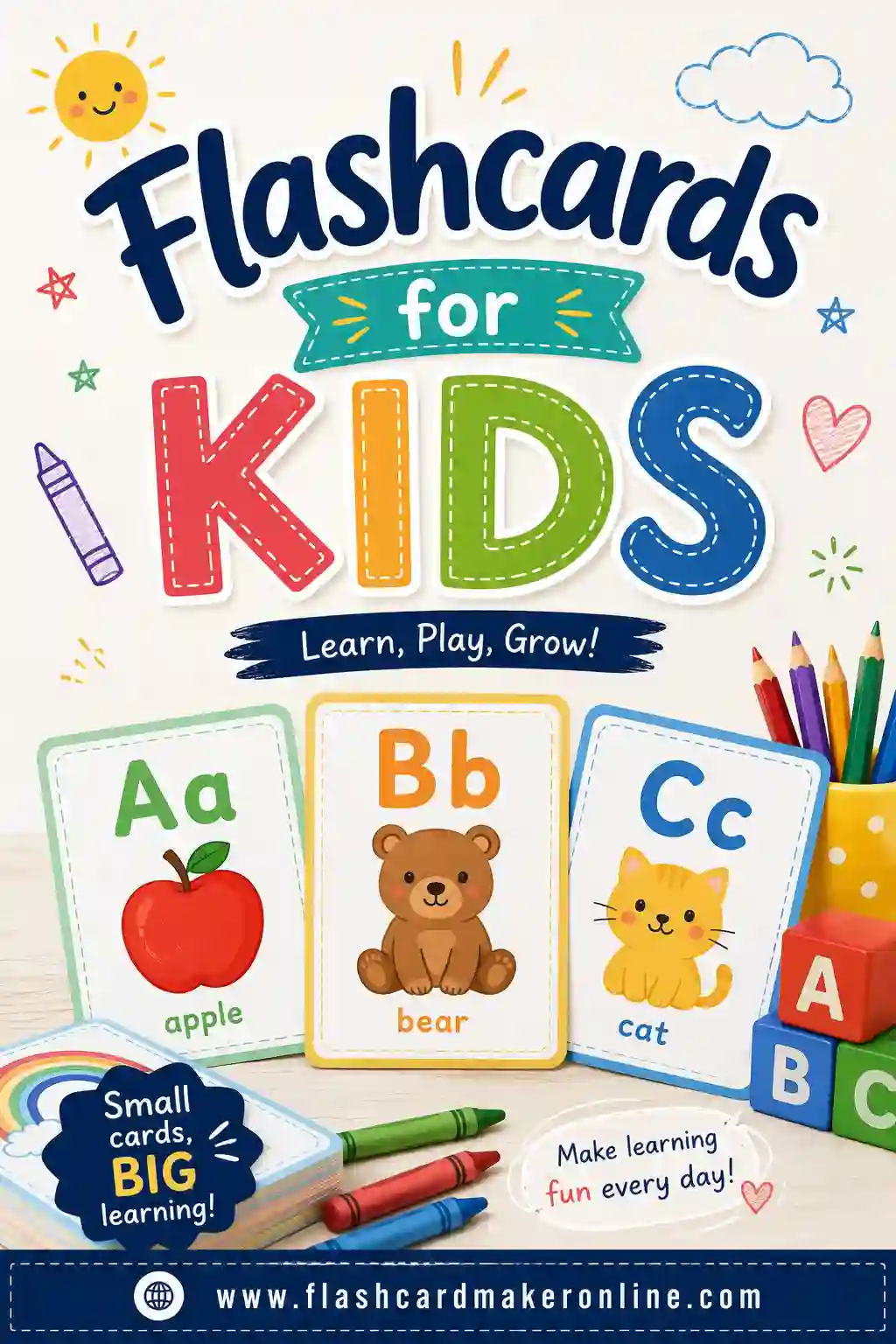
For words that can be sounded out, pair sight word work with phonics flashcards and letter sound flashcards so your reader builds both skills at once. Teaching a class or a homeschool group? Our kindergarten flashcards and flashcards for kids guides have more setup ideas.
How Sight Words Fit With Phonics
Parents often ask whether they should teach sight words or phonics first. The honest answer is both, side by side. They solve different problems, and a strong reader needs each one.
Phonics teaches a child to decode, to sound out a word letter by letter and blend it together. That works beautifully for words that follow the rules: "cat," "ship," "rain." But English is full of words that break the rules. "Said" doesn't sound like it looks. "One" and "two" are spelling oddities. "Have" should rhyme with "cave" but doesn't. If a child tries to decode those, they get stuck.
That's where sight words come in. They cover the high-frequency, rule-breaking words so the child reads them on sight instead of fighting the spelling. Meanwhile, phonics handles everything that can be sounded out. Together they cover the whole page.
A simple way to think about it: phonics is the toolbox, sight words are the shortcuts. A reader who has both moves through a sentence smoothly, decoding the regular words and recognizing the tricky ones instantly. So don't pick one. Run a short phonics drill and a short sight word drill in the same session, and your reader gets the best of both.
Tracking Progress Without the Pressure
Kids stay motivated when they can see themselves improving, and a little tracking goes a long way. You don't need a fancy chart or a sticker economy. Keep it light.
One easy method: a "words I know" jar or envelope. Every time a word moves permanently into the "knew it" pile for several sessions in a row, the card goes in the jar. Watching that stack grow is a real, visible win a child can be proud of.
Another approach is a quick weekly timed read. Lay out a row of mastered words and time how fast your child reads them, then note the time. Next week, beat it. The goal isn't speed for its own sake, it's the thrill of seeing a number improve.
Keep the tone celebratory, never grading. A child who feels tested clams up; a child who feels like they're winning a game keeps going. Praise the effort and the streak, not just the right answers, and sight word practice becomes something they actually look forward to.
Frequently Asked Questions
What are sight word flashcards?
They're flashcards that each show one high-frequency word, like "the" or "said," that a child learns to read instantly on sight. You flip through them in short sessions so the words become automatic, which makes reading sentences much smoother.
How many sight words should I teach at once?
Start with eight to ten words. A small deck keeps a child confident and lets each word get real practice. Once those are solid, swap in the next batch rather than piling on more.
What's the best way to study sight word flashcards?
Use the two-pile method: knew it versus needs review. Keep sessions to five or ten minutes, review the missed pile again, and revisit old words every few days so they stick. Short, frequent practice beats long cram sessions.
Are sight word flashcards free to print?
Yes. Paste your word list into the free flashcard maker, print on regular paper or cardstock, and cut them out. There's no sign-up and no cost, so you can make a fresh deck for every level.
What order should I teach sight words in?
Follow a list like Dolch or Fry, which group words by how often they appear. Start with pre-primer words ("the," "and," "I"), then primer, then first grade. The word list above is already in that order.
Do sight word flashcards work for older struggling readers?
Yes. Plenty of older kids and even adult learners benefit from instant-recognition practice. Just skip the cartoonish games and use clean cards, short sessions, and the same two-pile review.
Ready to Make Your Sight Word Flashcards?
Grab the word list above, open the free flashcard maker, and you'll have a clean, printable deck in minutes. It's free, there's no sign-up, and you can build a fresh set for every reading level. Start small, keep it short, and watch those words click into place.