The Blurting Method: A Simple Revision Technique That Shows What You Don't Know
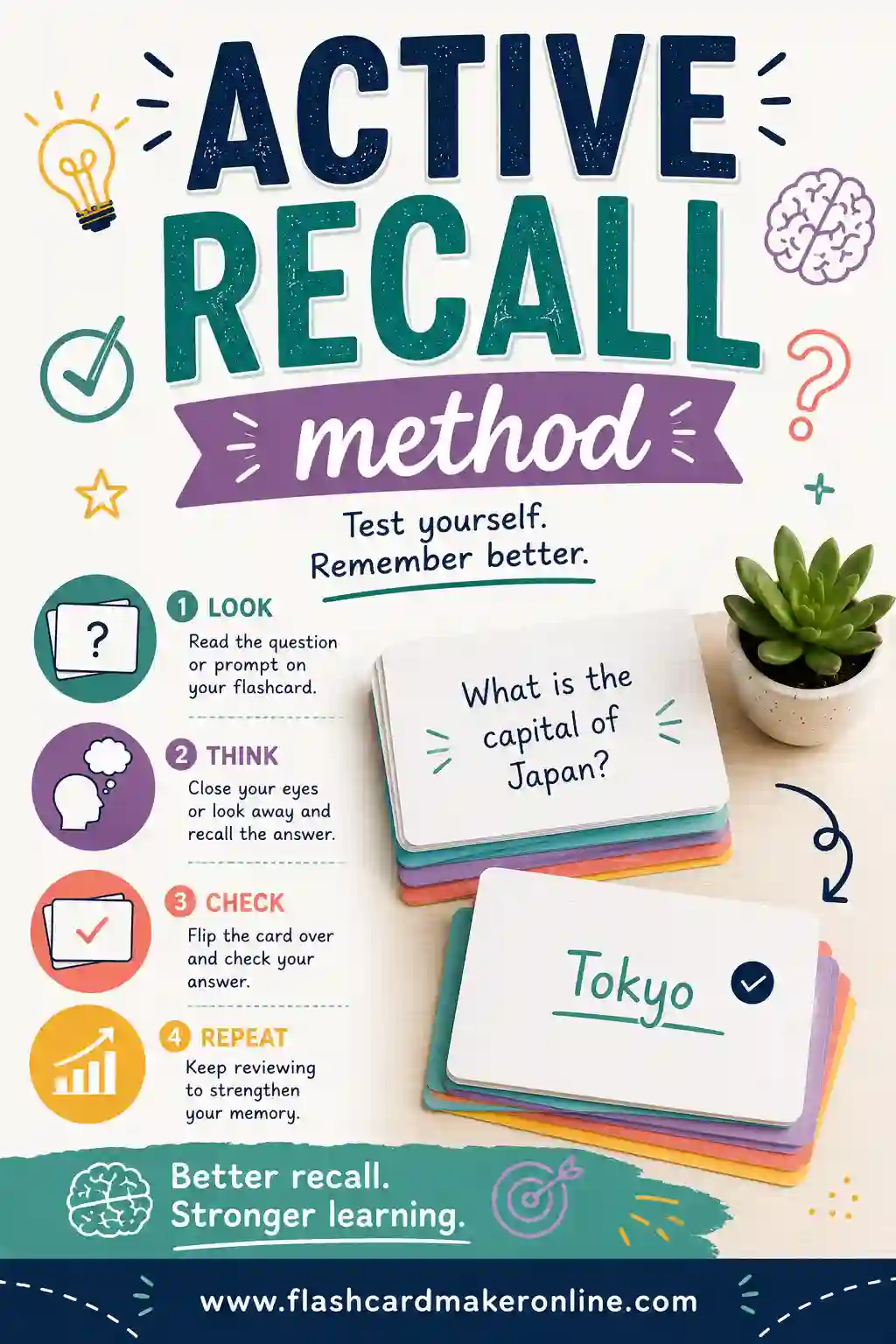
The blurting method is a simple revision technique: pick a topic, close your notes, and write down everything you can remember on a blank page. Then open your notes, fill in what you missed in a different color, and study those gaps. It works because it's a form of active recall: pulling information out of your memory, which strengthens it far more than rereading.
Try it with flashcards. Read the topic, blurt what you know (out loud or on scrap paper), then tap to compare:
🃏 Quiz yourself: 10 cards from this page
Read the front, say your answer, then tap the card to check.
Make, study & print this deck → Opens the free flashcard maker with all 10 cards ready to edit or print.How to do the blurting method (4 steps)
| Step | What to do | Time |
|---|---|---|
| 1. Pick a topic | One topic or subtopic, like 'the water cycle' or 'causes of World War I' | 1 minute |
| 2. Blurt | Close everything. Write all you remember on a blank page: words, lists, diagrams, dates, formulas | 5 to 10 minutes |
| 3. Check and fill gaps | Open your notes. Add anything missing or wrong in a different color pen | 5 to 10 minutes |
| 4. Repeat | Study the colored parts, then blurt the same topic again in a day or two | A few minutes |
The second color is the secret. After a couple of rounds, you can see exactly which ideas keep slipping. That's your study list.
A blurting example
Topic: photosynthesis. Here's what a first blurt might look like, and what got added after checking notes.
| First blurt (from memory) | Added after checking (in red) |
|---|---|
| Plants make food from sunlight | Happens in the chloroplasts, using chlorophyll |
| Uses water and CO2 | Water comes in through the roots; CO2 through stomata in the leaves |
| Makes oxygen | Also makes glucose (sugar) |
| There are two stages? | Light-dependent reactions, then the Calvin cycle |
The next blurt, two days later, should include everything in both columns. If it doesn't, those items go on flashcards.
Why blurting works
Blurting is active recall in its simplest form, a type of practice called free recall. Researchers have found again and again that testing yourself helps you remember more than reading the same material again, an idea often called the testing effect. Blurting also shows you the difference between "I recognize this" and "I can explain this." That gap is what makes rereading feel so convincing, a trap called the illusion of competence.
Blurting revision vs flashcards: use both
| Blurting | Flashcards | |
|---|---|---|
| Best for | Big-picture topics and how ideas connect | Specific facts, terms, dates and formulas |
| What it shows you | What's missing from a whole topic | Which single facts you know |
| When to use | End of a unit, before a test, as a weekly check | Daily, short sessions |
| How they work together | Gaps you find while blurting... | ...become new flashcards |
A great routine: blurt a topic, turn the gaps into cards, review the cards daily, then blurt again at the end of the week. You'll see the red ink shrink.
Blurting for different subjects
- Science: blurt a process (photosynthesis, the water cycle), including a diagram you draw from memory.
- History: blurt causes, events, people and dates for one period. Then check the order.
- Math: blurt the formulas and steps for a unit, plus one worked example.
- English: blurt characters, themes and key quotes for a book.
- Languages: blurt every word you know for a topic, like food or weather.
Tips to make blurting work better
- Keep topics small. "Biology" is too big. "Cell organelles" is just right.
- Don't peek. The struggle to remember is the part that helps.
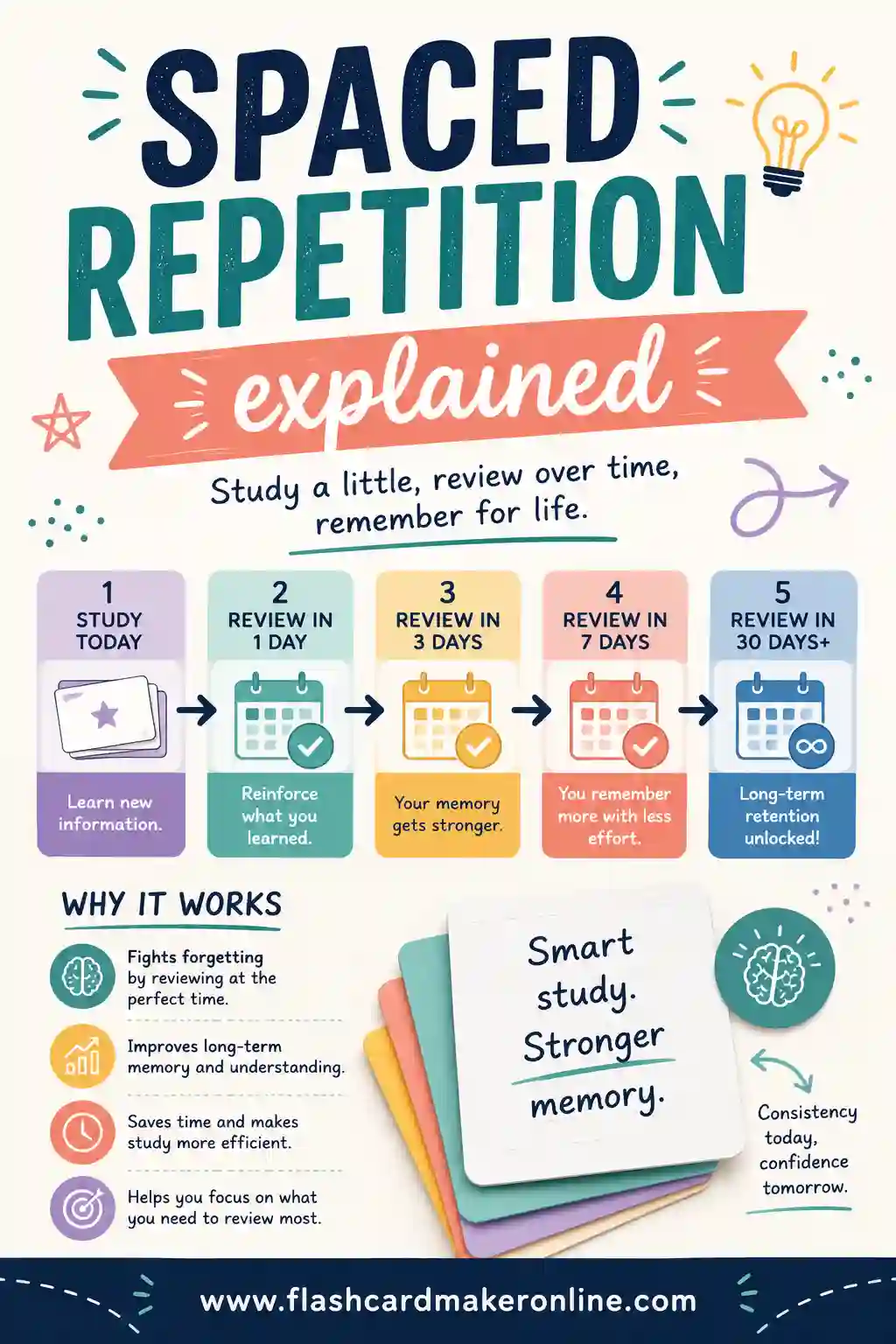
- Space it out. Blurt the same topic again after a day, then after a few days. See spaced repetition explained.
- Try it out loud. Saying everything you know, like teaching an imaginary class, works too. It's close to the Feynman technique.
- Keep your blurt pages. Flip back before the test to see what used to be hard.
Common blurting mistakes
- Blurting with your notes open (that's copying).
- Writing in the same color, so gaps don't stand out.
- Doing it once and never repeating the topic.
- Spending all your time on what you already know.
Turn your gaps into a deck in the free flashcard maker: the topic or question on the front, the answer on the back. Then blurt again in a couple of days and watch the red ink shrink.
Frequently Asked Questions
What is the blurting method?
A revision technique where you write everything you remember about a topic on a blank page without notes, then check your notes and fill in what you missed in a different color.
Does blurting actually work?
Yes. It's a form of active recall (free recall), and research consistently finds that retrieving information from memory helps you remember it better than rereading.
How long should you blurt for?
About 5 to 10 minutes per topic, then another 5 to 10 minutes to check and fill gaps. Repeat the same topic a day or two later.
Is blurting better than flashcards?
They do different jobs. Blurting shows gaps across a whole topic; flashcards drill specific facts. Use blurting to find gaps and flashcards to fix them.
What is blurting revision for GCSE or A-level?
It's the same technique. Students in the UK often call it blurting revision and use it to review each topic on their exam specification.