Flashcards for 1st Graders: What to Drill and What to Skip
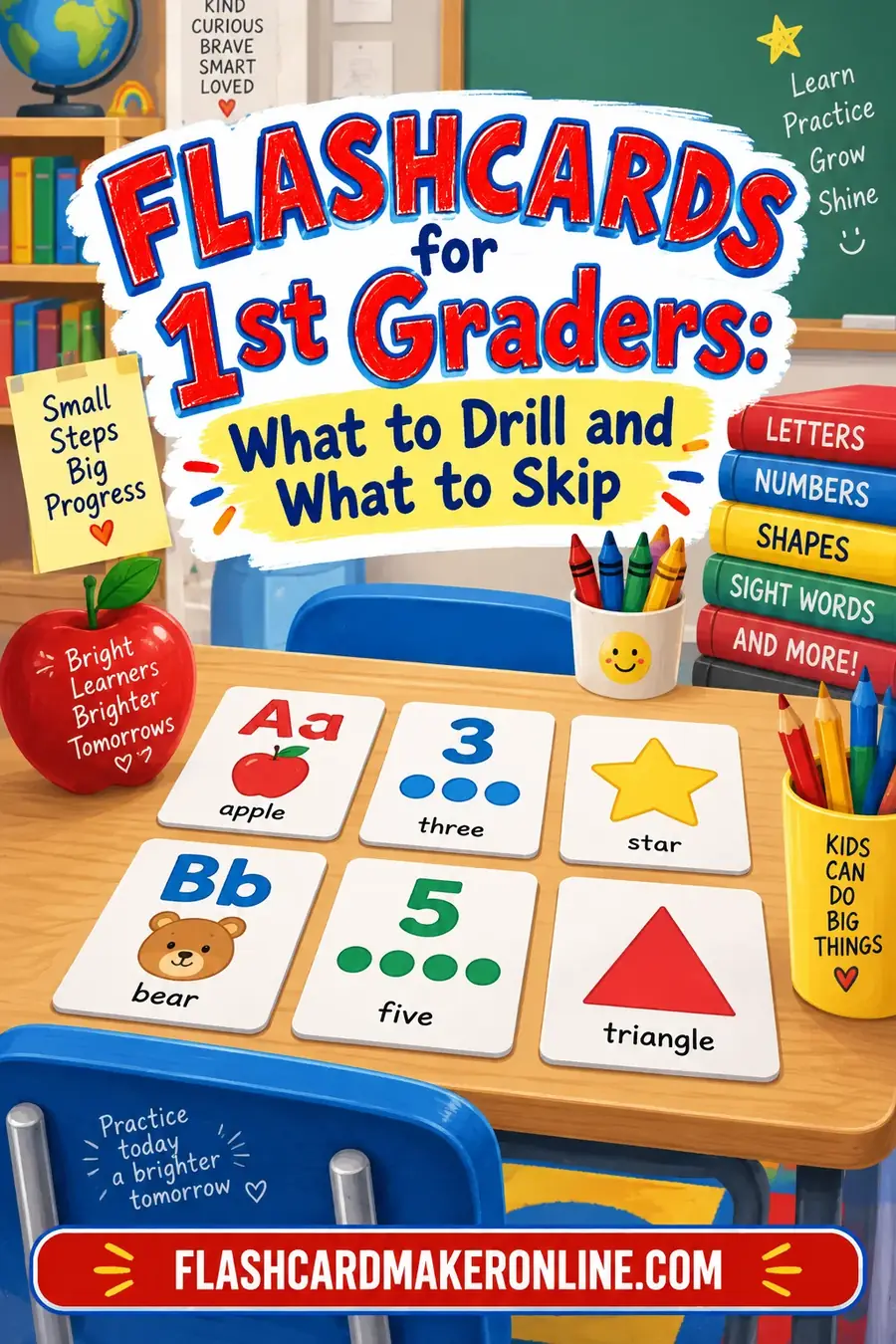
Flashcards work for first graders on exactly one type of material: things that should become automatic. Sight words, letter sounds and basic math facts need to be retrieved instantly without reasoning, and drilling is how automaticity happens. Everything else — comprehension, problem solving, writing — is actively harmed by being turned into card drills.
Knowing which is which is most of the value.
Worth Drilling
Sight words. The highest-value flashcard use at this age by some distance. Words like the, said, was, have, come don't follow phonics rules reliably and have to be recognized on sight. A first grader who stops to decode said every time loses the thread of the sentence.
Letter sounds and blends. Single letters, then digraphs (sh, ch, th, wh), then blends (bl, str, cr). These need to be automatic before reading fluency is possible.
Number recognition and math facts. Addition and subtraction within 10 first, then within 20. A child who counts on fingers for 6+3 is spending working memory on retrieval that should be spent on the actual problem.
CVC word families. -at, -an, -ig, -op. Pattern recognition that transfers to hundreds of words.
Shapes, colors, days, months. Basic vocabulary that's pure recall.
Not Worth Drilling
Reading comprehension. Cannot be reduced to a card. A child who can answer "what happened in the story" on a flashcard has memorized an answer, not learned to comprehend.
Writing and spelling production. Recognizing a correctly spelled word on a card is a different skill from producing it. Spelling needs writing practice.
Anything the child hasn't been taught yet. Flashcards reinforce; they don't introduce. A card for a sound the child has never been taught produces frustration and guessing.
Long lists of vocabulary definitions. At this age, vocabulary grows through reading and conversation, not definition drilling.
Multiplication. Comes later. Drilling it in first grade builds nothing except a dislike of math cards.
How Long, and How Often
Five to ten minutes, maximum. A first grader's sustained attention for a repetitive task is genuinely short. Ten minutes daily beats forty minutes on Saturday by a wide margin.
Ten to fifteen cards per session. Not the whole deck. A small stack that gets completed feels like success; a large stack that gets abandoned feels like failure.
Stop before they want to stop. The single most important rule. Ending while it's still going well is what makes tomorrow's session possible.
Same time each day if you can. After breakfast, before dinner — attaching it to an existing routine removes the daily negotiation.
Running a Session Well
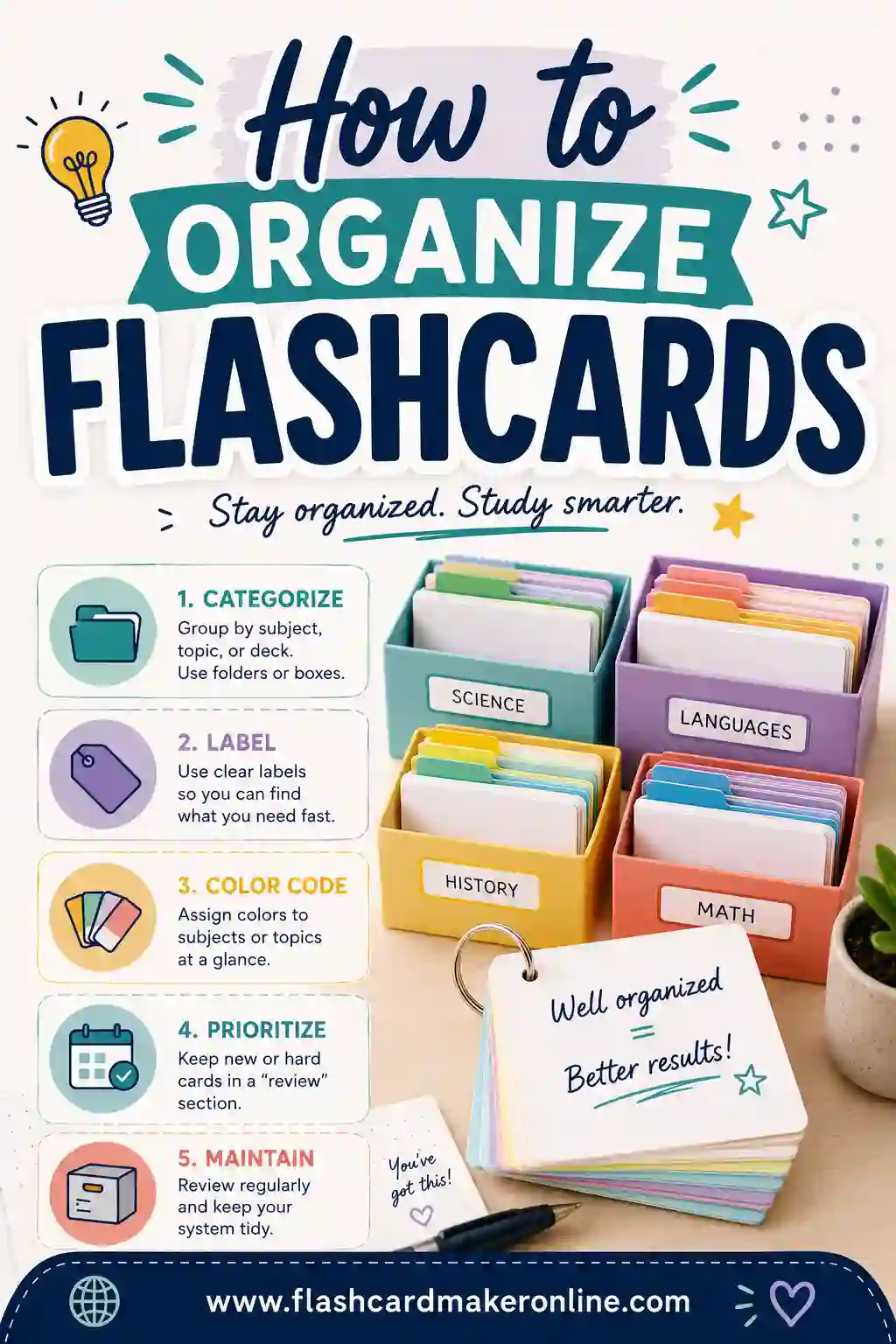
Keep a "know it" pile and a "practicing" pile. Visible progress matters enormously at this age. A growing "know it" pile is the motivation.
Celebrate the pile, not each card. Praising every single correct answer becomes noise. Praising a completed pile means something.
Don't correct instantly. Give three or four seconds. Retrieval takes longer for a beginner than an adult expects, and jumping in teaches the child to wait for the answer rather than reach for it.
When they're stuck, give the answer plainly and put the card back in the pile. Don't turn it into a guessing game or a lecture.
Let them be the teacher sometimes. Handing a child the cards to test a parent, a sibling or a stuffed animal is genuinely effective and children love it.
Never use cards as punishment. "You didn't listen, so now we're doing flashcards" makes the cards permanently unpleasant. This undoes months of good habit in a week.
Card Design for This Age
Large, plain text. One word per card, large enough to read at arm's length.
No pictures on sight-word cards. This one is counterintuitive and matters: a picture lets the child recognize the image instead of reading the word, which defeats the purpose entirely. Pictures belong on vocabulary and concept cards, never on sight words.
One font, consistently. A child learning to read is learning letterforms. Switching between decorative fonts adds difficulty that isn't teaching anything.
Lowercase, unless drilling capitals specifically. Most text a child reads is lowercase.
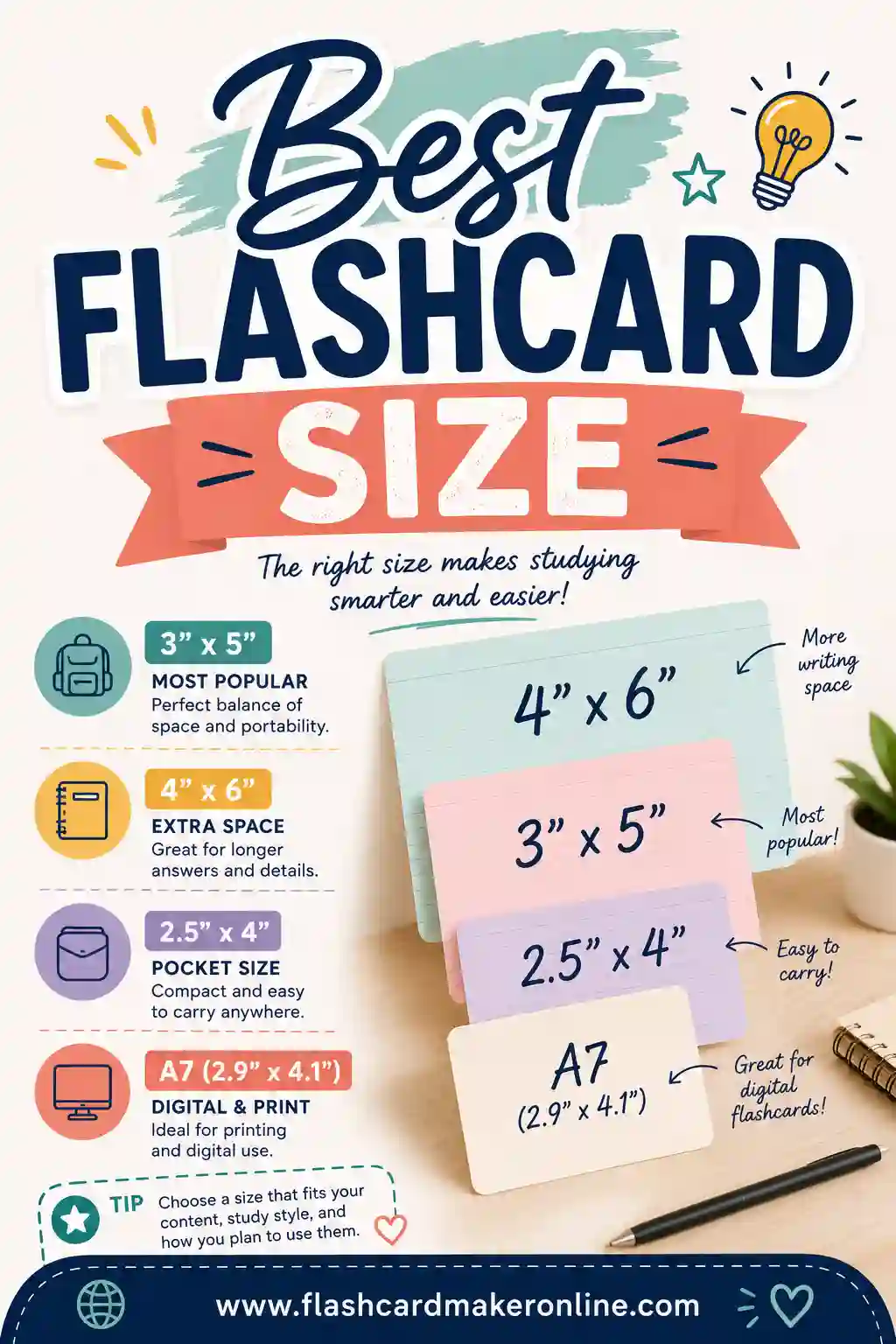
Sturdy cards. Six-year-olds are hard on paper. Cardstock or lamination if the set will last a term.
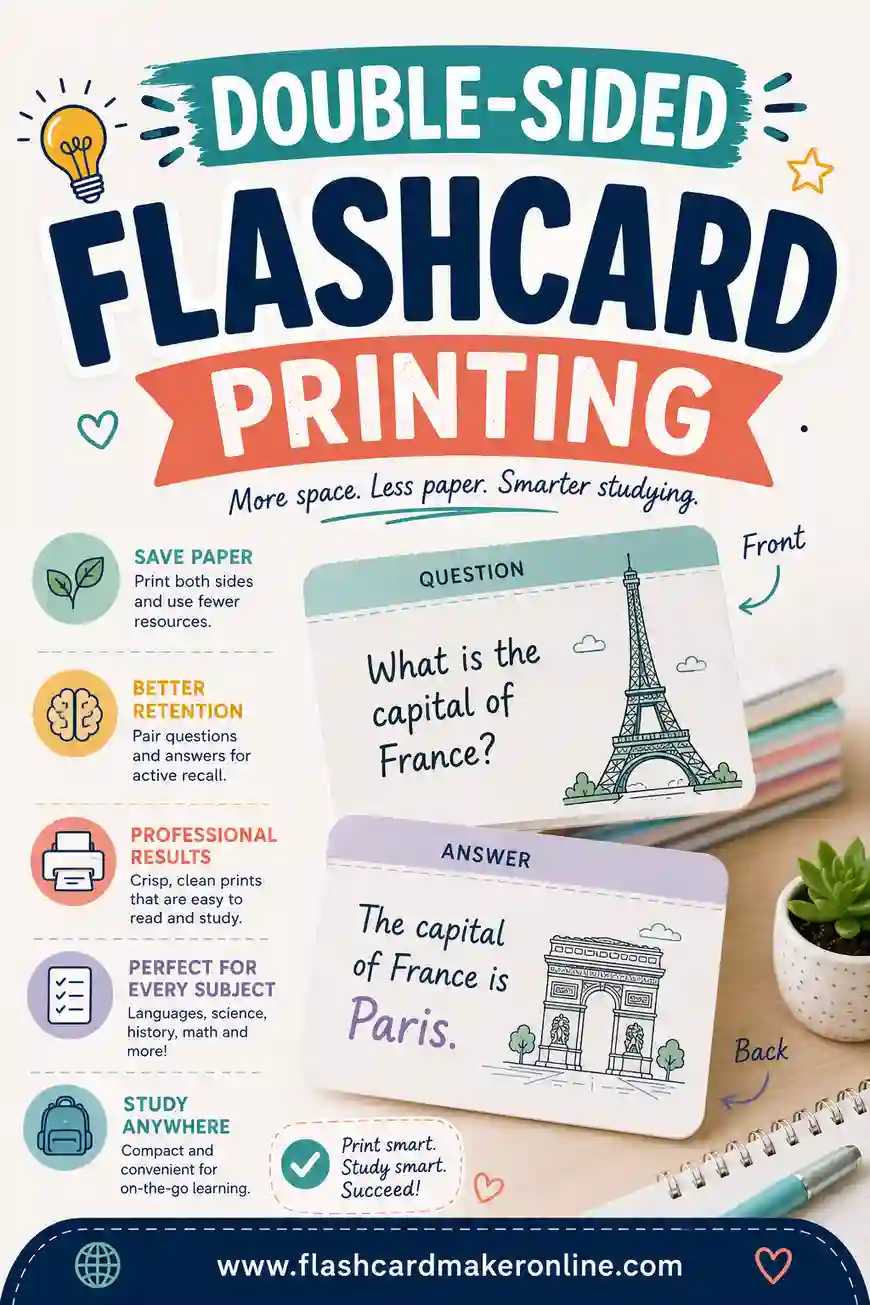
A flashcard maker that prints large, consistent text handles this quickly for a full sight-word list — which is the case where printing beats handwriting, given the volume involved.
When Flashcards Aren't the Answer
If a child is struggling with reading generally, more flashcards is usually the wrong response. Sight word drilling helps a child who can decode but is slow on irregular words. It does nothing for a child who hasn't got letter sounds secure yet, and can mask an underlying difficulty that's worth having looked at properly.
The signal: if drilling isn't producing steady improvement over a few weeks, the problem is probably upstream of what cards can fix.
A Realistic Weekly Structure
Something workable rather than aspirational, for a parent supporting a first grader at home.
Monday to Thursday: one short session, five to ten minutes, ten to fifteen cards. Mix of sight words and one other category.
Friday: review only the "know it" pile. Pure confidence-building, no new material, and it ends the week on success.
Weekend: optional. If the child asks, play. If not, leave it — five sessions a week is plenty and pushing a sixth is where resistance starts.
Every few weeks: retire the cards that are genuinely automatic and add the same number of new ones. Keeping the deck the same size prevents it becoming intimidating.
The total commitment is under an hour a week, which is sustainable in a way that a daily thirty-minute session is not.
Sight Words Specifically
Worth expanding, because it's the highest-value use of flashcards at this age.
Why they need memorizing. Words like said, was, come, one, there don't follow reliable phonics rules. A child trying to decode them letter by letter will either get them wrong or lose the thread of the sentence while working them out.
Why speed matters more than accuracy. A child who can work out said in four seconds is still spending working memory on it that should be going to comprehension. The target is instant, not correct-eventually.
How many. Most first-grade lists run to a couple of hundred words across the year. Working in batches of ten to fifteen is far more manageable than facing the whole list.
Order matters. Teach the most frequent words first — the, of, and, a, to, in, is, you, that, it. These few words make up a startlingly large share of everything a child will read.
No pictures. Covered above and worth repeating, because it's the most common mistake in commercially sold sight-word cards.
Signs It Isn't Working
Consistent resistance. If a child dreads the session, something is wrong — usually the length, the difficulty, or an association with punishment.
No progress over several weeks. Cards that aren't moving to the "know it" pile after a few weeks of consistent practice suggest the material is ahead of where the child is, or that something upstream needs attention.
Guessing rather than reading. A child calling out a random word rather than attempting the letters is not decoding, and more drilling won't fix it.
Regression. Words known last month that have gone is normal to a degree, and worth mentioning to a teacher if it's widespread.
In any of these cases, more flashcards is rarely the answer. Flashcards reinforce something already being taught; they can't substitute for the teaching, and they can't diagnose an underlying difficulty that's worth having looked at properly.
Making It Feel Like a Game
Small format changes that change how a six-year-old receives the same cards.
Beat the clock. How many can you get in one minute? Track it on a chart. Children who resist "practice" will race a timer enthusiastically.
Card toss. Every correct answer earns the chance to throw the card into a box. Adds a physical element and a reason to want the next card.
Teacher role reversal. The child tests you, and you get some deliberately wrong. Correcting an adult is genuinely motivating, and producing the right answer is harder than recognizing it.
Hide and seek. Cards hidden around a room; each one found gets read. Turns a five-minute session into a ten-minute game, and the movement helps.
Snap or memory pairs. Two copies of each word, played as a matching game. Works especially well for children who find straight drilling tedious.
Word hunt. Take three cards from the deck and find those words in a real book. Connects the drilling to actual reading, which is the point of the whole exercise.
What Success Looks Like
Worth being clear about, so progress is recognizable.
Instant recognition, not fast decoding. The goal is that the child sees said and says it without pausing. A child who sounds it out quickly has not yet learned it as a sight word.
Transfer to reading. The real measure is whether the words are recognized in a book, not on a card. A child who knows fifty cards but stalls on the same words in a sentence needs more reading practice, not more cards.
Retention across a gap. Words known on Friday and still known the following Wednesday are learned. Words that need re-teaching each session are not, and usually mean the batch is too large.
Willingness to start. A child who fetches the cards unprompted is the strongest signal there is that the format and the pacing are right.
What Not to Expect
Setting realistic expectations prevents a lot of unnecessary worry.
Progress isn't linear. A child will learn eight words in a week and then none for a fortnight. This is normal and not a sign anything is wrong.
Regression happens. Words known solidly in October can be gone in November. Also normal, and they usually come back faster the second time.
Speed comes after accuracy, with a gap. A child may know a word reliably for weeks before recognizing it instantly. The gap between "can work it out" and "knows on sight" is real and takes time to close.
Cards don't teach reading. They reinforce recognition of specific words. Actual reading — comprehension, fluency, enjoyment — comes from reading books, and no amount of card work substitutes.
Comparison to other children is unhelpful. The range of normal at this age is enormous, and a child who is behind a classmate in October may be ahead in March.
When to Ask for Help
Most first graders make steady progress with a small amount of home support. Some don't, and the signals worth acting on are reasonably clear.
No progress over six to eight weeks of consistent, appropriately-pitched practice.
Persistent letter confusion well into the year — reversing letters occasionally is normal at six; consistently failing to distinguish them is worth mentioning.
Guessing from the first letter rather than attempting the word.
Avoidance that goes beyond ordinary reluctance — genuine distress at reading tasks.
A significant gap between spoken language and reading. A child who talks fluently and confidently but can't decode is a specific pattern worth flagging.
None of these are diagnoses, and all of them are common enough to be unremarkable in isolation. But a conversation with the class teacher costs nothing, and early support is considerably more effective than late support. Flashcards are a useful tool within a working system; they can't fix one that isn't.
High Frequency Words Flashcards: Which List to Use
The single highest-value deck at this age is a set of high frequency words flashcards — the small, unremarkable words that make up a startling share of everything a child reads.
Two lists dominate US classrooms. The Dolch list groups 220 service words by grade level, plus 95 nouns; the first-grade set is the natural target. The Fry list is ordered purely by frequency, and its first 100 words account for roughly half the words in typical school texts. Either is fine. Ask the teacher which one the class uses and match it, because a child drilling one list at school and a different one at home is doing more work for less gain.
Practical rules:
- Ten to fifteen cards in rotation. Not the whole list. Retire a word once it is read instantly three sessions running, and add a new one in its place.
- Word alone on the front. No pictures. These words are not picturable, and an image teaches guessing instead of reading.
- Say it, do not sound it out. The goal is instant recognition. If a word still needs decoding after two weeks, it goes back into phonics work rather than the sight-word deck.
Frequently Asked Questions
How long should a first grader use flashcards? Five to ten minutes a day, with ten to fifteen cards per session. Short and daily is substantially more effective than long and occasional, and it's also the only thing a six-year-old will tolerate willingly.
Should sight word flashcards have pictures? No. A picture lets the child identify the image rather than read the word, which defeats the point. Save pictures for vocabulary and concept cards where the image is the thing being taught.
What should a first grader learn with flashcards? Anything that needs to become automatic — sight words, letter sounds and blends, and addition and subtraction facts within 20. Comprehension, writing and problem-solving shouldn't be drilled this way.
What if my child resists flashcards? Shorten the session, reduce the stack, and check the material isn't ahead of what they've been taught. Also make sure cards have never been used as a consequence for misbehaviour — that association is hard to undo once it forms.
Which games using flashcards work best at this age? The ones that add movement or a role reversal. Beat the clock, card toss, hide and seek, and memory pairs all appear above, and two more are worth adding: a Go Fish variant played with two copies of each word, and a swat game where two children race to slap the card you call out. What all the good games using flashcards have in common is that the child still has to produce the answer out loud — a game that lets them win by pointing has quietly become a matching exercise rather than reading practice.