Flashcards for Adult Learners: A Practical Guide
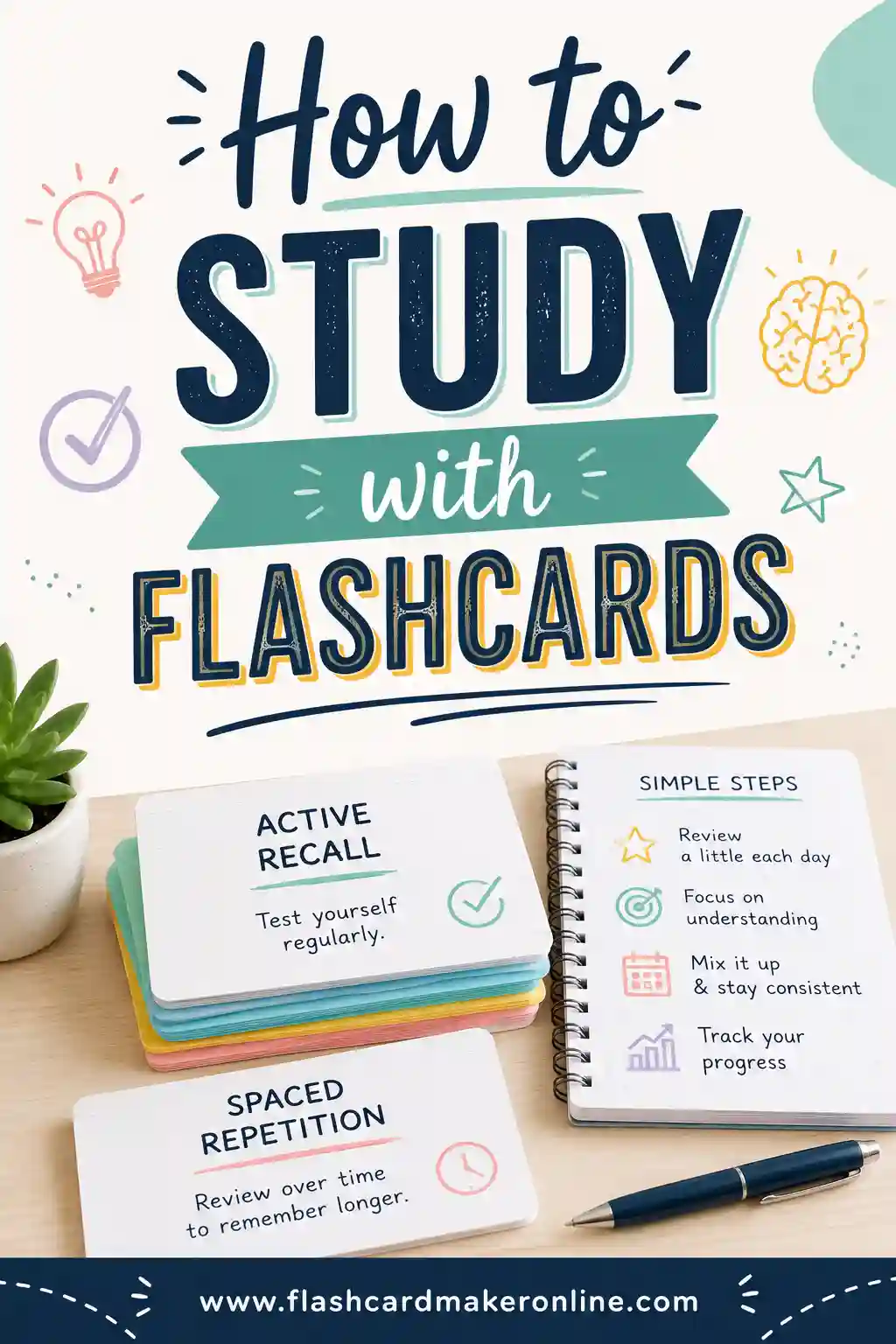
Flashcards for adult learners work the same way they did in school, but they fit better into a grown-up life: short bursts of study you can do on a coffee break, a commute, or ten quiet minutes before bed. The trick is pairing a small question on one side with a clear answer on the other, then testing yourself instead of rereading. The fastest way to start is a free flashcard maker that lets you build a deck, flip through it on your phone, and print a set when you want to study offline.
Want to dive in right now? Open the free flashcard maker, type a few terms and definitions (there's a ready-made set below you can copy), and you'll have a working deck in a couple of minutes. No sign-up, no fee, nothing to install.
Why Flashcards Work So Well for Adults
You're busy. You don't have hours to reread a textbook, and honestly, rereading barely works anyway. Flashcards solve both problems at once.
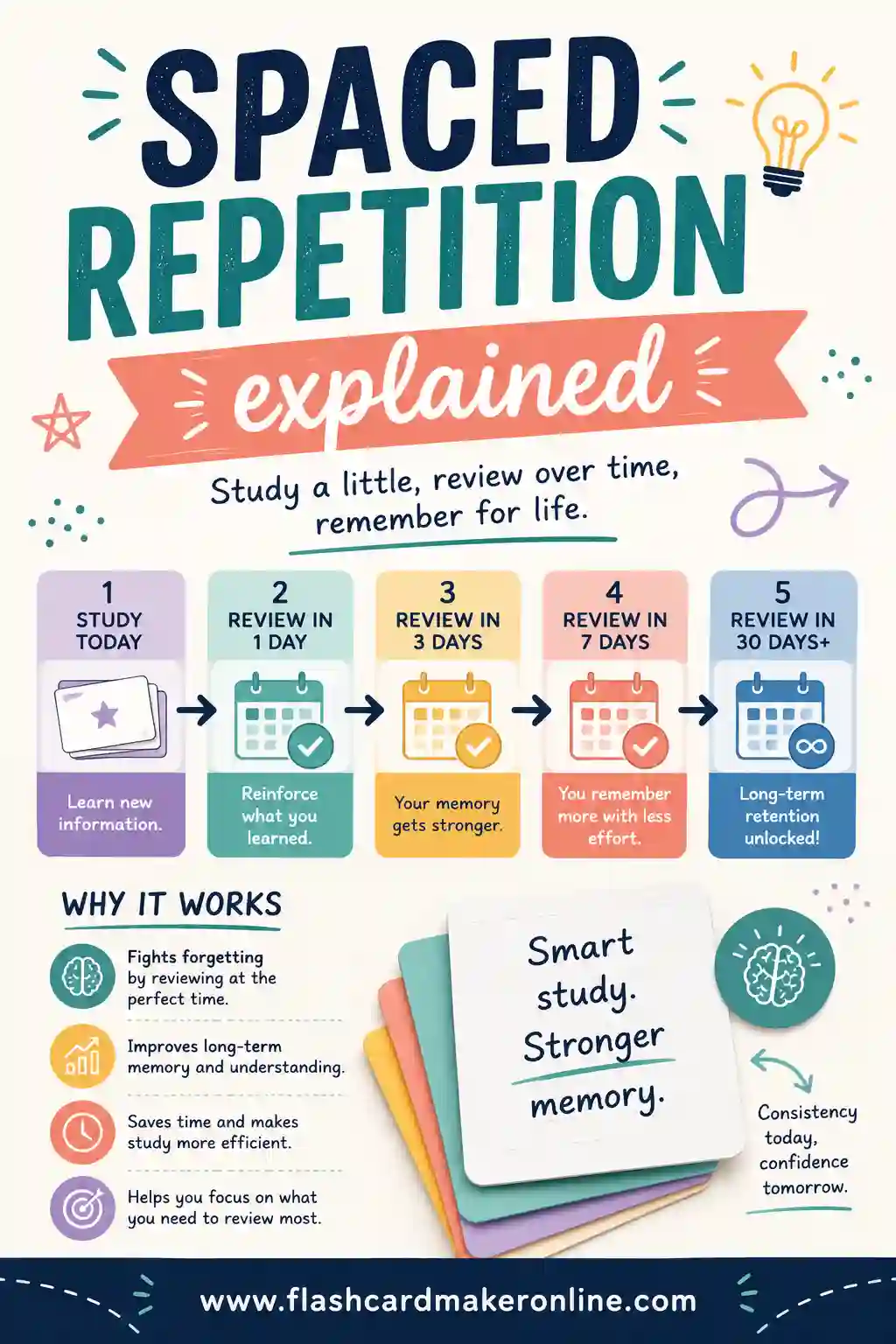
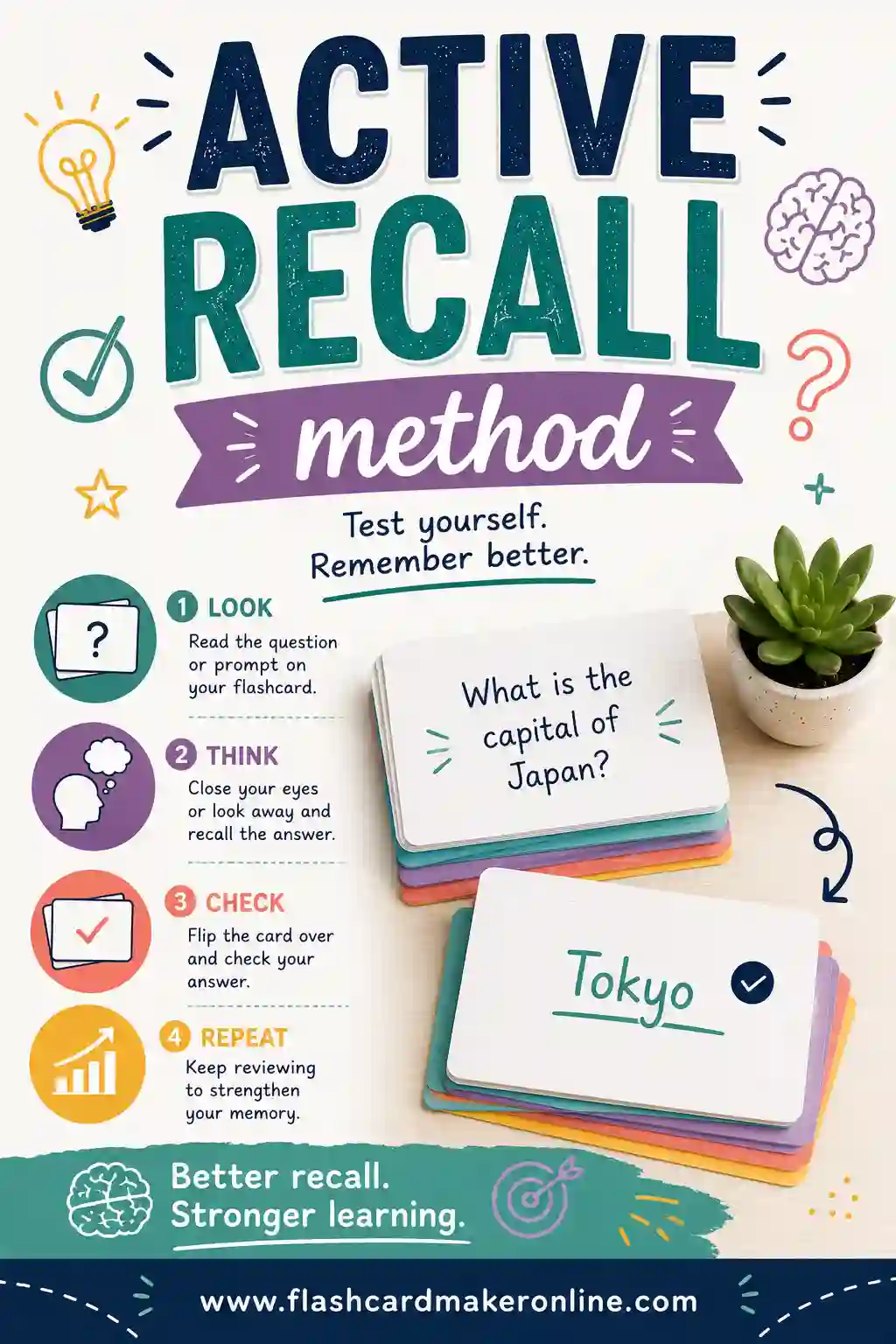
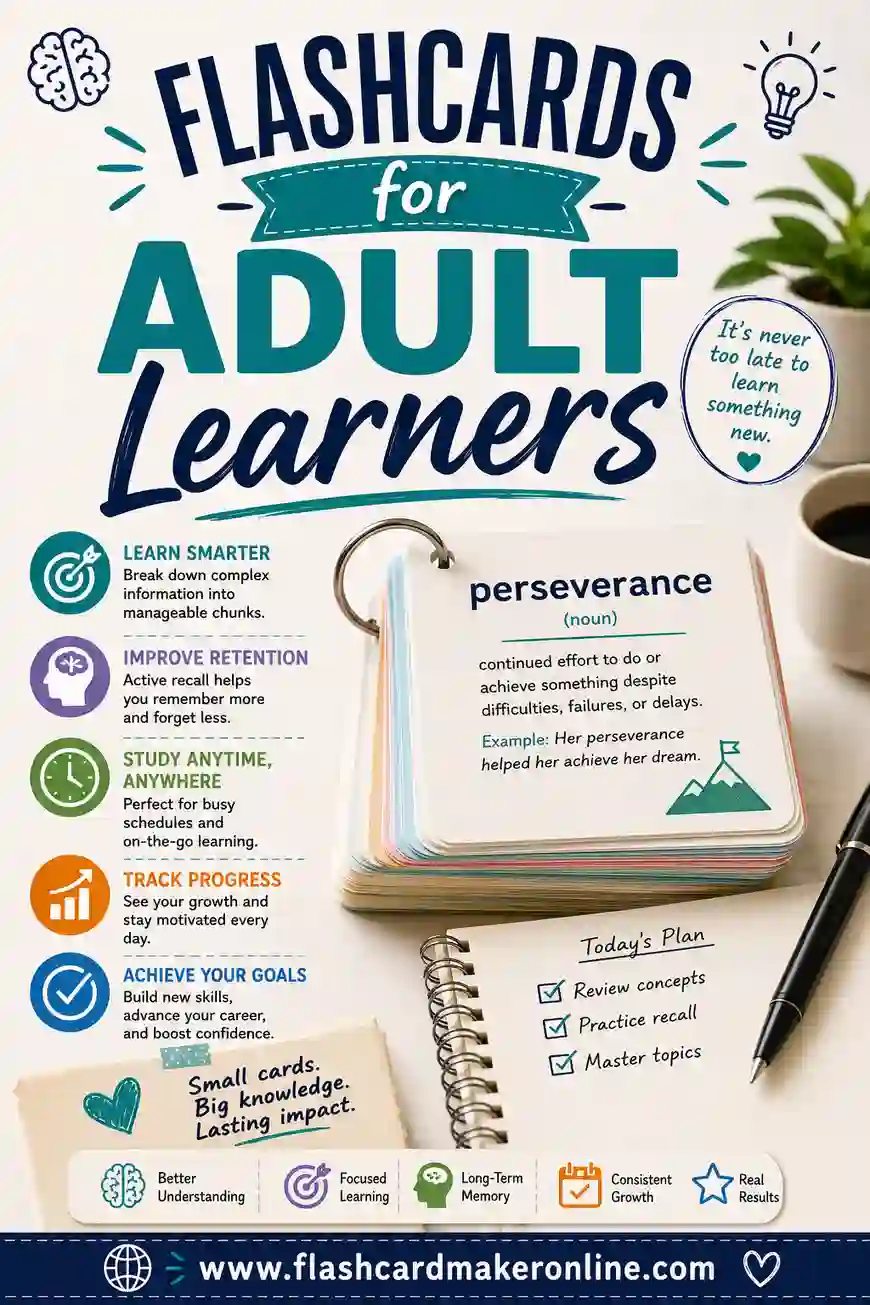
They lean on two of the most proven ideas in learning science: active recall (forcing your brain to retrieve an answer) and spaced repetition (reviewing things right before you'd forget them). Together they move facts into long-term memory far faster than passive reading. You can dig deeper in our guides on the active recall method and spaced repetition explained.
For adults specifically, flashcards have a few extra perks:
- They fit tiny time slots. Five minutes in a waiting room is enough for a quick review.
- They're portable. A deck lives on your phone or a stack in your bag.
- They give instant feedback. You know right away whether you knew it or not.
- They respect your schedule. No class times, no group pace. You study when you can.
What Makes Adult Learning Different
Going back to studying as an adult isn't the same as being a teenager with a free afternoon. You're juggling work, maybe a family, and a brain that's a little more skeptical about memorizing for the sake of it.
That's actually good news for flashcards. Adults learn best when material connects to something real, and you control exactly what goes on each card. You can tie a new term to your job, a hobby, or a goal you actually care about. That relevance makes the facts stick.
The other difference is honesty. As an adult, you're studying for a reason, a certification, a language trip, a career change, so you don't fool yourself by highlighting a page and calling it studying. Flashcards keep you honest because every card is a small test you either pass or fail.
Great Uses for Adult Flashcards
Here are some of the most common reasons grown-ups reach for flashcards, with a sense of what to put on the cards.
Professional certifications
Whether it's a PMP, a nursing exam, real estate licensing, or an IT cert, these tests are packed with terms and definitions. Flashcards turn a fat study guide into bite-sized reps you can run on your commute.
Learning a new language
Vocabulary is the slowest part of any language, and it's exactly what flashcards crush. Term on one side, meaning on the other, reviewed daily. Add a sample sentence on the back to lock in usage.
Job skills and onboarding
New role, new acronyms, new processes. Build a deck of the jargon, tools, and steps you need to remember, and you'll look fluent in weeks instead of months.
Hobbies and personal interests
Wine regions, chess openings, bird species, coffee brewing ratios, knitting stitches. Flashcards aren't just for exams. They're a great way to get genuinely good at something you love.
A Sample Adult Study Deck (Copy & Paste)
Here's a ready-to-use deck of study and learning terms, useful if you're brushing up on how to learn better. Copy the rows straight into the flashcard maker, or use it as a model for your own subject.
| Term | Definition |
|---|---|
| Active recall | Retrieving an answer from memory instead of rereading it |
| Spaced repetition | Reviewing material at increasing intervals to fight forgetting |
| Retrieval practice | The act of testing yourself to strengthen a memory |
| Interleaving | Mixing several topics in one session instead of blocking them |
| Chunking | Grouping small pieces of information into larger units |
| The forgetting curve | How quickly memory fades without review |
| Metacognition | Thinking about how well you actually know something |
| Deliberate practice | Focused practice aimed at your weak spots |
| Encoding | Turning new information into a memory you can store |
| Consolidation | The brain settling a memory into long-term storage, often during sleep |
| Cue | A prompt that triggers recall of stored information |
| Elaboration | Explaining a concept in your own words to deepen understanding |
| Dual coding | Pairing words with images to strengthen memory |
| Cramming | Massed last-minute study that fades quickly |
| Distributed practice | Spreading study sessions across days or weeks |
| Confidence gap | The difference between feeling sure and actually knowing |
| Recall cue | A keyword on the front of a card that triggers the answer |
| Leitner system | A spaced-repetition method using boxes for card difficulty |
| Microlearning | Learning in very short, focused sessions |
| Transfer | Applying what you learned to a new situation |
Twenty cards is a perfect starter deck. Run through it daily and you'll feel the difference within a week.
How to Build Flashcards That Actually Stick
A bad card is one you can't answer or one that's secretly five questions in a trench coat. A good card is short, clear, and tests one thing. Follow these rules.
- One idea per card. If a card has two facts, split it into two cards.
- Keep the front short. A clean question or a single term works best.
- Write the answer in your own words. It forces you to actually understand it.
- Add a memory hook. A tiny example, a mnemonic, or an image helps it stick.
- Avoid yes/no cards. "Is X true?" is too easy to guess. Ask "What is X?" instead.
Once your deck exists, the flashcard maker lets you flip through it digitally and print a clean set when you'd rather study away from a screen.
A Realistic Study Routine for Busy Adults
You don't need an hour. You need consistency. Here's a routine that fits a full life.
- Morning (5 min). Flip through new cards while your coffee brews.
- Commute (10 min). Review the deck on your phone, or read a printed stack on the train.
- Lunch (5 min). Hit the cards you got wrong this morning.
- Evening (5 min). A quick final pass, focusing on weak cards before bed (sleep helps lock them in).
That's about 25 minutes spread across the day, in chunks small enough that you'll actually do them. Compare that to a single dreaded hour you keep skipping.
Study session length by goal
| Goal | Cards per session | Frequency |
|---|---|---|
| Casual hobby | 10–15 | A few times a week |
| Language learning | 15–25 | Daily |
| Certification prep | 25–40 | Daily, ramping up near the exam |
| Quick refresher | 10–20 | As needed |
Digital vs. Printed Flashcards
Both have a place, and you don't have to choose just one.
Digital cards are great for daily review. They're always in your pocket, easy to shuffle, and effortless to update. The downside is they share screen time with every distraction you own.
Printed cards are better for deep, focused study. Writing or holding physical cards engages your hands and keeps your phone out of reach. They're also ideal for studying with a partner, who can quiz you from the answer side.
The nice thing about a good flashcard maker is you get both. Build once, study on screen during the week, then print a set for a distraction-free weekend session.
Common Mistakes to Avoid
- Making the deck too big. A 300-card monster is intimidating. Start small and grow it.
- Cramming instead of spacing. One long session beats nothing, but daily short sessions beat everything. See spaced repetition explained.
- Just reading the cards. Always cover the answer and try to recall it first. That's the whole point.
- Never updating the deck. Pull cards you've mastered and add new weak spots as you go.
- Studying tired and distracted. Five focused minutes beat thirty foggy ones.
Frequently Asked Questions
Are flashcards effective for adult learners?
Yes, very. Flashcards use active recall and spaced repetition, two of the best-supported techniques in learning research. They work just as well for a 40-year-old studying for a certification as for a student, and they fit a busy schedule far better than long reading sessions.
How many flashcards should I study per day?
Start with 15 to 25 cards a day for a serious goal like language learning or a certification. For a casual subject, 10 a few times a week is plenty. Consistency matters more than volume, so pick a number you can actually keep up with.
Are digital or paper flashcards better for adults?
Both work. Digital cards win for quick daily review on your phone, while printed cards are better for focused, screen-free study and quizzing with a partner. Many adults use both: a free flashcard maker lets you build once and study either way.
How do I make flashcards if I'm short on time?
Keep each card to one idea, write a short prompt on the front and a plain answer on the back, and build in small batches. Using a tool that lets you paste a list of terms and definitions at once is the fastest route. You can always add more cards later.
Can flashcards help me learn a new skill, not just facts?
Yes. Beyond vocabulary and definitions, flashcards work for steps in a process, formulas, shortcuts, and decision rules. Anything you need to recall quickly and reliably is a good candidate for a card.
Ready to Build Your First Deck?
Adult learning works best in short, honest, repeatable sessions, and that's exactly what flashcards deliver. Grab the sample deck above, open the free flashcard maker, and you'll have a study system that fits your real life in minutes. Build it once, flip through it anywhere, and print a set when you want to study off-screen. Pick one goal, make twenty cards, and start today.