How to Study With Flashcards: A Step-by-Step Guide
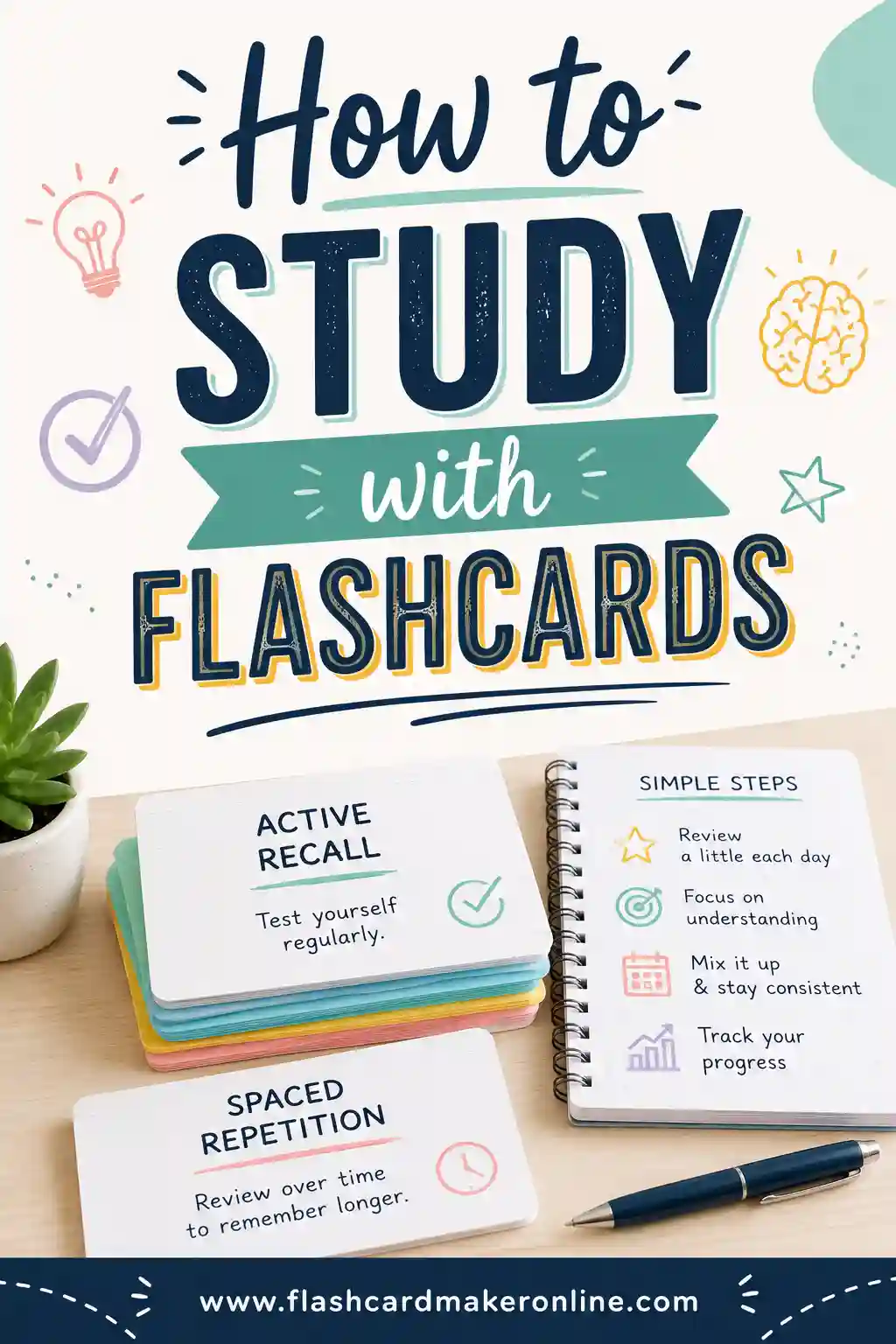
To study with flashcards effectively, look at the prompt, try to recall the answer before flipping the card, then sort each card by how well you knew it, reviewing the hard ones more often and the easy ones less. That simple loop, recall first, then check, then space out your reviews, is what turns flashcards from busywork into one of the fastest ways to learn. The easiest place to start is a free flashcard maker that builds your deck, lets you flip through it, and prints a set for offline study.
Ready to begin? Open the free flashcard maker, paste in your terms and definitions (there's a sample deck below to copy), and start studying in minutes. No sign-up, no fee, nothing to install.
The One Mistake Almost Everyone Makes
Most people "study" flashcards by flipping each card over and reading both sides. That feels productive, but it barely works. Reading the answer doesn't build memory. Retrieving it does.
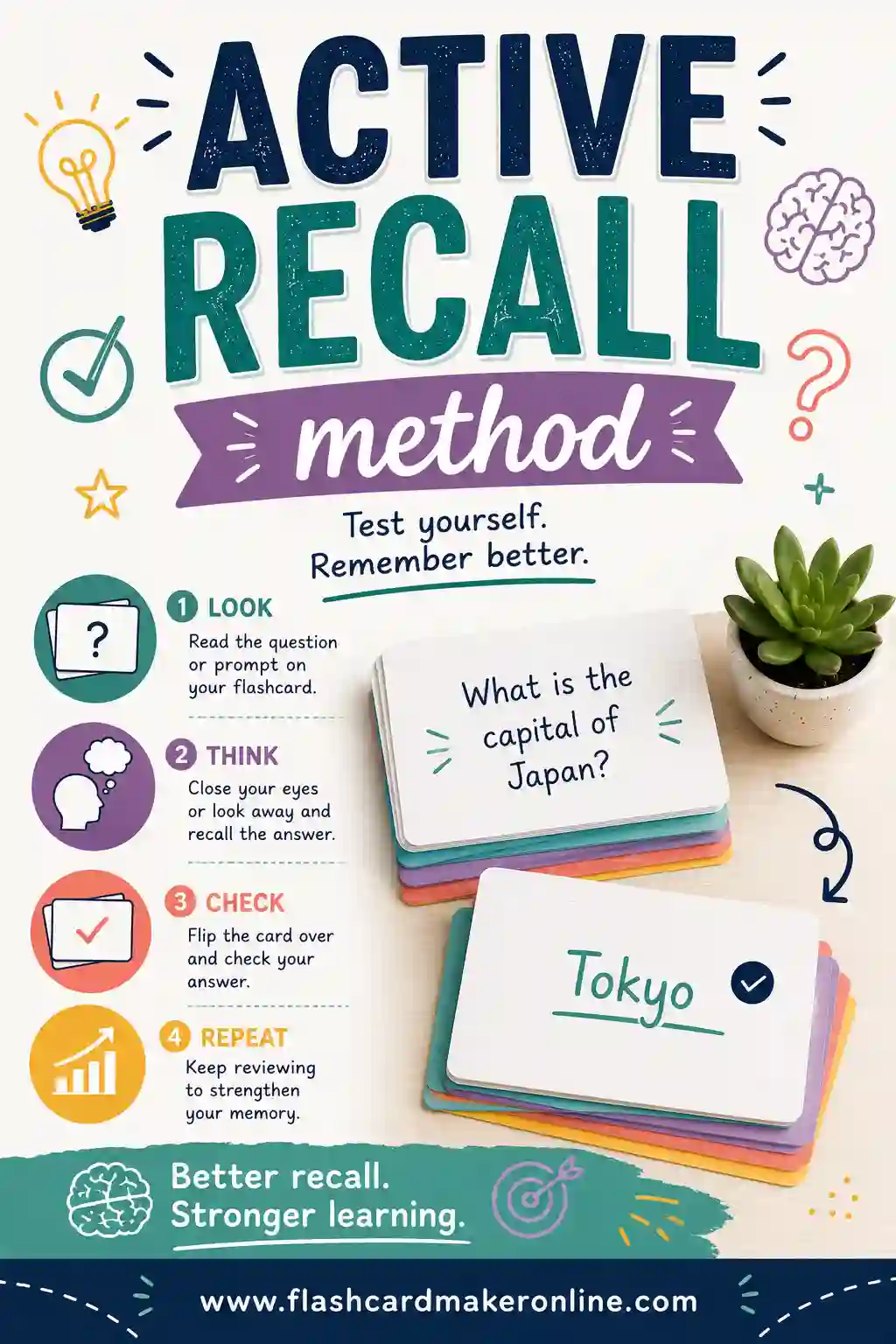
The fix is one simple rule: always try to recall the answer before you flip. Look at the front, pause, and make your brain reach for the answer, even if you get it wrong. That moment of effort is where the learning happens. It's called active recall, and it's the single most important habit for studying with flashcards. Our active recall method guide goes deeper if you want the science.
Get this one thing right and everything else is just optimization.
How to Study With Flashcards: The Core Method
Here's the full loop, step by step. It works for any subject.
- Read the front and pause. Don't flip yet. Give yourself a few seconds to retrieve the answer.
- Answer out loud or in your head. Saying it adds a layer of memory and forces a real commitment.
- Flip and check. Were you right? Be honest with yourself.
- Sort the card. Got it easily? Set it aside for later. Missed it or hesitated? Keep it in the active pile.
- Repeat the misses. Cycle the hard cards more often until they click.
- Space out future reviews. Come back to easy cards days later, hard cards sooner.
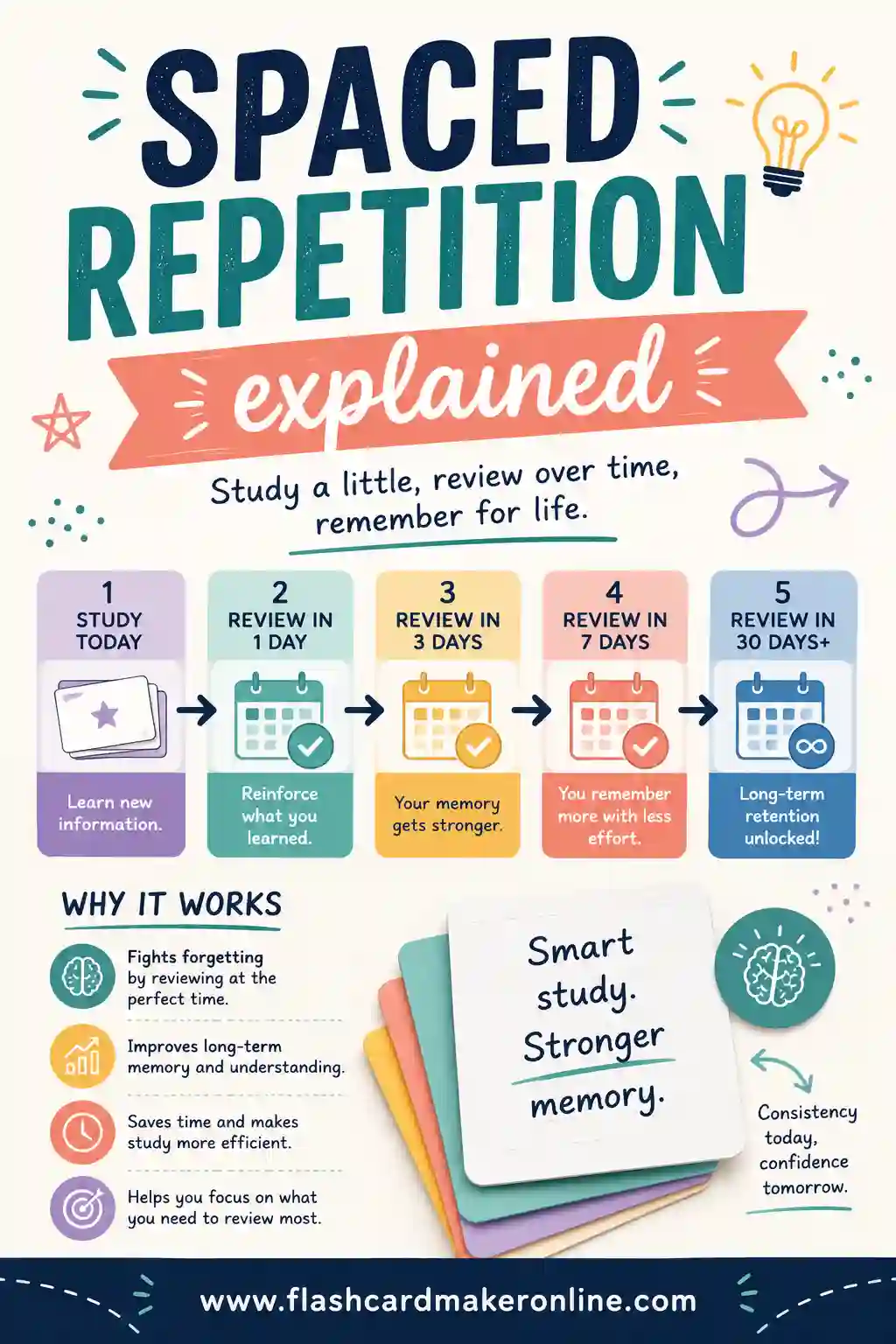
That last step, spacing, is what makes flashcards stick for the long term. We'll cover it next, and there's a full breakdown in spaced repetition explained.
Use Spaced Repetition (Don't Just Cram)
If you study a card once and never see it again, you'll forget it within days. That's just how memory works. The fix is to review each card at growing intervals, right before you'd otherwise forget it.
A simple manual version looks like this:
| Review | When to study the card |
|---|---|
| First learn | Today |
| 2nd review | Tomorrow |
| 3rd review | 3 days later |
| 4th review | 1 week later |
| 5th review | 2 weeks later |
| 6th review | 1 month later |
Each successful recall pushes the card further out. Each miss pulls it back to "review soon." Spread your studying across days like this and you'll remember far more than a single long cram session, with less total effort.
The Leitner System: Spaced Repetition by Hand
The Leitner system is a dead-simple way to do spaced repetition with physical cards. You sort cards into boxes (or piles) by how well you know them.
- Box 1 (review every day): brand-new and missed cards.
- Box 2 (review every few days): cards you got right once.
- Box 3 (review weekly): cards you keep getting right.
- Box 4+ (review rarely): cards you know cold.
The rules are easy:
- Study a box. If you get a card right, move it up one box.
- If you get it wrong, send it all the way back to Box 1.
- Review lower boxes often and higher boxes rarely.
This is why printing your deck on cardstock is so handy, you can physically move cards between piles. The flashcard maker makes printing a clean set quick.
A Sample Study Deck (Copy & Paste)
Here's a ready-to-use deck of study and learning terms, handy if you're learning how to learn. Copy the rows into the flashcard maker, or swap in your own subject.
| Term | Definition |
|---|---|
| Active recall | Retrieving an answer from memory instead of rereading |
| Spaced repetition | Reviewing material at increasing intervals over time |
| The Leitner system | Sorting cards into boxes by how well you know them |
| Retrieval practice | Testing yourself to strengthen a memory |
| The forgetting curve | How fast memory fades without review |
| Interleaving | Mixing topics in one session instead of blocking them |
| Massed practice | Studying one thing in a single long block (cramming) |
| Distributed practice | Spreading study across multiple days |
| Encoding | Turning new information into a memory |
| Consolidation | The brain locking a memory into long-term storage |
| Dual coding | Pairing words with images to aid memory |
| Elaboration | Explaining an idea in your own words |
| Metacognition | Judging how well you actually know something |
| Cue | A prompt that triggers recall |
| Confidence trap | Mistaking familiarity for real knowledge |
| Self-testing | Quizzing yourself instead of rereading |
| Chunking | Grouping small facts into larger units |
| Recall failure | Trying and failing to retrieve, which still helps learning |
| Overlearning | Studying past the point of first getting it right |
| Mastery | Knowing a card quickly and reliably every time |
| Testing effect | Learning more from a quiz than from restudying |
| Retrieval cue | A hint on the front that triggers the answer |
| Generation effect | Better memory for answers you produce yourself |
| Feedback | Checking the correct answer after you try |
| Desirable difficulty | A bit of struggle that strengthens learning |
Use this as your starter deck, then build your own once you've got the rhythm.
Tips to Get the Most From Each Session
Small habits add up. Here are the ones that matter most.
- Shuffle your deck. If you always study cards in the same order, you'll memorize the sequence, not the content.
- Say answers out loud. Speaking adds an extra memory channel and keeps you honest.
- Be brutally honest. "Almost" counts as a miss. Sort it back into the hard pile.
- Keep sessions short. Several 10-minute sessions beat one exhausting hour.
- Study before bed. Sleep helps your brain consolidate what you reviewed.
- Retire mastered cards. Pull cards you know cold so you spend time where it counts.
Make better cards, study better
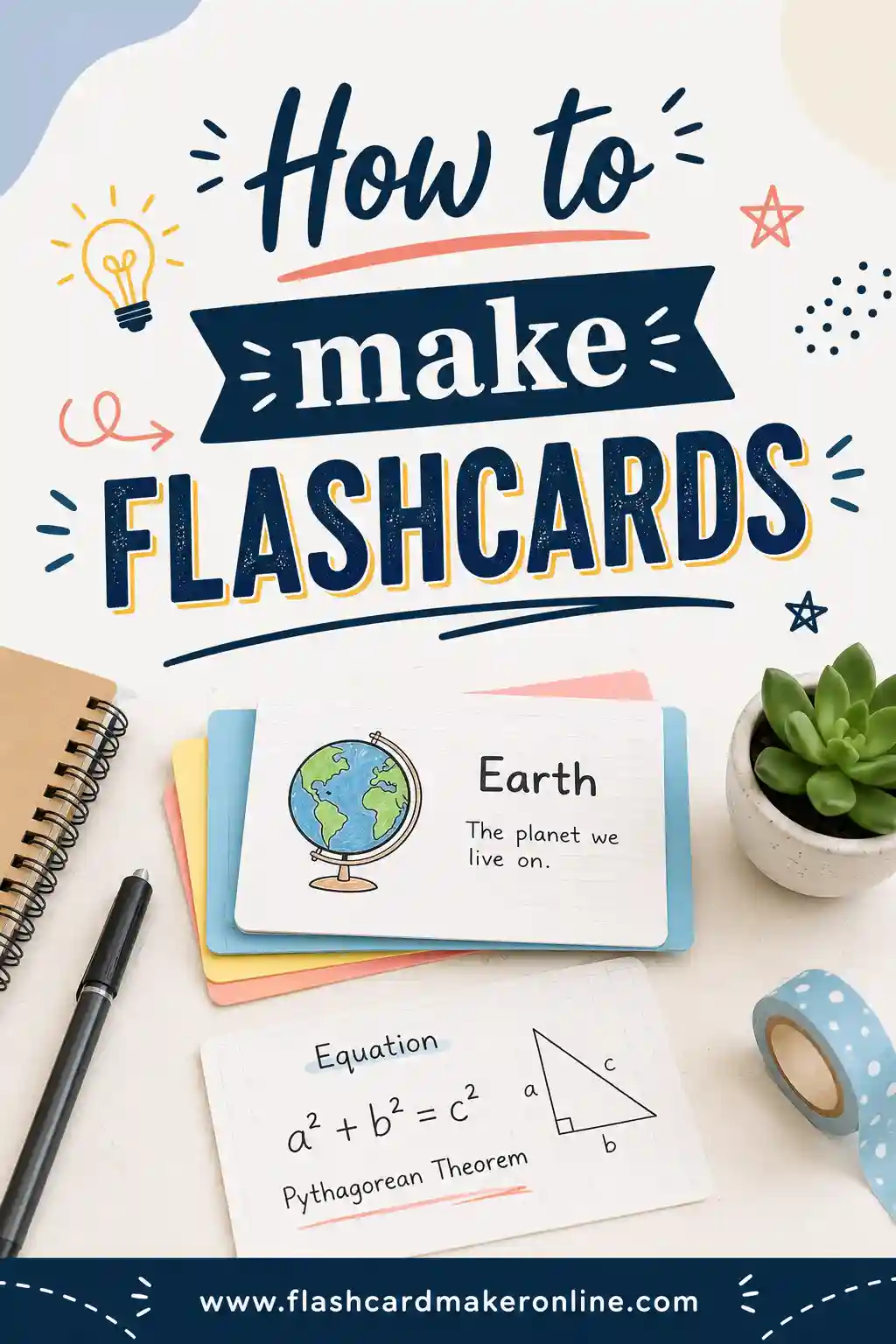
Good studying starts with good cards. Keep each card to one idea, write a short prompt on the front, and put a clear answer (in your own words) on the back. Avoid cards that ask for a long list, those are really several cards in disguise.
How Long and How Often to Study
You don't need marathon sessions. You need regular ones.
| Goal | Session length | How often |
|---|---|---|
| Light review | 10 min | A few times a week |
| Steady learning | 15–20 min | Daily |
| Exam prep | 25–40 min | Daily, more as the date nears |
| Maintenance | 10 min | Weekly |
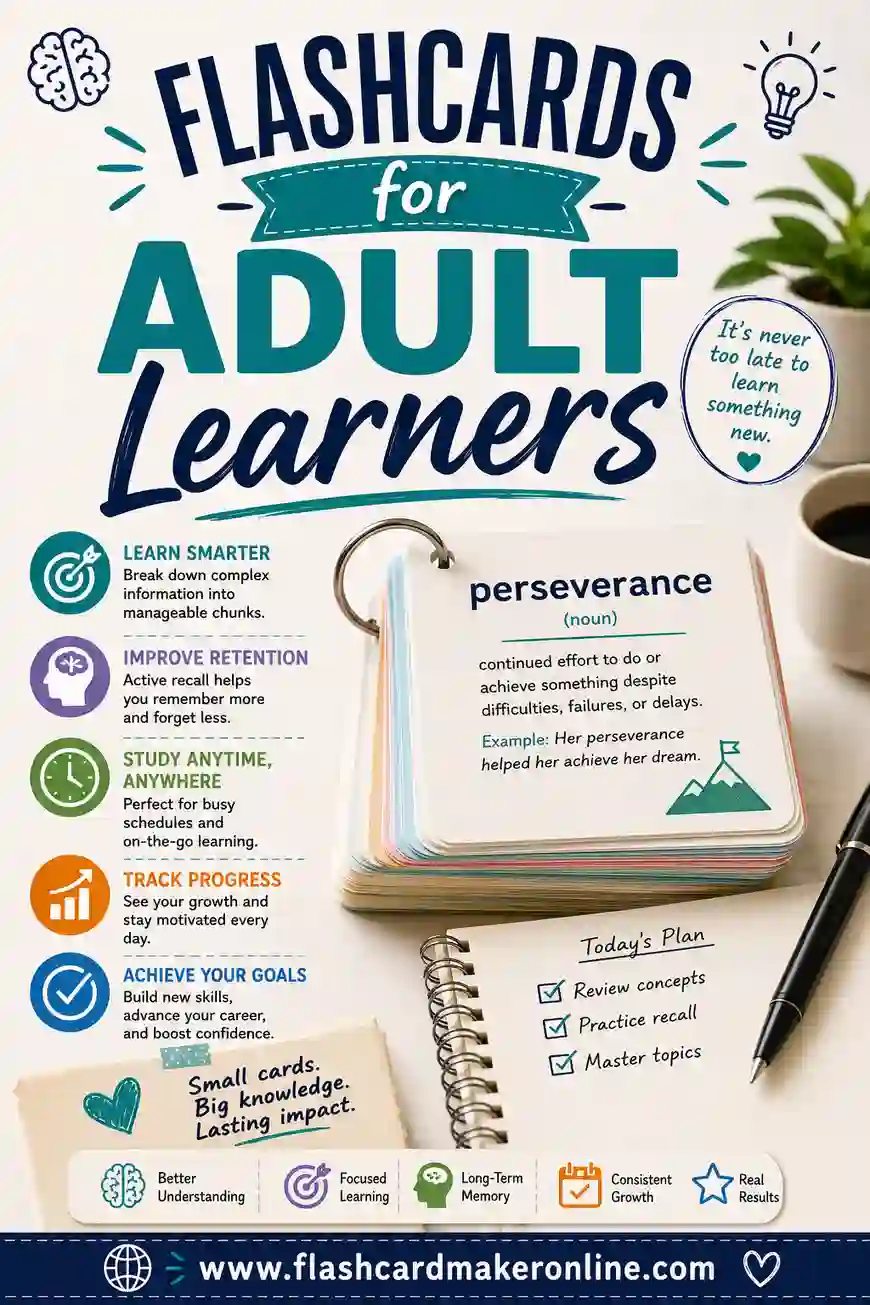
Daily short sessions almost always beat occasional long ones. Consistency is the whole game. If you're an adult fitting this around work, our flashcards for adult learners guide has routines built for tight schedules.
Digital vs. Paper: Which to Use
Both work, and the best choice depends on the moment.
Digital cards are perfect for quick reviews anywhere, easy to shuffle, and simple to update. The risk is the distractions that live on the same device.
Paper cards are great for focused study, hands-on sorting (hello, Leitner boxes), and quizzing with a partner. They keep your phone out of the picture.
The smart move is to use both. Build your deck once in the flashcard maker, review on screen during the week, and print a stack for distraction-free, deep-focus sessions.
How to Write Cards Worth Studying
Even a perfect study method falls flat with bad cards. The quality of your deck sets the ceiling on how well you can learn. A few rules turn a weak card into a strong one.
- One idea per card. If the back lists three things, that's three cards hiding in one. Split them. A single fact is easy to recall; a paragraph isn't.
- Keep the prompt short and specific. "Explain World War II" is hopeless. "What event pulled the U.S. into WWII?" has one clear answer you can actually retrieve.
- Answer in your own words. Copying the textbook gives you a definition you can't recall under pressure. Reword it so it makes sense to you.
- Add a hint, not the answer. A small cue on the front (a category, a first letter) can help without doing the recalling for you.
- Use images where they help. Pairing a word with a picture, called dual coding, gives your brain two routes to the same memory.
- Make it two-way when it fits. For vocabulary, drill both directions: term to definition, then definition to term. You'll know it cold from either side.
Spend a little extra care writing each card and every study session afterward pays off more. Good cards are the quiet half of studying well.
Adapt Your Studying to the Subject
The core loop (recall, check, sort, space) works everywhere, but a few tweaks help for different kinds of material.
Vocabulary and languages
Drill both directions and say answers out loud, especially for pronunciation. Add an example sentence to the back so you learn the word in context, not in isolation. These subjects reward sheer volume of short, frequent reviews.
Formulas and math
Don't just memorize the formula, add a card that asks when to use it. Understanding the trigger matters as much as the formula itself. Write out the steps by hand as you recall, rather than just reciting.
Dates, events, and timelines
Pair each fact with a one-line "why it mattered." Printed cards are perfect here, you can lay them out in order and physically build the timeline. Sequence becomes its own memory aid.
Concepts and definitions
Use the Feynman idea: try to explain the concept in plain words before you flip. If you can teach it simply, you know it. If you stumble, that's the card to keep in rotation.
Tailor the card style to the material and the same study loop works even harder for you.
Frequently Asked Questions
What's the right way to study with flashcards?
Look at the prompt, try to recall the answer before flipping, then check. Sort each card by how well you knew it, review the hard ones more often, and space out your reviews over days. The key habit is recalling the answer first, not just reading both sides.
How many flashcards should I study at once?
A focused session of 15 to 30 cards works well for most people. If you have a large deck, break it into smaller batches and rotate through them across days rather than trying to review everything in one sitting. Quality of recall beats raw volume.
How does spaced repetition work with flashcards?
You review each card at growing intervals, right before you'd forget it. Cards you know get reviewed less often; cards you miss come back sooner. The Leitner system does this by hand with boxes, and our spaced repetition explained guide covers the full method.
Should I make my own flashcards or use ready-made ones?
Making your own is usually better because the act of creating cards is itself a form of studying, and you can word them in a way that makes sense to you. Ready-made decks are a fine shortcut for big standardized subjects. A free flashcard maker lets you do both.
Are paper or digital flashcards better for studying?
Both work. Digital cards are best for quick reviews anywhere and easy updates; paper cards are better for focused study, hands-on sorting, and quizzing with a partner. Many people build a deck once and use both, studying on screen and printing a set for deep sessions.
Why do I forget cards right after studying them?
Usually because you read the answer instead of recalling it, or because you studied once and never reviewed again. Memory fades fast without repetition, that's the forgetting curve at work. Fix it by always recalling before you flip, and by spacing reviews over several days so each card gets revisited just before you'd forget it.
How do I know when I've truly mastered a card?
Mastery means you recall the answer quickly, correctly, and without hesitation, several times across different days. A card you got right once isn't mastered; a card you nail instantly a week later is. Once a card hits that bar, retire it from your active pile so you spend time on weaker spots.
Ready to Start Studying?
The method is simple: recall before you flip, sort by difficulty, and space your reviews over time. Do that consistently and flashcards become one of the most efficient ways to learn anything. Grab the sample deck above, open the free flashcard maker, and build your first deck in minutes, then flip through it on screen or print a set for the Leitner box. Pick one subject and run your first session today.