Flashcards for Vocabulary Building: Learn Words That Stick
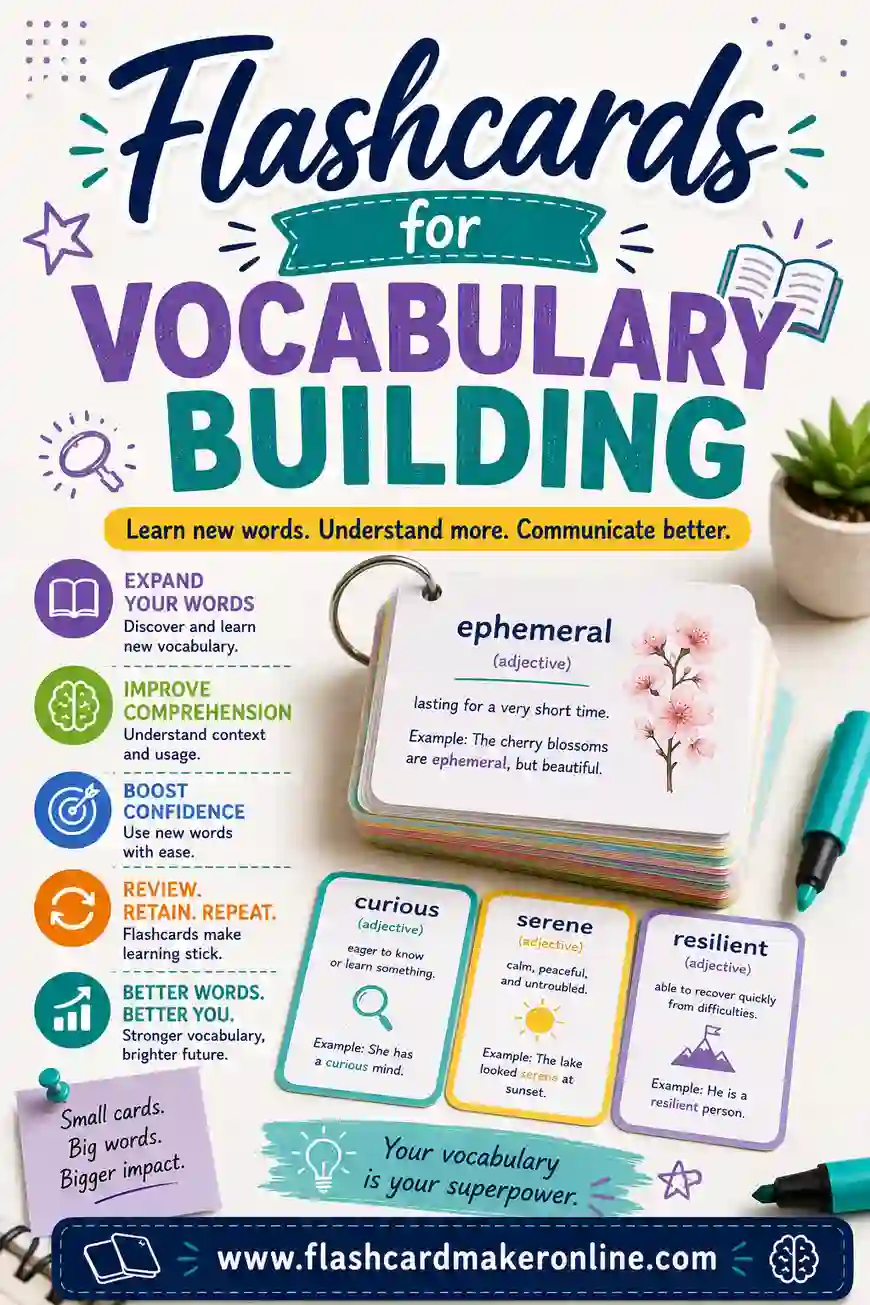
Flashcards for vocabulary building are two-sided cards with a word on the front and its meaning on the back, designed so you quiz yourself instead of just rereading a list. They work because they tap into active recall and spaced repetition — you pull the meaning out of memory rather than letting your eyes glide over it, and you see each word right before you'd forget it. The fastest way to start is to make your own deck with a free flashcard maker so every card holds a word you actually want to learn.
Want to grow your vocabulary right now? Open the free flashcard maker, type a new word on the front and its definition on the back, and you've got a deck you can flip on your phone or print for your desk. No sign-up, no app to download, no fee.
Why Flashcards Beat Reading a Word List
You've probably tried it: read a vocabulary list, nod along, then forget half of it by lunch. Reading feels like learning, but it's passive. Your brain doesn't have to work, so the words don't stick.
Flashcards flip that on its head. When you see "benevolent" and have to dig for "kind and generous," your brain does the work of retrieving the answer. That effort — the small struggle before the answer comes — is what burns the word into memory.
Two ideas do the heavy lifting:
- Active recall. Forcing yourself to remember the meaning builds a far stronger memory than rereading it. The harder the pull, the deeper it sets.
- Spaced repetition. New words come up often at first, then less as they stick. You spend your time on words you're about to forget instead of ones you already know cold.
Put those together and you can learn hundreds of words without endless re-reading. That's why flashcards have been a go-to for students, writers, and test-takers for generations.
What to Put on a Vocabulary Flashcard
The basic setup is word on the front, meaning on the back. But a few smart additions make each card much more powerful.
- Add a short definition, not a paragraph. Keep the back simple — a phrase you can recall, not a dictionary entry.
- Write a sample sentence. A word in context sticks better and shows you how it's actually used. "Her candid review spared no one" beats a bare definition.
- Note the part of speech. Knowing "verbose" is an adjective helps you slot it into your own sentences.
- Include a synonym or two. Linking a new word to ones you already know gives your memory more handles to grab.
- One word per card. Don't cram a whole list onto one card — that defeats the point of self-testing.
A Sample Vocabulary Deck (Copy & Adapt)
Here's a ready-made starter deck of useful, everyday-strong words. Drop these into the flashcard maker and keep adding the words you meet in your own reading. The front is the word; the back is a plain-English meaning.
| Term (Front) | Definition (Back) |
|---|---|
| benevolent | kind and generous |
| candid | honest and direct |
| eloquent | fluent and persuasive in speech |
| frugal | careful with money |
| lucid | clear and easy to understand |
| resilient | quick to recover from difficulty |
| tenacious | holding firmly to a goal |
| verbose | using more words than needed |
| meticulous | very careful about details |
| ambiguous | open to more than one meaning |
| gregarious | sociable and outgoing |
| pragmatic | practical rather than idealistic |
| diligent | hardworking and careful |
| skeptical | doubtful, not easily convinced |
| nuanced | showing subtle differences |
| concise | short and to the point |
| adamant | firm and unwilling to change |
| arbitrary | based on whim, not reason |
| candor | open honesty |
| empathy | understanding another's feelings |
| novice | a beginner |
| obsolete | no longer in use |
| spontaneous | done on impulse |
| trivial | of little importance |
That's 24 cards to start. The real growth comes when you build a deck from words you actually run into — in books, articles, and conversations.
How to Study Vocabulary Flashcards the Right Way
Owning a deck isn't enough. How you review it decides how fast your vocabulary grows.
- Review a little every day. Ten focused minutes daily beats an hour-long cram once a week. Spaced repetition only works if you show up.
- Say the word and use it. Speak the meaning aloud, then make a quick sentence. Using the word locks it in.
- Sort into two piles. Keep a "got it" stack and a "review again" stack. Spend your energy on the second one.
- Test recall, not recognition. Cover the back and force the answer out. Don't peek until you've tried.
- Retire mastered words. Once a word is automatic, pull it from active rotation so you focus on new material.
A weekly study rhythm
| Day | Focus |
|---|---|
| Monday | Add 10–15 new words from your reading |
| Tuesday–Thursday | Review due cards + add a few new ones |
| Friday | Test only your "review again" pile |
| Weekend | Mixed review; write sentences using new words |
Where to Find Words Worth Learning
The best vocabulary deck isn't a generic word list — it's built from your own life. A few rich sources:
- Books and articles. Every time you hit a word you can't quite define, jot it down and card it later. This is the single best source.
- Podcasts and shows. Spoken language surfaces words you might skim past in print.
- Word-of-the-day lists. A gentle daily trickle of new words, perfect for feeding your deck.
- Test prep lists. If you're studying for a big exam, those word lists are gold for a focused deck.
- Your own writing. Notice a word you keep wanting but can't recall? That's a perfect card.
Building a deck from words you genuinely meet means you're learning vocabulary you'll actually use — not trivia you'll forget.
Memory Tricks to Make Words Stick
Flashcards do most of the work, but a few simple tricks make each word far easier to recall. Build them right into your cards.
- Picture the word. For "gregarious," imagine a friend who talks to everyone at a party. A mental image is far stickier than a definition.
- Use a sound-alike hook. "Frugal" sounds a bit like "frugal Fred" who saves every penny. Goofy connections stick.
- Group related words. Learn "concise," "verbose," and "eloquent" together as a set about how people speak, and they reinforce each other.
- Write your own sentence. A word in a sentence you invented sticks better than one you copied. Bonus points if it's about your own life.
- Connect to a word you know. Linking "benevolent" to "benefit" gives your brain a familiar anchor.
The aim isn't to memorize words in a vacuum — it's to make each one easy to grab the moment you need it.
Digital vs. Printed Vocabulary Flashcards
You don't have to pick one. Most learners get the best of both.
Digital cards travel with you and are perfect for quick spaced-repetition review on your phone while you wait in line. You can fix a typo or tweak a definition instantly.
Printed cards are great for screen-free study, for spreading out on a table to sort piles, and for sticking on a wall where you'll see them. With a free flashcard maker you build the deck once and do both — flip on your phone, then print a set for hands-on review.
Printing tips
- Print double-sided so the definition lands on the back of each word.
- Use cardstock for cards that survive daily handling.
- Print small (6–8 per page) for a pocket-sized review stack.
- Make a "wall of words" set to tape near your desk.
Common Vocabulary-Building Mistakes to Avoid
A few habits quietly slow people down. Steer clear of these:
- Learning words in isolation. A word with no example sentence is hard to use. Always add context.
- Only studying recognition. If you can recognize "lucid" but can't pull it up when writing, you've done half the job. Practice recall.
- Letting reviews pile up. Skip a week and you face a daunting backlog. A little daily upkeep keeps it light.
- Cramming huge lists. Fifteen words a day, reviewed steadily, beats a hundred you forget by morning.
- Choosing showy words you'll never use. Learn words you'd actually say or write, not just ones that sound impressive.
Frequently Asked Questions
Do flashcards really help build vocabulary?
Yes. Flashcards are one of the most effective vocabulary tools because they combine active recall and spaced repetition — two methods strongly supported by memory research. Together they help you learn and keep far more words than passive reading alone.
How many new words should I learn per day?
For most people, 10–20 new words a day is a sustainable pace that adds up to thousands over a few months. What matters more than the number of new cards is reviewing your existing ones daily so the words actually stick.
What should go on the back of a vocabulary card?
A short, plain-language definition plus a sample sentence is the sweet spot. The sentence shows how the word is used, and a synonym or the part of speech gives your memory extra handles to grab.
Is it better to make my own cards or use a pre-made deck?
Making your own is usually more effective, because writing the card is itself practice and the words match exactly what you're learning. A pre-made deck is a fine starting point — many people use one as a base and add personal cards as they go.
Can I print my vocabulary flashcards?
Yes. Build your deck in the free flashcard maker and print a double-sided set on cardstock. Printed cards are great for screen-free study and for posting where you'll see them every day.
Ready to Build Your Vocabulary Flashcards?
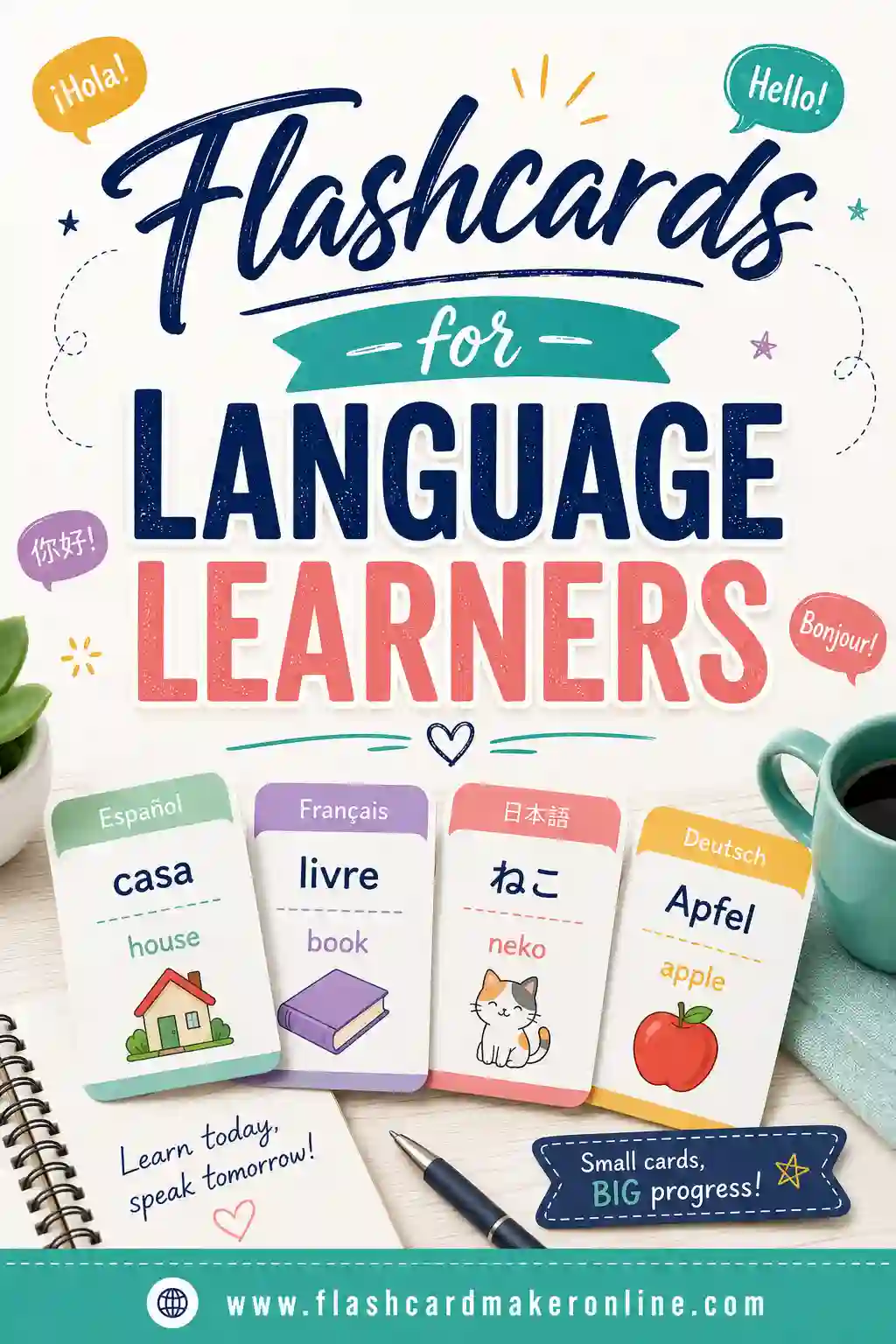
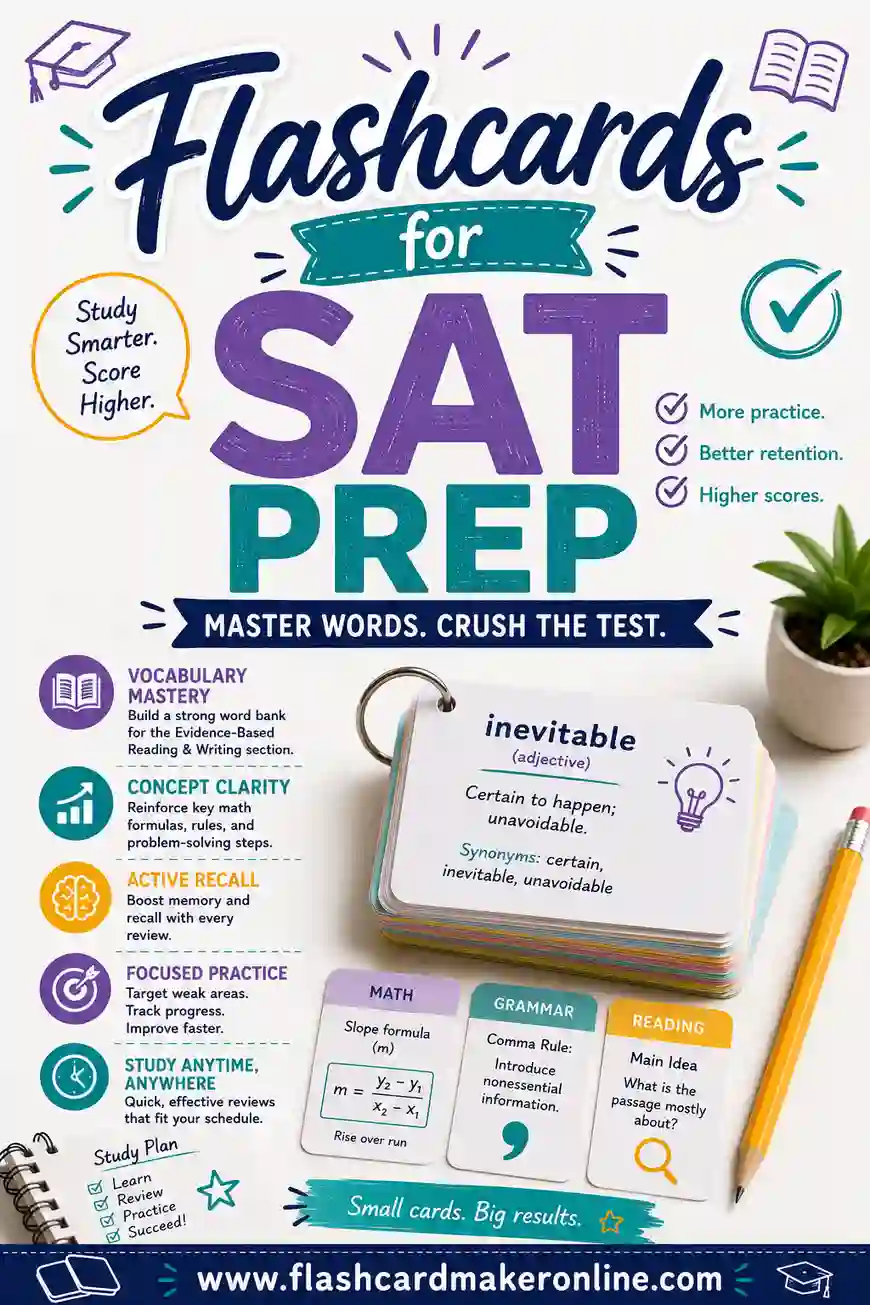
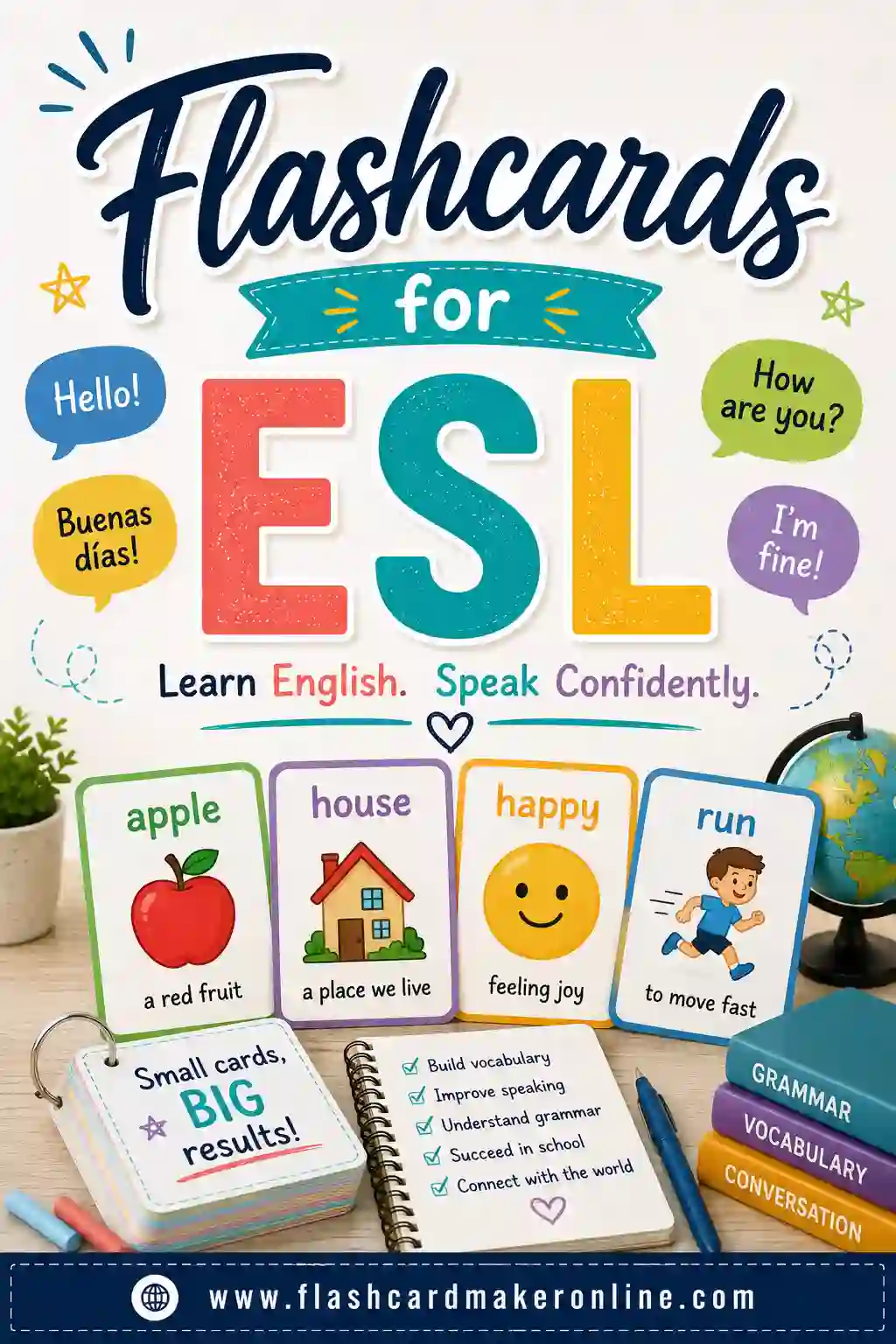
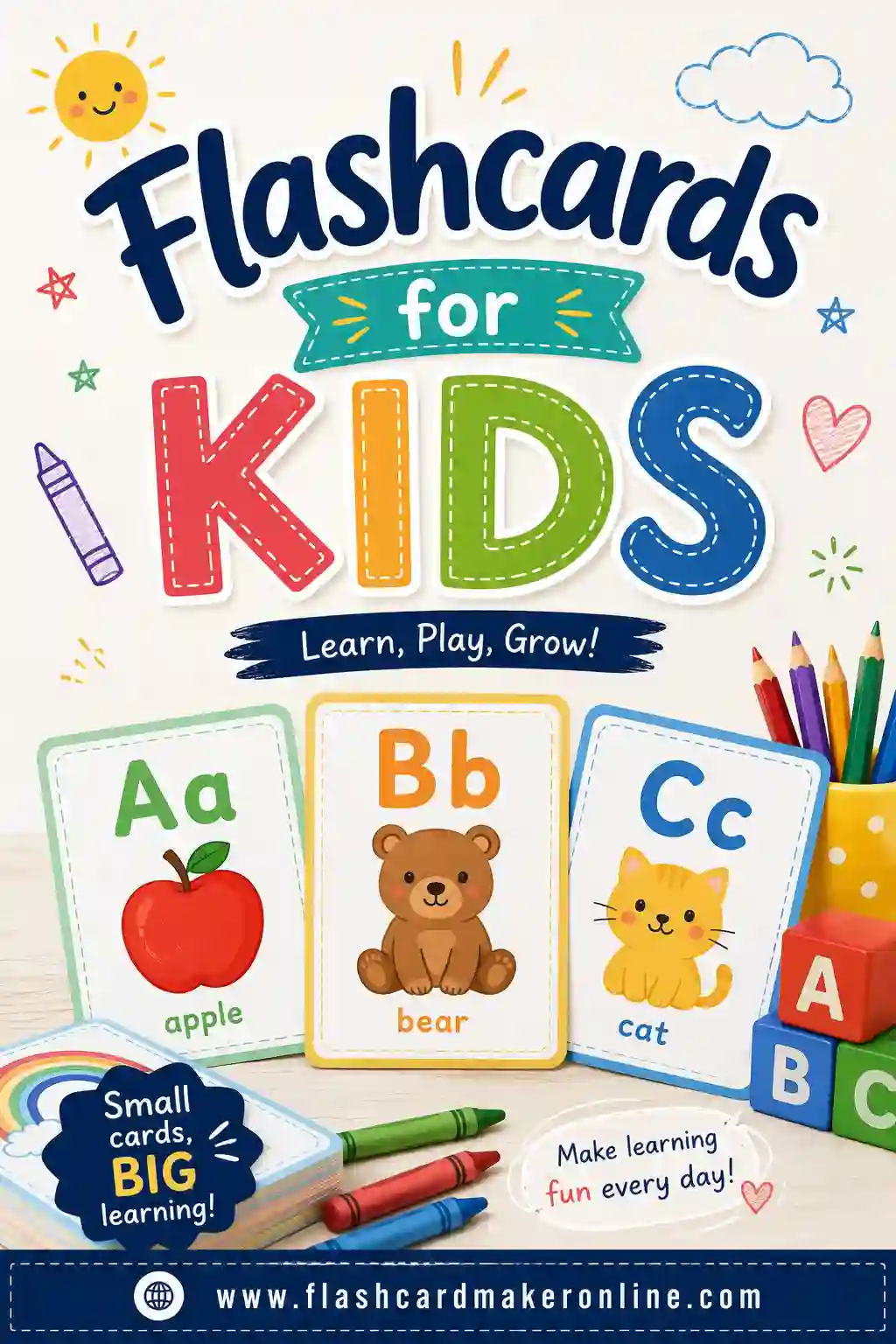
You've got the method, a starter deck, and a study rhythm that works. Now open the free flashcard maker, turn the words you're learning into a stack of cards, and start growing your vocabulary today. It's free, there's no sign-up, and you can flip on your phone or print for hands-on review. Want more ideas? Check out our guides on flashcards for language learners, flashcards for SAT prep, flashcards for ESL, and flashcards for kids. Happy studying — you'll be surprised how fast the words add up.