Hiragana Flash Cards Printable: Free Paper Kana Deck
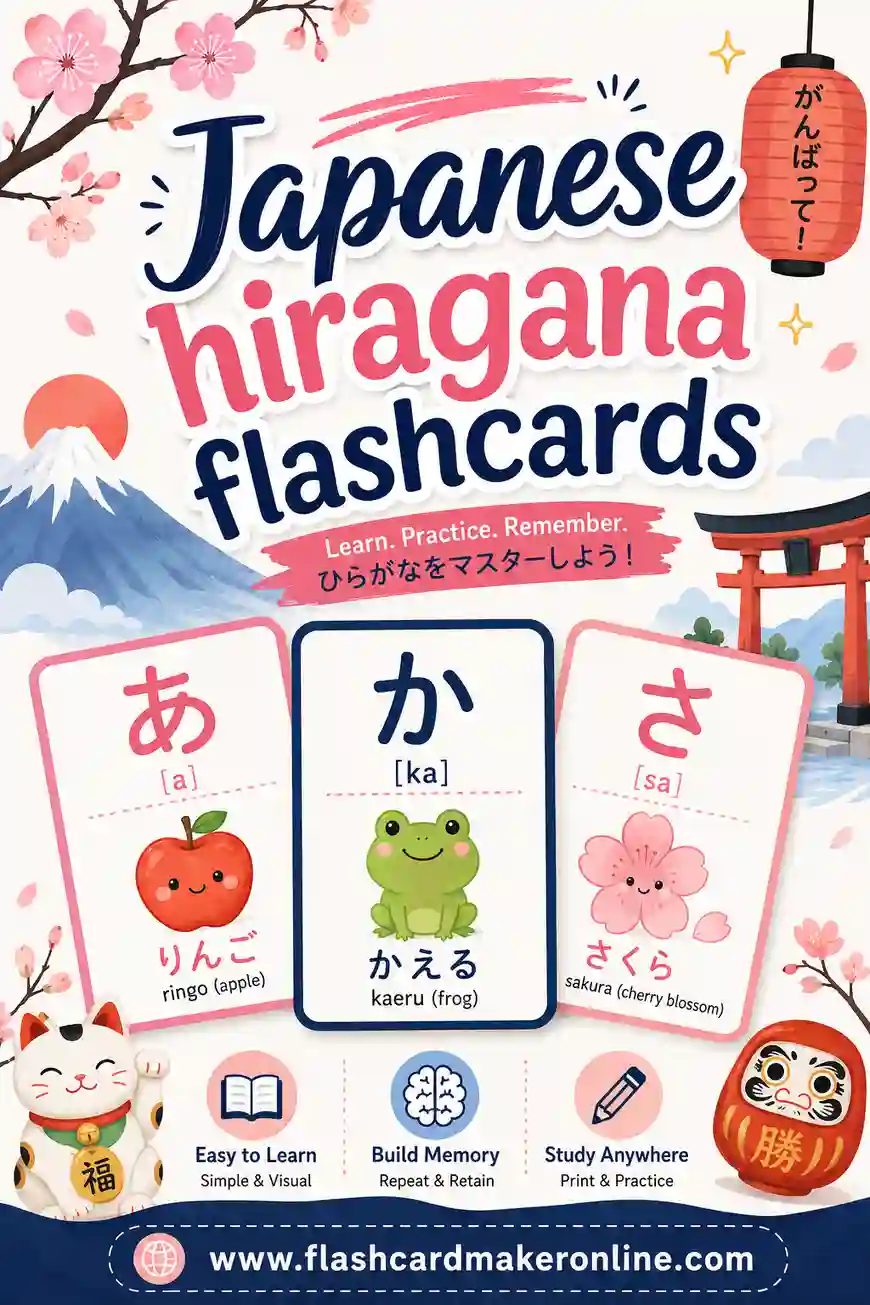
Hiragana flash cards printable at home are paper cards with a Japanese character on the front — あ, か, し — and its reading on the back — a, ka, shi. You look at the kana, say the sound, and flip to check. The fastest way to get a printed deck is a free flashcard maker that turns a pasted character list into clean double-sided cards, sized big enough that every stroke is easy to see.
Want a deck on your desk tonight? Open the free maker, paste the row-by-row starter deck below, choose a card size, and print — or save the whole thing as a PDF from the same dialog. No sign-up, no fee, no squinting at a cramped chart.
What Are Printable Hiragana Flash Cards?
Hiragana is the first Japanese script every learner tackles: 46 basic characters, each standing for one syllable sound. A hiragana flash card holds one character on the front, nice and large, with the romaji reading on the back. See あ, say "a," flip, confirm.
That say-then-flip moment is active recall, and it's what moves a character from "I've seen that squiggle" to instant recognition. Staring at a hiragana chart builds familiarity with the chart — the same character alone on a shuffled card is a different, harder, and far more useful test.
The printable part matters more for kana than for almost any other subject. Hiragana is a written script: your hand needs to learn it alongside your eyes. A paper deck sits next to your notebook, and every flip can end with writing the character once. Apps skip that step; paper invites it.
Why Paper Beats an App for Learning Kana
Plenty of apps drill hiragana, and they're fine for the bus. But a printed deck has four quiet advantages:
- Writing is built in. Flip, check, then copy the character into a notebook. Learners who write their kana while drilling learn the look-alikes (ね, れ, わ) dramatically faster, because the hand notices differences the eye skims past.
- Physical row sorting. Hiragana is organized in rows — あいうえお, かきくけこ. With paper you literally deal out today's row, shuffle yesterday's in, and set the mastered pile aside. The structure of the script becomes the structure of the deck.
- No romaji crutch on screen. Apps often flash the romaji everywhere. A printed card shows the kana alone until you flip — the discipline recognition requires.
- Big characters. On a Jumbo or Big card, every stroke of ぬ is clearly visible. That detail is exactly what separates it from め.
Row-by-Row Starter Deck (Copy & Paste)
Don't print all 46 characters on day one. Hiragana is learned row by row, so here are the first three rows plus a few high-frequency extras — 20 cards, the perfect first week. Copy them into the flashcard maker.
| Front | Back |
|---|---|
| あ | a |
| い | i |
| う | u |
| え | e |
| お | o |
| か | ka |
| き | ki |
| く | ku |
| け | ke |
| こ | ko |
| さ | sa |
| し | shi |
| す | su |
| せ | se |
| そ | so |
| ん | n |
| の | no |
| と | to |
| は | ha (wa as a particle) |
| で | de |
Those last five appear constantly in real Japanese, so meeting them early pays off. When these 20 are solid, add the た, な, and は rows, and keep going — the full chart, learning order, and look-alike guide live in our Japanese hiragana flashcards article.
How to Make Printable Hiragana Cards in 4 Steps
- Open the tool. Go to the free flashcard maker in any browser.
- Paste a row or three. Character on the front, romaji on the back. Add the next row only when the current one is fast.
- Flip through once on screen. A proofread pass — and your first recognition drill.
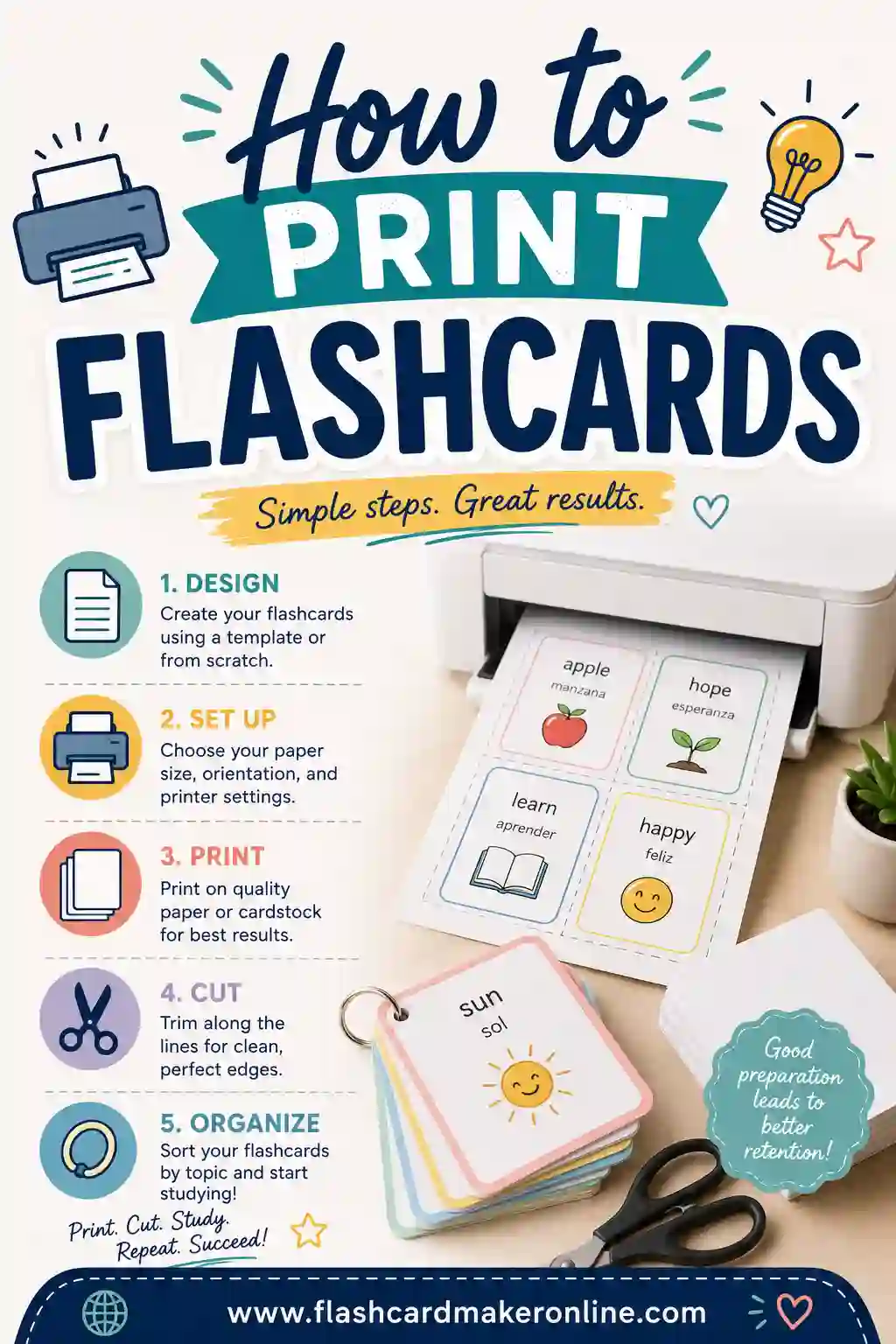
- Print double-sided and cut. Pick a card size, print on cardstock, and cut along the borders. Print one test page first so the readings line up behind the right kana.
The deck saves in your browser automatically, so extending it row by row over the coming weeks takes seconds each time.
A Study Routine That Makes Kana Stick
Drill in both directions
Kana-to-sound (see し, say "shi") builds reading. Sound-to-kana (hear "shi," write し) builds writing and is noticeably harder. Do the first with the fronts, the second by flipping the deck — same cards, both skills.
Write every miss
When you flip and discover you were wrong, write the character three times before moving on. The pen is the strongest memory tool in kana study — misses become your handwriting practice list automatically.
Quarantine the look-alikes
A handful of pairs cause most errors: ね/れ/わ, ぬ/め, る/ろ, さ/ち, は/ほ. When two characters start blurring, pull them into their own mini-pile and drill them side by side, writing each. Seeing them together is what finally splits them apart.
Shuffle ruthlessly
The chart order (あいうえお…) will answer for you if you let it. Once a row is familiar, shuffle it into everything you've learned so each character stands alone.
Fifteen minutes daily, in two sittings
Kana rewards frequency. A morning flip-through and an evening flip-plus-write session, a week or two per batch of rows, and the whole script falls in about a month.
Which Card Size Should You Print?
Stroke detail decides this one.
- Jumbo — 2 per page. Characters large enough to study stroke by stroke — the best choice for your first rows and for tricky look-alikes. Also great as wall cards above your desk.
- Big — 4 per page. The comfortable default: clear strokes, a stack that handles daily shuffling, and the whole basic set stays portable.
- Standard — 8 per page. Compact review deck for when you're past recognition and into speed — all 46 basic kana in one rubber-banded stack for the commute.
A pattern that works well: current rows in Jumbo or Big, mastered rows reprinted in Standard for weekly review.
Printing Tips for a Deck That Survives the Month
- Cardstock (65 lb). Daily shuffling for four to six weeks is exactly the workload paper fails at.
- Test the duplex alignment. One test page confirms "ka" lands behind か before you print the set.
- No duplex printer? Use the cut-out grid layout — kana and reading print side by side, and each cell folds into a two-sided card.
- Save the PDF. Choose "Save as PDF" in the print dialog and keep a hiragana flash cards printable file for reprints — handy when you want a fresh, unbent review deck later.
- Band by row. Keep learned rows and current rows in separate bundles so each session starts instantly.
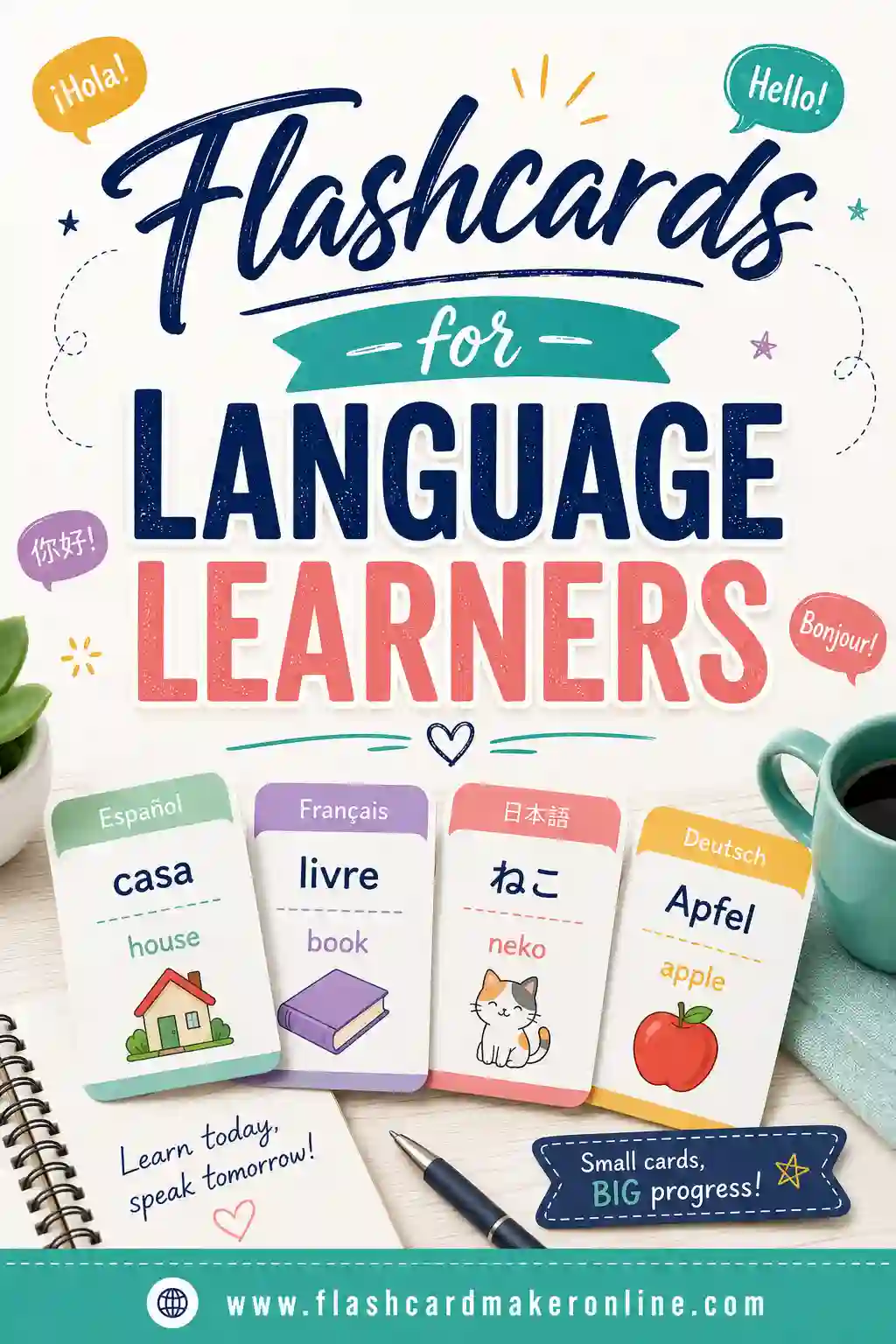
Studying Japanese more broadly? See our guides to flashcards for language learners and how to print flashcards cleanly every time.
Common Mistakes to Avoid
- Printing all 46 at once. A tower of unfamiliar kana is demoralizing. Rows in, rows mastered, rows added — that's the rhythm.
- Studying recognition only. If you never write, ぬ and め will haunt you. Every flip session should end with a few minutes of pen work.
- Leaning on romaji too long. The reading belongs on the back of the card and nowhere else. The goal is kana that need no translation step.
- Ignoring look-alike pairs until they hurt. The first ね/れ confusion is your cue to build the side-by-side mini-pile — not three weeks later.
- Chart-order drilling forever. Comfortable, and mostly fake. Shuffled decks tell the truth about what you know.
Frequently Asked Questions
Are these hiragana flash cards printable for free?
Yes. You build the deck in the free maker and print it at no cost — no sign-up, no watermark, and unlimited reprints as your deck grows row by row.
Can I save the deck as a PDF?
Yes. Click print and choose "Save as PDF" as the destination. You'll get a clean file at your chosen card size to store, print at a shop, or share with a study partner.
How long does it take to learn hiragana with printed cards?
With 15 focused minutes a day — flipping plus writing — most learners read all 46 basic characters comfortably in three to five weeks. The write-every-miss habit is the biggest accelerator.
Should the cards show romaji on the front?
No — romaji belongs on the back only. If the reading is visible alongside the kana, your brain reads the romaji and skips the character, and recognition never develops.
What about dakuten characters and combinations like きゃ?
Add them as new rows once the 46 basics are solid. が, ぱ, きゃ and friends are variations on characters you'll already know, so they come fast. Your deck saves in the browser — extending it takes a minute.
Should I learn hiragana or katakana first?
Hiragana first — it's the backbone of Japanese writing and what beginner textbooks assume. Katakana follows naturally afterward, using exactly the same printed-deck routine.
Ready to Print Your Kana Deck?
Paste the starter rows into the free flashcard maker, print your first 20 cards, and put a pen next to the pile. Fifteen minutes a day, flip and write, row by row — and in a month the squiggles are just... reading. がんばって!