Are Flashcards Effective? The Science Behind Why They Work
Yes, flashcards are one of the most effective study tools we have, and decades of research back it up. They work because they combine two of the most powerful learning techniques known to cognitive science: active recall (pulling answers from memory) and spaced repetition (reviewing over growing intervals). Together these beat rereading, highlighting, and re-watching lectures by a wide margin. The catch is that flashcards only deliver if you use them right — testing yourself, not just flipping through. The easiest way to do that is with a free flashcard maker that lets you flip, shuffle, and space out your reviews.
Let's unpack the actual science — no jargon for its own sake — so you understand why a humble stack of cards outperforms hours of rereading.
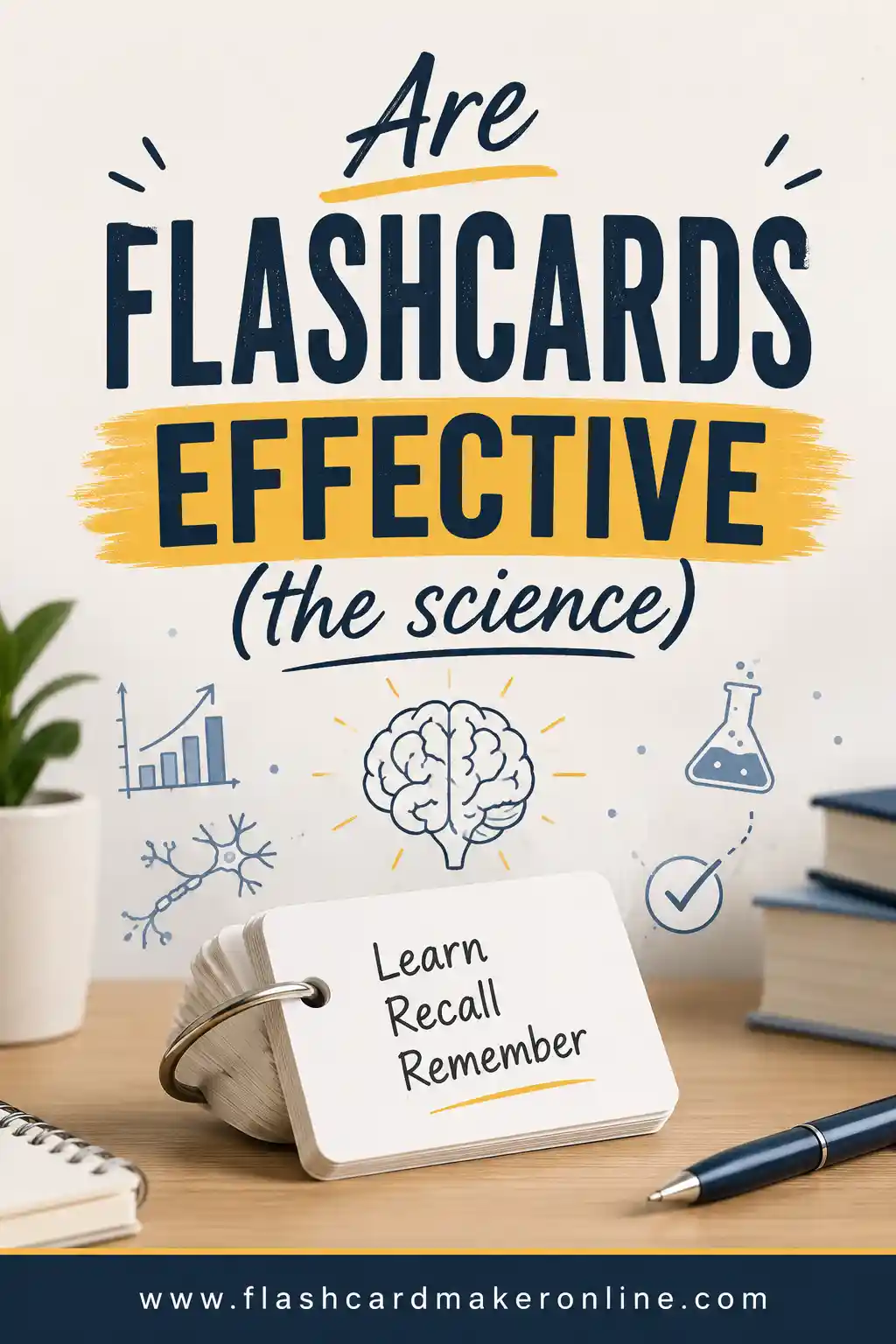
The One-Sentence Reason Flashcards Work
When you try to answer a card before flipping it, you force your brain to retrieve the information — and the act of retrieving is what strengthens the memory. That's it. That's the whole engine.
This is different from what most people do when they "study," which is reread notes or re-watch a video. Reading is input. Retrieval is output. Your brain learns far more from producing an answer than from receiving one again.
Active Recall: The Testing Effect
The single most studied reason flashcards work is the testing effect, sometimes called retrieval practice. The finding, replicated many times, is simple: people who quiz themselves on material remember it dramatically better later than people who spend the same time rereading it.
Here's why it makes sense. Every time you successfully pull a fact out of memory, you reinforce the neural path to that fact. The path gets wider and faster, so next time the answer comes quicker. Rereading skips this entirely — you never practice the actual skill you'll need on the test, which is producing the answer from scratch.
Flashcards are basically a retrieval-practice machine. Front of the card = the question. Your job = answer before flipping. Every card is a tiny self-test, and self-testing is the gold standard.
Why guessing wrong still helps
It feels bad to flip a card and discover you were wrong. But even a failed attempt helps, as long as you then see the correct answer. The struggle to recall — sometimes called a "desirable difficulty" — primes your brain to lock in the right answer when you finally see it. So don't peek early. Let yourself struggle for a few seconds. That effort is the point.
Spaced Repetition: Beating the Forgetting Curve
The second pillar is when you review. Over a century ago, the psychologist Hermann Ebbinghaus mapped the "forgetting curve" — memory drops off steeply after you learn something, then keeps fading. Without review, most of what you learn today is gone within days.
Spaced repetition flattens that curve. Instead of cramming all your reviews into one session, you space them out: review a card today, again in two days, again in a week, again in a month. Each review comes just as you're about to forget, which is the most efficient moment to reinforce a memory.
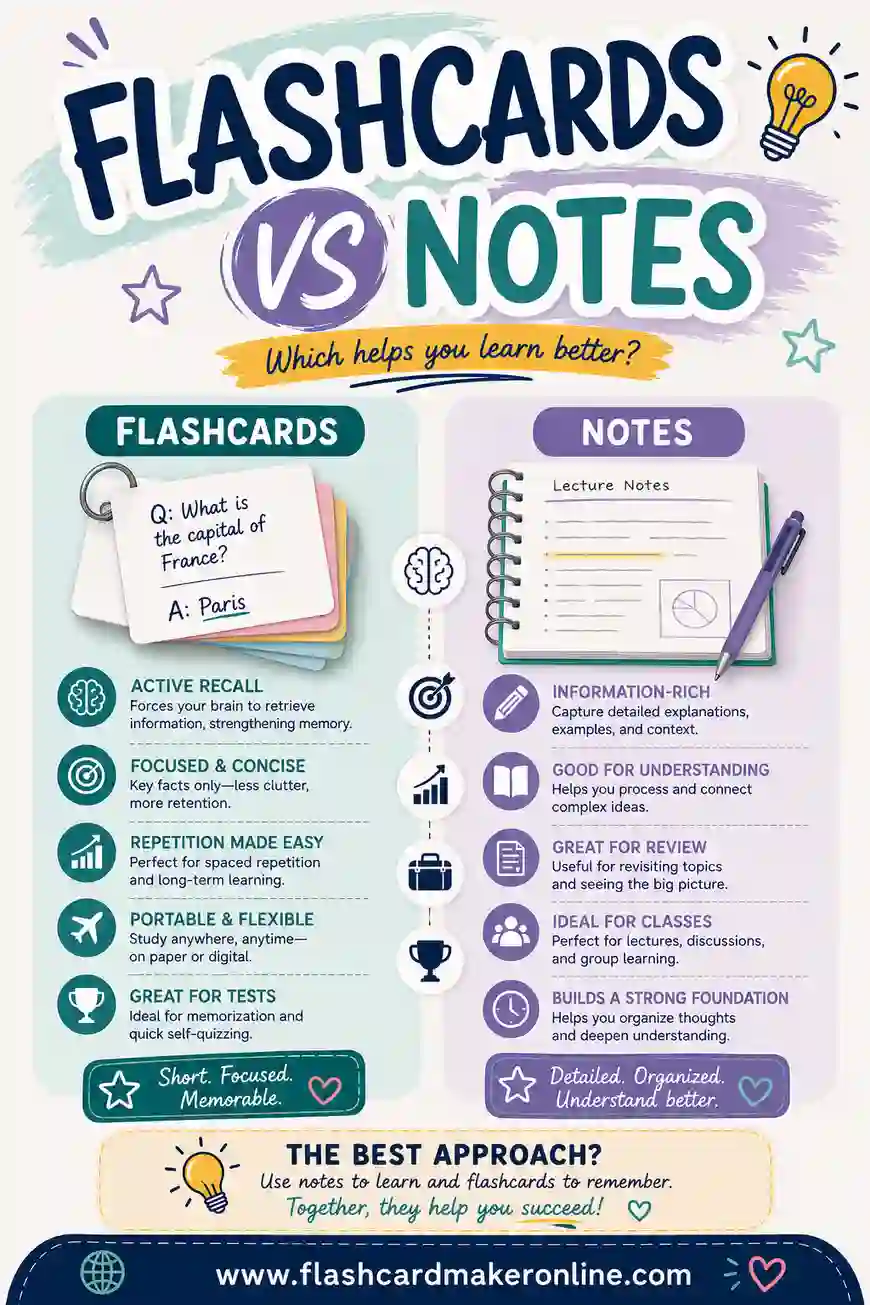
Flashcards are perfect for this because they're modular. You can pull out the cards you know cold and review them rarely, while drilling the tricky ones often. A pile of notes can't do that — you'd have to reread the whole thing every time.
The Leitner system: spacing on paper
You don't need an app to space your reviews. The Leitner system does it with boxes:
- Put all cards in Box 1.
- When you get a card right, promote it to the next box. Get it wrong, send it back to Box 1.
- Review Box 1 often, Box 2 less often, Box 3 rarely.
Cards you know naturally migrate to the "review rarely" pile, and cards you struggle with stay in your face. It's spaced repetition with shoeboxes, and it works.
What the Research Actually Says
A few honest takeaways from the body of learning research:
- Retrieval practice beats restudying across age groups, subjects, and test formats. It's one of the most robust findings in education science.
- Spacing beats cramming for long-term retention. Cramming can get you through tomorrow's quiz, but the material evaporates fast.
- Combining the two — spaced retrieval practice — is more effective than either alone. Flashcards naturally combine them.
- Effort matters. The harder (but still successful) the recall, the stronger the memory. Easy, mindless flipping does little.
The research also flags a trap, which we'll cover next.
Why Flashcards Sometimes "Don't Work"
Plenty of people say flashcards didn't help them. Usually it's one of these mistakes, not the cards themselves.
- Flipping too fast. If you read the front and immediately flip without trying to answer, you've turned a self-test into passive rereading. No retrieval, no benefit.
- Recognizing instead of recalling. Seeing the answer and thinking "yeah, I knew that" is recognition, which is much weaker than producing the answer cold. Cover the back and actually say or write your answer first.
- Cramming all cards in one sitting. Without spacing, you'll forget most of it. Spread reviews across days.
- Cards that are too vague or too crammed. A card with a paragraph on the back tests nothing cleanly. One clear idea per card.
- Memorizing card order. If you always review in the same order, you start cueing off position instead of the term. Shuffle.
Fix these and flashcards work for almost everyone. The free flashcard maker helps with the last two automatically — it shuffles for you and keeps cards to one clean idea.
How to Make Flashcards That Actually Stick
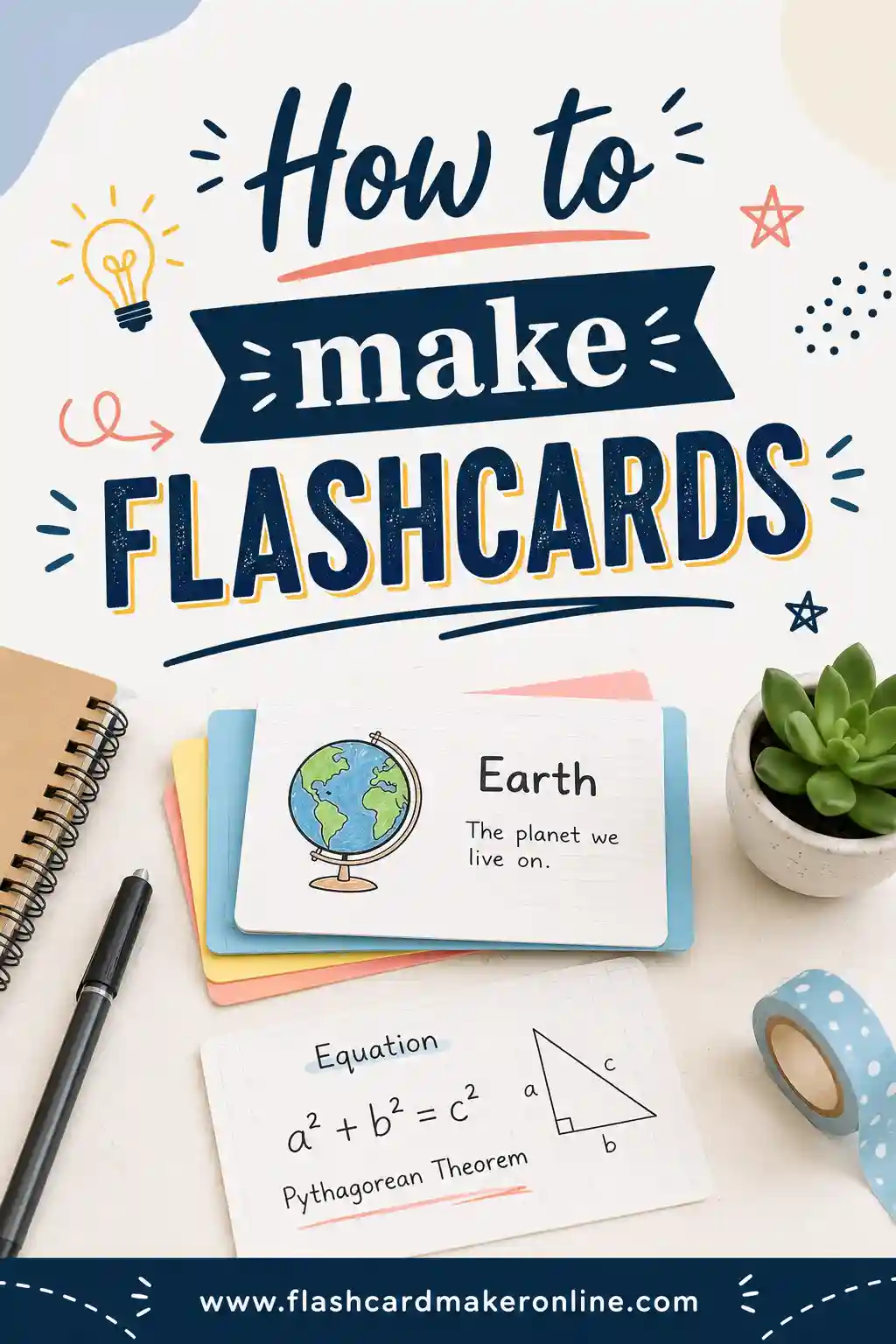
Science-backed cards share a few traits. Here's a sample deck on memory science itself, formatted the right way — one idea per card, clean question and answer.
| Term | Definition |
|---|---|
| Active recall | Retrieving an answer from memory rather than rereading |
| Spaced repetition | Reviewing at increasing intervals over time |
| Testing effect | Quizzing yourself produces more learning than restudying |
| Forgetting curve | The steep drop in memory over time without review |
| Retrieval practice | Deliberately pulling answers from memory to learn |
| Desirable difficulty | Useful effort during recall that deepens learning |
| Ebbinghaus | Psychologist who first mapped the forgetting curve |
| Leitner system | Sorting cards into boxes by mastery to space reviews |
| Encoding | Getting information into memory in the first place |
| Consolidation | The brain stabilizing a memory, often during sleep |
| Recognition | Identifying the right answer when shown options |
| Recall | Producing the answer with no options provided |
| Interleaving | Mixing topics in one session to boost learning |
| Massed practice | Cramming all study into a single block (less effective) |
| Distributed practice | Spreading study across multiple sessions |
| Fluency illusion | Mistaking familiar material for material you know |
| Cue | A prompt that triggers retrieval of a memory |
| Elaboration | Explaining an idea in your own words to strengthen it |
| Metacognition | Accurately judging how well you know something |
| Overlearning | Continuing practice past the first correct recall |
Use this as a template. Notice the back of each card is short and testable. That's by design.
A Quick Study Routine That Uses the Science
Put it all together with this loop:
| Step | What you do | Why it works |
|---|---|---|
| 1. Make clean cards | One question, one short answer | Easy to retrieve, no clutter |
| 2. Answer before flipping | Say or write your guess | Triggers the testing effect |
| 3. Sort by difficulty | Easy cards aside, hard cards up front | Focuses effort where it counts |
| 4. Space your reviews | Today, +2 days, +1 week | Beats the forgetting curve |
| 5. Shuffle each session | Randomize the order | Stops you cueing off position |
Follow this and you're not just "using flashcards" — you're running two of the most proven techniques in learning science at once.
Frequently Asked Questions
Are flashcards actually effective, or is it a myth?
They're genuinely effective, and the research is strong. Flashcards combine active recall and spaced repetition, two of the best-supported techniques in cognitive science. The key is to test yourself — try to answer before flipping — rather than passively flipping through.
Why are flashcards better than rereading my notes?
Rereading is passive input; your brain recognizes the material but doesn't practice producing it. Flashcards force retrieval, where you pull the answer from memory. That retrieval is what strengthens the memory, which is why self-testing beats rereading in study after study.
How does spaced repetition make flashcards work better?
Spacing your reviews over days and weeks catches each fact just as you're about to forget it, which is the most efficient time to reinforce it. This flattens the forgetting curve and locks information into long-term memory far better than cramming all reviews into one session.
How long should I spend on each flashcard?
Give yourself a few seconds to genuinely try to recall the answer before flipping — that struggle is what builds the memory. Don't flip instantly. But don't agonize for a minute either; if it won't come, check the answer and move on, then revisit that card sooner.
Do digital or paper flashcards work better?
Both work because the science is in the method, not the material. Digital cards make shuffling and spacing easier and travel in your pocket; paper cards suit the Leitner box system and screen-free study. A free online maker lets you flip on screen and print paper cards from the same deck.
How many times do I need to review a card to remember it?
It varies by card and person, but expect several spaced reviews — often three to seven over a couple of weeks — before a fact feels permanent. Easy cards graduate fast; tricky ones need more passes. Spacing and shuffling get you there with fewer total reviews.
Ready to Study the Smart Way?
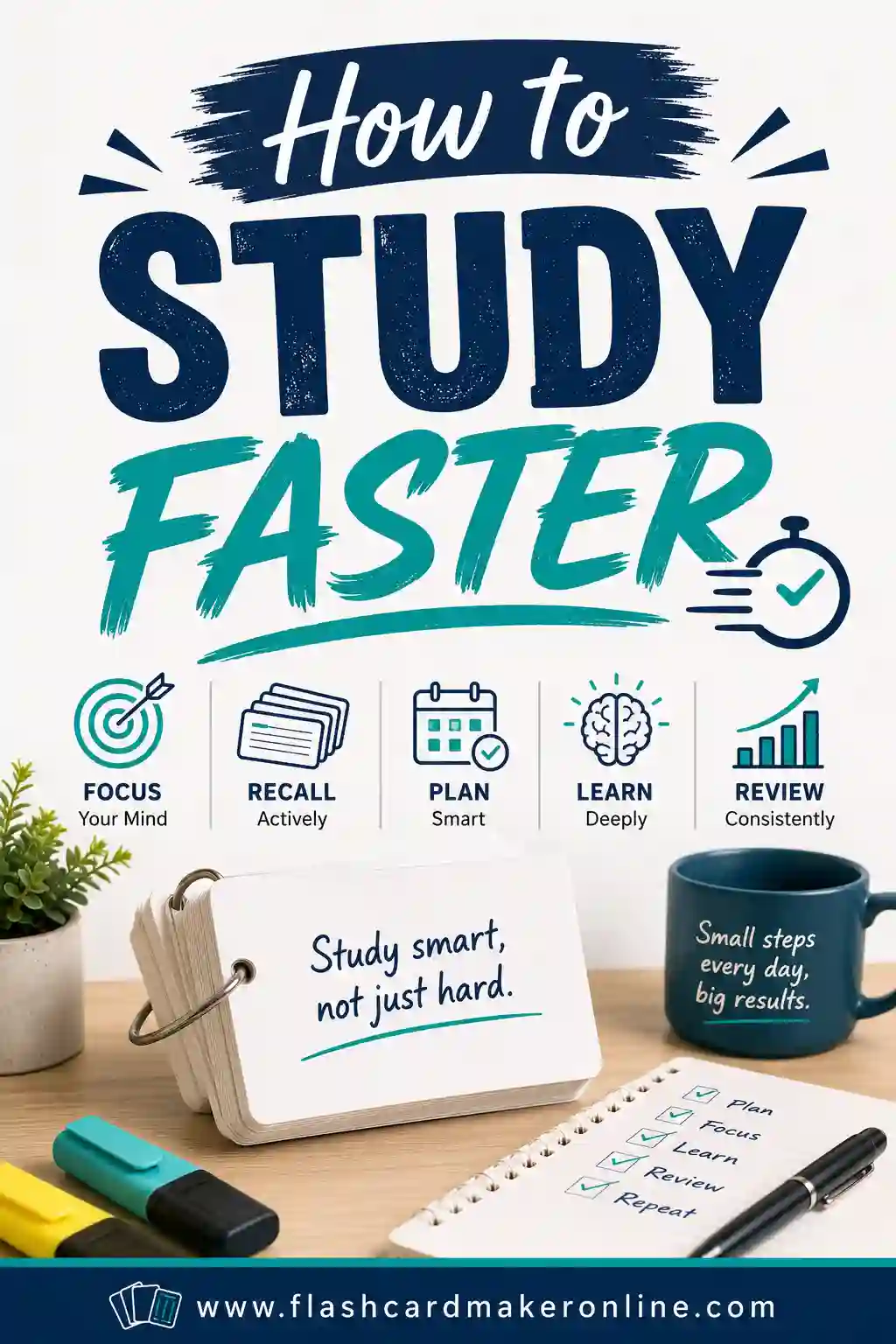
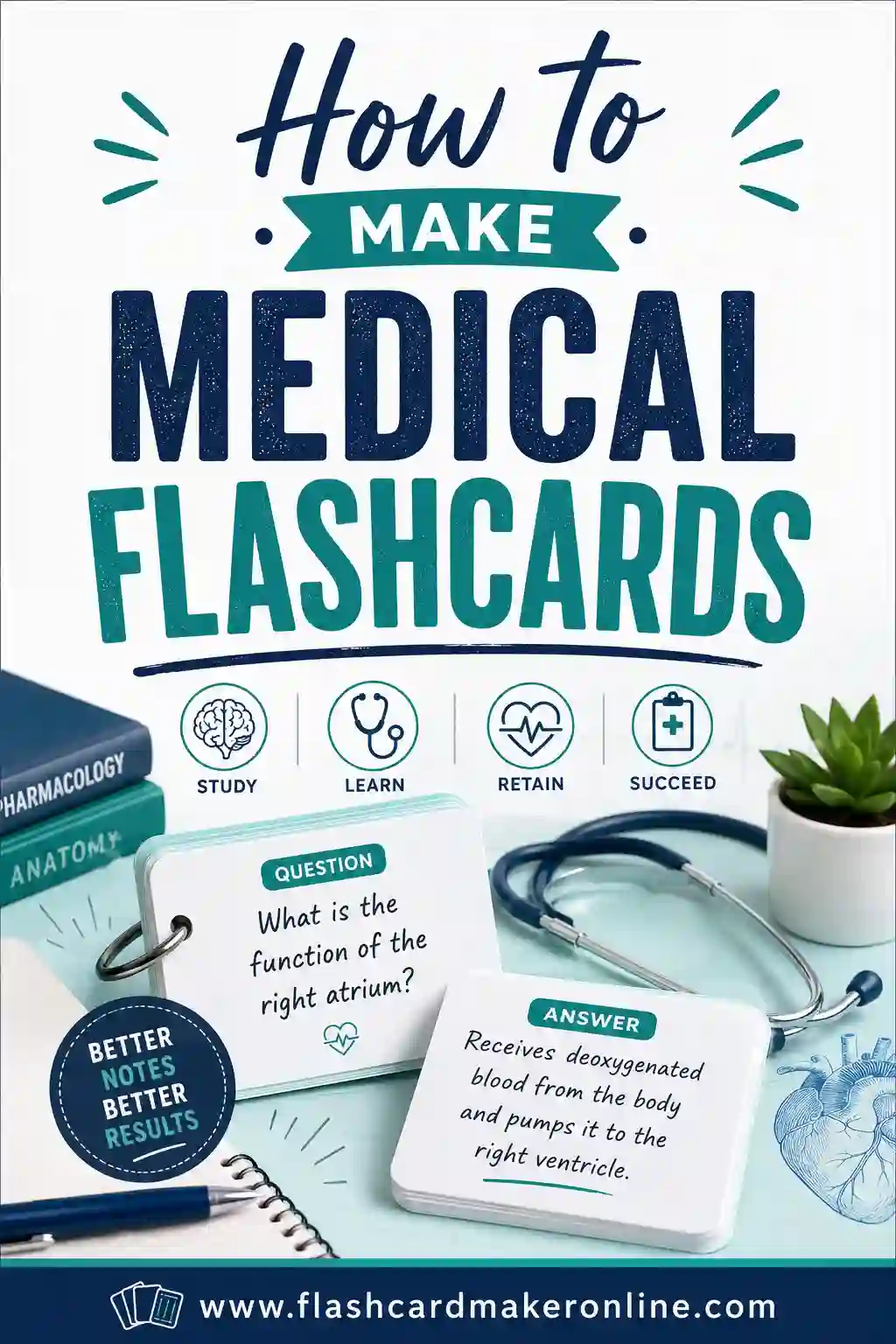
Now you know why flashcards work — active recall plus spaced repetition, two of the most proven tools in learning science. Put it into practice: open the free flashcard maker, build a deck, and test yourself instead of rereading. It's free with no sign-up. To go deeper, compare flashcards vs notes, learn how to study faster, or see how to make medical flashcards if you're in a tough program. Study smarter, not longer.