Handwritten Flashcards vs Digital: When Handwriting Actually Wins
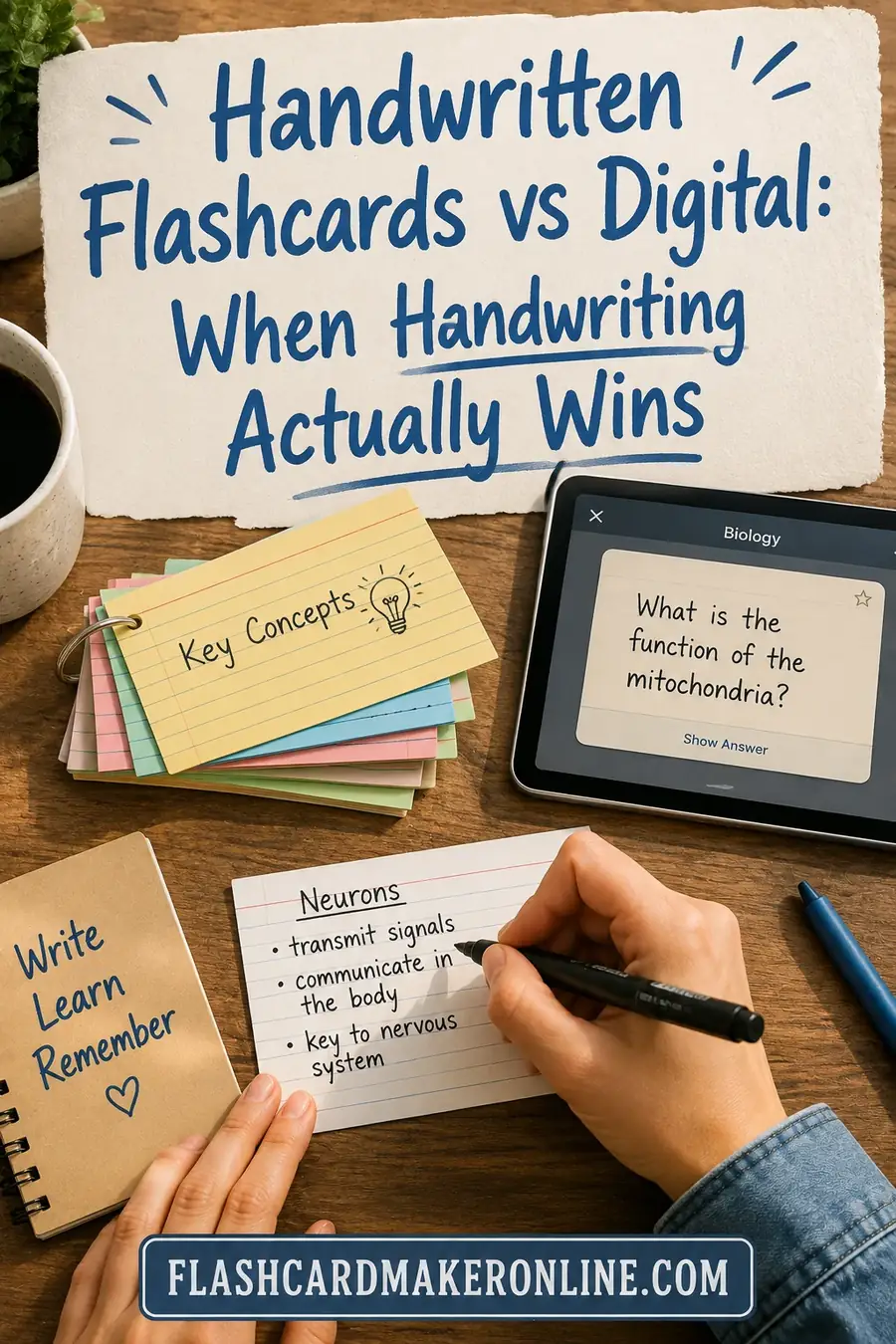
Handwritten flashcards produce measurably better recall than typed ones for a specific reason: the physical act of writing forces slower, more deliberate encoding of information, which is exactly the kind of "desirable difficulty" that strengthens memory. That doesn't mean digital flashcards are worse across the board — it means each format wins in different situations, and knowing which is which saves you real study time.
The Actual Research Behind "Handwriting Helps"
Multiple studies on note-taking (most famously research comparing laptop vs. longhand notes in lecture settings) found that people who wrote by hand retained conceptual information better than people who typed, even when the typists captured more total words. The theory: typing is fast enough that people transcribe passively, word-for-word, without processing. Writing by hand is slow enough that you're forced to summarize and reformulate in your own words as you go — and that reformulation is where the actual learning happens.
The same mechanism applies to flashcards. Handwriting a card forces you to condense a concept into your own words in a way that copy-pasting or fast typing doesn't.
When Handwritten Flashcards Win
Vocabulary and spelling — languages, SAT/GRE word lists, spelling-heavy subjects. The physical motion of writing a word repeatedly builds muscle memory that recognition-based digital review doesn't replicate.
Formulas and equations — math, physics, chemistry. Writing out a formula by hand, including the steps, engages a different memory pathway than reading a typed version. Many students report that they only truly "know" a formula once they've written it from memory several times, not just looked at it.
Diagrams and processes — biology, anatomy, chemistry structures. Redrawing a diagram from memory (even roughly) tests recall in a way that viewing a pre-made digital image can't.
Subjects with genuinely low card counts — under 50-75 cards. Handwriting doesn't scale well past this point; the time cost becomes a real barrier.
When Digital Flashcards Win
Large volumes — hundreds or thousands of cards, common in med school, language vocabulary at scale, or any subject with a huge base of discrete facts. Handwriting 800 cards isn't a study strategy, it's a part-time job.
Spaced repetition scheduling — digital tools (Anki, Quizlet, and similar) automatically reschedule cards based on how well you know them, showing struggling cards more often and mastered ones less. This scheduling effect on long-term retention is well-documented and hard to replicate by hand without a lot of manual sorting.
Multimedia content — audio pronunciation, images, video clips embedded in a card. Impossible on paper, trivial digitally.
Studying on the go — a phone in your pocket beats a shoebox of index cards for grabbing five minutes of review between classes or on a commute.
Shared or collaborative decks — a class or study group building one shared deck together works far better digitally than passing around physical cards.
The Hybrid Approach Most Effective Students Actually Use
The strongest real-world pattern isn't "pick one" — it's matching the format to the task:
- First pass: handwrite the initial set for genuinely new, hard-to-grasp material (new vocabulary, new formulas, new diagrams). This is where the encoding benefit of handwriting matters most.
- Digitize for ongoing review once the deck grows past 50-75 cards or once you need spaced repetition scheduling to manage what to review and when.
- Keep a small handwritten "trouble deck" of the 10-15 cards you consistently get wrong, even after digitizing the rest. Physically rewriting your weakest cards periodically reinforces them more than just re-viewing a digital version.
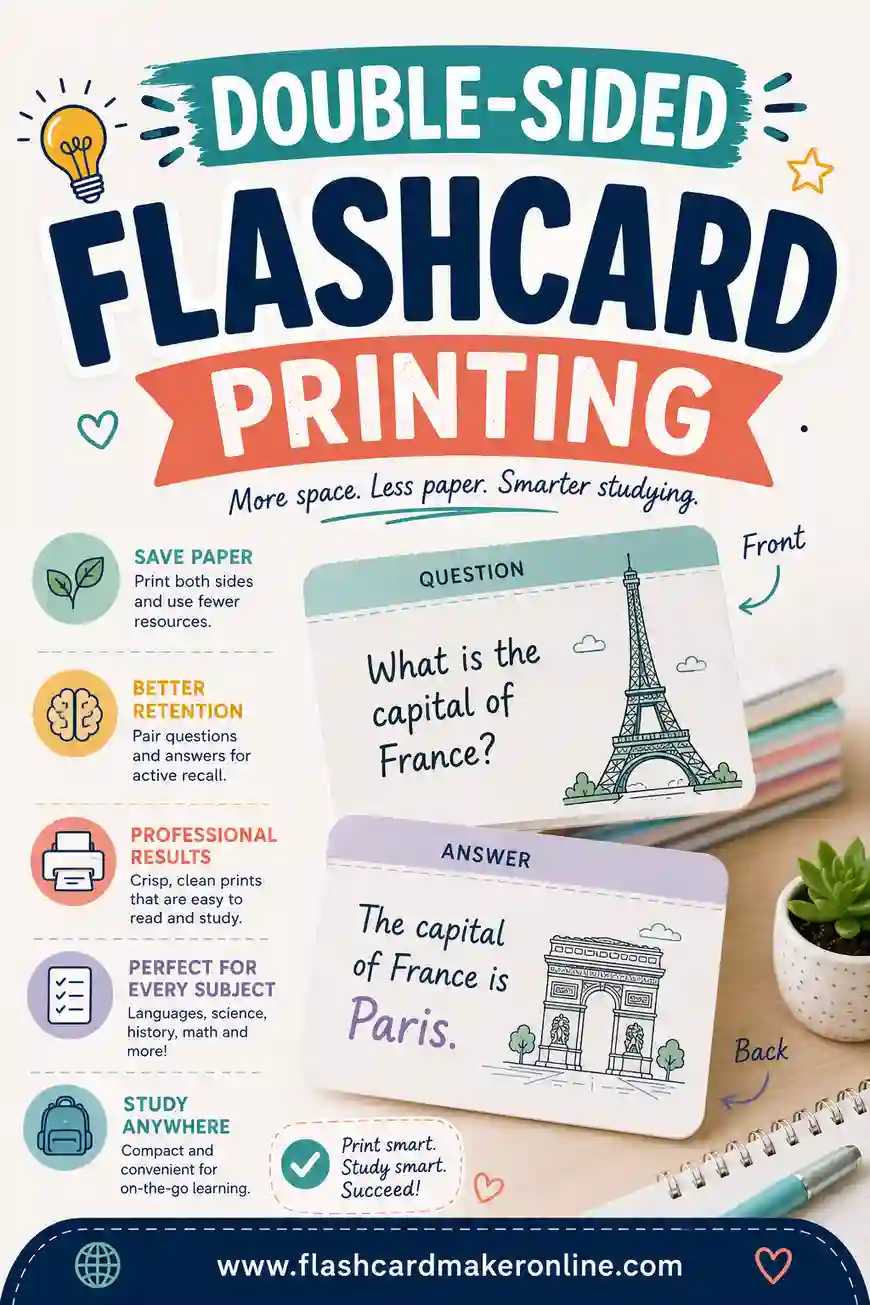
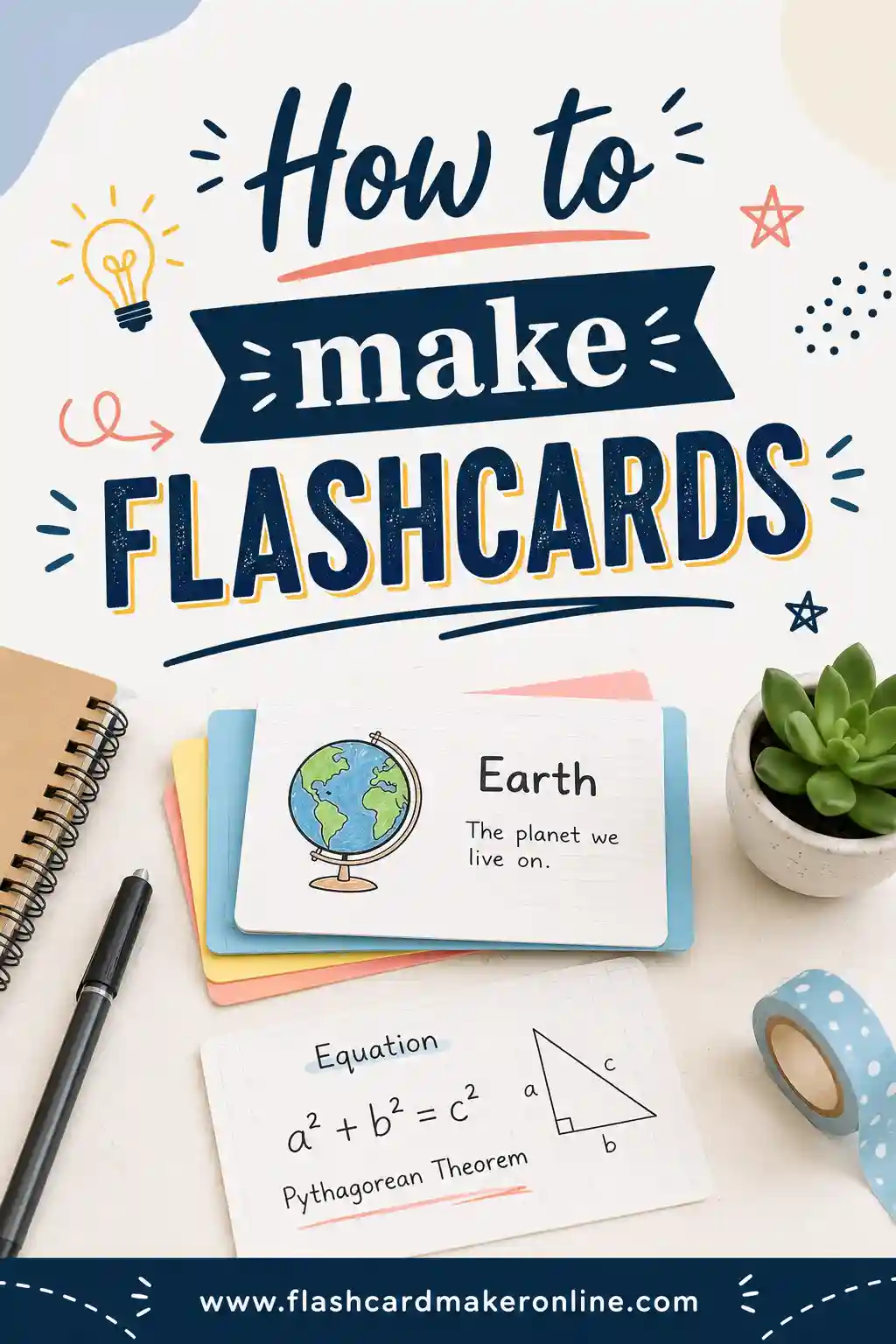
If typing every card by hand feels like too much friction to even start, a flashcard maker that lets you build and print a deck quickly gives you a middle path — fast enough to build a real deck, but still producing a physical card you can handwrite notes onto or flip through without a screen.
Practical Tips for Handwritten Cards That Actually Work
Keep one fact per card. The temptation with handwriting is to cram more onto a card since you're already writing — resist it. One question, one answer, every time.
Write the answer in your own words, not copied verbatim from the textbook. This is the entire point of the handwriting advantage — if you're just copying, you lose the benefit.
Use color sparingly and consistently — one color for definitions, another for examples, if that helps you. Random color use adds visual noise without adding recall value.
Test yourself in both directions where it makes sense (term → definition and definition → term), especially for vocabulary, since real-world recall often needs to work both ways.
The Science in a Bit More Depth: The Generation Effect
The formal name for the memory benefit behind handwritten flashcards is the "generation effect" — a well-documented finding in cognitive psychology that information you actively generate yourself (rather than passively receive) is remembered significantly better than information you simply read or copy. Handwriting a flashcard, especially when you're summarizing a concept into your own words rather than transcribing verbatim, is a form of active generation. Typing quickly, especially copy-pasting, is much closer to passive transcription.
This is closely related to but distinct from the "testing effect" — the well-established finding that actively retrieving information from memory (like flipping a flashcard and trying to recall the answer before checking) strengthens memory far more than simply re-reading the same information. The two effects compound: handwriting a card engages the generation effect during creation, and then quizzing yourself with that card engages the testing effect during review. This is part of why flashcards as a study method outperform passive re-reading of notes or textbooks so consistently across research on study techniques, regardless of whether the cards themselves are handwritten or digital.
Building the Habit: A Realistic Weekly Routine
Rather than treating flashcard creation and review as one big task, most successful students build it into a small daily or every-other-day routine:
When you encounter new material (a lecture, a reading assignment, a new vocabulary set), handwrite 5-10 cards covering the concepts that felt least intuitive on first exposure — not everything, just the parts that didn't immediately click.
Review the previous few days' cards briefly before adding new ones, so review time compounds gradually rather than piling up into one overwhelming session right before a test.
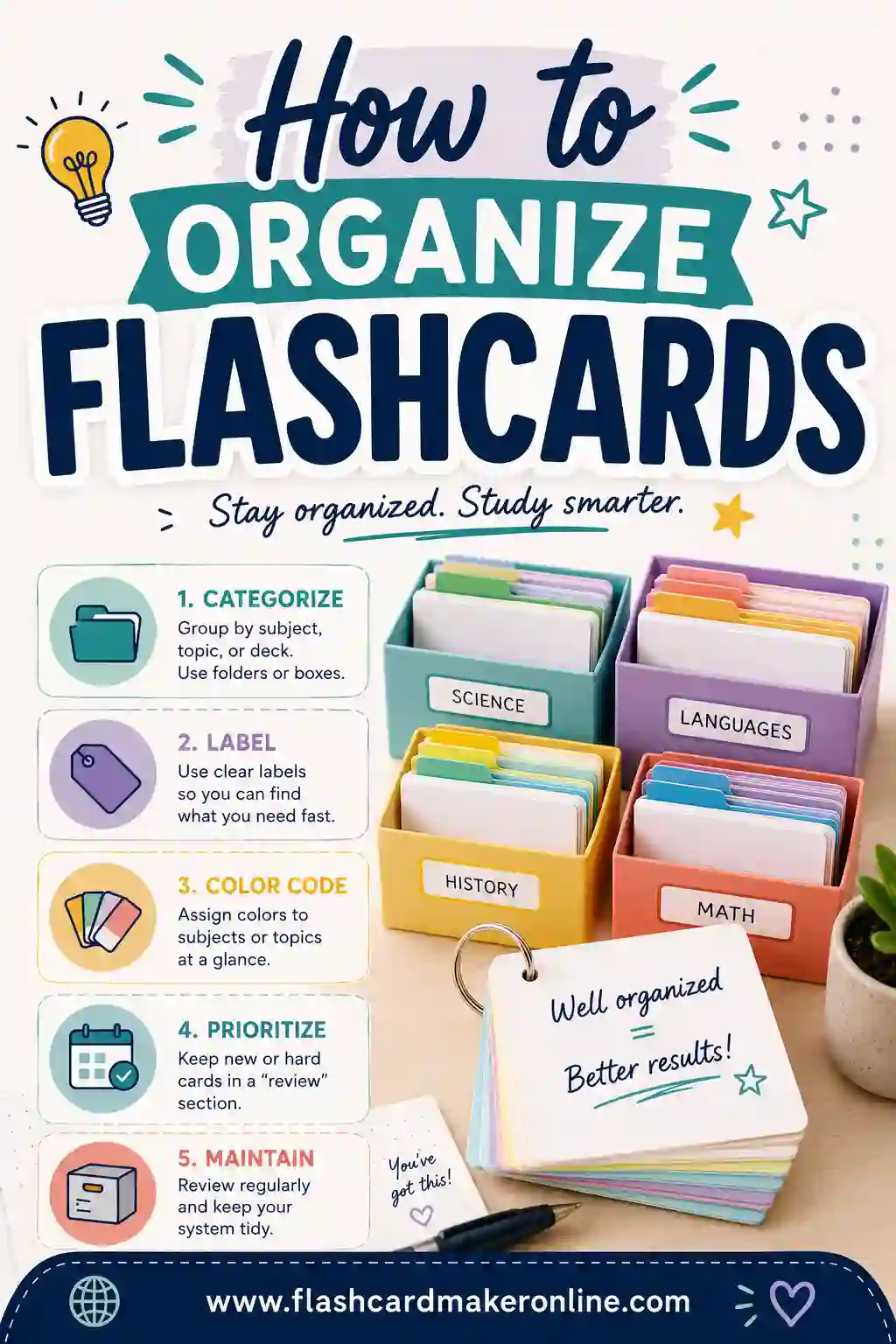
Set aside a specific weekly slot (even 15-20 minutes) to sort your deck — pull out cards you've mastered, keep struggling cards in active rotation, and retire cards you haven't gotten wrong in weeks.
This small-and-consistent approach beats a single marathon flashcard-making session before an exam almost every time, both because spaced review is more effective than cramming, and because handwriting a large batch of cards all at once loses much of its generation-effect benefit once fatigue sets in and the writing becomes more mechanical than genuinely engaged.
Handwriting Flashcards for Different Learning Styles
Not every student processes information the same way, and it's worth being honest that handwritten flashcards genuinely suit some learning preferences more than others. Students who describe themselves as strong visual or kinesthetic learners — people who remember things better through movement and physical creation than through pure reading — tend to report the biggest benefit from the handwriting approach specifically, since the physical act of writing engages that preference directly. Students who are strongly auditory learners might get comparable benefit from a different active-recall method entirely, like reading flashcard answers aloud or recording themselves explaining a concept and listening back, rather than assuming handwriting is the single best method for absolutely everyone.
This isn't an argument against trying handwritten flashcards — most students benefit from them to some degree, since the generation and testing effects described above aren't limited to one specific learning style — but it's worth paying attention to your own results over a few weeks rather than assuming a method that works dramatically well for a friend will produce identical results for you.
Adapting the Method for Group Study
Handwriting flashcards doesn't have to be a solitary activity. A study group can split up material, with each person handwriting cards for a different section of content, then combining and quizzing each other from the full pooled deck. This has a secondary benefit beyond just splitting the workload: explaining your own handwritten cards to groupmates, and being quizzed on cards someone else wrote, forces you to engage with material you didn't personally summarize — which tests genuine understanding rather than just recall of your own phrasing. Groups that use this rotating-quiz approach regularly report it surfaces gaps in understanding faster than individual studying does, since a groupmate's confused reaction to your card, or your own confusion reading theirs, flags exactly where more review is needed.
When Digitizing a Handwritten Deck Makes Sense
Even committed handwriting advocates often reach a point where digitizing pays off — typically once a deck grows past 75-100 cards, or once exam season approaches and daily spaced review across a large volume of material becomes the priority over the creation benefit. At that point, transcribing handwritten cards into a digital spaced-repetition tool preserves the original generation-effect benefit from when the cards were made, while adding the scheduling efficiency that becomes more valuable as review volume grows. This hybrid timeline — handwrite first, digitize once the deck matures — tends to capture the real benefit of both formats rather than forcing an early either/or choice.
Kanji Flashcards: The Strongest Case for Writing by Hand
If there is one deck where handwriting is not a preference but a requirement, it is kanji.
Writing a character trains stroke order, proportion, and the motor sequence that lets you produce it later. A learner who has only tapped through kanji flashcards on a phone can usually recognize a character and still cannot write it — which is a real gap, because recognition and production are separate abilities and only one of them survives a blank page.
How to build the deck:
- Front: the character alone. No reading, no meaning, nothing to lean on.
- Back: meaning, on-reading and kun-reading, one example word, and the stroke count.
- Write the character every time you review it. On scrap paper, in the air, on a whiteboard. The review is the writing.
- Group by radical, not by textbook order. Characters sharing a component are easier to keep apart once you can see the shared part.
The practical hybrid: handwrite the deck for production practice, then photograph the cards into an app for recognition drilling on the train. The writing builds the skill; the app maintains it.
Bible Verse Flashcards and Other Memory Work
Scripture memorization is one of the oldest uses of a card deck, and it is another case where copying by hand does real work rather than just feeling virtuous.
The standard build for bible verse flashcards puts the reference on one side and the verse on the other, and which side you look at first depends on the goal. Reference to verse is what most memory programs test; verse to reference is what helps in a study group when someone quotes a line and nobody can place it. Drill both directions, on separate passes.
For longer passages, chunk before you card. A five-line verse written on one card is a wall; the same verse split into three cards, each holding a phrase, builds up cleanly and joins back together within a week.
Two habits that make bible flashcards stick: write each card out in full by hand rather than printing it, since the copying pass is itself a rehearsal, and say the reference out loud before and after the verse. Programs like AWANA and most Sunday-school curricula grade the reference too, and it is the part people reliably forget.
Frequently Asked Questions
Is handwriting flashcards actually proven to help, or is this just a preference? It's backed by real cognitive research on the "generation effect" and "desirable difficulty" — the extra effort of writing something out, rather than passively reading or typing it, produces stronger memory encoding. It's a genuine effect, not just a study-habit preference.
Should I handwrite or type flashcards for a language I'm learning? Handwrite for new vocabulary and spelling, especially early on — the physical writing helps lock in both meaning and spelling together. Once you're reviewing a large established vocabulary list, switch to digital with spaced repetition for efficiency.
How many handwritten flashcards is too many to manage by hand? Most people hit diminishing returns somewhere around 75-100 cards, where sorting, shuffling, and tracking which cards need more review by hand becomes more work than the study itself. Beyond that, digitizing pays off.
Can I get the benefits of handwriting with digital flashcards? Partially — typing your own answer in your own words (rather than viewing a multiple-choice or pre-written answer) captures some of the same "generation effect" benefit, even without physical handwriting.
Do color-coded handwritten flashcards actually improve recall? Used sparingly and consistently (one color always meaning the same type of information), color-coding can help with quick visual categorization during review, though it doesn't meaningfully boost core memory encoding the way the act of writing itself does.
Is it worth handwriting flashcards for subjects with a lot of visual diagrams, like anatomy? Yes, often especially so — redrawing a diagram from memory by hand engages both the generation effect and visual-spatial memory simultaneously, which many students find particularly effective for diagram-heavy subjects.
How long should I keep a handwritten flashcard in rotation before retiring it? Once you've answered a card correctly without hesitation across several consecutive spaced reviews (typically over a few weeks), it's reasonable to retire it from active rotation, keeping it aside for an occasional refresher rather than continued frequent review.
Can handwriting flashcards help with test anxiety, not just recall? Some students report that the physical, active nature of handwriting flashcards builds a stronger sense of preparedness going into an exam compared to passive review, which can indirectly ease anxiety, though this varies by individual and isn't a substitute for addressing anxiety directly if it's a significant concern.
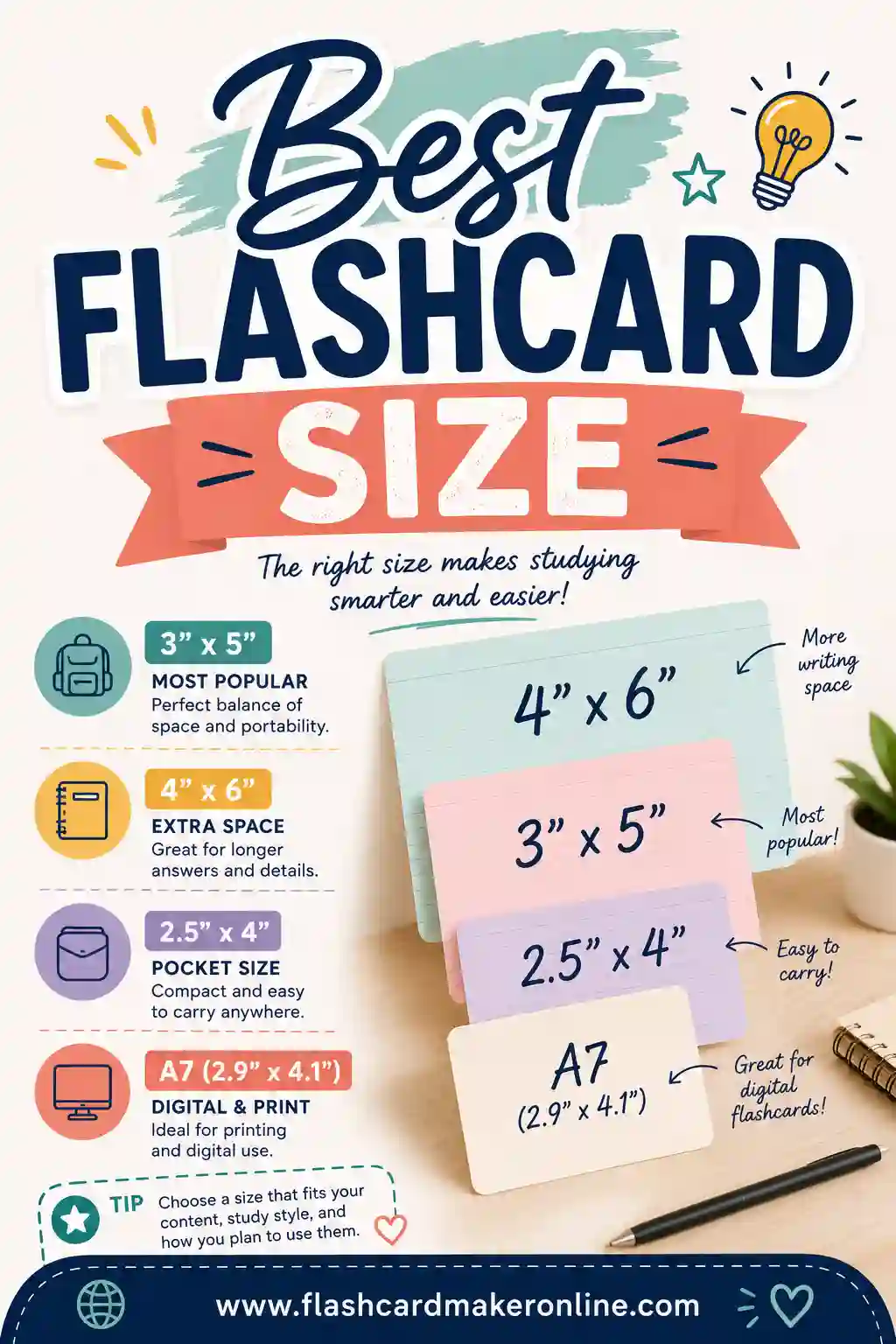
What size index cards work best for handwritten flashcards? Standard 3x5 inch cards are the most common choice, offering enough space for a clear question and answer without encouraging overcrowding — larger 4x6 cards work well for subjects needing diagrams or longer example sentences.