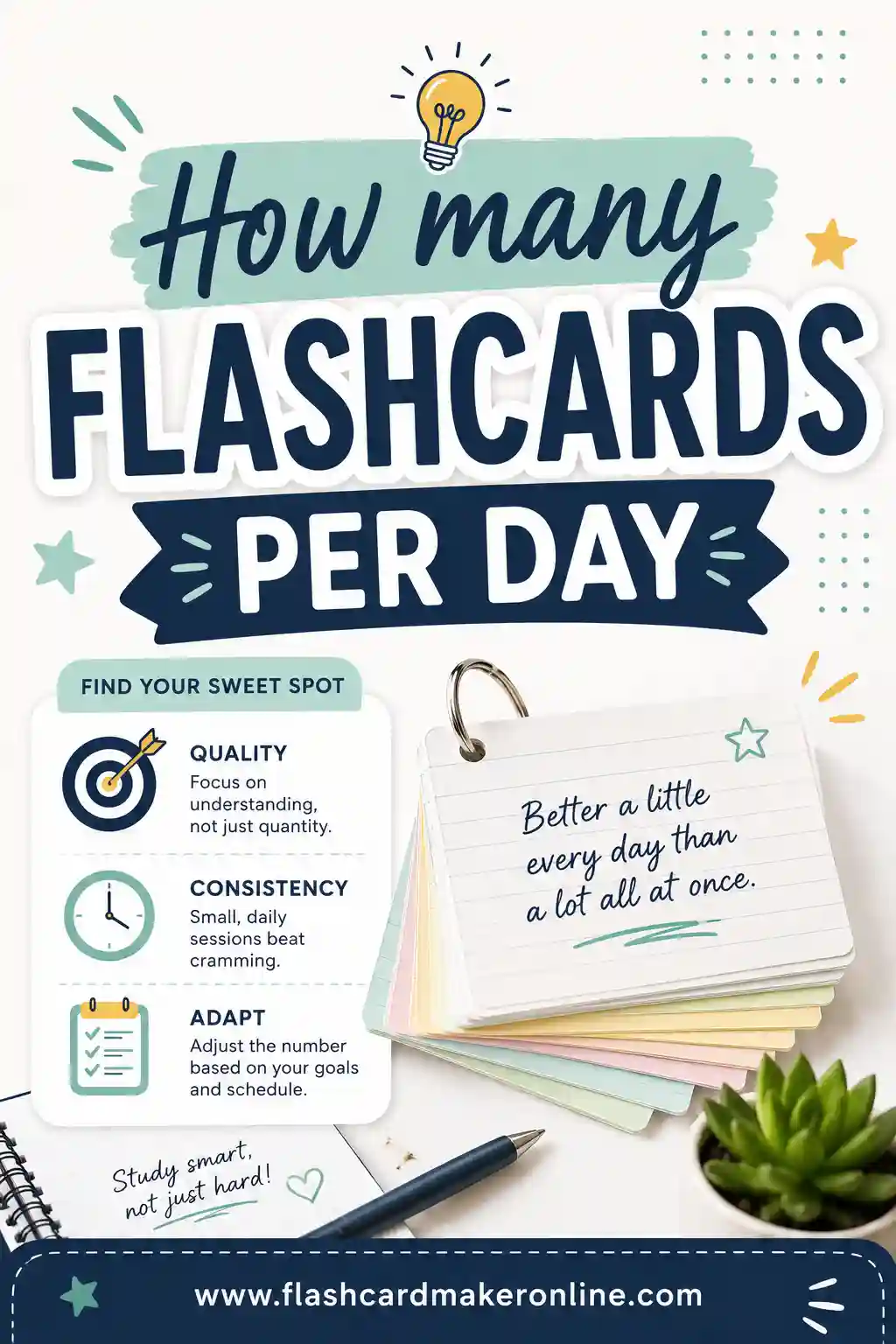
How Many Flashcards Per Day? A Realistic Study Guide
For most people, studying 20 to 30 new flashcards per day is a sustainable target, on top of reviewing the older cards that come due. Beginners should start lower (around 10 to 15 new cards) and build up. The exact number depends on how hard the material is, how much time you have, and how well you're keeping up with reviews. The goal isn't to add as many cards as possible, it's to actually remember the ones you add.
Want to build a deck and find your own pace? Open the free flashcard maker, add your terms (there's a ready-made sample deck below), and study a small batch today. No sign-up, no app to install.
The Short Answer: It Depends on the Reviews
Here's the thing most "how many cards per day" advice misses. The number of new cards you add isn't the whole story. Every new card you learn today comes back tomorrow, then in a few days, then later still, as a review. Those reviews stack up.
So the real limit isn't how many new cards you can learn in one sitting. It's how many total cards (new plus due reviews) you can comfortably get through each day without falling behind. Add new cards too fast and your daily review pile grows until it's overwhelming.
That's why the honest answer is "it depends." But we can give you solid starting numbers and a way to find your own pace.
A Realistic Daily Target by Experience Level
Start conservative and scale up as you find your rhythm. Here's a sensible guide for new cards per day.
| Your situation | New cards/day | Why |
|---|---|---|
| Brand new to flashcards | 10–15 | Build the habit before the volume |
| Comfortable, normal schedule | 20–30 | The sweet spot for most students |
| Heavy study period (exam prep) | 30–50 | Higher, but watch the review pile |
| Light material, lots of time | up to 50+ | Only if reviews stay manageable |
Notice these are new cards. On top of them, you'll review older cards that come due, which can easily double or triple your total card count for the day. Plan for that.
If you're just starting, lean to the low end. It's far better to do 15 cards a day for a month than to do 60 cards for three days and quit because the reviews buried you.
New Cards vs Review Cards
This is the distinction that makes everything click. Picture two buckets each day:
- New cards. Material you're seeing for the first time. These take the most mental effort because you're building the memory from scratch.
- Review cards. Cards you've seen before that are due again. These are faster, because you're refreshing a memory rather than forming one.
As your deck grows, the review bucket fills up. On day one you might have 20 new cards and zero reviews. Three weeks in, you might have 20 new cards and 80 reviews. That's normal, and it's why your daily new count should stay modest even though your total card count climbs.
The takeaway: judge your pace by the total, not just the new cards. If your reviews are getting skipped, that's your signal to slow down on new ones.
How Long Will That Take?
Time per card varies, but a rough planning number helps. Most people spend somewhere between 5 and 15 seconds on a well-made card once they know it, and longer on new or tricky ones.
Here's a rough time estimate for a daily session.
| Cards in the session | Rough time |
|---|---|
| 20 cards | 5–10 minutes |
| 50 cards | 10–20 minutes |
| 100 cards | 20–35 minutes |
| 200 cards | 40–60 minutes |
If your daily total is creeping past what you can finish in a comfortable sitting, that's the clearest sign you've added new cards too quickly. Clean, single-idea cards review faster, which is one more reason to keep each card focused. Our guide on how to make flashcards covers writing cards that are quick to review.
Signs You're Adding Too Many Cards
Your body and your deck will tell you when you've overreached. Watch for these:
- Reviews pile up and get skipped. The clearest warning sign. If due cards roll over day after day, you're adding new ones too fast.
- Sessions feel like a slog. Study should be focused, not exhausting. Dread is a signal.
- Your accuracy drops. Missing a lot of cards means you're not giving each one enough repetitions before piling on more.
- You're rushing to "get through it." Speed-flipping without real recall defeats the whole purpose.
If you spot these, the fix is simple: add fewer new cards for a while and let your reviews catch up. The deck will feel manageable again within a few days.
How to Find Your Own Sweet Spot
Numbers from a guide are a starting point. Your perfect daily count is the one you can sustain for weeks. Here's how to dial it in.
- Start low. Begin with 15 new cards a day for a week. Resist the urge to do more early on.
- Watch your reviews. If you're clearing all your due cards comfortably, you have room to add more.
- Nudge it up slowly. Increase by 5 new cards and hold there for a few days. See how the review load feels.
- Back off if it stings. The moment reviews start piling up or sessions feel heavy, drop back down.
- Settle in. Within a couple of weeks you'll land on a number that fits your life. That's your sweet spot.
The right pace isn't the biggest number you can survive for three days. It's the steady number you'll still be doing next month.
Quality Beats Quantity, Every Time
It's tempting to chase a big daily count like it's a high score. Resist that. Learning 20 cards so well you'll remember them in a month beats half-learning 60 you'll forget by Friday.
Three habits keep your studying high-quality no matter the count:
- Use active recall. Always answer before you flip. A card you flip without trying teaches you almost nothing.
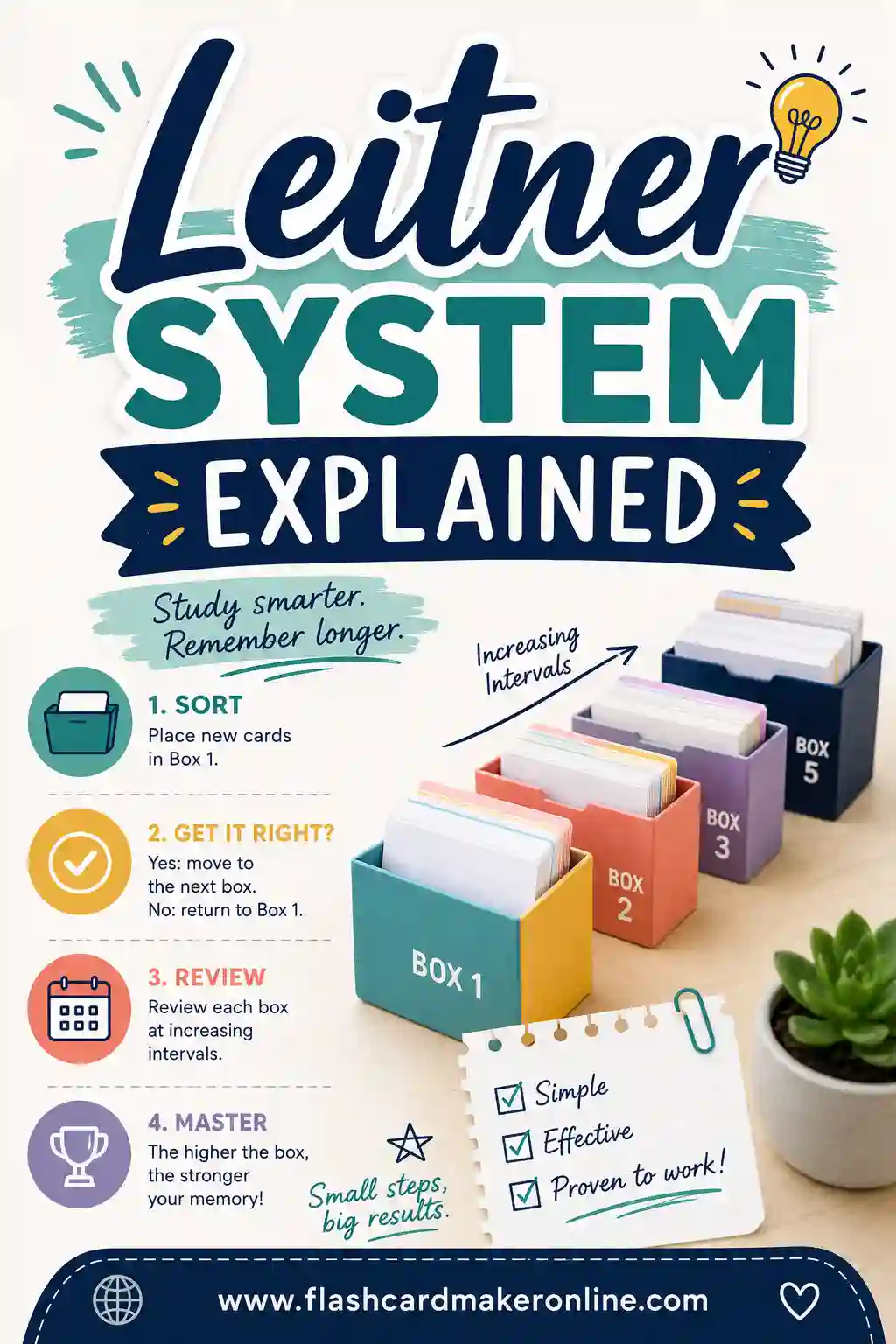
- Space your reviews. Don't drill everything every day. Let cards come back at growing intervals, the core of the Leitner system.
- Keep cards clean. One idea per card. Clean cards are faster to review, so you can handle a healthy daily count without burning out.
For more on getting the most from each card, see our full flashcard study tips.
Building a Deck You Can Actually Keep Up With
The easiest way to stay on a sustainable pace is to build your deck in a tool that makes review effortless. A digital flashcard maker lets you shuffle instantly, edit on the fly, and study a small batch in spare minutes.
Sample daily deck (Copy & Paste)
Here's a ready-to-use set of about 20 cards, a realistic single day's batch for most people. Copy it into the flashcard maker and time yourself.
| Front (term / question) | Back (answer) |
|---|---|
| Capital of France? | Paris |
| Capital of Spain? | Madrid |
| Spanish: "gracias" | Thank you |
| Spanish: "libro" | Book |
| French: "merci" | Thank you |
| Chemical symbol for iron? | Fe |
| Largest planet? | Jupiter |
| 7 x 6 = ? | 42 |
| 8 x 9 = ? | 72 |
| Freezing point of water (°C)? | 0°C |
| Who wrote Macbeth? | William Shakespeare |
| What year did WWII end? | 1945 |
| The powerhouse of the cell? | Mitochondria |
| A synonym for "big"? | Large / huge |
| Capital of Germany? | Berlin |
| Speed = distance ÷ ? | Time |
| Spanish: "rojo" | Red |
| What is a verb? | An action or state-of-being word |
| Number of continents? | Seven |
| Area of a triangle? | ½ × base × height |
Run through this once with active recall, note how long it took, and you'll have a real feel for what 20 cards costs you in time. Scale from there.
Frequently Asked Questions
How many new flashcards should I learn each day?
For most people, 20 to 30 new cards a day is a sustainable target, with beginners starting around 10 to 15. Remember those new cards add to a growing pile of review cards, so judge your pace by your total daily load, not just the new ones.
Is it bad to study too many flashcards in one day?
It can be. If you add new cards faster than you can review the old ones, the review pile grows until it's overwhelming and you start skipping cards. That breaks the spaced repetition that makes flashcards work. Add fewer new cards if reviews are piling up.
How many flashcards can I realistically memorize per day?
Memorizing is different from seeing. You might review 100+ cards a day, but truly locking in 20 to 30 brand-new facts is a solid day for most people. Quality of recall matters far more than the raw number you flip through.
How long should I spend on flashcards each day?
Most people do well with 15 to 30 minutes a day, split into short sessions if you like. If your daily session is stretching past an hour, you've likely added new cards too quickly and should slow down.
Should I study flashcards every day?
Ideally yes, even briefly. Flashcards work through spaced repetition, which depends on regular review. A short daily session keeps due cards from piling up and keeps facts fresh far better than a big weekly cram.
What if I fall behind on my reviews?
Stop adding new cards for a few days and just clear the backlog. Once your reviews are caught up, restart new cards at a slightly lower daily count than before. Falling behind once is normal, it's a sign to adjust your pace, not to quit.
Ready to Find Your Daily Pace?
Grab the sample deck above, open the free flashcard maker, and study one realistic batch today. Time it, see how it feels, and let that guide how many new cards you add tomorrow. Start low, watch your reviews, and build up to a pace you can keep for weeks. It's free, there's no sign-up, and you can make as many decks as you need. The best daily count is the one you'll actually stick with, so start small and stay steady.