Grandparent Photo Flashcards: Help a Toddler Know Family Before Christmas Visits
The easiest way to help a toddler know far-away family before a Christmas visit is a small deck of family photo flashcards: one clear, recent face on the front of each card, and the exact name your child will use, like Nana or Papa, on the back, looked at for two or three minutes a day for a few weeks. By the time you walk through the door, the faces are familiar, and the names are already words your child knows. You can make the whole deck in about 20 minutes with our free flashcard maker, using photos from your own phone, then print it on sturdy paper in a big size made for small hands.
Below you'll find who to put in the deck and what to call them, exact steps for adding photos and printing, a three-week plan that ends on the day of the visit, simple games for each age from about one to four, ways to use the cards on video calls, and what to do when your toddler still hides behind your leg at the front door (which is completely normal).
🃏 Quiz yourself: 8 cards from this page
Read the front, say your answer, then tap the card to check.
Make, study & print this deck → Opens the free flashcard maker with all 8 cards ready to edit or print.▶ Open this deck in the flashcard maker
Why Family Faces Fade Between Visits
If you live far from family, your toddler may only see Grandma and Grandpa a few times a year. For a one- or two-year-old, a few months is a very long time. Last summer's visit can feel like a different life. So when you arrive for Christmas and a beaming grandparent leans in for a hug, your child may cling, stare, cry, or simply not know who this excited person is.
That's not a sign anything is wrong. Toddlers are often wary of people who feel like strangers, and someone they last saw months ago can feel like one. It's hard on grandparents, though, who've been counting down the days, and it's hard on you, standing in the doorway trying to smooth it over.
Photo flashcards help in a simple way. They turn far-away people into familiar faces your child sees every day. A toddler who has pointed at Nana's picture and said "Nana!" thirty times in December is much more likely to look at the real Nana with curiosity instead of worry.
What photo cards can and can't do
It helps to keep expectations realistic:
- They can make faces and names familiar, so the first meeting starts warmer.
- They can give your child words for the people they'll meet, which helps toddlers feel more in control.
- They can give grandparents a way to connect on video calls before you arrive.
- They can't guarantee instant hugs. Even a child who knows the cards by heart may need some time to warm up in person. That's normal, and there's a section below on how to handle it kindly.
Every child is different, and there's no test to pass here. If your toddler enjoys the cards for two minutes a day and smiles at the people in them, the deck is doing its job.
Why real photos beat drawings
Picture cards for toddlers usually show cartoon animals or simple drawings. For family, you want the opposite: real photos of real faces, looking the way those people look right now. Your child needs to connect the card with a specific person who will walk through a door, not with a general idea of "a grandma." The more the photo looks like the real person on the day you visit, the easier that connection gets.
Pairing a picture with a spoken word is also simply how toddlers learn new words. You point, you say the name, they look and listen. Over a few weeks, the face and the name start to go together. Our page on flashcards for toddlers has more on how to keep card time short and playful at this age.
Who Goes in the Deck and What to Call Them
Start small. For a child under two, six to eight cards is plenty. For a two- or three-year-old, ten to fifteen works. You can always add more people later, but a huge deck at the start makes it hard for anyone to stand out.
Start with the people your child will see the most
Put the people your child will spend the most time with at the top of the list: the grandparents you're staying with, the aunt who'll be in the kitchen every morning, the cousin who's close in age. Distant relatives who'll only drop by for an hour can wait.
It's also a good idea to include Mommy and Daddy (or whatever your child calls you), especially at the start. Your child already knows those cards, so they get an easy win every time those faces come up, and the deck feels like "our family" rather than a quiz about strangers.
Use the exact names your child will say
This is the most important rule. Write the name on the card exactly the way your child will use it at the visit, not the person's full name and not a formal title.
| Who | Name on the card (examples) | Tip |
|---|---|---|
| Mom's mother | Nana, Grandma, Abuela, Oma, Lola | Ask the grandparent what they want to be called before you make the card |
| Mom's father | Papa, Grandpa, Pop, Abuelo, Opa | Pick one name and stick with it on every card and every call |
| Dad's mother | Grandma Jo, Gigi, Mimi | Add a first name if both grandmothers would otherwise be "Grandma" |
| Dad's father | Grandpa Ray, Pop-Pop | Same idea: a short add-on keeps two grandpas apart |
| Aunt or uncle | Aunt Rosie, Uncle Ben, Tia Lu | Use the name the family already uses out loud |
| Cousin | Max, Cousin Lily | Toddlers often find a first name alone easier to say |
| Family pet | Biscuit the dog | A pet card is a fun, low-pressure favorite |
If you're not sure what a grandparent wants to be called, ask before you print. A quick message works: "We're making photo cards so the baby knows you at Christmas. What would you like to be called?" Many grandparents are touched to be asked, and it saves an awkward moment when a card says "Grandma" and she's been "Mimi" with every other grandchild.
Choosing the right photo
The photo matters more than anything else on the card. Look for:
- A close-up of the face. Head and shoulders, filling most of the frame. A full-body shot at a wedding makes the face tiny once it's on a card.
- A recent picture. If Grandpa grew a beard or Aunt Rosie cut her hair short, use a photo that shows how they look now.
- One person per card. Group shots are lovely, but a toddler can't tell which face the name goes with.
- A plain background. A face against a wall or the sky reads more clearly than a face in a busy crowd.
- Eyes visible, no sunglasses. And a natural smile, if you can find one.
- Good light. A dark, grainy photo turns into a gray smudge when printed.
If you don't have a good recent photo of someone, ask them. Most relatives are happy to send a close-up selfie, especially once they know what it's for. Ask for one taken near a window in daylight, looking at the camera, with a smile.
Ideas for the back of the card
For the youngest children, the back holds just the name. For two- and three-year-olds, you can add a little more, and you can make a few extra cards with simple facts about each person:
- "Nana lives in the yellow house with the big tree."
- "Papa reads you stories and takes you to see the ducks."
- "Cousin Max has a red bike."
- "Aunt Rosie makes pancakes."
These small facts give your child something to look forward to and something to talk about at the visit. "Nana! Ducks?" is a pretty good opening line for a two-year-old.
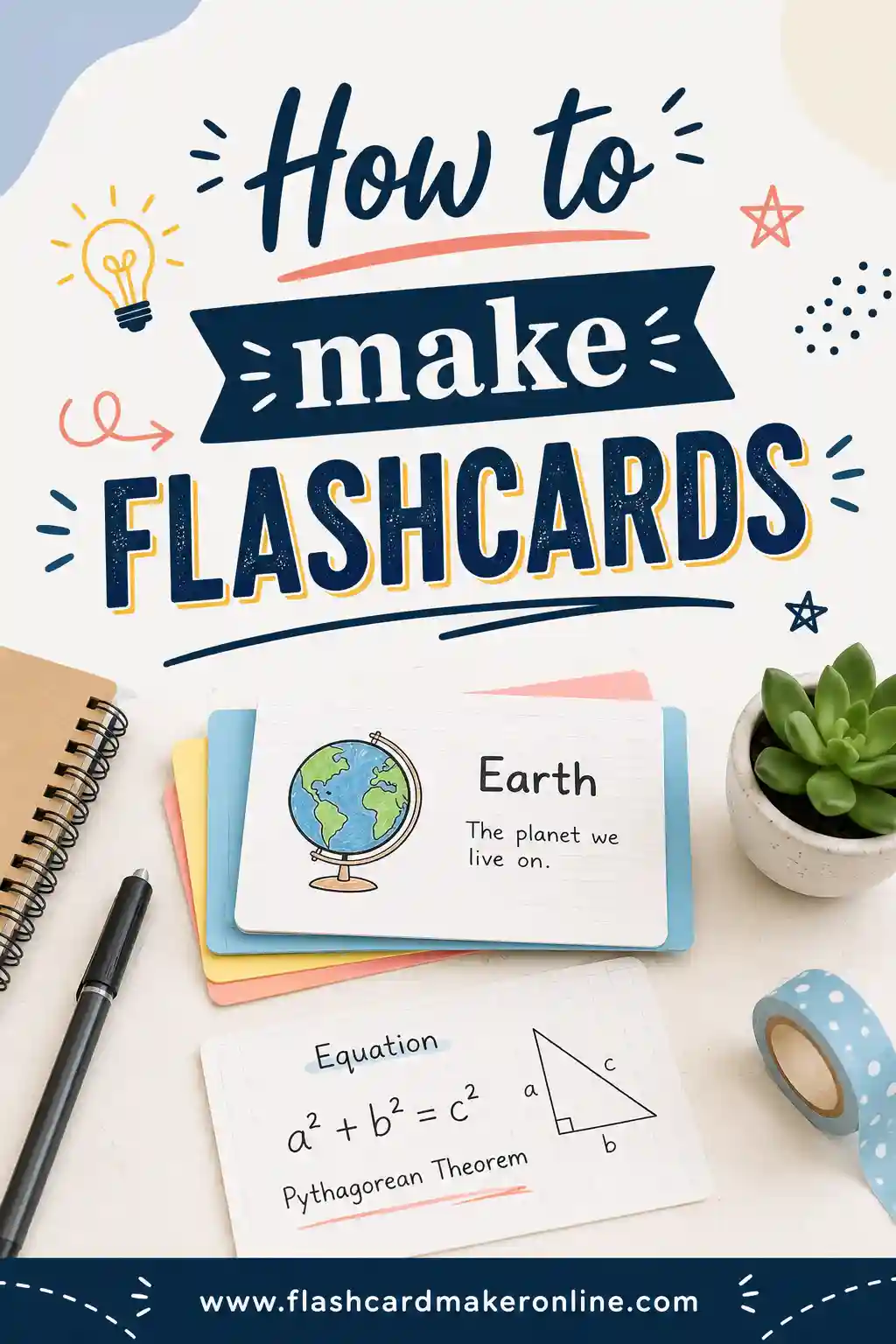
How to Make Family Photo Flashcards in the Free Flashcard Maker
Here's the exact process in the free flashcard maker. There's no account and no sign-up, and your photos are never uploaded anywhere. The maker shrinks each picture to a sensible size and keeps it right in your browser, which is a nice bonus when the pictures are of your family.
Before you start, gather the photos in one place on the device you'll use: your phone's photo album, or a folder on your computer. Crop each one to a close-up of the face if your phone's editor makes that easy. It takes a minute per photo and makes a big difference on the printed card.
Step 1: Name the deck
- Open the maker. You'll land on the Make cards tab.
- If there are old cards in the maker from something else, download them first with Download .csv, then click Clear all for a fresh start. (Clear all empties the deck right away, so don't skip the download if you want to keep them.)
- In Deck title, type
Our Family, or something more personal likeChristmas at Nana's.
Step 2: Add one card per person
- On the first card row, click 🖼️ Image on the Front side and pick the photo of the first person.
- In the Back box, type the name your child will use, like
Nana. - Click + Add card and repeat for the next person.
- Keep going until everyone is in. If you add the wrong photo, use the remove-picture button on that image and pick again.
For a younger toddler, you may want the name on the front too, right with the photo. Type Nana in the Front box as well as adding the picture. That way, every time your child sees the face, they also see you point at the name and hear you say it. Once your child knows the faces, you can make a "quiz" version with the photo alone on the front.
You can also add a photo to the Back of a card. One nice idea for two- and three-year-olds: the front shows Nana's face, and the back shows Nana's house or Nana's dog with the words "Nana's house." It gives your child a little picture of where you're going.
Step 3: Add a few fun-fact cards (optional)
For older toddlers, add three to five cards with a question on the front and a short answer on the back. These don't need photos, but you can add one if you have it:
- Front:
Where does Nana live?Back:In the yellow house with the big tree - Front:
What does Papa like to do with you?Back:Read stories and go see the ducks - Front:
Who has a red bike?Back:Cousin Max
Step 4: Try it on screen
- Switch to the Study tab.
- Click a card (or Flip) to turn it over, and use Next › to move along.
- Tap 🔊 Read aloud to hear the name on the back said out loud. It reads the words on the card, not the picture, so it works on the side that has the name. Some toddlers think it's very funny when the computer says "Nana."
- Leave Shuffle off for now. Little ones like the same order at first. Turn it on later, once they know every face.
Step 5: Know where your photos live
The photos in your deck are saved in the browser on the device you used, so the deck will still be there when you come back. A few things to know:
- Use the same device and browser each time. If you open the maker on a different phone or computer, your photo deck won't be there.
- A share link doesn't carry pictures. If you click Get share link to send the deck to a grandparent, the names and text travel in the link, but the photos stay on your device. To share the photo version, print it or save it as a PDF and send the file.
- Lots of big photos can fill the browser's storage. If the maker says the deck is too big to save, print it or save it as a PDF to keep a copy, then trim a few cards.
Saving a PDF is a good habit anyway. Go to the Print tab, click Print, and choose Save as PDF in the print dialog. Now you have a copy you can print again if the cards get chewed, and one you can email to Grandma so she can see what her grandchild has been looking at all month.
Printing Cards That Survive Little Hands
Toddlers drop, bend, chew and occasionally hide flashcards in the dishwasher. A bit of planning when you print makes the deck last until Christmas.
Pick a big size
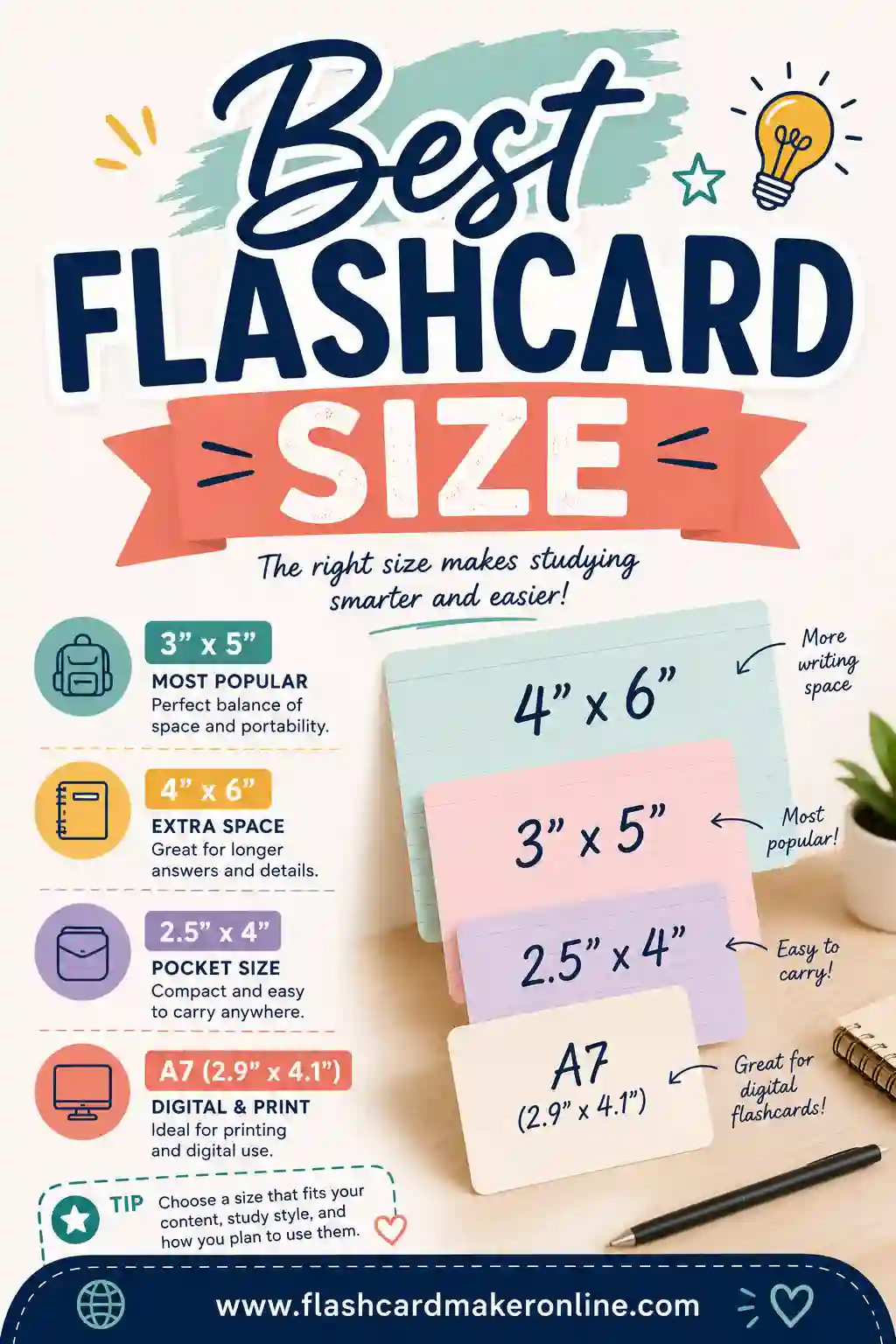
In the Print tab, the Card size options are listed below. For a toddler, bigger is better: a large face is easier to recognize, and a large card is harder to crumple.
| Card size in the maker | Cards per page | Best for |
|---|---|---|
| Jumbo | 2 | Children around one year old, and table games where you lay out a few cards |
| Big | 4 | Most toddlers. The maker labels it best for kids |
| Standard | 8 | Older toddlers and preschoolers who can handle smaller cards |
| 4×6 index card | 2 | Fitting a photo-sized card into a small album or a 4×6 photo box |
| 3×5 index card | 3 | A pocket set for the car or a diaper bag |
If a photo looks a little soft at Jumbo, try Big. The maker resizes pictures to keep the deck light, which looks fine on most cards but can show on the very largest size.
Pick a layout
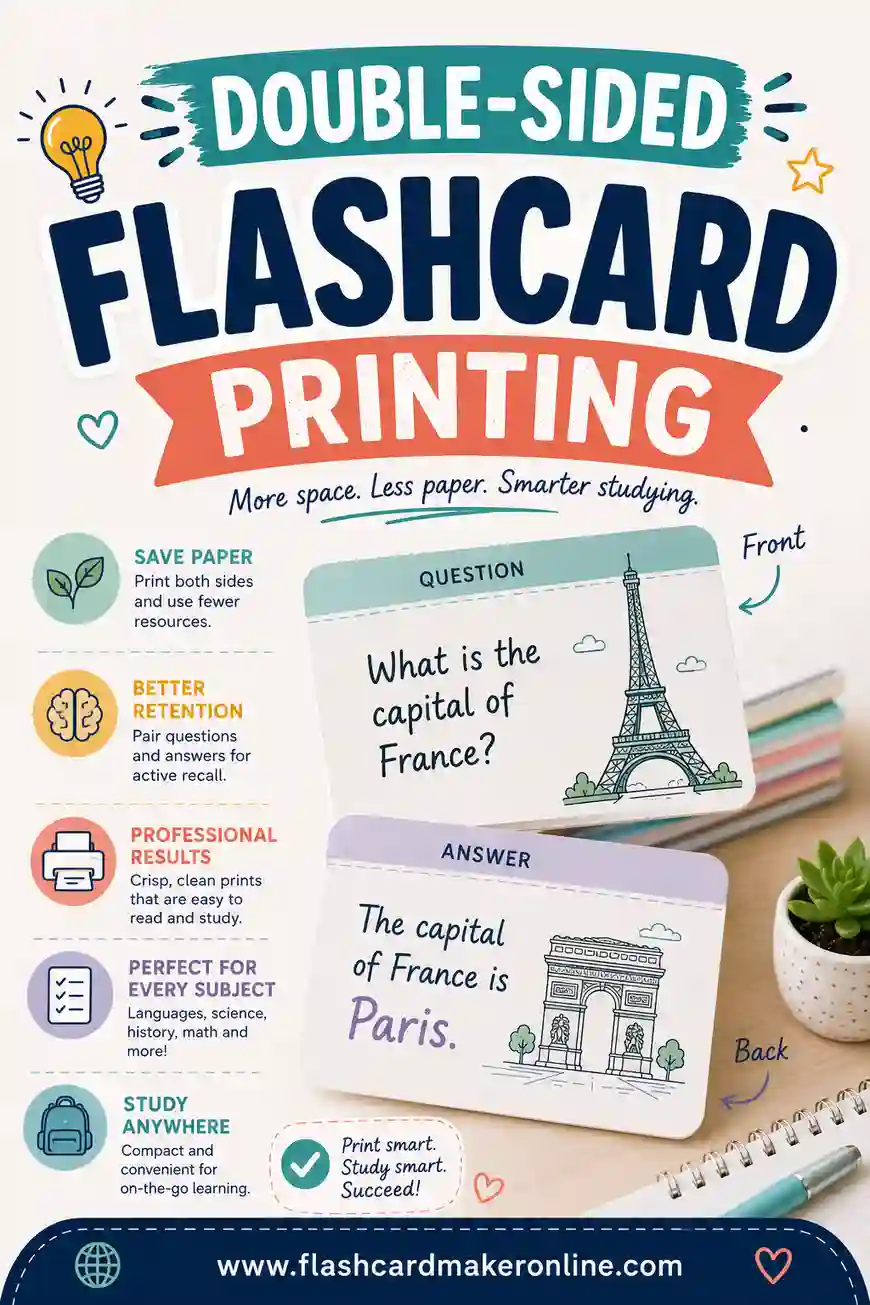
- Double-sided puts the photo on one side of the paper and the name behind it. Turn on duplex printing, flip on the long edge, and print at 100 percent. If you haven't done this on your printer before, click Print a test page first. Our guide to the best flashcard size has more on matching size and paper.
- Cut-out grid prints the front and back next to each other. Cut out each pair and fold it in half, then glue the halves together or seal them with clear tape. Folded cards are thicker, which toddlers can't bend as easily.
- Fronts only prints just the photo side. That's handy for a wall chart or a little photo book where you write the names by hand underneath.
Make them tough
- Use card stock if you have it. Regular printer paper works, but it bends quickly in small hands.
- Cover them. Self-adhesive clear sheets or a few strips of wide clear packing tape over both sides make the cards wipe-clean and much harder to tear. Trim the edges so no tape is sticking out.
- Round the corners with scissors. Soft corners are kinder to little fingers and less likely to peel.
- Punch a hole in one corner and put the cards on a large binder ring. A ring keeps the deck together, makes it easy to flip, and stops single cards from wandering off.
- Supervise. Cards are paper and tape, so keep an eye out for chewing, and toss any card that's started to come apart.
A Three-Week Plan Before the Christmas Visit
You don't need much time. Two or three minutes a day is enough for a toddler, and stopping while it's still fun is the whole trick. Here's a plan that starts about three weeks before you travel. Shift the dates to match your trip.
| When | What to do | Time each day |
|---|---|---|
| Week 1 | Show three or four cards, including Mommy and Daddy. Point at the face, say the name, and let your child hold the card | 2 minutes |
| Week 2 | Add the rest of the people. Ask "Where's Nana?" with two cards on the table and cheer when your child points | 2 to 3 minutes |
| Week 2 | Do one short video call with a grandparent while holding up their card | 5 to 10 minutes |
| Week 3 | Play a simple game from the list below. Add the fun-fact cards for older toddlers | 3 minutes |
| Last 3 days | Talk about the trip: "In three sleeps we'll see Nana and Papa!" Look at the cards at bedtime | 2 minutes |
| Travel day | Bring the ring of cards in the car or on the plane | Whenever your child wants them |
| At the visit | Keep the cards handy for the first day, then let the real people take over | As needed |
Finding the two minutes
Card time works best tied to a moment that already happens every day. Some ideas:
- Right after breakfast, before getting dressed
- In the high chair while you finish making a snack
- On the changing table (the cards can double as a distraction)
- Snuggled on the couch before nap
- At bedtime, after books and before lights out
Bedtime works especially well for the last few days before a trip. "Let's say goodnight to Nana and Papa" is a sweet routine, and it gives your child a chance to talk about the trip in a calm moment.
Keep it light
A few rules for keeping card time happy:
- Stop before your child gets bored. If they wander off after one card, that's a session. Try again tomorrow.
- Don't test too hard. For a one-year-old, pointing and naming is the whole activity. You say the name; they look. That's learning.
- Celebrate everything. A point, a grin, or a "Nana!" all deserve a big reaction.
- Let them hold the cards. Toddlers learn with their hands. Carrying the Nana card around the house all afternoon is a great outcome.
Simple Games With Family Photo Cards, by Age
Toddlers change fast, so the right game depends on where your child is right now. These are rough age guides, not rules. Start with the game that matches what your child already does and move up when it gets easy.
| Rough age | What your child might do | Game to try |
|---|---|---|
| About 12 to 18 months | Look, smile, maybe point | Peekaboo: hide a card behind your back, then pop it out and say "Nana!" |
| About 18 to 24 months | Point when you ask, say a name or two | Where's Papa? Lay out two cards and ask your child to point to one |
| About 2 to 3 years | Say most names, enjoy hiding and finding | Hide and seek: tuck cards around the room and name each one as it's found |
| About 3 to 4 years | Remember facts, take turns | Who lives where? Match each person card to a fun-fact card |
More game ideas
- Kiss goodnight. At bedtime, your child gives each card a kiss or a wave. It's quick, it's sweet, and grandparents love hearing about it.
- Phone call pretend. Hold a card up to your ear like a phone and say, "Hello, Nana! Merry Christmas!" Then hand it to your child. Toddlers love copying this.
- Who's missing? For three-year-olds: lay out three cards, have your child close their eyes, take one away, and ask who's gone.
- Family parade. Line the cards up on the floor and walk two fingers along them, saying hello to each person.
- Family tree on the fridge. Stick the cards to the fridge in family groups: Nana and Papa together, Aunt Rosie with Cousin Max. It's a gentle first look at who belongs to whom.
- Christmas tree hunt. Hang a few cards on the lower branches of your own tree with ribbon and let your child find them.
For a festive twist, mix your family deck with a few holiday picture cards. Our Christmas flashcards page has seasonal word ideas, and the list of games using flashcards has more ways to play with any deck.
Using the Cards on Video Calls and During the Visit
The cards work even better when the real people get involved before the trip. A video call connects the face on the card to a voice and a personality.
Video calls before the trip
Keep calls short for toddlers. Five to ten minutes is often plenty, and a happy short call beats a long one that ends in tears. Some ideas:
- Hold up the card. At the start of the call, hold Nana's card next to the screen and say, "Look, it's Nana! Same Nana!"
- Let the grandparent wave and say their own name. "Hi, it's Nana!" helps your child connect the name with the voice.
- Show something from the fun-fact cards. If the back of a card says Papa has ducks near his house, ask Papa to talk about the ducks.
- Give the grandparent a copy. Email them the PDF of the deck, so they can hold up your child's card on their end too: "Here's your picture! I have it on my fridge!"
A short script for grandparents
Grandparents sometimes worry the toddler won't like them. Sharing a simple plan in advance can help everyone relax. You might send something like this:
"We've been looking at your picture every day, and she says 'Nana' when she sees it. When we arrive, she might be shy for a bit, which is totally normal for her age. If you get down to her level, say 'Hi, it's Nana!' and maybe hold up the card we sent, she'll probably warm up faster than if we go straight for a hug. Give her a little time and she'll come to you."
Most grandparents are grateful for a tip like this, because it gives them something to do with all that excitement besides scooping the child up.
The first hour at the door
Arrivals are noisy and busy. Here's a gentle way to handle them:
- Talk about it in the car. "We're almost at Nana's house! Who will we see?" Look at the cards one last time.
- Let your child stay in your arms while you say hello. Being held gives a toddler a safe spot to watch from.
- Hold up the card if your child seems unsure: "Look, it's Nana, just like your card!"
- Let them come closer in their own time. A grandparent sitting on the floor with a toy or a book is often more inviting than one bending over for a kiss.
- Don't push hugs or kisses. A wave or a high five is a fine start, and the hugs often follow later that day.
After the first day or so, put the cards away, or leave them out for your child to show the real people. Many toddlers enjoy the game of matching a card to the person sitting right there.
When Things Don't Go to Plan
Even with weeks of practice, real life with toddlers is unpredictable. Here are common bumps and what usually helps.
| What happens | Why it might happen | What to try |
|---|---|---|
| Your child ignores the cards | Bored, tired, or the deck is too big | Show just two cards for one minute at a happier time of day |
| Your child knows the cards but hides at the visit | Real people are louder and bigger than photos | Give it time, stay close, and let the grandparent sit on the floor |
| Your child calls both grandmas Grandma | The names are too similar | Change the cards to Grandma Jo and Nana, or another clear pair |
| A grandparent looks different in person | Old photo, new glasses or haircut | Ask for a fresh selfie and remake that card |
| The cards get chewed or torn | Normal toddler life | Print another set from your saved PDF and cover the new ones with clear tape |
| Your photos are gone from the maker | Different device or browser, or cleared browser data | Re-add the photos, and save a PDF this time |
| An older sibling takes over the game | Excitement | Give the sibling a job, like hiding the cards for the little one to find |
If your toddler is upset for a long time at visits, or you have any worries about how your child recognizes people or uses words, that's a good thing to mention to your pediatrician at the next checkup. This is general information, not medical advice.
Make Your Family Photo Deck This Week
Start small and start soon. Open the free flashcard maker, add one close-up photo per person with the exact name your child will say on the back, and print the deck in Big size on card stock. Cover the cards with clear tape, put them on a ring, and spend two minutes a day with them. By the time you pull into the driveway at Christmas, the people waiting at the door won't be strangers. They'll be Nana, Papa, Aunt Rosie and Max from the cards.
If you'd like to start from the sample deck above, open the flashcard maker and swap in your own photos and names.
▶ Open this deck in the flashcard maker
Frequently Asked Questions
At what age can a toddler use family photo flashcards?
Many families start around the first birthday, when a child likes looking at faces and pointing. At that age, you simply show the photo and say the name. By around two, many children can point to the right person when asked, and by three, many can say names and remember small facts. Every child moves at their own pace.
How many family photo cards should I make?
For a child under two, six to eight cards is plenty. For a two- or three-year-old, ten to fifteen works well. Start with the people your child will see the most at the visit, and add others once those faces are familiar.
Should I put the name on the front or the back?
For the youngest toddlers, put the name on both sides so you're always pointing and saying it together. Once your child knows the faces, a card with only the photo on the front makes a fun guessing game, with the name on the back as the answer.
Are my family photos uploaded anywhere?
No. The flashcard maker resizes each photo and keeps it in your own browser. Nothing is uploaded, and if you create a share link, the photos stay on your device. To share the photo version, print it or save a PDF.
What if a grandparent doesn't have a good recent photo?
Ask them for one. A close-up selfie in daylight, looking at the camera with a smile, is ideal. Explain that it's for the toddler's photo cards, and most relatives will happily send a few to choose from.
How long should each session be?
Two or three minutes is enough for most toddlers. Stop while your child is still enjoying it, even if that's after one card. Short, cheerful sessions most days work better than one long session.
What if my child still won't go to Grandma at the visit?
That's very common, and it doesn't mean the cards didn't help. Keep your child close, let Grandma sit on the floor with a toy, and hold up the card if it helps. Give it a few hours or a day, and let your child set the pace.
Can I use the deck after Christmas?
Yes. Keep the cards on their ring and bring them out before video calls, birthdays, or the next visit. Swap in new photos as people change, and add new family members, like a new baby cousin, as they come along.