Bartender Flashcards: Learn Classic Cocktail Recipes
The fastest way to memorize cocktail recipes is a bartender flashcard deck with the drink name on the front and the full spec on the back: spirit and amount, modifiers, method, glass and garnish, always in that same order. Learn the drinks in families, not one by one, and you'll find most classics are small twists on five or six templates. You can type or paste the whole deck into our free flashcard maker, study it on screen, and print it as pocket-size cards for your next shift.
This guide is for bartending students, barbacks moving up, and servers who want to know what's in the drinks they sell. You'll get a 40-card classic cocktail deck you can paste in one step, cards for glassware, techniques and bar terms, and a three-week plan that gets the specs into your head without cramming.
One note before you start: specs vary. Every bar has house recipes, and the amounts below are common, widely taught versions, not the only correct ones. When you start a new job, swap in your bar's specs card by card. The structure of the deck stays the same.
🃏 Quiz yourself: 10 cards from this page
Read the front, say your answer, then tap the card to check.
Make, study & print this deck → Opens the free flashcard maker with all 10 cards ready to edit or print.▶ Open this deck in the flashcard maker
What Goes on a Bartender Flashcard
A good recipe card answers every question a bartender has to answer in the few seconds between hearing an order and reaching for a bottle. That's five things, and they should appear on the back of every card in the same order.
| Order on the back | What it tells you | Example (Daiquiri) |
|---|---|---|
| 1. Base spirit and amount | What you grab first and how much | 2 oz white rum |
| 2. Modifiers and amounts | Citrus, sweetener, liqueur, bitters | 1 oz lime, 3/4 oz simple syrup |
| 3. Method | Shaken, stirred, built, blended or muddled | Shaken |
| 4. Glass and ice | Where it goes and how it's served | Coupe, served up (no ice) |
| 5. Garnish | The last thing you add | Lime wheel |
Why a fixed order? Because your brain learns the pattern along with the facts. After a week or two, you'll stop thinking "what's in a Gimlet?" and start running a checklist: spirit, modifiers, method, glass, garnish. That checklist is exactly what you need behind a busy bar, where you build the drink in roughly that sequence anyway.
Keep the front simple. Just the drink name works for most cards. Later, you can add reverse cards that put the spec on the front and ask you to name the drink. Those are harder, and they catch the drinks you only half know.
One drink per card, not one bar per card
It's tempting to write a whole menu on one sheet and call it a study guide. Don't. A sheet lets your eyes slide to the answer before your memory has a chance to work. A card hides the answer until you've committed to one. That small pause, where you try to pull the spec out of your head, is the part that actually builds memory. If you want the science in plain English, our page on the active recall method explains why testing yourself beats rereading.
Learn Cocktail Families First
Most classic cocktails fall into a handful of families. Each family has a basic ratio, and once you know the ratio, you only need to memorize what changes. That turns 40 drinks into about six patterns plus a list of swaps.
| Family | Basic template | Method | Classic examples |
|---|---|---|---|
| Old Fashioned | Spirit + a little sugar + bitters | Stirred or built | Old Fashioned, Sazerac-style drinks |
| Spirit-forward stirred | Spirit + fortified wine or liqueur (+ bitters) | Stirred | Manhattan, Martini, Negroni, Rob Roy, Boulevardier |
| Sour | 2 oz spirit + about 3/4 to 1 oz citrus + about 3/4 oz sweet | Shaken | Daiquiri, Whiskey Sour, Gimlet, Margarita, Sidecar |
| Collins and fizz | A sour, lengthened with soda | Shaken or built, then topped | Tom Collins, Mojito, Paloma |
| Highball | Spirit + a larger mixer over ice | Built | Gin and Tonic, Cuba Libre, Moscow Mule, Screwdriver |
| Sparkling | A sour or juice topped with sparkling wine | Shaken or built, then topped | French 75, Mimosa, Bellini |
The sour template in action
Look at how many drinks come from one idea: strong, sour, sweet.
- Daiquiri: rum + lime + simple syrup.
- Gimlet: swap the rum for gin.
- Whiskey Sour: swap to bourbon and lemon.
- Margarita: tequila + lime, with orange liqueur doing most of the sweetening.
- Sidecar: cognac + lemon + orange liqueur.
- Bee's Knees: gin + lemon + honey syrup.
- Lemon Drop: citrus vodka + lemon + orange liqueur + simple, with a sugar rim.
When you study, learn the Daiquiri cold first. Then make "difference cards" for the rest. A front like "Gimlet vs Daiquiri: what changes?" with a back of "Gin instead of rum; everything else the same in most specs" is easier to remember than a fresh recipe, and it ties the two drinks together in your head. Grouping facts this way is a classic memory strategy, and our guide to chunking memory shows how to apply it to any long list.
The stirred template
Stirred drinks are usually all alcohol: a base spirit plus a fortified wine (like vermouth), a liqueur, or bitters. No juice, no cream, no egg. That's the rule of thumb behind "stir clear drinks, shake cloudy ones." Stirring chills and dilutes without adding air bubbles or ice chips, so the drink stays silky and clear.
The Manhattan is your anchor here: 2 parts whiskey, 1 part sweet vermouth, bitters. Change the whiskey to Scotch and it becomes a Rob Roy. Swap the whiskey for gin and dry vermouth, adjust the ratio, and you're in Martini territory. The Negroni breaks the 2:1 pattern with equal parts, and the Boulevardier is basically a Negroni with bourbon in place of gin.
40 Classic Cocktail Recipe Cards Ready to Paste
Here's the full starter deck. Each card follows the same back order: spirit, modifiers, method, glass, garnish. Amounts are in US fluid ounces. "Simple" means simple syrup made from equal parts sugar and water, and "up" means served chilled with no ice in a stemmed glass.
These are common versions taught in many bar programs. Your bar or school may use slightly different amounts, especially for sweeteners and citrus. Change the cards to match your house specs before you drill them.
| # | Cocktail | Back of card |
|---|---|---|
| 1 | Old Fashioned | 2 oz bourbon or rye, 1/4 oz simple, 2 dashes aromatic bitters. Stirred. Rocks glass, large cube. Orange peel |
| 2 | Manhattan | 2 oz rye, 1 oz sweet vermouth, 2 dashes aromatic bitters. Stirred. Coupe, up. Cherry |
| 3 | Dry Martini | 2 1/2 oz gin, 1/2 oz dry vermouth. Stirred. Martini glass, up. Olive or lemon twist |
| 4 | Negroni | 1 oz gin, 1 oz bitter red aperitivo, 1 oz sweet vermouth. Stirred. Rocks glass. Orange peel |
| 5 | Boulevardier | 1 1/4 oz bourbon, 1 oz bitter red aperitivo, 1 oz sweet vermouth. Stirred. Rocks or coupe. Orange peel |
| 6 | Rob Roy | 2 oz Scotch, 1 oz sweet vermouth, 2 dashes aromatic bitters. Stirred. Coupe, up. Cherry |
| 7 | Gibson | Martini spec (2 1/2 oz gin, 1/2 oz dry vermouth). Stirred. Martini glass, up. Cocktail onion |
| 8 | Americano | 1 1/2 oz bitter red aperitivo, 1 1/2 oz sweet vermouth, soda top. Built. Highball. Orange slice |
| 9 | Daiquiri | 2 oz white rum, 1 oz lime, 3/4 oz simple. Shaken. Coupe, up. Lime wheel |
| 10 | Margarita | 2 oz blanco tequila, 1 oz lime, 3/4 oz orange liqueur. Shaken. Rocks glass, optional salt rim. Lime wheel |
| 11 | Whiskey Sour | 2 oz bourbon, 3/4 oz lemon, 3/4 oz simple, optional egg white. Shaken (dry shake first if using egg). Rocks glass. Cherry or bitters drops on the foam |
| 12 | Gimlet | 2 oz gin, 3/4 oz lime, 3/4 oz simple. Shaken. Coupe, up. Lime wheel |
| 13 | Sidecar | 2 oz cognac, 3/4 oz orange liqueur, 3/4 oz lemon. Shaken. Coupe, up, optional sugar rim. Orange twist |
| 14 | Bee's Knees | 2 oz gin, 3/4 oz lemon, 3/4 oz honey syrup. Shaken. Coupe, up. Lemon twist |
| 15 | Lemon Drop | 2 oz citrus vodka, 1/2 oz orange liqueur, 1 oz lemon, 1/2 oz simple. Shaken. Martini glass, sugar rim. Lemon twist |
| 16 | Cosmopolitan | 1 1/2 oz citrus vodka, 3/4 oz orange liqueur, 1/2 oz lime, 1 oz cranberry juice. Shaken. Martini glass, up. Orange or lime twist |
| 17 | Pisco Sour | 2 oz pisco, 1 oz lime, 3/4 oz simple, 1 egg white. Dry shake, then shake with ice. Coupe or rocks. A few drops of aromatic bitters on the foam |
| 18 | Amaretto Sour | 1 1/2 oz amaretto, 3/4 oz bourbon (optional), 1 oz lemon, 1/4 oz simple, optional egg white. Shaken. Rocks glass. Cherry and lemon |
| 19 | Tom Collins | 2 oz gin, 1 oz lemon, 3/4 oz simple, soda top. Shaken or built, then topped. Collins glass. Lemon wheel and cherry |
| 20 | Mojito | 2 oz white rum, 1 oz lime, 3/4 oz simple, 6 to 8 mint leaves, soda top. Gently muddle mint, build. Highball. Mint sprig |
| 21 | Paloma | 2 oz blanco tequila, 1/2 oz lime, pinch of salt, grapefruit soda top. Built. Highball, optional salt rim. Lime wedge |
| 22 | Caipirinha | 2 oz cachaça, half a lime cut in wedges, 2 tsp sugar. Muddle lime and sugar, add ice and spirit. Rocks glass. No extra garnish needed |
| 23 | French 75 | 1 oz gin, 1/2 oz lemon, 1/2 oz simple, 2 to 3 oz sparkling wine top. Shaken, then topped. Flute. Lemon twist |
| 24 | Mimosa | Equal parts orange juice and sparkling wine (about 3 oz each). Built, pour wine first. Flute. Optional orange twist |
| 25 | Bellini | 2 oz white peach purée, about 4 oz prosecco. Built and gently stirred. Flute. No garnish |
| 26 | Gin and Tonic | 2 oz gin, about 4 oz tonic. Built. Highball or large wine glass. Lime wedge |
| 27 | Cuba Libre | 2 oz white rum, about 4 oz cola, lime squeeze. Built. Highball. Lime wedge |
| 28 | Moscow Mule | 2 oz vodka, 1/2 oz lime, about 4 oz ginger beer. Built. Copper mug or highball. Lime wedge |
| 29 | Screwdriver | 1 1/2 oz vodka, about 4 oz orange juice. Built. Highball. Orange slice |
| 30 | Sea Breeze | 1 1/2 oz vodka, 3 oz cranberry juice, 1 1/2 oz grapefruit juice. Built. Highball. Lime wedge |
| 31 | Tequila Sunrise | 2 oz blanco tequila, 4 oz orange juice, 1/2 oz grenadine poured last to sink. Built, no stir. Highball. Orange slice and cherry |
| 32 | Bloody Mary | 1 1/2 oz vodka, 4 oz tomato juice, 1/2 oz lemon, dashes of Worcestershire and hot sauce, celery salt, black pepper. Rolled. Highball or pint glass. Celery stalk and lemon wedge |
| 33 | Long Island Iced Tea | 1/2 oz each vodka, gin, white rum, blanco tequila and triple sec, 3/4 oz lemon, 1/2 oz simple, splash of cola. Shaken or built, then topped. Collins glass. Lemon wedge |
| 34 | Mai Tai | 2 oz aged rum, 3/4 oz lime, 1/2 oz orange curaçao, 1/2 oz orgeat, 1/4 oz simple. Shaken. Double rocks glass, crushed ice. Mint sprig and spent lime shell |
| 35 | Piña Colada | 2 oz white rum, 1 1/2 oz cream of coconut, 2 oz pineapple juice. Blended or shaken. Hurricane glass. Pineapple wedge and cherry |
| 36 | Mint Julep | 2 1/2 oz bourbon, 1/2 oz simple, 8 to 10 mint leaves. Gently muddle mint, add crushed ice, stir. Julep cup. Mint bouquet |
| 37 | White Russian | 2 oz vodka, 1 oz coffee liqueur, 1 oz heavy cream floated or stirred. Built. Rocks glass. No garnish |
| 38 | Espresso Martini | 2 oz vodka, 1/2 oz coffee liqueur, 1 oz fresh espresso, 1/4 oz simple. Shaken hard. Coupe or martini glass, up. Three coffee beans |
| 39 | Irish Coffee | 1 1/2 oz Irish whiskey, 1/2 oz brown sugar syrup, about 4 oz hot coffee, lightly whipped cream float. Built. Irish coffee glass (warmed). No extra garnish |
| 40 | Penicillin | 2 oz blended Scotch, 3/4 oz lemon, 3/4 oz honey-ginger syrup, 1/4 oz smoky Islay Scotch floated. Shaken, then floated. Rocks glass, large cube. Candied ginger |
The same 40 cards, ready for Paste a list
The maker's Paste a list box turns one line into one card, with the front and back split by a colon surrounded by spaces. Copy the block below, paste it in, and press Add to deck. All 40 cards appear at once.
Old Fashioned : 2 oz bourbon or rye, 1/4 oz simple, 2 dashes aromatic bitters. Stirred. Rocks glass, large cube. Orange peel
Manhattan : 2 oz rye, 1 oz sweet vermouth, 2 dashes aromatic bitters. Stirred. Coupe, up. Cherry
Dry Martini : 2 1/2 oz gin, 1/2 oz dry vermouth. Stirred. Martini glass, up. Olive or lemon twist
Negroni : 1 oz gin, 1 oz bitter red aperitivo, 1 oz sweet vermouth. Stirred. Rocks glass. Orange peel
Boulevardier : 1 1/4 oz bourbon, 1 oz bitter red aperitivo, 1 oz sweet vermouth. Stirred. Rocks or coupe. Orange peel
Rob Roy : 2 oz Scotch, 1 oz sweet vermouth, 2 dashes aromatic bitters. Stirred. Coupe, up. Cherry
Gibson : 2 1/2 oz gin, 1/2 oz dry vermouth. Stirred. Martini glass, up. Cocktail onion
Americano : 1 1/2 oz bitter red aperitivo, 1 1/2 oz sweet vermouth, soda top. Built. Highball. Orange slice
Daiquiri : 2 oz white rum, 1 oz lime, 3/4 oz simple. Shaken. Coupe, up. Lime wheel
Margarita : 2 oz blanco tequila, 1 oz lime, 3/4 oz orange liqueur. Shaken. Rocks glass, optional salt rim. Lime wheel
Whiskey Sour : 2 oz bourbon, 3/4 oz lemon, 3/4 oz simple, optional egg white. Shaken. Rocks glass. Cherry or bitters drops
Gimlet : 2 oz gin, 3/4 oz lime, 3/4 oz simple. Shaken. Coupe, up. Lime wheel
Sidecar : 2 oz cognac, 3/4 oz orange liqueur, 3/4 oz lemon. Shaken. Coupe, up, optional sugar rim. Orange twist
Bee's Knees : 2 oz gin, 3/4 oz lemon, 3/4 oz honey syrup. Shaken. Coupe, up. Lemon twist
Lemon Drop : 2 oz citrus vodka, 1/2 oz orange liqueur, 1 oz lemon, 1/2 oz simple. Shaken. Martini glass, sugar rim. Lemon twist
Cosmopolitan : 1 1/2 oz citrus vodka, 3/4 oz orange liqueur, 1/2 oz lime, 1 oz cranberry. Shaken. Martini glass, up. Orange or lime twist
Pisco Sour : 2 oz pisco, 1 oz lime, 3/4 oz simple, 1 egg white. Dry shake, then shake with ice. Coupe. Bitters drops on foam
Amaretto Sour : 1 1/2 oz amaretto, 3/4 oz bourbon optional, 1 oz lemon, 1/4 oz simple, optional egg white. Shaken. Rocks glass. Cherry and lemon
Tom Collins : 2 oz gin, 1 oz lemon, 3/4 oz simple, soda top. Built. Collins glass. Lemon wheel and cherry
Mojito : 2 oz white rum, 1 oz lime, 3/4 oz simple, 6 to 8 mint leaves, soda top. Gently muddle, build. Highball. Mint sprig
Paloma : 2 oz blanco tequila, 1/2 oz lime, pinch of salt, grapefruit soda top. Built. Highball. Lime wedge
Caipirinha : 2 oz cachaça, half a lime in wedges, 2 tsp sugar. Muddle, add ice and spirit. Rocks glass
French 75 : 1 oz gin, 1/2 oz lemon, 1/2 oz simple, sparkling wine top. Shaken, then topped. Flute. Lemon twist
Mimosa : Equal parts orange juice and sparkling wine. Built. Flute. Optional orange twist
Bellini : 2 oz white peach purée, about 4 oz prosecco. Built. Flute. No garnish
Gin and Tonic : 2 oz gin, about 4 oz tonic. Built. Highball. Lime wedge
Cuba Libre : 2 oz white rum, about 4 oz cola, lime squeeze. Built. Highball. Lime wedge
Moscow Mule : 2 oz vodka, 1/2 oz lime, about 4 oz ginger beer. Built. Copper mug or highball. Lime wedge
Screwdriver : 1 1/2 oz vodka, about 4 oz orange juice. Built. Highball. Orange slice
Sea Breeze : 1 1/2 oz vodka, 3 oz cranberry, 1 1/2 oz grapefruit. Built. Highball. Lime wedge
Tequila Sunrise : 2 oz blanco tequila, 4 oz orange juice, 1/2 oz grenadine sunk last. Built, no stir. Highball. Orange slice and cherry
Bloody Mary : 1 1/2 oz vodka, 4 oz tomato juice, 1/2 oz lemon, Worcestershire, hot sauce, celery salt, pepper. Rolled. Highball. Celery and lemon
Long Island Iced Tea : 1/2 oz each vodka, gin, white rum, blanco tequila, triple sec, 3/4 oz lemon, 1/2 oz simple, cola splash. Collins glass. Lemon wedge
Mai Tai : 2 oz aged rum, 3/4 oz lime, 1/2 oz orange curaçao, 1/2 oz orgeat, 1/4 oz simple. Shaken. Double rocks, crushed ice. Mint sprig
Piña Colada : 2 oz white rum, 1 1/2 oz cream of coconut, 2 oz pineapple juice. Blended or shaken. Hurricane glass. Pineapple and cherry
Mint Julep : 2 1/2 oz bourbon, 1/2 oz simple, 8 to 10 mint leaves. Muddle gently, crushed ice. Julep cup. Mint bouquet
White Russian : 2 oz vodka, 1 oz coffee liqueur, 1 oz heavy cream. Built. Rocks glass. No garnish
Espresso Martini : 2 oz vodka, 1/2 oz coffee liqueur, 1 oz espresso, 1/4 oz simple. Shaken hard. Coupe, up. Three coffee beans
Irish Coffee : 1 1/2 oz Irish whiskey, 1/2 oz brown sugar syrup, hot coffee, whipped cream float. Built. Warmed Irish coffee glass
Penicillin : 2 oz blended Scotch, 3/4 oz lemon, 3/4 oz honey-ginger syrup, Islay Scotch float. Shaken. Rocks glass. Candied ginger
If your bar's spec differs on a card, fix that line before you paste. It's much easier to change one line of text than to edit cards later.
Make difference cards for look-alike drinks
The drinks that trip people up aren't the strange ones. They're the near twins. Add a few cards that compare them directly:
| Front | Back |
|---|---|
| Manhattan vs Rob Roy | Same build; Rob Roy uses Scotch instead of rye or bourbon |
| Martini vs Gibson | Same spec; Gibson is garnished with a cocktail onion |
| Negroni vs Boulevardier | Boulevardier swaps the gin for bourbon (often a little more of it) |
| Daiquiri vs Gimlet | Same sour build; rum vs gin |
| Mojito vs Caipirinha | Mojito has mint, soda and rum; Caipirinha has no mint or soda and uses cachaça |
| Screwdriver vs Tequila Sunrise | Different spirit; Sunrise adds grenadine sunk to the bottom |
| Moscow Mule vs Cuba Libre | Vodka and ginger beer vs rum and cola; both get lime |
| Tom Collins vs gin fizz | Collins is built tall over ice; a fizz is shaken and usually served shorter with no ice |
Glassware, Technique and Bar Term Cards
Recipes are only half of bar study. You also need to know what each glass is called, how each technique works, and what guests mean when they say "up," "neat" or "dirty." These make a great second deck because the cards are short and you can clear them fast.
Glassware cards
| Front | Back |
|---|---|
| Rocks glass (old fashioned glass) | Short, wide tumbler for drinks on ice or neat pours; double rocks is the larger size |
| Highball glass | Tall, straight glass for spirit-and-mixer drinks over ice |
| Collins glass | Taller and narrower than a highball; used for Collins drinks and other long drinks |
| Coupe | Stemmed glass with a shallow, rounded bowl for drinks served up |
| Martini glass | Stemmed, V-shaped glass for drinks served up |
| Nick and Nora glass | Small stemmed glass with a deeper bell-shaped bowl for stirred drinks served up |
| Flute | Tall, narrow stemmed glass that holds bubbles in sparkling drinks |
| Copper mug | Traditional vessel for a Moscow Mule; keeps the drink cold to the touch |
| Hurricane glass | Tall, curvy glass for tropical blended drinks |
| Julep cup | Metal cup that frosts over when filled with crushed ice |
| Irish coffee glass | Heat-resistant stemmed glass with a handle for hot drinks |
| Why hold stemware by the stem? | Your hand doesn't warm a drink served without ice |
If you add pictures to your cards, this deck gets even better. The maker lets you add a picture to a card, so you can put a photo or simple drawing of each glass on the front and the name on the back. Pictures plus words is a strong combination for memory.
Technique cards
| Front | Back |
|---|---|
| Shake | Hard shaking with ice to chill, dilute and aerate; used for drinks with citrus, juice, dairy or egg |
| Stir | Stirring with ice in a mixing glass to chill and dilute without cloudiness; used for all-spirit drinks |
| Build | Pour ingredients straight into the serving glass over ice |
| Muddle | Gently press fruit, herbs or sugar to release juice and oils; press mint lightly so it doesn't turn bitter |
| Roll | Pour a drink back and forth between two vessels to mix it gently without foaming; common for Bloody Marys |
| Dry shake | Shake without ice first to whip egg white into foam, then shake again with ice |
| Reverse dry shake | Shake with ice first, strain out the ice, then shake again without ice for more foam |
| Double strain | Strain through the shaker strainer and a fine mesh strainer to catch ice chips and pulp |
| Float | Gently layer an ingredient on top, often over the back of a barspoon |
| Rinse | Coat the inside of a glass with a small amount of liquid, then discard the excess |
| Express a peel | Squeeze a citrus peel over the drink so its oils spray onto the surface |
| Rim a glass | Wet the outer edge and dip it in salt or sugar, ideally on half the rim so guests can choose |
Bar term cards
| Front | Back |
|---|---|
| Neat | Spirit poured straight into a glass, room temperature, no ice |
| Up | Chilled with ice, then strained into a stemmed glass with no ice |
| On the rocks | Served over ice |
| Dry (Martini) | Less vermouth |
| Wet (Martini) | More vermouth |
| Dirty (Martini) | Olive brine added |
| Perfect (Manhattan) | Vermouth split evenly between sweet and dry |
| Twist | A strip of citrus peel, expressed over the drink |
| Back | A small side drink served alongside, such as a water back |
| Well (rail) | The bar's default spirit used when a guest doesn't name a brand |
| Call | A drink where the guest asks for a specific brand of spirit |
| Dash | A few drops shaken from a bitters bottle |
| Barspoon | Long spoon used to stir; holds roughly a teaspoon |
| Jigger | Double-sided measuring cup for accurate pours |
How to Build This Deck in the Free Flashcard Maker
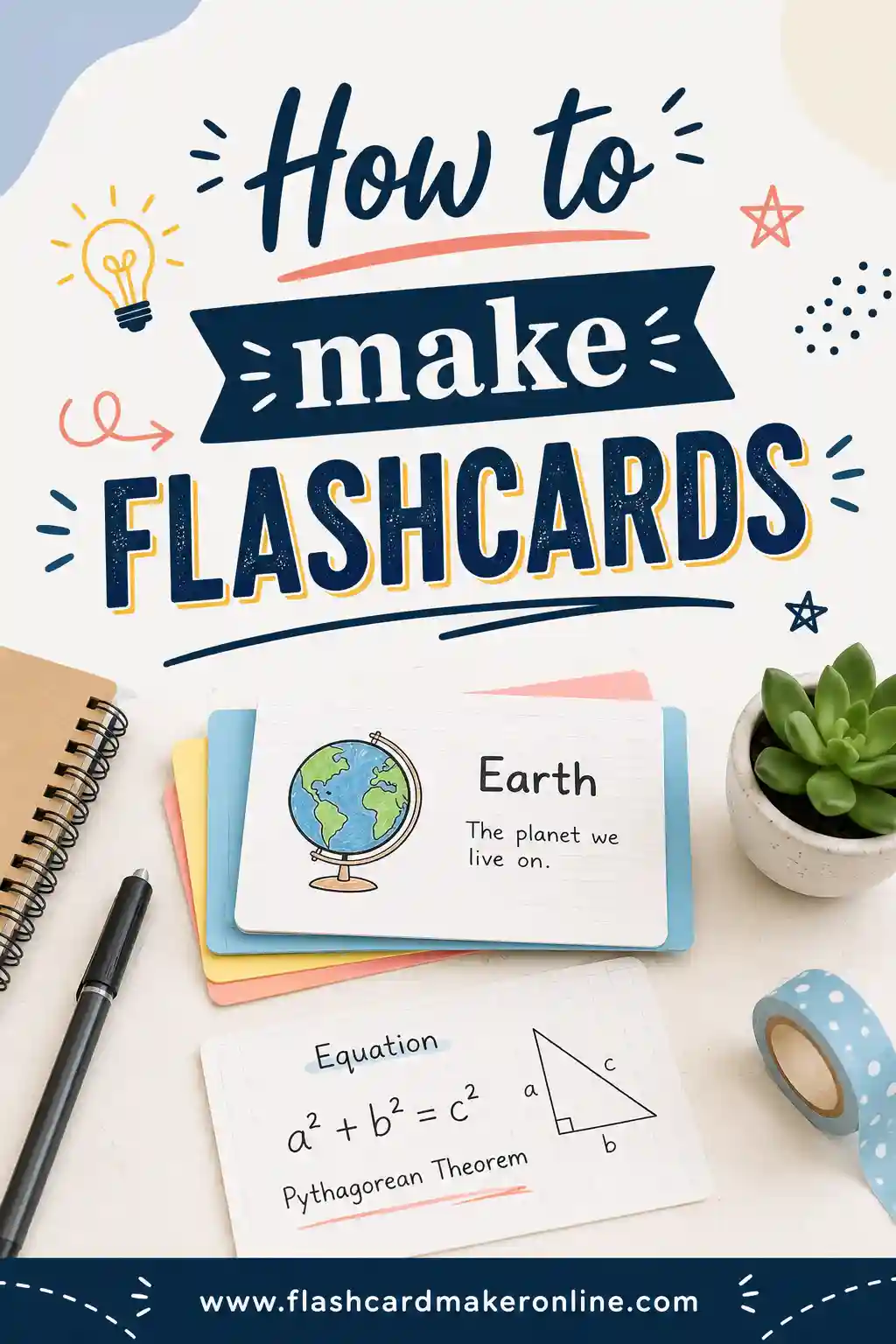
You can build the whole deck in about ten minutes. Here's the exact path in the online flashcard maker.
- Name the deck. Type a deck title like "Classic Cocktails, Week 1." Short, dated titles help if you build more decks later.
- Paste the recipes. Open Paste a list, paste the 40-line block from above (one card per line,
front : back), and choose Add to deck. Use Replace deck instead if you want to wipe a test deck and start fresh. - Add single cards. Use + Add card for anything your bar adds, like a house signature drink.
- Add pictures where they help. Glassware and garnish cards are the best candidates. A glass shape is often easier to recall from a picture than a name.
- Study on screen. Open Study mode, turn on Shuffle, and say each spec out loud before you Flip. Read aloud helps on a commute when you can't look at the screen.
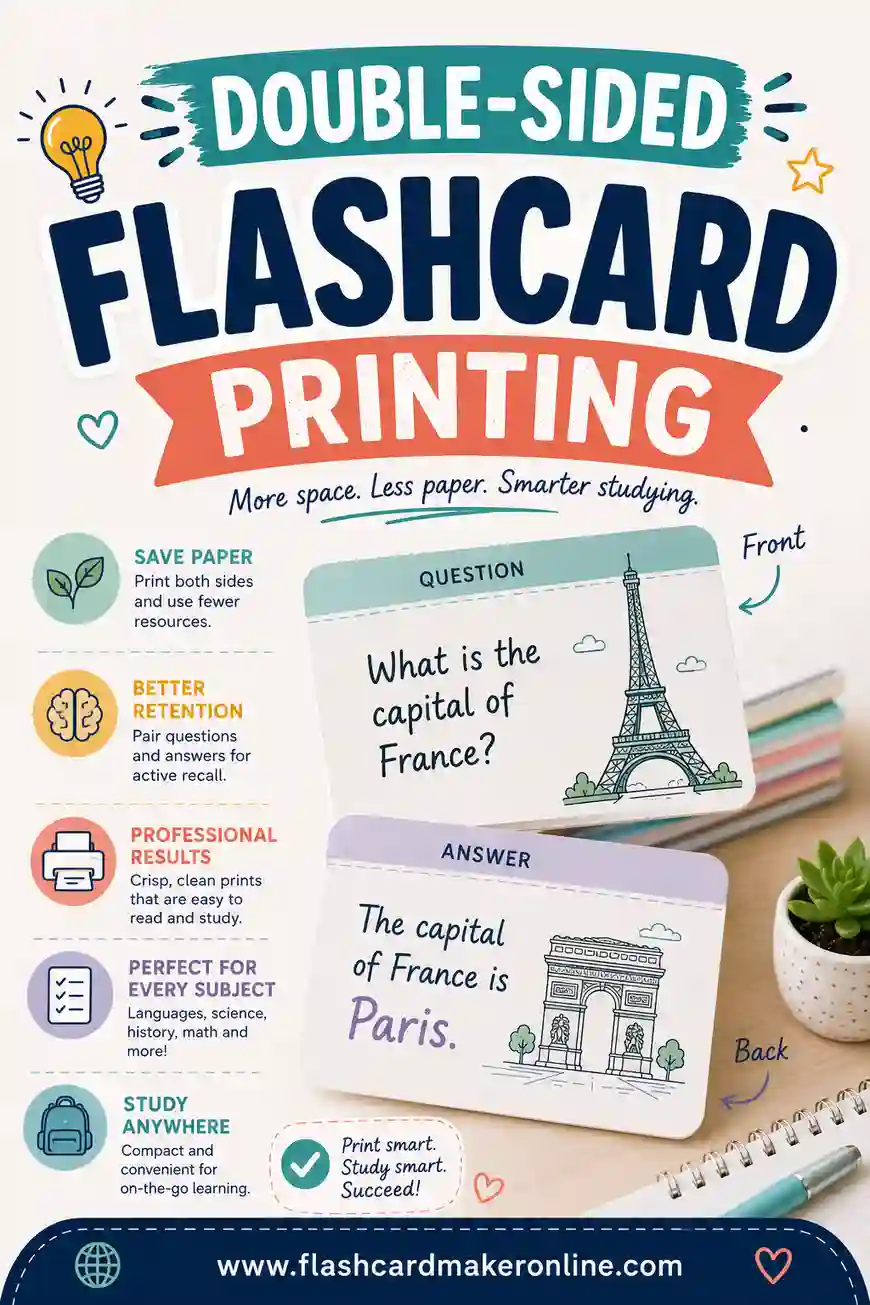
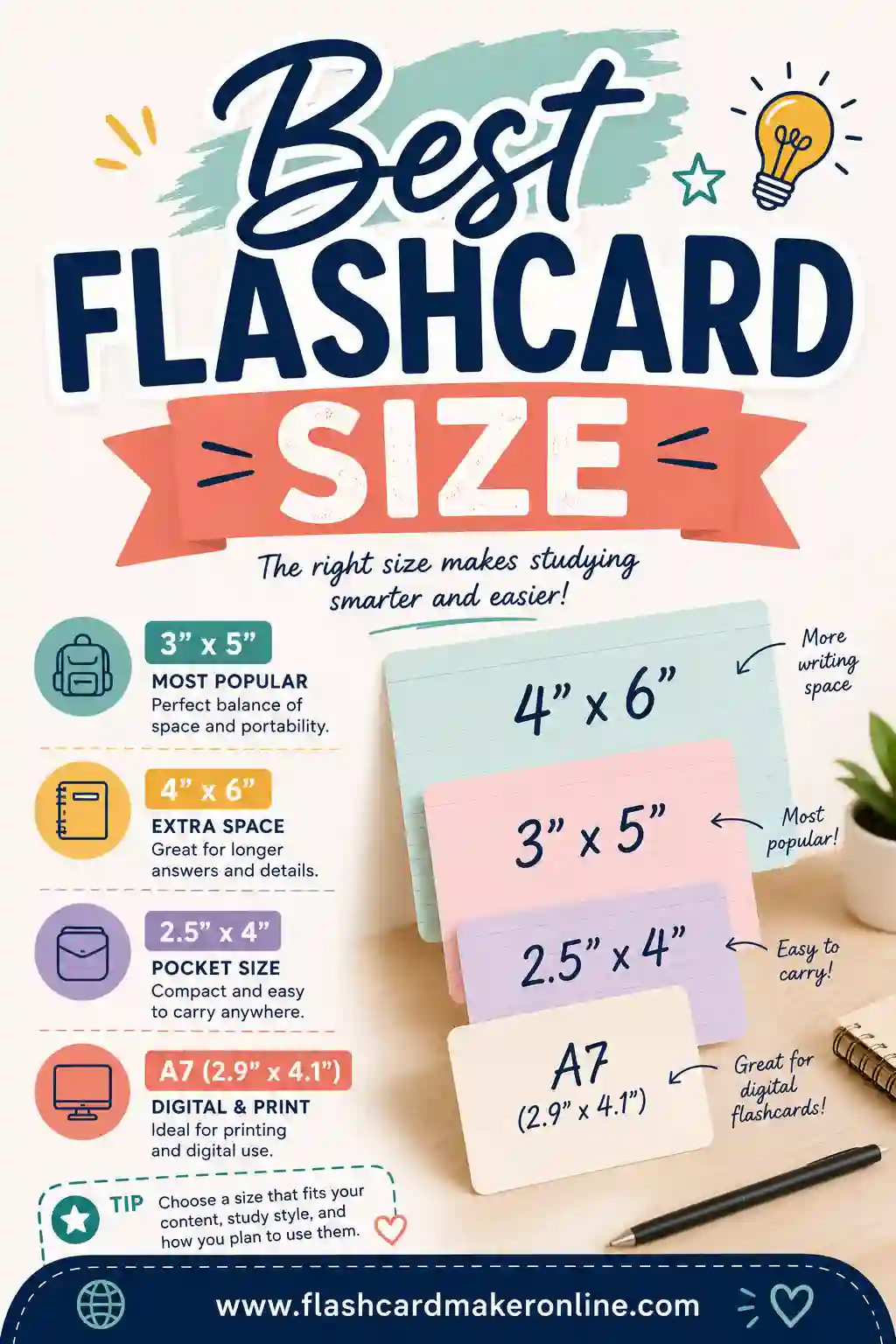
- Print it. Pick Double-sided so each spec lines up behind its drink name. 3×5 index card or Standard size fits an apron pocket. Run Print a test page first to check alignment, then print or save as PDF. Our guide to double-sided flashcard printing covers duplex settings if the backs come out shifted.
- Save and share. Use Download .csv to keep a copy you can edit, and Get share link to give classmates or new hires their own copy of the deck.
Make the glassware, technique and term cards as a second deck the same way. Two smaller decks are easier to finish than one huge one.
A 3-Week Bar Study Plan
This plan assumes 15 to 20 minutes a day. Short daily sessions beat one long weekend cram, because each review lands right as you're starting to forget.
| Days | New cards | What to do |
|---|---|---|
| 1 to 3 | Highballs (cards 26 to 33) | Learn spirit, mixer, glass, garnish. Easy wins first |
| 4 to 6 | Sours (cards 9 to 18) | Master the Daiquiri, then learn each sour as a swap |
| 7 | None | Shuffle everything so far; pull the misses into a "today" pile |
| 8 to 10 | Stirred drinks (cards 1 to 8) | Drill ratios; add difference cards for near twins |
| 11 to 13 | Collins, sparkling, tiki and specialty (cards 19 to 25, 34 to 40) | Focus on method and garnish, which are easy to mix up |
| 14 | None | Full shuffle of all 40; time how long a pass takes |
| 15 to 18 | Glassware, technique and term deck | Two short sessions a day if you can |
| 19 to 21 | None | Reverse cards: read the spec, name the drink |
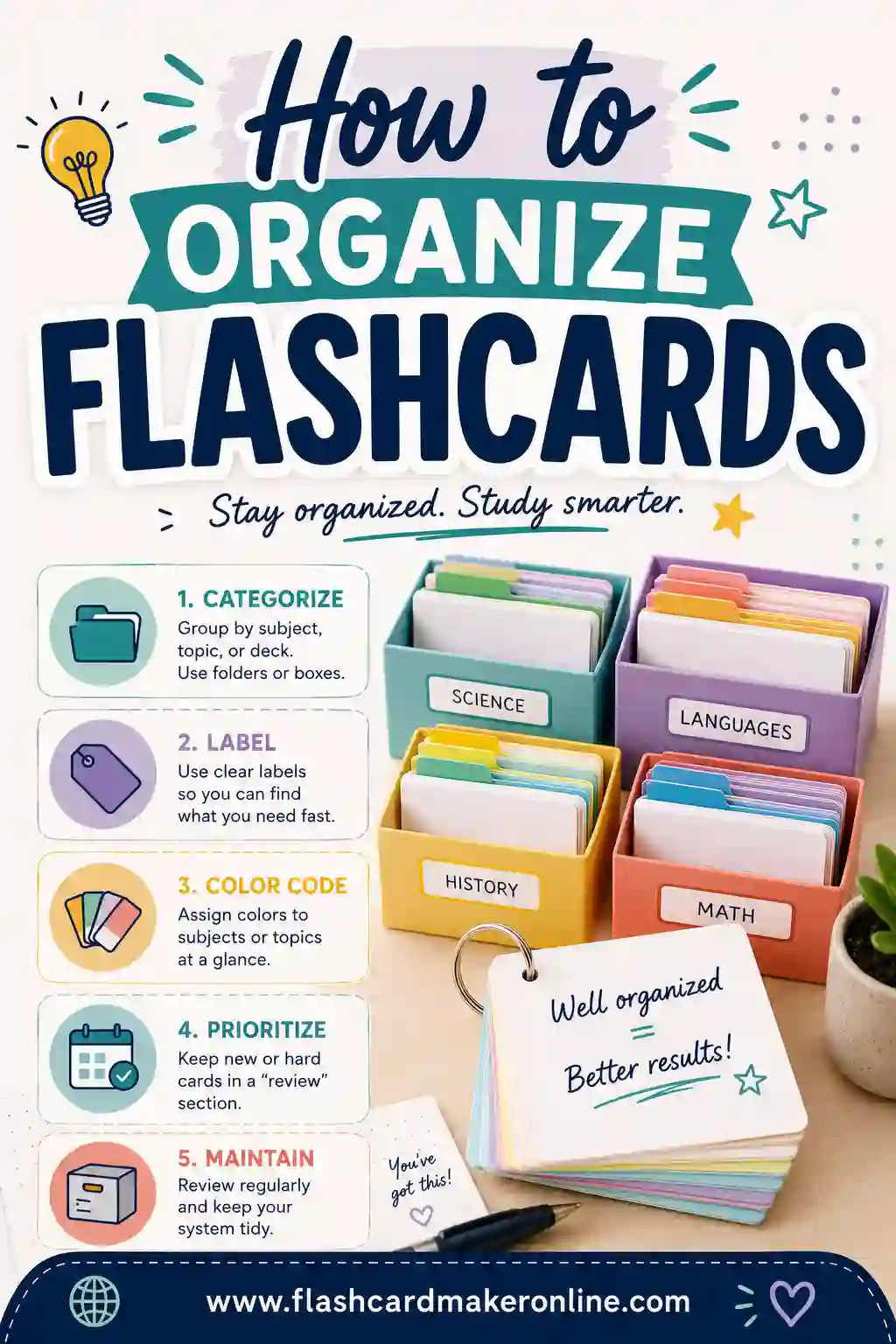
Sort cards into two piles as you go: "know it" and "still learning." Review the second pile every day and the first pile every few days. If you're juggling study with a job and other commitments, our tips on flashcards for adult learners help you fit review into a busy week.
Practice without a pour
You don't need alcohol to practice. Say each spec out loud while miming the build: grab the jigger, reach for the glass, add the garnish. If your school has a practice bar with colored water, use that. The goal is linking the card to the motion.
Mistakes New Bartenders Make With Recipe Cards (and Fixes)
- Mixing specs from different sources. Pick one source (your bar or school) and stick to it. Fix: put the source in the deck title.
- Skipping method and glass. Knowing the ingredients but stirring a Daiquiri still makes the wrong drink. Fix: keep all five parts on every back.
- Studying in menu order. You'll memorize the sequence, not the drinks. Fix: shuffle every session.
- Only front-to-back review. Fix: add reverse cards once the basics stick.
- Ignoring garnish. Guests notice. Fix: make garnish-only cards for drinks you keep missing.
Studying Responsibly
Bar study is about memory and craft, not drinking. You can learn every card here without tasting a drop. Knowing specs also means knowing standard pour sizes, which matters for consistent, responsible service. Many states and employers require responsible alcohol service training, such as checking IDs and recognizing signs of intoxication. Find out what applies where you'll work, and add those rules to a small deck of their own.
When you're ready, open the free flashcard maker, paste the 40 specs, and print your first pocket deck tonight.
▶ Open this deck in the flashcard maker
Frequently Asked Questions
How many cocktails should a new bartender memorize?
Start with 30 to 40 classics and your bar's own menu. That covers most orders on a typical shift. Add more once these feel automatic.
What should go on the back of a cocktail flashcard?
Put the base spirit and amount, the modifiers, the method, the glass and the garnish, in that order every time. The fixed order turns into a mental checklist you can use behind the bar.
Are these the official recipes?
They're common, widely taught versions, not the only correct ones. Bars and schools use their own house specs. Swap in your bar's amounts before you drill the cards.
How long does it take to memorize 40 cocktail recipes?
With 15 to 20 minutes of daily review, many students feel solid in about three weeks. Learning drinks in families speeds this up a lot.
Should I make paper cards or study on my phone?
Both work, and using both is best. Study on screen during spare minutes, then print a double-sided deck for focused sessions and quick checks before a shift.
Can I add my bar's signature cocktails?
Yes. Use + Add card or add lines in the front : back format with Paste a list. Keep the same five-part back so they fit the rest of the deck.
How do I share the deck with my coworkers?
Click Get share link in the maker. Anyone who opens it gets their own copy of the deck to study or print.
Do I need to taste the drinks to learn them?
No. You can memorize specs, glassware and technique entirely from cards and dry practice. Follow your school's and employer's rules on tasting, and always serve responsibly.