CDL Permit Test Flashcards
To pass your CDL permit tests, make flashcards straight from your state's CDL manual in three decks: general knowledge, air brakes, and combination vehicles, with one rule or number per card. Those three tests cover what most Class A applicants take first, and the questions come from the manual. You can paste the ready-made cards below into the free flashcard maker, check them against your own manual, and start studying today.
Getting a commercial learner's permit (CLP) means passing written knowledge tests before you can practice behind the wheel. Which tests you take depends on the class of license and the endorsements you want. The material is dense: air pressure numbers, inspection steps, coupling procedures, and a lot of safe-driving rules. Flashcards suit it well because so much of it is specific numbers and short rules you need to recall fast.
A key note before you start. Every state publishes its own CDL manual, and most are based on a national model, but details, test formats, and the number of questions can differ. Use the cards here as a starting point, and check every number against your state's current manual. If they differ, the manual wins.
🃏 Quiz yourself: 10 cards from this page
Read the front, say your answer, then tap the card to check.
Make, study & print this deck → Opens the free flashcard maker with all 10 cards ready to edit or print.▶ Open this deck in the flashcard maker
Which CDL Permit Tests Will You Take?
The knowledge tests you need depend on the vehicle you plan to drive. Here's the general picture. Your state's licensing agency has the exact requirements.
| Test | Who usually takes it | What it covers |
|---|---|---|
| General knowledge | Every CDL applicant | Vehicle inspection, basic control, shifting, seeing, space management, speed, hazards, emergencies, cargo, alcohol and drug rules |
| Air brakes | Anyone driving a vehicle with air brakes | Air system parts, dual systems, inspection and testing, using air brakes |
| Combination vehicles | Class A applicants | Driving combinations safely, trailer air brakes, coupling and uncoupling, inspecting combinations |
| Passenger | Bus drivers | Loading, inspections, safe passenger management |
| School bus | School bus drivers (with passenger) | Loading zones, mirrors, railroad crossings, student management |
| Tank vehicle | Drivers hauling liquids or gases in tanks | Surge, center of gravity, tank inspection |
| Doubles and triples | Drivers pulling more than one trailer | Coupling and inspecting multiple trailers |
| Hazardous materials | Drivers hauling placarded hazmat | Shipping papers, placards, loading, emergencies (also requires a security background check) |
If you skip the air brakes test, you'll usually get a restriction that bars you from driving vehicles with air brakes. Most trucking jobs use air brakes, so most applicants take it.
Federal rules also require you to hold your CLP for a minimum period before taking the skills test, and many first-time applicants must complete entry-level driver training first. Check your state's current rules and your training provider's requirements before you schedule anything.
How to Turn the CDL Manual Into Flashcards
The manual is long, and reading it twice isn't the same as knowing it. Here's a simple system for turning each section into cards.
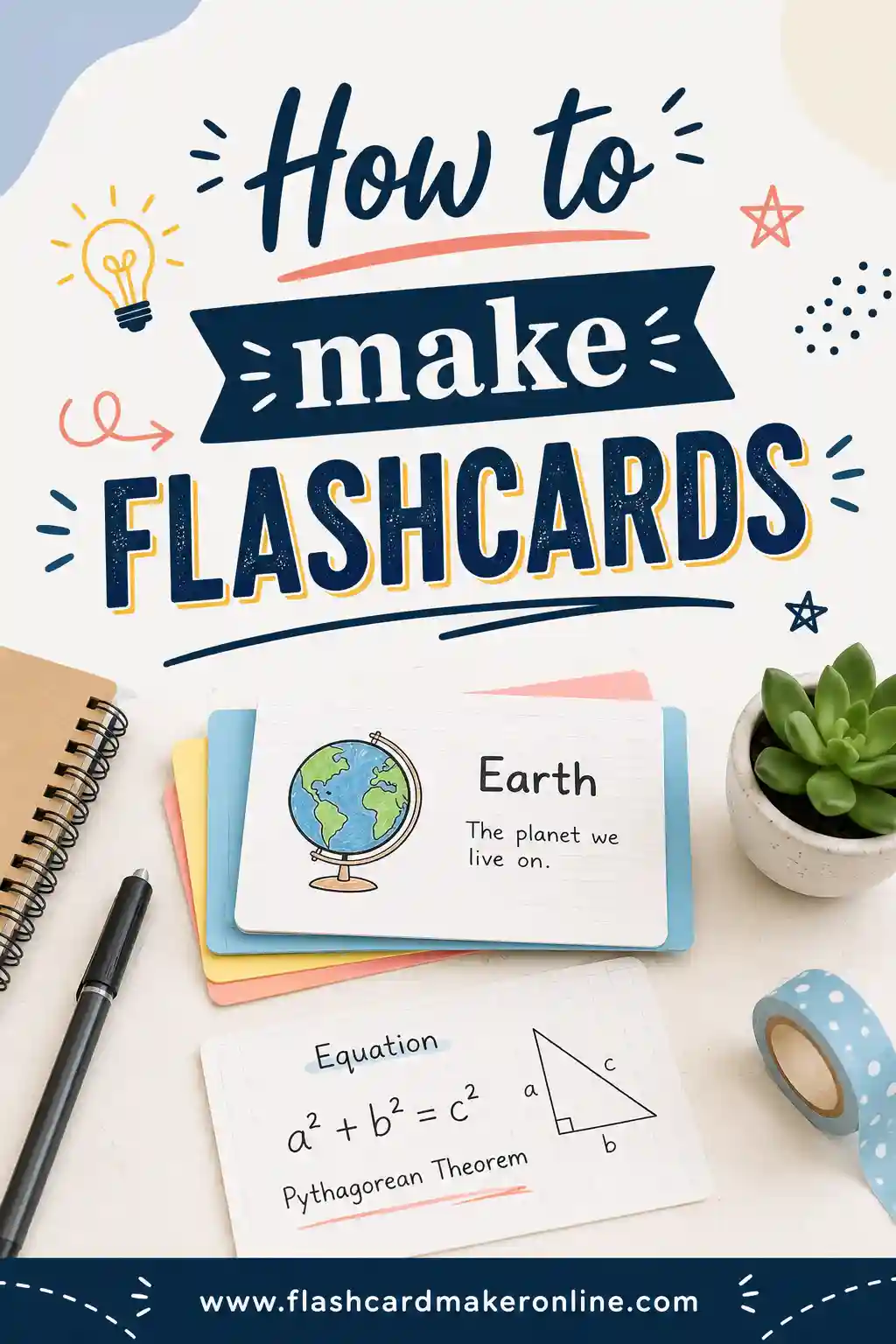
Read one section, then write cards right away. Don't read the whole manual and plan to make cards later. One section at a time keeps the cards accurate and the job small.
One rule or number per card. "Air brake system parts" is a heading, not a question. "What does the governor control?" is a question you can answer.
Write numbers as questions. The tests love numbers. "Low air warning comes on below what pressure?" is a classic card. So is "How many reflective triangles, and where?"
Add "why" cards for big rules. "Why drain air tanks daily?" helps you remember the rule and answer questions that ask about reasons.
Keep the manual's wording. If the manual says "rearward amplification," use that phrase. The test will too.
Turn diagrams into picture cards. Air system diagrams, coupling parts, and dashboard gauges are easier to remember when you see them. Snap a photo of the diagram in your manual and add it to the card.
Here's what that looks like for a single page on air brake dual systems:
| Front | Back |
|---|---|
| Dual air brake system. How many separate systems? | Two, each with its own tanks and lines |
| Dual air system. Usual primary system brakes? | Rear axle or axles |
| Dual air system. Usual secondary system brakes? | Front axle (and possibly one rear axle) |
| Dual system build-up. Typical requirement? | 85 to 100 psi within about 45 seconds (check your manual) |
| Why wait for normal pressure before driving? | So both systems have enough air for safe braking |
Five clear cards from one page. Do that for each section and you'll have a full deck by the end of the manual.
General Knowledge Cards You Can Paste In
These cards cover common topics from the general knowledge section. They're written in front : back format for the maker's Paste a list feature, one card per line. Check each against your state manual before you study.
Inspection and basic control
Pre-trip inspection. Why do it? : Safety. Find problems that could cause a crash or breakdown
Three types of vehicle inspection? : Pre-trip, en route, and post-trip
Post-trip report. What goes on it? : Any problems found that need repair
Tire tread depth. Common minimum on front tires? : 4/32 inch in every major groove
Tire tread depth. Common minimum on other tires? : 2/32 inch
Fire extinguisher. Common rating needed? : B and C type, for flammable liquids and electrical fires
Emergency equipment to carry? : Fire extinguisher, spare fuses if needed, warning devices such as reflective triangles
Steering wheel play limit on a 20-inch wheel? : More than about 10 degrees, roughly 2 inches at the rim. Check your manual
Backing. Safest way to back? : Back toward the driver side, and use a helper when possible
Backing. What to do before backing? : Get out and walk around to check the path
Double clutching. When used? : Shifting in non-synchronized transmissions
Retarders. When to turn off? : On wet, icy, or snowy roads, since they can cause skids
Seeing, communicating, and space
How far ahead should you look? : About 12 to 15 seconds
At highway speed, 12 to 15 seconds ahead is about? : A quarter mile
Following distance under 40 mph? : One second for each 10 feet of vehicle length
Following distance over 40 mph? : Add one more second
Following distance for a 40-foot vehicle under 40 mph? : 4 seconds
Following distance for a 60-foot vehicle over 40 mph? : 7 seconds
Turn signals. When to signal? : Early, well before turning, and cancel after
Stopped on a two-lane road. Where to put triangles? : Within 10 feet of the front or rear corner, about 100 feet behind, and about 100 feet ahead
Stopped on a divided or one-way road. Where to put triangles? : 10 feet, 100 feet, and 200 feet toward approaching traffic
Stopped just past a hill or curve. Back triangle placement? : Far enough back, 100 to 500 feet, so drivers see it in time
How soon to put out warning devices? : Within 10 minutes of stopping
Overhead clearance. Should you trust posted heights? : No. Repaving or snow can change actual clearance
Wide right turn. How? : Keep the rear close to the curb so cars cannot pass on the right, and swing wide as you complete the turn
Speed, hazards, and emergencies
Hydroplaning can happen at speeds as low as? : About 30 mph
Black ice. Where is it common? : Bridges, shaded spots, and areas that look wet in freezing weather
Downgrade. Choose gear when? : Before starting down the grade
Snub braking. What is it? : Brake until speed drops about 5 mph below safe speed, release, repeat
Brake fade. Main cause? : Overheating from using brakes too much
Escape ramps. What are they for? : Stopping runaway vehicles on steep downgrades
Controlled braking. How? : Squeeze brakes firmly without locking the wheels
Stab braking. How? : Brake fully, release when wheels lock, reapply when they roll (non-ABS)
Front tire blowout. First action? : Hold the steering wheel firmly and stay off the brake until slowed
Skid recovery. First step? : Stop braking or accelerating so wheels can roll
Railroad crossings. Never do what? : Shift gears while crossing the tracks
Required railroad stop. How close? : Within 50 feet but no closer than 15 feet
Fire on a truck. First step? : Pull off the road, away from buildings and traffic, and call for help
Hazardous cargo fire. What to do? : Follow the shipping papers and emergency response information. Don't fight it yourself without training
Cargo and alcohol rules
Cargo check. When first? : Within the first 50 miles
Cargo check. Then how often? : About every 3 hours or 150 miles, and after each break
Tiedowns. Common rule? : At least one per 10 feet of cargo, and never fewer than two
Who is responsible for cargo securement? : The driver, even if someone else loaded it
High center of gravity. Main danger? : Rollover
Blood alcohol limit while driving a commercial vehicle? : 0.04 percent under federal rules
Only thing that sobers you up? : Time
Refusing an alcohol test. Common result? : Loss of CDL for at least one year
Air Brakes, Combination, and Endorsement Cards
The air brakes test is where most people need the most review. The numbers are specific, and many questions ask you to put steps in order. These cards follow the model CDL manual that most states use. Check them against your own state's version.
Parts of the air brake system
Three braking systems on air-brake vehicles? : Service, parking, and emergency
Air compressor. Job? : Pumps air into the air storage tanks
Air compressor governor. Job? : Controls when the compressor pumps air into the tanks
Governor cut-out. Typical pressure? : About 125 psi
Governor cut-in. Typical pressure? : About 100 psi
Air storage tanks. Why drain daily? : Water and compressor oil build up and can freeze or damage brakes
Automatic tank drains. Still check manually? : Yes, check that they work
Alcohol evaporator. Job? : Puts alcohol in the air system to reduce ice in cold weather
Safety relief valve. Typical opening pressure? : About 150 psi
Brake pedal (foot valve). What does pressing it do? : Sends air to the brakes. More pressure means more braking
S-cam drum brakes. What turns the S-cam? : The slack adjuster, pushed by the brake chamber push rod
Supply pressure gauge. Shows what? : How much pressure is in the air tanks
Application pressure gauge. Shows what? : How much air pressure you're applying to the brakes
Low air pressure warning. Comes on before? : 60 psi
Spring brakes. What holds them off? : Air pressure
Spring brakes. Usually come on automatically at? : Between 20 and 45 psi
Parking brakes. When to avoid using them? : When brakes are very hot or wet in freezing weather
ABS. Required on air-brake trucks built after? : March 1, 1997 (trucks), March 1, 1998 (trailers)
ABS. What does it do? : Keeps wheels from locking up during hard braking
Inspecting and testing air brakes
Slack adjuster check. Too much movement? : More than about 1 inch where the push rod attaches when pulled by hand
Air leakage rate, engine off, brakes released, single vehicle? : No more than 2 psi in one minute
Air leakage rate, engine off, brakes released, combination? : No more than 3 psi in one minute
Air leakage rate, brakes fully applied, single vehicle? : No more than 3 psi in one minute after the first drop
Air leakage rate, brakes fully applied, combination? : No more than 4 psi in one minute after the first drop
Low air warning test. How? : Fan the brakes to lower pressure. Warning must come on before 60 psi
Spring brake test. How? : Keep fanning. Parking brake knob should pop out between 20 and 45 psi
Governor test. What to check? : Cut-out near 125 psi and cut-in near 100 psi
Parking brake test. How? : Set it and gently pull against it in a low gear to see if it holds
Service brake test. How? : Move slowly, apply brakes firmly, check for pulling or delay
The air brake check is also a series of steps done in order, and some states test that order. Make "what comes next" cards for it. For example, the front could read "Air brake check. After testing the low air warning, what's next?" and the back gives the next step from your manual. Build one card for each step in the sequence, then a final card that asks you to list every step from memory. Saying the full sequence out loud, start to finish, is good practice for the written test and the skills test that follows. If your school teaches a slightly different order than the manual, ask your instructor which one your state examiner expects, and use that version on every card.
Using air brakes
Normal stop with air brakes. How? : Push the brake pedal down smoothly, adjusting pressure as needed
Brake lag. Why do air brakes take longer? : Air takes time to flow through the lines to the brakes
Total stopping distance. Four parts? : Perception distance, reaction distance, brake lag distance, and braking distance
Low air warning while driving. What to do? : Stop and park safely as soon as possible
Proper braking on a long downgrade. Technique? : Low gear plus snub braking, not steady pressure
Low gear on a downgrade. Rule of thumb? : Use the gear you'd need to climb that hill, or a lower one
Air brakes in wet weather. Check? : Test them after driving through water, and dry them by light braking
Combination vehicles
Class A applicants also take the combination vehicles test. It covers driving combinations safely, trailer air brakes, and coupling. These cards follow the model manual. Check your own state's version.
Rearward amplification. What is it? : Crack-the-whip effect that makes trailers swing more than the tractor
Which combination is most likely to roll over? : Triples, then doubles, then a tractor-semitrailer
Rollover. Two big causes? : Turning too fast and steering too quickly
Off-tracking. What happens? : Rear wheels follow a shorter path than front wheels in turns
Trailer skid. First step? : Release the brakes to get traction back
Glad hands. Emergency line color? : Red
Glad hands. Service line color? : Blue
Trailer air supply control. Typical shape and color? : Red, eight-sided knob
Tractor protection valve. Job? : Keeps air in the tractor if the trailer breaks away or leaks badly
Trailer hand valve (trolley valve). Use it for parking? : No. Use it only to test trailer brakes
Emergency line. What does it do? : Supplies air to trailer tanks and controls the trailer emergency brakes
Service line. What does it do? : Carries air controlled by the foot brake or hand valve to the trailer brakes
Older trailers without spring brakes. Risk when parking? : Air can leak away and the trailer may roll
Coupling. Check the fifth wheel? : Fifth wheel tilted down and jaws open before backing under
Coupling. Before backing under, trailer height? : Trailer slightly lower than the center of the fifth wheel
Coupling. How to test the connection? : Pull gently forward in low gear with trailer brakes locked (tug test)
Coupling. Visual check? : No space between upper and lower fifth wheel, jaws closed around the kingpin shank
Coupling. Landing gear? : Fully raised and crank handle secured before driving
Uncoupling. Before releasing the fifth wheel lock, do what? : Lower the landing gear until it just touches the ground, on firm surface
Converter dolly. Job? : Connects a second trailer, acting like a short tractor
You'll notice some numbers here depend on equipment age or state rules. That's normal. The model manual itself often says "most" or "usually." Your job on the test is to match your state manual's wording.
Endorsement starter cards
If you're adding endorsements, give each one its own deck. Here are a few starter cards from topics the model manual covers. Each endorsement section has much more, so read it fully and keep adding cards as you go.
Tank vehicle. What is liquid surge? : Movement of liquid in a partly filled tank that pushes the vehicle
Tank baffles. What do they control? : Front-to-back surge. They do little for side-to-side surge
Smooth bore tank. What makes it tricky? : No baffles, so forward and back surge is strong
Outage. Why leave room in a tank? : Liquids expand as they warm, so they need space
Tank vehicle. Why extra care on curves? : High center of gravity makes rollover more likely
Hazmat. Where are shipping papers kept while driving? : Within reach with your seatbelt fastened, in the driver door pouch or in clear view
Hazmat. Where are shipping papers kept when you leave the cab? : On the driver seat or in the pouch on the driver door
Hazmat placards. How many sides of the vehicle? : All four sides
Hazmat. How many hazard classes? : Nine
Passenger vehicle. Standee line rule? : No passengers standing forward of the standee line
School bus. How far out does the danger zone extend? : Up to about 10 feet from the bus on all sides
Doubles. Which trailer goes in front? : The heavier trailer, closest to the tractor
Endorsement tests are usually shorter than general knowledge, but the questions are just as specific. Hazmat in particular has a lot of detail on loading rules, segregation, and emergency response. Plan extra time for it, and check your state's current rules on the background check, which can take a while to clear.
A quick way to manage several decks: put the endorsement name at the start of every front, like "Tanker" or "Hazmat." When you shuffle everything together near the end, you'll still know which test each card belongs to.
How to Build Your CDL Deck in the Maker
Here's the exact process, with no account or download.
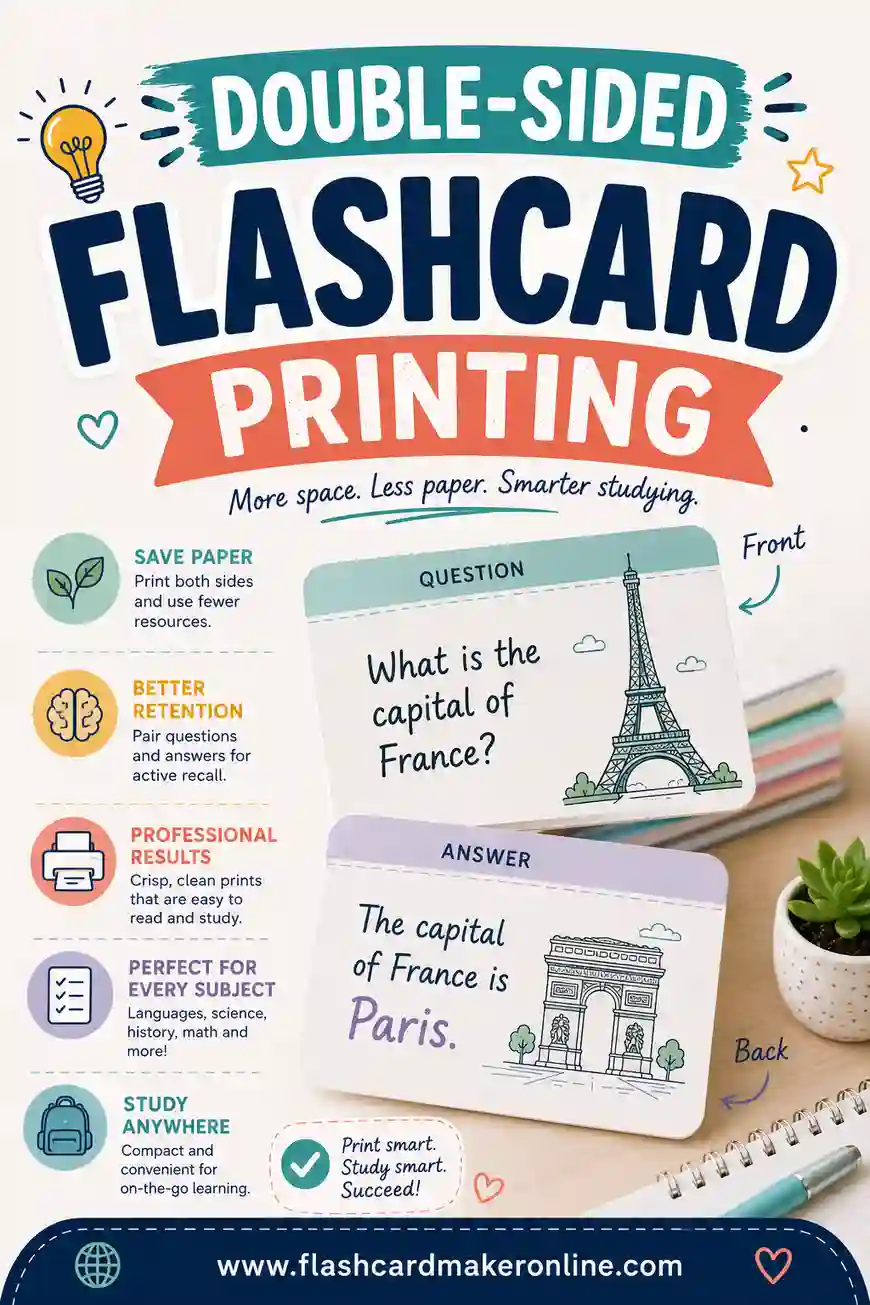
- Open the flashcard maker and type a deck title, like "CDL Air Brakes." Make one deck per test. Smaller decks make it easier to focus on the test you're about to take.
- Skip presets for this one. There's no CDL preset in the "Start from a preset" menu, so start from a blank deck.
- Click Paste a list. Paste one of the blocks above. Each line is
front : back, with spaces around the colon. Choose Add to deck to combine blocks or Replace deck to start fresh. - Check every card against your manual. Edit any number or wording that differs. Use + Add card to add cards from sections not covered here, like your state's specific rules.
- Add pictures. Photograph the air brake diagram, the dashboard gauges, glad hands, and the fifth wheel parts from your manual, and add each photo to the matching card. If you're also reviewing road signs, picture cards help there too.
- Study in short sessions. Open Study mode, hit Shuffle, answer each card out loud, then Flip. Use Prev and Next to go back over misses. 🔊 Read aloud works well for hands-free review when you're not driving, like during a break or while walking.
- Print a pocket deck. Choose Double-sided so backs line up with fronts, and pick the 3×5 index card size to fit a shirt pocket or a visor clip. Click Print a test page first to check alignment, then print or save as PDF.
- Save and share. Download .csv keeps a backup you can reload with Import a file. Get share link lets a classmate in your CDL school grab their own copy.
Pre-Trip Inspection Cards
You'll need the pre-trip inspection for the skills test, not the written test. But starting early pays off, and many knowledge questions touch on inspection anyway. Flashcards help you remember the order and the specific checks.
Use two kinds of cards:
| Card type | Front | Back |
|---|---|---|
| Sequence | Pre-trip. What comes after the engine compartment check? | The step your manual or school lists next |
| Item check | Leaf springs. What are you looking for? | Missing, shifted, cracked, or broken leaves |
| Item check | Brake hoses. What are you looking for? | Cracks, worn spots, leaks, secure connections |
| Item check | Tires. Three things to check? | Tread depth, inflation, damage such as cuts or bulges |
| Item check | Wheels and rims. What are you looking for? | Damaged rims, missing lug nuts, rust trails around nuts |
| Item check | Mirrors and windshield. What are you looking for? | Clean, properly adjusted, no cracks that block view |
| Item check | Lights. What to confirm? | All work and are clean, including turn signals and four-way flashers |
Inspection order differs between states and schools, and some states have their own scoring sheet. Get the exact sequence from your training provider and build sequence cards from that list, not from a generic one.
A tip that works well: say each item out loud as you'd say it to an examiner. "Checking leaf springs for missing, shifted, cracked, or broken leaves." When you practice in the yard, the words are already there.
Study Plan: Two to Four Weeks to Your Permit
Most people can be ready for the knowledge tests in a few weeks with daily review. Adjust the pace to your schedule.
| Week | Focus | Daily time |
|---|---|---|
| Week 1 | Read the general knowledge section. Make and study general knowledge cards | 30–45 min |
| Week 2 | Read air brakes. Make air brake cards. Keep reviewing general knowledge misses | 30–45 min |
| Week 3 | Read combination vehicles (Class A) and any endorsement sections. Make cards | 30–45 min |
| Final days | Shuffle all decks together. Take practice tests. Turn misses into cards | 30–60 min |
A few habits make this plan work:
Review misses first. Start each session with cards you got wrong last time. Then do a shuffled mix.
Say the answer before you flip. Thinking "yeah, I know that" isn't enough. Say it or write it, then check. The guide to the active recall method explains why this beats rereading.
Keep sessions short. Twenty minutes of focused review twice a day often works better than one long session. If you're not sure how many cards to handle at once, see how many flashcards per day for a simple way to set your daily limit.
Pair cards with practice tests. Cards build quick recall of rules and numbers. Practice tests show you how questions are worded. Every practice question you miss becomes a new card.
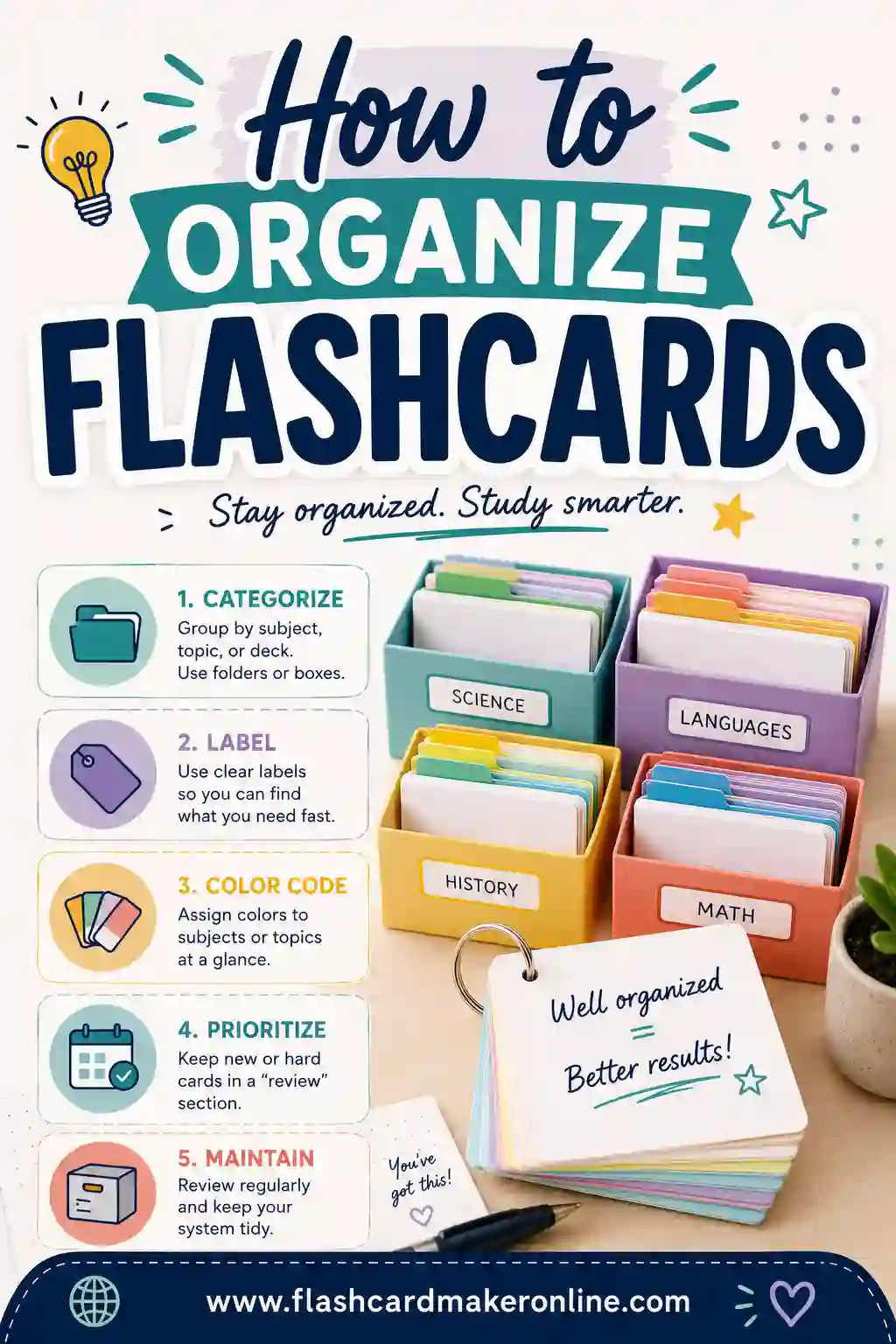
Use piles. With printed cards, keep "missed," "shaky," and "solid" piles. Review "missed" daily, "shaky" every couple of days, and "solid" once or twice a week.
Mistakes That Cost People the CDL Permit Test
Studying from random online lists. Some lists are outdated or from a different state. Your state manual is the source the test is written from. Use it to check every card.
Skipping the air brakes test. It feels optional, but without it you'll usually get an air brake restriction. Most trucking jobs need air brakes, so plan to take it.
Memorizing numbers without context. Knowing "60 psi" isn't enough. Know what happens at 60 psi (low air warning) and what happens between 20 and 45 psi (spring brakes come on). Make a card for each.
Mixing up similar numbers. Governor cut-in and cut-out, leakage rates for single versus combination vehicles, and triangle distances are easy to swap. Make contrast cards, like "Leakage, brakes released. Single vs combination?" with both numbers on the back.
Mixing up glad hand colors. Red is emergency, blue is service. A picture card fixes this for good.
Cramming the night before. Spread review over days. The rules need to be automatic, and that takes a few rounds of spaced review.
Ignoring endorsement sections. If you want tanker, doubles and triples, or hazmat, each has its own test. Make a separate deck for each.
Only studying cards you already know. It feels productive, but it isn't. Pull the misses out and do those first.
Variations for Different Licenses and Learners
Class B drivers. Box trucks, dump trucks, and buses usually fall here. You'll take general knowledge and often air brakes, plus passenger or school bus if you're driving people. Skip the combination deck unless you plan to upgrade.
Class A drivers. Take general knowledge, air brakes, and combination vehicles. Add doubles and triples, tanker, or hazmat decks if your job needs them.
Bus drivers. Add a passenger deck, and a school bus deck if needed. Railroad crossing rules, loading and unloading, and mirror use show up heavily.
English learners. Many states offer knowledge tests in other languages, so check with your licensing agency. Use 🔊 Read aloud to hear English trucking terms, and add a translation line to the back of tricky cards if it helps.
Experienced drivers upgrading or returning. Focus on numbers and rules that may have changed since you last tested. Compare your old knowledge to the current manual and make cards for every difference.
Car drivers new to big rigs. If road signs and basic traffic rules feel rusty, a quick refresher deck helps. See the guides to driving test flashcards and traffic signs flashcards for ready-made ideas.
Your permit is the first step. Build one deck per test, check every card against your state manual, and review a little every day. When you're ready, open the free flashcard maker and paste in your first block.
▶ Open this deck in the flashcard maker
Frequently Asked Questions
What tests do I need for a CDL permit?
Most applicants take the general knowledge test. If you'll drive a vehicle with air brakes, you'll also take air brakes, and Class A applicants take combination vehicles. Endorsements like passenger, school bus, tanker, doubles and triples, and hazmat each have their own test. Check your state's licensing agency for the exact list.
Are these CDL permit flashcards based on my state's manual?
They follow the model CDL manual that many states use, but details and test formats can vary. Check every card against your state's current manual and edit any number or wording that differs. The manual is what the test is written from.
How many flashcards do I need for the CDL permit test?
A solid deck often runs a few hundred cards across general knowledge, air brakes, and combination vehicles, plus any endorsements. Start with the blocks on this page, then add cards for each manual section and every practice question you miss.
What are the hardest CDL permit topics?
Many people find air brakes the toughest, because of the specific pressure numbers, leakage rates, and inspection steps. Coupling and uncoupling in the combination section is another common sticking point. Picture cards and contrast cards help a lot with both.
Can I study CDL flashcards on my phone?
Yes. The flashcard maker runs in your browser, so you can open your deck and use Study mode on your phone. Many people also print a pocket deck for times when they're away from a screen.
How should I print CDL flashcards?
Choose the Double-sided layout so fronts and backs line up, and try the 3×5 index card size for a pocket deck. Print a test page first to check that your printer lines up both sides. You can also save the deck as a PDF.
How long does it take to study for the CDL permit?
Many people prepare in two to four weeks with daily review, but it depends on your background and schedule. Go one section at a time, review daily, and take practice tests near the end. Move on when you're getting nearly every card right on shuffled review.
Do I need flashcards for the pre-trip inspection?
The pre-trip inspection is part of the skills test, not the written permit test. Starting cards early still helps, since inspection steps come up on knowledge questions too. Get the exact inspection order from your training provider or state and build your sequence cards from that.