Visiting Your Partner's Family Abroad for Christmas — 40 Survival Phrases Deck
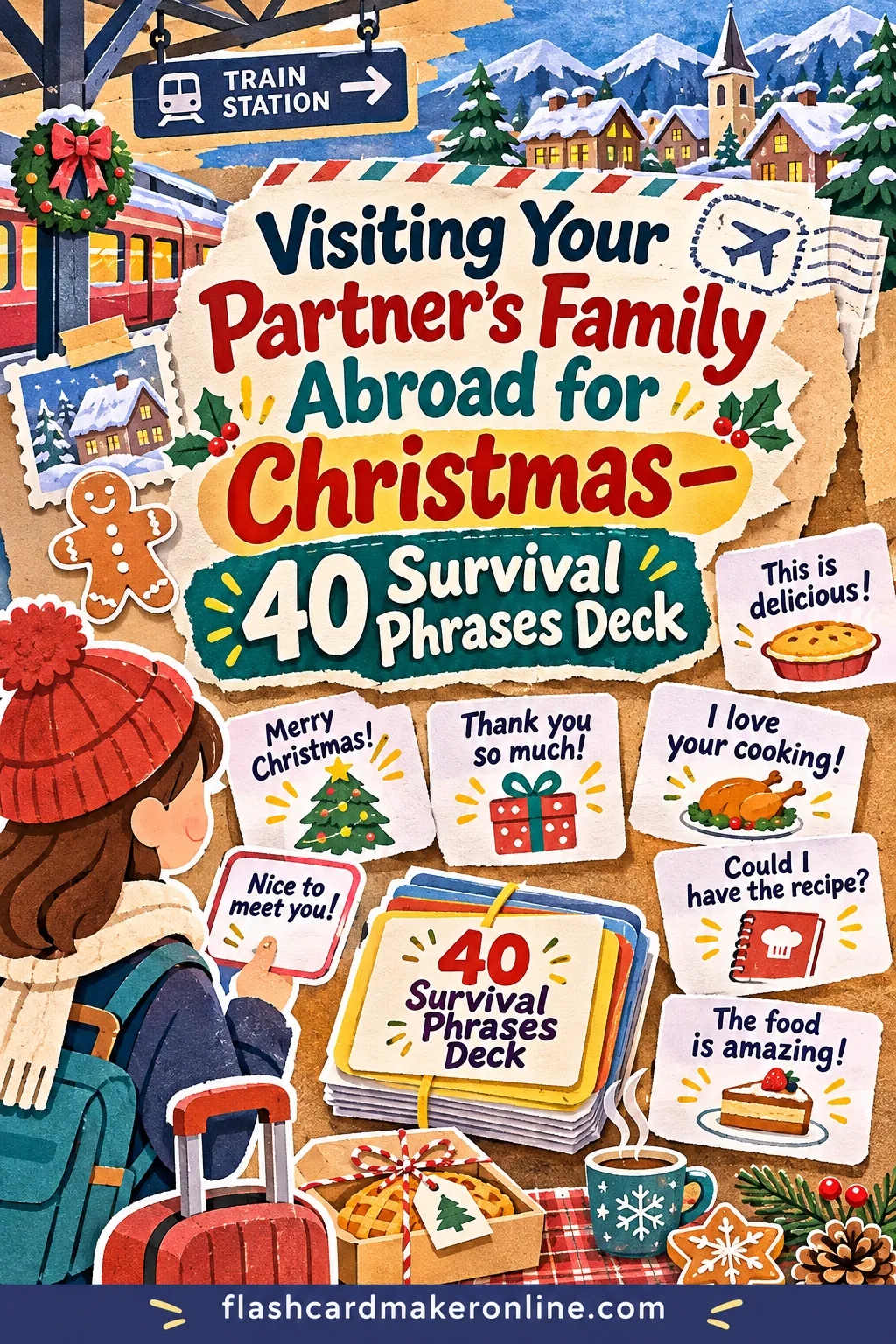
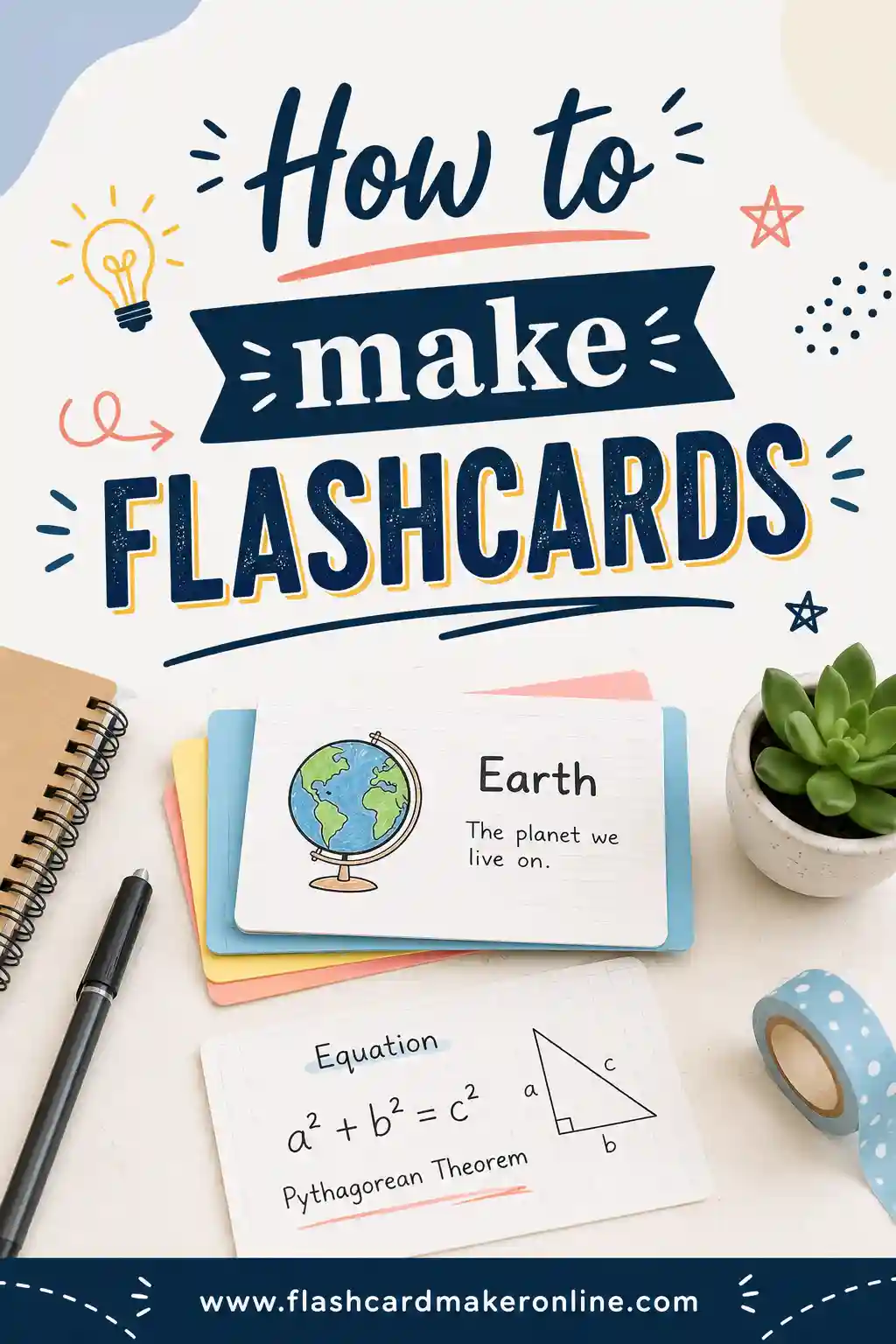
The phrases to learn before visiting in-laws abroad are not tourist phrases. You need about 40 family phrases: greetings, thank-yous, food compliments, a few "please say that again" lines, and a warm goodbye, practiced out loud for 20 minutes a day for three or four weeks. Put them on flashcards with English on the front and the phrase on the back, and say each answer before you flip. You can build the whole deck in about 15 minutes with our free flashcard maker, study it on your phone, and print a pocket set for the trip.
Below you'll find the full 40-phrase list (with Spanish as the worked example), the same key phrases in French, German, Italian and Portuguese, exact settings for building and printing the deck, a four-week study plan that ends the day you fly, and short scripts for the moments that make people nervous: the front door, the dinner table, the gift exchange and the goodbye.
🃏 Quiz yourself: 12 cards from this page
Read the front, say your answer, then tap the card to check.
Make, study & print this deck → Opens the free flashcard maker with all 12 cards ready to edit or print.▶ Open this deck in the flashcard maker
Why a Tourist Phrasebook Won't Help at the Christmas Table
Most phrase lists are written for hotels, trains and restaurants. "How much is this?" "Where is the station?" "A table for two, please." Those are fine if you're backpacking. They're close to useless when you're sitting in your partner's grandmother's dining room on Christmas Eve.
A family visit asks for a different set of words. You'll say hello to the same people many times a day. You'll be offered food again and again. You'll want to thank people for things that don't come with a receipt: a bed made up for you, a dish someone cooked for two days, a gift chosen just for you. And you'll spend a lot of time listening to fast, overlapping conversation in a language you're still learning.
So the goal of this deck is narrow and practical:
- Show warmth. A handful of greetings and compliments, said with a smile, do more than a perfect grammar lesson.
- Get through meals gracefully. Accepting food, declining food, praising food and offering to help clear the table.
- Recover when you're lost. Polite ways to say "again, please" and "slower, please" so you can stay in the conversation instead of nodding blankly.
- Handle the small practical stuff. The bathroom, bedtime, what time you're leaving, how to say you're tired.
That's it. You're not aiming for fluency by Christmas. You're aiming for a family that remembers you tried, and a few moments where you understood the joke and laughed at the right time.
Why flashcards fit this job
Phrases stick when you have to pull them out of your own memory, not when you read them over. A flashcard forces that. You see "Thank you for the meal," you say "Gracias por la comida" out loud, and only then do you flip to check. That act of recalling, called active recall, is what makes the phrase come out on its own when you need it at the table. Our guide on how to make flashcards for languages covers this in more depth if you want the background.
A short, focused deck also beats a big app course for a deadline like this. Forty cards is few enough to review every single day, and every card on it is a sentence you'll actually say.
The 40 Phrases to Learn Before Visiting In-Laws Abroad
Here's the full list, grouped by the moments you'll face. The example language is Spanish because it's one of the most common situations, but the English column is the real list. Swap in your partner's language and keep the same 40 meanings.
A few notes before you start:
- Formal or casual? Spanish (and many other languages) has a polite "you" and a casual "you." The phrases below use the polite form (usted), which is safe with parents and grandparents. Your partner can tell you if the family expects the casual form (tú) with everyone. Ask early, because it changes many verbs.
- He or she endings. Some phrases change depending on who's speaking. "Estoy lleno" is said by a man, "Estoy llena" by a woman. Put only your version on your card.
- Regional words. Spanish in Spain and Spanish in Mexico or Argentina differ in small ways. Have your partner check each card for how their family actually talks.
Greetings and meeting the family (8 phrases)
| # | English (front) | Spanish (back) |
|---|---|---|
| 1 | Nice to meet you | Mucho gusto / Encantado (Encantada) |
| 2 | Merry Christmas | Feliz Navidad |
| 3 | Happy New Year | Feliz Año Nuevo |
| 4 | Thank you for having me | Gracias por recibirme |
| 5 | Good morning | Buenos días |
| 6 | Good night (going to bed) | Buenas noches |
| 7 | How are you? (polite) | ¿Cómo está usted? |
| 8 | I'm [your name], [partner]'s partner | Soy [nombre], la pareja de [nombre] |
At the table (10 phrases)
| # | English (front) | Spanish (back) |
|---|---|---|
| 9 | Thank you for the meal | Gracias por la comida |
| 10 | It's delicious | Está delicioso / Está riquísimo |
| 11 | Could I have a little more, please? | ¿Me da un poquito más, por favor? |
| 12 | I'm full, thank you | Estoy lleno (llena), gracias |
| 13 | Just a little, please | Solo un poquito, por favor |
| 14 | What is this dish called? | ¿Cómo se llama este plato? |
| 15 | Did you make this? | ¿Lo hizo usted? |
| 16 | Can I help in the kitchen? | ¿Puedo ayudar en la cocina? |
| 17 | I don't eat meat | No como carne |
| 18 | I'm allergic to nuts | Soy alérgico (alérgica) a los frutos secos |
Cards 17 and 18 are examples. Replace them with your own needs, or drop them if you don't have any. If you have a serious food allergy, also write it out in full on a printed card you can hand to whoever is cooking. A card that says it clearly is safer than trying to explain it in a new language over a noisy kitchen.
When you're lost (8 phrases)
| # | English (front) | Spanish (back) |
|---|---|---|
| 19 | Could you repeat that, please? | ¿Puede repetirlo, por favor? |
| 20 | More slowly, please | Más despacio, por favor |
| 21 | I'm still learning | Todavía estoy aprendiendo |
| 22 | How do you say...? | ¿Cómo se dice...? |
| 23 | What does ... mean? | ¿Qué significa...? |
| 24 | I understand a little | Entiendo un poco |
| 25 | I don't understand | No entiendo |
| 26 | Sorry / Excuse me | Perdón |
These eight are your safety net. They're the cards to learn first, because they turn every confusing moment into a small chance to learn something. "¿Cómo se dice...?" while pointing at the dessert is also one of the fastest ways to get the whole table helping you, which tends to go over well.
Warm words (8 phrases)
| # | English (front) | Spanish (back) |
|---|---|---|
| 27 | Your home is beautiful | Su casa es preciosa |
| 28 | I'm so happy to be here | Estoy muy feliz de estar aquí |
| 29 | Thank you for everything | Gracias por todo |
| 30 | You're very kind | Es usted muy amable |
| 31 | I've heard so much about you | He oído hablar mucho de usted |
| 32 | Merry Christmas to the whole family | Feliz Navidad a toda la familia |
| 33 | What a lovely gift, thank you | Qué regalo tan bonito, gracias |
| 34 | This is for you | Esto es para usted |
Practical everyday phrases (6 phrases)
| # | English (front) | Spanish (back) |
|---|---|---|
| 35 | Where is the bathroom? | ¿Dónde está el baño? |
| 36 | Let me wash the dishes | Déjeme lavar los platos |
| 37 | I'm tired, I'm going to bed | Estoy cansado (cansada), me voy a dormir |
| 38 | What time do we leave? | ¿A qué hora salimos? |
| 39 | See you tomorrow | Hasta mañana |
| 40 | Goodbye, I'll miss you all | Adiós, los voy a extrañar |
Card 40 is a good example of a regional difference. "Los voy a extrañar" is common in much of Latin America, while in Spain a family might say "Os voy a echar de menos." This is exactly the kind of card your partner should check.
Bonus: who's who cards
On top of the 40 phrases, make a small set of family cards. These matter more than you'd think. Calling your partner's aunt by her name, or knowing that the man at the end of the table is a cousin and not an uncle, makes you seem like part of things.
Make one card per person: a photo on the front (ask your partner for one, or use a group picture), and on the back their name, how they're related to your partner, and one detail ("Tía Rosa, Mom's sister, makes the tamales"). The maker lets you add an image to either side of any card with the Image button, and the pictures stay in your browser, so they're never uploaded.
Add a few relationship words too. In Spanish, for example: suegra (mother-in-law), suegro (father-in-law), cuñado and cuñada (brother- and sister-in-law), abuela and abuelo (grandmother and grandfather), tío and tía (uncle and aunt), primo and prima (cousin).
The Same Key Phrases in Other Languages
If your partner's family speaks something other than Spanish, here are ten of the most important cards in four more languages. Use these as a head start, then have your partner check the wording and fill in the other 30 cards for their family.
| English | French | German | Italian | Portuguese (Brazil) |
|---|---|---|---|---|
| Nice to meet you | Enchanté (Enchantée) | Freut mich | Piacere | Prazer em conhecer |
| Merry Christmas | Joyeux Noël | Frohe Weihnachten | Buon Natale | Feliz Natal |
| Happy New Year | Bonne année | Frohes neues Jahr | Buon anno | Feliz Ano Novo |
| Thank you for having me | Merci de m'accueillir | Danke, dass ich hier sein darf | Grazie dell'ospitalità | Obrigado (Obrigada) pela hospitalidade |
| Thank you for the meal | Merci pour le repas | Danke für das Essen | Grazie per la cena | Obrigado (Obrigada) pela comida |
| It's delicious | C'est délicieux | Das schmeckt sehr gut | È buonissimo | Está delicioso |
| I'm full, thank you | J'ai bien mangé, merci | Ich bin satt, danke | Sono pieno (piena), grazie | Estou satisfeito (satisfeita), obrigado (obrigada) |
| Could you repeat that, please? | Vous pouvez répéter, s'il vous plaît ? | Können Sie das bitte wiederholen? | Può ripetere, per favore? | Pode repetir, por favor? |
| More slowly, please | Plus lentement, s'il vous plaît | Langsamer, bitte | Più piano, per favore | Mais devagar, por favor |
| How do you say...? | Comment dit-on... ? | Wie sagt man...? | Come si dice...? | Como se diz...? |
A couple of things in that table are worth a closer look, because they show why a word-for-word translation can trip you up:
- "I'm full" in French. English speakers often translate it word for word, but French speakers usually say "J'ai bien mangé" (I ate well) instead. That's the version to learn.
- "Thank you for the meal" in Italian. Italian names the meal. "Grazie per la cena" is for dinner. For a big midday meal, which is common on Christmas Day in many Italian families, it would be "Grazie per il pranzo."
- Obrigado or obrigada. In Portuguese, a man says obrigado and a woman says obrigada. Put only your version on your card.
There are separate pages with longer word lists if you want to keep going after the trip, like our Spanish flashcards and French flashcards. For this trip, though, stick to the 40 family phrases. A short deck you finish beats a long one you abandon.
If the language uses another alphabet
If your partner's family speaks Japanese, Korean, Chinese, Russian, Arabic, Hindi, Greek or another language with its own script, add one more piece to each card: the pronunciation in English letters. Put it in brackets after the phrase on the back. "Merry Christmas" goes on the front, and the phrase in its own script plus the sound-it-out version goes on the back.
That gives you two things. You can read the card on day one, before you know the script. And the family sees you writing their language properly, which is a nice touch if they look over your shoulder.
How to Build Your Deck with the Free Flashcard Maker
Here's how to set up the whole thing in the free flashcard maker. It takes about 15 minutes, and most of that is your partner checking the translations. There's no account or signup, and your cards save automatically in the browser you're using.
- Name the deck. In Deck title, type something like "Meeting the Family." (There's a good reason to add the language name to a second deck later, explained in the Read aloud section below.)
- Write your list. In a notes app or document, type one card per line in the format
English : phrase. For example:Nice to meet you : Mucho gusto Merry Christmas : Feliz Navidad Thank you for having me : Gracias por recibirme Thank you for the meal : Gracias por la comida It's delicious : Está deliciosoKeep colons, equal signs and spaced dashes out of the English side, because the maker uses them to tell the front from the back. Question marks, commas and accents are all fine. - Paste it in. Click Paste a list, paste all your lines, and click Add to deck. If you're starting over, Replace deck clears the old cards first. A tab between front and back works too, so two columns copied from a spreadsheet paste in as-is.
- Fix and add single cards. Click into any card to edit it. Use + Add card for a phrase you think of later, like the nickname everyone uses for your partner's grandmother.
- Add photos for the who's who cards. On each family card, click the Image button and pick a photo for the front. Type the name and relationship on the back.
- Send it to your partner to check. Click Get share link, then Copy link, and send it to your partner. When they open it, they get their own copy of the deck. They can correct it and send it back to you with their own share link. This is the step that saves you from learning a phrase their family would never say. (Photos don't travel in the link. They stay on the device where you added them, so the who's who cards will reach your partner as text.)
- Keep a backup. Click Download .csv. If you switch phones or clear your browser, use Import a file to bring the deck back.
Study it on your phone
Open the Study tab. Turn on Shuffle so you don't learn the phrases in order (at the table, nobody asks them in order). Read the English, say the phrase out loud, then click the card or press Flip to check. Use Next › and ‹ Prev to move through the deck.
The study view works in any phone browser, so you can run through the deck on a commute, in a waiting room, or on the plane before takeoff. Because your cards are stored in that browser, open the deck on the same phone and browser each time, or move it to a new device with your share link or the .csv file.
Hearing the phrases with Read aloud
The 🔊 Read aloud button reads the current side of the card using your device's built-in voices. It picks the language like this:
- Text in Japanese kana, Korean, Chinese characters or Cyrillic letters is read in that language automatically, on either side of the card.
- For other languages, the maker looks at the deck title. If the title names the language (for example Spanish, French, German, Italian, Portuguese, Dutch, Arabic, Hindi or Tagalog), the front of each card is read in that language and the back is read normally.
That second rule matters for this deck. Your main deck has English on the front, so the phrase on the back will be read in your device's default voice, which won't sound right. The easy fix is a second, "listening" deck:
- Click Download .csv to save your finished deck.
- Open the file in a spreadsheet. Leave the first row as it is (Front, Back), swap the phrases and the English below it so the phrase comes first, and save it as a .csv.
- Back in the maker, click Clear all, change the Deck title to something like "Spanish Meeting the Family," and use Import a file to load the swapped version. (Import adds cards to whatever is already there, which is why you clear first. Since you saved the original .csv, you can switch back any time.)
- Now Read aloud reads each phrase in a Spanish voice, as long as your phone or computer has one installed.
Voice quality depends on your device, and some devices don't have every language. The best pronunciation guide is still a real person. Ask your partner to say each phrase while you repeat it, or to record a short voice memo of all 40. Ten minutes of their time is worth more than any device voice.
Printing a Pocket Deck for the Trip
Phone screens are fine for practice. A printed deck is better for the trip itself. You can glance at it in the bathroom before dinner, nobody thinks you're checking messages at the table, and it doesn't need a charger. Here are the settings in the Print tab:
| What you want | Print layout | Card size | Notes |
|---|---|---|---|
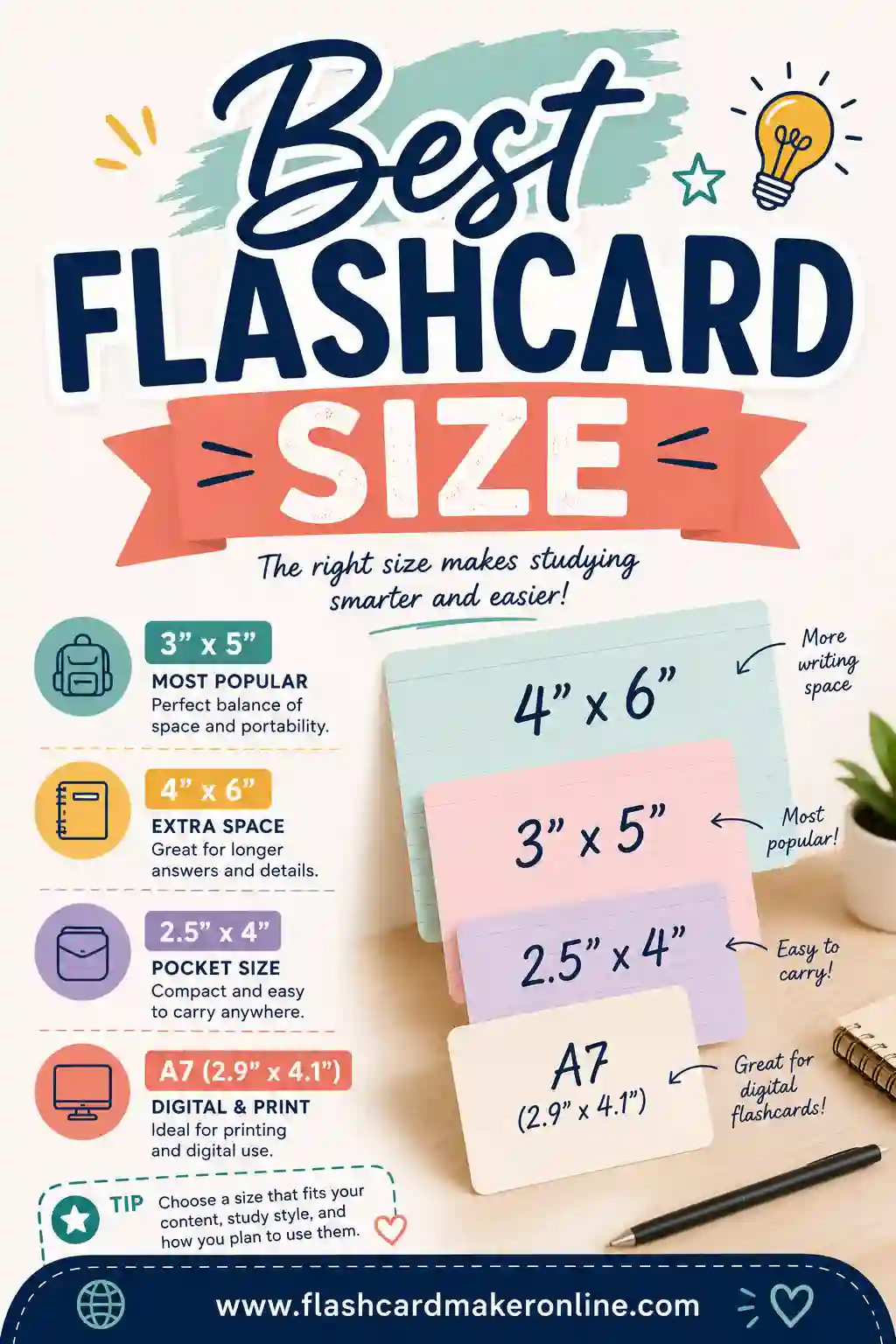
| A small ring of cards for your pocket | Double-sided | 3×5 index card (3 per page) | Punch a corner and put them on a ring. |
| All 40 in as few sheets as possible | Double-sided | Standard (8 per page) | 40 cards fit on 5 sheets, printed on both sides. |
| A cheat sheet with no duplex printer | Cut-out grid | Standard (8 per page) | Front and back print together. Fold each card in half. |
| Big cards to practice at home | Double-sided | Big (4 per page) | Easier to read across the kitchen while you cook. |
| A one-sided list of English prompts | Fronts only | Standard (8 per page) | Test yourself with the answers hidden. |
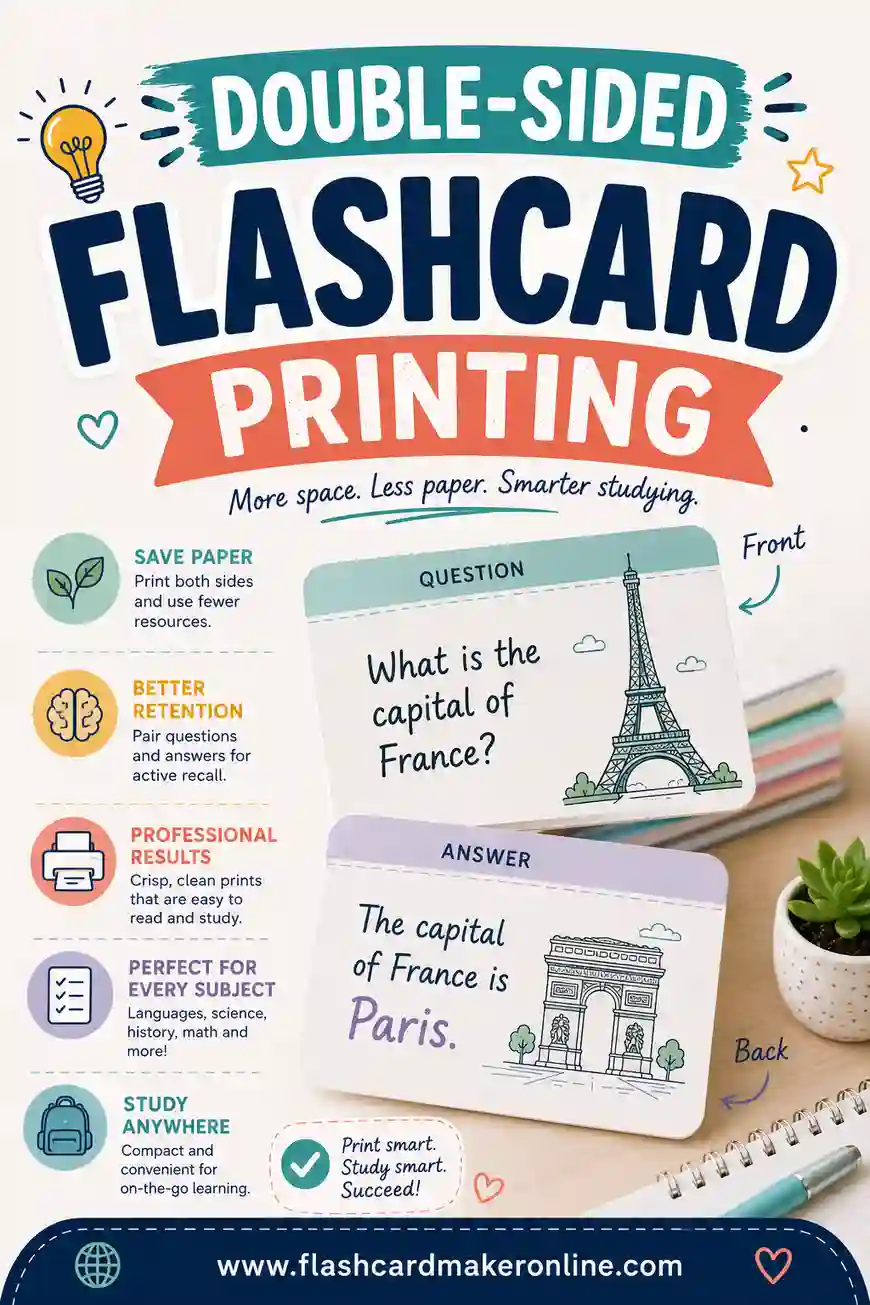
For double-sided printing, turn on duplex in your print dialog and choose flip on the long edge. If you've never printed cards on your printer, use Print a test page first. It's two pages that show you which edge your printer flips on, so you don't waste card stock. Also print at 100% / Actual size, not "Fit to page," or the 3×5 cards won't come out at true size. Our guide to double-sided flashcard printing walks through fixing backs that don't line up.
You can also choose Save as PDF in the print dialog. That gives you a file you can print later, or keep on your phone as a backup if the paper deck gets lost in a suitcase.
A 4-Week Plan That Ends the Day You Fly
Twenty minutes a day is enough. The trick is to add cards in small batches so you're never staring at 40 new phrases at once, and to say every answer out loud. Here's a plan for four weeks before the trip. Count back from your travel date to find your start day.
| Week | New cards | Daily routine (about 20 minutes) | Goal by the end of the week |
|---|---|---|---|
| Week 1 | The 8 "when you're lost" cards, plus the 8 greetings | Shuffle, say each answer out loud, flip. Run the misses again. | All 16 come out without much pause |
| Week 2 | The 10 table phrases | Review all old cards first (5 minutes), then work on the new ones | You can get through a pretend dinner with your partner |
| Week 3 | The 8 warm words and 6 practical phrases, plus who's who cards | Old cards first, then new. Start the listening deck. | All 40 in one sitting, most answered in a second or two |
| Week 4 | No new cards | One full pass, then only the slow ones. Practice the scripts below with your partner. | Quick, calm answers. Print the pocket deck. |
A few rules make the plan work:
- Out loud, every time. Thinking the answer isn't the same as saying it. Your mouth needs practice with the sounds, especially the ones English doesn't have.
- Slow counts as a miss. If you had to think for five seconds, the card isn't ready for a noisy dinner table. Put it in the "again" pile.
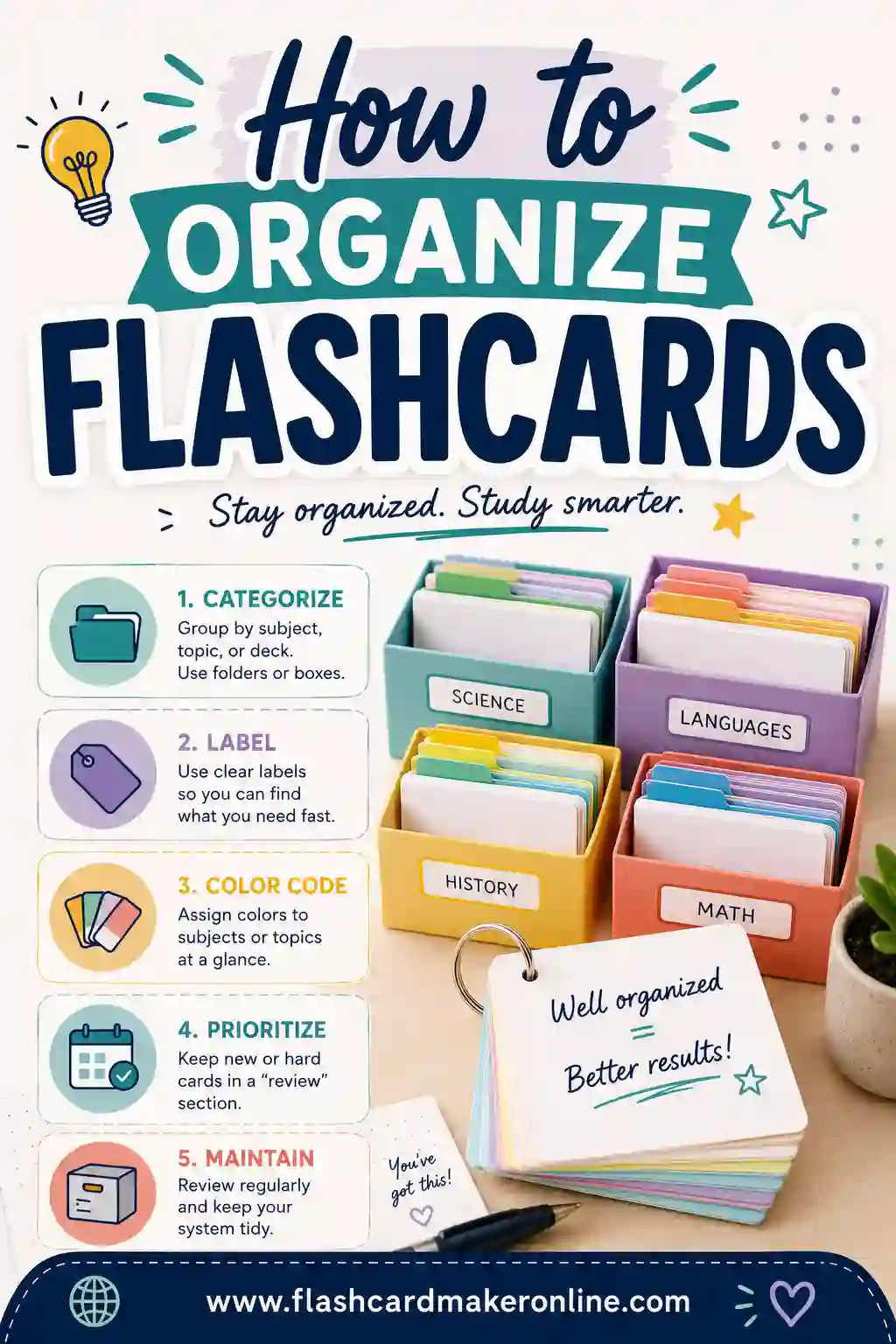
- Two piles. After each pass, split the cards into "quick" and "slow or wrong." Give the slow pile two or three extra passes. That puts your time where it's needed. Our page on how many flashcards per day explains why small daily batches work better than big weekend sessions.
- Practice the real moment. Once a week, have your partner act out a scene in their language (greeting you at the door, offering you more food) and answer without looking at the cards.
Only have 1 or 2 weeks?
Cut the deck. Learn the 8 "when you're lost" cards and these 8 core cards: nice to meet you, Merry Christmas, thank you for having me, thank you for the meal, it's delicious, I'm full thank you, thank you for everything, and goodbye. That's 16 cards. Do 20 minutes a day, split into two 10-minute sessions if that's easier, and add more only once all 16 come out quickly.
| Day | What to do |
|---|---|
| Days 1–3 | The 8 "when you're lost" cards |
| Days 4–6 | Add the 8 core cards and review all 16 each day |
| Days 7–10 | All 16 shuffled. Add who's who cards if you have time. |
| Days 11–14 | Add a few table phrases. Practice short scenes with your partner. Print your pocket deck. |
Keep going during the visit
Bring the pocket deck. Every evening, add two or three new cards by hand for words you heard that day: a dish, a nickname, a phrase your partner's dad says all the time. Those are the most useful cards you'll ever make, because they come straight from the family. When you get home, type them into the maker so they're part of the deck for next year.
Short Scripts for the Moments That Make People Nervous
Flashcards get the phrases into your head. Scripts help you string them together. Here are four short ones, using the Spanish cards. Practice each one with your partner a few times in the last week before you go.
At the front door
You: Buenas tardes. Mucho gusto. (Good afternoon. Nice to meet you.) You: Gracias por recibirme. (Thank you for having me.) You: Esto es para usted. (This is for you.) hand over the gift You: Su casa es preciosa. (Your home is beautiful.)
Note that "Buenas tardes" (good afternoon) is a bonus card. Greetings change by time of day in many languages, so add whichever one fits your arrival.
At dinner
Host offers more food. You: Solo un poquito, por favor. (Just a little, please.) You: Está riquísimo. ¿Lo hizo usted? (It's delicious. Did you make this?) Later: Estoy llena, gracias. Gracias por la comida. (I'm full, thank you. Thank you for the meal.) You: ¿Puedo ayudar en la cocina? (Can I help in the kitchen?)
In many families, the first "no thanks" is taken as politeness and the food comes anyway. "Just a little, please" is often an easier answer than "no," because it lets the host feel generous and keeps your plate manageable. Ask your partner how their family handles this, since the custom varies a lot.
Opening gifts
You: ¡Qué regalo tan bonito, gracias! (What a lovely gift, thank you!) You: Feliz Navidad a toda la familia. (Merry Christmas to the whole family.)
Saying goodbye
You: Gracias por todo. (Thank you for everything.) You: Estoy muy feliz de haber venido. (I'm so happy I came.) You: Adiós, los voy a extrañar. (Goodbye, I'll miss you all.)
"Estoy muy feliz de haber venido" is a variation of card 28. Once you know a phrase well, small changes like this are easy to add, and your partner can help you make them.
Common Problems (and Quick Fixes)
| Problem | Why it happens | What to do |
|---|---|---|
| You know the cards but freeze at the table | You've only practiced reading, not speaking under a little pressure | Do the weekly role-play with your partner. Answer before they finish their sentence. |
| Everyone talks too fast to follow | Family conversation is fast, and people talk over each other | Use cards 19 and 20. Ask one person, one-on-one, to say it again slowly. |
| Your pronunciation gets blank looks | The sounds are new and you learned them from text | Have your partner record all 40. Copy their voice, not your guess. |
| Phrases come out mixed up | Too many new cards at once | Go back to 16 cards. Add the rest only when those are quick. |
| You keep skipping practice days | 20 minutes feels like a lot after work | Split it into two 10-minute sessions, like breakfast and bedtime. |
| A phrase gets a laugh you didn't expect | It's too formal, too casual, or regional | Ask what you said (card 23 helps here). Fix the card that night. |
| The printed backs don't line up | The printer flips on a different edge | Print the test page first, and print at 100%. |
The laugh is not a disaster, by the way. A small mistake that makes Grandma laugh and correct you often becomes a family story. People tend to like the person who's trying.
Adjusting the Deck for Your Situation
No two family visits are alike. Here's how to change the deck for a few common setups.
- You're meeting the family for the first time. Lean heavily on greetings, warm words and who's who cards. First impressions come from those, not from grammar.
- You've visited before. Skip what you already know and add 10 new cards about things you couldn't say last time. Maybe you wanted to ask about the old family photos, or tell a story about how you met your partner.
- Grandparents who don't speak any English. Make the polite form your default, add a few cards about their health and their home ("Did you sleep well?" and "How are you feeling today?"), and learn to ask them a simple question about the past. Older relatives often light up when asked about how Christmas used to be.
- There are kids in the family. Add a handful of playful cards: "Do you want to play?", "Your turn!", "Well done!", "What's your name?" Kids are forgiving teachers, and they'll correct you with no hesitation.
- You're bringing your own children. Make a small kids' deck of 8 to 10 cards with Big cards and pictures. Greeting cards and "thank you" are enough. The free flashcard maker prints Big cards at 4 per page, which little hands manage well.
- The family speaks two languages. Ask your partner which one is used at the table. That's the one to learn first.
Your Deck Is Ready to Start Tonight
You don't need a course or a textbook to show up well. You need 40 well-chosen phrases, a partner to check them, and 20 minutes a day of saying them out loud. Open the free flashcard maker, paste in the phrases above, share the link with your partner for a quick check, and start Week 1 tonight. By the time you're at the front door with a gift in your hands, "Mucho gusto, gracias por recibirme" will come out on its own.
▶ Open this deck in the flashcard maker
Frequently Asked Questions
How many phrases should I learn before visiting my in-laws abroad?
Around 30 to 50 is a realistic target for three or four weeks, and 40 is a good middle. If you only have a week or two, learn 16: the 8 phrases for when you're lost and 8 core greetings and thank-yous. A small set you can say quickly is more useful than a long list you only half remember.
How long do I need to practice each day?
About 20 minutes a day works for most people. Split it into two 10-minute sessions if that's easier to fit around work. Practicing most days matters more than long sessions on the weekend.
Should I use the formal or informal "you"?
Start with the polite form for parents and grandparents, since it's the safer choice in most languages that have both. Then ask your partner. Some families switch to the casual form right away and would find the polite form a bit stiff.
How do I say "thank you for the meal" in another language?
In Spanish it's "Gracias por la comida," in French "Merci pour le repas," in German "Danke für das Essen," in Italian "Grazie per la cena" (for dinner) and in Brazilian Portuguese "Obrigado pela comida" (or "Obrigada" if you're a woman). Have your partner check the version their family uses, since some languages have a set phrase said after eating.
Can the flashcard maker read the phrases out loud?
Yes. The Read aloud button uses your device's built-in voices. For most languages, name the language in the deck title and put the phrase on the front of the card, and it will be read in that language if your device has a matching voice. Japanese, Korean, Chinese and Cyrillic text is detected on either side automatically.
Do I need an account to save my deck?
No. Your cards save automatically in the browser you're using, with no signup. To keep a backup or move the deck to another device, use Download .csv and Import a file, or make a share link.
What's the best way to print a pocket deck?
Choose Double-sided and the 3×5 index card size, then punch a corner and put the cards on a ring. If your printer can't print on both sides, use the Cut-out grid layout and fold each card in half. Print the test page first so the backs line up.
What if I forget a phrase in the middle of a conversation?
Use your repair phrases. "I'm still learning" and "How do you say...?" turn a blank moment into a chance to learn, and most families are happy to help. You can also glance at your pocket deck when you step away from the table.