Aphasia and Stroke Recovery: Picture Flashcards for Word Finding
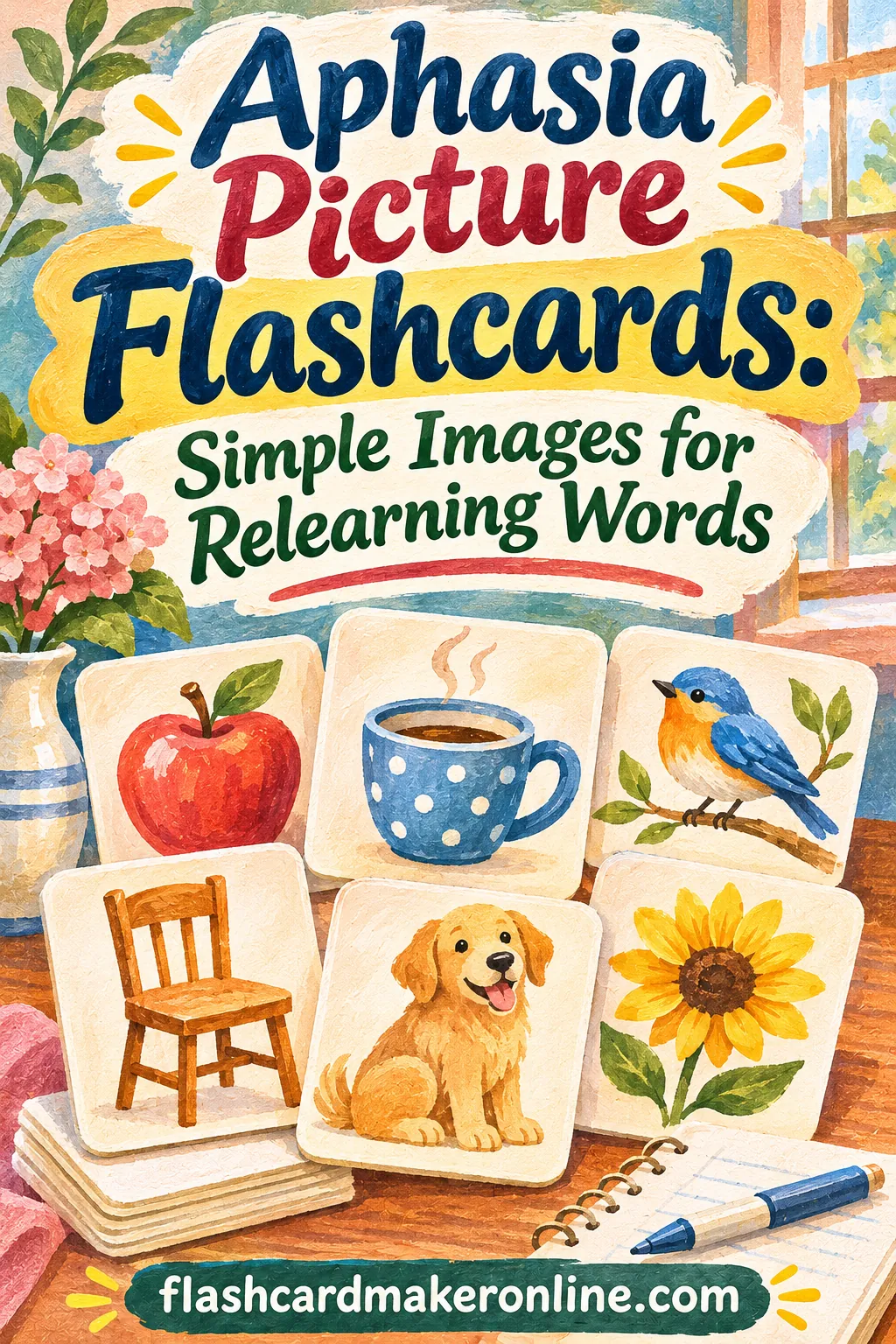
The most useful aphasia flashcards are simple picture cards of the real things your loved one uses every day, a photo of their own mug, their own keys, their own dog, with the word on the back so you can check and cue. Start small, with 5 to 10 cards, practice for a few calm minutes at a time, and build the deck around the goals and cues their speech-language pathologist (SLP) gives you. You can make, study and print a deck like this with the free flashcard maker, no account needed.
Below you'll find what to put on the cards, a ready-to-paste starter list of everyday words, a step-by-step guide to building the deck, a gentle practice routine, and the mistakes that tend to frustrate people. One thing up front: this page is practical help for families. It isn't therapy and it doesn't replace it. Your relative's SLP knows their type of aphasia, what they can do today, and what to practice next, so treat their advice as the plan and these cards as one tool for carrying it out at home.
Start With the Speech-Language Pathologist
Before you make a single card, have a short conversation with the SLP. Aphasia looks different from person to person. One person can understand nearly everything but can't pull up the names of things. Another speaks fluently but uses the wrong words. Another has trouble understanding what's said to them. Some people also have apraxia of speech, where the brain knows the word but has trouble planning the mouth movements to say it. Each of these calls for a different kind of practice, and picture naming isn't always the right place to start.
Here are good questions to bring to that conversation:
- Is picture naming a good activity right now? If yes, how many cards at a time, and how long should a session last?
- Which cues should I use when they get stuck? For example, should you give the first sound, a sentence to finish, or the whole word to repeat?
- How long should I wait before I help? Some SLPs want you to wait several seconds. Others want you to step in sooner to avoid frustration.
- Should the word be printed on the card? Reading the word can help some people and get in the way for others.
- Which words matter most? The SLP may already have a target list, or may want you to focus on family names, food, or words needed for safety.
Write the answers down and keep them with the cards. If more than one family member helps with practice, everyone should use the same cues in the same order. Consistency makes practice feel predictable, and predictable practice is less stressful.
If your relative isn't seeing an SLP yet, ask their doctor about a referral. You can still use the cards as a calm, everyday activity in the meantime, just keep it low-pressure and don't treat a missed word as a failure.
What Makes a Good Picture Card for Word Finding
A picture card for an adult with aphasia isn't the same as a picture card for a toddler. The pictures need to be clear and respectful, and the words need to matter to the person holding the card. These guidelines come up again and again in caregiver advice:
Use real photos, ideally of their own things. A photo of your dad's actual reading glasses is more meaningful than a cartoon of generic glasses. Familiar objects carry more connections in memory: where they live, what they're for, who gave them. Those connections can help a word surface. Your phone camera is all you need.
One object per card, on a plain background. Put the item on a table or a plain sheet of paper and take the photo straight on. A cluttered kitchen counter behind a mug turns a simple naming task into a hunt.
Big cards and big pictures. After a stroke, some people also have vision changes, such as losing part of their field of view. Bigger cards are easier to see and easier to handle, especially with one hand. Ask the care team if there are any vision issues you should plan around, like placing cards toward one side.
Keep it adult. Choose photos of real, grown-up items and activities. Skip baby-style clip art and childish fonts. Your loved one is an adult relearning access to words they already know, and the cards should reflect that.
Put the answer and a cue on the back. The back is for the helper. It holds the target word plus a short cue you can read out if they get stuck, like a sentence to finish or the first sound.
Here's how the two sides of a card usually split:
| Side | What goes on it | Example (mug) |
|---|---|---|
| Front | A clear photo of the object, plus a small topic label if you like | Photo of their blue coffee mug, label "Kitchen" |
| Back | The target word | mug |
| Back | A sentence-completion cue | "You drink coffee from a ___." |
| Back | A first-sound cue (if the SLP uses them) | "It starts with mmm..." |
| Back | Optional: a related word or two | coffee, tea, handle |
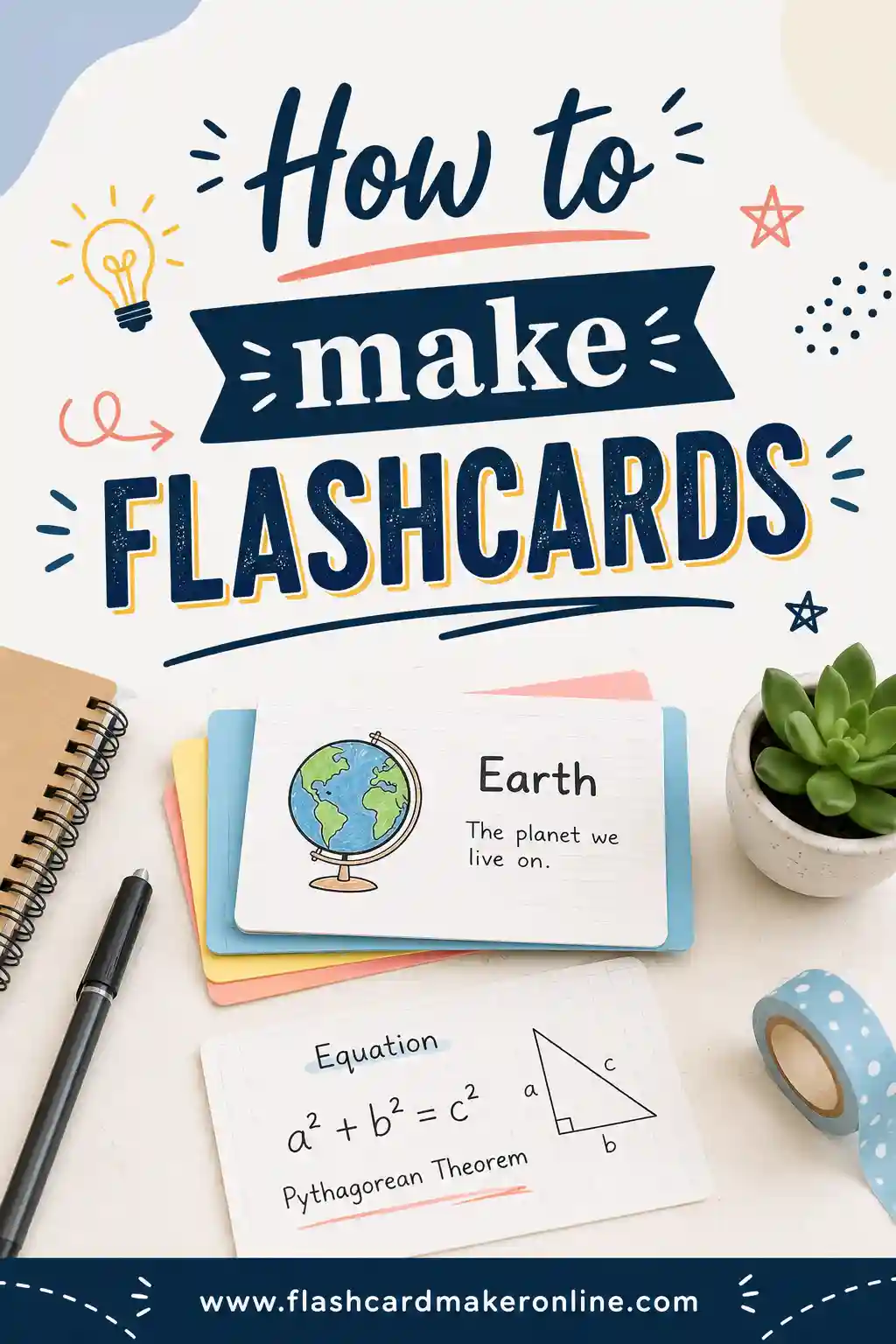
The mini deck near the top of this page shows the sentence-completion style on its own. Many families like to start there because it gives the person a strong hint from meaning, not just sound.
Photos or drawings?
Photos of the person's own belongings are usually the first choice for everyday nouns. Simple line drawings can work for things that are hard to photograph, like weather or emotions. Mixing styles in one deck is fine. The question to ask is always: can they tell at a glance what this is? If a picture causes confusion that has nothing to do with word finding, swap it out. The idea that words paired with clear pictures are easier to remember has a name in learning research; you can read more about it in our page on dual coding theory.
Which Words to Put on the Cards First
The words that matter most are the ones your loved one wants and needs to say. A useful word list is personal, practical, and short at first. A deck of 200 random nouns is overwhelming. A deck of 15 words they'll use at breakfast tomorrow is motivating.
Think in this order:
- People and pets. Names of their spouse, children, grandchildren, close friends, and pets. These are often the words families and patients care about most. Use real photos of the people.
- Needs and safety. Water, bathroom, pain, help, glasses, phone, medicine, doctor, cold, hot, tired.
- Daily routine. The items they touch from morning to night: toothbrush, towel, shirt, shoes, coffee, plate, fork, keys, remote, bed.
- Food and drink they actually like. If they eat oatmeal every morning, put oatmeal in the deck, not caviar.
- Hobbies and interests. Garden tools, a fishing rod, a deck of cards, a favorite sports team, church, the piano, the car.
- Places. Kitchen, bathroom, bedroom, store, church, park, doctor's office, the name of their town.
Ask your relative which words they want, if they can point or nod. Showing a few photos and letting them pick builds a sense of control, which matters a lot when so much else has changed.
Most families find it helps to keep the first active pile very small, sometimes just 5 to 10 cards, and to add new cards only when the SLP says the time is right. A small pile that's mostly successful keeps practice pleasant. You can always have a bigger "library" deck in a box and pull a handful out each day.
A ready-to-paste list of 48 everyday words
The maker's Paste a list box turns each line into one card, written as front : back. Pictures can't travel in a text list, so the trick is to paste short topic labels on the fronts and the words plus cues on the backs. Then you open each card and add your photo to the front. The label ("Kitchen 3") stays small next to the photo and works as a gentle category hint, which is a cue many SLPs use anyway. If the SLP doesn't want any text on the front, you can keep the labels just for your own sorting.
Copy the lines below in chunks of 10 to 20. Replace anything that doesn't fit your loved one's home, food or routine. Words in parentheses are alternatives; pick the one they actually use, because "couch" and "sofa" are both right, but only one is their word.
| Paste this line | What you'll photograph |
|---|---|
| Morning 1 : toothbrush - You brush your teeth with a ___ | Their toothbrush |
| Morning 2 : toothpaste - You squeeze ___ onto the brush | The tube they use |
| Morning 3 : towel - You dry off with a ___ | A bath towel, folded |
| Morning 4 : soap - You wash your hands with ___ | The bar or pump by the sink |
| Morning 5 : comb (brush) - You fix your hair with a ___ | Their comb or hairbrush |
| Morning 6 : glasses - You put on your ___ to see | Their glasses |
| Morning 7 : shirt - You button up your ___ | A favorite shirt on a hanger |
| Morning 8 : socks - You wear ___ inside your shoes | A pair of their socks |
| Morning 9 : shoes - You tie your ___ | Their everyday shoes |
| Kitchen 1 : cup (mug) - You drink coffee from a ___ | Their usual mug |
| Kitchen 2 : plate - You put your dinner on a ___ | A plain dinner plate |
| Kitchen 3 : fork - You eat with a knife and ___ | A fork on a placemat |
| Kitchen 4 : spoon - You stir your coffee with a ___ | A teaspoon |
| Kitchen 5 : knife - You cut the meat with a ___ | A table knife |
| Kitchen 6 : bowl - You eat cereal from a ___ | A cereal bowl |
| Kitchen 7 : coffee - In the morning you drink a cup of ___ | Coffee in their mug |
| Kitchen 8 : bread - You make toast with ___ | A loaf or a slice |
| Kitchen 9 : milk - You pour ___ on your cereal | The milk carton or jug |
| Kitchen 10 : water - When you're thirsty you drink ___ | A glass of water |
| House 1 : chair - You sit down on a ___ | A dining chair |
| House 2 : bed - At night you sleep in a ___ | Their made bed |
| House 3 : door - You open the ___ to go out | The front door |
| House 4 : window - You look outside through the ___ | A window with the view |
| House 5 : lamp - You turn on the ___ to read | Their reading lamp |
| House 6 : clock - You check the time on the ___ | The kitchen clock |
| House 7 : television (TV) - You watch the news on ___ | Their TV |
| House 8 : remote - You change the channel with the ___ | The remote control |
| House 9 : phone - You call your family on the ___ | Their phone |
| House 10 : key - You lock the door with a ___ | Their house key |
| Out 1 : car - You drive to the store in the ___ | Their car |
| Out 2 : coat - When it's cold you wear a ___ | Their winter coat |
| Out 3 : hat - You wear a ___ on your head | A hat they own |
| Out 4 : wallet (purse) - You keep your money in a ___ | Their wallet or purse |
| Out 5 : umbrella - When it rains you open an ___ | An umbrella |
| Out 6 : store - You buy groceries at the ___ | The local grocery store |
| Needs 1 : medicine - You take your ___ with water | A pill organizer |
| Needs 2 : bathroom - You wash your hands in the ___ | The bathroom door or sink |
| Needs 3 : blanket - When you're cold you need a ___ | A blanket on the bed |
| Needs 4 : doctor - When you're sick you see the ___ | A photo of their doctor's office |
| Needs 5 : walker (cane) - You lean on your ___ to walk | Their walking aid, if they use one |
| Needs 6 : help - Say this word when you need someone | A photo of you waving, or a call bell |
| Food 1 : banana - A long yellow fruit | A banana |
| Food 2 : cheese - You put ___ on a sandwich | A block or slice of cheese |
| Food 3 : soup - You eat ___ from a bowl with a spoon | A bowl of soup |
| Hobby 1 : newspaper - You read the ___ every morning | The paper they read |
| Hobby 2 : book - You read a ___ before bed | A book they like |
| Hobby 4 : flowers - You grow ___ in the garden | Flowers from the yard |
| Hobby 5 : dog (cat) - Your pet is a ___ | Their pet |
Notice the dash in each line. The front : back format uses the colon to split the card, so keep cue sentences free of extra colons. Short dashes, commas and blanks are fine.
Cards for people's names
Make a separate small deck for family and friends. Each front is a photo of the person, and each back holds their name plus a cue tied to them:
| Paste this line | Photo |
|---|---|
| Family 1 : Linda - Your wife, married since 1978 | Their spouse |
| Family 2 : Mike - Your son, lives in Ohio | Their son |
| Family 3 : Emma - Your granddaughter, loves soccer | A grandchild |
| Family 4 : Buster - Your dog, a beagle | The family pet |
Swap in your real names and details. Name cards tend to be emotional, in both directions. Getting a grandchild's name out can feel wonderful, and struggling with it can feel awful. Go slowly, mix name cards with easier object cards, and stop on a good one.
How to Cue When the Word Won't Come
Cueing is what you do in the moment a word gets stuck. It's the part of home practice where your SLP's guidance matters most, because the right cue, in the right order, depends on the person. What follows is a description of cue types families commonly hear about, so you know the vocabulary when the SLP explains their plan. Use their order, not this one, if the two differ.
| Cue type | What you do | Example for "key" |
|---|---|---|
| Wait time | Say nothing for a few seconds and let them search | Calm pause, friendly face |
| Describe use (meaning cue) | Say what the thing is for or where it lives | "You use it to open the door." |
| Sentence completion | Start a familiar phrase and stop before the word | "Lock the door with your ___." |
| Category or related word | Name the group or something that goes with it | "It's on your ring with the others." |
| Gesture | Show the action | Mime turning a key in a lock |
| First sound | Give only the first sound | "K..." |
| Model the word | Say the whole word and let them repeat | "Key. Your turn." |
A few principles most families find helpful, again subject to what the SLP says:
Give them time first. Word retrieval after a stroke can be slow. Jumping in with the answer after one second can take away the chance to find it. Ask the SLP how long to wait, then actually count it in your head.
Don't quiz in a sharp voice. "What's this? What's this?" said quickly feels like a test. A calm "Let's look at this one together" feels like teamwork.
If they say a related word, acknowledge it. If they look at a fork and say "spoon," that's a close miss, not nonsense. A warm "Close, it goes with the spoon. This one has points" keeps the conversation going. Ask the SLP how they want you to handle these near-misses.
End every card with the word said correctly. Even if you had to model it, finish by saying the word together so the last thing they heard and said was right.
Celebrate other ways of communicating. If they can't say "phone" but point to it, write the first letter, or mime holding it to their ear, they've told you what they mean. That's communication, and many therapy plans treat it as a real win.
How to Build This Deck in the Flashcard Maker
Here are the exact steps, start to finish, using the free flashcard maker. Plan on about 30 minutes for a 20-card deck, mostly for the photos.
1. Take your photos first. Walk through the house with your phone and photograph each item from your word list on a plain background. Take a couple of shots of each so you can pick the clearest. Crop them tight.
2. Open the maker and name the deck. Type a deck title like "Dad's Morning Words" or "Kitchen Deck 1." Clear titles make it easy to keep several small decks going.
3. Paste your list. Click Paste a list and paste 10 to 20 lines from the table above, one card per line in front : back format. Choose Add to deck. If you're starting over with a new set, choose Replace deck instead.
4. Add a picture to each card. Open each card and add the matching photo to the front. Check that the photo is the right one for the word on the back, which is easy to mix up when you've taken 40 pictures of kitchen items.
5. Look at the presets for extras. The Start from a preset menu includes decks like Animals with Pictures, First Words and Colors & Shapes. They were built with young learners in mind, so look through them before using any with an adult. A few cards may be handy as extra practice, but your own photos will almost always mean more.
6. Try it in Study mode. Click Study and go through the cards on a tablet or laptop. Leave Shuffle alone for the first sessions so the order is predictable, and shuffle later. Flip shows the back. 🔊 Read aloud reads the card text out loud, which can be useful when the person wants to hear a word modeled again, or when you want a break from being the voice. Check what it says first; on these cards the back includes the cue sentence too.
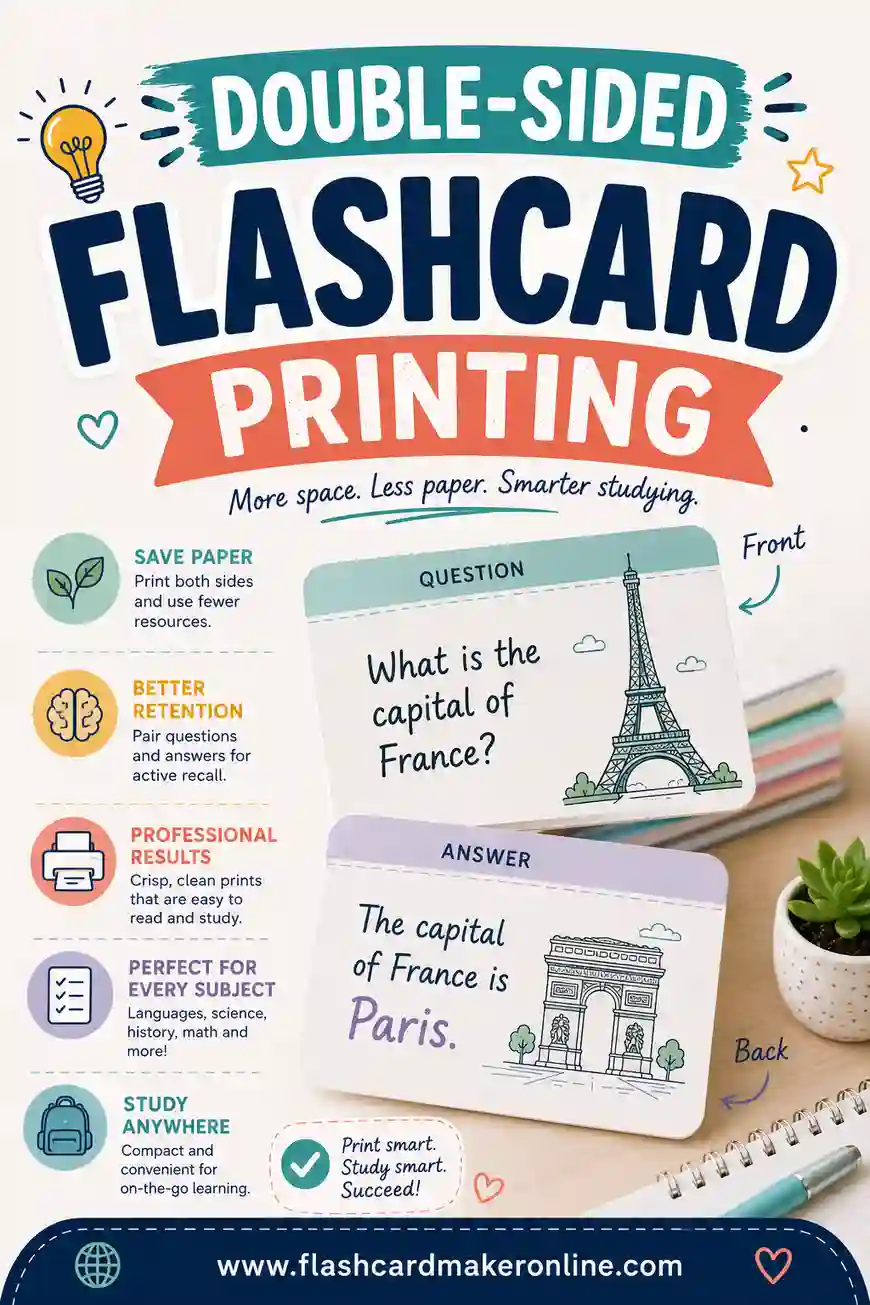
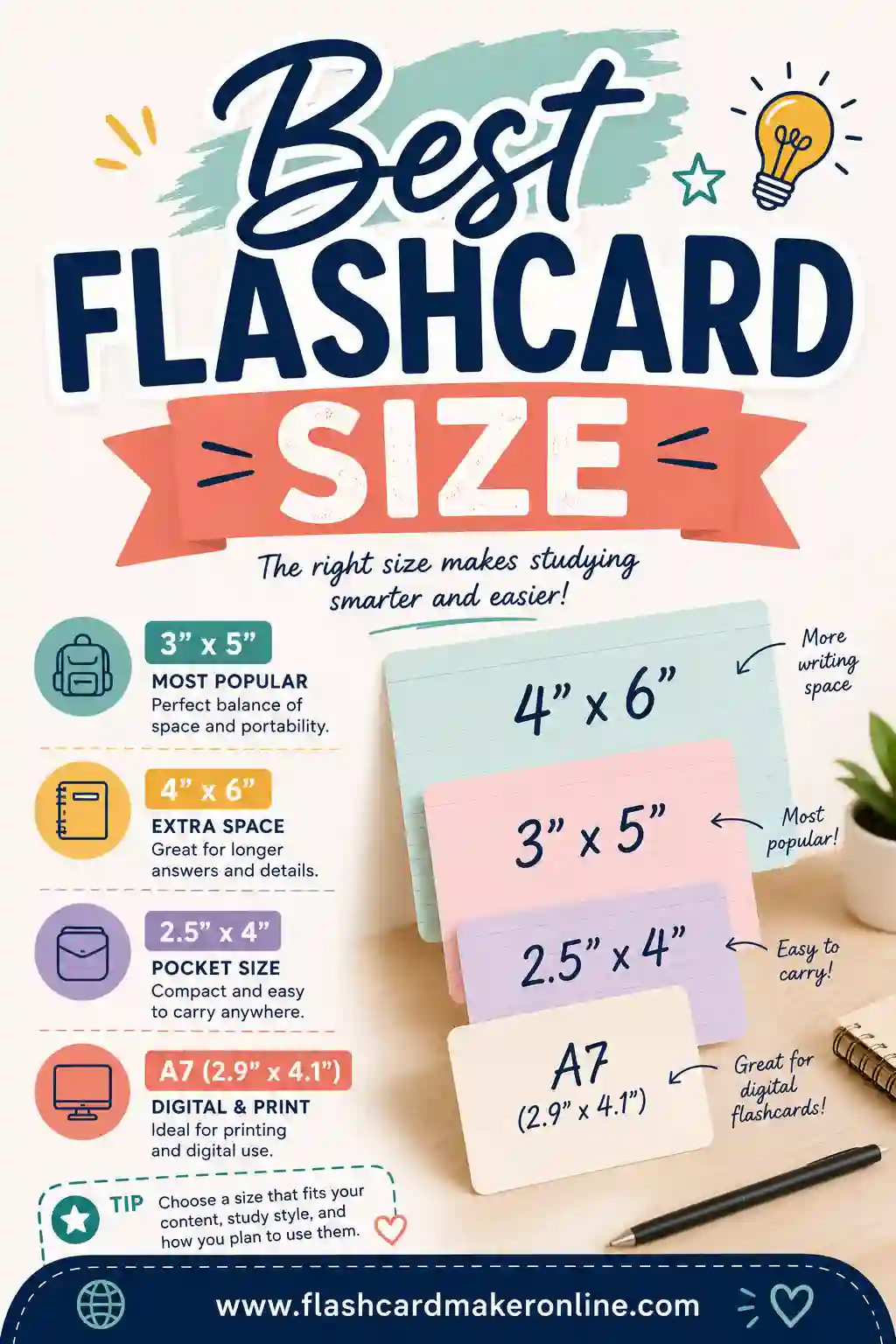
7. Print the cards. Click Print and choose Double-sided so the photo lands on the front and the word and cue line up on the back. Pick Jumbo or Big for large, easy-to-see pictures, or the 4×6 index card size if you'd like cards that fit standard index-card boxes. Use Print a test page first to check that the two sides line up on your printer before you print the whole deck, then print it or save as PDF.
8. Save a backup and share. Click Download .csv to keep a copy of the text. You can bring it back later with Import a file. Click Get share link to send the deck to a sibling or another caregiver; anyone with the link gets their own copy, so the whole family can practice the same cards with the same cues.
If you've never printed double-sided cards before, our guides on how to print flashcards and choosing the best flashcard size walk through paper, printer settings and size choices in more detail.
A Gentle Practice Routine
Short and frequent tends to beat long and rare. A tired brain doesn't retrieve words well, and a session that ends in frustration makes the next one harder to start. Ask the SLP how often and how long to practice; many families end up with something like the sample below.
| Part of the session | About how long | What happens |
|---|---|---|
| Settle in | 1 minute | Quiet room, TV off, glasses on, cards in reach |
| Warm-up | 1 to 2 minutes | 2 or 3 cards they almost always get right |
| Practice | 5 to 10 minutes | 5 to 10 target cards with the SLP's cues |
| Easy finish | 1 minute | End on a card they know well |
| Quick note | 1 minute | Jot down which words came easily and which didn't |
That's well under 15 minutes, and it can happen once or twice a day at the times your loved one is most alert. For many people that's the morning, after breakfast. Watch for signs of fatigue: longer pauses, yawning, irritability, rubbing eyes, or more errors than usual. Those are signals to stop, even if you planned to do more.
A sample first month
Here's how a first month might grow, assuming the SLP is on board. Every person moves at their own pace, so treat this as a shape, not a schedule to hit.
| Week | Active pile | Focus |
|---|---|---|
| Week 1 | 5 to 8 cards | Morning routine words, lots of support, same order each time |
| Week 2 | 8 to 12 cards | Add a few kitchen words, start to shuffle |
| Week 3 | 10 to 15 cards | Add 2 or 3 name cards, mix easy and harder cards |
| Week 4 | 12 to 20 cards | Retire well-known cards to a "done" box, review them weekly |
Move the practice off the cards
The point of naming practice is using words in real life, not just at the table. Once a word comes reliably on a card, look for chances to use it naturally. Hold up the real mug at breakfast and wait a moment. Ask "Coffee or tea?" instead of "Do you want coffee?" so they get to choose a word. Leave a little space in conversation instead of finishing every sentence for them. The SLP may have specific ideas for this step too.
Adjusting the Deck to the Person
No two people with aphasia need quite the same deck. Here are common situations families describe, and ways the cards can bend to fit. Run any big change past the SLP first.
Very few words right now. Keep the active pile to a handful of high-value words: names, yes and no, help, water, bathroom. Picture-to-picture matching, or simply pointing to the right card when you say the word, may be the first step instead of naming. Some SLPs use pictures like these for a communication board or book; ask whether that's a good idea for your loved one.
Most words come but some stick. Build the deck from the words that keep getting stuck in real conversations. Keep a running list on the fridge and turn it into new cards every week or two.
Speech is fluent but words come out wrong. For some people, naming practice works best with a lot of checking and gentle correction, while for others the SLP may focus on understanding first. This is a time to follow the therapy plan closely rather than improvise.
Reading is still strong. The SLP may suggest cards with the word on the front, or practice where they read the word and then name the picture without it. Reading the cue sentence on the back aloud can also be a practice step of its own.
Apraxia of speech along with aphasia. If the person knows the word but struggles to get their mouth to make it, the SLP will likely have specific speech practice in mind. Picture cards can still be used, but follow their instructions on how to model words and how many tries to allow.
Using a tablet more than paper. Study mode on a tablet can work well, especially with larger text and pictures on screen. Some people still prefer paper cards they can hold, sort and hand back. Try both and see what feels more natural; there's more on that choice in our comparison of digital vs paper flashcards.
Common Mistakes and How to Fix Them
| Mistake | Why it backfires | Fix |
|---|---|---|
| Starting with too many cards | Lots of misses, practice feels like failure | Start with 5 to 10, add slowly |
| Childish pictures and fonts | Can feel insulting to an adult | Real photos of their own things |
| Rushing to give the answer | Takes away the chance to retrieve it | Wait the time the SLP suggests |
| Waiting too long with no help | Frustration builds, they may shut down | Follow the cue order, then model the word |
| Correcting sharply | Raises stress, which makes retrieval harder | Calm, warm tone; "Close, try this" |
| Different helpers, different cues | Confusing and unpredictable | Write the cue plan down, share the deck link |
| Ignoring the SLP's plan | Practice may not match their goals | Bring the cards to appointments |
Keeping It Encouraging for Everyone
Word-finding trouble after a stroke is hard on the person living with it and on the people who love them. A few reminders that families say help:
Aphasia affects language, not intelligence. Your loved one is still the same person, with the same opinions, memories and sense of humor. Talk to them as an adult, and include them in decisions about their own practice.
Progress can be uneven. Good days and bad days are normal. A word that came easily yesterday may not come today. That doesn't mean practice isn't working.
Make it a shared moment, not a test. Sit side by side, not across a table like an exam. Laugh at the funny misses together if they're laughing. Tell the story behind a photo. The cards can start conversations as well as practice single words.
Look after yourself too. Caregiving is a lot. Shared decks mean other family members can take a turn. Stroke support groups, including ones for families, can also help; the hospital or SLP can often point you to local or online options.
For more ideas on making study cards work for grown-ups in general, see our guide to flashcards for adult learners.
When you're ready, open the free flashcard maker, paste your first 10 words, add the photos you took, and print a small set in a big size. Keep it short, keep it kind, and keep the SLP in the loop.
Frequently Asked Questions
Do aphasia flashcards actually help with word finding?
Picture naming practice is a common part of aphasia therapy, and many SLPs give families picture cards to use at home. Whether it's the right activity for your loved one, and how to do it, depends on their type of aphasia and their goals. Ask their SLP before you start and follow their plan for cues and session length.
Should I use photos or drawings on the cards?
For everyday objects, clear photos of the person's own things are usually the first choice because they're familiar and meaningful. Simple drawings can fill in for things that are hard to photograph. The main test is whether they can tell at a glance what the picture shows.
How many cards should we practice at once?
Start small, often 5 to 10 cards, and add more only as practice stays mostly successful. A small pile that goes well is better than a big pile that ends in frustration. Your SLP can give you a number that fits your loved one's current level.
What do I do when my loved one gets stuck on a word?
Wait a few seconds first, then use cues in the order the SLP recommends, such as describing what the thing is for, starting a sentence for them to finish, or giving the first sound. If the word still won't come, say it for them and let them repeat it, so the card ends on a success. Keep your tone calm and warm.
Should the word be printed on the front of the card?
It depends on the person and the stage of recovery. For pure naming practice the front usually shows only the picture, while some people do better with the word there too, at least at first. Ask the SLP, and consider making two versions of the deck so you can switch.
How long should a practice session be?
Many families keep sessions short, around 10 to 15 minutes, once or twice a day at times when their loved one is most alert. Stop early if you notice tiredness or frustration. The SLP can tell you what's appropriate for your relative.
What size should I print the cards?
Bigger is usually easier, especially if there are vision changes or hand weakness. The Jumbo or Big print sizes give large, clear pictures, and the 4×6 index card size fits standard boxes. Print a test page first so the front and back line up.
Can several family members use the same deck?
Yes. Use Get share link in the maker, and anyone with the link gets their own copy of the deck. Share the SLP's cue plan along with it so everyone practices the same way.