Korean Hangul Flashcards: Printable Set and How to Learn the Alphabet in a Week
To learn Hangul in a week, make 24 flashcards, one for each of the 14 basic consonants and 10 basic vowels, put a simple picture mnemonic next to each letter, and drill consonants and vowels as separate piles before you combine them into syllables. Once those 24 cards are solid, the double consonants, compound vowels and final consonants are small add-ons, not a new alphabet. You can type, study and print the whole set in a free flashcard maker with no account and nothing to buy.
Below you'll find every letter with its sound and a memory hook, a paste-ready deck of about 70 cards, exact steps for printing, and a day-by-day plan that gets you reading real Korean words by day seven.
Why Hangul Is Fast to Learn (and Where People Get Stuck)
Hangul was created in the 1440s under King Sejong and published in 1446 in a document called the Hunminjeongeum, which means roughly "the correct sounds for teaching the people." It was designed on purpose to be easy, and it shows. There are no thousands of characters to memorize like Chinese hanja or Japanese kanji. There are 24 core letters, and most of them follow a logic you can see.
Here's what makes it quick:
- The shapes are based on the mouth. The basic consonants ㄱ, ㄴ, ㅁ, ㅅ and ㅇ were drawn to suggest how your tongue, lips, teeth or throat are positioned when you make the sound. ㄱ shows the back of the tongue touching the roof of the mouth. ㄴ shows the tip of the tongue touching the ridge behind your teeth. ㅁ is the closed mouth.
- Extra strokes add extra breath. ㄱ becomes ㅋ with one added line, and ㅋ is the same sound with a puff of air. The same pattern turns ㄷ into ㅌ, ㅂ into ㅍ and ㅈ into ㅊ.
- Vowels are built from three pieces. A short stroke, a horizontal line and a vertical line. Long vertical line with a short tick to the right is ㅏ (a). Tick to the left is ㅓ (eo). Double the tick and you add a y sound: ㅑ (ya), ㅕ (yeo).
So where do people stall? Usually in three places:
- Similar-looking letters. ㄷ and ㅌ, ㅂ and ㅍ, ㅈ and ㅊ, ㅓ and ㅏ. Flipping through a mixed deck too early makes these blur together.
- The silent ㅇ. It's silent at the start of a syllable and sounds like "ng" at the end. Many beginners try to pronounce it in 아 and get confused.
- Syllable blocks. Korean doesn't write letters in a line. It stacks them into square blocks, like 한 (h + a + n). Learners who only study single letters can name every letter and still freeze in front of a word.
Flashcards fix all three, if you build them the right way. Single letters first, in small piles. Look-alike pairs on purpose, side by side. Then syllables and words, so you practice reading blocks, not just naming letters.
A quick note on romanization
This article uses the Revised Romanization of Korean, the official system in South Korea, which writes 서울 as Seoul and 한글 as Hangeul. Korean sounds don't map perfectly onto English letters, so treat the Latin spellings as a rough guide and check pronunciation with native audio.
The 14 Basic Consonants, With Picture Mnemonics
These are the 14 consonant cards. The "sound" column gives the usual romanization. Several consonants change a little depending on where they sit in a word, and the notes column tells you when.
| Letter | Name | Sound | Picture mnemonic | Notes |
|---|---|---|---|---|
| ㄱ | giyeok | g / k | A gun pointing down | Closer to k at the start of a word, g between vowels |
| ㄴ | nieun | n | A nose seen from the side | Always n |
| ㄷ | digeut | d / t | A door frame tipped open | Closer to t at the start, d between vowels |
| ㄹ | rieul | r / l | A rattlesnake curling | r between vowels, l at the end of a syllable |
| ㅁ | mieum | m | A square mouth | Always m |
| ㅂ | bieup | b / p | A bucket with two handles | Closer to p at the start, b between vowels |
| ㅅ | siot | s | A ski slope or a tent | Sounds like sh before ㅣ (i), as in 시 (si) |
| ㅇ | ieung | silent / ng | A zero: zero sound at the start | Silent first, ng at the end |
| ㅈ | jieut | j | A jug tipped on its side | Lighter than an English j at the start |
| ㅊ | chieut | ch | ㅈ wearing a chef's hat | Aspirated: a strong puff of air |
| ㅋ | kieuk | k | A key with an extra tooth | ㄱ plus a stroke, with a puff of air |
| ㅌ | tieut | t | A table with a tray in the middle | ㄷ plus a stroke, with a puff of air |
| ㅍ | pieup | p | Two pillars holding a roof | Aspirated p, strong puff of air |
| ㅎ | hieut | h | A man in a hat: h for hat | Often soft or dropped between vowels |
You don't have to use these exact pictures. A mnemonic you make up yourself often sticks better, as long as the picture starts with the right sound and looks like the letter.
Grouping the look-alikes
Four groups of consonants trip people up more than anything else in Hangul. They aren't random look-alikes. They're families, and the shape tells you which member you're looking at.
| Plain | Aspirated (extra stroke, puff of air) | Tense (doubled, tight throat) |
|---|---|---|
| ㄱ g/k | ㅋ k | ㄲ kk |
| ㄷ d/t | ㅌ t | ㄸ tt |
| ㅂ b/p | ㅍ p | ㅃ pp |
| ㅈ j | ㅊ ch | ㅉ jj |
| ㅅ s | (none) | ㅆ ss |
Make one "family" card for each row. Put the plain letter on the front and all three versions on the back, with a one-line note on how they differ. Then make separate single-letter cards for each member. The family card shows you the system, and the single cards check whether you can spot one letter alone.
To hear the difference, hold a tissue in front of your mouth. Aspirated letters like ㅋ and ㅌ should move it. Tense letters like ㄲ and ㄸ barely move it.
The 10 Basic Vowels
Korean vowels are built around two lines. A long vertical line (ㅣ) and a long horizontal line (ㅡ). Short strokes, or ticks, attach to them. Learn where the tick points and you've got most of the vowel system.
| Vowel | Sound | Mnemonic | Example |
|---|---|---|---|
| ㅏ | a (father) | The tick points right, "ah, look over there" | 아 a |
| ㅑ | ya (yacht) | Two ticks add the y sound | 야 ya |
| ㅓ | eo (like u in up, but rounder) | The tick points left, back toward you: "uh?" | 어 eo |
| ㅕ | yeo | Two ticks left: y plus eo | 여 yeo |
| ㅗ | o (go, without the w glide) | The tick points up, "oh, up there" | 오 o |
| ㅛ | yo | Two ticks up: y plus o, like "yo!" | 요 yo |
| ㅜ | u (moon) | The tick points down, "ooh, down there" | 우 u |
| ㅠ | yu (you) | Two ticks down: y plus u | 유 yu |
| ㅡ | eu (unrounded, like saying "oo" with a smile) | A flat line, a flat mouth | 으 eu |
| ㅣ | i (see) | A straight line, a straight "ee" | 이 i |
Notice the pairs: every one-tick vowel has a "y" partner with two ticks. If you know ㅏ is "a," then ㅑ has to be "ya."
The two vowels that need the most practice are ㅓ (eo) and ㅡ (eu), because English doesn't have a clean match for either one. ㅓ is like the vowel in "up" or "bought," with the mouth more open. ㅡ is made with the lips spread flat, as if you're smiling, while you try to say "oo." Put a short audio note on these two cards, such as "listen to 어 and 으 in a native recording," so you remember to check them by ear and not just by sight.
Why the examples use ㅇ
Every vowel example above starts with ㅇ because a written syllable can't begin with a bare vowel. A silent ㅇ fills the consonant slot, so ㅏ on its own is written 아. Put both on your vowel cards: ㅏ on the front, "a, written 아 as a syllable" on the back.
How Letters Stack Into Syllable Blocks
This is the step most printed letter sets skip, and it's the one that turns "I know the alphabet" into "I can read." Korean groups letters into square syllable blocks. Each block has an initial consonant and a vowel, and it can also have a final consonant.
The vowel's shape decides the layout:
- Vertical vowels (ㅏ, ㅑ, ㅓ, ㅕ, ㅣ) sit to the right of the consonant. ㄴ + ㅏ = 나 (na).
- Horizontal vowels (ㅗ, ㅛ, ㅜ, ㅠ, ㅡ) sit under the consonant. ㄴ + ㅗ = 노 (no).
- A final consonant goes at the bottom of the block. ㄴ + ㅏ + ㅁ = 남 (nam).
That's the whole system. Here's how a few blocks break down:
| Block | Pieces | Reads as | Layout |
|---|---|---|---|
| 가 | ㄱ + ㅏ | ga | Consonant left, vowel right |
| 고 | ㄱ + ㅗ | go | Consonant top, vowel below |
| 한 | ㅎ + ㅏ + ㄴ | han | Left, right, final on the bottom |
| 글 | ㄱ + ㅡ + ㄹ | geul | Top, middle, final on the bottom |
| 밥 | ㅂ + ㅏ + ㅂ | bap | Left, right, final on the bottom |
| 아 | ㅇ + ㅏ | a | Silent ㅇ holds the consonant spot |
| 강 | ㄱ + ㅏ + ㅇ | gang | ㅇ at the bottom says ng |
That last pair is worth its own card. ㅇ in 아 is silent. ㅇ in 강 is "ng." Same letter, two jobs, and the position in the block tells you which one.
Syllable grid cards
A great middle step between single letters and real words is a syllable grid. Pick one consonant and run it through all ten basic vowels. For ㄱ that's 가, 갸, 거, 겨, 고, 교, 구, 규, 그, 기. Put each block on the front and its reading on the back, or type the grid into the flashcard maker as one short deck.
You don't need all 140 simple blocks (14 consonants times 10 vowels). Do grids for ㄱ, ㄴ, ㅁ and ㅅ, and you'll be able to sound out the rest on sight.
Double Consonants, Compound Vowels and Final Consonants
Once your 24 core cards feel easy, you're ready for the rest of Hangul. In total, modern Korean uses 40 letters: 19 consonants and 21 vowels. You already know 24 of them, so this is 16 more cards plus a short set of rules for final consonants.
The 5 double (tense) consonants
You met these in the family table. Each one is a basic consonant written twice, and each is said with a tight throat and no puff of air.
| Letter | Name | Sound | Example |
|---|---|---|---|
| ㄲ | ssang-giyeok | kk | 까치 kkachi (magpie) |
| ㄸ | ssang-digeut | tt | 딸기 ttalgi (strawberry) |
| ㅃ | ssang-bieup | pp | 빵 ppang (bread) |
| ㅆ | ssang-siot | ss | 싸다 ssada (cheap) |
| ㅉ | ssang-jieut | jj | 짜다 jjada (salty) |
"Ssang" means "double" or "twin," so the names are easy once you know the base letters.
The 11 compound vowels
Compound vowels are two basic vowels written together. Many of them sound like you'd guess if you said the two parts quickly.
| Vowel | Built from | Sound | Example |
|---|---|---|---|
| ㅐ | ㅏ + ㅣ | ae (like e in bed) | 개 gae (dog) |
| ㅒ | ㅑ + ㅣ | yae | 얘 yae (this kid, casual) |
| ㅔ | ㅓ + ㅣ | e (like e in bed) | 게 ge (crab) |
| ㅖ | ㅕ + ㅣ | ye | 예 ye (yes, polite) |
| ㅘ | ㅗ + ㅏ | wa | 사과 sagwa (apple) |
| ㅙ | ㅗ + ㅐ | wae | 왜 wae (why) |
| ㅚ | ㅗ + ㅣ | oe (usually like we) | 회 hoe (raw fish) |
| ㅝ | ㅜ + ㅓ | wo | 뭐 mwo (what) |
| ㅞ | ㅜ + ㅔ | we | 웨이터 weiteo (waiter) |
| ㅟ | ㅜ + ㅣ | wi | 쥐 jwi (mouse) |
| ㅢ | ㅡ + ㅣ | ui | 의사 uisa (doctor) |
Two honest notes for your cards. First, ㅐ and ㅔ sound nearly the same in modern Seoul speech, but spelling still depends on them: 개 (dog) and 게 (crab) are different words. Second, ㅙ, ㅚ and ㅞ all sound very close to "we" in everyday speech, so don't waste time hunting for a difference.
ㅢ is the odd one. It's "ui" at the start of a word, as in 의사, but it often shifts to "i" after a consonant. Give it a card with the base sound and a note that it changes.
Final consonants (batchim)
The consonant at the bottom of a block is called batchim (받침). Here's the rule that saves you the most confusion: at the end of a syllable, Korean only has seven sounds. Many different letters collapse into those seven.
| Final sound | Letters that make it | Examples |
|---|---|---|
| k | ㄱ, ㅋ, ㄲ | 책 chaek (book), 부엌 bueok (kitchen) |
| n | ㄴ | 산 san (mountain) |
| t | ㄷ, ㅅ, ㅆ, ㅈ, ㅊ, ㅌ, ㅎ | 옷 ot (clothes), 꽃 kkot (flower) |
| l | ㄹ | 물 mul (water) |
| m | ㅁ | 김 gim (seaweed) |
| p | ㅂ, ㅍ | 밥 bap (rice), 앞 ap (front) |
| ng | ㅇ | 방 bang (room) |
Make this table into seven cards, one per final sound. Front: "Final ㅅ, ㅈ, ㅊ, ㅌ sound like...?" Back: "t, as in 옷 (ot)." These are some of the most useful cards in the whole deck, because batchim shows up constantly and the spelling doesn't always match the sound.
One more wrinkle: when the next block starts with silent ㅇ, a final consonant usually slides over into it. 한국어 (Korean language) sounds like "han-gu-geo," and 옷이 sounds like "o-si." One rule card with these two examples is enough for week one.
The Full Paste-Ready Hangul Deck
Here's a complete starter deck in the front : back format the flashcard maker's Paste a list box expects: one card per line, with a space, a colon and a space between the front and the back. Copy one section at a time so you can study each pile on its own.
Pile 1: Basic consonants (14 cards)
ㄱ : g or k (giyeok) - a gun pointing down
ㄴ : n (nieun) - a nose from the side
ㄷ : d or t (digeut) - an open door frame
ㄹ : r between vowels, l at the end (rieul) - a rattlesnake
ㅁ : m (mieum) - a square mouth
ㅂ : b or p (bieup) - a bucket with handles
ㅅ : s, sh before ㅣ (siot) - a ski slope
ㅇ : silent at the start, ng at the end (ieung)
ㅈ : j (jieut) - a jug on its side
ㅊ : ch, with a puff of air (chieut) - ㅈ with a hat
ㅋ : k, with a puff of air (kieuk) - ㄱ plus a stroke
ㅌ : t, with a puff of air (tieut) - ㄷ plus a stroke
ㅍ : p, with a puff of air (pieup) - two pillars
ㅎ : h (hieut) - a man in a hat
Pile 2: Basic vowels (10 cards)
ㅏ : a as in father (tick points right)
ㅑ : ya (two ticks right)
ㅓ : eo, like u in up but rounder (tick points left)
ㅕ : yeo (two ticks left)
ㅗ : o as in go (tick points up)
ㅛ : yo (two ticks up)
ㅜ : u as in moon (tick points down)
ㅠ : yu as in you (two ticks down)
ㅡ : eu, say oo with flat smiling lips
ㅣ : i as in see
Pile 3: Double consonants and compound vowels (16 cards)
ㄲ : kk, tense k with no puff (ssang-giyeok)
ㄸ : tt, tense t with no puff (ssang-digeut)
ㅃ : pp, tense p with no puff (ssang-bieup)
ㅆ : ss, tense s (ssang-siot)
ㅉ : jj, tense j (ssang-jieut)
ㅐ : ae, like e in bed (ㅏ + ㅣ)
ㅒ : yae (ㅑ + ㅣ)
ㅔ : e, like e in bed (ㅓ + ㅣ)
ㅖ : ye (ㅕ + ㅣ)
ㅘ : wa (ㅗ + ㅏ)
ㅙ : wae, close to we (ㅗ + ㅐ)
ㅚ : oe, usually said like we (ㅗ + ㅣ)
ㅝ : wo (ㅜ + ㅓ)
ㅞ : we (ㅜ + ㅔ)
ㅟ : wi (ㅜ + ㅣ)
ㅢ : ui (ㅡ + ㅣ), changes in some words
Pile 4: Final consonant rules (7 cards)
Final ㄱ, ㅋ, ㄲ sound like : k, as in 책 (chaek)
Final ㄴ sounds like : n, as in 산 (san)
Final ㄷ, ㅅ, ㅆ, ㅈ, ㅊ, ㅌ, ㅎ sound like : t, as in 옷 (ot)
Final ㄹ sounds like : l, as in 물 (mul)
Final ㅁ sounds like : m, as in 김 (gim)
Final ㅂ, ㅍ sound like : p, as in 밥 (bap)
Final ㅇ sounds like : ng, as in 방 (bang)
Pile 5: First words to read (24 cards)
These words use only the letters above, and many are loanwords from English, so you get an instant "aha" when you sound them out.
나무 : namu - tree
바나나 : banana - banana
커피 : keopi - coffee
피자 : pija - pizza
라디오 : radio - radio
토마토 : tomato - tomato
버스 : beoseu - bus
우유 : uyu - milk
아기 : agi - baby
모자 : moja - hat
오이 : oi - cucumber
고기 : gogi - meat
바다 : bada - sea
하나 : hana - one
두부 : dubu - tofu
사람 : saram - person
김치 : gimchi - kimchi
서울 : Seoul - the capital of South Korea
한국 : Hanguk - Korea (South Korea)
한글 : Hangeul - the Korean alphabet
물 : mul - water
밥 : bap - cooked rice, or a meal
사과 : sagwa - apple
의자 : uija - chair
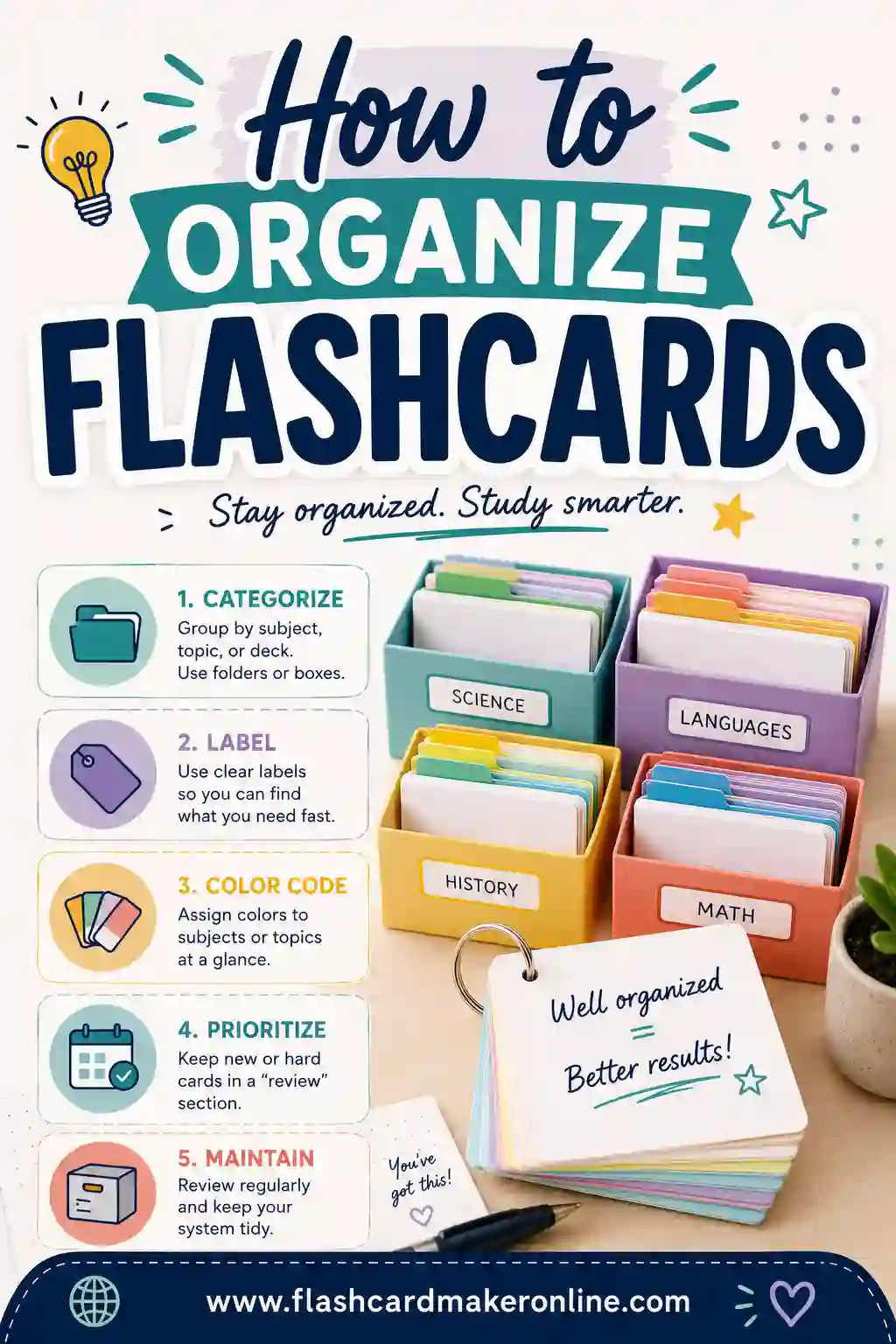
That's 71 cards across five piles. Keep the piles as separate decks in the maker, each with its own title, such as "Hangul 1 - Consonants" and "Hangul 5 - First Words." Separate decks make it easy to print, shuffle and review one skill at a time.
How to Build and Print This Deck
Here's the exact process in the free flashcard maker on our homepage. It takes about ten minutes for all five piles.
- Name the deck. Type a title like "Hangul 1 - Consonants" in the deck title box.
- Paste the list. Open Paste a list, copy Pile 1 from above, and paste it in. Each line has to read
front : back. Choose Replace deck for a fresh deck, or Add to deck if you're adding to cards you already made. - Check the Korean text. Scroll through and make sure every letter came through. Hangul displays fine on most modern phones and computers, but if you see empty boxes, your device is missing a Korean font. Adding Korean language support in your device's settings usually fixes it.
- Add your mnemonic pictures. Use the add-a-picture option on each consonant card. A small drawing of a gun next to ㄱ or a bucket next to ㅂ does more than a sentence on the back, because you see the picture and the letter as one image. You can sketch them on paper, snap a photo, and add the photo. Pairing words with images is the idea behind dual coding, and it's a big reason mnemonic decks stick.
- Study on screen first. Switch to Study mode. Use Shuffle so you can't lean on the order, then Flip each card after you've said the sound out loud. 🔊 Read aloud uses your browser's built-in voices, so whether it pronounces Hangul well depends on your device and whether a Korean voice is installed. Treat it as a bonus and use native recordings as your real pronunciation guide.
- Save a copy. Click Download .csv to keep a backup, or Get share link to send the deck to a study partner or class. Anyone who opens the link gets their own copy.
- Print. Open Print and pick a layout:
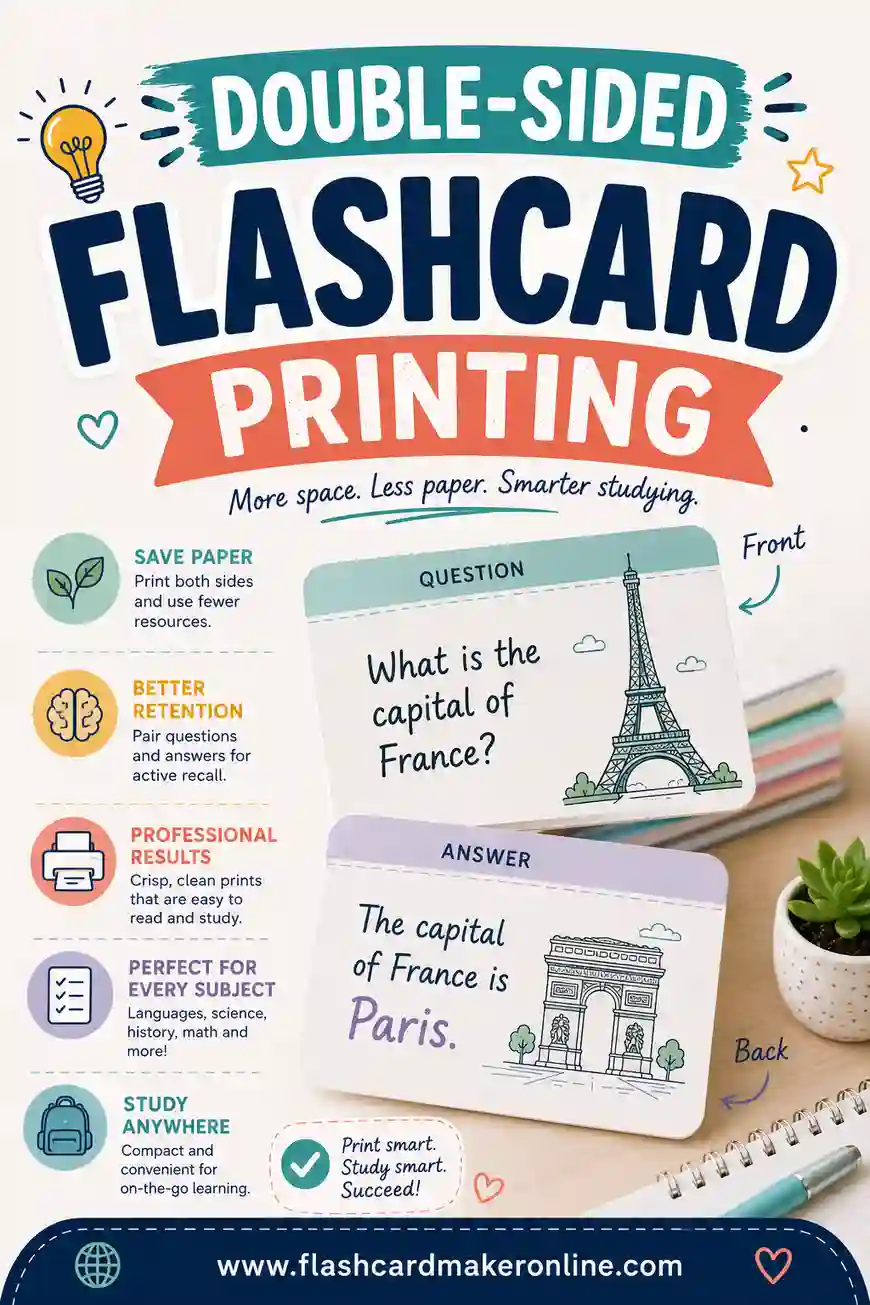
- Double-sided lines up the fronts and backs, so the letter is on one side and the sound and mnemonic are on the other. This is the layout you want for a classic flip deck.
- Fronts only prints just the letters. Use it for a wall chart or for a "say it out loud" drill where a partner holds the answer key.
- Cut-out grid puts front and back side by side, which works if your printer doesn't handle two-sided printing well.
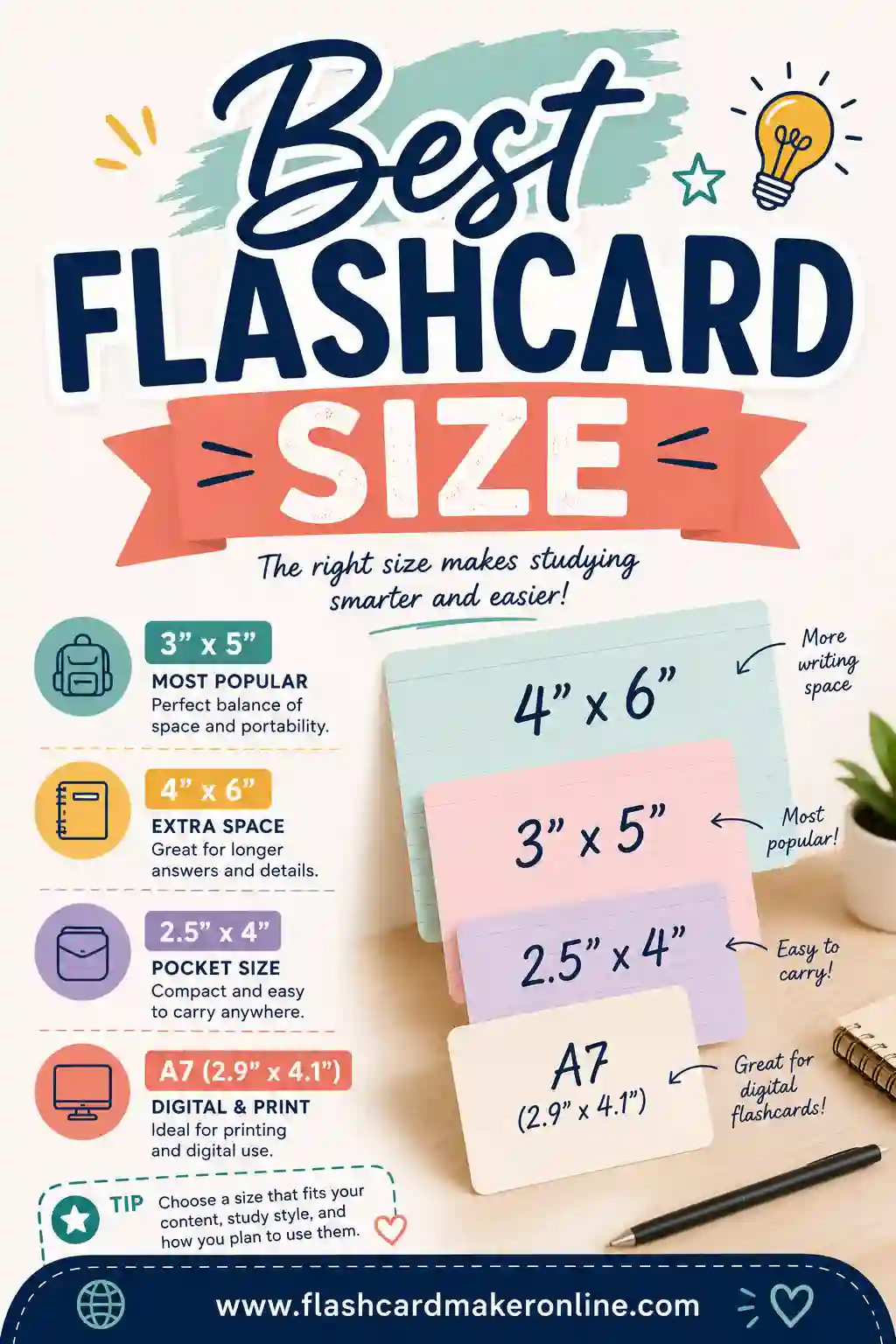
- Pick a size. Jumbo or Big cards are great for single letters, because a big ㅂ and ㅍ are easy to tell apart across a room. 3×5 index card or 4×6 index card sizes work well for the word pile, where you want a pocket deck. Standard is a good middle ground.
- Run a test page. Use Print a test page first before you print the whole deck, especially for double-sided printing, and then save as PDF so you can reprint any pile later.
If your two sides don't line up on the first try, our guide to double-sided flashcard printing walks through paper settings and how to flip on the long or short edge.
Tip: print each pile on a different color of paper. Consonants on blue, vowels on yellow, words on white. When you mix piles later, you'll see at a glance whether your misses are mostly vowels or mostly batchim.
A 7-Day Plan to Read Hangul
This plan assumes about 20 to 30 minutes a day, split into two short sessions if you can. Two short reviews beat one long one, because each new session makes you pull the letters back out of memory.
| Day | New cards | Review | Goal by the end of the day |
|---|---|---|---|
| 1 | Consonants ㄱ through ㅅ (7 cards) | None yet | Name all 7 with the mnemonics |
| 2 | Consonants ㅇ through ㅎ (7 cards) | Day 1 cards, shuffled | All 14 consonants, any order |
| 3 | 10 basic vowels | All consonants | Read any vowel written with ㅇ (아, 어, 오...) |
| 4 | Syllable grids for ㄱ, ㄴ, ㅁ, ㅅ | Consonants and vowels mixed | Sound out simple blocks like 나, 고, 미 |
| 5 | 5 double consonants, 11 compound vowels | Everything so far | Spot ㄲ, ㄸ, ㅃ, ㅆ, ㅉ and read 왜, 뭐, 개 |
| 6 | 7 final consonant rule cards | Syllable grids | Read blocks with batchim like 한, 물, 밥 |
| 7 | 24 first-word cards | All piles, shuffled | Read every word in Pile 5 without the back |
A few ground rules make this work:
- Say every answer out loud before you flip. Silent "I know that one" thinking feels like learning, but it's easy to fool yourself. Saying the sound commits you to an answer.
- Keep consonants and vowels apart until day 4. Mixing them on day 1 is like learning two new alphabets at once.
- Sort as you go. After each round, put cards into "got it" and "missed it" piles. Next session, start with the missed pile. This is a simple version of the Leitner system, and it keeps your time on the letters you actually struggle with.
- Read real Korean on day 7. Find a menu, a product label, a song title or a subway map, and sound out a few words. Many will be loanwords, like 아이스크림 (aiseukeurim, ice cream), and the moment you recognize one is the best motivation you'll get all week.
After day 7, shuffle all 71 cards together every two or three days for a couple of weeks. Look-alikes like ㅓ and ㅏ or ㅂ and ㅍ tend to slip if you stop entirely.
Common Mistakes and How to Fix Them
| Mistake | Why it happens | Fix |
|---|---|---|
| Mixing up ㅏ and ㅓ | Both are a line with one tick | ㅏ ticks away from you ("ah, over there"), ㅓ ticks back toward you ("uh?") |
| Reading ㅇ as a sound at the start | It looks like the letter o | Card: "ㅇ at the start = silent placeholder" with 아 and 이 as examples |
| Reading ㄹ as only r or only l | English has two separate letters | Card: r between vowels (나라 nara), l at the end (물 mul) |
| Saying final ㅅ as s | It's s at the start of a block | Batchim card: final ㅅ sounds like t, as in 옷 (ot) |
| Studying single letters only | Feels like progress | Add syllable grids and word cards by day 4 |
| Leaning on romanization | It's familiar | Cover the romanized line on your word cards after day 5 and read the Hangul only |
| Confusing ㅈ and ㅊ | Small difference in shape | Family card: ㅈ plain, ㅊ with a "hat" and a puff of air, ㅉ doubled and tense |
| Ignoring the ㅐ and ㅔ difference | They sound alike | One card each, with the word pair 개 (dog) and 게 (crab) |
The biggest mistake of all is waiting to "finish" the alphabet before reading anything. Start sounding out real words early, even slowly.
Adjusting the deck for kids, travelers and serious learners
Kids: use Jumbo cards, teach five letters at a time, and swap the loanwords for family words like 엄마 (eomma, mom) and 아빠 (appa, dad). Travelers: focus on Piles 1, 2 and 4, then add words from your trip, such as 역 (yeok, station), 출구 (chulgu, exit) and 화장실 (hwajangsil, restroom), printed at 3×5 index card size. Serious learners: keep these piles as your foundation and start a vocabulary deck tied to your textbook. Our guide on how to make flashcards for languages covers vocabulary and grammar cards, and the same picture-mnemonic approach works for kana in our hiragana flashcards deck.
Frequently Asked Questions
How many letters are in the Korean alphabet?
Modern Hangul uses 24 basic letters: 14 consonants and 10 vowels. Add the 5 double consonants and 11 compound vowels and you get 40 letters in total. Start with the 24 basic letters, because the other 16 are built from them.
Can you really learn Hangul in a week?
Many learners can recognize the letters and sound out simple words after about a week of short daily practice. Reading quickly and pronouncing everything naturally takes longer, and that comes with listening and reading practice over the following weeks. A week is a realistic goal for decoding, not for fluency.
Should I learn consonants or vowels first?
Either order works, but keep them in separate piles at first. Many learners start with consonants because the picture mnemonics are easy to remember, then add vowels and combine them into syllable blocks. What matters most is not mixing both sets on the very first day.
Do I need romanization on my hangul flashcards?
It helps for the first few days, because it gives you a quick sound reference. After that, it can slow you down, since you start reading the Latin letters instead of the Hangul. Cover or remove the romanized line once you can sound out simple blocks without it.
What size should I print Korean alphabet flashcards?
Jumbo or Big cards work well for single letters, especially for kids or for telling apart look-alikes like ㅂ and ㅍ. For word cards and a pocket deck, 3×5 or 4×6 index card sizes are handier. Print a test page first to check that the Hangul is crisp at your chosen size.
Why does ㄱ sometimes sound like g and sometimes like k?
ㄱ is a plain, lightly breathed sound that falls between an English g and k. At the start of a word it tends to sound closer to k, and between vowels it sounds closer to g. The same pattern applies to ㄷ (d or t), ㅂ (b or p) and ㅈ (j).
Will the read-aloud button pronounce Korean correctly?
The read-aloud button uses your browser's built-in voices, so results depend on your device and whether a Korean voice is installed. It can be a handy extra, but it isn't a substitute for native audio. Check tricky sounds like ㅓ, ㅡ and the double consonants against a dictionary recording or your course audio.
Ready to start? Open the free flashcard maker, paste Pile 1, add a picture to each consonant, and print your first 14 cards tonight. By this time next week, you'll be reading Korean words.