Learn a Christmas Carol or Solo Line by Line: A Memorization Deck for Choir
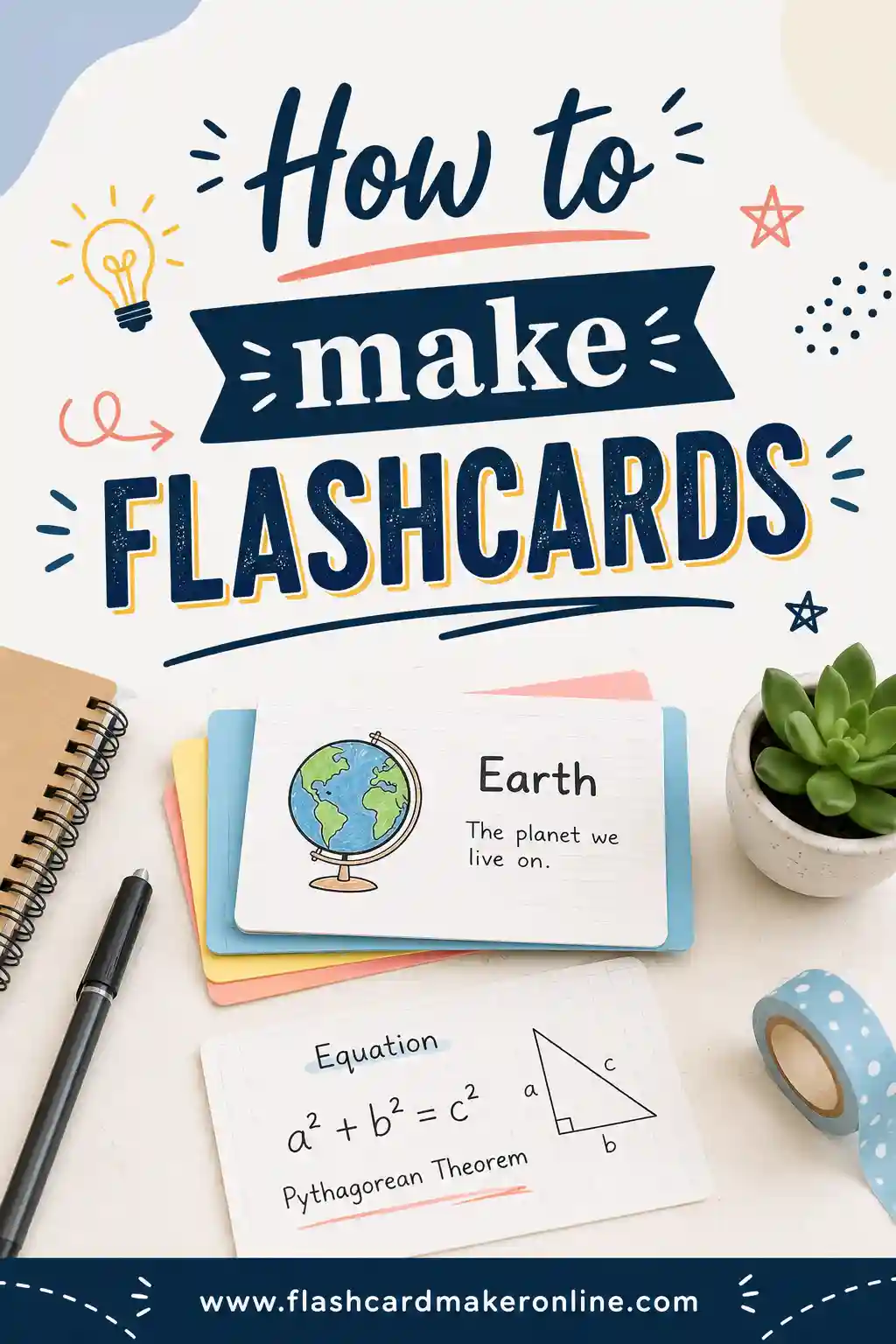
The fastest way to memorize Christmas carol lyrics is to stop practicing the song from the top and start practicing the joins: put the last few words of one line on the front of a card, the next line on the back, and say (or sing) the answer before you flip. Work 4 to 6 lines at a time for 10 to 15 minutes a day, shuffle the cards so you start from random spots, and the lines you keep blanking on get the most attention. You can build a whole verse deck in about 10 minutes with our free flashcard maker, study it on your phone, and print a pocket copy for rehearsal.
Below you'll find why certain lines keep disappearing, exactly how to write the cards, a worked Silent Night deck, a three-week plan that ends on program night, and fixes for the problems choir members and soloists run into most. Every example uses traditional, public-domain carols, so you can copy the lyrics straight onto your cards.
🃏 Quiz yourself: 12 cards from this page
Read the front, say your answer, then tap the card to check.
Make, study & print this deck → Opens the free flashcard maker with all 12 cards ready to edit or print.▶ Open this deck in the flashcard maker
Why You Keep Blanking on the Same Lines
If you've ever sung a carol perfectly in the car and then gone completely blank in the second verse at rehearsal, you're not alone, and you're not bad at memorizing. You've been practicing the song in a way that hides the weak spots.
Most people learn lyrics by singing from the top, again and again. That feels productive, because the opening lines get really solid. But it means the first verse gets 20 rehearsals and the third verse gets 4. Worse, every run-through gives you a running start. Line 3 comes easily because lines 1 and 2 pulled it along. Take that running start away, like when the director says "let's pick it up from verse 3, bar 9," and the line isn't there.
Here are the usual suspects behind a blank:
- The switch between verses. Many carols open every verse the same way, then split off. Silent Night begins all three verses with "Silent night, holy night," and your brain has to choose which path to take on line 2. That fork is where most people stall.
- Repeated lines. "And heaven and nature sing" appears three times in a row at the end of the first verse of Joy to the World. Did you sing it twice or three times? The repeats blur.
- Old-fashioned words. "Round yon Virgin," "gath'ring winter fuel," "th'angelic host." Words you'd never say in daily life don't have a hook in your memory yet.
- Similar verses. Verse 2 and verse 3 of many carols share rhythm and rhyme sounds, so you swap lines between them without noticing.
- Nerves. Under pressure, memory gets narrower. A line you only half know is the first thing to go when the lights are on you.
Every one of these problems lives at a join between two lines, not in the middle of a line. That's why the card method below targets the joins.
Why flashcards beat singing it through again
A flashcard makes you pull the next line out of your own memory without a running start. You see "...all is bright," and you have to produce "Round yon Virgin Mother and Child" on your own before you flip. That kind of effortful recall, called active recall, is what builds a line you can find under pressure. Rereading the lyric sheet or singing along with a recording feels easy, which is exactly why it doesn't stick as well.
Cards also let you shuffle. Once the deck is shuffled, every card is a cold start from a different spot in the carol, which is exactly what happens when the director restarts the choir mid-verse or when a soloist loses their place after a page turn. If you want the bigger picture on why this works, our guide on how to memorize flashcards goes deeper into recall and spacing.
The Line-by-Line Card Method
You only need three kinds of cards to cover a carol. Most people only need the first kind. The other two are for the spots that keep tripping you up.
Card type 1: the join card (most of your deck)
- Front: the last 2 to 4 words of a line, starting with "..." so you know it's a cue.
- Back: the whole next line.
Example:
- Front: ...all is calm, all is bright
- Back: Round yon Virgin Mother and Child
Why only the last few words on the front? Because when you're singing, the end of the line you just sang is the only cue you have for the next one. You're training the exact handoff your brain has to make on stage.
Card type 2: the verse-starter card
- Front: "Verse 2 starts with..." or "After the Silent night opening, verse 3 goes..."
- Back: the first line or the first line that's different.
These cards fix the fork problem. If all three verses open the same way, the starter card makes you practice choosing the right branch.
Card type 3: the repeat-count card
- Front: "How many times is And heaven and nature sing at the end of verse 1?"
- Back: "Twice the same, then a third time as And heaven, and heaven, and nature sing."
These are for repeats, refrains and choruses where the question isn't "what's the line" but "how many times, and which version."
How many lines per batch
Don't put the whole carol into practice on day one. Work 4 to 6 lines at a time. A typical carol verse is 6 to 8 lines, so one batch is roughly one verse. Once a batch is smooth from any starting point, add the next one. This is just chunking: your memory handles a few small groups far better than one long string.
A rough guide to deck size:
| What you're learning | Lines | Join cards | Starter + repeat cards | Total cards |
|---|---|---|---|---|
| One carol, verse 1 only | 6 to 8 | 6 to 8 | 1 to 2 | 7 to 10 |
| One carol, three verses | 18 to 24 | 18 to 24 | 3 to 6 | 21 to 30 |
| Solo verse + choir refrain | 8 to 12 | 8 to 12 | 2 to 4 | 10 to 16 |
| Full program, 4 carols, 2 verses each | 48 to 64 | 48 to 64 | 8 to 12 | 56 to 76 |
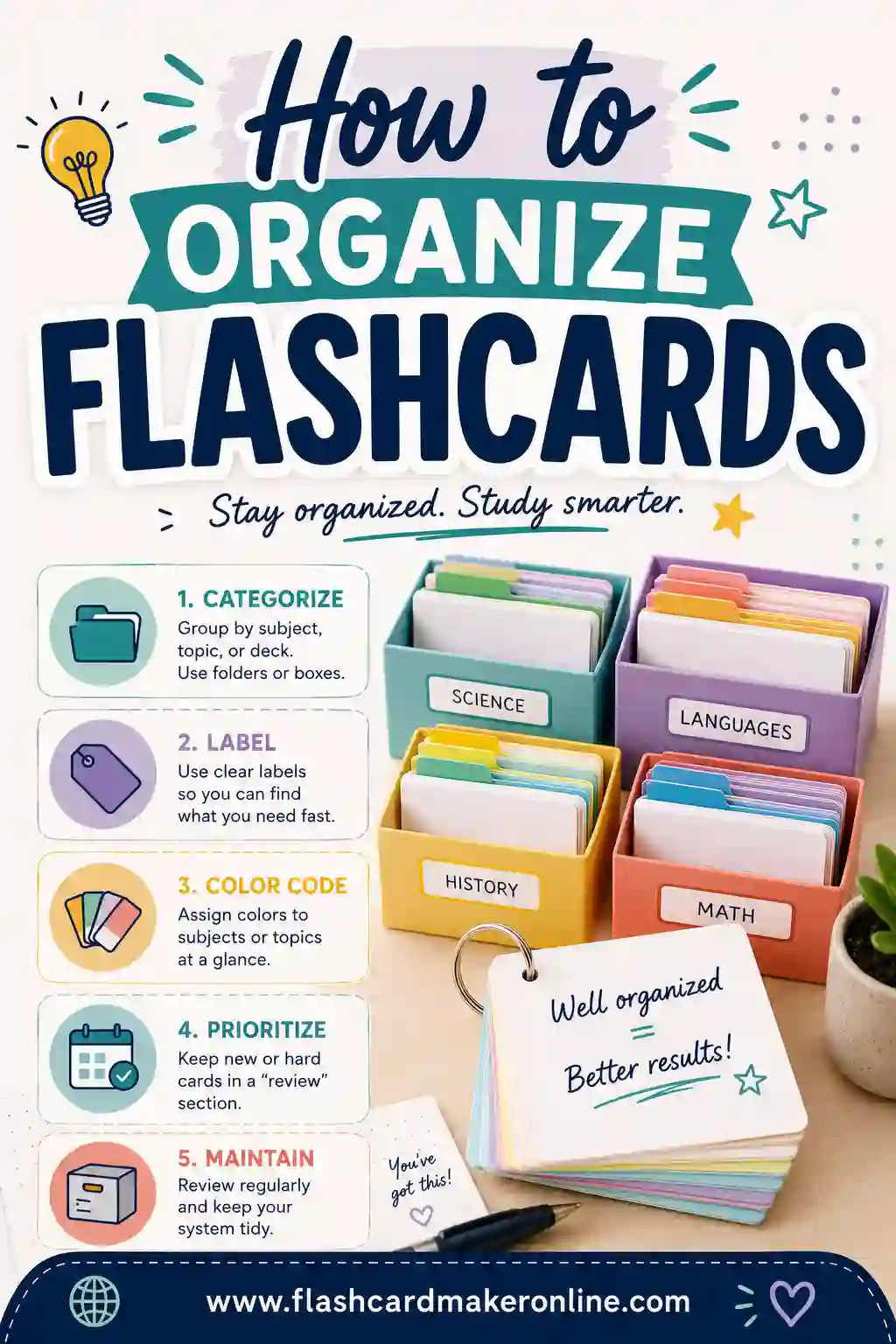
For a full program, make one deck per carol rather than one giant deck. You'll want to drill the carol that's giving you trouble on its own.
How to Build the Deck with the Free Flashcard Maker
Here's the exact setup in the free flashcard maker. There's no account or signup, and the cards save automatically in the browser you're using, so you can close the tab and come back tomorrow.
- Name the deck. In Deck title, type something specific like "Silent Night verses 1 to 3" or "Program solo, O Come All Ye Faithful." If you make several decks, the title is how you'll tell them apart when you print.
- Open Make cards. This is the default tab. You'll see a Front and Back box for each card.
- Use Paste a list instead of typing card by card. Click Paste a list. Put one card per line, with the front and back separated by a colon, like this:
Verse 1 starts with... : Silent night, holy night
...silent night, holy night : All is calm, all is bright
...all is calm, all is bright : Round yon Virgin Mother and Child
...Mother and Child : Holy Infant so tender and mild
...so tender and mild : Sleep in heavenly peace
...heavenly peace (first time) : Sleep in heavenly peace (sung again)
- Click Add to deck. Each line becomes one card. If you're redoing a deck from scratch, Replace deck swaps the old cards out.
- Check the card count. The counter under the card list shows how many cards you have. It should match the number of lines you pasted.
One formatting trap with lyrics
The paste box splits each line at the first colon it finds. A tab, an equals sign, an en dash, or a hyphen with a space on both sides also counts as a separator. Commas are fine, which is good news, since lyrics are full of them. Because the first divider wins, a colon later in the back is harmless, but if the cue on the front contains a colon or a spaced dash, the card will split in the wrong place.
The fix is simple: remove colons and spaced dashes from the cue text before you paste (you won't miss them when you sing), and use exactly one colon per line as the divider. Then scroll through the cards once to make sure every front and back look right.
Adding the music or a marking
If you're working from a marked copy of the score, you can add a picture to any card with the Image button. A phone photo of the two bars where the line starts, with your breath mark or the director's dynamics penciled in, can go on the back of a card. It's handy for a solo entrance you keep coming in early on. Images stay in your browser and print with the card.
Studying on screen
Switch to the Study tab. Click or tap the card to flip it, or use Flip, and move through the deck with ‹ Prev and Next ›. Two settings matter for lyrics:
- Shuffle off for the first pass of a new batch, so you meet the lines in order once.
- Shuffle on for every pass after that. This is where the real work happens, because each card becomes a cold start.
There's also a 🔊 Read aloud button that speaks the side you're looking at, using your device's built-in voice. It won't sing the melody, but hearing the words spoken is a handy check on old-fashioned words you're not sure how to say, and it's useful when you're practicing while cooking or folding laundry. Ask your director how your choir pronounces words like "yon" or "Wenceslas," since a computer voice won't always match.
Sharing the deck with your section
Choir directors and section leaders can build one deck and hand it out. Click Get share link, then Copy link, and send it to the group. Anyone who opens the link gets their own copy of the deck in their browser, so a singer who edits their copy (to add a breath mark, say) doesn't change anyone else's. You can also Download .csv to keep a backup or to bring the list into a spreadsheet.
Worked Example: A Silent Night Deck, Verse by Verse
Silent Night is a great first deck because all three verses start the same way and then split. That makes it the classic "I always sing verse 1 words in verse 3" carol. The English text below is the long-standing public-domain translation used in most hymnals.
Verse 1
| Front (cue) | Back (next line) |
|---|---|
| Verse 1 starts with... | Silent night, holy night |
| ...silent night, holy night | All is calm, all is bright |
| ...all is calm, all is bright | Round yon Virgin Mother and Child |
| ...Mother and Child | Holy Infant so tender and mild |
| ...so tender and mild | Sleep in heavenly peace |
| ...heavenly peace (first time) | Sleep in heavenly peace (sung again) |
Verse 2
| Front (cue) | Back (next line) |
|---|---|
| Verse 2 starts with... | Silent night, holy night |
| ...holy night (verse 2) | Shepherds quake at the sight |
| ...quake at the sight | Glories stream from heaven afar |
| ...from heaven afar | Heavenly hosts sing Alleluia |
| ...sing Alleluia | Christ the Savior is born |
| ...the Savior is born (first time) | Christ the Savior is born (sung again) |
Verse 3
| Front (cue) | Back (next line) |
|---|---|
| Verse 3 starts with... | Silent night, holy night |
| ...holy night (verse 3) | Son of God, love's pure light |
| ...love's pure light | Radiant beams from Thy holy face |
| ...Thy holy face | With the dawn of redeeming grace |
| ...redeeming grace | Jesus, Lord, at Thy birth |
| ...at Thy birth (first time) | Jesus, Lord, at Thy birth (sung again) |
That's 18 cards for the whole carol. Notice the fronts that say "(verse 2)" and "(verse 3)." Those three cards are the most important in the deck, because they force you to pick the right second line. If you only have time for a few cards on a busy day, drill those.
Add three more cards to finish the deck:
- Front: Which verse has the shepherds? Back: Verse 2 (Shepherds quake at the sight).
- Front: Which verse has the dawn? Back: Verse 3 (With the dawn of redeeming grace).
- Front: Which verse has the Infant? Back: Verse 1 (Holy Infant so tender and mild).
These "which verse" cards give each verse a picture: verse 1 is the mother and baby, verse 2 is the shepherds and angels, verse 3 is the light. When you're on stage and the opening line comes around again, that picture tells you where you are.
Repeats: a Joy to the World example
The first verse of Joy to the World ends with a line sung three times, and the third time is different. Here's the verse:
Joy to the world, the Lord is come! Let earth receive her King; Let every heart prepare Him room, And heaven and nature sing, And heaven and nature sing, And heaven, and heaven, and nature sing.
Join cards alone won't help here, because the front "...nature sing" points to two different backs. Use numbered fronts and one repeat-count card:
| Front (cue) | Back |
|---|---|
| ...prepare Him room | And heaven and nature sing |
| ...nature sing (1st) | And heaven and nature sing |
| ...nature sing (2nd) | And heaven, and heaven, and nature sing |
| How does the end of verse 1 repeat? | Same line twice, then the third time with heaven doubled |
The same pattern works for any carol with a repeated ending. O Come All Ye Faithful repeats "O come, let us adore Him" three times before "Christ the Lord," so a repeat-count card ("How many times before Christ the Lord?" / "Three") saves you from coming in a beat early.
Long lines: a Good King Wenceslas example
Good King Wenceslas has short lines that are easy to swap, because the rhyme sounds carry you into the wrong verse. Here's verse 1:
Good King Wenceslas looked out On the feast of Stephen, When the snow lay round about, Deep and crisp and even; Brightly shone the moon that night, Though the frost was cruel, When a poor man came in sight, Gath'ring winter fuel.
With short lines, you can put two lines on one back. For example, Front: "...feast of Stephen" / Back: "When the snow lay round about, deep and crisp and even." That halves the card count without making any card too long to recall in one go. Don't go past two short lines per back, though. If a back takes more than a breath to say, split it.
A Three-Week Plan That Ends on Program Night
Most choirs get the music for a December program about three to six weeks ahead. Here's a plan for the most common case: three weeks, 10 to 15 minutes a day, for one carol with three verses plus a few lines of a second one. Stretch it if you have more time; there's a one-week version after this. Ten minutes a day for three weeks adds up to about three and a half hours, and spreading it out beats one long cram. Our page on how many flashcards per day explains how to size a daily batch.
| Days | What you add | How you practice | Time |
|---|---|---|---|
| 1 to 2 | Verse 1 (6 to 8 cards) | First pass in order, then 3 shuffled passes, saying each line out loud | 10 min |
| 3 to 4 | Verse 2 + its starter card | Verse 2 shuffled, then all cards shuffled together | 10 to 12 min |
| 5 to 7 | Verse 3 + "which verse" cards | Full deck shuffled twice; pull out every miss into a problem pile | 12 to 15 min |
| 8 to 10 | Nothing new | Problem pile 3 times, then full deck once, singing quietly instead of speaking | 10 to 15 min |
| 11 to 14 | Second carol or solo section | Same steps as days 1 to 7, plus one full pass of carol 1 | 15 min |
| 15 to 18 | Nothing new | Full decks shuffled once a day; sing each answer at performance tempo | 10 to 15 min |
| 19 to 20 | Nothing new | Sing the whole carol from memory with no cards, then do only the cards you missed | 10 min |
| 21 (program day) | Nothing new | One calm pass through the starter and "which verse" cards, then stop | 5 min |
What a single session looks like
- Warm-up (2 minutes). Flip through yesterday's problem pile with Shuffle on.
- New batch (5 minutes). If it's an "add" day, do the new cards in order once, then shuffled.
- Mixed review (5 minutes). Shuffle everything you've learned so far. Say or sing the answer before you flip. Every card you miss or hesitate on goes into the problem pile.
- Problem pile (3 minutes). Go through only the misses, twice.
On paper, the problem pile is a real pile on the table. On screen, keep a short list of the fronts you missed on a sticky note, or make a second small deck titled "Silent Night problem lines" and paste just those cards into it. The Leitner system is a tidy way to manage this if you're using printed cards: misses go back to box 1, and box 1 gets practiced every day.
Only have one week?
It happens: you got asked to fill in for a soloist, or the program moved up. Cut the plan down like this:
- Day 1: Make the deck (10 minutes) and learn verse 1.
- Day 2: Add verse 2 and its starter card.
- Day 3: Add verse 3 and the "which verse" cards.
- Days 4 to 5: Full deck shuffled, twice a day (morning and evening), 10 minutes each. Problem pile after each.
- Day 6: Sing from memory, then cards for misses only.
- Day 7: Starter cards only, then stop and rest your voice.
Two short sessions a day beat one long one when time is tight. If you're learning two carols in a week, do one in the morning and the other at night.
Practicing From Any Starting Point
The goal isn't to know the carol from the top. It's to be able to start at any line and keep going. Here are four drills that build that, all using the same deck.
1. The cold start
Shuffle the deck, flip the top card, and sing from that line to the end of the verse without stopping. Then check the next few cards in order to make sure you didn't skip anything. This is the closest thing to the director saying "from the second line of verse 3."
2. Speak, then sing
For the first few days, speak the answers. Speaking is faster, so you get through more cards, and it separates "do I know the words" from "can I hit the notes." Once a batch is solid spoken, switch to singing the answers quietly at the real tempo. Some lines that are easy to say fall apart when they have to fit the rhythm, and you want to find those before rehearsal does.
3. Backwards cards
Flip the deck around: look at the back (a full line) and say the line that came before it. This is harder, and it's worth doing for a solo. If you lose your place mid-verse, knowing the line before helps you find your way back without stopping.
4. Performance pass
Once a day in the last week, stand up, hold your folder the way you will on the night (or no folder, if you're singing from memory), and sing the whole carol with no cards. Any line you stumble on gets a card in the problem pile for tomorrow.
Variations for Soloists, Section Singers and Kids
The method is the same for everyone, but the deck and the plan change a bit depending on what you're singing.
| Singer | What to put in the deck | Extra cards | Daily time |
|---|---|---|---|
| Soloist (one verse alone) | Every line of your solo, one join card per line | Your entrance cue (what the choir or piano does just before you come in), breath marks on the back | 15 min |
| Section singer, full carol | All verses, join cards | Starter cards for each verse, "which verse" cards, repeat-count cards | 10 to 15 min |
| Descant or harmony part | Only the lines where your words or rhythm differ from the melody | A card for each place your part drops out or comes back in | 10 min |
| Children (ages 6 to 10) | One verse, 4 to 6 cards, Big card size, a picture on each front | A picture card for each verse (a star, a manger, shepherds) | 5 to 8 min |
| Adult new to the language of the carol | Line pairs in the original language | A meaning card for each unfamiliar word | 15 min |
For soloists
A solo has one extra danger: the entrance. Make a card where the front is what you hear right before you come in (for example, "Piano plays the last two bars of the chorus" or "Altos finish ...nature sing") and the back is your first line. Practice that card more than any other. A soloist who comes in confidently and on time almost always settles into the rest of the verse.
If you're singing a verse that the choir also sings in other verses, add a "my verse" card: Front: "Which verse is my solo?" Back: "Verse 2, Shepherds quake at the sight." It sounds obvious, but on the night, nerves can make you start the wrong one.
For kids
Keep it tiny. One verse, four to six cards, and a picture on the front of each card. In the Print tab, choose the Big card size (4 per page), which little hands manage well. Have the child "read" the picture and sing the line. A grown-up can hold the cards and play the role of the cue: say the end of the line, and the child sings the next one. Five minutes after dinner for two weeks is plenty for one verse. For more ideas for young learners, see our guide to flashcards for kids.
Printing a Pocket Set for Rehearsal
Printed cards are useful for choir because you can't always be on your phone during rehearsal breaks, and many singers like a screen-free practice before bed. Here's how to print them in the free flashcard maker:
- Open the Print tab.
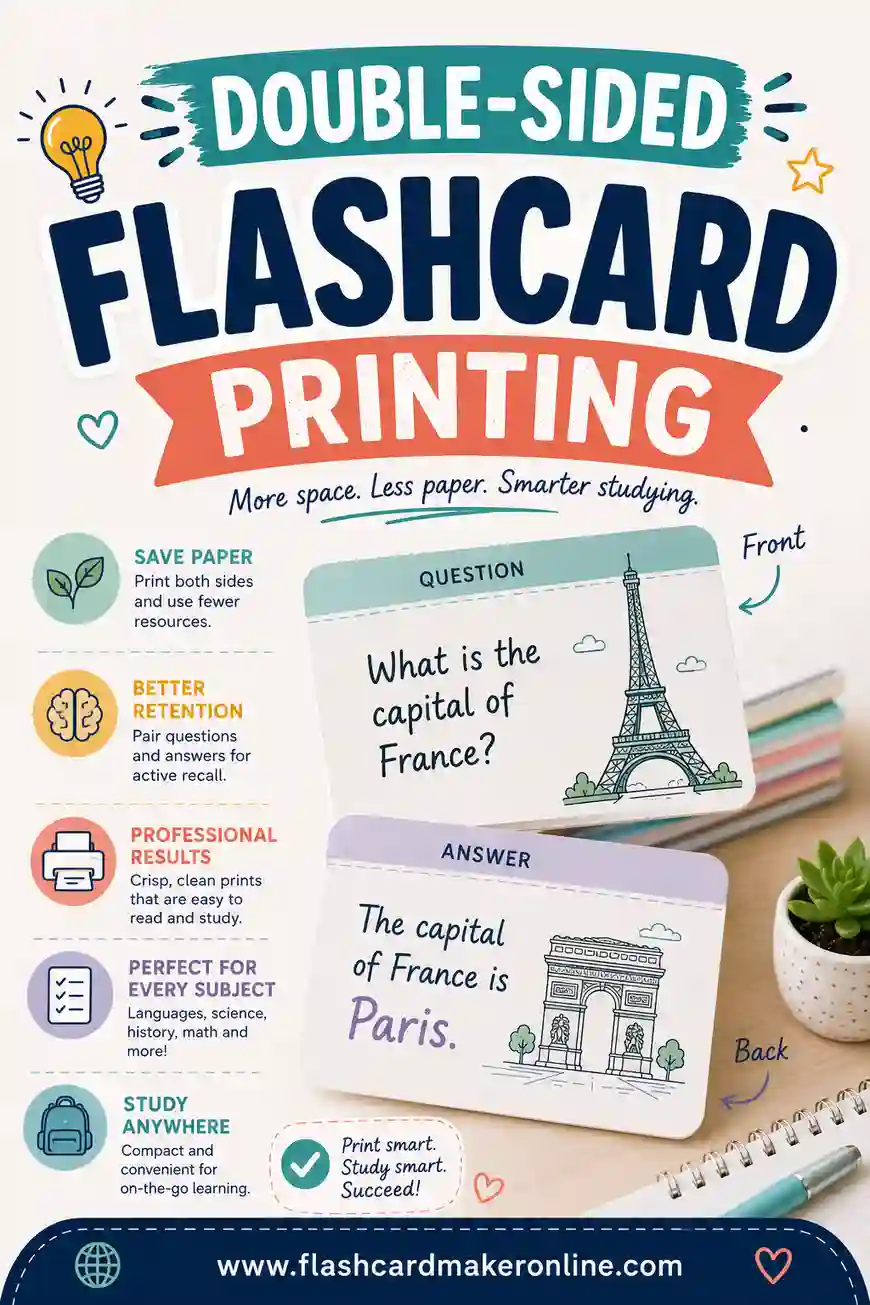
- Under Print layout, pick Double-sided (fronts and mirrored backs for duplex printing) or Cut-out grid (front and back side by side, so you can cut or fold).
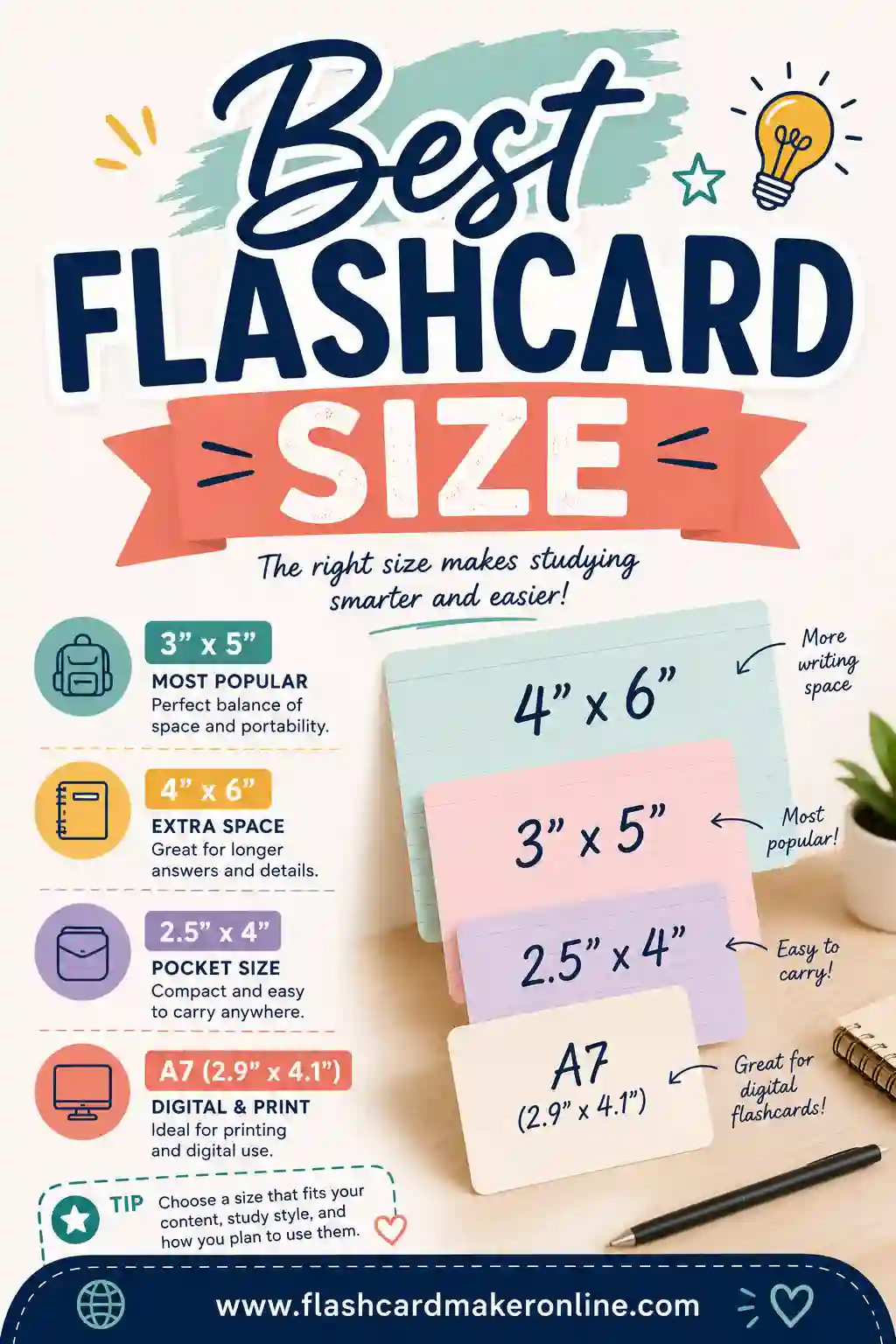
- Under Card size, pick 3×5 index card (3 per page) for a pocket set, or Standard (8 per page) to save paper.
- Click Print. In the print dialog, set the scale to 100% / Actual size, not "Fit to page."
- For double-sided, turn on duplex and flip on the long edge. If it's your first time printing cards on that printer, use Print a test page first, a two-page check that shows which edge to flip on.
- Choose Save as PDF in the same dialog if you want a file to send to your section.
Card stock or heavier paper keeps you from seeing the answer through the card. A rubber band and a 3×5 deck fit in a coat pocket or the front of a choir folder. For more on getting the backs to line up, read our guide to double-sided flashcard printing.
Common Problems and Quick Fixes
| Problem | Likely cause | Fix |
|---|---|---|
| I sing verse 1 words in verse 3 | The shared opening line sends you down the wrong path | Drill the "(verse 3)" join card and the "which verse" cards daily; picture each verse's scene |
| I know the cards but lose it in rehearsal | You only practiced speaking, not singing at tempo | Switch to singing the answers quietly at the real speed from day 8 on |
| I skip a repeat or add an extra one | Repeated lines blur together | Number the repeats on the fronts (1st, 2nd) and add a repeat-count card |
| A card split in a weird place | The cue on the front had a colon or a spaced dash in it | Remove the colon or dash from the cue and paste the line again |
| The deck got too big to finish | Too many carols in one deck | One deck per carol; on busy days do only the problem pile |
| Old words feel like nonsense | No meaning to hang them on | Add a meaning card: Front "yon" / Back "that, over there" |
| I freeze on my solo entrance | No practice on the cue | Make an entrance card and drill it first every session |
| My cards are gone on another device | Cards save in the browser you made them in | Use Get share link to open the deck on your other device, or print it |
The program-week checklist
The last week is about keeping what you have, not cramming more in. Use this list in the days before the program.
- Five days out: Sing each carol once from memory with no cards. Make a problem pile from any misses.
- Four days out: Problem pile twice, full deck once, singing at tempo.
- Three days out: Same as yesterday. Check you know your entrance and which verse is yours.
- Two days out: One full performance pass standing up. Cards only for misses.
- The day before: Starter, "which verse" and entrance cards only. Then stop. Sleep matters more tonight than one more pass.
- The day of: One quiet pass through the starter cards in the morning or in the car. Then leave the deck in your bag.
Your Deck Can Be Ready Tonight
You don't need a special app or a lot of time. You need one card for each join between lines, a shuffle button, and 10 to 15 minutes a day. Open the free flashcard maker, paste in your verses with one colon per line, and do your first shuffled pass tonight. Three weeks from now, the second line of verse 3 will be waiting for you right when you need it.
▶ Open this deck in the flashcard maker
Frequently Asked Questions
How long does it take to memorize a Christmas carol?
For most adults, one verse of a familiar carol takes two to four days at 10 to 15 minutes a day, and a three-verse carol takes about one to two weeks to feel solid from any starting point. A solo or an unfamiliar carol takes longer. Leave the last few days for review only.
What should go on the front of a lyrics flashcard?
Put the last two to four words of the line you just sang, starting with "..." so you know it's a cue. The back holds the whole next line. That trains the exact handoff you make while singing.
Should I practice by speaking or singing the words?
Both, in that order. Speak the answers for the first several days so you can get through more cards quickly. Then switch to singing them quietly at performance tempo, since some lines only go wrong once they have to fit the rhythm.
How do I stop mixing up verses that start the same way?
Make "verse-starter" cards and a join card for the second line of each verse, labeled with the verse number on the front. Add "which verse" cards that tie each verse to one image, like the shepherds or the dawn. Drill those cards first every day.
Can I use this for a carol in Latin or another language?
Yes. Use the same line-pair cards in the original language, and add a meaning card for each unfamiliar word. Check pronunciation with your director. The Read aloud button can speak a card using your device's voice, but it won't always match how your choir sings a word.
Do I need an account to save my lyrics deck?
No. The flashcard maker saves your cards automatically in the browser you're using, with no signup. To use the deck on another phone or computer, create a share link and open it there, or print the deck or save it as a PDF.
Can a choir director share one deck with the whole choir?
Yes. Build the deck, click Get share link, and send the copied link to your singers. Each person who opens it gets their own copy, so their edits don't affect anyone else's. You can also save a printable PDF from the Print tab.
What carols are safe to put on cards and share?
Traditional carols whose words are in the public domain, like Silent Night (in its classic English translation), Joy to the World, Hark! The Herald Angels Sing, O Come All Ye Faithful and Good King Wenceslas, are fine to copy onto your own cards. For newer arrangements or modern songs, use only the copy your choir provides for its own rehearsal use.