Organic Chemistry Reaction Flashcards: Mechanisms Without Blind Memorizing
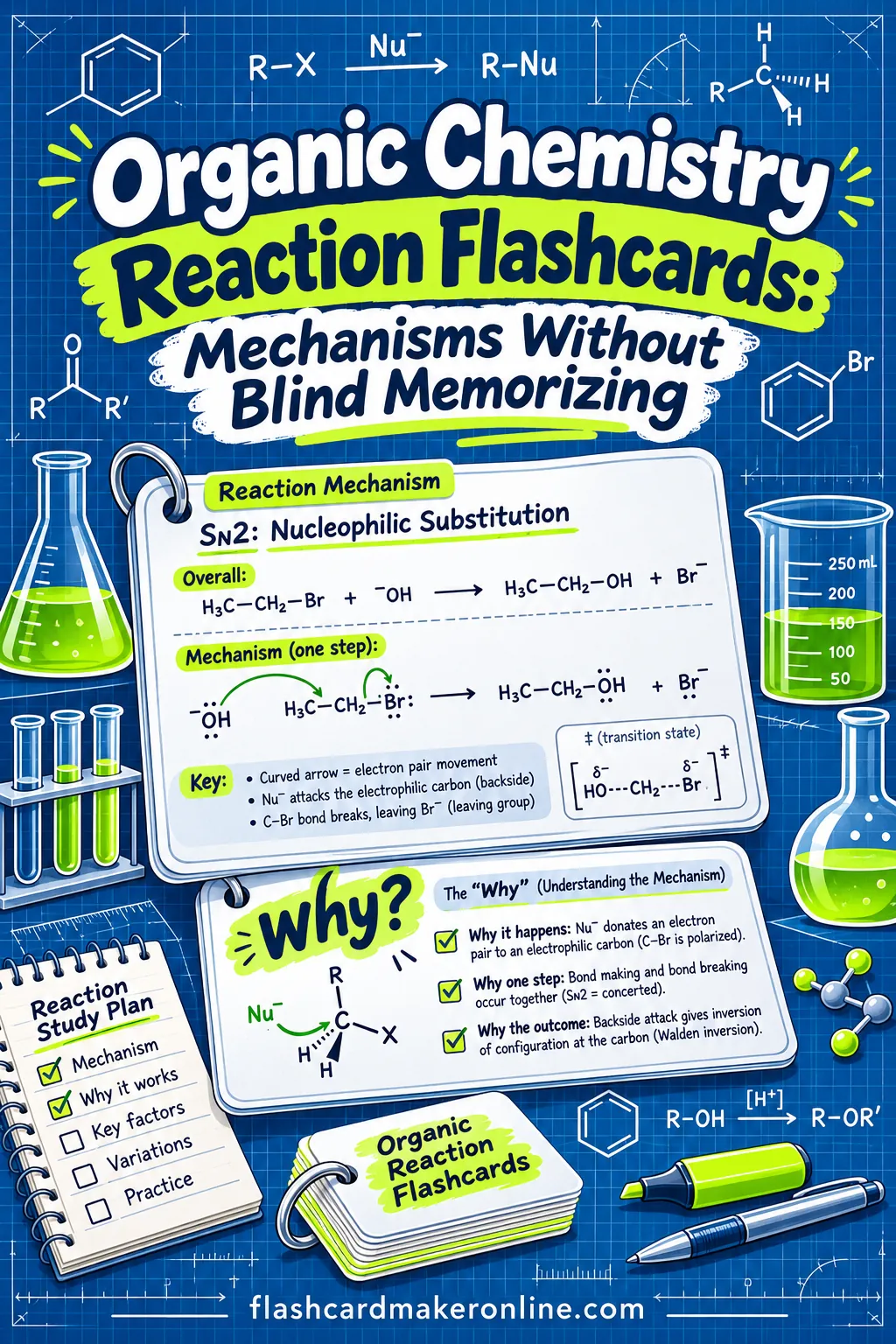
The best organic chemistry flashcards put the starting material and reagents on the front and the product plus a one-line mechanism on the back, and they're grouped by reaction type, not by chapter page. That way every card asks you to predict, and every answer reminds you why it happens. You can build these in the free flashcard maker, study them shuffled on screen, and print them for the desk next to your problem sets.
Orgo has a reputation for being a memorization course. It isn't, quite. There are a lot of reactions, but most of them follow a small number of patterns: a nucleophile attacks an electrophile, a leaving group leaves, a carbocation forms or doesn't, a base pulls off a proton. If your cards teach those patterns, you'll memorize far less and predict far more.
This guide shows you how to set up reaction cards that do that, with a full sample deck you can paste in, card types beyond "reagent to product," a study schedule, and the mistakes that make orgo decks fall apart.
A quick note: textbooks differ in naming, reagent choices, and which reactions they cover. Use your course's reagent list and your professor's notation on your cards. If a card here doesn't match your class, edit it.
🃏 Quiz yourself: 10 cards from this page
Read the front, say your answer, then tap the card to check.
Make, study & print this deck → Opens the free flashcard maker with all 10 cards ready to edit or print.▶ Open this deck in the flashcard maker
Why Blind Memorizing Fails in Orgo
Most students start orgo with a card like "Hydroboration-oxidation" on the front and "anti-Markovnikov alcohol" on the back. That card is fine for a week. Then the exam gives you a structure and a reagent you've never seen together, and the card doesn't help.
Here's why plain name-to-product cards fall short:
- Exams show reagents, not names. You'll see "1. BH3, THF 2. H2O2, NaOH" over an arrow. You won't see the word "hydroboration." Your cards need to start from what the exam shows.
- Products depend on the substrate. HBr on a symmetric alkene gives one product. On an unsymmetric one, you have to decide where the H and Br go. A card that skips the "why" can't help you decide.
- Synthesis questions run backward. You'll be asked how to make a product from a starting material. That means you need cards that go from product to reagents, too.
- Mechanisms are tested directly. Many exams ask you to draw arrows. A card that only lists a product doesn't train that.
The good news is that the "why" usually comes down to a few ideas: carbocation stability, sterics, the strength of the nucleophile or base, and whether a step is concerted or happens in pieces. Put those on your cards and the deck starts to explain itself.
The Reaction Card Format
Every reaction gets a small set of cards. Not every reaction needs all of them, but these are the slots to choose from.
| Card type | Front | Back |
|---|---|---|
| Forward | Substrate + reagents. Product? | Product, plus regio and stereo notes |
| Mechanism | Substrate + reagents. Key intermediate or first step? | One line, such as "bromonium ion, then backside attack" |
| Why | Why is this product Markovnikov (or anti, or syn)? | The reason in a sentence |
| Reverse | How do you make [product] from [starting material]? | Reagents in order |
| Conditions | Which conditions favor this reaction over its rival? | Substrate, nucleophile or base, solvent, heat |
| Trap | What goes wrong with this reaction? | Rearrangement, over-oxidation, polyalkylation |
The forward card is your bread and butter. The mechanism and why cards are what stop blind memorizing. The reverse card is what gets you through synthesis questions.
Keep each back short. A back like "Alcohol, anti-Markovnikov, syn addition, no rearrangement" is four facts, but they're tightly linked and you'll recall them as a unit. A back that also explains the four-membered transition state, the boron-to-oxygen migration, and the history of the reaction is too much. Split that into a mechanism card.
Write fronts the way the exam does
Write reagents exactly as your professor writes them over the arrow. If your class writes "Hg(OAc)2, H2O; then NaBH4," put that on the front. If your class says "oxymercuration-demercuration," make a separate card linking the name to the reagents. You want instant recognition of the actual symbols.
Numbered steps matter. "1. O3 2. DMS" and "1. O3 2. H2O2" give different products. Keep the numbers on your fronts.
Group cards by reaction type
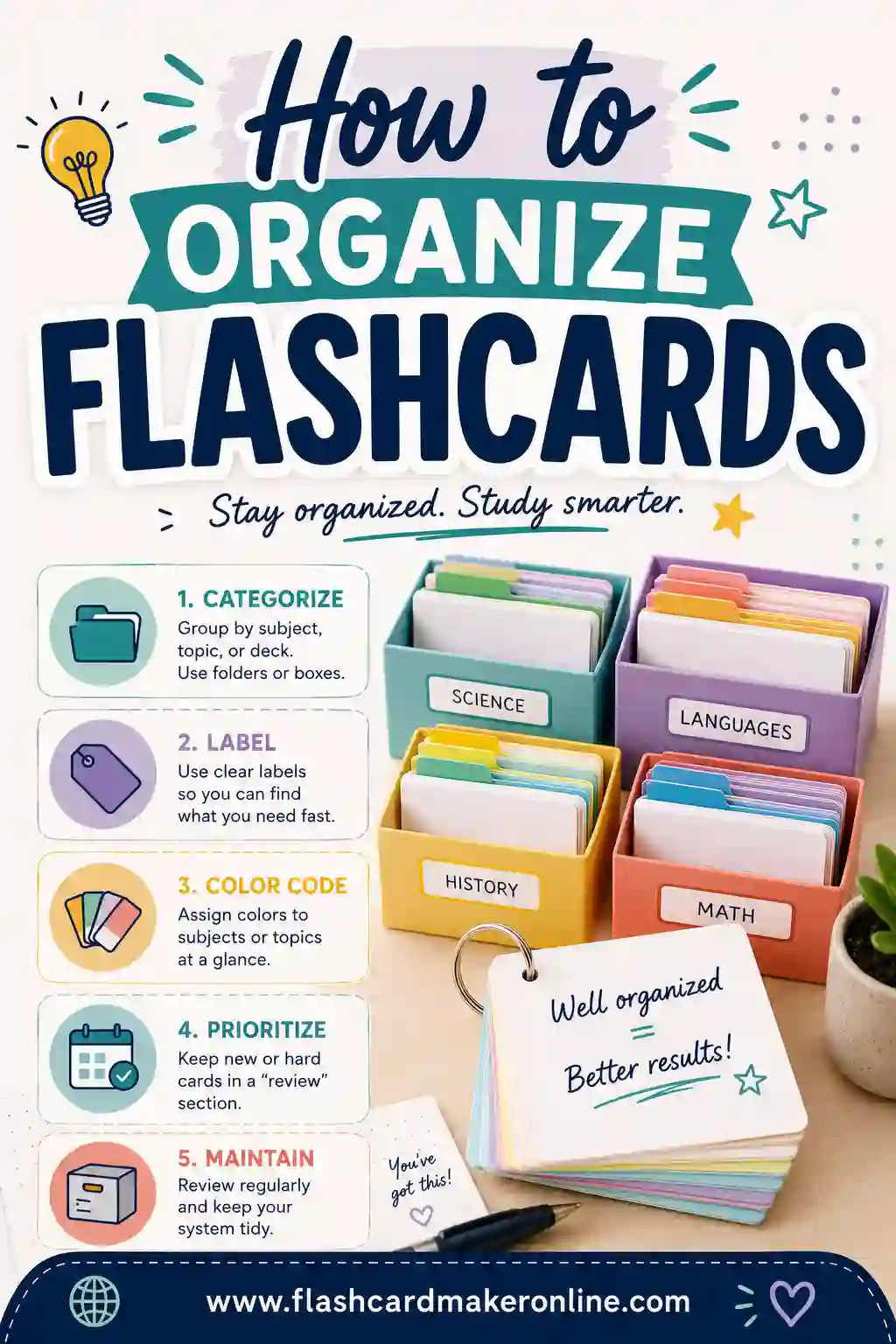
Grouping is the main way to stop orgo from feeling like hundreds of unrelated facts. Instead of one deck per chapter, build decks around what the reactions do.
| Deck | What goes in it | Unifying idea |
|---|---|---|
| Substitution and elimination | SN1, SN2, E1, E2, deciding between them | Nucleophile vs base, substrate, solvent |
| Alkene additions | HX, hydration, hydroboration, halogenation, dihydroxylation, epoxidation, ozonolysis | Regiochemistry and syn vs anti addition |
| Alkyne reactions | Reductions, hydration, acetylide alkylation | Alkynes act like double-alkenes, plus acidic terminal H |
| Alcohol reactions | Oxidation, conversion to halides and tosylates | Making OH into a better leaving group or a carbonyl |
| Carbonyl additions | Hydride reductions, Grignards, Wittig, acetals, imines | Nucleophile attacks the carbonyl carbon |
| Aromatic substitution | Halogenation, nitration, sulfonation, Friedel-Crafts, directing effects | Electrophile attacks the ring, ring stays aromatic |
| Enolates and condensation | Aldol, Claisen, alkylation of enolates | The alpha carbon becomes the nucleophile |
Within each deck, the shared idea becomes a card of its own. For example, the carbonyl deck should start with "Why is a carbonyl carbon electrophilic?" with the answer "Oxygen pulls electron density away, leaving the carbon partly positive." Every other card in that deck builds on it.
Once a few decks feel solid, start mixing them. Real exams don't tell you which chapter a problem comes from, and synthesis problems chain reactions from different decks. The guide on interleaved practice explains why shuffled review beats studying one type at a time, even though it feels harder.
Sample Orgo Reaction Deck You Can Paste In
Here's a starter deck in the front : back format the maker uses for Paste a list. One card per line. Copy a block, paste it in, and fix anything that differs from your textbook.
Substitution and elimination
SN2. Number of steps? : One step, concerted
SN2. Stereochemistry? : Inversion at the carbon, from backside attack
SN2. Best substrate? : Methyl or primary. Tertiary basically doesn't react by SN2
SN2. Best solvent type? : Polar aprotic, such as DMSO, DMF, or acetone
SN2. Rate depends on? : Both substrate and nucleophile (second order)
SN1. Key intermediate? : Carbocation
SN1. Best substrate? : Tertiary, or others that form stable carbocations
SN1. Stereochemistry? : Mostly racemization, since the carbocation is flat
SN1. Best solvent type? : Polar protic, such as water or alcohols
SN1. Trap to watch for? : Carbocation rearrangement by hydride or alkyl shift
E2. Geometry requirement? : H and leaving group anti-periplanar
E2. Usual major product with a small strong base? : More substituted alkene (Zaitsev)
E2 with t-BuOK. Major product? : Often the less substituted alkene (Hofmann), because the base is bulky
E1. Conditions? : Tertiary substrate, weak base, heat
Strong nucleophile, weak base. Examples? : I-, Br-, HS-, CN-, N3-
Strong base, poor nucleophile. Examples? : t-BuOK, LDA, DBU
Alkene additions
Alkene + HBr. Product? : Alkyl bromide, Markovnikov
Alkene + HBr, ROOR. Product? : Alkyl bromide, anti-Markovnikov, radical mechanism
Alkene + H2O, H2SO4. Product? : Markovnikov alcohol, rearrangement possible
Alkene + Hg(OAc)2, H2O, then NaBH4. Product? : Markovnikov alcohol, no rearrangement
Alkene + BH3 THF, then H2O2, NaOH. Product? : Anti-Markovnikov alcohol, syn addition
Alkene + Br2. Product? : Vicinal dibromide, anti addition
Alkene + Br2. Key intermediate? : Bromonium ion
Alkene + Br2, H2O. Product? : Halohydrin, OH on the more substituted carbon, anti
Alkene + H2, Pd/C. Product? : Alkane, syn addition
Alkene + OsO4, NMO. Product? : Vicinal diol, syn addition
Alkene + cold dilute KMnO4, NaOH. Product? : Vicinal diol, syn addition
Alkene + mCPBA. Product? : Epoxide, stereochemistry of the alkene kept
Epoxide + H3O+. Product? : Trans diol (anti opening)
Alkene + O3, then DMS. Product? : Aldehydes and or ketones from cleaving the double bond
Alkene + O3, then H2O2. Product? : Ketones and carboxylic acids
Why Markovnikov? : H adds to give the more stable carbocation, then the nucleophile attacks it
Alkynes
Alkyne + H2, Lindlar catalyst. Product? : Cis alkene
Alkyne + Na, NH3 liquid. Product? : Trans alkene
Alkyne + excess H2, Pd/C. Product? : Alkane
Terminal alkyne + H2SO4, H2O, HgSO4. Product? : Methyl ketone, Markovnikov
Terminal alkyne + R2BH, then H2O2, NaOH. Product? : Aldehyde, anti-Markovnikov
Why does alkyne hydration give a ketone? : The enol formed first tautomerizes to the more stable carbonyl
Terminal alkyne + NaNH2. Product? : Acetylide anion, a strong nucleophile
Acetylide + primary alkyl halide. Product? : Longer internal alkyne, SN2
Acetylide + tertiary alkyl halide. Product? : Mainly elimination, not substitution
Alcohols
Primary alcohol + PCC. Product? : Aldehyde, stops there
Primary alcohol + H2CrO4 (Jones). Product? : Carboxylic acid
Secondary alcohol + H2CrO4 or PCC. Product? : Ketone
Tertiary alcohol + oxidizing agent. Product? : No reaction under normal conditions
Alcohol + SOCl2. Product? : Alkyl chloride
Alcohol + PBr3. Product? : Alkyl bromide
Alcohol + TsCl, pyridine. Product? : Tosylate, a good leaving group, same stereochemistry
Why turn an alcohol into a tosylate? : OH is a poor leaving group. OTs leaves easily
Carbonyls
Aldehyde or ketone + NaBH4. Product? : Alcohol
Ester + LiAlH4. Product? : Primary alcohol (two alcohols after cleavage)
Ester + NaBH4. Product? : Usually no reaction, too mild
Ester + DIBAL-H, low temperature. Product? : Aldehyde
Amide + LiAlH4. Product? : Amine
Formaldehyde + RMgBr, then H3O+. Product? : Primary alcohol
Aldehyde + RMgBr, then H3O+. Product? : Secondary alcohol
Ketone + RMgBr, then H3O+. Product? : Tertiary alcohol
Ester + excess RMgBr, then H3O+. Product? : Tertiary alcohol, two R groups added
CO2 + RMgBr, then H3O+. Product? : Carboxylic acid
Why keep Grignards away from water? : Grignards are strong bases and get protonated, destroying them
Aldehyde or ketone + Ph3P=CHR. Product? : Alkene (Wittig)
Aldehyde or ketone + 2 ROH, acid. Product? : Acetal
Why make an acetal? : Protects the carbonyl from bases and nucleophiles
Aldehyde or ketone + primary amine, mild acid. Product? : Imine
Aldehyde or ketone + secondary amine, mild acid. Product? : Enamine
Carboxylic acid + ROH, acid catalyst. Product? : Ester (Fischer esterification)
Ester + NaOH, H2O. Product? : Carboxylate salt plus alcohol (saponification)
Acid chloride + amine. Product? : Amide
Aromatic substitution and enolates
Benzene + Br2, FeBr3. Product? : Bromobenzene
Benzene + HNO3, H2SO4. Product? : Nitrobenzene
Nitration. Actual electrophile? : Nitronium ion, NO2+
Benzene + RCOCl, AlCl3. Product? : Aryl ketone (Friedel-Crafts acylation)
Friedel-Crafts alkylation. Two traps? : Carbocation rearrangement and polyalkylation
Activating groups direct to? : Ortho and para
Most deactivating groups direct to? : Meta
Halogens on a ring. Activating or deactivating, and direction? : Weakly deactivating, ortho and para directing
Ketone + LDA, low temperature. Which enolate? : Kinetic, from the less substituted alpha carbon
Aldol addition. Product? : Beta-hydroxy aldehyde or ketone
Aldol condensation with heat. Product? : Alpha,beta-unsaturated carbonyl
Claisen condensation. Product? : Beta-keto ester
Diels-Alder. Reactants and product? : Diene plus dienophile gives a cyclohexene, one concerted step
Diels-Alder. Diene conformation needed? : s-cis
That's about 90 cards. It covers the core of a typical two-semester sequence, but every course is a little different. Add the named reactions your professor emphasizes, and cut what your course skips.
How to Build This Deck Step by Step
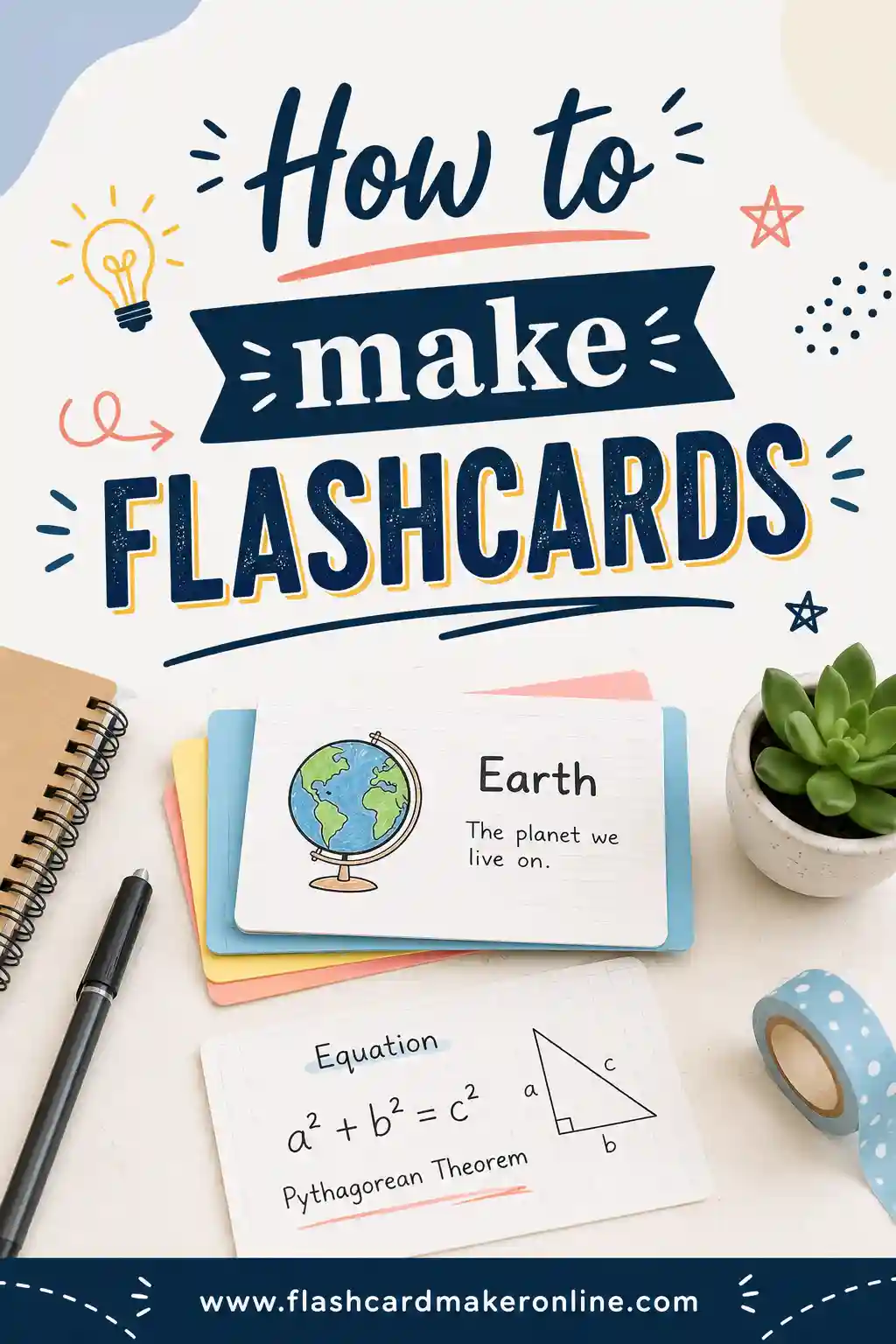
Here's the exact process in the maker. No account, nothing to install.
- Open the flashcard maker and type a deck title. Use one deck per reaction group, like "Orgo Alkene Additions," so each deck stays focused.
- Optional warm-up preset. The "Start from a preset" menu includes Chemistry and Periodic Table. They're general chemistry, not orgo, but they're handy if you're shaky on electronegativity or functional basics. For orgo reactions, you'll mostly use your own cards.
- Click Paste a list. Paste one block from above. Each line is
front : back, with a colon and a space on each side. Pick Add to deck to keep existing cards or Replace deck to start over. - Avoid stray colons in your own cards. Since the colon splits front from back, write ratios and labels without colons. "1. O3 2. DMS" works fine.
- Add pictures to mechanism cards. Draw the mechanism by hand, snap a photo, and add the picture to that card. A photo of your own arrow-pushing is often more useful than a typed line. Structures are hard to type, so pictures are the fix for anything visual, like chair conformations or ring products.
- Study mode. Click Shuffle, try each card, then Flip. On forward cards, sketch the product on scrap paper before flipping. Use Prev and Next to go back over ones you missed.
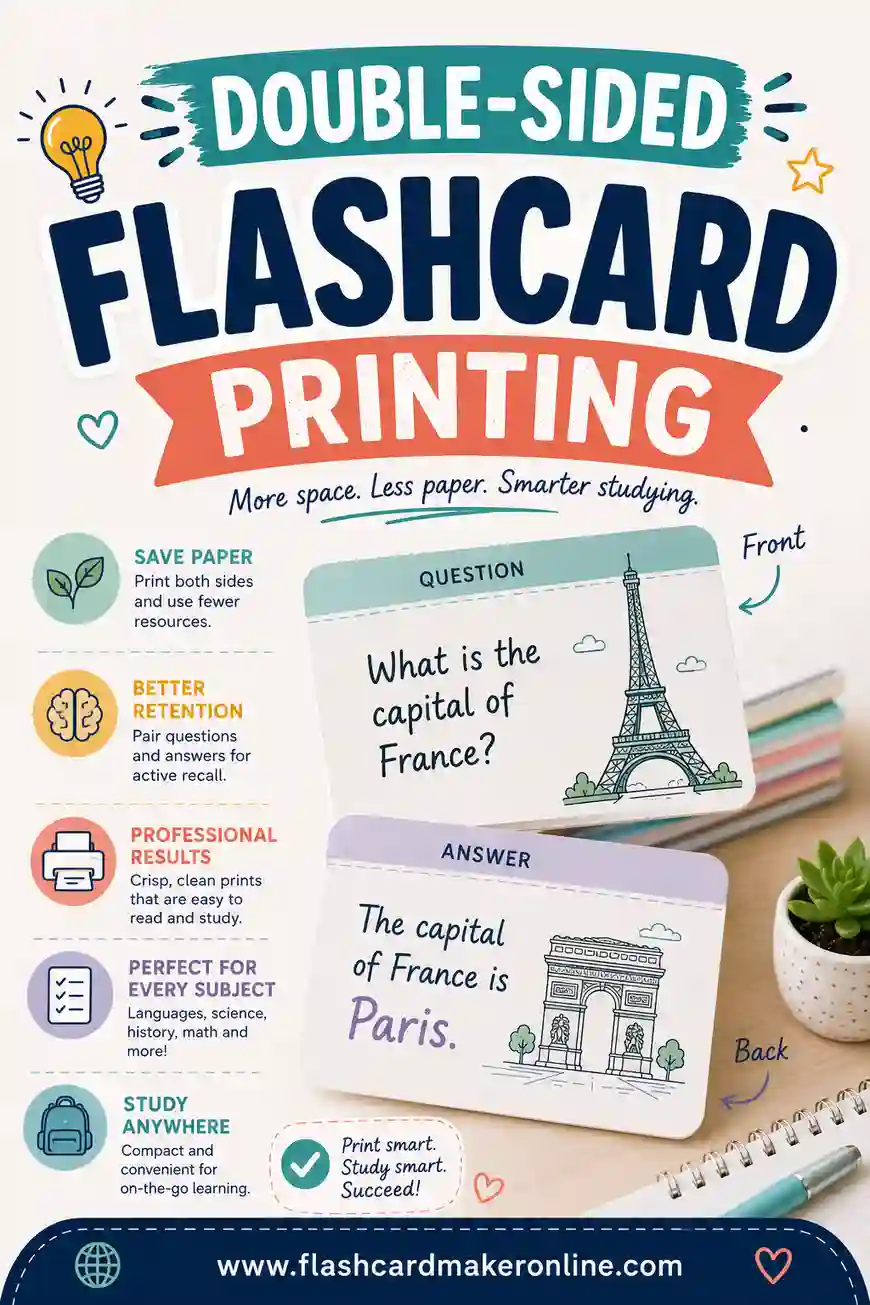
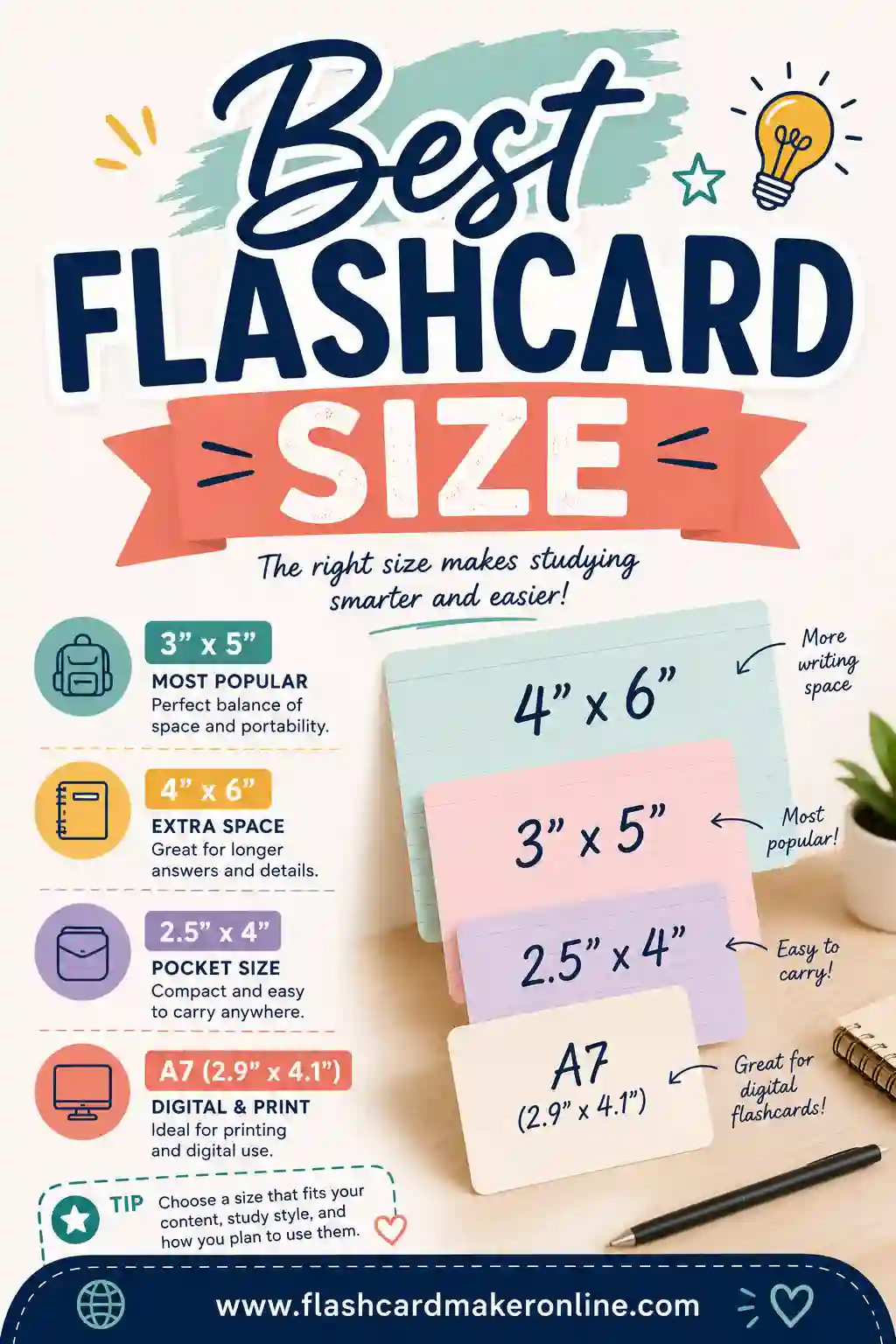
- Print. Choose Double-sided so backs line up with fronts. Big or Standard gives you room for structures you add by hand later. Click Print a test page first, then print or save as PDF.
- Back up and share. Use Download .csv to keep a copy you can bring back with Import a file. Get share link lets lab partners grab their own copy.
For more on making general chemistry decks first, the guide to chemistry flashcards covers the basics that orgo builds on.
Mechanism Cards That Build Understanding
Mechanism cards are where you stop memorizing and start predicting. The trick is to break a mechanism into small, testable steps, not to cram the whole thing on one back.
Take acid-catalyzed hydration of an alkene. Instead of one card with five steps on the back, make three:
| Front | Back |
|---|---|
| Acid-catalyzed hydration. Step 1? | Alkene pi bond attacks H+ to form the more stable carbocation |
| Acid-catalyzed hydration. Step 2? | Water attacks the carbocation |
| Acid-catalyzed hydration. Step 3? | Water removes a proton to give the neutral alcohol |
| Acid-catalyzed hydration. Can it rearrange? | Yes, because there's a carbocation |
Then link it to its cousins with comparison cards:
| Front | Back |
|---|---|
| Acid hydration vs oxymercuration. Key difference? | Oxymercuration has no free carbocation, so no rearrangement |
| Oxymercuration vs hydroboration. Regiochemistry? | Oxymercuration Markovnikov. Hydroboration anti-Markovnikov |
| Br2 addition vs H2 addition. Stereochemistry? | Br2 anti. H2 syn |
| OsO4 diol vs epoxide-opening diol. Stereochemistry? | OsO4 syn. Epoxide opening anti |
These comparison cards are where most exam points live. Questions often hinge on telling two similar reactions apart, especially on stereochemistry.
Use "arrow" cards for core moves
Some arrow-pushing moves appear over and over. Give each its own card so you can spot it in any mechanism:
- Nucleophilic attack. Arrow from a lone pair or pi bond to an electrophilic atom.
- Loss of a leaving group. Arrow from a bond to the leaving group.
- Proton transfer. Arrow from a base's lone pair to H, and from the H bond to the atom that keeps the electrons.
- Carbocation rearrangement. Hydride or alkyl shift to make a more stable carbocation.
A front like "Arrow for a proton transfer. Where does it start?" with the back "At the base's lone pair, pointing to the H" sounds simple. But students lose points every exam for arrows drawn backward. A card fixes that.
Ask "why" on purpose
For each reaction group, add a few why cards. Why does SN2 fail on tertiary substrates? Steric hindrance blocks backside attack. Why is a tertiary carbocation more stable than a primary one? More alkyl groups donate electron density and spread the positive charge (hyperconjugation and induction). Why does a bulky base favor the less substituted alkene? It can reach the more exposed H more easily.
Asking and answering why questions is a known study technique called elaborative interrogation. It pays off in orgo because the reasons repeat across chapters.
Decision cards for SN1, SN2, E1, and E2
The substitution and elimination chapter trips up more students than almost any other, because four reactions compete and the "right" answer depends on several factors at once. Plain cards for each reaction aren't enough. You need decision cards that give you a situation and ask which pathway wins.
| Front | Back |
|---|---|
| Primary alkyl halide + strong nucleophile, weak base, polar aprotic solvent | SN2 |
| Primary alkyl halide + strong bulky base (t-BuOK) | E2, mostly the less substituted alkene |
| Tertiary alkyl halide + strong base | E2 |
| Tertiary alkyl halide + weak nucleophile in water or alcohol, no heat | Mostly SN1, with some E1 |
| Tertiary alkyl halide + weak base, heat | E1 favored |
| Secondary alkyl halide + strong base, such as ethoxide | Mostly E2 |
| Secondary alkyl halide + good nucleophile that's a weak base, polar aprotic | SN2 |
| Methyl halide + any strong base | SN2, since there's no beta hydrogen to eliminate |
Work through these in a fixed order on every card: first look at the substrate (methyl, primary, secondary, tertiary), then the reagent (strong or weak, nucleophile or base, bulky or not), then the solvent and temperature. Write that order on a card of its own and review it first in every session until it's automatic.
Courses differ on how they handle the gray areas, especially secondary substrates. Some professors expect "mixture" as an answer, others want the major pathway. Match your back to the way your class grades it. When a practice problem surprises you, turn it into a new decision card with the exact conditions from the problem.
Reverse Cards for Synthesis Problems
Synthesis questions give you a start and an end and ask for the reagents in between. Forward cards alone don't train that, because you never practice the "product to reagent" direction.
Make reverse cards for each transformation that matters:
| Front | Back |
|---|---|
| Alkene to anti-Markovnikov alcohol. Reagents? | 1. BH3, THF 2. H2O2, NaOH |
| Alkene to Markovnikov alcohol, no rearrangement. Reagents? | 1. Hg(OAc)2, H2O 2. NaBH4 |
| Primary alcohol to aldehyde. Reagent? | PCC |
| Primary alcohol to carboxylic acid. Reagent? | H2CrO4 (Jones) or another strong oxidant |
| Alkyne to cis alkene. Reagent? | H2, Lindlar catalyst |
| Alkyne to trans alkene. Reagent? | Na, NH3 (liquid) |
| Alkene to cleaved carbonyls. Reagents? | 1. O3 2. DMS (or Zn, acid) |
| Add one carbon and make a carboxylic acid from an alkyl halide. Path? | Make a Grignard, react with CO2, then acid workup |
| Add carbons to a terminal alkyne. Path? | NaNH2, then a primary alkyl halide |
When you've got forward and reverse cards for a reaction, you can use it in both directions, which is what synthesis needs.
Then try short chains. Front: "1-butene to butanal. Reagents?" Back: "Hydroboration-oxidation gives 1-butanol, then PCC gives butanal." Those two-step cards are great practice for longer problems.
Study Plan for an Orgo Semester
Orgo moves fast and builds on itself. A little every day works better than long weekend sessions.
| When | What to do | Time |
|---|---|---|
| After each lecture | Write forward, mechanism, and reverse cards for the new reactions | 20–30 min |
| Next day | First review. Sketch products on paper before flipping | 15 min |
| Daily | Missed cards first, then a shuffled mix from older decks | 15–25 min |
| Twice a week | Reverse cards only, with short two-step chains | 20 min |
| Weekend | Shuffle all decks together, then do practice problems | 45–60 min |
| Week before exam | Full mix of every deck plus timed synthesis problems | 45–90 min a day |
Keep printed cards in three piles: "missed," "shaky," and "solid." Review "missed" every day, "shaky" every couple of days, and "solid" once a week. Anything you miss drops back to the "missed" pile.
Pair cards with problems. Cards build fast recall of reagents and patterns. Problems build the skill of applying them to new structures. Every problem you get wrong should become a new card, written in your own words. The generation effect is the reason: writing your own card from a mistake helps it stick more than copying someone else's card.
If you're preparing for the MCAT, keep in mind the exam tests organic chemistry inside a broader science section, with a focus on core concepts and reasoning. Check the current official content outline to see which reaction types matter, and trim your deck to match.
Common Mistakes With Orgo Flashcards
Only making name-to-product cards. Exams show reagents, so start your fronts from reagents. Keep name cards as a separate small set.
Dropping the step numbers. "1. RMgBr 2. H3O+" means the acid comes after the Grignard has reacted. Written as one step, it would destroy the Grignard before it did anything. Keep numbered steps on the front.
Leaving stereochemistry off the back. "Diol" isn't a full answer. Syn or anti matters on exams. Add it to every addition card.
One huge mechanism card. If the back has five arrows described in text, split it. One step per card, plus a "can it rearrange?" card.
Never drawing. Flashcards for orgo work best with a pencil and scrap paper nearby. Sketch the product, then flip. If you can't draw it, you don't know it yet.
Cards from mixed sources. Different books use different reagents for the same job. Pick your course's version and stay with it so you don't second-guess on the exam.
Studying decks in order only. If you always review alkene additions right after the alkene lecture, you'll recognize them in context and freeze when they appear mixed with carbonyl reactions. Shuffle across decks every week.
Skipping the reverse direction. Forward cards feel good, but synthesis questions are worth a lot. Make the reverse cards early.
Variations by Course and Goal
First-semester orgo. Focus on substitution and elimination, alkene and alkyne reactions, and alcohols. Spend extra time on the SN1, SN2, E1, E2 decision cards. Everything later builds on them.
Second-semester orgo. Carbonyl chemistry, aromatic substitution, enolates, and named reactions take over. The carbonyl deck usually becomes your biggest. Group it by nucleophile type: hydride, carbon, oxygen, nitrogen.
MCAT prep. Trim the deck to concepts the official outline emphasizes. Keep why cards and comparison cards, since passage questions reward understanding over recall of rare reagents. The guide on MCAT flashcards has ideas for building a balanced deck across all sections.
Students who struggle with structures. Lean on picture cards. Draw by hand, photograph, and attach. You can also print cards in the Jumbo size and draw structures directly on the printed fronts with a pen.
Group study. Share a deck by link and split the work. One person writes alkene cards, another writes alcohols, and everyone checks each other's mechanisms. Quiz each other with the printed cards and make the person answering draw the arrows.
Whatever your goal, start small. Pick the reaction group you're learning this week. Paste the matching block from the sample deck, edit it to match your lecture notes, add a few photos of hand-drawn mechanisms, and run one shuffled Study session. It takes less time than rereading a chapter, and it'll show you right away which reactions you actually understand. Open the free flashcard maker and start with one deck.
▶ Open this deck in the flashcard maker
Frequently Asked Questions
How many organic chemistry flashcards do I need?
A full two-semester course often ends up with a few hundred cards across all reaction groups. Start with the forward, mechanism, and reverse cards for each reaction your course covers. Add cards from every problem you miss, and the deck will grow to fit your weak spots.
Should orgo flashcards have structures drawn on them?
Structures help, especially for stereochemistry and ring reactions. Typing them is hard, so add a photo of your own drawing to the card or print the deck and sketch structures on by hand. Text-only cards still work well for reagents, conditions, and why questions.
Is it better to group orgo cards by chapter or by reaction type?
Grouping by reaction type usually works better, because reactions that share a mechanism or a pattern end up together. Once each group feels solid, shuffle all groups together so you can spot reactions out of context, the way exams present them.
How do I memorize reagents without just memorizing?
Attach a reason to each reagent. Add why cards, such as why PCC stops at the aldehyde or why hydroboration is anti-Markovnikov. When you know the reason, you can often work out the product even if you forget the exact card.
Can I use these cards for the MCAT?
Yes, with trimming. The MCAT tests organic chemistry concepts inside a broader science section. Check the current official content outline and keep the cards that match, especially comparison and why cards.
What's the best card size for orgo flashcards?
Standard or Big gives enough room for a short answer plus space to sketch. If you plan to draw structures by hand on printed cards, try Jumbo. Use the Double-sided layout so fronts and backs line up.
How do I make cards for mechanisms with many steps?
Make one card per step, such as "Step 1?" and "Step 2?" for the same reaction, plus a card about the key intermediate. Then add a comparison card linking it to a similar reaction. Small cards are much easier to recall than one long list of arrows.
Can I share my orgo deck with classmates?
Yes. Click Get share link, and anyone who opens it gets their own copy to edit. You can also download a .csv file and send it to classmates to import.