How to Learn Your Students' or New Coworkers' Names With Flashcards
To learn names with flashcards, make one card per person with their photo or a short description on the front and their name, pronunciation, and one memorable detail on the back, then shuffle and review the deck for five to ten minutes every day of your first week. Say each name out loud before you flip. You can build the deck in minutes with our free flashcard maker, which lets you add pictures to cards and needs no account.
That's the short version. Below you'll find the full method: what to put on each card, how to handle a class of 30 or a whole department, a first-week schedule, ways to do it without photos, privacy rules to respect, and the small tricks that turn "I know your face" into "Hi, Ngozi."
🃏 Quiz yourself: 10 cards from this page
Read the front, say your answer, then tap the card to check.
Make, study & print this deck → Opens the free flashcard maker with all 10 cards ready to edit or print.▶ Open this deck in the flashcard maker
Why Names Are So Hard to Remember
You've probably had this happen. Someone introduces themselves, you shake hands, and three seconds later the name is gone. You remember their face, their job, even what they said about their dog, but not the one word you need.
There are a few reasons for that.
Names carry little meaning. "Baker" used to describe a job, but a person named Baker today could be anything. Your brain has nothing to hook the name onto. Facts with meaning attach to things you already know. Names often float free.
You hear them once, under pressure. Introductions happen when you're busy thinking about what to say next, how you look, or what the room is like. Your attention is split.
They come in a flood. On a first day at school or work, you might meet thirty people before lunch. Every new name crowds the last one.
You rarely test yourself. After the introduction, you see the person again but avoid saying their name, just in case. You never practice pulling it out of memory, so it never gets stronger.
Flashcards fix the last problem directly, and help with the others. Each card is a tiny test: you see a face and try to produce the name. That act of retrieval is what makes a memory durable. Our guide to the active recall method explains the idea. Cards also let you meet everyone again in a calm moment, at your own pace, instead of all at once in a noisy hallway.
What to Put on a Name Card
A good name card is quick to check and gives your memory something to grab. Here's the layout that works best.
| Card part | What to include | Example |
|---|---|---|
| Front | A photo, or a short description if you don't have one | Photo, or "Runs onboarding, front desk, green scarf" |
| Back, line 1 | Full name as they like to be called | Priya Natarajan |
| Back, line 2 | Pronunciation, if it's not obvious | PREE-yah |
| Back, line 3 | One detail that ties them to your world | Ask her about badge access |
| Back, optional | A memory hook you made up | "Priya at the front desk is the first person you see" |
Photo first, when you're allowed. Faces are what you'll see in real life, so a face on the front is the closest match to the real test. The maker lets you add pictures to cards, so you can drop in a photo and type the name on the back. More on where photos can come from, and when you shouldn't use them, below.
Use the name they actually go by. If Marcus says "call me Marc," the card says Marc. If a student's roster name is Jonathan but he goes by Jack, write Jack and put the roster name in small text. You want to learn the name you'll actually say.
Always add pronunciation for names you're not sure about. Write it the way it sounds to you, using simple syllables, with the stressed part in capitals: n-GO-zee, TOH-mahsh, KWAH-may. The only reliable source is the person, so ask them. "Can you say your name once more so I get it right?" is a kind question, and most people appreciate it.
Pick a detail that's useful and kind. Their role, where they sit, what they're working on, or something they told you. Avoid anything about weight, looks you'd never say out loud, or anything private. A good test: would you be comfortable if they read the card?
Where to Get Photos (and When Not To)
Photos make name cards much easier. They also involve real people, so treat them with care.
Teachers
Many schools provide class rosters with student photos in the student information system. Some schools are fine with teachers using those for a personal study deck, and some aren't. Check your school or district policy first, and follow it.
If you do use student photos:
- Keep the deck private. Don't use Get share link for a deck with student photos. Anyone with that link gets a copy of the deck, so the photos would travel with it.
- Print only what you need, and keep printed cards in your desk or bag, not on a public board.
- Delete or shred the deck at the end of the year, or whenever your school's rules say.
If photos aren't allowed, the description method in the next section works well for teachers, since students tend to sit in the same seats for the first weeks.
New jobs
Company directories, chat apps, and intranet pages often show profile pictures. Using them to learn names for your own private study is usually reasonable, but follow your workplace's rules about saving or copying them. Never post coworker photos anywhere public.
Groups, clubs, and volunteers
For a choir, sports team, church group, or volunteer crew, the simplest and friendliest approach is to ask. "I'm trying to learn everyone's names. Mind if I use the team photo?" Most people say yes, and some will like that you're making the effort.
Kids' camps and coaching
For children, be extra careful. Use only photos the program provides and permits, keep decks private, and delete them when the season ends. If you're unsure, use the no-photo method.
How to learn names without photos
You don't need photos to learn names with flashcards. A short description on the front can work nearly as well, especially in the first week when people stick to the same places.
Use where they sit or work. "Back row, by the window." "Second desk on the left in marketing." In a classroom, a seating chart turns into cards fast: the front is the seat, the back is the name.
Use what they do. "Runs payroll." "Plays goalie." "Leads Tuesday standup." Role cards help especially at work, where you'll often need someone's name exactly when you need their help.
Use something they said. "Just moved from Ohio." "Has twin toddlers." "Training for a marathon." These are great because they also give you something to talk about.
Use a steady visual detail. Something that stays the same day to day, like glasses, a hairstyle, or a favorite jacket, can help early on. Pair it with a role or seat, since clothing changes.
Write two or three cues, not one. "Sales, sits next to you, marathon runner" is much easier to pin to one person than just "sales." The extra cues also give you several ways to remember the name.
When you get a photo later, you can add it to the card in the maker. The description stays useful as a second clue.
A Sample Name Deck You Can Paste In
Here's a sample deck for a fictional new workplace, so you can see how real cards read. Every name and detail is made up. Replace them with your own people.
| # | Front | Back |
|---|---|---|
| 1 | Runs onboarding, front desk, green scarf | Priya Natarajan (PREE-yah). Badge access. |
| 2 | Team lead, corner office by the window | Marcus Bell, goes by Marc. 1-on-1s Tuesdays. |
| 3 | IT help, 3rd floor, always has a coffee mug | Tomasz Nowak (TOH-mahsh). Laptops and passwords. |
| 4 | Payroll, quiet, runs payroll Thursdays | Ngozi Okafor (n-GO-zee). Timesheets go to her. |
| 5 | Sits next to you, sales, marathon runner | Diego Ramirez. Trains new sales hires. |
| 6 | Design team, bright sneakers, plays guitar | Hannah Kim. Owns the brand templates. |
| 7 | Facilities, keys and parking passes | Walt Jensen. Basement office. |
| 8 | Your work buddy for week one | Aisha Rahman (EYE-sha). Ask her anything. |
| 9 | Head of the department, opens all-hands | Dr. Elena Vasquez, goes by Dr. V. |
| 10 | Night-shift supervisor, tall, calm voice | Kwame Mensah (KWAH-may). Covers weekends. |
| 11 | Customer support lead, headset, laughs a lot | Sofia Rossi. Escalations go to her. |
| 12 | Finance, spreadsheets wizard, from Atlanta | Jordan Price. Approves expenses. |
| 13 | Warehouse manager, orange vest | Luis Ortega. Shipping schedule. |
| 14 | Marketing, writes the newsletter | Grace O'Neill. Send her updates by Friday. |
| 15 | HR, benefits questions | Daniel Cho. Open-door hours Wednesday. |
| 16 | Sits across from you, new hire like you | Fatima Haddad (FAH-tee-mah). Started same day. |
And here's the same deck in the front : back format for Paste a list. Copy it, change the details, and paste.
Runs onboarding, front desk, green scarf : Priya Natarajan (PREE-yah). Badge access.
Team lead, corner office by the window : Marcus Bell, goes by Marc. 1-on-1s Tuesdays.
IT help, 3rd floor, always has a coffee mug : Tomasz Nowak (TOH-mahsh). Laptops and passwords.
Payroll, quiet, runs payroll Thursdays : Ngozi Okafor (n-GO-zee). Timesheets go to her.
Sits next to you, sales, marathon runner : Diego Ramirez. Trains new sales hires.
Design team, bright sneakers, plays guitar : Hannah Kim. Owns the brand templates.
Facilities, keys and parking passes : Walt Jensen. Basement office.
Your work buddy for week one : Aisha Rahman (EYE-sha). Ask her anything.
Head of the department, opens all-hands : Dr. Elena Vasquez, goes by Dr. V.
Night-shift supervisor, tall, calm voice : Kwame Mensah (KWAH-may). Covers weekends.
Customer support lead, headset, laughs a lot : Sofia Rossi. Escalations go to her.
Finance, spreadsheets wizard, from Atlanta : Jordan Price. Approves expenses.
Warehouse manager, orange vest : Luis Ortega. Shipping schedule.
Marketing, writes the newsletter : Grace O'Neill. Send her updates by Friday.
HR, benefits questions : Daniel Cho. Open-door hours Wednesday.
Sits across from you, new hire like you : Fatima Haddad (FAH-tee-mah). Started same day.
A classroom version
For a teacher, a seat-based deck for a class might start like this. Again, every name here is invented.
| Front (seat or detail) | Back |
|---|---|
| Row 1, seat 1, by the door | Ava Thompson. Loves horses. |
| Row 1, seat 2 | Mateo Garcia. Goes by Teo. |
| Row 1, seat 3, left-handed | Lily Chen. Asked about the science fair. |
| Row 1, seat 4 | Jamal Wright. Plays soccer. |
| Row 2, seat 1, purple backpack | Zoe Martinez. New to the school. |
| Row 2, seat 2 | Ethan Nguyen (WIN). Twin of Owen in period 4. |
| Row 2, seat 3 | Amara Okoye (ah-MAR-ah). Reads during free time. |
| Row 2, seat 4, by the window | Caleb Johnson. Goes by CJ. |
The seat cards get you through the first two weeks. Once you've switched seats or started group work, add photos if you're allowed, or rewrite the fronts with details you've learned about each student.
How to Build Your Name Deck in the Free Maker
Here are the exact steps in the flashcard maker.
- Name the deck. Use something clear like "Period 2 - Fall" or "New team - Week 1." Make one deck per class or group so you can focus on whoever you're seeing next.
- Start from a blank deck. The "Start from a preset" menu has subject decks like Spanish vocab and US States & Capitals, but for names, you'll build your own.
- Paste your list. Click Paste a list and enter one person per line as
front : back, with the description or seat before the colon and the name after it. Click Add to deck. If you're updating a roster later, Replace deck wipes the old version and loads the new one. - Add pictures. For each card where you have permission to use a photo, add the picture to the card. Keep the description too. It gives you a second clue and helps on days when the photo isn't a close match, like after a haircut.
- Fix anything with a colon. The colon splits front from back, so if a detail has its own colon, like a time written as 9:30, add that card with "+ Add card" or write the time as "9.30" or "half past nine."
- Study. Open Study mode and turn on Shuffle. Look at the front, say the name out loud, then click Flip. Use Prev and Next to move through. Try 🔊 Read aloud on the back to hear the name spoken, which helps you notice names you've been saying silently but never out loud.
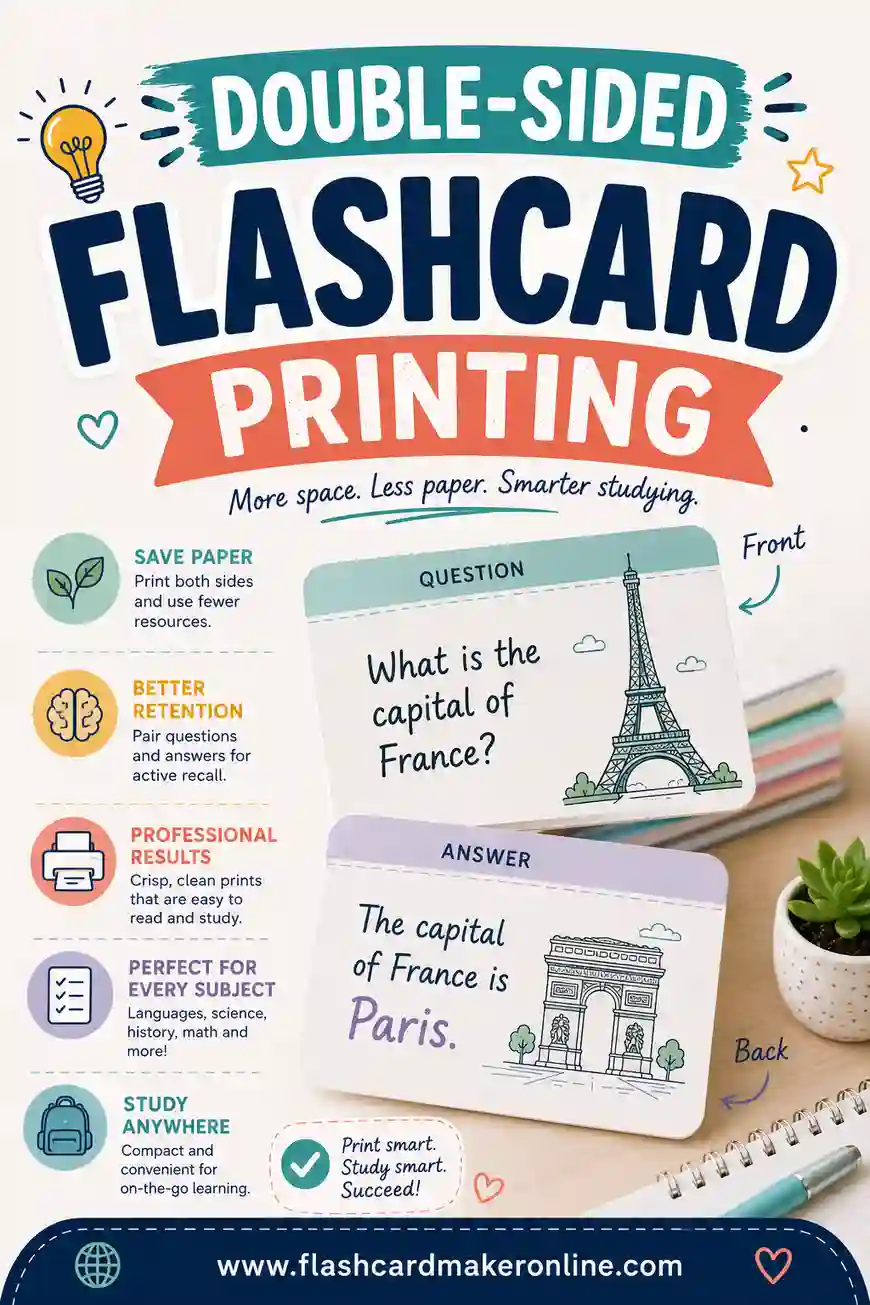
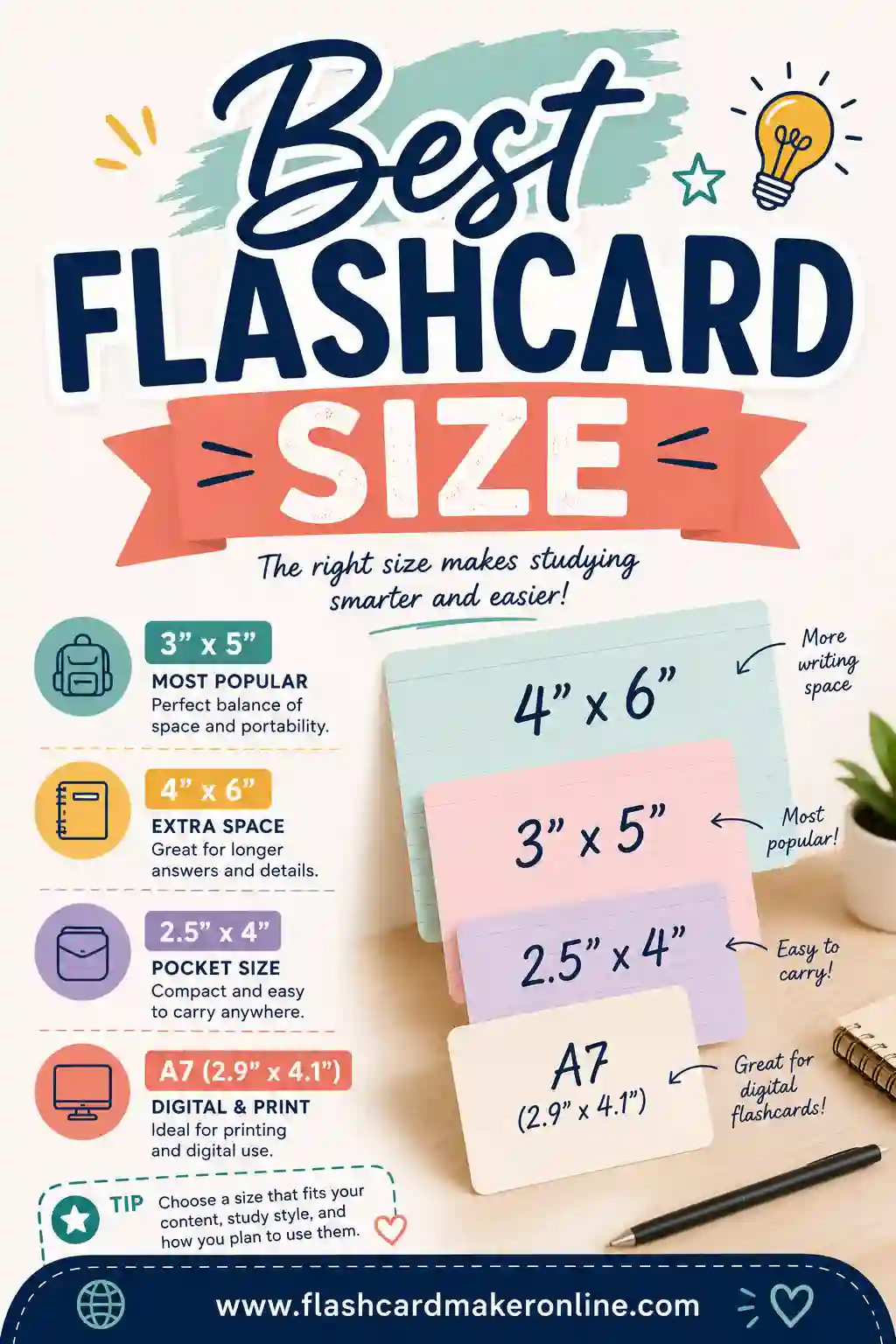
- Print a pocket set if it helps. Under Print, choose Double-sided so each face or description lines up with its name on the back. The 3×5 index card size fits in a pocket or planner. Use "Print a test page first" to check that the backs line up. If you'd rather tape a grid inside a folder, choose Fronts only or the Cut-out grid layout. Cardstock holds up better than plain paper if you'll carry the cards around for a few weeks.
- Back up your deck. Click Download .csv to save a copy. You can bring it back later with Import a file. For decks with photos of students or coworkers, keep any copy on your own device and delete it when you're done.
Your First-Week Schedule
Short, frequent sessions beat one long session. You also get a bonus: every day, you see the real people, which acts as extra review. Here's a plan that fits around a busy first week.
| Day | Before you go in | During the day | Evening |
|---|---|---|---|
| Before Day 1 | Build the deck from the roster or team page. Read every name and pronunciation once. | — | — |
| Day 1 | Shuffled pass, say every name out loud (5 min) | Use each name once when you talk to someone | Add details you learned to the backs (5 min) |
| Day 2 | Shuffled pass; pull out cards you missed (5 min) | Greet people by name at the door or in meetings | Drill the missed cards only (5 min) |
| Day 3 | Missed cards, then full deck (5 min) | Call on students or address coworkers by name | Full shuffled pass (5 min) |
| Day 4 | Full deck shuffled (5 min) | Try naming everyone silently as you walk past | Fix any card where you mixed up two people |
| Day 5 | Full deck shuffled (5 min) | Quiz yourself: who's absent today? | Review the hardest five |
| Week 2 | Every other day (5 min) | Use names naturally | Add new people as you meet them |
| Week 3 and on | Once or twice a week | — | Retire cards you never miss |
Five minutes is enough. For a class of 30, a shuffled pass takes about that long once you're past the first day. Short daily reviews spaced out over days are far more effective than one long cram, because you're constantly retrieving names just as they start to fade. If you're curious about the reasoning, our article on spaced repetition explains it.
Teachers with several classes: stagger your decks. Do period 1 before school, period 2 at lunch, and so on, rather than drilling 150 names at once. Or review each class's deck in the few minutes before that class walks in.
Big workplaces: don't try to learn the whole company. Start with your team, the people you'll ask for help, and anyone you'll see every day. That might be 15 to 25 people. Add others as you actually work with them.
Memory Tricks That Make Name Cards Stronger
Flashcards give you practice. These tricks give the names something to stick to.
Say it, use it, repeat it
When you first meet someone, say their name back right away: "Nice to meet you, Diego." Then use it once more before you part. That's two extra retrievals in the first minute. Later, your cards turn those first two into dozens.
Link the name to something you know
If you know another person with the same name, picture them together. If the name sounds like a word, use it: Grace writes the newsletter "gracefully." Silly is fine, since you'll never say it out loud. Our page on memory techniques for studying covers more ways to build these links.
Turn the face into a picture
Pick one feature you notice first and connect it to the name. If Walt has keys on his belt, picture the keys locking a vault, "Walt" and "vault." The weirder and more vivid, the better it tends to stick. Pictures plus words together are easier to remember than either alone, which is the idea behind dual coding.
Group by place or team
Put names in clusters. Everyone in IT, everyone in the back row, everyone on the night shift. Our brains handle small groups better than long lists. Within each cluster, notice what's different about each person.
Watch for look-alikes and sound-alikes
You'll almost always mix up a pair. Two students with similar hair, two coworkers named Jordan and Jared. When it happens, make a special "compare" card: the front says "Jordan vs. Jared - who's in finance?" and the back gives the answer plus one difference. Then drill that card extra.
Write the name yourself
Typing or writing the name helps you notice spelling, which helps when you need to email someone or sign a note. If you print a deck, write a quick note on the back by hand when you learn something new about someone.
Play a quick name game
Once the deck is mostly solid, a little play keeps reviews from feeling like a chore. Print the deck with Fronts only on one sheet and the names on another, or use the Cut-out grid layout, then cut the cards apart. Lay the faces or descriptions face up and match a name to each one as fast as you can. Time yourself and try to beat yesterday's score.
Teachers can turn this into a class activity in the first week, with a twist: use name tents or a seating chart, never student photos on a public table. Ask students to learn each other's names too. A class that knows everyone's name tends to settle in faster, and you'll get extra practice hearing the names spoken.
At work, a lighter version works on your own. Before a meeting, look at the invite list and picture each person, then name them in your head as they join. After the meeting, check any you missed against your deck. It's a two-minute habit, and it uses the real setting as your test.
You can also flip the usual direction. Look at the back of a card, read the name, and try to picture the face or recall the details before you flip to the front. Going both ways builds a stronger link, so a name on an email brings up a face, and a face in the hallway brings up a name.
Common Mistakes When Learning Names
| Mistake | Why it hurts | Fix |
|---|---|---|
| Reading the roster instead of testing yourself | You recognize names but can't produce them | Look at the front, say the name, then flip |
| Studying silently | You never practice saying hard names | Say every name out loud, even quietly |
| Only clothing on the front | Clothes change daily | Use seat, role, or something they said, plus a steady feature |
| Guessing pronunciation | You lock in the wrong version | Ask the person and write it on the card |
| Cramming the night before | Names fade overnight | Five minutes a day, every day, for a week |
| Ignoring mix-ups | The same two people stay tangled | Make "compare" cards for confused pairs |
| Sharing a deck with real photos | Photos spread beyond your control | Keep photo decks private; never use a share link for them |
| Trying to learn everyone at once | Overload; nothing sticks | Start with the people you see daily |
Variations by Setting
Elementary teachers
Young kids notice instantly when you know their names, and it helps them feel safe. With a class of 20 to 25, you can usually learn names in a few days with a seat or photo deck. Add a detail you can say out loud, like "Ava loves horses," and use it in your first conversations. Our page on flashcards for teachers has more classroom ideas.
Middle and high school teachers
You may have 120 to 180 students across several periods. Build one deck per period. Learn the seat version first, then switch to photos or details once seats change. The first two weeks are the hardest; a steady five minutes before each class makes them much easier.
College instructors and TAs
Large lecture classes are tough, but even learning the names of students who speak up helps a lot. Start with your discussion section or lab group. For big lectures, a deck of the students who come to office hours is a good start.
New job, office or remote
On video calls, names often show under faces, which helps but also lets you lean on the label. Close your eyes or look away and try to name the speaker before you check. Make a card for each regular in your meetings, with their role on the front.
Healthcare, retail, and shift work
You may meet a different mix of coworkers on each shift. Build cards as you go, with the shift and role on the front: "Night shift, charge nurse." Add new people after each shift while the details are fresh.
Coaches, scout leaders, and youth programs
Kids respond to coaches who know their names right away. Use a roster with numbers or positions on the front: "Number 14, plays left wing." Keep the deck private and delete it at the end of the season.
Adults learning names in a new language
If many of the names around you come from a language you don't speak, pronunciation cards matter even more. Write the sound in syllables, and use 🔊 Read aloud to hear the card. Remember that a computer voice may not say every name correctly, so the person's own pronunciation always comes first.
When you forget anyway
You'll still blank sometimes. Everyone does. A few graceful moves help:
- Be honest and quick. "I'm sorry, I've met so many people this week. Remind me of your name?" Most people understand, especially in week one.
- Use it right away. Once they tell you, say it back and use it again before you part.
- Fix the card. That evening, find the card and add the detail that would have helped, like where you saw them or what you talked about. Then drill it.
- Don't fake it. Calling someone the wrong name with confidence lands worse than asking.
- Get a little help. At work, a quick glance at a meeting invite or chat profile can save you. In class, a seating chart on your desk is a perfectly normal backup during the first weeks.
- Notice the pattern. If you keep forgetting the same few people, it's usually because you see them less often. Move their cards to the front of your next few sessions, and make a point of saying hello to them by name the next time you cross paths.
Start your name deck today
Learning names fast is one of the kindest things you can do in a new class or job, and it doesn't take a special memory. It takes a handful of cards and five minutes a day. Open the free flashcard maker, paste your list, add photos where you're allowed, and do your first shuffled pass tonight. By Friday, you'll be greeting people by name without a second thought.
▶ Open this deck in the flashcard maker
Frequently Asked Questions
How do I learn names with flashcards quickly?
Make one card per person with a photo or short description on the front and their name, pronunciation, and one detail on the back. Shuffle the deck and review it for about five minutes a day, saying each name out loud before you flip. Most people can learn a class or a small team within a week this way.
Is it OK to use student photos on flashcards?
It depends on your school or district policy, so check before you use them. If you're allowed, keep the deck private, don't share it with a link, and delete it at the end of the year. If you're not allowed, seat-based or description cards work well.
How many names can I learn in a week?
Many people can learn 20 to 40 names in a week with short daily reviews, and more with extra time. Teachers with several classes do best by building one deck per class and reviewing each one before that class meets. Start with the people you see every day.
What should I write if I can't use a photo?
Use two or three clues that stay steady, such as where the person sits, their role, and something they told you. For example, "Sits next to you, sales, marathon runner." Avoid relying only on clothing, since it changes day to day.
How do I remember how to pronounce a name?
Ask the person to say it again, then write it on the card in simple syllables with the stressed part in capitals, like n-GO-zee. Say it out loud every time you review the card. The 🔊 Read aloud button can help, but the person's own pronunciation is always the one to follow.
What if I keep mixing up two people?
Make a "compare" card just for that pair, like "Jordan vs. Jared - who's in finance?" with the answer and one clear difference on the back. Drill it more often than the rest of the deck. Mix-ups usually clear up within a few days once they get their own card.
Can I study my name deck on my phone?
Yes. The maker runs in a web browser, so you can open Study mode on your phone for quick reviews between classes or meetings. You can also print a small double-sided set to keep in a planner.
Should I keep reviewing after I know everyone?
A quick review once or twice a week for the next few weeks helps names stay put, especially for people you don't see daily. After that, everyday use does the work. Retire cards you never miss and keep the tricky ones in rotation a little longer.